
)
)
)
)
)
)
)
)
How To Choose The Right Stools For A Kitchen Island
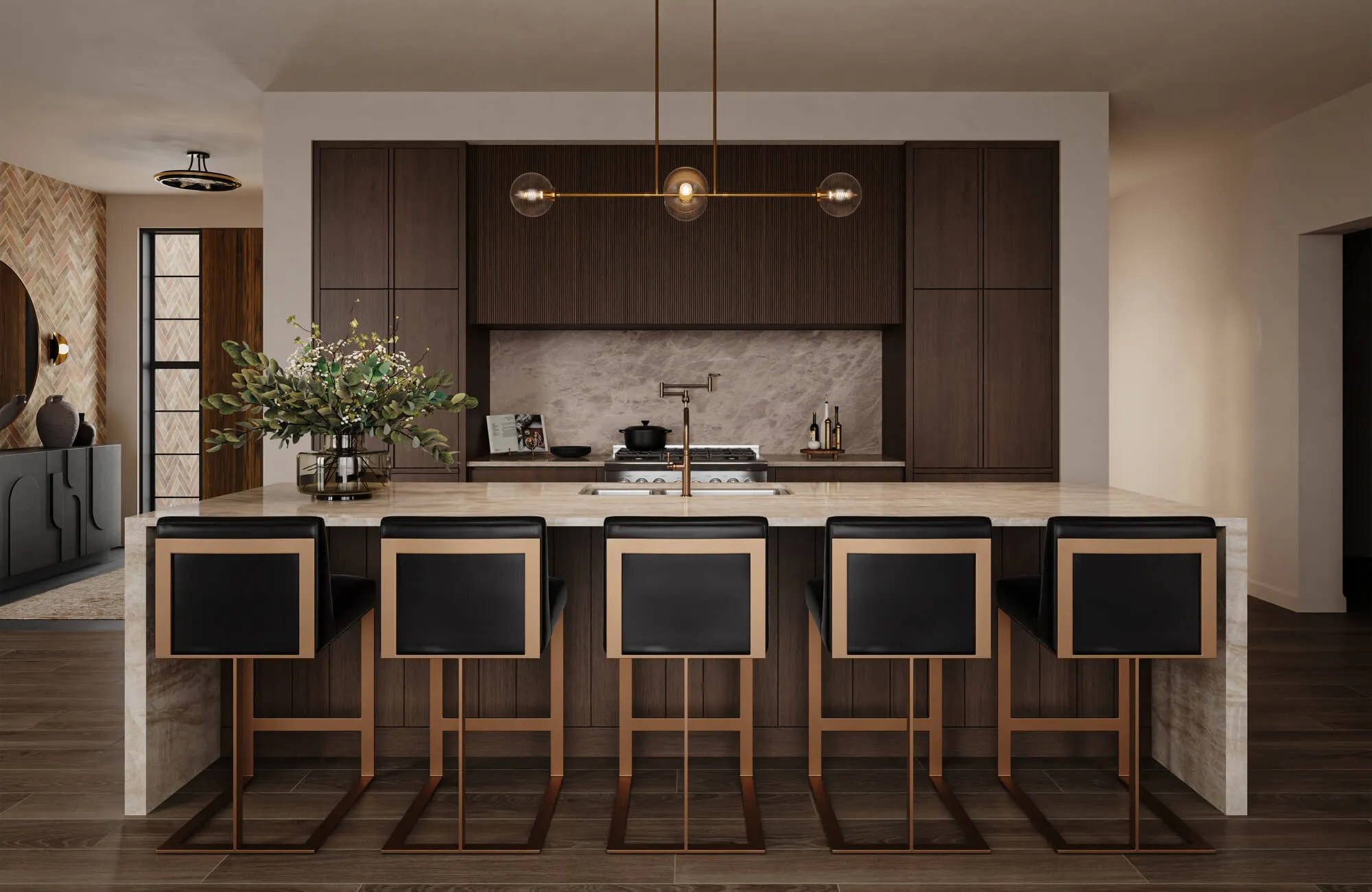
Choosing the right stools for your kitchen island can make a bigger difference than you might expect. The right height, style, and comfort level can turn the island into a true gathering spot, whether you’re sharing quick breakfasts, chatting with friends, or helping kids with homework. In this guide, we’ll walk through the key things to consider so your stools feel natural, comfortable, and perfectly in tune with your space.
The Best Stool Height for Your Kitchen Island
Choosing the right stool height makes a big difference in how comfortable and functional your kitchen island feels day to day. It’s all about matching the stool to your counter height so sitting, eating, and working feel natural rather than cramped. Below, we’ll go over the key measurements that help you find the right fit without overthinking the process.
Counter-Height vs. Bar-Height: What’s the Difference?
Counter-height and bar-height stools may look similar, but they sit at very different levels, which affects how comfortable they feel. Counter-height stools usually pair with standard kitchen islands around 36 inches tall, giving you a relaxed, table-like seating experience. Bar-height stools are made for taller surfaces, closer to 43 inches if not more, so they naturally feel more elevated and casual. It helps to compare both side by side because even a few inches can change how natural the sitting position feels. Once you match the stool height correctly, the whole island setup becomes more inviting and easier to use.
How Much Legroom You Actually Need
Legroom plays a huge role in whether people enjoy sitting at your island for quick meals or long conversations. Aim for about 10 to 12 inches between the top of the seat and the underside of the counter so knees don’t feel cramped. This spacing gives you enough flexibility to shift, turn, or cross your legs without bumping into anything. It also helps the island feel more open and comfortable, especially when multiple stools are lined up together. With the right amount of clearance, the seating feels effortless and easy to settle into.
Measuring Tips to Get the Perfect Fit
A few simple measurements can save you from choosing stools that feel too tall, too short, or awkwardly proportioned. Start by measuring from the floor to the underside of your island countertop, then subtract your ideal legroom to find the right seat height. It’s helpful to measure twice, too, since small variations in cabinetry or flooring can affect the fit. If you’re choosing adjustable stools, check the full height range to ensure it aligns comfortably with your island. With these quick steps, you’ll land on a height that feels balanced, practical, and comfortable for everyday use.
Choosing a Stool Style That Complements Your Kitchen
The style of your stools can completely shape how your kitchen island looks and feels, so it helps to choose silhouettes that naturally blend with your overall design. Whether your space leans modern, traditional, or somewhere in between, the right stool style can anchor the room without overwhelming it.
Backless, Low-Back, or High-Back: Which Look Fits Your Space?
Backless stools work well when you want the island to feel open and uncluttered, especially in kitchens where every inch matters. They slide neatly under the counter, which helps maintain clean sightlines and a lighter overall feel. This style is great if you prefer seating that supports movement and flexibility rather than acting as a focal point. Because they stay visually minimal, they blend easily into many design styles.
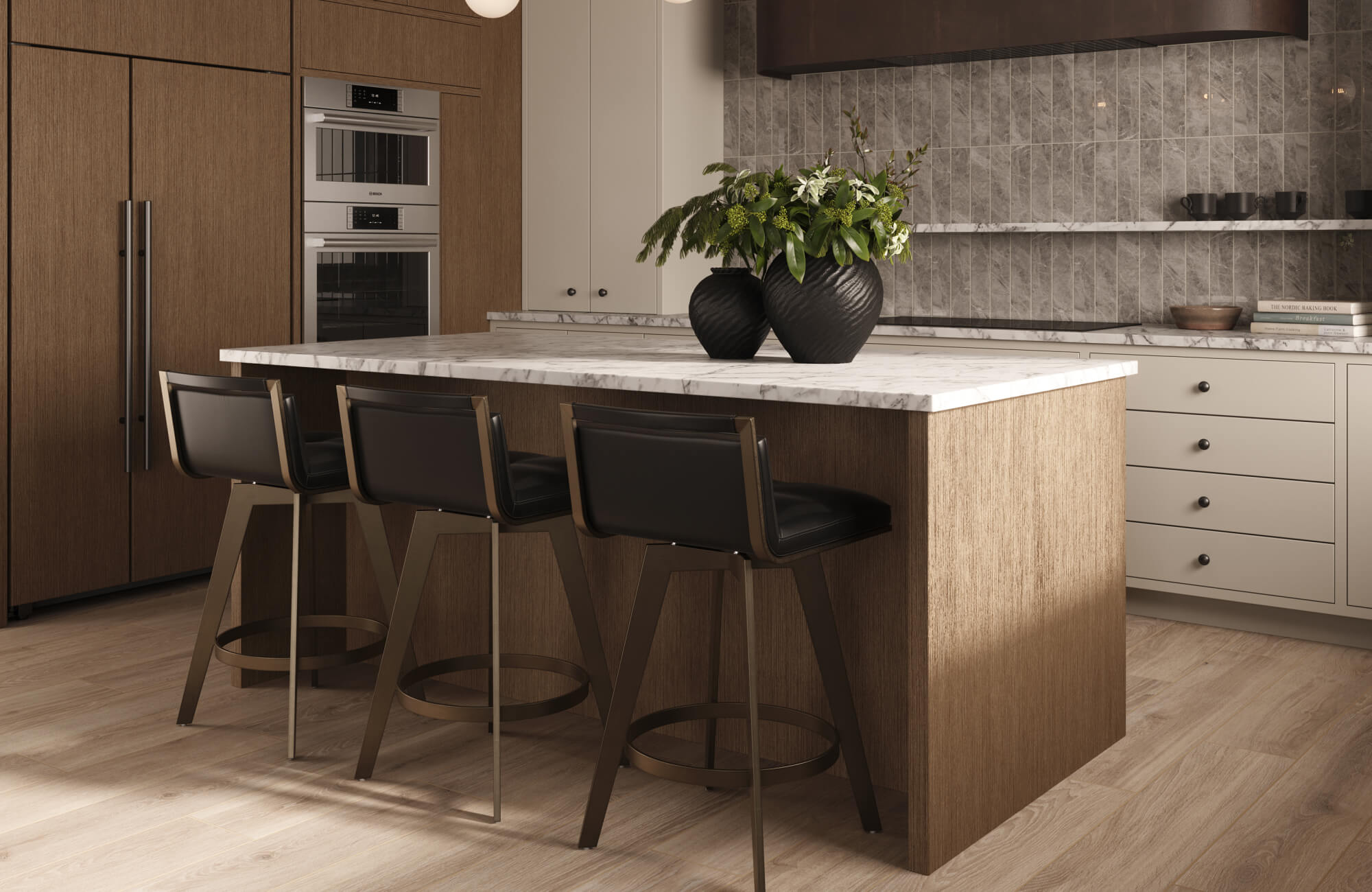
Low-back stools, such as our Shaffer Counter Stool in Charcoal Black Leather above, offer a bit more support while still keeping the island looking airy and approachable. They’re helpful when you want something comfortable for daily use without introducing too much visual weight. This style supports good flow around the island because the backs sit low enough not to block views. If you’re aiming for balance between comfort and openness, low-back options tend to hit that sweet spot.
High-back stools deliver the most presence and structure, which can make the kitchen feel more anchored and inviting. They’re a great fit when the island doubles as a dining area or a spot for guests to gather. The added support creates a more relaxed seating experience, which is especially helpful for longer conversations or meals. In larger kitchens, high-back styles also bring warmth and help define the island as a key gathering point.
Modern, Traditional, or Transitional Styles
Modern stools work beautifully when your kitchen leans clean and simple, especially if you like streamlined cabinetry and understated finishes. Their slim silhouettes help keep the space feeling open, which is useful in both small and large layouts. Because modern styles rely on clean geometry, they create a crisp visual rhythm around the island. This look works particularly well if you prefer a calm, uncluttered aesthetic.
Traditional stools add softness through curves, detailing, or textured materials, creating a sense of warmth that feels welcoming. They’re a strong option if your kitchen already includes wood tones or classic architectural elements. This approach helps balance more contemporary finishes by adding character without overwhelming the space. Traditional styles also make the island feel more like a gathering spot instead of a strictly functional surface.
Transitional stools sit comfortably between the two, making them ideal when your kitchen mixes modern elements with more classic features. They bring just enough detail to feel inviting while still keeping the overall look polished and cohesive. These styles are especially helpful when you want flexibility, since they pair well with a wider range of finishes and hardware. If your kitchen blends old and new, transitional stools help everything feel naturally connected.
Choosing Stools That Match or Contrast Your Island
Matching your stools to your island creates a seamless, coordinated look that feels calm and unified. This works especially well when your cabinetry has a strong color or material presence, since repeating it in the stools reinforces the design. A matching palette also helps the space feel more cohesive, making the island look like a natural extension of the kitchen instead of a standalone element. It’s a safe, polished option that suits both modern and traditional layouts.
Contrasting stools, on the other hand, add personality and visual variety in a way that feels intentional rather than chaotic. A darker stool against a light island brings depth, while a softer fabric seat can warm up a cool-toned kitchen. These contrasts help your island stand out as a feature without overwhelming the room. When chosen thoughtfully, contrasting stools let you introduce texture, color, or shape that enriches the space and adds a subtle layer of design interest.
Comfort Features You Should Consider Before Buying
Comfort can completely change how often you actually use your kitchen island stools, so it helps to think about the small details that affect daily sitting. The right mix of cushioning, ergonomics, and supportive features can make quick meals, conversations, and longer gatherings feel much more enjoyable.
Upholstered vs. Unupholstered Seats
Upholstered stools offer a soft, cushioned feel that works well if your island is a place for longer meals or casual work sessions. Fabrics and leathers add warmth and texture, too, which makes the seating area feel more inviting and comfortable to settle into. Unupholstered options, such as wood or molded plastic, are easier to clean because spills wipe away quickly without soaking into the material. These styles also fit well in kitchens where you prefer a cleaner, more minimal look.
Upholstered seats can help balance out a kitchen filled with hard surfaces since they introduce a softer visual element. Unupholstered stools, by comparison, keep maintenance simple and suit households that use the island mostly for quick bites or light prep. Thinking about how your space is used day to day helps you choose which option supports your lifestyle best. Both styles have advantages, so the right choice depends on comfort preferences and how much upkeep you want to manage.
Footrests, Swivel Seats, and Other Comfort Add-Ons
Footrests make a noticeable difference in comfort because they support your legs and prevent your feet from hanging uncomfortably. Many stools already include them, and some kitchen islands do as well, which gives you an easy way to sit in a more relaxed position. Swivel seats bring extra convenience by making it simple to turn toward the counter or another person without shifting the entire stool. This feature works especially well in busy or social kitchens where movement happens naturally.
Additional add-ons, such as shaped seat pans or gentle back support, can make stools feel more ergonomic during longer use. Swivel functions can help protect your flooring, too, because the stool does not need to be dragged as often. A comfortable footrest also encourages better posture, which you will appreciate during extended conversations or meals. With the right combination of features, your stools feel less like occasional seating and more like a daily go-to spot.
Seat Width and Depth for Comfortable Daily Use
Seat width plays a large role in how spacious and supportive a stool feels, especially when multiple people use the kitchen frequently. A wider seat gives you room to shift comfortably, while the right depth helps you sit upright without feeling pushed forward or leaning too far back. Finding a balanced size is important because it supports good posture and makes the stool feel more natural to sit in. This becomes even more helpful during longer meals or conversations where comfort really matters.
Choosing the correct width and depth also influences how the kitchen functions overall, since stools that fit well make the space easier to navigate. Larger stools can feel great but may overwhelm tighter layouts, so measuring ahead of time is always a smart step. When the proportions feel just right, people tend to gather and stay longer at the island, which gives the kitchen a more welcoming atmosphere.
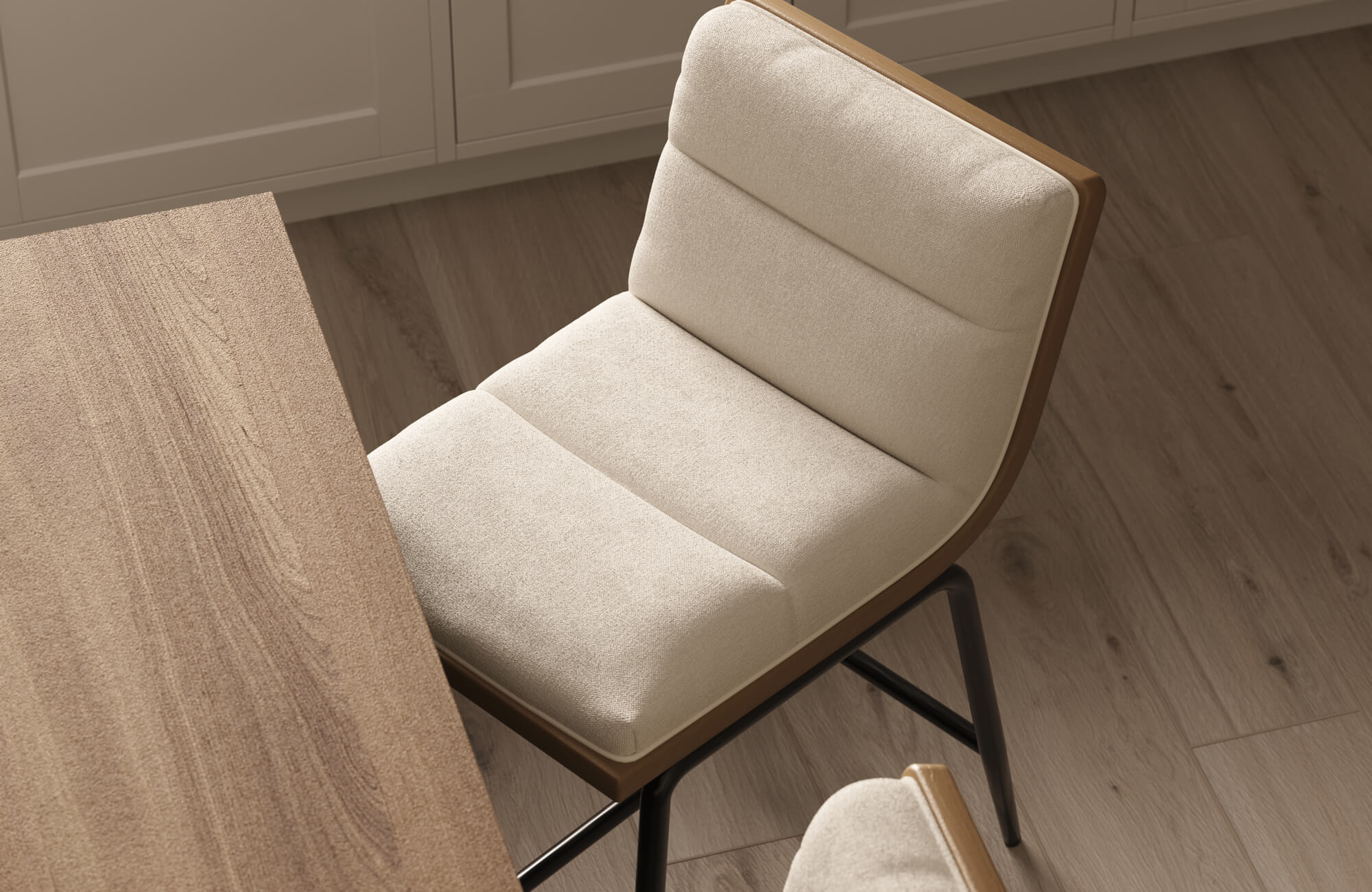
A great example of this is our Georgia Counter Stool in White, shown above. Its cushioned, tufted seat offers supportive depth and gentle contouring, so it’s easy to settle into whether you’re eating, working, or chatting at the island. The rustic oak frame and dark metal legs keep the stool feeling sturdy without looking bulky, giving you comfort without overwhelming the room. With its ergonomic shape and soft performance upholstery, it’s the kind of seating people naturally linger in.
Materials & Finishes That Work Best for Kitchen Seating
The materials you choose for your kitchen stools play a big role in how well they hold up to daily use, spills, and the natural wear that comes with an active home. It helps to consider durability, ease of cleaning, and how each finish interacts with the rest of your kitchen. Below, we’ll explore the materials and finishes that support long-term comfort and style without adding extra maintenance to your routine.
Wood, Metal, or Mixed-Material Frames
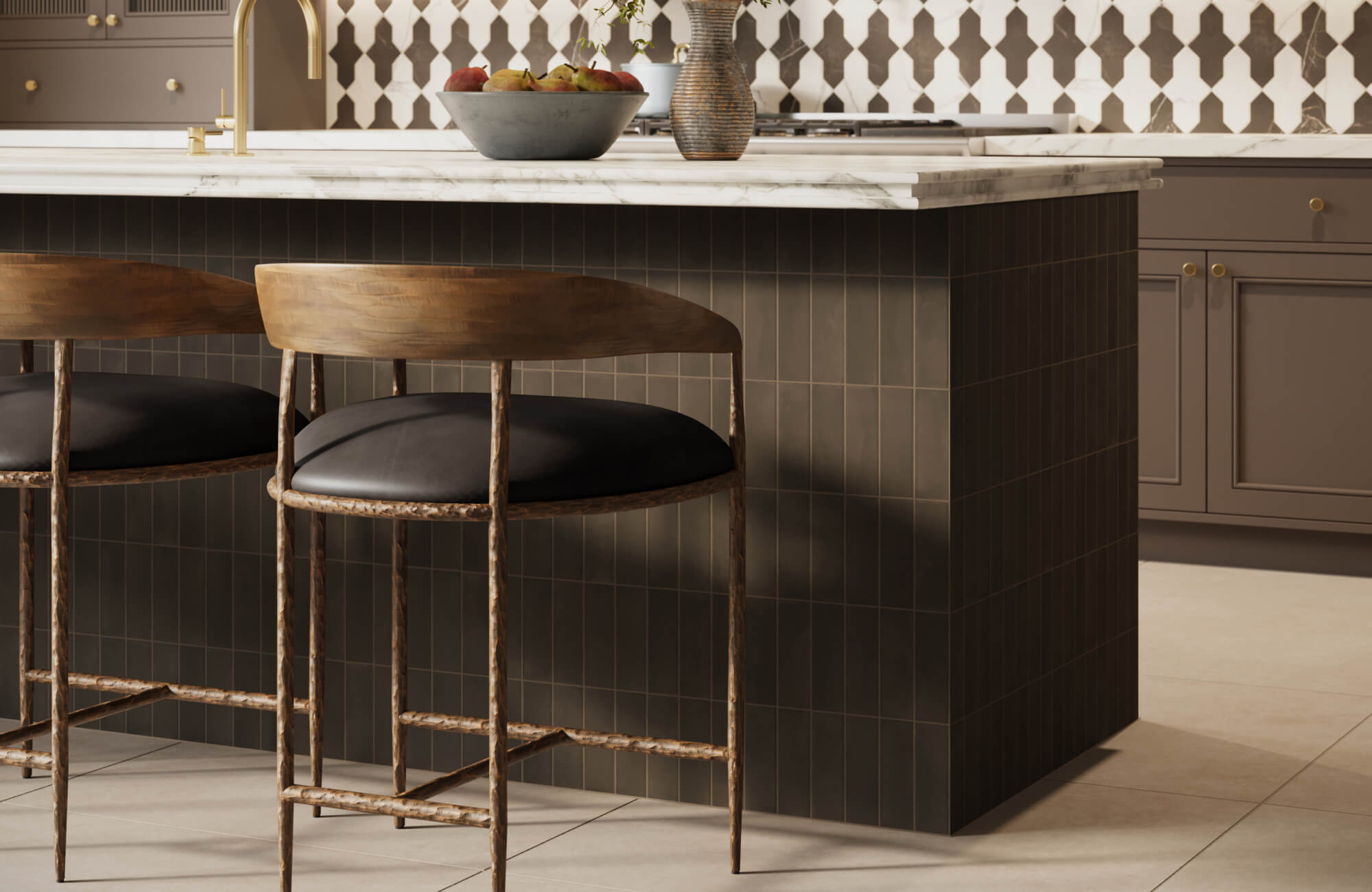
Wood frames bring warmth and a classic feel, which makes them a great fit for kitchens that already have natural tones or softer finishes. Metal frames, on the other hand, offer strength and a more modern look that works well in busy spaces because they’re sturdy and easy to maintain. Mixed-material stools combine both elements, giving you the warmth of wood with the durability of metal, which creates a balanced look that suits many design styles. Wood may require occasional care to keep it looking its best, while metal usually cleans up quickly with a simple wipe. If you want something versatile and long-lasting, mixed materials often provide the best of both worlds.
Fabric, Leather, or Performance Upholstery
Fabric seats add comfort and softness, making them appealing if you spend a lot of time at the island for meals or conversations. Leather brings a more refined look and becomes even more beautiful over time, although it may require a bit more care to avoid stains. Performance fabrics are especially practical because they resist spills and clean easily, which helps in households with kids or frequent entertaining. These fabrics also hold up well to daily use, so they continue looking fresh even after years of sitting. Thinking about how your kitchen is used each day helps you choose upholstery that stays comfortable and low-maintenance.
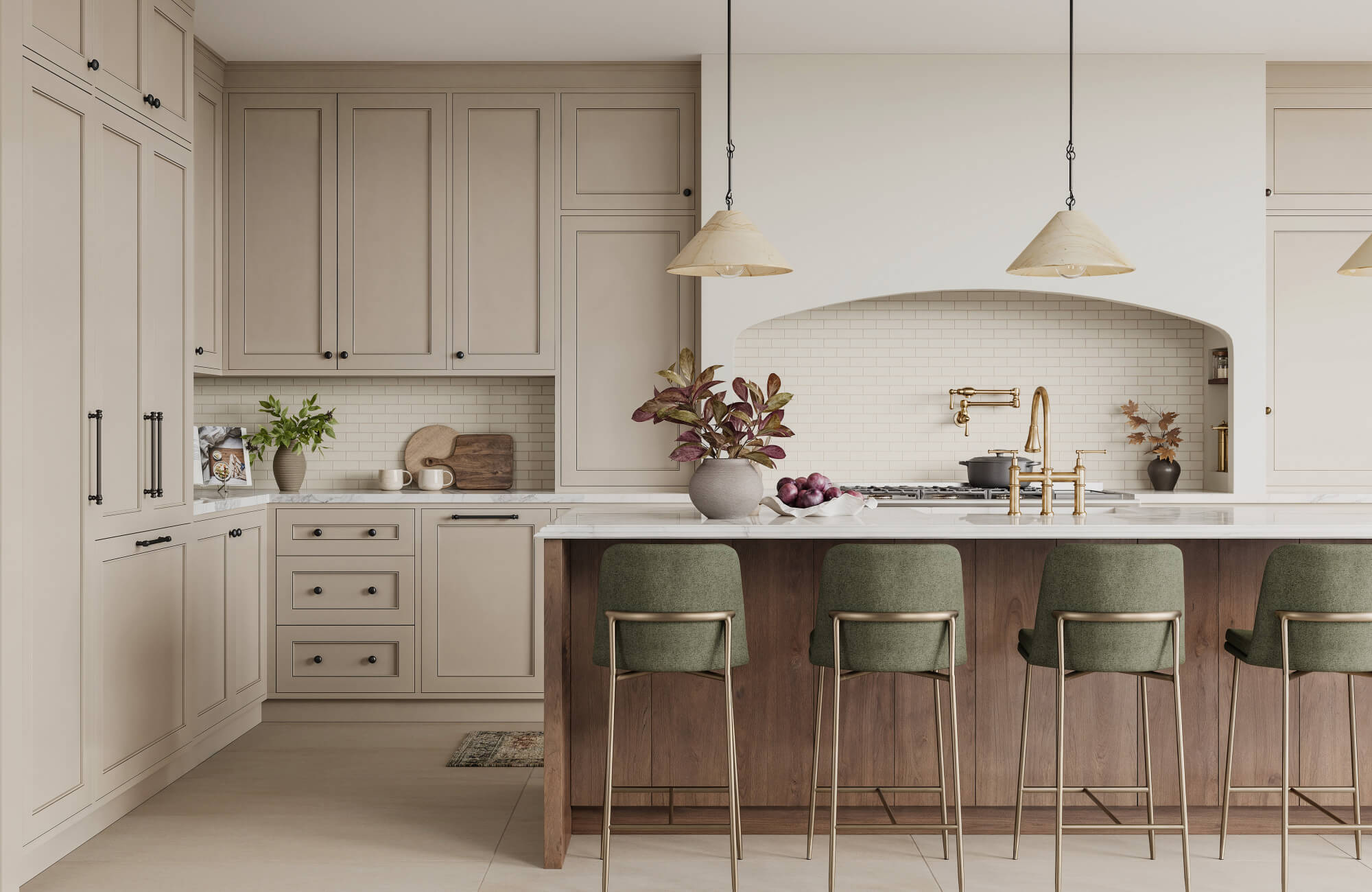
A great example is our Shaw Counter Stool in Bergen Olive, shown above. Its soft, textured fabric brings a comfortable, inviting feel to the island, adding warmth that balances the room’s harder surfaces. The rich olive tone introduces subtle color without overwhelming the palette, while the cushioned seat supports longer sitting and everyday use. It’s a practical blend of comfort and style that shows how the right upholstery can quietly elevate the entire kitchen.
Choosing Finishes That Coordinate With Your Hardware
Coordinating stool finishes with your hardware helps the entire kitchen feel more intentional and cohesive. Matching finishes, such as brushed nickel with stainless appliances or matte black with dark pulls, creates a streamlined look without feeling overly coordinated. You can mix finishes too, especially if the tones complement each other and share similar warmth or texture. This approach works well when your kitchen includes a variety of materials because it lets the stools blend naturally. When your finishes relate in a subtle way, the room feels pulled together without losing its personality.
Durability & Cleaning Considerations for Busy Kitchens
Durability matters in kitchens because stools tend to see daily use, spills, and constant movement. Hard materials like metal or sealed wood stand up well to busy mornings and frequent guests, which makes them practical for long-term use. Upholstery should also be chosen with cleaning in mind, since some fabrics absorb stains more easily than others. Performance materials and smooth surfaces are especially helpful because they wipe clean quickly and continue looking neat. When you choose materials that match your lifestyle, your seating stays comfortable, welcoming, and easy to care for.
How Many Stools Do You Really Need?
Figuring out the right number of stools for your kitchen island depends on how much room you have and how you want the space to function. A little planning goes a long way because proper spacing keeps the area comfortable, easy to move through, and visually balanced.
How to Space Stools for Comfort
Comfortable spacing usually comes down to giving each person enough elbow room so everyone can sit naturally without feeling cramped. Most kitchens do well with around 20 to 24 inches of space per stool, which keeps people from bumping into each other as they eat or talk. This spacing also helps the island look orderly because the stools line up evenly instead of feeling squeezed together. Allowing a little extra room can make long conversations or family meals feel more relaxed. When the spacing feels right, the island becomes a spot where people can gather comfortably throughout the day.
Choosing the Right Number Based on Island Width
The width of your island plays a big role in determining how many stools actually fit, so measuring the usable overhang first helps avoid guesswork. Wider islands often hold three or four stools comfortably, while smaller ones may only have room for two without feeling overcrowded. It helps to consider how much the countertop extends beyond the base because that’s the space people will actually be sitting under. Matching stool count to your island’s proportions also keeps the entire kitchen visually balanced. When the number feels right for the size, the island looks intentional rather than forced.
Allowing Enough Movement and Walkway Clearance
Movement around the island matters just as much as the seating itself because this area often serves as a high-activity zone for cooking and conversation. Leaving enough walkway space behind the stools makes it easier for people to pass by without disrupting anyone who’s seated. Most kitchens feel comfortable with at least 36 inches of clearance, although a bit more can help in layouts with heavier path flow. This spacing also prevents the island from becoming a bottleneck during busy times like meal prep. With clear walkways, your kitchen feels open, efficient, and easy to navigate.
Matching Stools to Your Kitchen Layout & Lifestyle
The right stools should feel like they belong in your kitchen, not just because they match your island but because they suit the way you live every day. Your layout, whether open or more defined, also shapes the kind of seating that will actually function well. Below, we’ll look at how lifestyle, flow, and daily habits influence the best stool choices for your home.
Best Stool Choices for Open-Concept Layouts
Open-concept layouts call for stools that look intentional from every direction, since they’re visible far beyond the kitchen. Designs with open frames or slimmer silhouettes help maintain a sense of flow between adjoining rooms. Coordinating colors or finishes can also tie the kitchen to nearby living areas, so everything feels connected. Swivel stools are often helpful too, because they let people turn easily toward conversations happening around the space. This kind of thoughtful pairing helps your island feel like a natural extension of the entire layout.
Family-Friendly Features for Daily Use
In homes where the kitchen is used constantly, choosing stools that can handle everyday activity becomes especially important. Durable materials, sturdy legs, and stable bases help them hold up to kids climbing on and off throughout the day. Cushioned seats or upholstered backs offer a little extra comfort during meals, homework time, or quick snacks. Performance fabrics and wipeable surfaces make cleaning easier, which parents usually appreciate. When seating feels practical and comfortable, it becomes a reliable part of the family routine.
Stools for Entertaining and Hosting
For people who love entertaining, picking stools that encourage easy conversation makes a noticeable difference. Swivel bases or low-back designs help guests interact naturally without feeling boxed in. Soft textures, warm finishes, or subtle curves can also make the seating feel more welcoming for longer gatherings. Matching the stools to your home’s overall style keeps the whole room feeling cohesive during parties. This creates an inviting setup that supports everything from casual hangouts to more polished hosting moments.
Seating Choice That Supports Your Kitchen Perfectly
Choosing the right stools can really change how your kitchen feels, not just how it looks. When the height, comfort, and style all line up, the island becomes a place people naturally gather rather than a spot they pass by. It’s surprising how much the right seating can influence the rhythm of everyday meals, quick chats, or late-night snacks. Once everything feels balanced, the whole kitchen takes on a more welcoming energy.
If you want help finding stools that match your island, layout, and lifestyle, our design team can guide you through options that feel tailored to your home. We can walk you through proportions, finishes, comfort features, and placement so everything comes together smoothly. Book a design consultation today and build a kitchen that feels balanced, welcoming, and truly yours.
Follow us on Instagram
@EDWARD.MARTIN
)
)
)
)
)
)
)
)
)
)
)
)
)
)
)
)