The search for the perfect makeup lighting has become a defining part of modern bathroom design, especially as homeowners invest more in personalized beauty spaces. With lighted mirrors gaining popularity and traditional vanity lights remaining a long-trusted standard, the debate over which option delivers the most accurate, flattering, and functional illumination continues to evolve.
What many overlook is that good makeup lighting requires more than brightness alone. It relies on direction, color accuracy, and consistency, all working together to create a true reflection of how makeup will appear in natural environments. By understanding how each lighting type behaves and what it contributes to both your routine and your bathroom’s design, you can make an informed decision that enhances everyday use while elevating the overall aesthetic.

Why The Direction Of Light Matters Most For Makeup
Before comparing different lighting products, it helps to understand the single factor that influences makeup accuracy more than anything else: the direction of the light. How light hits the face shapes everything from shadow placement to color perception, making this the foundation of any effective beauty setup.
The Problem With Overhead Vanity Bars
Overhead vanity bars have long been considered the standard in bathroom design, yet their positioning often creates challenges for anyone applying makeup. Light coming from above falls across the face unevenly, resulting in shadows beneath the eyes, nose, and chin, areas where precision is crucial. These shadows make it easy to apply too much concealer in an attempt to compensate, or to under-blend bronzer and contour because the lighting exaggerates contrast. Even high-quality overhead fixtures can distort the appearance of texture and color, leading to results that look markedly different once you step outside or into a room with balanced illumination. The design intent behind overhead bars was once largely utilitarian, built for general visibility rather than cosmetic accuracy, and this becomes evident the moment natural light competes with the artificial overhead source.
How Front Facing Light Eliminates Shadows
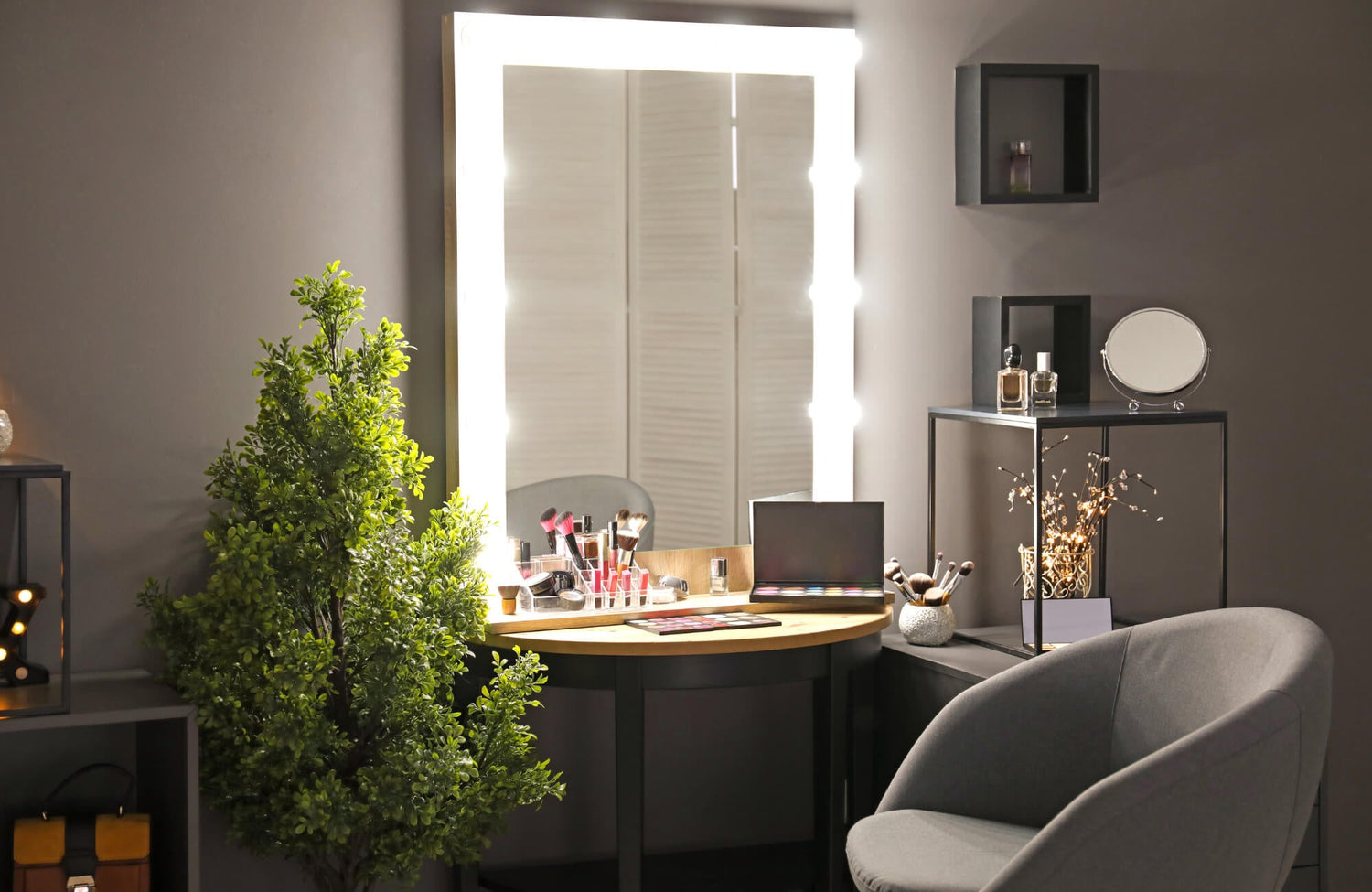
Front-facing illumination, which is the defining advantage of a lighted mirror, surrounds the face with even, directional light that eliminates the harsh shadows overhead fixtures often cast. By distributing light at eye level, a lighted mirror ensures that every part of the face receives consistent illumination, revealing the true relationship between tones and textures. This setup mirrors the conditions of natural daylight more closely than traditional fixtures, making it easier to blend foundation seamlessly, match undertones accurately, and evaluate symmetry with precision. The result is a makeup application process that feels more intuitive and forgiving, reducing the guesswork that comes from shifting head positions or stepping back to check whether uneven lighting has created false impressions.
The Consistency Of The Light Source
Another advantage of lighted mirrors is the uniformity of their illumination. Because the LED panels extend across the mirror’s perimeter or sit behind a diffused surface, the light spreads evenly without hotspots or directional gaps. Consistency matters deeply when assessing coverage and detail work, particularly around the eyes where uneven brightness can obscure fine lines or exaggerate shadows. Traditional vanity lights often rely on multiple bulbs, each susceptible to slight differences in color temperature or brightness as they age. These variations can subtly distort the face and make accurate evaluation more challenging. With integrated LED lighting, the source remains stable, cohesive, and predictable, creating the kind of controlled environment that supports flawless execution.

Understanding Color Accuracy And Brightness Specs
Once you understand how direction affects your reflection, the next step is looking at the quality of the light itself. Color temperature, brightness, and accuracy determine whether your makeup reads true to life, helping bridge the gap between bathroom mirrors and real-world environments.
The Importance Of Kelvin Temperature For Realism
Kelvin temperature determines whether the light appears warm, cool, or neutral. For makeup application, a temperature that mimics natural daylight, typically between 3000K and 4000K, offers the most realistic results. Lighted mirrors often fall within this range intentionally, ensuring a balance between clarity and comfort. A warm light may soften the complexion but can distort the perception of undertones, making color matching more difficult. Cooler light may appear bright and clinical but can wash out the skin or create a stark contrast that is not flattering or accurate. Homeowners who rely solely on traditional vanity lights may struggle with inconsistency, as different bulbs or fixtures can deviate significantly from the ideal temperature. A lighted mirror removes this uncertainty with a calibrated color output designed for cosmetic realism.
Why High CRI Is A Non Negotiable Feature
CRI, or Color Rendering Index, measures how accurately a light source reveals colors compared to natural sunlight. A high CRI rating, ideally above 90, ensures that your skin tone and makeup pigments appear true to life. This is especially important when working with foundation, blush, lip color, or eyeshadow, where subtle differences make a meaningful impact on the final look. Lighted mirrors typically integrate LEDs engineered with high CRI values because their core purpose is visual clarity. Traditional vanity fixtures may or may not meet this standard depending on the bulbs used, leading to situations where colors shift slightly warmer, cooler, or duller than intended. A high-CRI lighted mirror supports more confident decision-making, reducing the likelihood of color-matching errors and enhancing the overall makeup experience.
The Benefit Of Integrated Dimming Technology
Dimming capability is frequently overlooked, yet it significantly influences the creation of adaptable lighting conditions. A fully illuminated lighted mirror offers excellent clarity for detailed application, but adjusting the brightness allows you to simulate various environments you might encounter throughout the day. Lower levels help mimic soft ambient restaurant lighting, while full brightness may reflect outdoor daylight conditions more effectively. This ability to tailor the light gives homeowners greater control and ensures that their makeup translates seamlessly across different settings. Traditional vanity fixtures can include dimmable bulbs, but the experience is often less refined, with flickering, limited adjustment range, or inconsistent warmth as brightness changes. Integrated dimming within a lighted mirror preserves color accuracy and stability at every level while supporting personalized comfort, especially when using a model like Edward Martin’s Jenny 37" LED Vanity Mirror in White, shown in the image above, which demonstrates how smooth, responsive dimming elevates the entire lighting experience.

Comparing The Aesthetic Impact On Your Bathroom Design
After exploring how lighting affects performance, it’s equally important to consider how each option shapes the room around it. The visual presence of a lighted mirror or vanity fixture can transform a bathroom’s atmosphere, influencing everything from spaciousness to overall style.
Streamlining Small Spaces With An All In One Solution
Lighted mirrors contribute significantly to a bathroom’s visual cohesion, especially in smaller rooms where clutter can feel magnified. By combining lighting and reflection into a single piece, they reduce the need for additional hardware and create a clean, uninterrupted wall surface. This streamlined look supports modern design principles where minimalism and function come together seamlessly. Because the lighting is built into the mirror rather than projecting into the room, the space feels more open and balanced. Homeowners looking to maximize every inch of a compact area often appreciate how a lighted mirror eliminates the visual weight of protruding fixtures while still delivering ample illumination for both grooming and daily routines.
The Decorative Value Of Vanity Sconces
Although lighted mirrors excel in functional clarity, vanity sconces provide a decorative opportunity that can enhance the overall character of a bathroom. Sconces introduce architectural interest through shape, finish, and placement, allowing homeowners to express personal style more overtly. This visual impact becomes even clearer when you look at the image above, where elements like Edward Martin’s Tristan Square Mirror in Rustic Black and the softly glowing Emmery 29" LED Vanity Light in Brushed Gold/Opal Glass work together to warm the room with an inviting glow that contributes to ambience, even if they do not always offer the ideal angle for makeup. Sconces also offer a wide range of options from traditional and transitional to ultra-modern, ensuring they can complement almost any interior aesthetic. Their presence adds a sense of intentional layering and helps tie together other elements in the space, such as faucets, hardware, or cabinetry finishes.
Creating A High End Hotel Vibe
Lighted mirrors have become emblematic of luxury hospitality design, where environments are crafted to feel both indulgent and effortlessly functional. Installing one in a residential bathroom brings this high-end sensibility home, transforming daily rituals into experiences that feel curated and elevated. The soft, even illumination around the mirror creates a glow reminiscent of professional dressing rooms, while the sleek surface and concealed LED technology contribute to a sense of refined sophistication. When paired with thoughtful material choices like stone, polished metal, or warm wood accents, the combination can evoke the atmosphere of a spa or boutique hotel suite. This design impact goes beyond utility, influencing how the entire room feels and how homeowners engage with it.

Choosing The Right Setup For Your Specific Needs
With both functional and aesthetic factors in mind, the final step is deciding what works best for your home and lifestyle. Your choice ultimately comes down to installation requirements, personal preferences, and how you want your lighting to support daily routines moving forward.
Evaluating Your Electrical Setup And Budget
Deciding between a lighted mirror and traditional vanity lights often begins with assessing the existing conditions of your bathroom. A lighted mirror typically requires a direct electrical connection behind the wall, which may involve additional wiring if the space was not originally designed for it. While the installation investment may be higher, the long-term energy efficiency of LED technology and the extended lifespan of integrated lighting can offer lasting value. Traditional vanity fixtures are generally easier and less expensive to install or replace, making them an appealing choice for homeowners working within a tighter budget or undertaking minor refreshes rather than full remodels. Evaluating the balance between immediate cost and long-term performance helps ensure that the chosen lighting solution aligns with both practical needs and design aspirations.
When To Stick With Traditional Vanity Lights
Despite the advantages of lighted mirrors, there are circumstances where traditional vanity lights remain the preferred choice. Bathrooms with architectural features that frame the mirror, such as built-in niches or decorative molding, may not be suitable for integrated lighting. Homeowners who enjoy changing fixtures regularly to refresh the look of the room may also prefer the flexibility of swap-in sconces or vanity bars. In spaces like the one shown above, pieces such as Edward Martin’s Posey Wall Sconce in Aged Brass, paired with the elegant Esmeralda Round Mirror in Polished Brass and the sculptural Aida Pendant in Aged Brass, demonstrate how some people simply enjoy the warmth and decorative charm of exposed-bulb fixtures or shaded sconces, which contribute a sense of personality and atmosphere that differs from the streamlined quality of a lighted mirror. When makeup is not the primary concern and the lighting needs lean more toward versatility or ambiance, traditional fixtures continue to serve effectively.
The Ultimate Solution Layering Both Light Sources
For homeowners who want the best of both worlds, layering a lighted mirror with complementary vanity sconces provides an elevated solution where function and aesthetics coexist beautifully. The lighted mirror delivers precise, shadow-free illumination for makeup, grooming, and personal care, while the sconces contribute warmth, dimension, and decorative interest. This approach supports a lighting plan that adapts to various needs throughout the day, from bright morning rituals to calm evening routines.
Layering also enhances depth and visual balance in the room, creating an environment that feels both designed and lived-in. When executed thoughtfully, the combination of sources results in a bathroom that performs at a high level without compromising style or comfort, and homeowners who feel unsure about pairing the right pieces can benefit from Edward Martin’s design consultation, which offers personalized guidance for everything from product selection to coordinating tiles, rugs, or furniture. For additional support or specific product questions, you can always contact Edward Martin for expert assistance tailored to your project.
The Verdict for the Modern Beauty Routine
The heart of the debate between lighted mirrors and vanity lights rests on how well each supports accurate, comfortable, and satisfying makeup application. Lighted mirrors offer unrivaled clarity through shadow-free, front-facing illumination, consistent LED performance, and calibrated color accuracy that mirrors natural daylight. They streamline smaller spaces and introduce a refined, high-end aesthetic that brings a sense of luxury to everyday moments.
Traditional vanity lights contribute decorative value, flexibility, and warmth, making them an appealing choice for those who prioritize ambiance or design versatility. Ultimately, the most effective solution depends on the homeowner’s priorities, but for anyone committed to achieving makeup that looks flawless in any environment, a lighted mirror stands as the superior functional tool. When combined with thoughtfully selected sconces, it creates a complete lighting ecosystem that enhances both beauty routines and bathroom design with equal sophistication.