The modern dining room has become more than a place to eat; it now serves as a multifunctional hub for gathering, working, hosting, and connecting. With these expanded roles, homeowners have grown more intentional about furniture choices that influence both aesthetics and day-to-day living.
Among the most debated pieces is the dining table, particularly whether the oval silhouette, once considered traditional, still holds its place in today’s design-forward homes. As interiors continue shifting toward softer lines, improved functionality, and a greater sense of flow, the oval table has quietly reemerged as a favorite for those seeking a blend of modern elegance and practical comfort.

The Aesthetic Shift Toward Organic Curves
As modern interiors move toward softer lines and more natural silhouettes, oval dining tables have reemerged as a stylish way to bring warmth and fluidity into the home. This shift toward organic curves helps balance the rigid geometry common in contemporary architecture.
Breaking Up the Boxy Room Geometry
Many contemporary homes lean heavily on rectilinear architecture. Straight walls, squared-off kitchens, sharp cabinetry frameworks, and streamlined sofas create a foundation that, while clean, can quickly feel rigid if left unbalanced. An oval dining table introduces a contrasting geometry that softens these dominant lines. Its curved perimeter interrupts the monotony of hard edges, creating a visual rhythm that feels more inviting and less predictable. This effect becomes especially valuable in open-concept spaces where the dining zone is not enclosed. The absence of corners allows the eye to glide around the table smoothly, producing a more harmonious composition within the larger room.
The Rise of Organic Modernism
The continued rise of organic modernism has pushed design preferences toward forms inspired by nature, gentle curves, fluid silhouettes, and tactile finishes. Oval tables sit naturally within this movement because they embody the same sense of effortless elegance that defines organic design, a quality reflected in Edward Martin’s Anastasia 59" Dining Table in Taupe shown in the image above. Unlike traditional oval styles that leaned ornate or formal, today’s versions often feature minimalist profiles, matte wood finishes, and sculptural bases that align with modern sensibilities. They create a presence that is refined but not rigid, and sophisticated without feeling showy. In spaces where homeowners want warmth without heaviness, an oval table often strikes the perfect balance.
Visual Lightness Versus Heavy Rectangles
Rectangular tables, especially those crafted from dense woods, tend to introduce visual weight that anchors the room but can also overwhelm smaller or more minimally styled interiors. Oval tables offer a lighter impression purely through shape. Without sharp corners defining each boundary, they feel more fluid, allowing light to move around them more freely. This sense of lightness is not only aesthetic but psychological; the room feels more breathable and less crowded. Even in larger dining areas, the oval silhouette supports a more graceful atmosphere, creating a focal point that complements modern décor without imposing on it.

Solving the Space and Flow Dilemma
As more homeowners embrace these softer forms, the practical advantages of an oval table become just as compelling as its visual appeal. Beyond aesthetics, its rounded edges and flexible footprint solve many of the everyday layout and circulation challenges found in modern homes.
Navigating Tight Walkways and Corners
Every dining space has unique spatial challenges, especially in compact urban homes or open layouts where circulation paths weave between functional zones. Oval tables are inherently more forgiving in these scenarios, particularly designs like Edward Martin’s Alice 54" Round Dining Table in Light Oak, which appears in the image above and illustrates how rounded edges ease movement. Their curved perimeter eliminates the bottleneck effect created by rectangular corners, making it easier to slide past the table without collision. This smoother navigation matters not only for everyday use but also when hosting gatherings where multiple people move around simultaneously. The absence of corners expands the usable perimeter, allowing the table to sit closer to walls or adjacent furniture without feeling obstructive.
The Pedestal Base Advantage
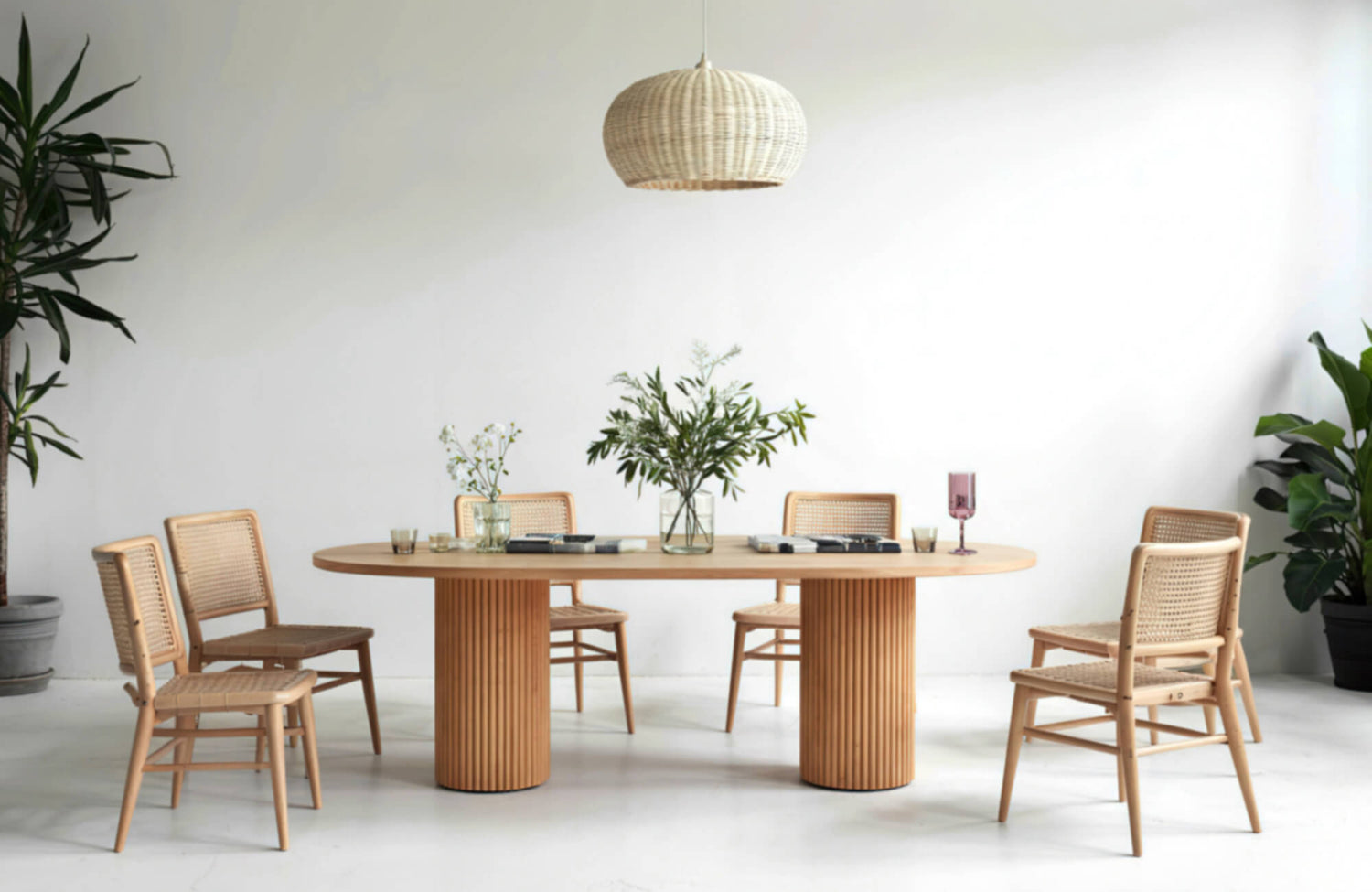
A defining feature of many modern oval tables is the pedestal base, which enhances both functionality and comfort. Traditional four-leg designs often force diners to negotiate leg placement, disrupting seating flexibility. A pedestal base removes these obstacles entirely, creating unobstructed space beneath the tabletop. This design choice also reinforces visual openness because the eye sees fewer structural elements, allowing the table to feel lighter and more sculptural. In smaller dining rooms, this becomes a strategic advantage: the table appears less bulky, and users can slide in and out more freely without bumping into legs.
Fitting More People in Less Space
One of the most practical benefits of an oval dining table is its ability to accommodate more people comfortably. With no corners to restrict placement, chairs can be added fluidly along the curve, and each person enjoys more elbow room compared to a rectangular layout of similar length. The tapered ends allow additional seating during larger gatherings while maintaining visual balance. For families or hosts who frequently welcome guests, the oval shape offers the flexibility of expanded capacity without requiring a significantly larger footprint, which is especially valuable in modern homes where dining rooms must multitask alongside living and kitchen areas.

How Shape Impacts Social Dynamics
Once the functional benefits come into focus, it becomes clear that the oval shape also changes the way people interact around the table. Its continuous curve naturally supports easier conversation, more democratic seating, and a more welcoming atmosphere overall.
Eliminating the Head of the Table
The psychology of seating often dictates the tone of a meal. Rectangular tables naturally establish hierarchy through their head positions at opposite ends, which can subtly influence the social atmosphere. Oval tables remove this dynamic entirely. With no defined head, the arrangement feels more democratic, encouraging open interaction rather than directing attention toward a single host. This creates a more relaxed environment, ideal for casual dinners, collaborative discussions, or family meals where the goal is shared connection rather than formality.
Improving Sightlines for Conversation
The continuous curve of an oval table enhances sightlines across the surface, allowing everyone to engage more easily in group conversation. That openness is exemplified by Edward Martin’s Leonardo 59" Dining Table in Brown, visible in the image above, which demonstrates how a fluid silhouette keeps diners connected. Unlike long rectangular tables where distance and angles impede visibility, oval shapes allow each person to see more of the group without leaning or adjusting awkwardly. This makes discussions feel more fluid and natural. The shape also reduces the physical and psychological distance between diners, which contributes to a warmer, more inviting dining experience.
The Versatility for Solo Use
Oval tables are not only social assets; they serve individuals exceptionally well. When used for solitary activities, working from home, enjoying morning coffee, or spreading out personal projects, the curve offers a comfortable and ergonomic workspace. The rounded edges eliminate the sensation of being boxed in, and the expansive middle section provides ample surface area without feeling oversized. This versatility is one reason homeowners increasingly seek multifunctional dining setups that support dynamic daily routines.

Styling Strategies for a Modern Look
With aesthetics, practicality, and social flow working in harmony, the final step is understanding how to style an oval table so it feels fully integrated into a modern home. Thoughtful choices in rugs, seating, and lighting can elevate the table’s presence and highlight its sculptural silhouette.
The Rectangle vs Oval Rug Debate
A common styling question arises when pairing an oval table with a rug: should the rug mirror the table’s shape or contrast with it? Both approaches can feel modern when executed thoughtfully, especially when paired as shown in the image above with Edward Martin’s Alice 84" Oval Dining Table in Light Oak resting over the McGowan Rug in Moss / Sand. A rectangular rug establishes structure and grounds the dining zone with clean lines, providing a geometric counterpoint to the curved tabletop. This pairing often works well in open-concept layouts where the rug helps define boundaries. An oval rug, on the other hand, reinforces the softness of the table’s silhouette and creates a cohesive, organic look. It feels especially elegant in smaller rooms where maintaining a sense of gentle movement is desired. The key is ensuring the rug is large enough that all chairs remain comfortably placed on it, preserving both aesthetics and function.
Mixing Chair Styles for Eclectic Charm
Modern styling embraces individuality, and oval tables adapt beautifully to eclectic seating combinations. Their softened contour pairs well with both angular and curved chair designs, much like the mix seen in the image above featuring Edward Martin’s Rita Dining Chairs in Taupe alongside the Genevieve Counter Stool in Light Oak. The absence of corners reduces symmetry expectations, which means mismatched chairs feel intentional rather than disjointed. This flexibility allows the dining set to evolve over time, whether through the addition of upholstered host chairs, sculptural mid-century pieces, or minimalist designs that highlight negative space. The oval table becomes the unifying element that ties the variation together.
Lighting That Complements the Curve
Lighting becomes a key element in highlighting the modern elegance of an oval dining table. A linear chandelier draws attention to the table’s length and reinforces contemporary styling without overwhelming the curve, similar to how Edward Martin’s Reece Linear Lighting in Aged Brass works with the space in the image above. Conversely, a round or oval pendant like the Otis Pendant in Aged Brass creates a soft, centralized glow that mirrors the table’s shape. The gentle overlap of light enhances the organic quality of the surface, making the dining zone feel more intimate. The key is scale: the fixture should span roughly one-half to two-thirds of the table’s length to maintain proportion and visual harmony. When lighting and table shape work in concert, the result is a dining space that feels cohesive, welcoming, and architecturally elevated.
The Future of Dining is Fluid
Oval dining tables have reentered modern design not as a trend but as a thoughtful response to how people live today. Their organic silhouette softens rooms dominated by straight lines, and their fluid geometry improves both spatial flow and seating flexibility. They encourage better conversation, dissolve hierarchical seating patterns, and adapt seamlessly to the multifunctional demands of contemporary homes. When styled with complementary lighting, mixed seating, and intentional rug placement, they become a timeless centerpiece that elevates the entire dining experience, especially when paired with personalized guidance available through Edward Martin’s design consultation for homeowners seeking clarity in their selections.
For those looking to blend sophistication, comfort, and effortless modernity, the oval dining table remains a compelling choice, one that reflects not only current design shifts but a broader movement toward fluid, human-centric living. And as interiors continue evolving toward warmth and organic expression, contact Edward Martin for tailored recommendations, whether you need help comparing furniture styles, choosing the right rug, or coordinating materials, to move forward with confidence.