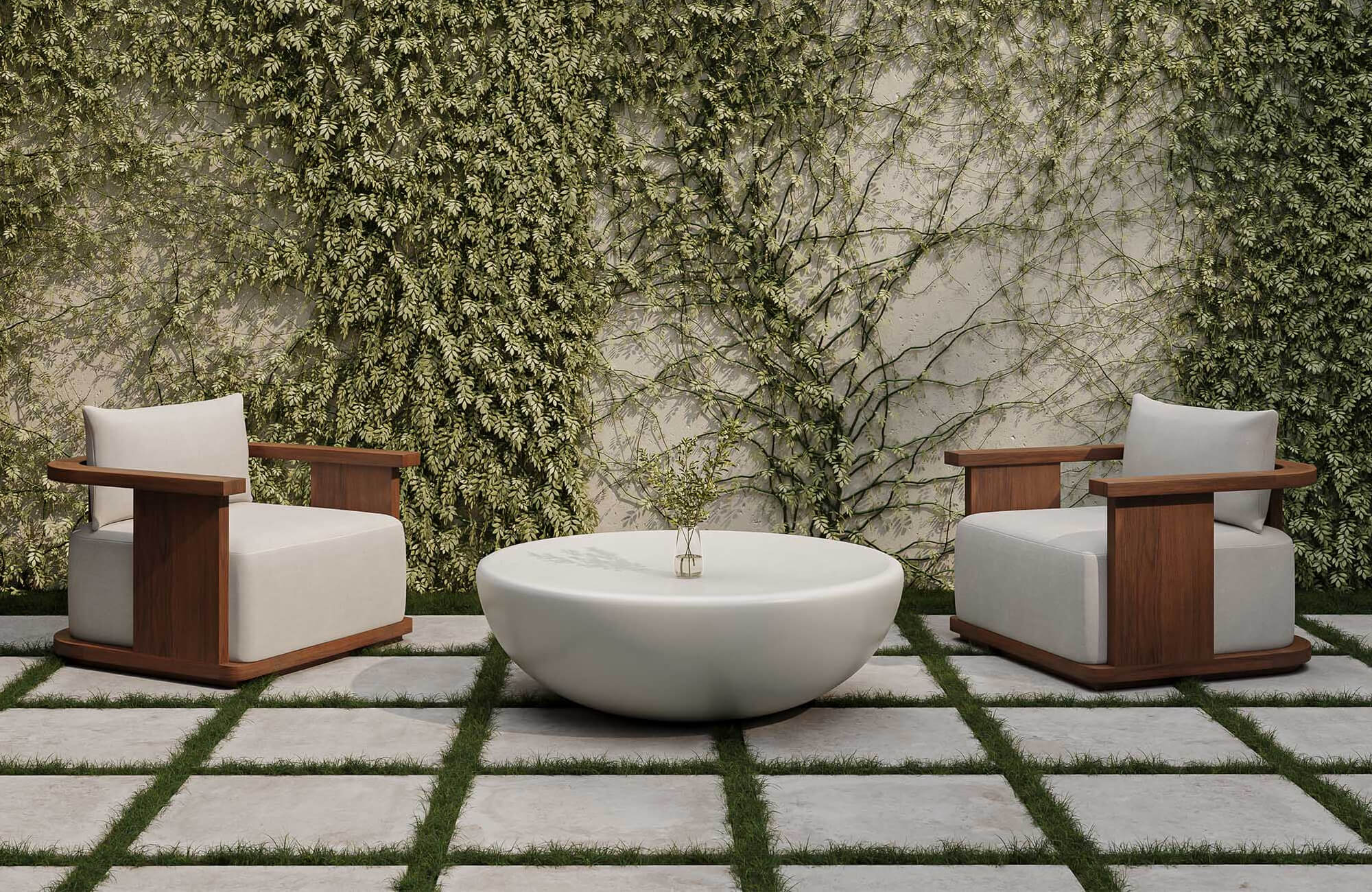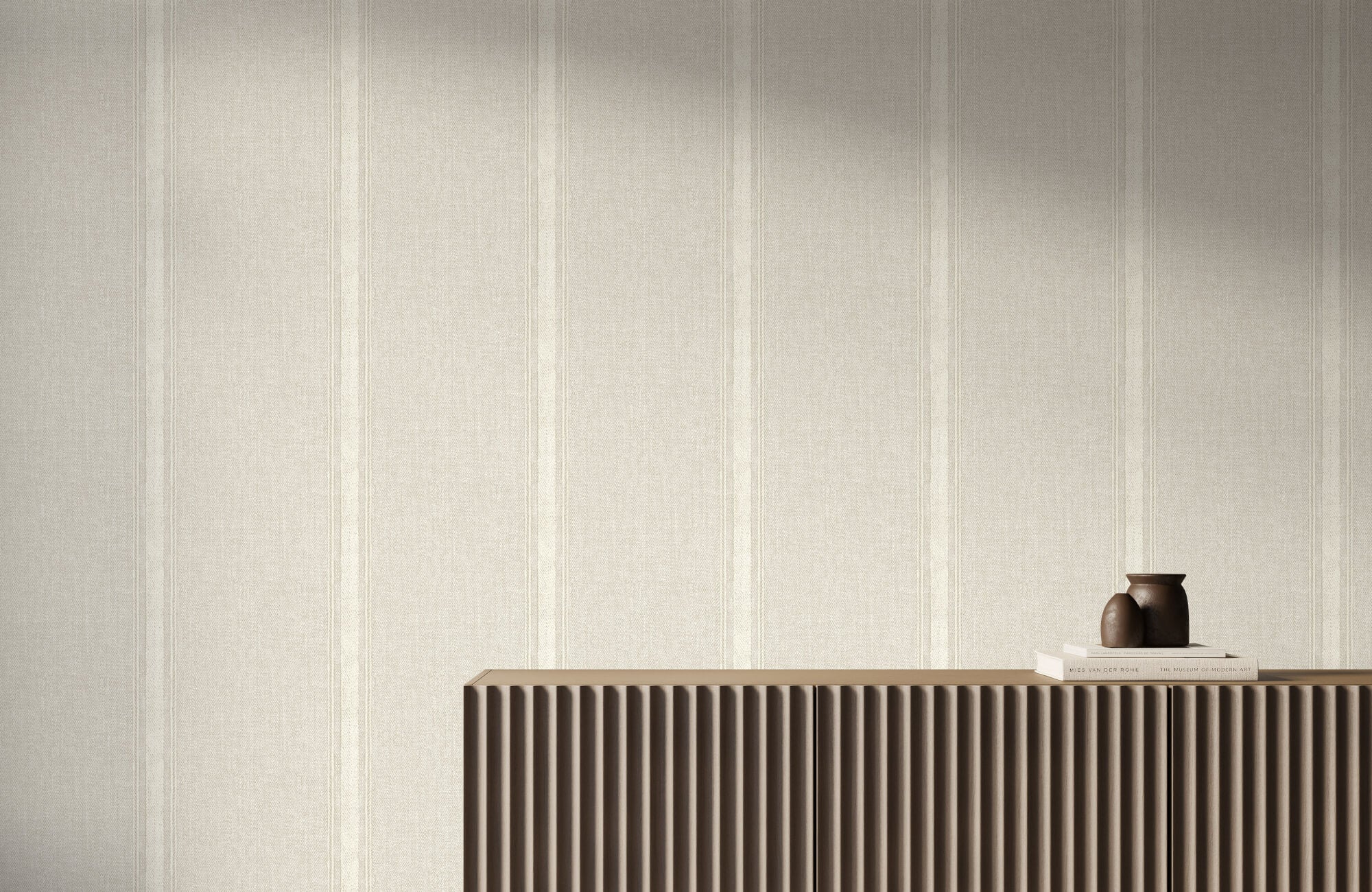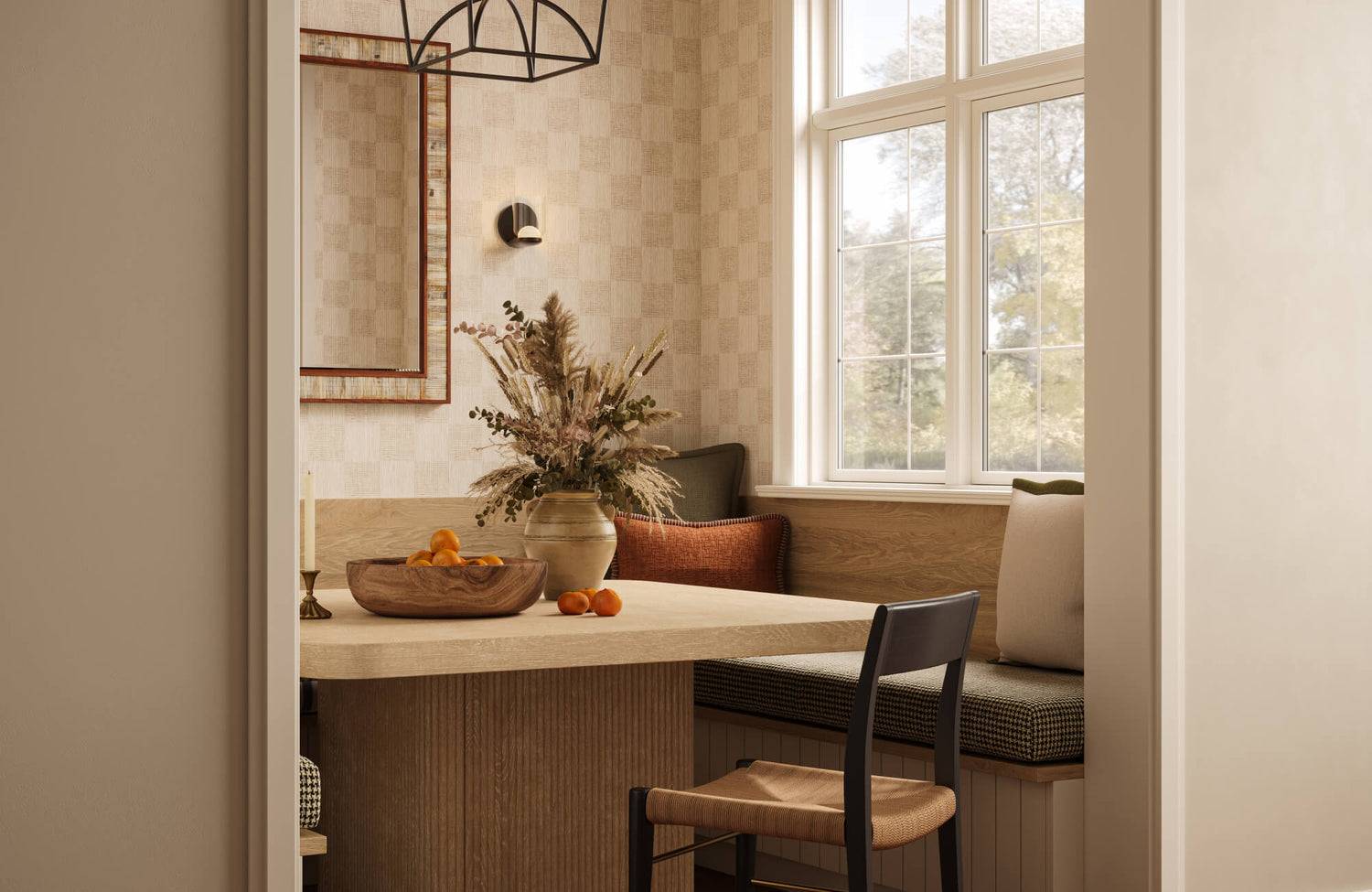
A room can have the right sofa, a well-sized rug, balanced lighting, and carefully chosen decor, yet still feel unresolved. Often, the issue is not the furniture plan or the color palette. It is the walls. When the largest vertical surfaces in a room remain visually flat or disconnected from the rest of the design, the space can feel underdeveloped, even when every major furnishing is already in place.
Modern wallpaper offers a more dimensional way to complete those surfaces. Rather than serving only as decoration, it can add texture, pattern, rhythm, and color continuity that make a room feel considered from floor to ceiling. Because walls shape so much of a room’s visual field, treating them with intention can change how finished, layered, and cohesive the entire space feels. It helps connect materials, define focal points, and give walls a more intentional relationship to the rest of the home.

Selena 55" Outdoor Dining Table in Cream, Yanna Dining Chair in Matte/Bone, and Finn Pendant in Aged Brass create a soft, rounded counterpoint to the room’s vertical striped wallpaper and framed artwork.
What Makes a Room Feel Finished in the First Place?
Before explaining the role of wallpaper, it helps to define what “finished” actually means in interior design. A finished room is not simply a room with enough furniture or accessories. It is a space where surfaces, proportions, textures, and focal points feel deliberately composed. This section establishes that foundation so modern wallpaper can be understood as a design tool rather than a decorative afterthought.
A Finished Room Has Visual Cohesion
A room feels finished when its parts appear to belong to the same visual story. The wall color relates to the rug. The lighting finish makes sense with the hardware. The artwork, upholstery, tile, wood tones, and decorative accents do not need to match, but they should feel connected by a clear palette or material logic.
Modern wallpaper can strengthen that connection by repeating or softening colors already present in the room. A tonal pattern might pick up the warmth of oak furniture, the coolness of marble-look tile, or the muted color of a hand-knotted rug. A subtle geometric print can echo the linear shape of a mirror, console, or architectural opening. Even a quiet textured wallcovering can help a wall feel less separate from the room’s furnishings.
This is especially useful in spaces that feel “almost done.” The individual pieces may be well chosen, but the walls may not yet participate in the composition. Wallpaper can bridge that gap by making the vertical plane part of the same design vocabulary.
A Finished Room Has Layering and Depth
Layering is one of the clearest differences between a furnished room and a finished one. A furnished room may have the necessary pieces. A finished room has depth: varied surfaces, tactile contrast, and enough visual dimension to hold interest without becoming crowded.
Walls occupy a large portion of what the eye sees. When they are painted in a single flat color, that simplicity can be beautiful, but it may also leave the room feeling thin if the other elements are restrained. Wallpaper introduces another layer through woven texture, tonal movement, printed pattern, metallic detail, or mural-like composition. It gives the wall a surface quality that paint alone cannot always provide.
In a minimalist room, that layer might be barely visible: a linen-effect wallpaper, a plaster-inspired texture, or a soft tone-on-tone motif. In a more expressive room, it might come through a graphic pattern or scenic wallcovering. The key is not visual volume. It is depth that supports the room’s overall character.
A Finished Room Has a Clear Focal Point
A well-composed room gives the eye somewhere to land. Without a focal point, even a nicely furnished space can feel scattered. Wallpaper can create that sense of focus without requiring oversized artwork, heavy millwork, or additional furniture.
Behind a bed, wallpaper can frame the headboard and make the sleeping area feel complete. Behind a sofa, it can anchor the seating arrangement. In a dining room, it can create a more intimate backdrop for a table, pendant, chandelier, sideboard, or mirror. Edward Martin's Windsor Wallpaper in Olive I, 52" x 132" demonstrates this clearly through its vertical stripe pattern, which gives the wall a sense of height and order while allowing framed artwork, rounded seating, and a globe pendant to remain visually balanced. Around a fireplace wall, wallpaper can reinforce the room’s natural center. In an entryway or powder room, it can immediately establish the home’s design tone.
This is where planning becomes especially valuable. Edward Martin’s design services can help evaluate how wallpaper might relate to surrounding materials, such as rugs, lighting, mirrors, tile, and furniture. When a room is being designed as a whole rather than assembled in isolated decisions, the focal point feels more integrated and less like a surface-level accent.

Davies Rug in Graphite / Fog grounds the dining area, while Fleurin Walnut Oval Dining Table in Matte, 96" and Orielle Lounge Chair in Taupe bring warmth and structure against the patterned wallpaper backdrop.
How Modern Wallpaper Adds Depth Without Adding Clutter
One of the most common concerns about wallpaper is that it will make a room feel busy. Modern wallpaper can do the opposite when it is selected with attention to texture, scale, color, and placement. This section explains how wallpaper can add visual richness while preserving clarity, giving a room a more finished presence without overwhelming its architecture or furnishings.
Texture Can Make Plain Walls Feel Designed
Texture is often the most understated way wallpaper makes a room feel finished. A textured wallpaper does not need a bold motif to change the quality of the space. Grasscloth-inspired surfaces, linen effects, silk-like sheens, plaster looks, and finely striated finishes can make walls feel more tactile and refined while still reading as quiet from a distance.
This approach works especially well in neutral rooms. A beige, taupe, ivory, gray, or clay-toned wall may feel flat if it is painted in a single finish, particularly when the furnishings are also restrained. A textured wallcovering introduces slight variation, allowing light and shadow to move across the surface. The result is subtle, but the room often feels more complete because the wall now has material character.
Texture also helps soften rooms with clean-lined furniture or hard finishes. A living room with a low-profile sofa, stone-topped table, and simple metal lighting may benefit from a woven or plaster-look wallcovering because it adds warmth without interrupting the modern composition. The wall remains calm, but it no longer feels blank.
Pattern Creates Rhythm and Movement
Pattern gives the eye a path to follow. Repeated lines, organic shapes, geometrics, abstract forms, and botanical motifs can introduce rhythm that makes the room feel more deliberate. In modern interiors, pattern is often less about ornament for its own sake and more about visual order.
A large-scale geometric wallpaper can give a wall architectural structure. A soft abstract pattern can add movement behind simple furnishings. An organic motif can ease the rigidity of a room with many straight lines. Edward Martin's Porter Wallpaper in Olive Night I, 52" x 132" shows how a repeated small-scale motif can bring movement to a dining room while still reading as a controlled surface. Its olive ground keeps the wall visually grounded, while the lighter animal pattern creates a steady rhythm behind wood casework, upholstered seating, and brass lighting.
Scale is central to this effect. A small pattern may read as texture from across the room, which can be useful in bedrooms, hallways, and powder rooms. A larger pattern can feel more contemporary and confident, particularly on a broad wall with minimal interruptions. If the scale is too small for a large room, it can feel visually noisy. If it is too large for a compact or interrupted wall, the repeat may feel unresolved. The most successful pattern choices consider both the size of the wall and the viewing distance.
Tonal Wallpaper Can Add Finish Quietly
Wallpaper does not need strong color contrast to make a room feel finished. In many modern spaces, the most effective choice is tonal: a pattern or texture that sits close to the wall color while adding movement, shadow, or surface variation.
Tone-on-tone geometrics, subtle woven textures, soft plaster effects, and low-contrast organic designs can make a space feel layered without making the wall the dominant feature. This is a strong solution for readers wondering whether wallpaper can make a room feel finished without feeling too bold. It can, especially when the goal is refinement rather than drama.
Tonal wallpaper is also easier to coordinate with furnishings that already have visual weight. If the room includes a patterned rug, sculptural lighting, veined tile, or richly grained wood furniture, a quieter wallcovering may provide the necessary finish without adding competition. The space gains depth, but the hierarchy remains controlled.

Palmer 12x12 Checkerboard Matte Porcelain Tile in Natural and Nero gives the room a graphic foundation, while Irene 6" 1 Light Wall/Vanity Light in Urban Bronze/Opal Matte Glass adds balanced illumination against the botanical wallpaper.
Why Wallpaper Helps Connect Walls, Furniture, and Decor
Wallpaper often makes a room feel more finished because it gives the walls a relationship to everything else in the space. Instead of functioning as a plain backdrop, the wall becomes part of the material and color composition. This section focuses on how wallpaper can connect furnishings, tile, rugs, mirrors, lighting, and decor into a more cohesive design.
Wallpaper Can Repeat Colors Already in the Room
Color repetition is one of the simplest ways wallpaper can make a room feel more intentional. A wallpaper pattern may include a tone already present in a rug, a vanity finish, a tile installation, a sofa fabric, or a piece of artwork. When that color appears on the wall, the room feels more composed because the eye recognizes a relationship between separate elements.
The repetition does not need to be exact. In fact, exact matching can sometimes feel flat or overly controlled. Undertone matters more. Edward Martin's Bower Wallpaper in Taupe II, 52" x 132" is a useful example because its soft botanical pattern carries warm neutral tones that relate to wood cabinetry, painted trim, and surrounding architectural details without copying them directly. A warm ivory wallpaper can connect beautifully with brass lighting, natural oak furniture, cream upholstery, or beige stone-look tile. A cool gray-blue pattern might relate to polished nickel, marble-look surfaces, blue-gray textiles, or a soft charcoal rug. A clay or terracotta detail can warm a neutral room and connect with wood, leather, or handmade decor.
This is where sampling becomes practical. When wallpaper is used near tile or stone-look surfaces, tile samples can help compare undertones under the same lighting conditions. A wallpaper that looks warm online may turn cooler next to a specific tile, vanity, or countertop. Seeing materials together helps prevent a room from feeling mismatched once everything is installed.
Wallpaper Can Balance Strong Furniture or Hard Surfaces
Many rooms need wallpaper not because they lack color, but because they need balance. Spaces with tile, glass, metal, stone, mirrors, or polished surfaces can feel hard if there is no softer visual layer. Wallpaper can temper that effect by introducing texture, pattern, or tonal softness.
In a powder room, wallpaper can create warmth above a vanity and mirror, especially when paired with tile flooring or a stone-look surface. In an entryway, textured wallpaper behind a console table can make the arrangement feel grounded rather than sparse. In a dining room, a patterned wallcovering can soften the formality of a table, chairs, and chandelier while giving the walls enough presence to support the room’s scale.
Wallpaper can also make simple furniture feel more intentional. A clean-lined sideboard placed against a plain wall may look functional but incomplete. Add a textured or patterned wallcovering, a mirror, and wall sconces, and the same piece becomes part of a composed vignette. The furnishings have not changed, but the context around them has.
Wallpaper Can Support the Room’s Design Style
Different modern wallpaper styles reinforce different design directions. A geometric pattern can bring structure to a contemporary room or support an Art Deco-inspired space through symmetry and repeated forms. An organic pattern can soften a bedroom, living room, or reading corner. A textured neutral can suit minimalist, transitional, or quietly layered interiors. A mural can create a stronger design statement in a dining room, bedroom, or large blank wall.
The right choice depends on what the room needs visually. A space that already has expressive furniture may need a quieter wallcovering. A room with simple forms and restrained materials may benefit from a stronger pattern. A narrow hallway may need vertical movement, while a broad dining room wall may be able to carry a larger-scale motif.
The table below shows how different wallpaper types can contribute to a more finished room without serving the same purpose.
| Wallpaper Type | Best Design Use | How It Helps the Room Feel Finished |
|---|---|---|
| Textured neutral | Minimalist or transitional rooms | Adds depth without strong pattern |
| Geometric | Modern or Art Deco-inspired rooms | Creates structure and rhythm |
| Mural | Bedrooms, dining rooms, large blank walls | Establishes a strong focal point |
| Organic pattern | Relaxed living spaces or bedrooms | Softens hard lines and adds movement |
| Metallic detail | Powder rooms or accent walls | Reflects light and adds dimension |
The value of this comparison is not simply choosing a style. It is identifying what kind of finish the room is missing. Some rooms need a quiet texture. Others need structure, softness, light reflection, or a more defined focal point.

Elodie 72" Double Vanity in Black Onyx with 3 cm White Zeus Quartz Top anchors the bathroom, while Isabel 2.5x12 Matte Porcelain Tile in Cream adds a quiet pattern beneath the layered wallpaper and arched mirrors.
Where Modern Wallpaper Has the Strongest Design Impact
Modern wallpaper can be used throughout the home, but certain spaces benefit from it more immediately. This section focuses on where wallpaper has the strongest visual return and why those applications make a room feel more complete. The goal is not to prescribe one approach for every room, but to clarify how placement affects the final design result.
Living Rooms and Dining Rooms
Living rooms often have large uninterrupted walls that can feel empty once the furniture is arranged. Wallpaper can give those walls structure and help anchor the seating area. Behind a sofa, it can provide a refined backdrop that reduces the need for excessive artwork. Around built-ins or a fireplace wall, it can add depth while respecting the room’s existing architecture.
Dining rooms are especially well suited to wallpaper because they rely heavily on atmosphere. A table and chairs may define the function of the room, but the surrounding walls shape how intimate, formal, relaxed, or dramatic the space feels. Wallpaper can create that envelope, particularly when paired with a chandelier, pendant, sideboard, mirror, or wall sconces.
Wallpaper above wainscoting is another strong option for dining rooms. The lower wall remains structured and architectural, while the upper wall gains pattern or texture. This balance can make the room feel finished without covering every surface in a strong motif.
Bedrooms and Entryways
Bedrooms benefit from wallpaper because the bed wall naturally functions as the room’s focal point. A wallcovering behind the headboard can frame the bed, soften the architecture, and make the sleeping area feel intentionally composed. For a quiet bedroom, textured or tonal wallpaper may be more effective than a bold pattern. For a more expressive bedroom, a mural or large-scale motif can create a sense of enclosure and visual depth.
Entryways offer a different opportunity. They are transitional spaces, but they set expectations for the rest of the home. Wallpaper can make an entry feel designed rather than merely functional, especially when paired with a console, mirror, bench, rug, or sculptural lighting. Because entryways are often smaller than living areas, they can support a more distinct pattern without affecting the mood of an entire open-plan room.
In both spaces, the wallpaper should relate to what follows. A bedroom wallcovering should support the bedding, rug, lighting, and furniture finishes. An entryway wallpaper should feel connected to adjacent rooms, even if it makes a stronger first impression.
Bathrooms and Powder Rooms
Powder rooms are among the strongest places to use modern wallpaper. Because they are compact and often have fewer furnishings, the walls carry more visual responsibility. A patterned or textured wallcovering can make the room feel complete with relatively few additional elements. Paired with a vanity, mirror, tile, and lighting, wallpaper can turn a small room into one of the most considered spaces in the home.
In larger bathrooms, wallpaper can also soften the visual weight of vanities, mirrors, tile, and plumbing fixtures. Edward Martin's Bower Wallpaper in Taupe I, 52" x 132" illustrates how a leafy botanical pattern can bring movement to a bathroom while still feeling integrated with neutral surfaces. Its taupe ground helps the wallcovering sit comfortably beside a black vanity, arched mirrors, warm metal details, and pale herringbone flooring, making the room feel layered rather than heavily decorated.
Bathrooms require more caution. Moisture, ventilation, splash zones, and product suitability matter. Wallpaper near showers, tubs, or sinks should be selected and installed according to manufacturer guidelines, and some spaces may require materials specifically designed for humid conditions. Proper wall preparation is also essential. Damaged drywall, heavy texture, glossy paint, or residual moisture can affect adhesion and the final appearance.
For these applications, a professional installer may be the best choice, particularly with delicate materials, large-scale patterns, murals, or rooms with many corners and cutouts. The goal is not only to select a beautiful wallpaper, but to ensure the installation supports the finished effect rather than undermining it.

Quiet Orchard Wall Art and Foster Dining Chair in Onyx Leather add contrast within the study, while Nora 8x48 Matte Porcelain Tile in Foam keeps the floor plane calm beneath the richly patterned wallpaper.
How to Choose Wallpaper That Makes a Room Feel Finished, Not Busy
Choosing wallpaper is less about finding a pattern in isolation and more about understanding what the room needs. The most successful selections respond to existing materials, lighting, scale, and architecture. This section provides practical guidance for choosing modern wallpaper that adds finish and depth without overwhelming the room.
Start With the Room’s Existing Materials
A wallpaper should be chosen in relation to the surfaces and objects already shaping the room. Flooring, tile, rugs, upholstery, wood finishes, metal finishes, vanities, mirrors, and lighting all affect how a wallpaper will read. A pattern that looks calm on its own may feel too active beside a high-contrast rug. A neutral texture may look warm in one room and gray in another depending on the surrounding materials.
Undertone is one of the most important details. Warm whites, cool whites, taupes, ivories, grays, and beiges can shift dramatically depending on natural light and adjacent finishes. A wallpaper with a warm linen texture may pair beautifully with brass lighting and oak furniture, while a cooler plaster-look wallcovering may suit chrome, marble-look tile, or blue-gray textiles.
When the room includes tile, stone looks, or a vanity installation, samples become essential. Tile samples can be reviewed alongside wallpaper swatches to confirm that undertones, surface textures, and finishes work together. For larger projects involving furniture, lighting, rugs, mirrors, and decor, Edward Martin’s contact page can support a more coordinated approach, especially when multiple rooms need to feel connected.
Choose the Right Pattern Scale
Pattern scale affects whether wallpaper feels refined or distracting. A small-scale repeat can create softness and detail, but in a large room it may become visually busy if viewed across a broad wall. A large-scale pattern can feel more modern and architectural, but it needs enough wall area for the motif to breathe.
In compact rooms, small patterns, tonal textures, and vertical movement can be effective because they add interest without overpowering the space. In larger rooms, a more generous scale may feel cleaner because the eye can understand the pattern from a distance. Murals and oversized motifs work best when there are fewer interruptions from windows, doors, shelving, or tall furniture.
Lighting should also guide the choice. Natural light can reveal texture and color variation, while artificial lighting may emphasize sheen, shadow, or metallic detail. Samples should be viewed at different times of day and against the actual materials in the room. This is especially important for wallpapers with reflective finishes, woven surfaces, or subtle undertones.
Decide Between Accent Wall and Full-Room Application
The choice between an accent wall and a full-room application depends on the room’s size, function, architecture, and desired level of impact. An accent wall can define a focal point with less commitment. It works well behind beds, sofas, fireplaces, dining room sideboards, and entry consoles. When the surrounding walls remain quieter, the wallpapered surface carries the room’s visual emphasis.
Full-room wallpaper creates a more immersive effect. It can make dining rooms, powder rooms, studies, and bedrooms feel enveloped and complete. Edward Martin's Plateau Wallpaper in Taupe II, 52" x 132" is a strong example of this approach because its fine, abstract linework can continue across walls and ceiling while still reading as textural rather than overwhelming. In a study with warm built-ins, a writing surface, and restrained furniture, the pattern gives the room a unified envelope and makes the architecture feel more intentional.
Wallpaper above wainscoting can offer a middle path. It adds pattern or texture while the lower wall provides architectural structure and visual relief. Ceiling wallpaper is another option, especially in powder rooms, bedrooms, or nurseries, but it requires careful planning because it changes how the room’s proportions are perceived.
| Application | Best For | Design Effect | Risk Level |
|---|---|---|---|
| Accent wall | Bedrooms, living rooms, fireplace walls | Creates a defined focal point | Lower |
| Full room | Dining rooms, powder rooms, studies | Feels immersive and complete | Moderate |
| Above wainscoting | Dining rooms, hallways, powder rooms | Adds detail while preserving structure | Lower to moderate |
| Ceiling wallpaper | Bedrooms, nurseries, powder rooms | Adds unexpected depth | Moderate |
Surface condition should always be evaluated before installation. Textured walls, damaged drywall, glossy paint, or moisture-prone areas may require additional preparation. Installation methods vary by product, and manufacturer instructions should be followed carefully. For intricate patterns, murals, grasscloth, or full-room applications, professional installation can help protect the final result.

Strafford Wallpaper in Tan II, 52" x 132" brings soft botanical texture above Isabel 2x6 Matte Porcelain Tile in Almond Mist, creating a warm layered transition between wallcovering, tile, and countertop.
Modern Wallpaper vs. Paint: Why the Finished Effect Feels Different
Paint and wallpaper can both transform a room, but they do not create the same visual effect. This section addresses comparison intent by explaining where paint excels, where wallpaper provides a stronger sense of finish, and why the right choice depends on the room’s design needs rather than a universal rule.
Paint Creates Color; Wallpaper Creates Surface Detail
Paint is one of the most flexible ways to change a room. It can brighten, soften, deepen, or sharpen a space through color. In rooms with strong architecture, layered furnishings, or detailed materials, paint may be all the walls need. A clean painted surface can keep the focus on tile, artwork, furniture, rugs, or views.
Wallpaper adds something different: surface detail. It can introduce a repeat pattern, woven texture, tonal movement, metallic reflection, or mural composition. Edward Martin's Strafford Wallpaper in Tan II, 52" x 132" shows this distinction in a subtle way. Its fine botanical texture gives the upper wall a visible surface quality, while the tan palette keeps the composition calm beside tile, countertop, wood accents, and ceramic pieces. These qualities change the wall from a color field into a designed surface. That difference is why wallpaper can make a room feel more finished when paint alone leaves the space feeling flat.
The distinction matters most in rooms where the walls occupy a large visual plane or where several materials meet in one view. A painted dining room may feel clean but sparse if the furniture is simple. A wallpapered dining room can feel more layered because the walls contribute texture, rhythm, or atmosphere. In kitchens, baths, and utility spaces, wallpaper can also help soften the transition between hard surfaces and painted architecture.
Wallpaper Can Reduce the Need for Extra Wall Decor
One reason wallpaper can make a room feel finished is that it often reduces the need to add more objects. A patterned wall behind a bed may eliminate the need for oversized artwork. A textured wallpaper in a dining room may give enough depth that a single mirror or pair of sconces feels sufficient. A mural can become the room’s primary focal point without adding shelves, frames, or decorative clutter.
This is particularly useful in modern interiors, where restraint matters. Adding more accessories is not always the right solution for an unfinished room. Sometimes the better choice is to enrich the surface itself. Wallpaper can provide that richness while keeping the furniture plan clean and the room visually ordered.
The effect is also practical in small spaces. In a powder room, hallway, or compact bedroom, too many decorative pieces can feel crowded. Wallpaper allows the wall to carry detail without taking up physical space.
When Paint May Still Be the Better Choice
Wallpaper is not always the better solution. Paint may be preferable in spaces where flexibility is the priority, budgets are limited, walls are heavily damaged, or the design plan is still evolving. It can also be the stronger choice when the room already has a significant pattern from tile, rugs, upholstery, artwork, or architectural detail.
Maintenance and product suitability should also be considered. Some wallpapers are more durable or washable than others, but care requirements vary by material and finish. Always follow manufacturer guidelines for cleaning and maintenance, especially in kitchens, baths, children’s rooms, or high-contact areas.
The table below clarifies where each option tends to perform best.
| Design Need | Paint | Modern Wallpaper |
|---|---|---|
| Simple color change | Strong choice | Useful but may be more than needed |
| Added texture | Limited | Strong choice |
| Pattern or movement | Limited | Strong choice |
| Strong focal point | Possible with color blocking | Strong choice |
| Easy future changes | Strong choice | Depends on wallpaper type |
| Finished, layered effect | Moderate | Strong choice |
The best choice depends on what the room lacks. If it only needs a cleaner color, paint may be enough. If it needs texture, rhythm, focal emphasis, or a stronger relationship between the walls and furnishings, modern wallpaper can create a more complete result.
A More Finished Room Starts With More Intentional Walls
Modern wallpaper makes a room feel more finished because it gives the walls purpose. It turns a surface that might otherwise feel blank into part of the room’s structure, palette, texture, and visual rhythm. The effect can be subtle or expressive, but the strongest applications share the same quality: they make the wall feel connected to the rest of the design.
The most successful wallpaper choice is not always the boldest one. What matters is whether the wallpaper answers a real design need. A finished room is built through relationships: between color and material, pattern and proportion, surface and furniture, detail and restraint. Modern wallpaper is one way to strengthen those relationships. When selected with attention to scale, lighting, installation, and surrounding materials, it helps the entire room feel less assembled and more resolved.