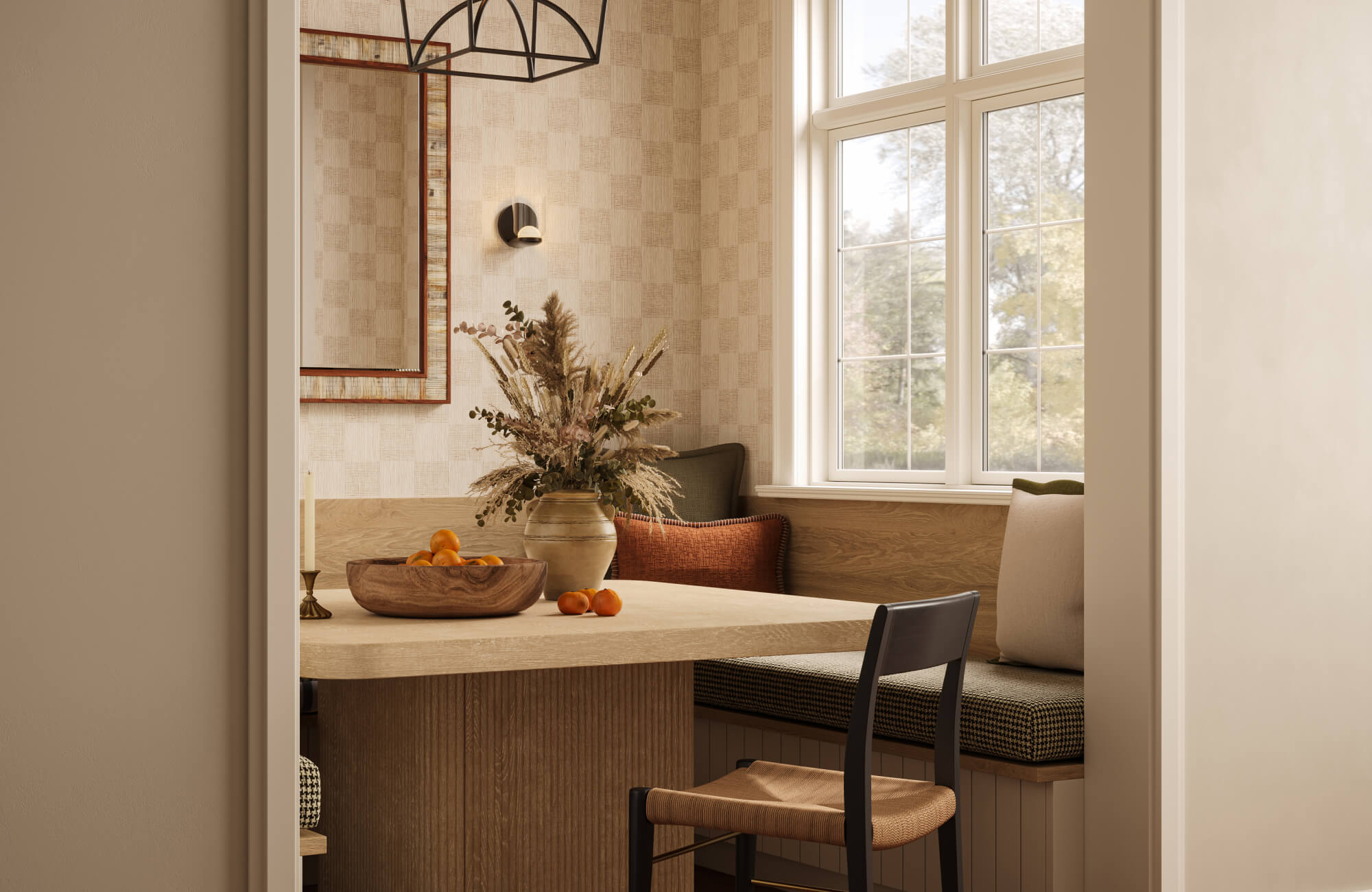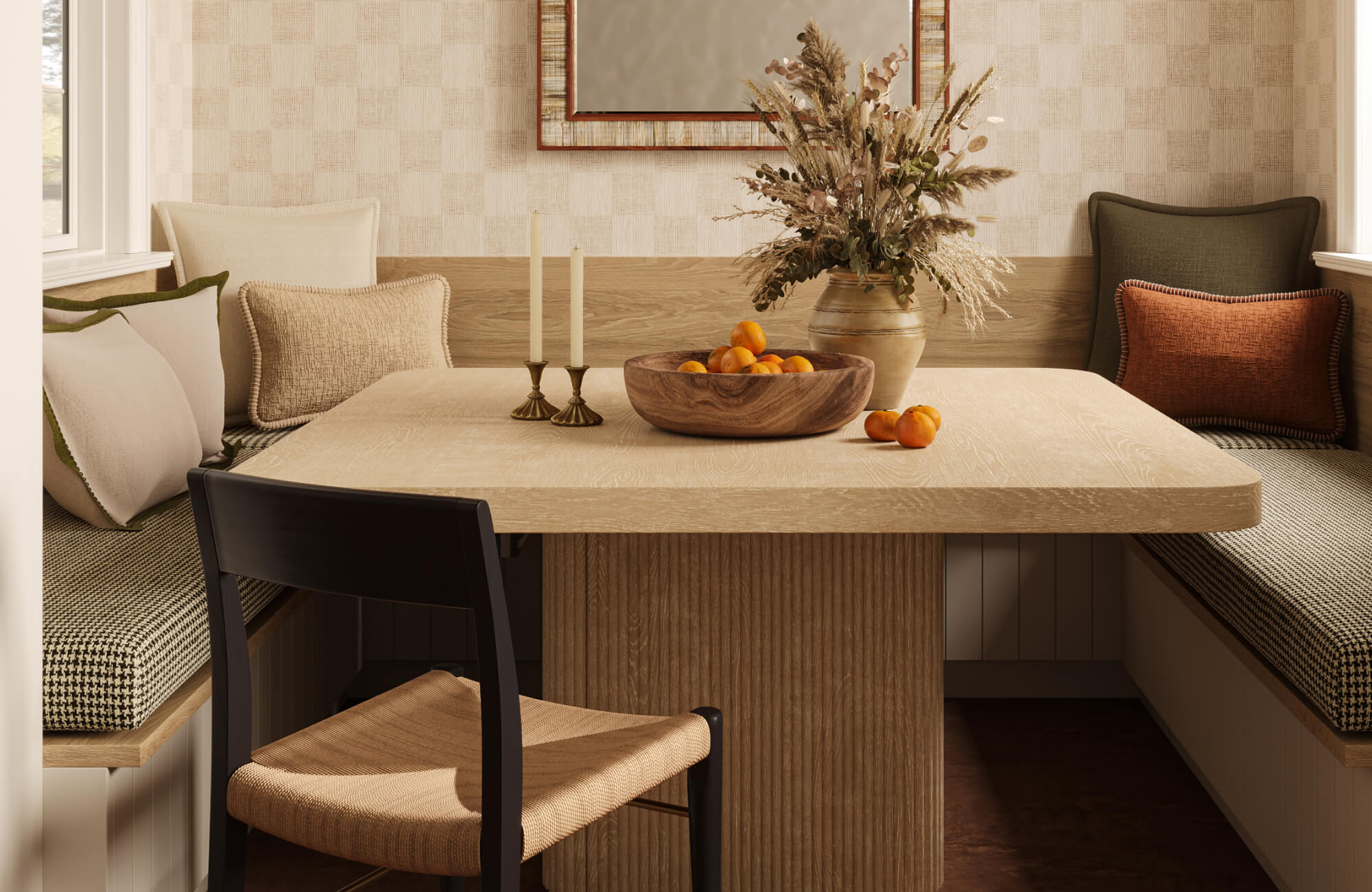
Striped wallpaper brings a sense of quiet architecture to a room, shaping the walls with rhythm, proportion, and refined visual movement. In today’s interiors, it feels especially current through textured wallcoverings, soft neutral stripe wallpaper, wide stripe designs, and organic hand-painted patterns that add depth without overwhelming the space. Its appeal comes from the way it can make ceilings appear taller, hallways feel more expansive, and focal walls look intentionally designed.
From grasscloth-inspired striped wallpaper to contemporary vertical stripe wallpaper for bedrooms and powder rooms, the pattern adapts beautifully to both classic and modern homes. With the right scale, color palette, material, and placement, striped wallpaper remains a timeless wall treatment that feels polished, versatile, and enduring.

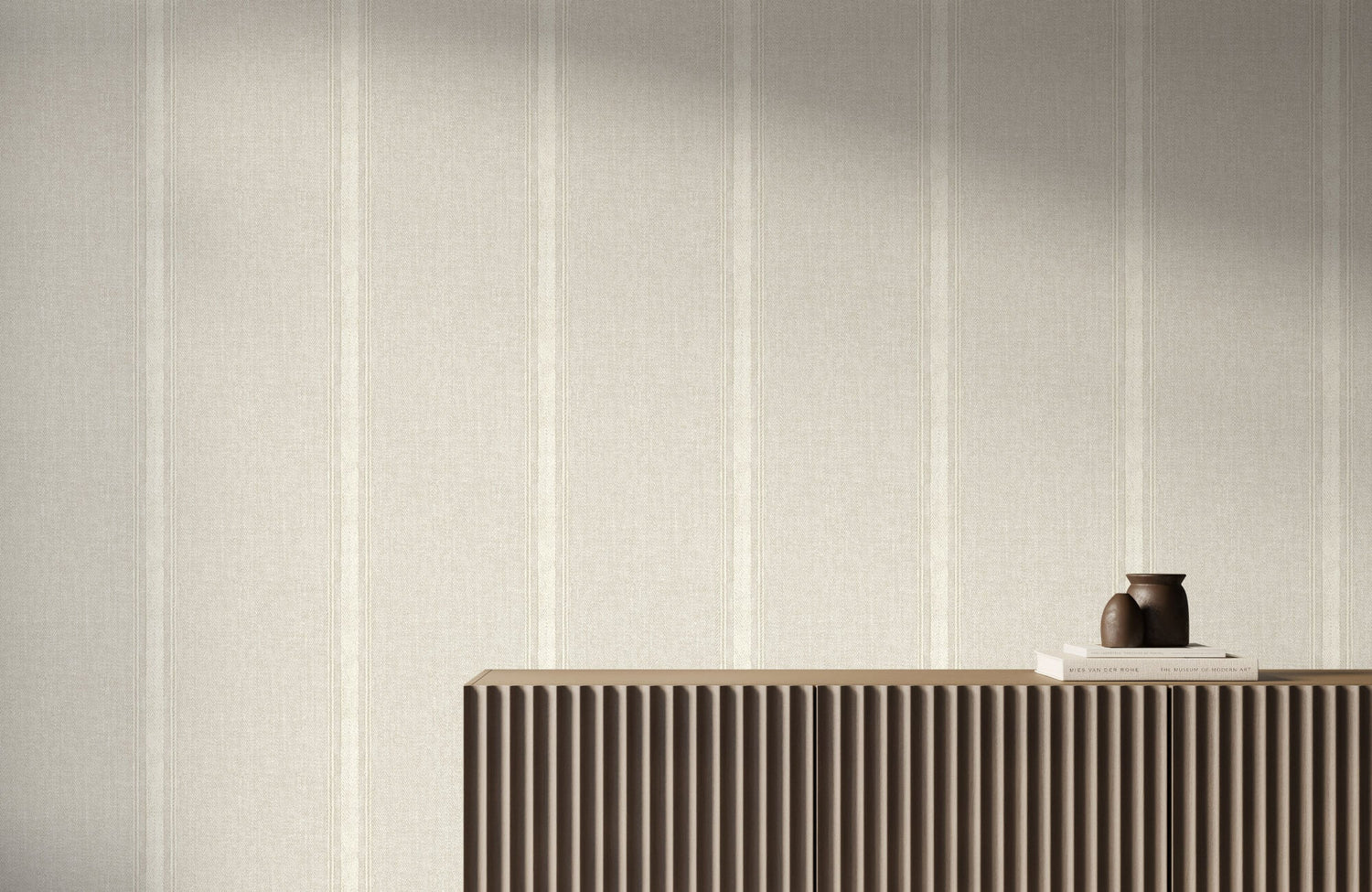
The refined vertical lines of Windsor Wallpaper in Tan II demonstrate how striped wallpaper can bring enduring structure and elegance to a space, balancing classic pattern with a soft, contemporary palette
The Timeless Design Appeal Of Striped Wallpaper
Striped wallpaper continues to stay relevant because it is built on balance, repetition, and directional movement. These qualities allow it to enhance a room’s architecture while adding pattern in a clean, controlled way.
Why Stripes Remain A Classic Wall Pattern
Striped wallpaper has lasting appeal because its linear composition creates order on the wall without relying on heavy ornamentation. This makes it adaptable to traditional interiors, transitional homes, coastal rooms, and contemporary spaces. A narrow pinstripe wallpaper can feel tailored and formal, while a wide striped wallpaper creates a bolder architectural effect. Because the pattern can shift through scale, color, and material, it is less trend-dependent than many decorative prints. Stripes also work well with both minimal and layered interior design schemes because their geometry feels structured rather than busy. This versatility keeps striped wallpaper one of the most dependable wallpaper patterns for modern homes.
How Striped Wallpaper Changes Room Proportions
Striped wallpaper can influence how a room feels by directing the movement of the eye. For instance, vertical striped wallpaper draws attention upward, which can make ceilings appear taller and walls feel more elongated. Horizontal striped wallpaper, on the other hand, can make a narrow room, hallway, or compact wall appear wider. The final effect depends on stripe width, color contrast, and pattern repeat. Closely spaced stripes create more movement, while wider stripes produce a calmer and more architectural look. This makes stripe orientation especially important when choosing wallpaper for small rooms, low ceilings, or narrow spaces.
Why Striped Wallpaper Works Across Design Styles
Striped wallpaper works across many design styles because it can act as either a subtle backdrop or a strong focal feature. Tone-on-tone striped wallpaper, for instance, adds a quiet dimension, making it ideal for neutral interiors and refined bedrooms, while high-contrast striped wallpaper creates stronger definition, especially in powder rooms, entryways, and accent walls. The pattern also pairs well with wood flooring, natural stone, ceramic tile, linen upholstery, brass hardware, and matte black fixtures. When the stripe palette connects with these surrounding finishes, the room feels cohesive rather than overly patterned. This ability to support different materials and moods keeps striped wallpaper relevant in both classic and modern interior design.

With its abstract layered pattern and painterly texture, Redwick Wallpaper in Beige showcases how modern wallcoverings reinterpret stripes through organic forms and subtle visual movement
Modern Striped Wallpaper Styles That Feel Current
Modern striped wallpaper has moved beyond rigid formal lines into more textured, organic, and visually layered designs. Updated materials and softer palettes now make stripes feel sophisticated, dimensional, and easier to integrate into contemporary interiors.
Textured And Grasscloth-Inspired Striped Wallpaper
Textured striped wallpaper is popular because it adds depth through surface variation instead of relying only on color contrast. Grasscloth-inspired striped wallpaper, linen-effect wallpaper, embossed vinyl wallcovering, and woven-look wallpaper create a tactile finish that feels elevated. These materials interact with natural and artificial light, allowing the stripe pattern to shift subtly throughout the day. In neutral interiors, texture also prevents striped walls from looking flat or overly graphic. This makes textured stripe wallpaper especially effective in bedrooms, dining rooms, home offices, and living rooms. Its layered surface quality gives the room a more custom and high-end interior design look.
Wide Stripe Wallpaper For A Contemporary Look
Wide stripe wallpaper feels current because its larger scale creates a bold but controlled statement. Unlike narrow high-contrast stripes, wide stripes reduce visual busyness and make the wall feel more architectural. This style works especially well behind beds, on fireplace walls, in powder rooms, and in boutique hotel-inspired interiors. The clean rhythm of wide stripes can also define a focal area without requiring heavy artwork or excessive decor. For a polished result, the stripe colors should relate to the room’s flooring, upholstery, lighting, and trim. When balanced with simple furnishings, wide striped wallpaper feels refined rather than overwhelming.
Irregular And Hand-Painted Stripe Designs
Irregular striped wallpaper offers a softer alternative to perfectly uniform stripe patterns. Hand-painted stripes, watercolor bands, uneven stripe widths, blurred edges, and abstract stripe-inspired designs, like the one shown above, create a more artisanal wallcovering effect. These designs suit organic modern interiors, relaxed coastal rooms, and spaces with natural materials. The variation in linework also keeps the pattern from feeling too formal or mechanical. Because the stripes are less rigid, they pair well with curved furniture, plaster finishes, woven textures, and warm wood tones. This makes irregular striped wallpaper a strong option for interiors that need pattern with a relaxed but sophisticated character.

The rich olive tones and tailored stripe pattern of Windsor Wallpaper in Olive I create depth and definition, illustrating how striped wallpaper can be adapted to elevate dining rooms and other gathering spaces
Choosing The Right Striped Wallpaper For Each Room
The best striped wallpaper depends on room size, ceiling height, lighting, furniture placement, and the desired visual effect. A thoughtful stripe selection can define a focal wall, improve room proportion, or add architectural interest where the space needs more structure.
Striped Wallpaper For Bedrooms
Striped wallpaper works well in bedrooms because it can create a calm, tailored backdrop. For example, vertical stripes behind the bed emphasize ceiling height while framing the headboard with subtle symmetry. Softer colors such as ivory, beige, taupe, warm gray, sage green, and muted blue also help maintain a restful atmosphere. Low-contrast stripe wallpaper is often better for bedrooms because it adds pattern without disrupting visual calm. The design pairs naturally with upholstered beds, layered bedding, bedside sconces, and wood furniture. When used thoughtfully, striped bedroom wallpaper creates a refined focal point that still feels comfortable.
Striped Wallpaper For Living And Dining Rooms
In living rooms, striped wallpaper can add rhythm to a fireplace wall, built-in shelving area, or main seating backdrop. The stripe scale should coordinate with furniture proportions so the pattern does not compete with upholstery, rugs, or artwork. In dining rooms, striped wallcoverings add formality when paired with wainscoting, crown molding, or statement lighting. A medium-scale stripe often works well because it provides movement without overwhelming the table setting. Color is also important, since the wallpaper should complement wood tones, metal finishes, and dining chairs. When these elements are aligned, striped wallpaper gives living and dining spaces a finished, designer look.
Striped Wallpaper For Hallways, Entryways, And Powder Rooms
Hallways and entryways benefit from striped wallpaper because linear patterns naturally guide movement through transitional spaces. Vertical striped wallpaper can make a narrow hallway feel taller and more structured. In entryways, stripes create a polished first impression while connecting nearby rooms through color and pattern. Powder rooms can also handle more expressive striped wallpaper because the space is small and self-contained. Bold stripes, textured stripes, or dramatic color combinations can create a memorable design moment. With the right vanity, mirror, lighting, and hardware, striped wallpaper can make compact spaces feel intentionally designed.

Ravelle Wallpaper in Navy highlights how thoughtful stripe scale, balanced contrast, and sophisticated color selection can keep striped wallpaper feeling timeless rather than trend-driven
When Striped Wallpaper Can Look Dated
Striped wallpaper usually looks dated when the color palette, scale, finish, or installation feels disconnected from the rest of the room. The stripe itself is rarely the issue; the problem is usually poor coordination with architecture, furnishings, and modern interior finishes.
Outdated Color And Finish Choices
Color and finish are two of the main reasons striped wallpaper can feel outdated. Harsh contrasts, overly bright tones, glossy surfaces, or color pairings that clash with flooring and furniture can make the room feel visually disconnected. More current striped wallpaper often uses layered neutrals, warm beige, soft gray, muted green, smoky blue, cream, charcoal, or earthy clay tones. These palettes work better with natural wood, stone countertops, ceramic tile, and modern metal finishes. Matte, woven, and textured finishes also tend to look more refined than shiny or overly flat surfaces. Choosing updated colors and materials is one of the easiest ways to make striped wallpaper look current.
Stripe Scale That Overwhelms The Room
Stripe scale can strongly affect whether wallpaper feels balanced or busy. Very narrow stripes with high contrast may create visual vibration, especially in small rooms or areas with many doors and trim lines. Oversized stripes can also feel heavy if the wall area is limited or the room lacks enough visual breathing space. In addition, a medium or wide stripe often feels more modern because it creates rhythm without excessive detail. Similarly, compact rooms usually benefit from softer contrast and simpler stripe repeats. Matching the pattern scale to the room size helps striped wallpaper look intentional and proportionate.
Overuse Across Too Many Walls
Striped wallpaper can lose impact when it is used too heavily throughout a home. Applying bold stripes across multiple rooms may make the design feel repetitive rather than curated. A more elevated approach is to use stripes where they serve a clear design purpose. For example, striped wallpaper can highlight a bed wall, define an entryway, add interest above wainscoting, or create drama in a powder room. This type of strategic placement keeps the pattern from overwhelming the architecture. When used with restraint, striped wallpaper feels more stylish, timeless, and professionally designed.

The combination of slender vertical stripes, warm neutral tones, and coordinated brass finishes demonstrates how striped wallpaper feels most sophisticated when integrated with the room’s architecture, materials, and decorative details
How To Make Striped Wallpaper Look Stylish And Timeless
Striped wallpaper looks best when it is selected with attention to material, proportion, color, and architectural context. A timeless result comes from coordinating the wallcovering with surrounding finishes rather than treating it as an isolated decorative feature.
Coordinate Stripes With Interior Finishes
Striped wallpaper should relate closely to the room’s existing material palette. Wood flooring, stone surfaces, tile, hardware, upholstery, and lighting all influence which stripe colors will look most cohesive. A warm beige stripe may complement oak floors and brass accents, while a dark gray and off-white stripe may work better with black metal fixtures. This type of coordination prevents the wallpaper from feeling disconnected from the rest of the room. Texture can also help bridge different materials by adding softness and depth to the walls. When the wallpaper supports the finishes, the entire space feels more intentional and elevated.
Use Stripes To Create Architectural Definition
Striped wallpaper can strengthen a room’s architecture when used with a clear visual purpose. Vertical stripes, for instance, can emphasize wall height, while horizontal stripes can broaden compact areas. Above chair rail, wainscoting, or panel molding, striped wallpaper creates a tailored and classic effect. On an accent wall, it can frame a bed, fireplace, desk, or built-in cabinetry. This architectural use makes the pattern feel integrated rather than purely decorative. By directing the eye with intention, striped wallpaper becomes a design tool as much as a surface finish.
Select Materials That Add Depth And Longevity
Material selection affects both the appearance and performance of striped wallpaper. Non-woven wallpaper is widely used in residential interiors because it is dimensionally stable and easier to install or remove than many traditional paper-backed products. Vinyl wallcovering can be useful in busy or moisture-prone areas because it offers stronger durability and cleanability. Grasscloth, textile-inspired, and embossed striped wallpapers create a more natural and luxurious appearance. These materials add depth through texture, shadow, and surface movement. Choosing the right wallpaper substrate helps the stripe pattern stay attractive, functional, and timeless.
The Enduring Beauty Of Striped Wallpaper
Striped wallpaper remains in style because it offers more than pattern; it brings proportion, movement, and architectural clarity to the walls. Whether used as vertical striped wallpaper for a taller room effect, textured striped wallpaper for added depth, or wide stripe wallpaper for a contemporary focal wall, the design can be adapted to many interior styles. Its success depends on choosing the right stripe scale, color palette, wallcovering material, and placement for the space. When coordinated with natural wood, stone, tile, upholstery, lighting, and trim, striped wallpaper feels intentional rather than trend-driven. With thoughtful selection, it becomes a timeless wall treatment that adds elegance, dimension, and lasting character to modern interiors.
Edward Martin’s design services can help refine wallpaper selections with expert guidance on color, scale, material, and room placement. Contact us to create a striped wallpaper design that feels tailored, timeless, and beautifully integrated!