An outdoor coffee table may seem like a small detail, but it often becomes the piece that makes a patio feel complete. It gives the seating area a clear center, offers a practical place for drinks and decor, and helps turn an open outdoor area into a comfortable extension of the space.
More importantly, the right coffee table can shape how people gather, move, and relax outside. From choosing a silhouette that fits the layout to selecting weather-ready materials, styling the surface, and planning for entertaining, thoughtful coffee table choices can make a patio feel more inviting, functional, and visually connected.

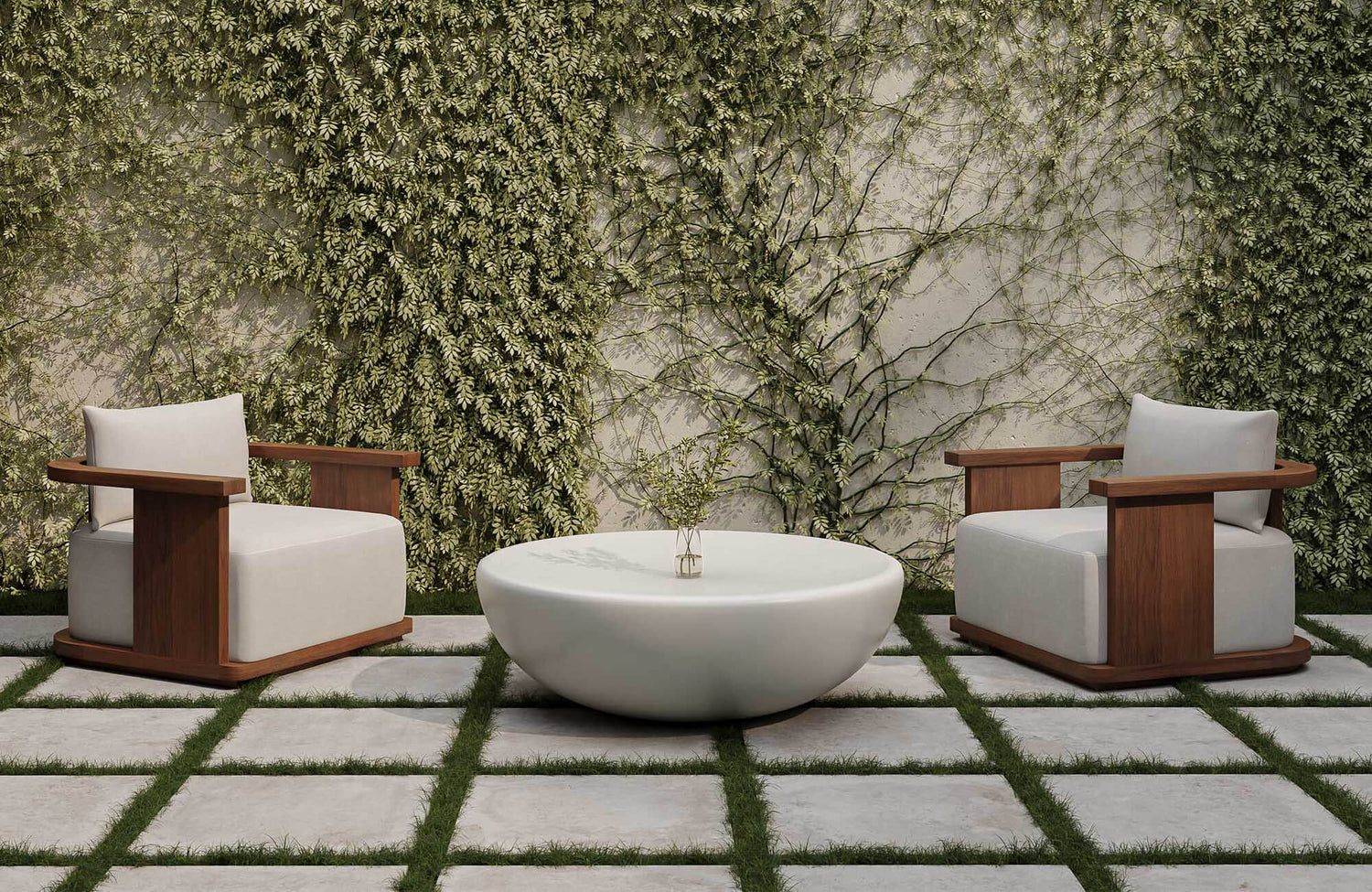
Mysa Coffee Table paired with two Vetra Club Chairs creates a refined outdoor conversation area
Choosing The Right Outdoor Coffee Table Shape
The shape of an outdoor coffee table influences movement flow, seating comfort, and the overall structure of a patio layout. Choosing the right silhouette helps the table function as both a practical surface and a visual anchor within the outdoor seating area.
Round Tables
Round outdoor coffee tables are especially effective in patios designed for relaxed conversation and easy movement. Without corners, they create a smoother circulation path around lounge chairs, curved sectionals, and compact seating groups, making them useful where guests frequently move between seats or where the layout needs to feel open rather than tightly arranged. Their curved form also softens patios with strong linear features, such as rectangular pavers, plank decking, straight fencing, or boxy outdoor sofas. A round table works best when each seat has convenient access to the tabletop, so choose a diameter that provides enough surface for drinks, small plates, and decorative accents without reducing the clearance needed for comfortable movement.
For a more sculptural take on this rounded approach, the Mysa Coffee Table brings a smooth, bowl-like silhouette that feels calm, grounded, and highly approachable in an outdoor lounge setting, as seen in the photo above. Its softened profile contrasts beautifully with gridded pavers, vertical greenery, and angular lounge chairs, allowing the table to serve as both a functional centerpiece and a gentle visual pause within the patio layout.
Rectangular Tables
Rectangular outdoor coffee tables, like the Maris Teak Coffee Table, pair naturally with sofas, benches, and elongated sectional arrangements because their proportions follow the same visual direction. Their longer surface area allows several people to use the table at once, making them practical for patios intended for lounging, casual meals, or entertaining. In larger outdoor spaces, a rectangular table can define the lounge zone with a strong linear axis, especially when aligned with a sofa, outdoor fireplace, or architectural feature. For balanced scale, the table should generally be about two-thirds the length of the sofa, with enough clearance between the table and seating edge for guests to sit, stand, and move comfortably.
Square Tables
Square outdoor coffee tables work best in seating layouts that rely on symmetry and equal access. They are particularly well-suited to four-chair groupings, U-shaped sectionals, and modular patio furniture arranged around a central point because each side gives the surrounding seats a similar relationship to the tabletop. This shape is useful for patios designed to feel structured and room-like, especially when the table reinforces a seating group around a fire pit, outdoor rug, courtyard feature, or garden focal point. Since a square footprint can quickly dominate a compact area, choose a size that reflects the proportions of the seating layout without restricting legroom or circulation.
Nesting Tables
Nesting outdoor coffee tables are ideal for patios that need to shift between different uses throughout the day. Their compact, layered design allows smaller tables to tuck beneath a larger one when not needed, while gatherings can call for the pieces to be separated and placed beside individual seats for drinks, snacks, or personal items. This flexibility is especially valuable for balconies, small patios, and multi-purpose outdoor areas where fixed furniture can feel limiting. Sets with staggered heights, coordinated finishes, or mixed materials can also add depth without visual clutter, provided the tables have weather-resistant frames, stable bases, and durable surface finishes suited to frequent movement.

Creating a sleek outdoor setting, the Vetra Coffee Table complements the Vetra Sofa with its minimalist metal frame
Outdoor Coffee Table Materials That Balance Style And Durability
The material of an outdoor coffee table affects its weather performance, maintenance needs, surface texture, and overall design character. Comparing each option by climate suitability and long-term care helps ensure the table remains both attractive and functional in an exterior setting.
Teak And Acacia
Wood outdoor coffee tables bring a natural warmth that can soften patios built with stone pavers, concrete flooring, metal railings, or minimalist outdoor furniture. Teak and acacia are especially popular because they offer visible grain variation, organic color, and a tactile quality that makes an outdoor seating area feel more relaxed and residential. Their warm tones can also balance cooler materials, such as gray porcelain tile, stainless steel, or powder-coated aluminum.
Teak, such as the Sundara Outdoor Coffee Table in Stained Heritage Brown, is often preferred for higher-end outdoor furniture because of its dense grain and naturally occurring oils, which help it resist moisture, decay, and seasonal exposure. Untreated teak develops a silvery gray patina over time, while acacia offers a more budget-conscious natural wood look that performs best in covered patios, screened porches, or areas protected from constant rain and direct sun. To extend the life of either material, choose exterior-grade sealants, elevate the table slightly from wet flooring, and use protective covers during harsh weather.
Aluminum And Powder Coated Metal
Aluminum coffee tables are a strong choice for those who want a lightweight, easy-care material that suits modern and contemporary patio designs. Because aluminum is naturally resistant to rust, it works well in humid or coastal environments where other metals may need more protection. Its lighter weight also makes it practical for patios that need occasional rearranging for entertaining, cleaning, or seasonal storage.
Powder coated metal adds durability by creating a hard, bonded finish that helps protect the metal substrate from moisture, scratches, and surface oxidation when properly maintained. For best performance, inspect the table for smooth coating, reinforced joints, capped edges, and drainage-friendly details such as slatted tops, perforated surfaces, or slightly pitched designs. These features help prevent standing water, which can leave mineral deposits or accelerate finish wear.
Edward Martin’s Vetra Coffee Table, shown in the image above, reflects these advantages with a streamlined aluminum frame and slatted tabletop that feel both architectural and practical for outdoor living. Its clean profile suits modern patios, while the open construction supports airflow and drainage, helping the surface remain easier to maintain after light moisture or everyday use. Paired with lounge seating, it brings a polished, low-maintenance anchor to the space without adding visual heaviness.
Concrete And Stone
Concrete and stone coffee tables add a sense of permanence to outdoor spaces, making them especially effective on larger patios, pool terraces, and open-air lounges. Their substantial weight and solid profiles create a grounded focal point that can visually anchor expansive seating arrangements. Materials such as cast concrete, travertine, limestone, and natural stone also introduce mineral texture that complements masonry walls, porcelain pavers, gravel borders, and stucco exteriors, as seen in pieces like the Calis Coffee Table in Dark Grey, which brings a bold, sculptural presence to contemporary outdoor settings.
These materials are valued for both visual weight and architectural presence, but scale should guide their use. A heavy block-style table may overwhelm a small patio, while the same mass can bring balance and stability to a generous seating area. Since concrete and natural stone can be porous, sealing may be recommended to reduce staining from food, drinks, leaves, or moisture exposure, especially in busy entertaining spaces.
Wicker And Rattan Inspired Designs
Wicker and rattan-inspired outdoor coffee tables are ideal for patios designed around comfort, texture, and a relaxed hospitality feel. Although natural rattan is best reserved for protected indoor or covered spaces, all-weather wicker made from synthetic resin is specifically developed for exterior use. This material is commonly woven over aluminum frames, giving the table a casual handcrafted appearance with improved resistance to moisture and daily wear.
The woven texture also pairs well with plush cushions, outdoor rugs, linen-look performance fabrics, and layered neutral palettes, making it suitable for coastal, traditional, and resort-inspired patios. Quality varies widely, so look for UV-resistant resin fibers, powder-coated interior frames, and tightly secured weaving that will not unravel with frequent use. A glass, stone, or tray-style tabletop can also make the surface more practical for drinks and decor while preserving the table’s casual character.

Alina Outdoor Coffee Table in White anchors this cozy outdoor gathering space, surrounded by four Caldra Outdoor Lounge Chairs in Cream
Styling An Outdoor Coffee Table For Everyday Use
An outdoor coffee table should feel intentionally styled without losing its practical purpose. The best arrangements balance decorative interest with open surface area, allowing the table to support daily routines, casual entertaining, and relaxed outdoor living.
Use A Tray To Keep Decor Contained
A tray is one of the most effective tools for making an outdoor coffee table look polished while keeping the surface easy to manage. It creates a defined styling zone for smaller items such as candles, coasters, compact planters, or a decorative bowl, preventing the tabletop from appearing scattered in outdoor conditions where wind, moisture, and frequent use can make loose accessories impractical. For exterior settings, choose a tray material that can withstand exposure, such as metal with a protective finish, resin, teak, or stone. Raised edges are especially useful because they help contain items when the table is moved, cleaned, or quickly cleared for drinks and snacks, while the tray’s shape should suit the table’s scale, with compact forms for smaller round tables and elongated trays for rectangular surfaces.
Add Greenery With Low Profile Planters
Greenery brings life and softness to an outdoor coffee table, especially when the surrounding patio includes hardscape materials such as concrete, stone, tile, or metal furniture. Low-profile planters are ideal because they add natural texture without blocking sightlines across the seating area, keeping conversation comfortable and the tabletop visually layered. Small succulents, herbs, and restrained trailing plants provide interest without requiring a large footprint, with succulents suited to sunny patios, herbs such as rosemary or mint adding fragrance, and trailing varieties softening the table edge. For stability, choose compact containers with enough base weight to resist tipping in light wind, using durable materials such as ceramic, concrete, resin, or stone.
Edward Martin’s Alina Outdoor Coffee Table in White, displayed above, offers an ideal surface for this kind of restrained planting because its broad, low profile keeps tabletop styling grounded and easy to see across. A compact vase or low planter placed at the center can introduce fresh greenery without competing with surrounding lounge chairs, fireplace details, or garden views, allowing the table to feel styled, functional, and naturally connected to the outdoor setting.
Layer Candles And Lanterns For Evening Atmosphere
Lighting can transform an outdoor coffee table from a daytime surface into an evening focal point. Flameless candles, hurricane lanterns, and solar-powered accent lights create a warm glow that makes the patio feel more intimate after sunset, especially in outdoor lounge areas designed for lingering into the evening. Hurricane lanterns help shield light sources from wind, flameless candles offer a low-maintenance option for households with children or pets, and solar lanterns reduce the need for cords or batteries when they receive adequate daylight. For a balanced composition, group lighting pieces in odd numbers and vary their heights while keeping the arrangement low enough to preserve views between seated guests.
Leave Open Space For Real Use
A well-styled outdoor coffee table should still function as a surface for daily living. Guests need room for glasses, small plates, books, sunglasses, phones, and other personal items, so the table should never be completely filled with decor. A practical guideline is to style only one-third to one-half of the tabletop, depending on the size and shape of the table, preserving usable surface area for spontaneous activities from morning coffee to evening refreshments. This restraint also creates negative space, allowing each decorative item to stand out while helping the entire patio feel calmer, more spacious, and easier to maintain.

Vela Coffee Table anchors this sophisticated outdoor living area, surrounded by two Noa Outdoor Sofas in Grey
Coffee Table Ideas For Small Patios And Balconies
Small patios and balconies require coffee tables that contribute function without reducing comfort or circulation. The most successful options use lighter proportions, flexible placement, and space-saving features to make compact outdoor areas feel open, usable, and thoughtfully designed.
Choose Slim Tables With Open Bases
Slim outdoor coffee tables with open bases are especially effective in compact patios because they provide surface area without creating visual heaviness. Unlike solid block-style tables, open-frame designs allow light and flooring materials to remain visible beneath the piece, helping the entire seating area feel less crowded on balconies, narrow terraces, and small courtyard patios. Metal and wood are common choices because both can be formed into slender frames while still offering enough structural support for daily use. A powder-coated metal frame can feel crisp and architectural, while a narrow wood frame introduces warmth without overwhelming the layout. For tighter spaces, choose a table that feels proportional to the seating rather than simply small, such as a narrow rectangular or oval design that preserves a clearer circulation path.
With a rounded form and an open architectural base, the Vela Coffee Table supports the same light, space-conscious approach. Its sculptural frame allows the surrounding flooring, seating, and architectural features to remain visible, helping it feel substantial without visually crowding the patio. This makes it especially useful for covered balconies, like the setup seen above, or compact lounge areas where maintaining a sense of openness is essential.
Try Ottoman Style Coffee Tables With Dual Function
Ottoman-style coffee tables are useful in small outdoor spaces because they can serve more than one purpose without adding another separate furniture piece. They can function as a footrest during quiet lounging, an extra seat when guests arrive, or a casual coffee table when paired with a stable tray, making them especially practical for patios where flexibility is more important than a fixed furniture arrangement. For exterior use, look for ottomans upholstered in performance fabrics or made with weather-resistant woven materials that can withstand regular outdoor exposure. A flat-topped design works best for coffee table use because it can support a tray securely, creating a firm surface for drinks, snacks, books, or small decorative items. Smaller paired ottomans can also be easier to move than one large piece, allowing the patio to adapt throughout the day.
Use Storage Coffee Tables For Cushions And Throws
Storage coffee tables can make a small patio more efficient by turning the center of the seating area into concealed organization. Instead of adding a separate deck box or storage bench, the coffee table itself can hold outdoor pillows, lightweight throws, garden accessories, or tabletop games, keeping frequently used items within reach while reducing clutter. For outdoor use, the interior construction matters as much as the exterior appearance, so choose a table with weather-resistant materials, a secure lid, and enough protection to shield contents from light rain, dust, and debris. Ventilation is also important because trapped moisture can lead to mildew, especially when storing fabric items such as cushions or blankets.
Consider Side Table Clusters Instead Of One Large Table
In some small patios, a cluster of side tables can work better than a single central coffee table. Two or three compact tables provide flexible surfaces that can be moved closer to individual seats, making the arrangement more responsive to different activities, especially during casual entertaining when guests may want a place for drinks or plates without reaching toward one fixed table in the center. Side table clusters also help open up the middle of the seating area when more floor space is needed. To keep the look cohesive, choose tables that share at least one design element, such as material, finish, shape, or color temperature, so they feel related enough to read as a deliberate grouping.

Calis Coffee Table in Dark Grey serves as the centerpiece of this sophisticated outdoor area, surrounded by four Briaro Outdoor Lounge Chairs in Cream
Creating A More Inviting Patio Through Layout
The placement of an outdoor coffee table can determine whether a patio feels open, comfortable, and easy to use. Thoughtful spacing, alignment, rug placement, and table height help turn an outdoor seating group into a more welcoming extension of the space.
Keep Comfortable Clearance Around The Table
Clearance is one of the most important layout considerations when positioning an outdoor coffee table. The table should sit close enough to the seating so guests can set down a drink or reach for a book without leaning forward uncomfortably, yet far enough away to preserve legroom and allow people to sit, stand, and move naturally. Circulation should also be considered around the outside of the seating arrangement, especially if the patio connects to a garden path, sliding door, grill station, or pool area. A well-placed table supports daily use without becoming a barrier, helping the entire patio feel more intuitive, relaxed, and hospitable.
Center The Table Within The Conversation Zone
Placing the coffee table within the center of the conversation zone gives the patio a clear point of connection. It visually gathers the surrounding chairs, sofas, or sectionals into one cohesive arrangement, making the space feel intentional rather than loosely furnished. This central placement also provides guests with a shared surface for drinks, small plates, books, or decorative accents. Centering does not always mean placing the table in the exact geometric middle of the patio; instead, it means centering it within the functional seating group and aligning it with the main sofa, outdoor rug, fireplace, fire pit, or garden view when appropriate. On asymmetrical patios, the table may need to shift slightly toward the primary seating or away from a walkway to keep the layout balanced and comfortable.
Pair The Table With An Outdoor Rug
An outdoor rug helps visually connect the coffee table with the surrounding furniture, giving the patio the feel of a finished outdoor living room. Without a rug, individual furniture pieces can appear separate, especially on large expanses of stone, concrete, decking, or porcelain pavers. A rug creates a defined lounge zone and adds softness underfoot, making the seating area feel more inviting. Rug size has a major impact on the success of the layout, so choose one large enough for at least the front legs of the sofa and chairs to rest on it. Outdoor rugs made from polypropylene, recycled plastic fibers, or other performance materials are also practical because they resist moisture, fading, and mildew better than indoor textiles.
Match Table Height To Seating Comfort
Coffee table height directly affects how comfortable the patio seating feels in daily use. A table that sits near the height of the surrounding seat cushions, or slightly lower, usually feels most natural for lounging because guests can place items on the surface without awkward arm movement or excessive bending. A table that is too tall can disrupt the relaxed proportions of outdoor lounge furniture and make the area feel more like a dining setup than a casual seating zone. Before choosing a table, compare its height with the actual cushion height rather than relying only on product dimensions, since outdoor cushions and deep seating frames can vary significantly.

Lina Outdoor Coffee Table in Cream brings sculptural elegance to this covered patio seating area
Seasonal And Entertaining Ideas For Outdoor Coffee Tables
An outdoor coffee table can shift with the season, the time of day, and the way the patio is being used. With durable styling pieces and practical entertaining details, it can support everything from relaxed morning coffee to casual gatherings and cooler evening lounging.
Style With Seasonal Textures Instead Of Fragile Decor
Seasonal styling works best outdoors when it relies on texture, material, and color rather than delicate decorative pieces. Woven trays, ceramic bowls, metal lanterns, stoneware vessels, and potted greenery can reflect the mood of the season while standing up better to sun exposure, humidity, light wind, and frequent handling. For warmer months, natural fibers, pale ceramics, and fresh greenery can make the table feel breezy and relaxed, while deeper-toned planters, heavier lanterns, and weather-safe woven accents can create a more grounded look in cooler weather. The goal is to suggest the season through durable materials that are easy to move, clean, and refresh without adding extra maintenance.
Set Up A Simple Drink Station For Guests
During casual gatherings, an outdoor coffee table can function as a compact drink station without requiring a separate bar cart or serving console. A pitcher of iced tea, lemonade, infused water, or a batch cocktail can sit alongside glasses, coasters, napkins, and a small bowl of snacks, keeping refreshments within easy reach and encouraging guests to serve themselves comfortably. To keep the arrangement organized, use a weather-resistant tray or divided caddy for glasses, stirrers, bottle openers, and napkins, especially since raised edges help contain items when the table is bumped or guests move around the seating area. Keep the setup scaled to the table so it still leaves room for guests’ personal items.
Add Cozy Layers For Cooler Evenings
Cooler evenings call for small comfort details that make guests feel welcome and encourage them to linger outdoors. A basket placed beneath or beside the coffee table can hold lightweight throws, outdoor blankets, or extra cushions without interrupting the tabletop arrangement, preserving the surface for drinks, candles, and serving pieces. Choose performance fabrics, washable throws, mildew-resistant cushion covers, and structured baskets made from resin wicker, coated metal, or sealed natural fiber for better exterior use. When these layers are already within reach, the patio feels more considered, hospitable, and comfortable beyond the warmest hours of the day.
Use Decorative Bowls For Practical Outdoor Items
Decorative bowls and lidded containers can make everyday patio essentials feel intentional rather than messy. Items such as sunscreen, matchbooks, bug-repellent wipes, napkins, or small hand towels can be stored neatly on or near the coffee table, making them easy to access throughout the day. A lidded ceramic jar, resin box, stone bowl with a cover, or metal container can blend with the rest of the tabletop styling while protecting contents from dust, pollen, and light moisture. The key is to limit the contents to items that genuinely support outdoor use, so the table becomes more functional without losing its designed, inviting appearance.
A Thoughtful Coffee Table Completes A More Inviting Patio
The best outdoor coffee table does more than fill the space between chairs. It supports the way the patio is lived in, whether that means quiet morning coffee, casual conversations, family gatherings, or relaxed evenings outdoors. By considering shape, material, scale, layout, and styling together, you can choose a table that feels purposeful rather than incidental. As a result, the patio becomes easier to use, more comfortable to share, and more visually finished, proving that the right coffee table can be both a practical surface and the design anchor that brings the entire outdoor setting together.
To find a piece that suits your patio’s proportions, materials, and everyday needs, explore coffee table options that bring both utility and design presence to your outdoor setting. For personalized guidance, product questions, or help choosing the right fit, you can contact us and connect with a team that can help you complete your patio with confidence!