Pillow shams are one of the easiest ways to make a bed look more complete, but their placement can change the entire feel of the room. When you know where to put them, they can add height, structure, softness, and a more finished look without making the bed feel overdone.
In most bedrooms, pillow shams belong on the bed as a decorative layer rather than as the pillows you sleep on every night. You can place them behind sleeping pillows for an easy everyday setup, bring them forward when you want their fabric or trim to stand out, or use them with euro shams and accent pillows for a more layered arrangement. The best choice depends on your bed size, headboard height, pillow shape, and how practical you want your routine to be.

The Purpose Of Pillow Shams
Pillow shams are decorative covers that give your bed a more polished, intentional look. Because shams often feature details like flanges, closures, embroidery, quilting, or piping, they are usually better suited for daytime styling than sleeping.
Decorative Function
The main purpose of a pillow sham is to frame the bed. A bed with only sleeping pillows can still be comfortable, but shams add a more complete visual layer. They help the pillows look intentional instead of purely functional.
For example, if your bedding is mostly neutral, shams can introduce a subtle pattern or texture without requiring you to replace the duvet, quilt, or sheet set. If your bedding already has a pattern, solid-colored shams can calm the look and give the eye a place to rest. This makes them useful whether your room feels minimal, classic, relaxed, or more layered.
Shams can also help connect the bed to the rest of the room. You might choose a sham color that echoes a rug, curtain, bench, or upholstered headboard. This creates a sense of continuity without making every piece match exactly.
Daytime Styling
Pillow shams are especially useful after the bed is made in the morning. Once the sheets and cover are pulled into place, shams give the bed height and shape. They make the sleeping area look prepared rather than unfinished.
This matters in guest rooms, primary bedrooms, and any space where the bed is visible throughout the day. Even a simple arrangement with two shams can make the room feel more orderly. If you prefer a low-maintenance setup, you do not need many pillows. A pair of shams placed neatly can be enough to make the bed feel considered.
At night, you can remove the shams and keep them on a bench, chair, or basket near the bed. This keeps your sleeping pillows within easy reach while helping protect the decorative covers from everyday wear.
Practical Difference
The difference between a sham and a pillowcase is not only visual. A pillowcase is designed for sleep, so it is usually softer, simpler, and easier to wash regularly. A sham is designed for display, which means it often has more structure, detail, or decorative finishing.
This distinction helps you decide where each pillow belongs. Keep sleeping pillows within easy reach, and place shams where they make the bed look more finished. In many arrangements, that means the shams go behind the sleeping pillows during the day or in front of them when the shams are the main decorative feature.
When you treat shams as part of the styling layer, the bed becomes easier to manage. You do not have to force decorative pillows to do the job of sleeping pillows, and you do not have to sacrifice comfort for appearance.

Place Shams Behind Sleeping Pillows For Everyday Ease
Placing shams behind sleeping pillows gives your bed a finished look without making it harder to use. The shams create a soft backdrop, while the pillows you sleep on stay easy to reach at night.
Against The Headboard
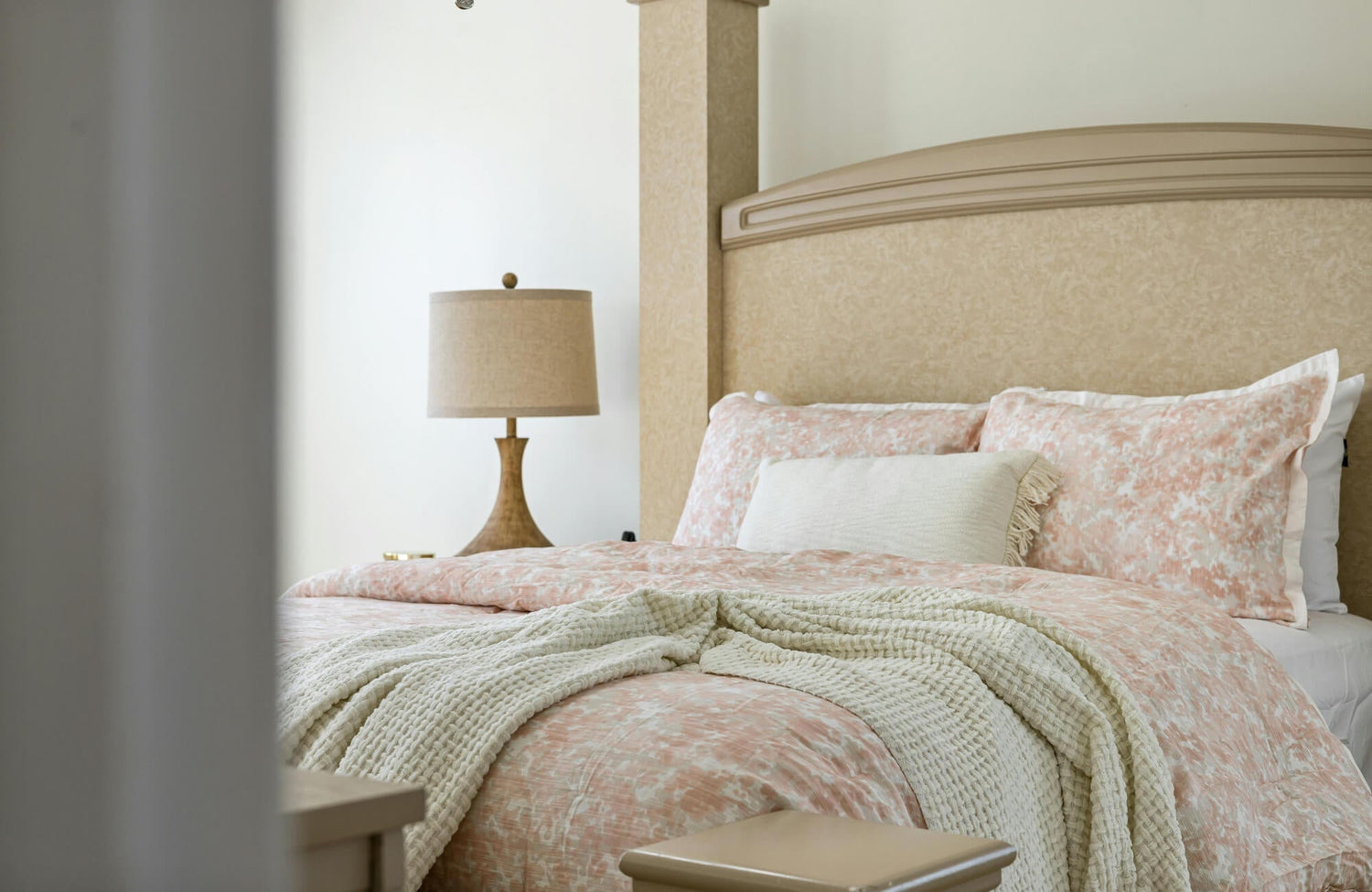
A simple place to start is by standing the shams upright against the headboard. This creates a soft backdrop and adds height to the bed. It also softens the look of hard materials such as wood, metal, or cane. If your headboard is tall, shams can help fill the space between the mattress and the upper part of the frame. If your headboard is low, keep the shams relaxed rather than overly stacked so they do not overpower the bed. The goal is to make the bed look balanced, not crowded.
This placement also works well when the headboard has a strong design. A carved-wood frame, curved headboard, or upholstered design can still stand out, while the shams soften the look near the mattress.
Sleeping Pillows In Front
Once the shams are placed against the headboard, your sleeping pillows can sit in front of them. This makes sense for daily use because the pillows you need at night are already accessible. You can pull them down without removing the entire arrangement.
This setup is also useful if your shams are more decorative than comfortable. Instead of placing them where your head naturally rests, you allow them to support the look of the bed from behind. The sleeping pillows do the practical work, and the shams create the structure.
For a queen bed, two shams behind two sleeping pillows usually look balanced. For a king bed, two king shams behind sleeping pillows create a wider, more proportional backdrop. The arrangement stays simple, but it still feels complete.
Clean And Simple Look
Behind-the-pillow placement is a good choice if you prefer a clean bed with fewer layers. It also works well in guest rooms, where too many decorative pillows can make the bed feel less intuitive to use. This arrangement keeps the bed polished without making it feel formal. You can use shams that match the duvet for a calm look or choose a slightly contrasting fabric for more depth. Either way, the bed remains easy to use.
It also works well in smaller bedrooms because the pillows do not take up too much visual space. Instead of adding several throw pillows, the shams provide enough styling on their own. The result feels intentional but still approachable.

Bring Shams Forward For A More Styled Display
Place shams in front of sleeping pillows when you want their fabric, trim, color, or pattern to stand out. This arrangement gives the bed a more layered look, especially when the rest of the bedding is simple.
Show The Details
If your shams have texture or pattern, placing them at the front allows those details to be seen. A quilted sham, for instance, can add dimension to plain bedding. A striped or floral sham can bring personality to a neutral duvet.
This works especially well when the sham is the main design feature on the bed. Instead of hiding it behind sleeping pillows, you let it set the tone for the arrangement. The bed feels more curated because the most decorative layer is clearly visible.
To keep the look balanced, avoid placing too many competing pillows in front of detailed shams. If the shams already have trim, texture, or pattern, one small accent pillow may be enough.
Pair With A Folded Layer
Front-facing shams often look best when they are paired with a folded layer at the foot of the bed. This could be a quilt, coverlet, lightweight blanket, or throw. The folded layer helps connect the top and bottom of the bed so the shams do not feel isolated.
For example, if your shams are a warm beige linen, a folded coverlet in a similar tone can make the bed feel cohesive. If your shams have a soft pattern, a solid throw can ground the arrangement. The goal is not to match everything perfectly, but to create a clear relationship between the pillows and the bedding.
This technique also gives the bed a more finished shape. The pillows draw attention at the head of the bed, while the folded layer adds weight and balance at the foot.
Plan For Removal
When shams sit in front, they are more likely to be removed before sleep. This is not a problem as long as you have a place to put them. A bench, chair, basket, or open shelf nearby can make the routine simple. Without a designated spot, shams often end up on the floor, where they can collect dust or lose their shape. Keeping a clean surface nearby helps preserve the fabric and makes it easier to put them back in the morning.
This is especially useful for shams made from linen, velvet, embroidered cotton, or other fabrics that need a little extra care. A small storage habit can extend their life and keep your bedroom looking more orderly.

Match Sham Placement To Bed Size And Pillow Shape
Sham placement works best when it suits both your bed size and pillow shape. When the scale feels right, the shams fill the head of the bed without making the arrangement look crowded or sparse.
Twin Beds
On a twin bed, one standard sham is usually enough. Place it centered against the headboard or slightly in front of the sleeping pillow, depending on how styled you want the bed to feel. Because a twin bed is narrow, too many pillows can make it harder to use. A single sham gives the bed a finished appearance without taking up valuable space. If the room belongs to a child, student, or guest, this simple setup is often the most practical choice.
For a more relaxed look, lean the sham against the headboard and place the sleeping pillow flat or slightly angled in front. This keeps the bed comfortable while still giving it a tidy daytime presentation.
Full And Queen Beds
Full and queen beds usually look best with two shams placed side by side. Standard shams often work well on both sizes, although queen shams can provide a slightly fuller look on a queen mattress. For everyday use, place the shams behind the sleeping pillows. This gives the bed structure while keeping the arrangement simple. For a more styled display, place the shams in front so their fabric or pattern becomes more noticeable.
The key is to keep the width balanced. The shams should cover most of the head of the bed without spilling too far beyond the sleeping pillows. If they look cramped, reduce the number of accent pillows rather than forcing more layers into the arrangement.
King Beds
On a king bed, the pillows need to fill more space across the head of the mattress; smaller arrangements can look unfinished. Two king shams work well because they match the bed’s scale and create a clean, even line. You can place king shams against the headboard with sleeping pillows in front for a practical arrangement. If you prefer a fuller look, add euro shams behind them to create height. This gives the bed more presence without relying on many small decorative pillows.
On a king bed, proportion matters more than quantity. A few well-sized pillows often look better than several small ones. Large shams help the bed feel complete while keeping the arrangement easy to manage.
Euro Shams
Euro shams are square decorative pillows usually placed at the back of the arrangement. They are often used to create height and structure, especially on queen and king beds. Because euro shams are taller than standard rectangular shams, they work well against headboards. They can fill vertical space and make the bed feel more layered. On a queen bed, two euro shams usually look balanced. On a king bed, three euro shams can create a fuller backdrop.
Euro shams are especially useful when the bedding itself is simple. They add shape without requiring bold colors or patterns. If your bed already has a lot of texture, choose euro shams in a quieter fabric so the arrangement does not feel too busy.
Daybeds
On a daybed, pillows do more than decorate. They also give you something comfortable to lean against during the day. For a clean look, line two or three shams along the long side of the daybed. If the daybed is used mostly for lounging, you can add smaller cushions in front. If it is used for sleeping often, keep the arrangement simpler so the pillows are easy to remove. This placement helps a daybed feel more versatile. It can look like a seating area during the day and still convert easily into a sleeping space when needed.

Layer Shams With Other Pillows Without Crowding The Bed
Pillow shams should support the rest of the pillow arrangement, not compete with it. Give each pillow a clear purpose so the bed feels styled and comfortable without becoming hard to use.
Follow A Clear Order
A strong pillow arrangement usually starts with the largest pillows at the back and moves to the smallest pillows at the front. This adds depth while keeping each layer visible. For example, euro shams can sit against the headboard, sleeping pillows can come next, standard shams can sit in front, and one small accent pillow can finish the look. You do not need every layer for every bed, but this order helps you understand how the pieces work together.
If you want a simpler version, use sleeping pillows and standard shams only. Place the shams behind the sleeping pillows for convenience or in front for display. The arrangement still feels complete because the pillows are organized by function and size.
Limit Accent Pillows
Accent pillows can add charm, but they should not make the bed harder to use. If your shams already have strong color, pattern, texture, or trim, keep the extra pillows minimal. One accent pillow centered in front of the shams can be enough. On a larger bed, two smaller accent pillows, like our Brielle 18'' x 18'' Down Pillow in Natural / Brown, can work as long as they do not cover the shams. The purpose is to finish the arrangement, not hide the layers behind more fabric.
This approach is especially useful for busy households. A bed that takes too much effort to remake is less likely to stay styled. With the right shams and only a few supporting pillows, you can keep the room looking polished without adding unnecessary work.
Balance Color And Texture
Shams can either blend with your bedding or create contrast. For a calm look, choose shams in a color close to your duvet, quilt, or coverlet. If you want more dimension, choose a fabric or shade that stands apart. Texture is just as important as color. Linen shams can feel relaxed, velvet shams can add richness, quilted cotton can create a classic look, and matelassé can bring subtle pattern without feeling too bold. Each fabric gives the bed a different feel.
To keep the arrangement cohesive, repeat one element elsewhere in the room. A sham can pick up the color of a throw blanket or mirror the texture of a woven rug or upholstered bench. These small connections help the space feel pulled together.

Store Shams Neatly When They Are Not On The Bed
Pillow shams do not always need to stay on the bed, especially at night. Giving them a clean, dedicated place helps protect the fabric and keeps your room looking orderly.
On A Bedroom Bench
A bench at the foot of the bed is one of the most convenient places to put shams at night. It keeps them close to the bed, off the floor, and easy to return in the morning. This option works especially well if you use several pillows. Stack the shams in the order you remove them so it is easier to recreate the arrangement the next day. A bench also keeps the pillows visible, so they do not get forgotten in a closet or corner.
If your room is small, choose a narrow bench or low-profile seat. It does not need to be large. It only needs enough surface space to hold the shams without crushing them.
In A Storage Basket
A basket is a practical option for casual bedrooms, guest rooms, and smaller spaces. It gives the shams a dedicated place without requiring extra furniture. Choose a basket with enough room for the pillows to sit loosely. If the basket is too tight, the shams may crease or flatten. A soft-sided or woven basket can work well, as long as the inside is clean and does not snag delicate fabric.
Place the basket near the bed so the habit feels easy. If it is across the room or inside a crowded closet, you may be less likely to use it consistently. The best storage solution is the one that fits naturally into your routine.
On A Chair Or Settee
If your bedroom has a chair, settee, or small sitting area, it can also hold shams at night. This works well in larger rooms where the furniture is already part of the layout. The key is to stack the shams neatly rather than dropping them loosely. A tidy stack looks intentional and keeps the room feeling composed. If the chair is used daily for reading or dressing, choose another storage spot so the pillows do not become an inconvenience.
This option is best when the shams are removed only at bedtime and returned to the bed in the morning. For long-term storage, a closet shelf or bedding drawer is a better choice.
Inside A Closet
Closet storage works well for seasonal shams or extra sets that are not used every day. Fold or stack them with the bedding they belong to so they are easy to find when you change the bed. If the shams have embroidery, trim, or textured fabric, avoid pressing them under heavy blankets. Store them where they can keep their shape. A shelf, fabric bin, or breathable storage bag can help protect them from dust while still keeping them accessible.
This is also a good place for shams used only in guest rooms. Keeping them stored with the correct sheet set or duvet cover makes room preparation easier when visitors arrive.

A Simple Way To Decide Where Your Shams Should Go
The easiest way to decide where to place pillow shams is to think about how you use the bed. If you want the bed to be easy to manage, place the shams behind your sleeping pillows. If you want the shams to be the most visible part of the arrangement, place them in front.
From there, adjust the setup based on scale. A twin bed usually needs one sham, a full or queen bed often needs two, and a king bed looks more balanced with two king shams or a row of euro shams. If the headboard is tall, shams can add softness and fill the space. If the bed is low or compact, fewer pillows may look better.
Most importantly, the arrangement should support your routine. A beautiful bed should not feel difficult to use. When your shams are placed with both style and function in mind, they help your bedroom feel finished, comfortable, and easy to maintain.
The Best Place For Pillow Shams
Pillow shams can be placed behind sleeping pillows for everyday ease, in front of them for a more decorative display, or at the back of the arrangement when using euro shams for height. The right placement depends on your bed size, pillow shape, headboard, and how much daily rearranging you prefer. For the most practical setup, keep sleeping pillows accessible and let shams provide the styled layer. Whether they stay on the bed during the day or rest on a bench, chair, basket, or closet shelf at night, shams should make your bedroom look more complete without making it harder to use.
If you are unsure which arrangement works best for your room, our design service can help you choose pillow sizes, sham placement, and bedding layers that suit your space. Contact us to create a bed setup that feels polished, comfortable, and easy to maintain.