

)
)
)
)
)
)
)
)
What Makes A Firm Pillow The Right Choice For Different Sleep Positions
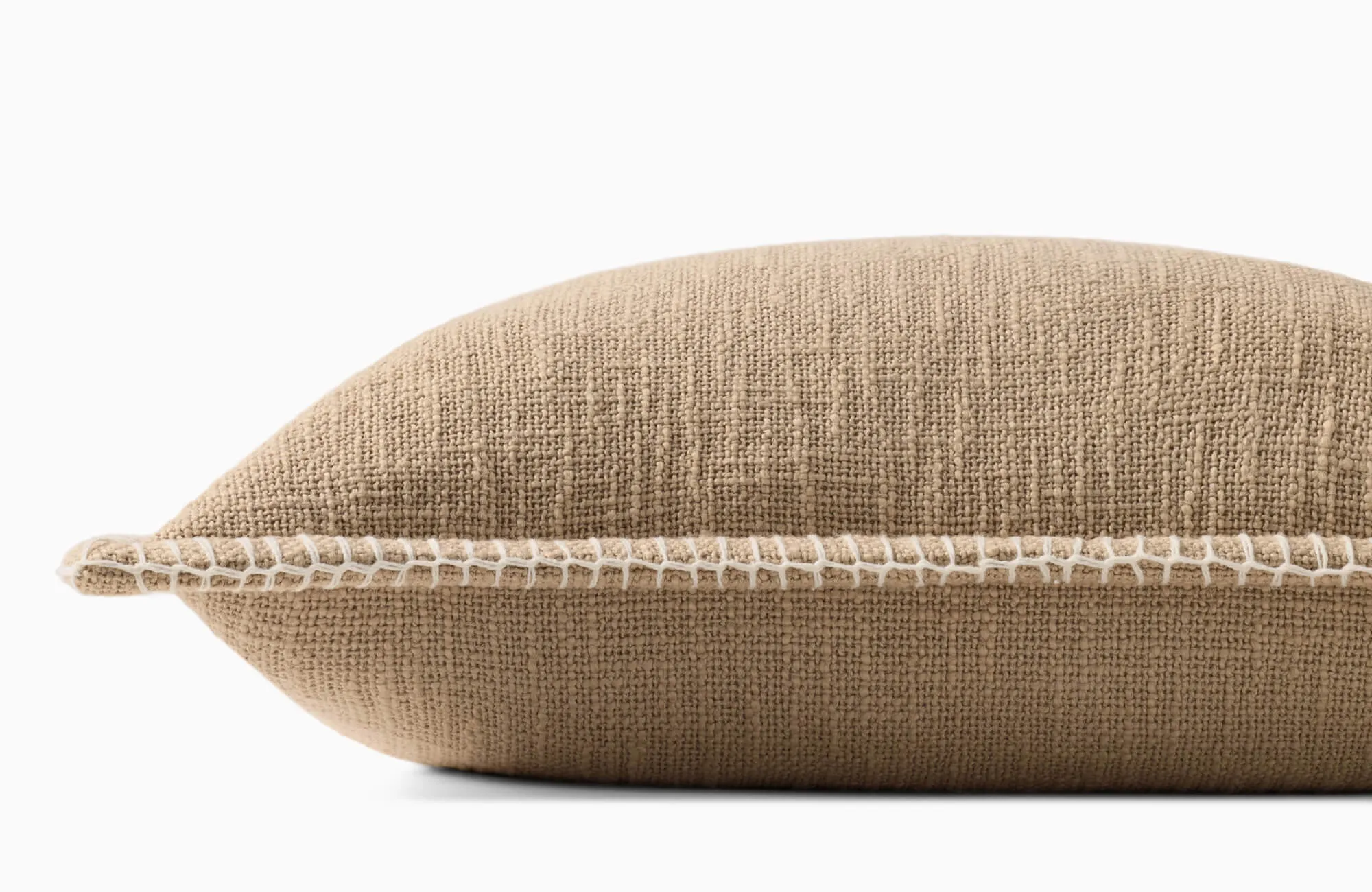
Choosing the right pillow is one of the few bedroom decisions that affects how the body feels every morning. The firmness of a pillow determines how well it supports the head and neck through the night, and that support changes depending on how a person sleeps, how their body is built, and what kind of mattress they are sleeping on. What works for a side sleeper with broad shoulders is not what works for a back sleeper on a soft mattress, and a pillow that feels supportive on the first night can lose that quality faster than expected if the fill material is not suited to the demand being placed on it.
In this blog, we'll cover what pillow firmness actually means, how sleep position and body type shape the right choice, and where throw and lumbar pillows fit into the broader conversation about comfort and support at home.

What Firmness Actually Means In A Pillow
Pillow firmness is not a single, standardized measurement, the way mattress firmness is. It describes how much resistance a pillow offers when weight is applied to it, and that resistance is shaped by what is inside the pillow, how much of it is there, and how the fill behaves under pressure over the course of a night.
How Pillow Firmness Is Measured And What It Affects
Unlike mattresses, pillows do not carry an industry-wide firmness scale, which means firmness is largely communicated through descriptive ratings, soft, medium, and firm, that can vary significantly from one manufacturer to another. What those ratings are trying to capture is how much the pillow compresses when a head rests on it and how quickly it rebounds when that pressure is removed. A pillow that compresses easily and stays flat offers very little resistance, while one that holds its shape under weight and pushes back against it is what most people mean when they describe a pillow as firm. That resistance directly affects how high the head sits above the mattress surface, which in turn affects the angle of the neck and the alignment of the spine. Understanding what firmness actually means makes it easier to evaluate whether a given pillow will meet the specific demands of how someone sleeps.
How Firmness Affects Neck And Spine Alignment During Sleep
The primary job of a sleep pillow is to keep the head, neck, and spine in a neutral position throughout the night, and firmness is the main variable that determines whether it can do that job. A pillow that is too soft allows the head to sink too deeply, dropping the neck below the level of the spine and creating a downward angle that places strain on the cervical vertebrae over hours of sleep. A pillow that is too firm holds the head too high, pushing the neck upward and creating the opposite problem. The right firmness holds the head at a height that keeps the neck in line with the rest of the spine, which varies depending on sleep position, body size, and mattress surface. When firmness is correctly matched to those variables, the muscles of the neck and shoulders are able to relax fully during sleep rather than working to compensate for a misaligned position.
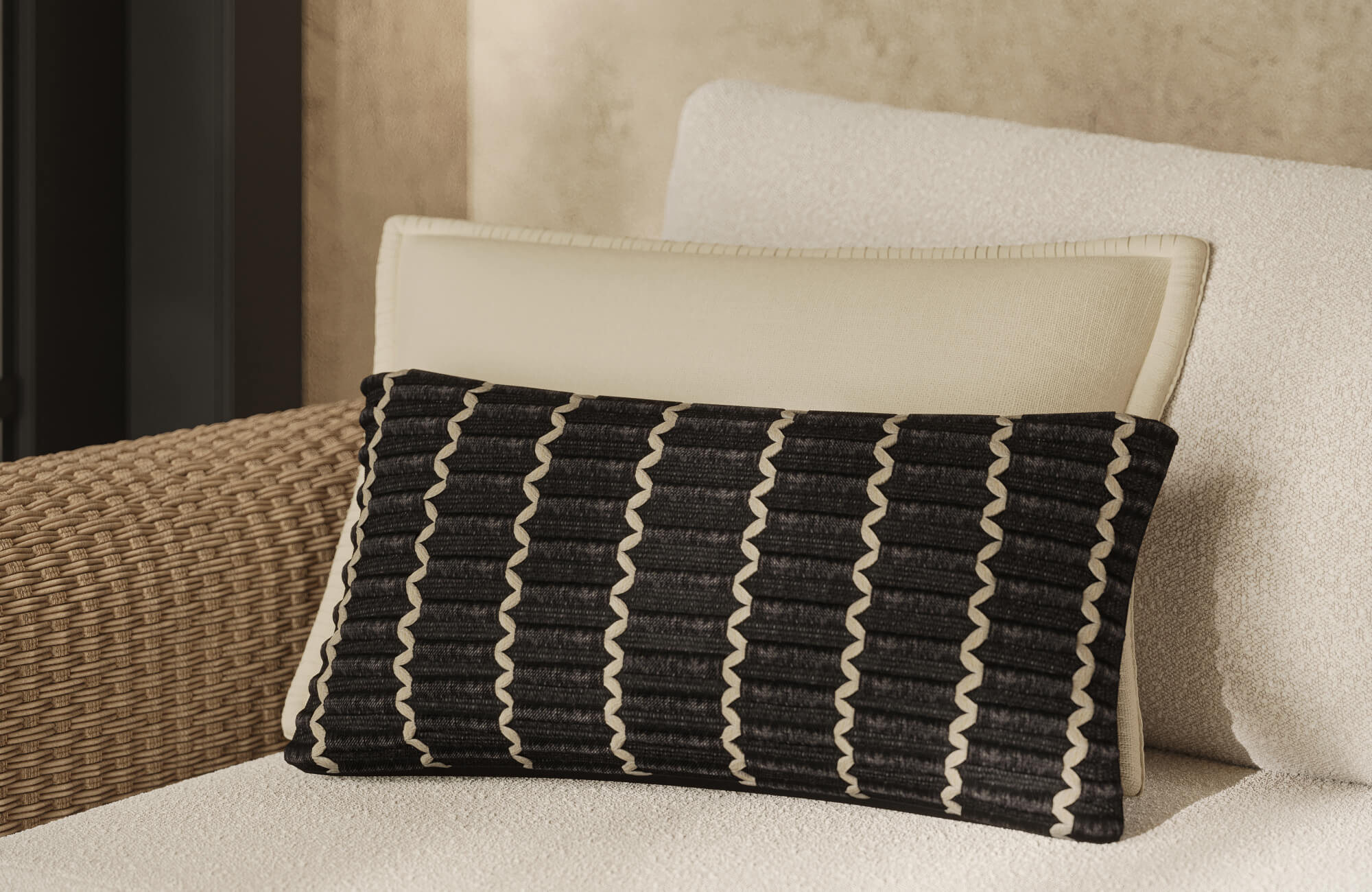
Fill material is one of the clearest predictors of how a pillow will behave under the weight of the head through the night. The olive pillow with the white whipstitched flange edge in the bedroom setting above is our Merelle 22" x 22" Down Pillow in Olive, filled with natural down clusters that compress readily under pressure and redistribute rather than holding a fixed position beneath the head. That softness makes it better suited as a layered decorative pillow than as a primary sleep support, where the fill would compress too deeply for most sleep positions to maintain proper neck alignment. In a bedroom arrangement that includes both supportive sleep pillows and decorative layers, the Merelle sits most comfortably at the front, contributing texture through its richly woven cotton cover without being asked to support the neck through the night.

How Sleep Position Determines The Right Level Of Firmness
The way a person sleeps determines how much distance needs to be bridged between the mattress surface and the head, and firmness is what controls that distance. Each sleep position places the body in a different relationship to the mattress, which means the support requirements of a side sleeper and a back sleeper are not interchangeable.
Why Side Sleepers Generally Need A Firmer Pillow
Side sleeping creates the largest gap between the mattress and the head because the shoulder acts as a platform that raises the torso above the surface. A pillow needs to fill that gap fully without compressing so much under the weight of the head that the neck begins to angle downward toward the mattress. A firmer pillow resists that compression and holds the head at a height that keeps the neck level with the spine rather than dropping below it. The wider the sleeper's shoulders, the more height the pillow needs to maintain, which is why firmness alone is not always enough, and loft also becomes a factor. Side sleepers who wake with neck or shoulder tension are often using a pillow that is compressing too quickly and failing to hold its shape through the night.
How Back Sleepers Benefit From Medium To Firm Support
Back sleeping places the head closer to the mattress surface than side sleeping does, which means the pillow does not need to bridge as large a gap. What it needs to do is support the natural curve of the neck without pushing the head too far forward or allowing it to drop too far back. A medium to firm pillow tends to serve back sleepers well because it provides enough resistance to maintain that curve without holding the head at an angle that strains the muscles at the base of the skull. A pillow that is too soft under a back sleeper will flatten out and let the head fall back toward the mattress, while one that is too firm will push the chin toward the chest and create tension in the front of the neck. The goal is a pillow that cradles the natural curve rather than flattening or exaggerating it.
Why Stomach Sleepers Require A Different Approach Entirely
Stomach sleeping is the position that places the most consistent strain on the neck because the head must rotate to one side for the entire duration of sleep. Adding height between the head and the mattress through a firm or even a medium pillow increases the angle of that rotation and compounds the strain on the cervical spine. Most stomach sleepers are better served by a very soft, low-loft pillow that keeps the head as close to the mattress level as possible, reducing the degree of rotation the neck has to sustain. Some stomach sleepers find that sleeping without a pillow under the head entirely, and placing one under the stomach instead to reduce lower back strain, is the more supportive arrangement. Firmness in a traditional sense works against the stomach sleeper rather than for them, which sets this position apart from every other sleep style.
What Combination Sleepers Should Look For In A Pillow
Combination sleepers move between two or more positions during the night, which means a pillow optimized for one position may actively work against them when they shift to another. A very firm pillow that serves a side sleeper well can feel uncomfortably high when that same person rolls onto their back. The most practical approach for combination sleepers is a medium-firmness pillow with enough responsiveness to adapt as the body shifts, holding adequate loft for side sleeping without creating too much height during back or stomach sleeping. Adjustable fill pillows are particularly well-suited to combination sleepers because the firmness and loft can be calibrated to a middle point that does not fully compromise any single position. The priority is a pillow that transitions without requiring the sleeper to wake up and reposition it.
When Two Pillows At Different Firmness Levels Work Better Than One
There are sleeping setups where a single pillow cannot meet all of the support needs in play, and using two pillows at different firmness levels is a more practical solution than searching for one pillow that does everything. A side sleeper who also experiences lower back tension, for example, might use a firm pillow under the head and a softer one between the knees to keep the hips aligned. A back sleeper with neck curvature concerns might layer a medium pillow beneath a thinner, firmer one to fine-tune the height and angle of support. The two-pillow approach also works for combination sleepers who want a firm base layer that does not shift and a softer top layer that adjusts more readily as they move. It is a more considered solution than defaulting to a single pillow and adjusting sleep habits around its limitations.
Choosing The Right Firmness For Your Body Type And Sleeping Setup
Sleep position is only part of the equation. The body carrying that position, and the surface it is sleeping on, both affect how a pillow needs to perform in order to deliver genuine support rather than just a general approximation of it.
How Shoulder Width Affects The Firmness A Side Sleeper Needs
Shoulder width determines how large the gap is between the mattress surface and the head when lying on one side, and that gap is what the pillow has to fill consistently throughout the night. A broader shoulder creates a larger gap, which means the pillow needs both adequate loft and enough firmness to resist compression under the weight of the head without collapsing and narrowing that distance. A side sleeper with narrower shoulders has a smaller gap to bridge, and a pillow that is too firm or too high for their frame will push the head upward rather than holding it level with the spine. This is why two people who sleep in the same position can need entirely different pillows. The position tells you the direction of the support needed, but shoulder width tells you how much.
Broader-framed side sleepers often find that pillows marketed as firm still compress too readily for their needs, particularly those filled with down or down alternative, and that a denser fill like latex or high-density foam holds up more reliably through the night. Narrower-framed side sleepers, on the other hand, may find that a pillow labeled as medium delivers what a firm pillow delivers for someone with a wider frame. Trying a pillow based on its firmness label alone, without accounting for body frame, is one of the most common reasons people cycle through multiple pillows without finding one that works. The label is a starting point, not a guarantee. Frame and fill together are what determine whether a pillow actually performs as needed.
Why Mattress Firmness And Pillow Firmness Work Together
The mattress surface a person sleeps on directly affects how much the body sinks into the bed, which changes the relationship between the shoulder, the mattress, and the head for a side sleeper, and between the back, the mattress, and the neck for a back sleeper. A very soft mattress allows the shoulder to sink deeply into the surface, which reduces the gap between the mattress and the head and means a side sleeper may need a less firm or lower loft pillow than they would on a firmer surface. A firm mattress keeps the shoulder closer to the surface level, increasing that gap and generally requiring more pillow height and resistance to compensate. Pillow firmness chosen without accounting for mattress firmness is often the reason a pillow that worked well in one bedroom feels wrong after a mattress change.
Back sleepers experience this relationship differently but just as significantly. On a soft mattress, the hips and torso sink lower, which can cause the upper back and neck to angle slightly, changing how much support the cervical curve needs from the pillow. On a firm mattress, the body stays closer to the surface, and the neck curve is more predictable, making it easier to find a pillow that reliably meets it. Thinking of the pillow and mattress as a system rather than two independent purchases leads to better outcomes than selecting each in isolation. When the two are well matched in firmness, the spine has the best chance of maintaining a neutral position from head to tailbone through the night.
How Body Weight Influences How A Pillow Compresses During Sleep
Body weight affects how quickly and how deeply a pillow compresses under the head, which in turn affects how long the pillow can maintain the support it initially provides. A heavier head places more downward force on the fill, which causes softer fills to compress more rapidly and reach a point where they are no longer providing meaningful resistance. For sleepers with a larger frame or a heavier head, a firmer pillow is not just a preference but a practical necessity if the goal is consistent support through the night rather than adequate support only in the first hour. Lighter sleepers can often find sufficient support in a medium pillow because the compression force they place on the fill is low enough that the pillow retains its loft without needing to be particularly resistant.
Body weight also affects how fill materials age and how quickly they lose their ability to hold shape. A pillow that performs well for a lighter sleeper may last considerably longer than the same pillow used by a heavier sleeper, because the cumulative compression over time breaks down the fill more quickly under greater force. This is worth factoring into the decision when choosing between fill types, particularly for those who have found that their pillows flatten and lose support faster than the expected lifespan. A denser, more resilient fill, latex or high-density foam in particular, tends to hold up better under sustained compression than down or down alternative, making it the more durable choice for sleepers whose body weight places consistent demand on the pillow through the night.
Where Throw And Lumbar Pillows Fit Into The Conversation
Firmness in pillows is not a concern reserved for sleep alone. Throw and lumbar pillows carry their own set of firmness considerations that are tied to how the body uses them during waking hours and how well they hold their shape in a space that is seen as much as it is used.
What Lumbar Pillows Actually Do For The Body During Seated Rest
A lumbar pillow sits at the lower back and fills the gap between the spine and whatever surface a person is leaning against, whether that is a sofa, a headboard, or a chair back. Most seating surfaces are not shaped to follow the natural inward curve of the lumbar spine, which means the lower back is left unsupported and begins to round forward over time as the muscles fatigue. A firm lumbar pillow resists that rounding by pushing back against the spine and encouraging it to maintain its natural curve rather than collapsing into the seat. A softer lumbar pillow compresses too readily under the weight of the torso and stops providing meaningful resistance within a short period of use, which defeats the purpose of having one. The effectiveness of a lumbar pillow is almost entirely dependent on whether it is firm enough to hold its position and its shape while the body leans into it.
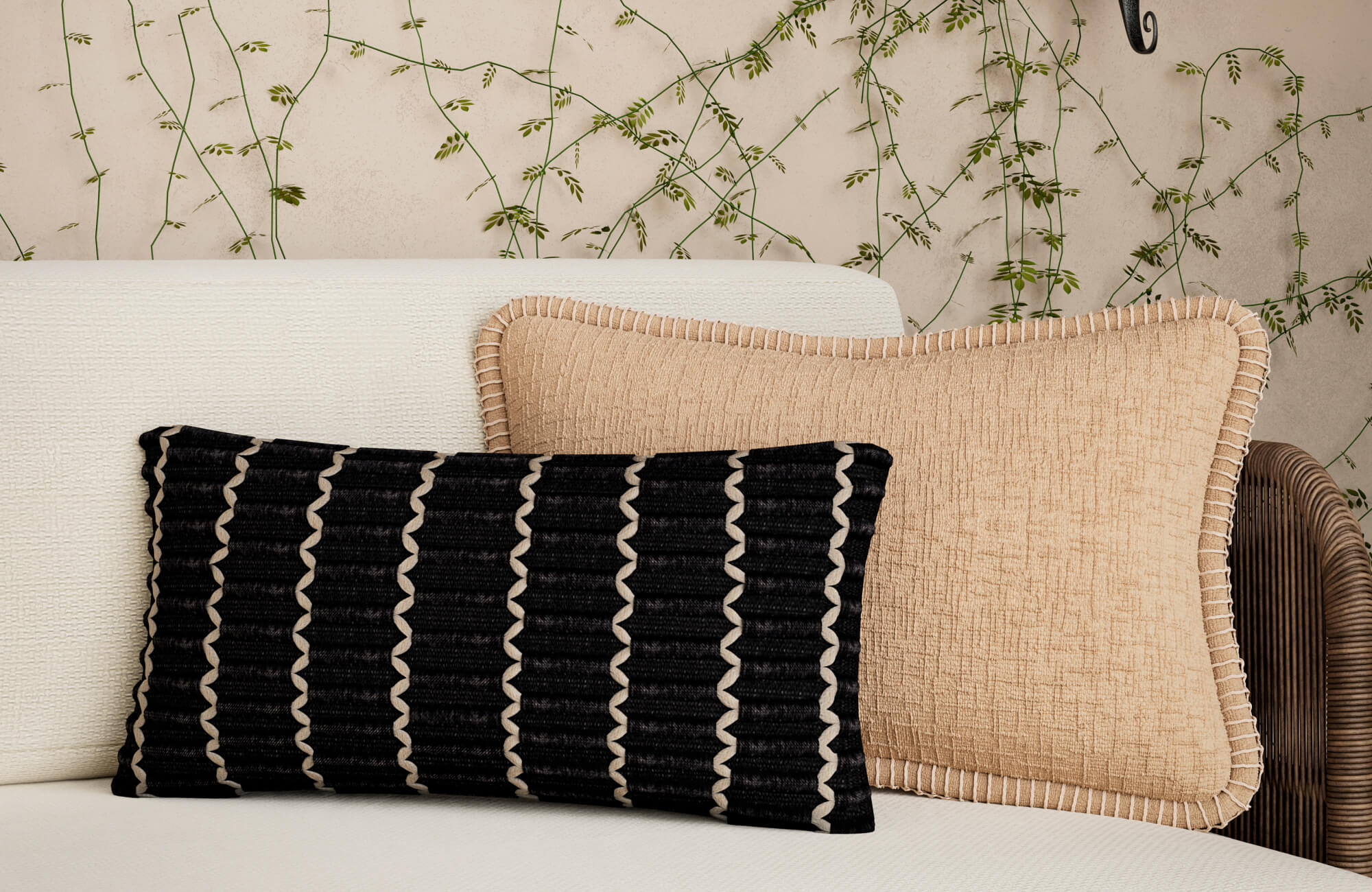
Our Merelle 13" x 21" Down Pillow in Tan above, whose natural down fill gives it a soft, yielding quality that makes it more comfortable to lean against during relaxed, casual seating than a densely packed insert would allow. For seated positions where sustained lower back support is the priority, pairing it with a firmer lumbar insert behind it gives the spine the resistance it needs, while Merelle's textured cotton cover and whipstitched flange edge contribute to the layered, considered look of the arrangement in front.
Why Throw Pillow Firmness Affects How A Bed Or Sofa Looks And Feels
A throw pillow that is too soft loses its shape quickly and begins to look deflated and uneven on a bed or sofa, which affects how the entire seating or sleeping surface reads in the room. A pillow that holds its fill firmly keeps its intended shape, whether that is a clean square, a structured rectangle, or a fuller, rounded form, and maintains that shape between uses without requiring constant refluffing. The firmness of a throw pillow also affects how it feels when someone leans against it or rests an arm on it during casual use. A pillow that collapses immediately under light pressure offers no meaningful support and tends to slide out of position rather than staying where it was placed. Firmness in a throw pillow is what allows it to function as both a visual element in the room and a usable object rather than purely one or the other.
How Firmness In Decorative Pillows Affects Their Shape Over Time
A decorative pillow insert that is too soft will begin to show its age faster than one with adequate firmness, because soft fills compress with repeated use and lose their ability to return to their original shape. The corners of a square pillow are often the first place this becomes visible, as they start to look pinched or empty rather than full and defined. A firmer insert maintains its volume more consistently because the fill resists compression rather than yielding to it, which means the pillow continues to look as full after months of use as it did when it was first placed. Insert size relative to the cover also plays a role here. An insert that is slightly larger than the cover dimensions forces the fill outward and keeps the pillow looking full even as the fill naturally settles over time. Choosing a firmer insert from the outset extends the life of the pillow's appearance without requiring it to be replaced or restuffed.
Fill Materials And How They Deliver Firmness Differently
Two pillows with the same firmness label can feel entirely different depending on what is inside them. Fill material determines not just the initial feel but how a pillow compresses over months of use, how it responds to heat, and whether it can maintain its support level long enough to justify the choice.
How Down And Down Alternative Pillows Achieve And Lose Firmness
Down pillows achieve their firmness through volume rather than density. The more fill packed into the pillow, the more resistance it offers, but that resistance is always compressible because the clusters of down shift and redistribute under pressure rather than holding a fixed position. A down pillow labeled as firm is simply one with a higher fill volume than a soft version of the same pillow, and that distinction matters because the firmness is not structural. Over time, down clusters break down with use and laundering, losing their ability to trap air and maintain loft, which causes the pillow to gradually flatten and offer less resistance than it did when new. Down alternative fills behave similarly, with synthetic clusters that mimic the compressibility of natural down but tend to break down faster and clump more readily, accelerating the point at which the pillow stops performing at the firmness level it was purchased for.
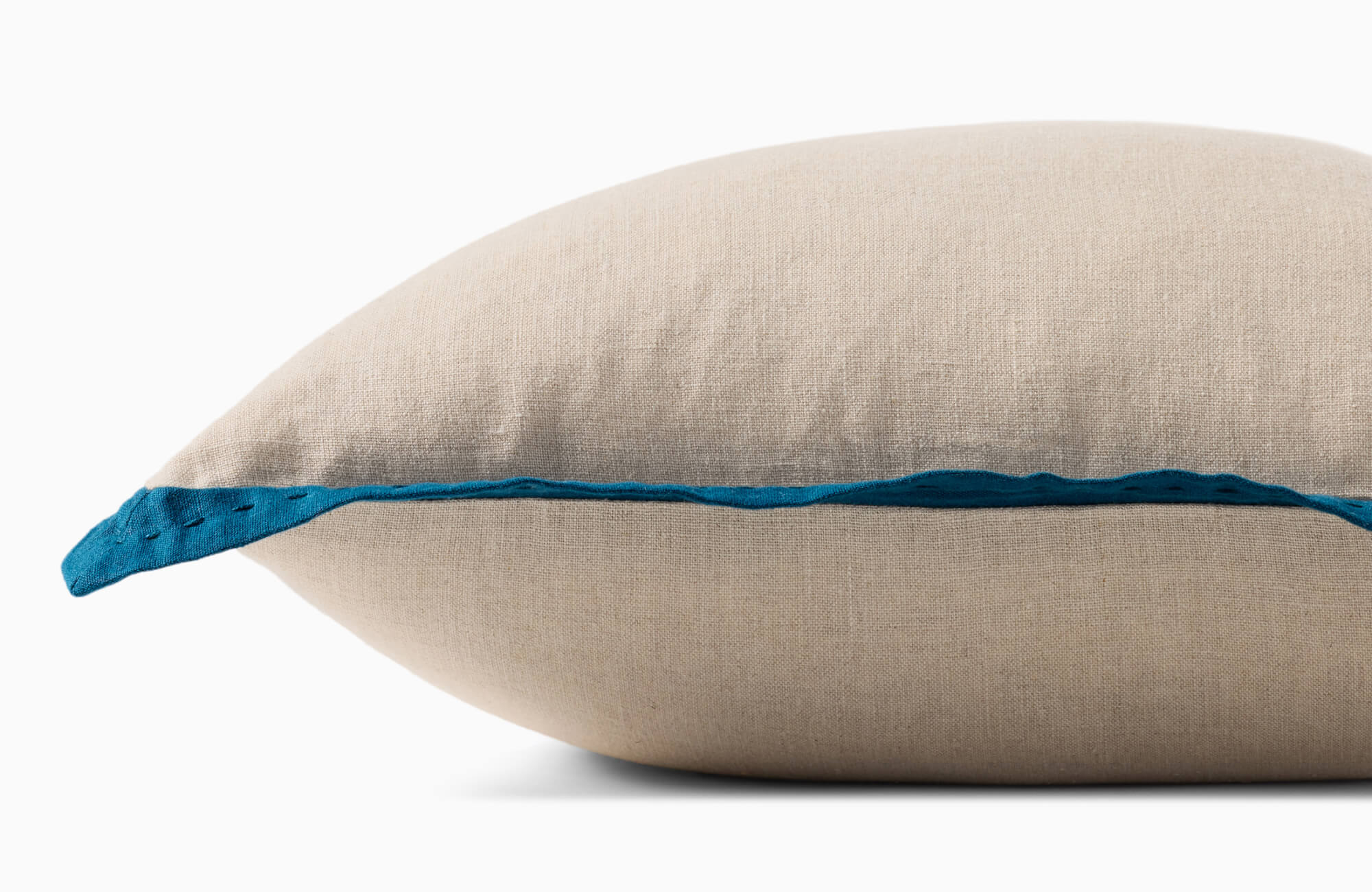
Down fill is one of the most common choices for throw and decorative pillows precisely because its softness and loft create the full, rounded profile that makes a pillow look generous and well-made on a bed or sofa. The profile visible in the image above belongs to our Brielle 18" x 18" Down Pillow in Natural and Blue, whose natural down cluster fill gives it that characteristically soft, rounded loft that holds its shape well when the pillow is upright and freshly placed. Because down firmness is volumetric rather than structural, the pillow will compress under sustained pressure and require occasional refluffing to return to the full profile shown here, which is a normal quality of down fill rather than a defect. For decorative use where the pillow is handled lightly and reset regularly, the down fill delivers the soft, generous appearance that makes the airy linen cover and hand-stitched blue flange edge read at their best.
Why Memory Foam Delivers A Different Kind Of Firm Support
Memory foam firmness is structural rather than volumetric, meaning the foam itself is the source of the resistance rather than the quantity of fill inside the pillow. When weight is applied, memory foam compresses slowly and conforms to the shape of the head and neck, distributing pressure across a wider surface area rather than pushing back against a single point of contact. This slow response is what gives memory foam its characteristic feel, a firmness that yields gradually rather than immediately, which some sleepers find supportive and others find restrictive depending on how much they move during the night. Memory foam is also sensitive to temperature, becoming slightly softer in warmer conditions and firmer in cooler ones, which means the feel of the pillow can shift between seasons or across different sleep environments. Shredded memory foam pillows behave somewhat differently from solid foam, offering more adjustability and a less uniform feel while still delivering more structural resistance than down or down alternative.
Latex As A Consistently Firm Option Across Sleep Positions
Latex delivers firmness through a different mechanism than memory foam, offering immediate pushback rather than a slow conforming response. When compressed, latex displaces and rebounds quickly, holding the head at a consistent height rather than allowing it to sink progressively deeper into the surface, the way memory foam does. This responsiveness makes latex particularly well-suited to combination sleepers who shift positions during the night, because the pillow adjusts immediately rather than requiring time to recover its shape between position changes. Natural latex also holds its firmness level more consistently over time than most other fill materials, resisting the gradual compression and breakdown that shortens the effective life of down and synthetic fills. It sleeps cooler than memory foam in most conditions because its open cell structure allows more airflow through the pillow, which makes it a more comfortable option for those who find dense foam pillows trap heat.
Buckwheat And Specialty Fills For Those Who Need Adjustable Firmness
Buckwheat hulls deliver firmness in a way that no other fill material does, through a loose, granular structure that holds its shape under pressure without compressing the way soft fills do. The hulls shift to conform to the contours of the head and neck and then stay in that position rather than springing back, which provides a firm and stable surface that some sleepers find more supportive than foam or latex. The defining advantage of buckwheat over other fill types is adjustability. Because the hulls can be added or removed through a zippered opening, the sleeper can dial in the exact loft and firmness level that works for their body and position rather than being fixed to whatever the manufacturer chose. The trade-off is weight and noise, as buckwheat pillows are considerably heavier than other types and produce a rustling sound when the fill shifts, which is a meaningful consideration for light sleepers. Other specialty fills, including wool and kapok, occupy a middle ground between down and latex in terms of firmness and are worth considering for those with sensitivities to synthetic materials or foam off-gassing.
Finding The Right Pillow Firmness For Your Sleep And Your Space
Pillow firmness is rarely a one-size decision. It is shaped by how a person sleeps, the width of their frame, the surface they are sleeping on, and the fill material inside the pillow itself. A firmness level that delivers genuine support for one sleeper can work against another in the same bed, which is why understanding the variables behind the choice matters more than defaulting to a label. The same thinking applies to throw and lumbar pillows, where firmness determines not just how a pillow feels in use but how well it holds its shape and function over time.
If you are comparing pillow options, fill materials, or trying to determine how different firmness levels might work across your bedroom or living spaces, our Personalized Design Consultation can help bring clarity to the process. Our team can offer tailored guidance based on your sleep setup, your existing space, and your comfort goals, helping you move forward with choices that perform as well as they look.
Follow us on Instagram
@EDWARD.MARTIN
)
)
)
)
)
)
)
)
)
)
)
)
)
)
)
)