Choosing the best height of a countertop is an equally important part of creating a kitchen that feels comfortable and easy to work in. The height you select influences posture, reach, and how naturally you move through everyday tasks. When the counter is positioned well, it can improve efficiency, reduce strain, and make your workspace feel more intuitive. In this article, we’ll explore the key factors that shape the ideal countertop height to help you make a decision that supports both function and comfort.

The Standard Countertop Height and Why It Exists
Most people start with the standard countertop height because it suits a wide range of layouts and appliances, yet few know how this measurement became the norm. Explore how this height was established, how cabinetry influences the final measurement, and why compatibility plays an important role when planning a new kitchen.
The Established Standard
The standard height of a kitchen countertop is typically 36 inches. This measurement became standard because it aligns with the average standing posture, allowing most people to work comfortably without unnecessary bending or reaching. As kitchens evolved, manufacturers began designing appliances and cabinets around this height, which is why it appears consistently across many styles. Understanding how this standard developed helps you decide whether it suits your daily habits or if a customized height would be a better fit.
The Role of Base Cabinet Design
Base cabinets significantly influence the final countertop height. Their structure includes the cabinet box, the toe kick, and the countertop material, all of which contribute to the overall measurement. Small adjustments within these components can raise or lower the height to better suit your needs. A higher surface might be achieved by increasing the toe kick or choosing a thicker countertop, while a lower height can result from using a slimmer material or modifying the cabinet proportions. Exploring these options helps you choose a height that feels comfortable while maintaining stability and practicality.
Appliance and Fixture Compatibility
Many appliances, including dishwashers, built-in ovens, and sinks, are designed to align with a standard 36-inch counter height. When adjusting the height, it’s equally important to check whether the appliances you plan to use can accommodate that change. A dishwasher, for example, has limited adjustment in its legs, so raising the counter too far may prevent it from fitting beneath the cabinet. Measuring each appliance’s required clearance and comparing it with your planned height helps ensure everything aligns properly. Taking this step keeps the kitchen both cohesive and fully functional.

Adapting Counter Height to User Ergonomics
While the standard countertop height suits many households, it isn’t ideal for everyone. The height you choose influences how comfortably you can prepare food, wash dishes, and move through everyday kitchen tasks. By considering body measurements and natural posture, you can identify a height that feels more supportive and suitable for your routine.
Matching Height to User Measurements
A straightforward way to determine your ideal counter height is to measure the height of your elbow. Stand naturally with your arms bent at a ninety-degree angle, then subtract two to four inches from that measurement to estimate a comfortable working level. This usually positions your hands so they can move efficiently without strain. You can try this out by stacking books or similar items on a table until the surface matches the height that feels most natural, giving you a clear sense of what works before making a final decision.
Supporting Natural Movement
The right countertop height allows your arms and shoulders to move comfortably during daily tasks. If the surface is too tall, your shoulders may lift and create tension, while a height that is too low can cause your back to round as you reach downward. For anyone with back discomfort or limited mobility, a slightly higher surface can lessen the need to bend. Adjusting the height to match your natural movement makes everyday cooking feel more comfortable and efficient.
Considering Primary User Priorities
Households vary in who uses the kitchen most, and the ideal countertop height often reflects those routines. For example, if one person handles most of the cooking, the height can be tailored to that individual’s comfort. However, when several people share the space and have different height needs, incorporating a mix of counter heights can be especially useful. An island, for instance, can be set slightly lower or higher for specific tasks while the surrounding counters remain at a standard height. Seating also plays a role in this balance, and stools like Edward Martin’s Shaw Counter Stool in Bergen Olive, as shown in the photo above, help create a comfortable transition between sitting and standing at the island. In turn, this approach allows everyone to work comfortably without relying on one fixed height.

Countertop Height for Different Kitchen Tasks
Not every kitchen task works best at the same counter height. Some activities require greater leverage, while others benefit from a higher surface that improves reach and visibility. Understanding how different heights support specific tasks can help you shape a layout that feels practical and comfortable to use.
Food Prep Zones
During chopping and detailed prep work, a slightly lower surface can feel more natural because it brings the food closer to your hands. This reduces strain on your wrists and supports better control over your knife. Prep areas between 33 and 35 inches often work well for these tasks. If you prepare vegetables or other ingredients regularly, dedicating a section of your counter to this height can also make the work feel more precise and comfortable. In kitchens where the island doubles as a prep surface, a counter stool such as Edward Martin’s Genevieve Counter Stool in Light Oak, as displayed in the photo above, also helps maintain a practical working posture while still keeping the space comfortable and inviting.
Cooking and Stove Adjacency
Cooking near the stove typically works well at a standard counter height, as it provides enough clearance to manage pots and pans while keeping your arms in a comfortable position. The relationship between the counter and the cooktop can differ depending on whether you use gas or induction, as gas ranges often sit slightly higher, while induction models can be installed flush with the counter. Understanding how your cooktop aligns with the surrounding counter helps you create a seamless transition that supports safe and steady movement during cooking.
Baking and Kneading Areas
Baking tasks often feel easier at a lower surface, especially when rolling dough or shaping pastry. A reduced height helps you apply steady pressure without straining your arms. A dedicated baking area around 33 inches can be useful if you regularly make bread or desserts. Incorporating a small lowered section into an island or side counter can provide this functionality while still fitting smoothly into the overall kitchen design.

Customizing Counter Height for Kitchen Layout and Workflow
Your kitchen layout plays a major role in how comfortably the space supports your daily routine. Counter height affects how easily you move between work zones and how comfortably multiple people can use the space simultaneously. Understanding how layout and workflow interact with height choices helps you create a kitchen that feels both efficient and easy to navigate.
Optimizing the Work Triangle
A well-designed kitchen supports smooth movement between the sink, stove, and refrigerator. Counter height contributes to this flow by influencing how naturally you can pivot or reach for ingredients. When the height suits your build, transitioning between these areas feels easier and places less strain on your body. As you plan your layout, it helps to stand in these key spots and consider how your arms and back will move during meal preparation.
Integrating Islands and Peninsulas
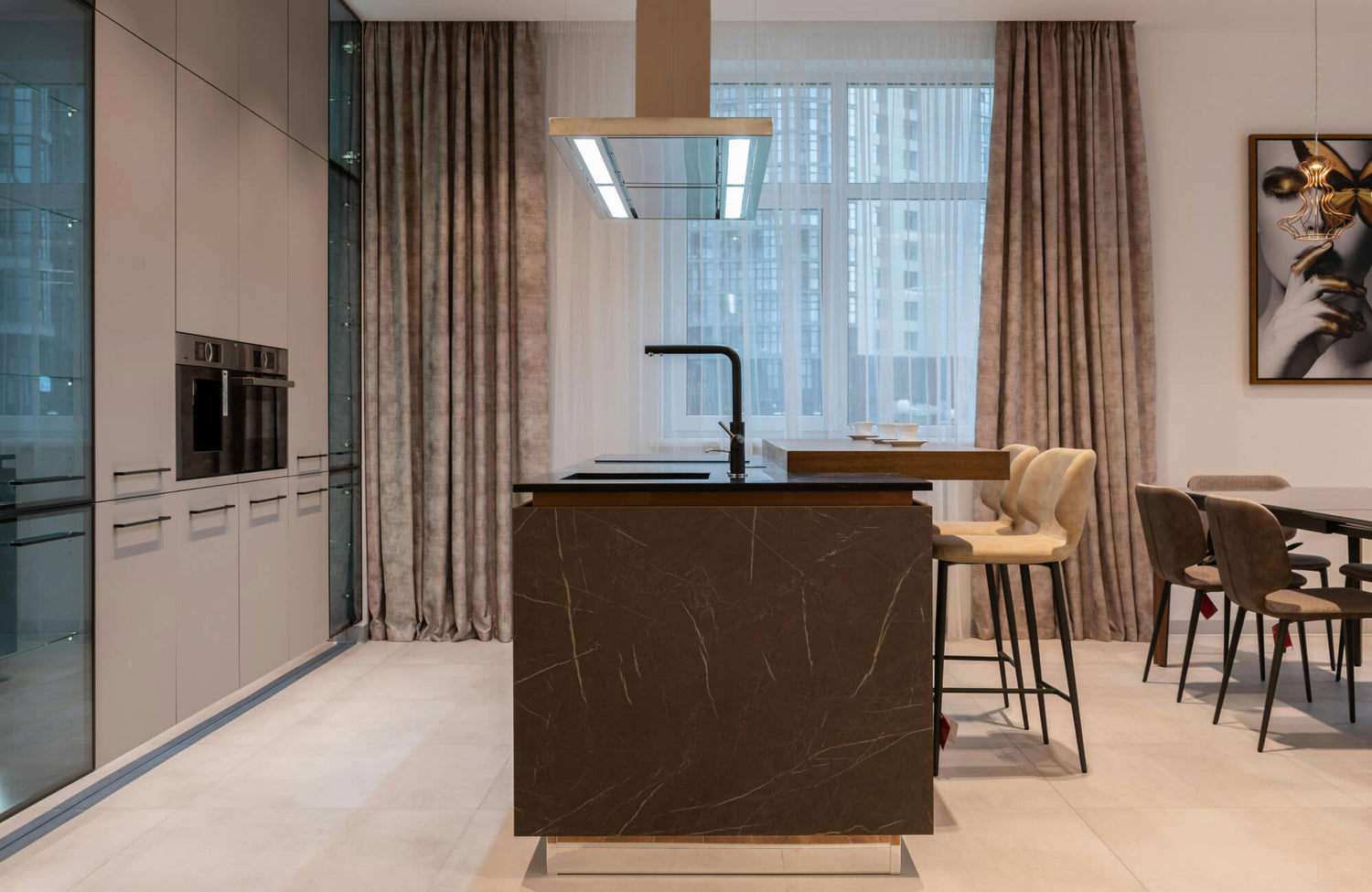
Islands and peninsulas often serve different roles than perimeter counters, and selecting the right height helps them function effectively. For example, if your island is primarily used for meal preparation, a standard or slightly lower height may feel most comfortable. On the other hand, when the island also serves as a gathering area or casual dining spot, a raised section can improve seating comfort. Seating choices can also influence how the island feels in daily use, and pieces like Edward Martin’s Crawford Counter Stool in Brown, as displayed in the photo above, show how supportive counter stools can complement the island’s height and purpose. By clearly defining the role of each surface, you can choose heights that support how the space is used and create a layout that feels cohesive and practical.
Managing Transitions Between Surfaces
When you include multiple counter heights, it’s essential to consider how each surface visually and physically connects. A subtle step-down or step-up can define distinct zones without disrupting the overall flow. You can emphasize these transitions with material changes or edge details that naturally guide the eye from one area to the next. These choices can help each height serve its intended purpose while still supporting a cohesive layout.

Height Considerations for Seating and Multiuse Counters
Many modern kitchens feature seating at islands or peninsulas, making counter height an equally important part of overall comfort and usability. When a surface is used for both cooking and gathering, its height should support good posture and easy interaction. Understanding these considerations helps you create a seating area that feels welcoming and functional.
Counter Seating Standards
There are three common seating heights: standard table height at about 30 inches, counter height at around 36 inches, and bar height at roughly 42 inches. Your counter should match the right stool height so everyone can sit comfortably without feeling cramped. Adequate knee space, elbow clearance, and a suitable overhang all play an equally important role in creating a stable and comfortable seating experience. When these proportions are well balanced, the seating area feels inviting and easy to use.
Designing Comfortable Eating Zones
Eating at a counter often involves a different posture than working at one, so it’s useful to consider legroom, seat spacing, and the width needed for comfortable dining. A well-planned eating area supports easy conversation and gives each person enough room to sit naturally. By considering these dimensions early, you can ensure the seating area fits smoothly into your cooking routine without making the space feel crowded.
Choosing Stools for the Right Height
The height of your counter stools plays a key role in how comfortable the seating area feels. To find a good fit, measure from the floor to the underside of the countertop and subtract about ten inches. This gap gives your legs enough space to rest naturally without lifting your knees too high. Selecting counterstools that match the counter height helps avoid awkward sitting positions and makes the space more pleasant for everyday use. A well-designed seating, such as Edward Martin’s Savannah Counter Stool in Black, as shown in the photo above, can also reinforce that balance by pairing supportive proportions with the surrounding counter height.

Long-Term Planning and Accessibility Needs
A kitchen designed with future needs in mind can remain functional and comfortable for many years. Whether you expect to stay in your home long-term or want to make the space more accessible for various users, counter height becomes an important consideration. Exploring how height adjustments support changing mobility and physical needs can help you plan a kitchen that stays practical over time.
Planning for Aging in Place
As mobility changes, accessibility naturally becomes more important. A counter that feels comfortable today may be harder to use later if bending or reaching becomes difficult. By incorporating a range of counter heights, you can make the kitchen more adaptable without compromising its appearance. These variations offer flexibility if you or someone in your household experiences changing needs over time.
Meeting Accessibility Guidelines
Accessibility guidelines provide practical measurements that help make kitchens easier to use for people with limited mobility. These recommendations often include lowering certain counters and allowing enough knee clearance for wheelchair users. By considering these guidelines, you can create a kitchen that feels open, practical, and comfortable for everyone. Thoughtful planning ensures the space remains functional while still maintaining a welcoming atmosphere.
Flexible Design Strategies
Some design features can help your kitchen adjust as your needs evolve. For instance, pull-out work surfaces, adjustable islands, and modular cabinetry offer height options that can shift with your daily routines. Additionally, these flexible solutions work well in both remodels and new builds, allowing you to create a space that serves you now and continues to support you in the future.
Choosing the Right Kitchen Countertop Height
The best height for a kitchen countertop is typically 36 inches, a standard that suits most users for everyday tasks, such as prepping, cooking, and cleaning. However, the ideal height ultimately depends on your posture, daily habits, and the way you use your kitchen. By weighing these factors together, you can choose a countertop height that feels natural, supports comfortable movement, and elevates the way you use your kitchen every day. Every kitchen is unique, and the goal is to create a height that functions seamlessly with your home and lifestyle.
If you’d like support choosing the height that works best for your space, you’re welcome to contact us or explore our design services for personalized guidance.