Sharing a bathroom with someone else can make you appreciate how much the right vanity top really matters, especially when you’re working with two sinks. From the material you choose to the way it fits into your layout, each detail affects how comfortable the space feels and how easy it is to maintain. In this guide, we’ll go over the essentials so you can find a double sink vanity top that matches your routine, supports your storage needs, and blends naturally with your bathroom design.

What to Look for in a Double Sink Vanity Top
Choosing the right double sink vanity top comes down to balancing durability, daily practicality, and how well the piece fits into your overall bathroom layout. The material you pick, the way it performs over time, and how it blends with your design will all shape how functional and visually cohesive the space feels.
Material Durability and Long-Term Performance
The material of your vanity top plays a huge role in how well it holds up to daily water exposure, product spills, and constant use. Options like quartz, marble, granite, and solid surface each offer different strengths, so it helps to weigh how much durability you need versus the look you want. A strong, well-sealed surface keeps the countertop looking smooth and consistent, even in busy bathrooms. You’ll also want something that resists staining and scratching since double vanities typically see more activity.
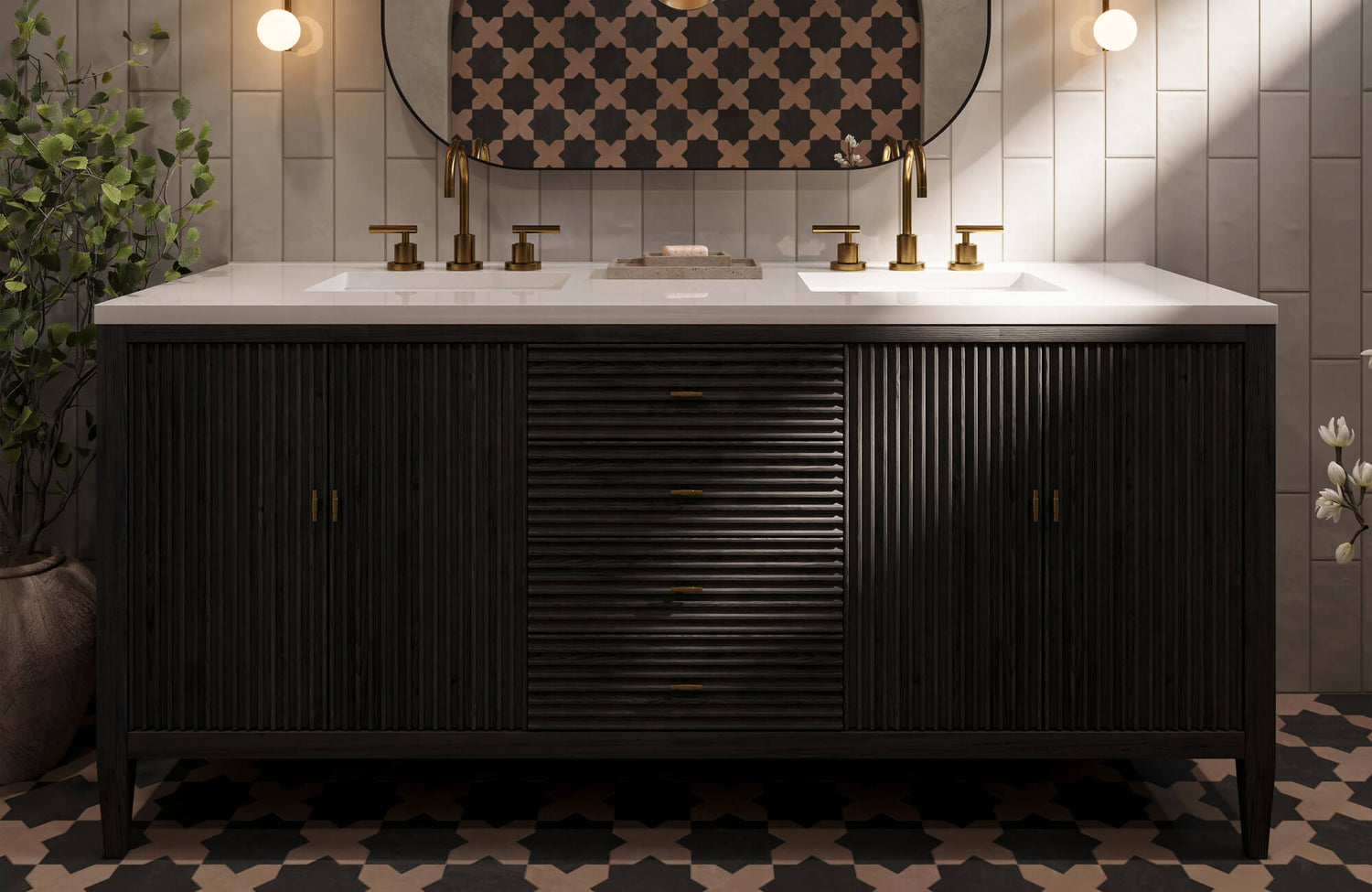
A great example of this is our Bridgette 72" Double Vanity in Smokey Celadon with a 3 cm White Zeus Quartz Top above, which shows how durable materials support both beauty and daily performance. The quartz surface resists stains and moisture with ease, keeping its clean, bright finish even with constant use. Paired with thoughtful storage, soft-close hardware, and a UV- and moisture-resistant build, the Bridgette demonstrates how the right materials help a double vanity stay reliable and polished for years.
Daily Maintenance and Cleaning Needs
Every material comes with its own maintenance routine, and understanding those needs early helps prevent future frustration. Some surfaces wipe clean with simple daily care, while others may require periodic sealing or more delicate cleaning habits. If you share the bathroom with a partner or family, ease of maintenance becomes even more important. Picking a surface that fits naturally into your lifestyle keeps the vanity looking polished without extra effort. The goal is to choose something that feels manageable day-to-day while still offering the finish you love.
Space, Layout, and Plumbing Considerations
A double sink vanity top needs enough room for two basins, comfortable spacing, and smooth plumbing alignment. Before choosing a countertop, it’s important to understand how the sinks will sit, how much counter space you’ll have left, and whether your plumbing can accommodate the layout. The width and depth of the vanity also influence how comfortable the setup feels when two people use the space at once. Thinking about these factors early helps prevent crowding or awkward placements later. A well-planned layout ensures the vanity top feels natural and functional in your bathroom.
Aesthetic Cohesion With Your Bathroom Style
Your vanity top should blend seamlessly with the rest of your bathroom, creating a unified look rather than feeling like a separate piece. The color, pattern, and finish you choose influence how well the countertop pairs with your tile, fixtures, mirrors, and overall design direction. Whether you prefer something bold and eye-catching or soft and understated, the surface should support the atmosphere you want to create. Cohesion also helps the bathroom feel cleaner and more intentional as a whole. When everything works together visually, the double sink setup looks polished and well-designed.

Comparing Double Sink vs. Single Sink Vanities
Choosing between a double sink and a single sink vanity depends on how you use your bathroom, how much space you have, and what feels most comfortable for your daily routine. Each option comes with its own strengths and trade-offs, and understanding these differences makes it easier to pick the setup that truly fits your household.
Space Efficiency: What You Gain and What You Give Up
A double sink vanity offers more shared sink access, but it naturally takes up more horizontal space, which can reduce open floor area in smaller bathrooms. Single sink vanities, on the other hand, like our Maxine 55" Single Vanity in Black Wash Oak Veneer with Carrara Marble Top above, leave more room for movement and allow for wider counter space on either side. When space is tight, this extra breathing room can make the bathroom feel more open and comfortable. In larger bathrooms, a double sink can feel right at home without overwhelming the layout. The key is choosing the setup that feels balanced rather than crowded.
Storage Differences: Countertop vs. Cabinet Space
Double sinks often reduce available countertop space because each basin takes a portion of the surface. They can also limit the amount of storage inside the vanity since plumbing lines take up more room beneath. Single sink vanities typically offer more uninterrupted counter space and more usable cabinet compartments for daily essentials. Households that rely heavily on product storage may appreciate this extra room. Thinking about what you store and how you use the space helps reveal which option fits your routine better.
Daily Usability for Couples and Families
For couples or shared bathrooms, two sinks can make mornings feel much smoother by allowing simultaneous use without waiting. However, some families find that one larger sink with more counter space works just as well, especially if routines are staggered. Single sinks also allow for more expansive mirror options, which can be helpful in multi-user households. It ultimately comes down to how many people use the space at the same time. When your daily rhythm is clear, choosing the right setup becomes much simpler.
Plumbing Implications and Installation Differences
Double sink vanities require additional plumbing lines and drain connections, which may mean a more complex installation compared to a single sink. This can affect how cabinets are arranged inside the vanity, as more space is needed for pipes and fittings. Single sinks offer simpler installation and often allow more flexibility in how the vanity is designed internally. These plumbing differences also influence long-term accessibility for maintenance and repairs. Understanding these practical considerations helps you choose a setup that aligns with your comfort level and future needs.

Popular Materials for Double Sink Vanity Tops
The material you choose for a double sink vanity top affects everything from daily comfort to long-term durability and the overall style of your bathroom. Each option brings its own balance of texture, maintenance needs, and visual appeal, making it important to pick one that supports both your routine and your design goals. Below, we’ll look at the most popular materials and how they perform in real, everyday use.
Quartz
Quartz is one of the most dependable materials for double sink vanities because it blends durability with a refined, consistent look. It resists stains, moisture, and everyday wear, which makes it great for busy households or shared bathrooms. The non-porous surface also keeps cleaning simple since it doesn’t require sealing the way natural stone does. With a wide range of colors and patterns, quartz easily matches modern, traditional, or transitional designs.
A great example of this is our Bridgette 72" Double Vanity in Light Natural Oak with a 3 cm White Zeus Quartz Top above, which shows how quartz can elevate both function and style. The quartz surface stays bright and resilient through daily use, resisting stains and moisture while keeping the vanity easy to maintain. Its durability pairs beautifully with the vanity’s warm oak finish, soft-close storage, and built-in power features, creating a setup that feels both practical and refined.
Marble
Marble offers a classic, high-end appearance that instantly elevates any bathroom with its veining and natural movement. Its cool, smooth surface adds a sense of luxury, especially in larger double-sink setups where more stone is visible. However, marble is naturally porous and can show subtle etching or stains over time, which means it requires more mindful care and sealing. When maintained well, though, it develops a rich patina that adds character and elegance. For homeowners who love a timeless, organic look, marble remains a beautiful and expressive choice.
Engineered Stone
Engineered stone delivers the look of natural materials while offering more predictable performance and easier upkeep. It’s designed to resist stains, scratches, and moisture, making it well-suited for bathrooms with frequent daily use. The surface texture stays consistent across the slab, which helps create a seamless look on double sink vanities. It also comes in a wide selection of patterns that mimic stone without the natural variations. If you want a material that balances appearance and practicality, engineered stone offers a dependable middle ground.
Porcelain
Porcelain vanity tops stand out for their durability, sleek aesthetics, and resistance to heat, moisture, and scratches. Because porcelain is non-porous, it won’t absorb liquids or oils, keeping upkeep simple and predictable. Its thin, modern profile works beautifully in contemporary bathrooms, especially when paired with floating vanities. You’ll also find a variety of finishes, from soft matte to glossy, stone-look styles. For a streamlined and long-lasting option, porcelain brings both style and strength.
Solid Surface
Solid surface materials provide a smooth, seamless appearance that feels clean, soft, and modern. They’re non-porous and easy to maintain, making them ideal for households that want low-effort upkeep without sacrificing design. These surfaces can be molded into integrated sinks, eliminating joints where grime tends to collect. Solid surface materials also have a warm, velvety feel that adds comfort to daily use. If you’re drawn to a minimalist, cohesive look, this option delivers effortless polish.
Granite
Granite brings a natural, earthy presence to the bathroom with its organic patterns and textured depth. It resists heat and scratches well, making it suitable for busy spaces or shared vanities. Although granite requires periodic sealing to protect against stains, many homeowners find the upkeep manageable given its long-term resilience. The natural variation in each slab gives double sink setups a rich, distinctive look. If you prefer strong, bold stone characteristics, granite offers both durability and natural beauty.

Standard Vanity Top Sizes and What Fits Your Bathroom Best
Vanity top size plays a major role in how comfortable and functional a double sink setup feels in your bathroom. Larger tops create more counter space and separation, while smaller options work better in compact layouts where every inch matters. Here, we’ll walk through the most common sizes so you can picture how each one performs in everyday use.
20"
A 20-inch vanity top is typically too narrow for two sinks, but it can work for small bathrooms that need a compact single-sink solution. It offers just enough space for essential items without overwhelming the room. This size keeps walkways open and maintains good flow in tight layouts. If your bathroom is very limited in width, 20 inches provides a practical, space-saving option.
24"
A 24-inch vanity top offers a bit more comfort than a 20-inch model, but still remains best suited for single sinks. It gives you slightly more counter space for daily essentials while keeping a small footprint. This size works well in modest guest bathrooms or powder rooms where simplicity matters. If you want a functional yet compact setup, 24 inches strikes a good balance.
30"
A 30-inch vanity top is ideal for comfortable single-sink setups that need room for storage and daily essentials. It accommodates a larger basin with enough counter space to feel practical for everyday use. This size works especially well in small to medium bathrooms where balance and functionality are important. If you're upgrading from a compact vanity, 30 inches creates a noticeable improvement in comfort.
36"
A 36-inch vanity top, like the one our Abigail 36" Single Vanity in Light Natural Oak with 3 cm White Zeus Quartz Top above, offers a roomy single-sink layout that still fits well in medium-sized bathrooms. It provides generous counter space on both sides, making daily routines feel more organized and comfortable. The proportion feels substantial without overwhelming the room. If you want a single-sink setup that still feels upscale, 36 inches is a reliable choice.
48"
A 48-inch vanity top is the smallest size that can accommodate a double sink, though spacing will be fairly tight. It offers limited counter space but works for couples who need two basins in a compact bathroom. This size functions well when you prioritize dual sinks over storage. If your room is narrow but you still want a double-sink experience, 48 inches is the starting point.
55"
A 55-inch vanity top provides slightly more comfort for a double-sink layout, giving each person a bit more breathing room. Counter space becomes more functional, allowing for daily items without feeling crowded. This size fits well in medium-sized bathrooms where proportion still matters. If you need a double-sink setup that doesn’t feel cramped, 55 inches offers a smoother experience.
60"
A 60-inch vanity top is one of the most popular choices for double sinks because it creates a balanced mix of comfort and functionality. It offers enough counter space for two people to use the vanity comfortably. The size also suits a wide range of bathroom layouts, from modern remodels to classic designs. If you want a double-sink option that feels neither too large nor too tight, 60 inches is a dependable standard.
72"
A 72-inch vanity top provides spacious comfort, making it ideal for primary bathrooms or large shared spaces. Each sink gets ample room, along with a generous counter surface for storage and daily routines. This size also creates a luxurious, resort-like feel when styled with mirrors and lighting. If you want the most comfortable and visually impressive double-sink setup, 72 inches is the go-to option.

Choosing Between Floating and Freestanding Vanities
Floating and freestanding vanities each create a different visual and functional experience in a bathroom, so choosing between them comes down to the look and lifestyle you want. One style opens up the room with lighter lines, while the other brings grounded presence and built-in storage. Below, we’ll break down the key differences to help you picture which one fits your space best.
Visual Weight and Openness
Floating vanities, such as our Royce 72" Double Vanity in Chestnut with 3 cm White Zeus Quartz Top above, create a lighter, more open look because they leave the floor visible underneath, which helps small bathrooms feel bigger and more breathable. This style pairs well with modern, minimalist spaces where clean lines matter. Freestanding vanities, on the other hand, add visual weight and feel more like a piece of furniture, giving the room a grounded and substantial presence. They work beautifully in traditional or transitional designs where warmth and structure are key. Choosing between the two depends on whether you want the room to feel airy or anchored.
Storage Capacity and Organization
Freestanding vanities usually offer more storage because they extend all the way to the floor and can accommodate larger drawers or cabinets. This makes them ideal for households that need space for towels, cleaning supplies, and everyday toiletries. Floating styles tend to provide less storage, but they still offer practical organization in the form of drawers or slim compartments. Their raised design, however, can give the illusion of more space even when actual storage is limited. If you prioritize capacity, freestanding wins, but floating offers visual clarity with just enough functionality.
Installation Complexity and Plumbing Exposure
Floating vanities generally require more advanced installation because they must be securely mounted to the wall and supported properly, which can involve extra labor. This style also leaves the plumbing slightly more exposed unless you choose a model designed to conceal it. Freestanding vanities are easier to install because they sit directly on the floor, often needing only simple plumbing alignment. They typically hide pipes more effectively, which keeps the look clean and finished. If you prefer a simpler setup with less construction work, freestanding is usually the more straightforward option.
Best Scenarios for Each Style
Floating vanities shine in small bathrooms, modern designs, and spaces where you want the floor to feel more open and expansive. They’re perfect when you want a sleek, contemporary look without adding visual heaviness. Freestanding vanities excel in primary bathrooms, family spaces, and rooms where extra storage and a furniture-like presence are important. Their grounded feel adds warmth and structure, making the room look more established. Ultimately, the best choice comes down to your layout needs, design style, and how you want the room to function day to day.

Sink Style Options for Double Vanities
The type of sink you choose can completely change how a double vanity looks and functions, so it’s worth thinking about both style and day-to-day usability. Some sinks create a clean, seamless appearance, while others add sculptural height or extra counter presence.
Undermount Sinks
Undermount sinks offer a streamlined, modern look because they sit below the countertop, creating a smooth surface that’s easy to wipe clean. This style works especially well for double vanities since it keeps the counter open and uncluttered. With no raised edges, water and spills flow directly into the sink, which makes daily upkeep simpler. They pair beautifully with stone and solid-surface tops, reinforcing a polished, high-end feel. If you prefer a clean, understated design, undermount sinks are one of the most reliable choices.
Vessel Sinks
Vessel sinks sit above the countertop, acting almost like a decorative focal point that adds height and sculptural presence. On a double vanity, they bring symmetry and drama, especially when paired with modern or spa-inspired interiors. However, they do take up more counter space, so the layout needs to be planned carefully. Their raised profile can also slightly change the ergonomics of handwashing, depending on the height of the vanity. If you want your double vanity to make a stylish statement, vessel sinks deliver a strong visual impact.
Integrated Sinks
Integrated sinks blend seamlessly into the vanity top because the basin and countertop are made from a single material. This creates a smooth, continuous look that feels clean and contemporary, while eliminating seams where grime typically collects. Integrated designs make cleaning incredibly easy, which is especially helpful for busy households. They also give double vanities a cohesive, minimal aesthetic that works in both modern and transitional bathrooms. If you love simplicity and low-maintenance style, integrated sinks are a standout option.
Trough Sinks
Trough sinks offer a long, shared basin that can comfortably accommodate two people at once. This style works well in double vanities when you want a more unified and spa-like feel instead of two separate bowls. The elongated shape adds visual interest and can make the vanity look more custom and architectural. Trough sinks also reduce splashing because of their depth and smooth lines. If you prefer a clean, communal design with plenty of functional space, a trough sink is a smart and stylish choice.
Drop-In Sinks
Drop-in sinks sit into a cutout in the countertop, with a rim that rests on top of the surface. They’re easy to install and work well with many vanity styles, making them a versatile option for double sink setups. The raised rim does create a slight cleaning edge, but the functional tradeoff is easier replacement or upgrades in the future. Drop-in sinks also come in a wide range of shapes and materials, giving you plenty of design flexibility. If you want a practical, straightforward sink choice that fits nearly any double vanity, drop-ins are a dependable option.
What This Means for Your Double Sink Vanity
A double sink vanity top feels much easier to choose once you get a sense of how the material, layout, and daily habits all come together in real use. When you pick something that fits your routine and matches the look you want, the bathroom naturally feels more comfortable and easier to move around in. Thinking about storage, plumbing, and size early on also helps you avoid surprises during installation. With the right decisions, your vanity top turns into a reliable part of the bathroom that supports your day-to-day rhythm.
If you’re planning a remodel or want a clearer idea of which material or size works best for your space, our team can help you sort through the details. A design consultation gives you the chance to compare finishes, visualize layouts, and build a setup that feels both practical and beautifully coordinated. Book a design consultation today and start creating a bathroom that truly works for you.