A comfortable kitchen island can completely transform how you use your space, turning quick meals, casual conversations, and even work sessions into moments you actually look forward to. Although islands are naturally social and functional, the real magic happens when the seating feels effortless and inviting. This is why comfort should be more than an afterthought. It should influence your choices from the very beginning.
As you explore the many ways to elevate your island seating, you’ll find that comfort is the result of thoughtful decisions that blend practicality with design. The right stool structure, smart layout, supportive accessories, and cohesive style all work together to create a place where you and your guests can settle in naturally. With the strategies in this article, you can turn your kitchen island into a destination that feels as good as it looks.

Choosing Stools that Support Real Comfort
Before anything else, comfort begins with the stool itself. A stool’s form, construction, and materials directly shape how enjoyable and sustainable your island seating experience will be.
Prioritizing Ergonomic Stool Structure
The anatomy of a stool goes far beyond style, and if you want seating that truly supports longer meals or work sessions, it helps to look closely at its ergonomic details. Contoured seats, for instance, distribute weight more evenly and ease pressure on your hips, which makes a noticeable difference when you’ve been seated for a while. Equally important, a supportive backrest encourages your spine to rest in a natural and relaxed position. When you choose a seat depth between 15 and 18 inches, your knees also bend comfortably, and a back height of 8 to 12 inches above the seat gives enough support without restricting movement or feeling bulky.
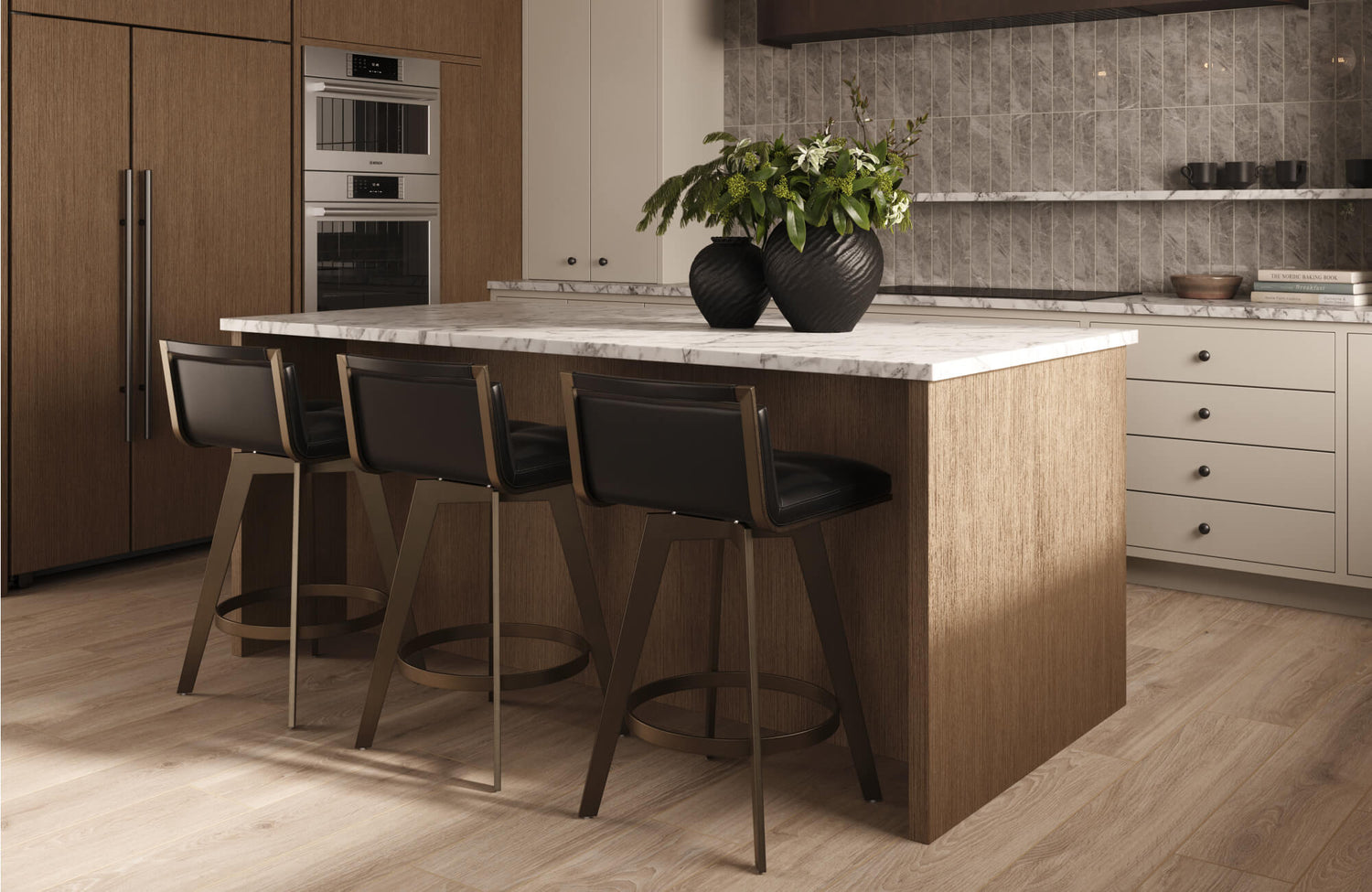
As you refine these small but meaningful elements, you’ll find that the stool feels more inviting and relaxing. The stools shown in the image above are our Crawford Counter Stool in Brown, featuring a warm caramel-like tone and a supportive curved silhouette that highlights how ergonomic design can elevate both comfort and style. Their gentle contouring and balanced proportions also show exactly how extended sitting can feel effortless when the right structure is in place. When these ergonomic qualities pair with a well-scaled kitchen island, the result is seating that feels supportive, balanced, and genuinely enjoyable every time you settle in.
Evaluating Upholstery, Padding, and Materials
The materials you select influence not only how a stool feels the moment you sit down, but also how well that comfort holds up over time. High-density foam offers consistent, firm support that resists flattening, while memory foam molds to your body for a more customized sensation. If you lean toward clean, minimalist design, contoured wood or molded plastic may be appealing, though they typically work best when you don’t plan to sit for extended periods.
However, comfort also depends on how well the stool fits your daily routine. If your kitchen sees plenty of activity or you share the space with kids or pets, fabrics with stain-resistant coatings and strong abrasion ratings can save you a lot of frustration. These performance materials allow you to enjoy soft, padded seating without worrying about frequent wear or spills. Whether you prefer a plush upholstered stool or a sleek sculptural design, choosing materials that match your lifestyle ensures your comfort lasts.
Matching Stool Height to Counter Height
Getting the stool height right is an essential step toward a comfortable seating experience, yet it’s often overlooked. You’ll want to maintain about 9 to 12 inches of space between the top of the seat and the underside of your counter, which gives your legs room to move naturally and keeps your posture relaxed. For standard 36-inch counters, stools between 24 and 27 inches will feel most comfortable, while 42-inch counters or bar-height islands pair best with stools ranging from 28 to 32 inches.
If your kitchen serves many purposes or if people of various heights regularly use the island, adjustable stools provide a welcome level of flexibility. Gas-lift styles let each person fine-tune their seating height so they can sit comfortably whether they’re eating, working, or simply hanging out. And if you prefer a fixed-height option that still feels versatile and universally supportive, our Grant Counter Stool in White offers a clean, bright look with proportions that suit a wide range of counter heights. This adaptability ensures that your island becomes a space where everyone feels at ease, no matter who takes a seat.

Designing the Island for Better Seating Comfort
Designing your kitchen island with comfort in mind is just as important as choosing the right stools. Even the most ergonomic seat won’t feel quite right if the island itself doesn’t support natural, relaxed movement. Proper knee and leg clearance, for instance, plays a major role in how easy it is to settle into your seat. When your island offers an overhang between 12 and 15 inches, you gain the space needed to sit without twisting your legs or leaning forward awkwardly. If your island falls short, additions like a waterfall edge or a shallow foot rail can provide the extra depth or support you need, proving that even small structural changes can dramatically elevate everyday comfort.
However, comfort isn’t just about structure. It also depends on smart layout decisions. When stools are spaced 26 to 30 inches apart, you avoid crowding and allow each person to move naturally, fostering smoother conversation and easier dining. In tighter kitchens, staggering the seating or choosing slimmer stool silhouettes keeps the area functional without sacrificing ease of use. The final layer of comfort comes from lighting, which shapes the overall atmosphere of the island. Pendant lights hung 30 to 36 inches above the counter prevent glare and maintain open sightlines, while a mix of task and ambient lighting, especially with dimmers, allows the space to adapt effortlessly to everything from food prep to evening gatherings. Together, these elements create an island setup that feels intuitive, welcoming, and genuinely comfortable to use.

Tailoring Stool Choices to Lifestyle and Household Needs
Stool design should reflect the way you live. Whether you’re raising a family, entertaining friends, or working within a compact layout, the right seating should feel aligned with your daily rhythm and effortless to use.
Families with Children
In a family-focused kitchen, stools need to offer stability, safety, and durability so you can worry less about mishaps and focus more on everyday moments. Stools with wide bases or splayed legs create a grounded feel that minimizes tipping, making them a smart choice for younger children who tend to move and shift as they sit. Fixed-height stools are also worth considering because they remove the temptation for kids to fiddle with adjustment levers, reducing the chance of sudden drops or wobbles. If you prefer an even more secure seating style for little ones, incorporating dining chairs at the island can work beautifully, especially when the layout allows for chairs with arms that help keep children comfortably contained.
Additionally, cleaning becomes far easier when you choose materials meant to withstand spills and heavy use. Marine vinyl and polypropylene wipe down quickly and resist staining, helping your island maintain a neat, fresh look even with frequent snacks and activities. Opting for wider seats and shorter backs also offers a secure perch that supports comfort while reducing the risk of a child leaning too far back. With these thoughtful details, your island seating becomes both practical and reassuring in a busy household.
Frequent Entertainers
If you use your kitchen island as a gathering spot, comfort plays a major role in how long your guests feel inclined to stay. Plush, padded stools with higher backs create a welcoming environment that encourages people to relax and engage. These features make a noticeable difference during longer conversations or meals, allowing everyone to settle in without shifting or adjusting constantly. Swivel bases further enhance the experience by making interaction natural and effortless, especially when people want to turn toward different parts of the room.
Aesthetic harmony can also elevate the atmosphere of your entertaining space. By mixing stool styles at different sections of the island—pairing swivel stools on one side with upholstered seats on the other—you create visual interest without compromising usability. As long as the seating heights remain consistent and the comfort level balanced, the island becomes both a focal point and a functional anchor for hosting.
Compact Kitchens and Multipurpose Islands
In a smaller kitchen, every inch counts, and choosing the right stools helps the space feel open and efficient. Backless stools are especially useful because they tuck neatly under the counter when not in use, keeping pathways clear and reducing visual clutter. Their low profile makes the kitchen appear larger, which can be a welcome bonus in tight quarters. Lightweight frames made from aluminum or slim-profile steel also allow you to move stools easily when you need to shift from meal prep to dining or from everyday use to accommodating extra guests.
To maintain comfort without sacrificing space, shallow seat depths help prevent stools from projecting too far into walkways, creating a smoother flow through the room. If your household needs flexibility, collapsible or stackable stools provide an adaptable solution that adjusts to your changing routines. These options let you expand or streamline seating as needed, ensuring your island remains functional and comfortable regardless of its size or purpose.
The kitchen shown above offers a great example of how the right stool style can keep a compact layout feeling airy and refined. The stools featured are our Genevieve Counter Stool in Light Oak, celebrated for their slender frame, woven seat, and light oak finish that brightens the space without overwhelming it. Their streamlined profile also maintains an open visual flow while still providing supportive seating, making them an excellent fit for kitchens where style and efficiency need to work hand in hand.

Enhancing Comfort Through Layout and Flow
Enhancing comfort at your kitchen island goes beyond choosing the right stools. It also depends on how smoothly the space functions around them. When walkways are wide enough and circulation feels natural, the island becomes easier to approach, sit at, and move around. Maintaining 36 to 44 inches of space behind your stools allows people to pass without squeezing or interrupting anyone who’s seated, which keeps the kitchen running well even during busy moments. In smaller spaces, seating placed along one end of the island or stools that tuck in fully can preserve valuable circulation while still offering a welcoming place to sit. These subtle adjustments ensure that the island remains both comfortable and practical throughout your daily routine.
Equally important is how stools relate to different zones of the island. Positioning seating away from hot or wet areas helps maintain safety and keeps prep zones uncluttered, while placing stools along the outer or room-facing edge encourages relaxed interaction. Moreover, the layout you choose can steer the experience toward focused tasks or social connection. A straight row of stools supports meals, homework, and laptop use, giving each person their own defined space. Meanwhile, angled or L-shaped seating naturally promotes conversation and creates a more communal feel.
The space seen in the picture above is a great example of how thoughtful layout and seating work together. Our Shaw Counter Stool in Bergen Olive, whose slim frame and soft, supportive seat allow for easy circulation while adding visual warmth to the island. Their placement along the outer edge also encourages comfortable interaction without disrupting prep areas. By aligning circulation, placement, and orientation with the way you use your kitchen, you create a seating area that feels effortless, intuitive, and genuinely comfortable.

Aligning Aesthetics and Comfort for Cohesive Design
Aligning aesthetics with comfort has a powerful effect on how inviting your kitchen island seating feels. When your stools reflect the style, scale, and personality of your kitchen, the entire space takes on a sense of balance that naturally enhances comfort. Coordinated materials, finishes, and silhouettes help the stools blend into the design rather than stand out awkwardly, creating an atmosphere where sitting down feels seamless and intuitive. This harmony not only strengthens the visual appeal of the room but also shapes the emotional experience of using the space, making your kitchen island feel warm, intentional, and engaging.
As you layer design choices like shape, color, and texture, the connection between aesthetics and comfort becomes even clearer. Lightweight designs with open backs or slim profiles keep your kitchen feeling airy while still offering strong physical support, especially in smaller spaces. Soft neutrals, matte finishes, and inviting fabrics also contribute to a sense of ease, subtly signaling that the island is a place to relax and enjoy.
In settings where softness and warmth are essential to the overall design, stools like our Joel Counter Stool in Dove Cream, featured in the image above, provide a beautiful example of how comfort and aesthetics meet. Its quilted cream seat and smooth wood frame introduce gentle texture and a welcoming tone that complements both classic and contemporary kitchens. By integrating stools with finishes and upholstery that echo the room’s colors and materials, you reinforce visual unity that naturally enhances the comfort of the entire island area.
Designing an Island That Invites You to Stay
Comfort at a kitchen island comes from intentionally layering function, ergonomics, and style so the space supports the way you live. By choosing well-built stools, refining the island’s layout, and creating visual harmony, you craft seating that feels effortless and enjoyable throughout your daily routine. When each detail works in sync, your kitchen island becomes more than a surface for meals or tasks; it becomes a place where people naturally gather, linger, and connect.
If you ever need guidance selecting the right materials, exploring new design options, or getting expert insight tailored to your space, our team is always ready to help. Our Contact Us page provides an easy way to reach knowledgeable professionals who can answer questions, offer recommendations, or assist you with your next project. This added support allows you to move forward with confidence, ensuring your island design not only looks beautiful but also delivers lasting comfort for years to come.