
)
)
)
)
)
)
)
)
What Are The Different Types Of Decorative Bowls?
A decorative bowl can quietly change the feeling of a surface, adding shape, material weight, or a considered focal point that makes a room feel more complete. Whether placed on a coffee table, dining table, kitchen island, shelf, console, or dresser, the right bowl brings a sense of layering without unnecessary accumulation. From understated everyday accents to sculptural statement pieces, decorative bowls take many forms, each suited to different rooms, surfaces, and intentions. Understanding how they differ makes it easier to choose one that feels deliberate, beautiful, and truly at home in your space.
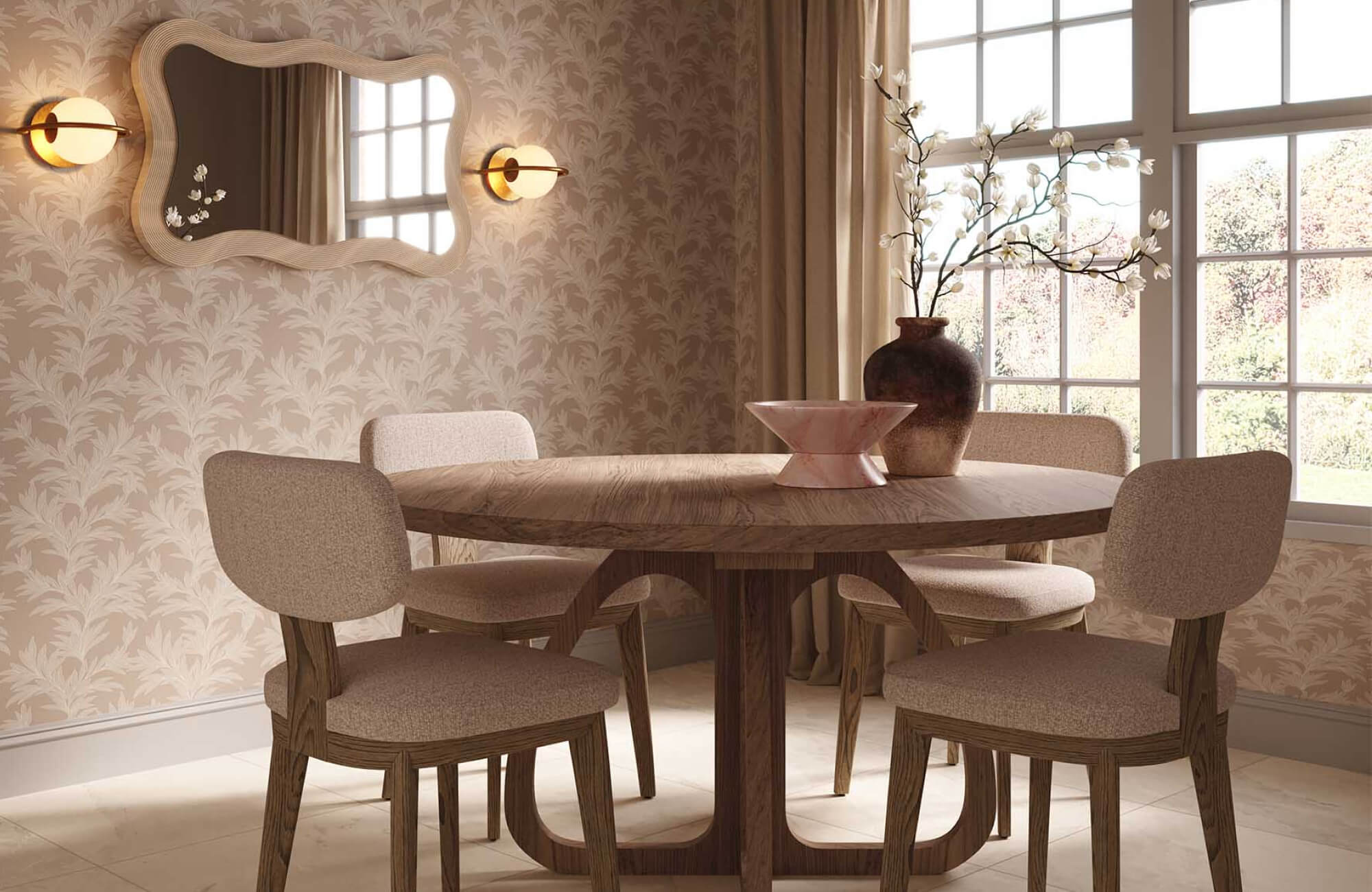
A marble decorative bowl sits at the center of the Laurent Walnut Round Dining Table in Matte, 60", its rose-toned form standing out softly against the warm wood grain, the patterned wallpaper, and the layered glow of Carly 22" Pendant in Vintage Brass above
Decorative Bowls By Material
The material of a decorative bowl shapes everything: how it reads in a room, how it feels to the eye, and how it relates to the surfaces and objects around it. Before choosing, consider what quality you want the bowl to bring: warmth, reflection, texture, weight, color, or a quiet presence that simply belongs.
Ceramic Bowls
Ceramic decorative bowls are among the most versatile because their character shifts entirely with the finish. A glazed ceramic bowl can introduce color and light to a tabletop, while a matte ceramic bowl creates something softer and more grounded, present without demanding attention. In a room already rich with texture, a smooth ceramic bowl can bring calm to the arrangement. In a space that feels too quiet, a hand-thrown ceramic bowl with an irregular rim or a visible glaze pattern adds character without overwhelming the room. Ceramic works especially well on dining tables, open shelves, consoles, and sideboards, substantial enough to stand alone, composed enough to hold simple fillers with ease.
Glass Bowls
Glass decorative bowls are a considered choice when you want a lighter visual presence. Because glass reflects light and reads as less heavy than wood, stone, or metal, it works well in smaller rooms or on surfaces that already hold several objects. A clear glass bowl keeps a coffee table or console from feeling visually crowded. Tinted, ribbed, or blown glass introduces personality while preserving the overall sense of lightness. If you want a bowl that feels refined without imposing, glass is a strong choice, beautiful when left empty if the form is interesting, or filled simply with smooth stones, shells, ornaments, or seasonal objects.
Wood Bowls
Wood decorative bowls bring warmth and an organic quality that few other materials can replicate. They are especially effective in spaces that need a natural element to soften harder surfaces, such as stone countertops, glass tables, metal shelving, or painted cabinetry. A smooth wooden bowl can feel clean and understated. A carved or live-edge bowl reads as more textural and collected. Wood bowls are often most at home on kitchen islands, dining tables, and entry consoles, where they contribute a sense of ease and welcome. For food display, choose a food-safe finish. For purely decorative use, let the grain, form, and tone of the wood guide the selection.
Metal Bowls
Metal decorative bowls introduce contrast, reflection, and a structural quality that can sharpen a room. The finish determines the effect. Brass and bronze feel warm and settled; nickel and silver read cooler and more precise; blackened iron brings a stronger modern or industrial character.
A metal bowl is particularly effective when a room needs a defined accent. A brass bowl can warm a neutral console. A hammered metal bowl adds texture without depending on color. Metal also has a practical appeal, durable and easy to move when you want to shift a surface arrangement. To keep the result balanced, pair metal with softer materials nearby: books, woven trays, linen runners, or ceramic vessels.
Stone Bowls
Stone decorative bowls feel substantial, and they often become the natural focal point of a surface. Marble, travertine, onyx, alabaster, and concrete-finish bowls all carry natural patterns and weight, making them well-suited to spaces that need a strong visual anchor.
A stone bowl is most powerful when the material itself is the statement. Veining, pitting, tonal variation, and carved edges can make even an empty bowl feel complete. Edward Martin's Denwick Rosa Marble Small Bowl embodies exactly this quality; its soft rose-toned marble and natural veining need nothing more than the right surface to feel considered and complete. The photo featured above shows how effortlessly Denwick settles onto a dining table, its warm coloring drawing the eye without competing with the room.
For a quieter result, choose soft, even coloring. For a more decisive accent, look for visible veining or stronger contrast.
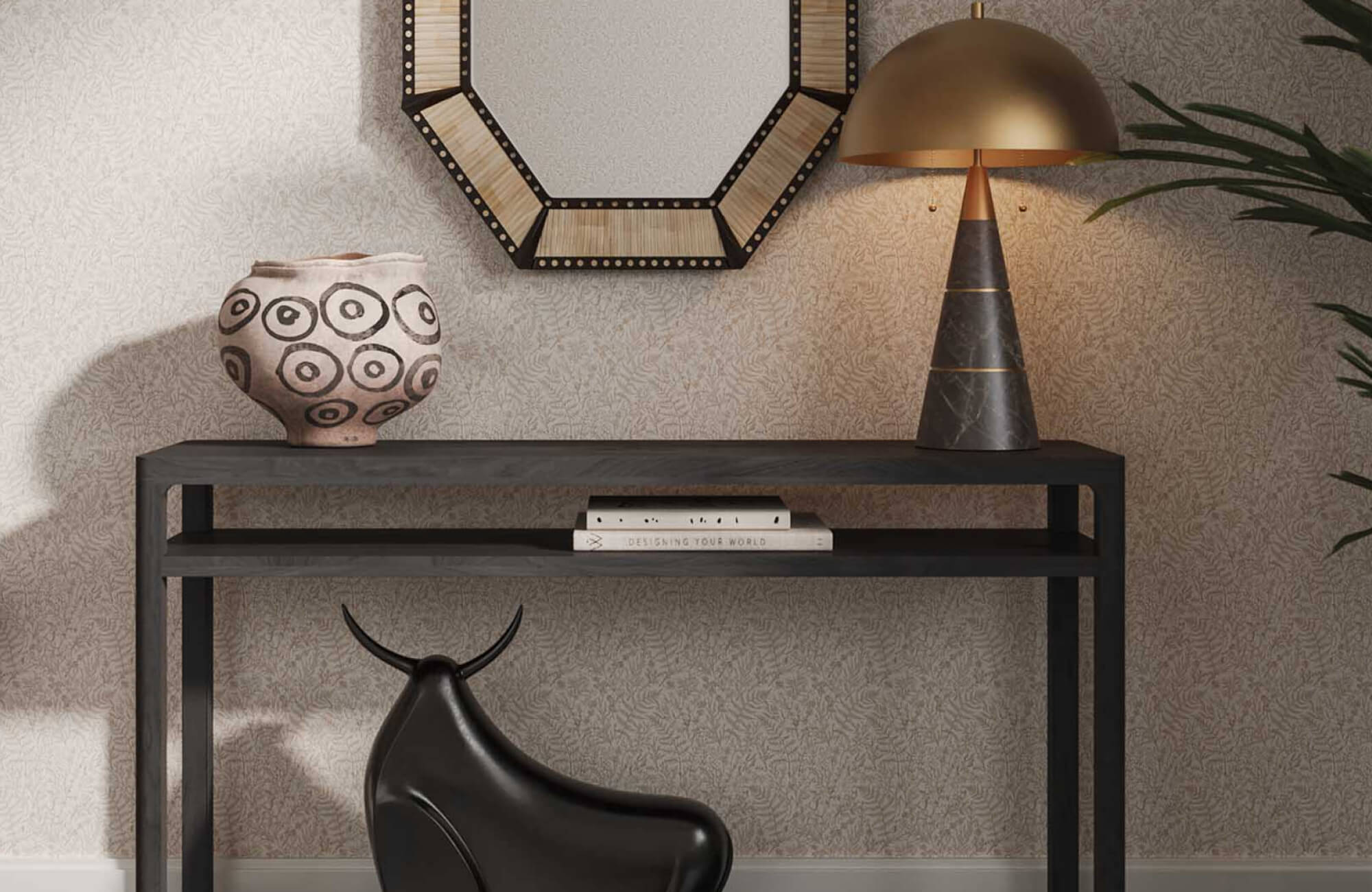
A porcelain decorative bowl with a hand-painted circular pattern anchors the left side of the Rovian Console Table in Black, its organic, textured form balanced by the warm dome of Redmont Desk Lamp, stacked books, and an octagonal mirror that frames the arrangement above
Decorative Bowls By Shape And Form
The shape of a decorative bowl determines how it settles into a surface and how it relates to the surrounding furniture. Understanding the basic forms makes it easier to choose a bowl that genuinely suits the space, not simply one that appeals in isolation.
Round Bowls
Round decorative bowls endure because they create balance from every angle. Their symmetry makes them easy to place on coffee tables, dining tables, shelves, and counters without the arrangement feeling labored.
A round bowl is especially useful when the surrounding furniture is angular. On a rectangular table or console, its curve softens the surface and prevents the display from feeling too rigid. Smaller round bowls work well as catchalls; larger ones can anchor a surface as a centerpiece. For those new to styling with decorative bowls, a round form is almost always the most intuitive starting point.
Oval Bowls
Oval decorative bowls are well-suited to long and narrow surfaces. Their form follows the direction of rectangular tables, console tables, sideboards, and kitchen islands, making the surface feel more connected and considered. An oval bowl creates visual movement without demanding too much depth, making it a natural fit for entryways or dining areas where the surface must remain practical. When left empty, its elongated silhouette can feel sculptural. When filled simply with dried botanicals, smooth stones, decorative beads, or seasonal accents, it holds the surface without needing several separate objects.
Shallow Bowls
Shallow decorative bowls are shaped for display. Their open form lets both the bowl and its contents be seen clearly, which makes them particularly effective on coffee tables, shelves, and center tables where the view from above matters. A shallow bowl suits fillers such as shells, moss spheres, pinecones, ornaments, or river stones, but because nothing is hidden, every element inside should feel intentional. This form is also a practical centerpiece choice for dining tables where sightlines across the table matter. The discipline is restrained: shallow bowls look most refined when the shape itself remains visible.
Deep Bowls
Deep decorative bowls feel more substantial and carry a more functional range. They work well in kitchens, entryways, bedrooms, and living rooms where a single piece is meant to be both beautiful and genuinely useful. A deep bowl can hold fruit, keys, small accessories, ornaments, or everyday items that would otherwise scatter across a surface. Its higher sides contain without concealing, keeping things in place while the bowl itself remains decorative. The depth should match the intended use: a very deep bowl may obscure smaller objects, while a moderately deep bowl keeps things visible and accessible.
Sculptural Bowls
Sculptural decorative bowls are chosen primarily for their form. They may have irregular rims, asymmetrical profiles, raised bases, carved surfaces, or abstract silhouettes, forms that bring them closer to an art object than a conventional vessel.
Edward Martin's Hawthorne Porcelain Bowl is a fitting example of this sensibility. Its hand-painted surface pattern and rounded, organic form give it a presence that makes a surface feel curated rather than simply styled. The photo featured above shows how naturally it holds its own on a console, contributing depth and artistic character to the arrangement without needing anything around it to justify its place.
This type of bowl is most effective when given enough space to be fully appreciated. A sculptural bowl can occupy a coffee table, pedestal, console, or open shelf without needing filler; in fact, too much styling around it can diminish the form. In rooms with strong patterns or many accessories, choose a sculptural bowl in a quieter finish so it contributes without competing.
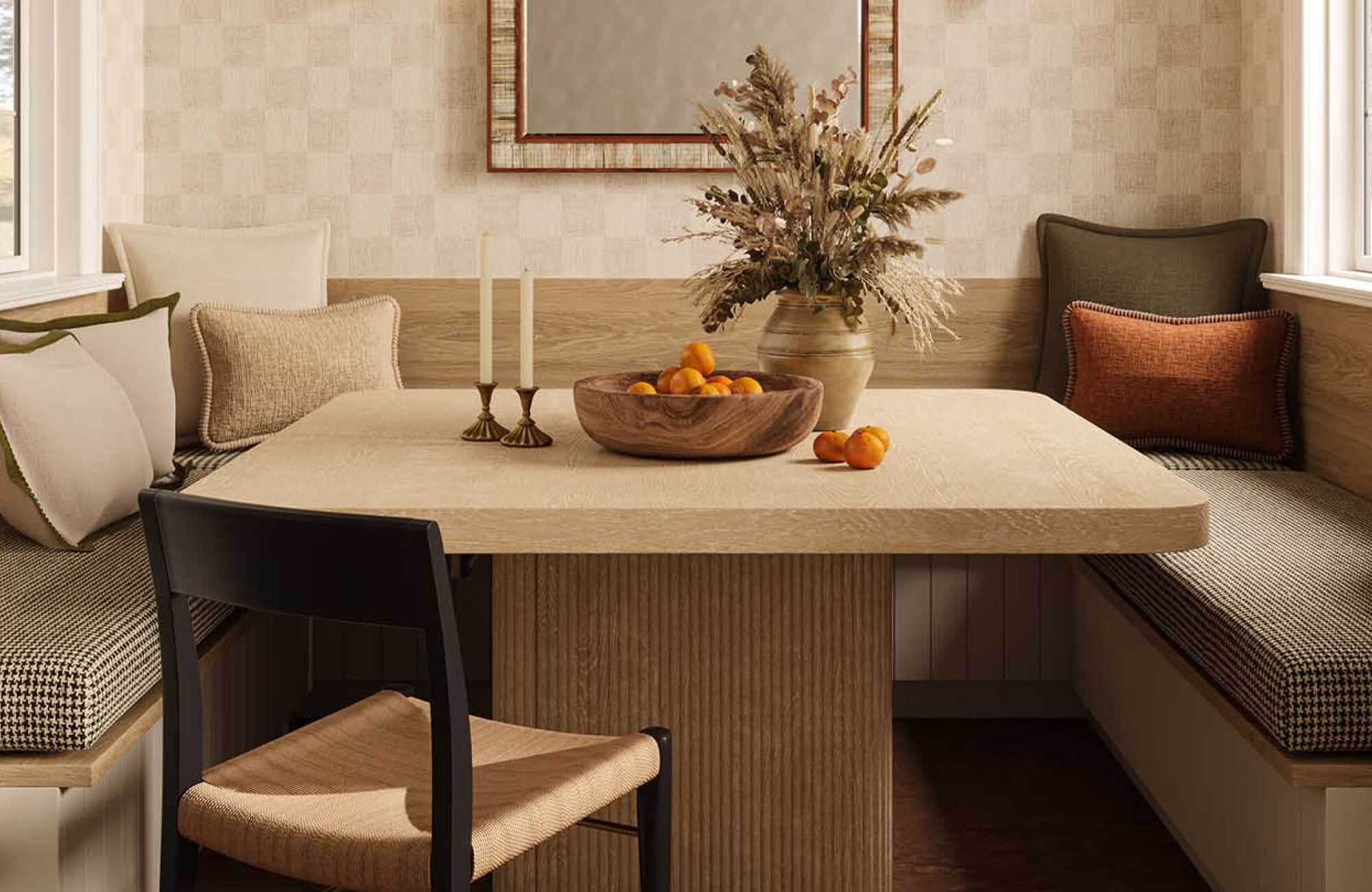
A wooden decorative bowl filled with seasonal fruit sits at the center of Zevara Square Dining Table in White Oak, 60", its warm grain and carved form connecting naturally to the layered textures of woven cushions, brass candlesticks, and dried botanicals that define the room's relaxed, collected character
Decorative Bowls By Interior Style
Decorative bowls can also be understood by the design sensibility they support. A bowl whose material, finish, or silhouette does not align with the room's character will always feel slightly out of place, however beautiful it may be on its own.
Modern Bowls
Modern decorative bowls are defined by clean lines, restrained forms, and finishes that never overreach. They often appear in neutral tones, smooth ceramic, polished metal, clear glass, or stone with minimal veining.
A modern bowl is a strong choice when you want an accent that feels precise but not overdone. Rather than grouping several smaller accessories, a single well-chosen bowl on a coffee table or console can resolve a surface with greater authority. Black, white, gray, warm beige, and brushed metal finishes tend to read well in modern interiors. The form and proportion carry the weight.
Rustic Bowls
Rustic decorative bowls bring a more relaxed and lived-in quality to a room. They often feature carved wood, aged metal, rough ceramic, visible grain, or surfaces that feel gathered rather than produced. Edward Martin's Avirel Small Wooden Bowl is a natural expression of this quality. Its carved form and warm wood grain carry the kind of honest materiality that makes a surface feel considered without feeling arranged. The photo featured above shows it holding a simple display of fruit on a kitchen counter, grounded, unpretentious, and entirely at ease in its surroundings.
A rustic bowl is at home in farmhouse, cottage, lodge, or traditionally casual spaces, on a dining table with seasonal fruit, on an entry console with natural accents, or on a shelf as a textural layer. To keep the result from feeling heavy, pair rustic bowls with lighter materials nearby: linen, pale ceramics, glass, or woven accents.
Coastal Bowls
Coastal decorative bowls feel light, natural, and unhurried. Common materials include white ceramic, pale wood, woven seagrass, rattan, shell, driftwood, and soft blue or green glass. A coastal bowl does not need to be filled with obvious references to feel appropriate. A white ceramic bowl with an undulating rim or a woven bowl placed simply on a console is often enough to suggest a relaxed, airy mood. When fillers are used, keep them restrained and natural, shells, pale stones, or driftwood-inspired objects used sparingly rather than in abundance.
Glam Bowls
Glam decorative bowls rely on shine, reflection, and polished materiality. They may feature gold, silver, crystal, mirrored finishes, marble, or high-gloss ceramic. A glam bowl works well on a console, dresser, vanity, or dining sideboard, adding a finished, deliberate quality, especially when paired with candles, mirrors, glass lamps, or soft textiles. The discipline here is restraint. Reflective pieces already draw the eye, so one glam bowl is often more effective than several shiny objects placed in proximity.
Organic Modern Bowls
Organic modern decorative bowls bring clean design together with natural texture. They are often made from stone, wood, matte ceramic, clay, or materials that feel earthy in origin but refined in execution.
This sensibility works well in neutral interiors that need depth without strong color. A travertine bowl, a carved wood bowl, or a matte ceramic bowl with an irregular rim can add quiet dimension to a surface. Organic modern bowls tend to be most effective when styled with restraint, when placed on a coffee table alongside books, or left empty so the material and form can speak for themselves.
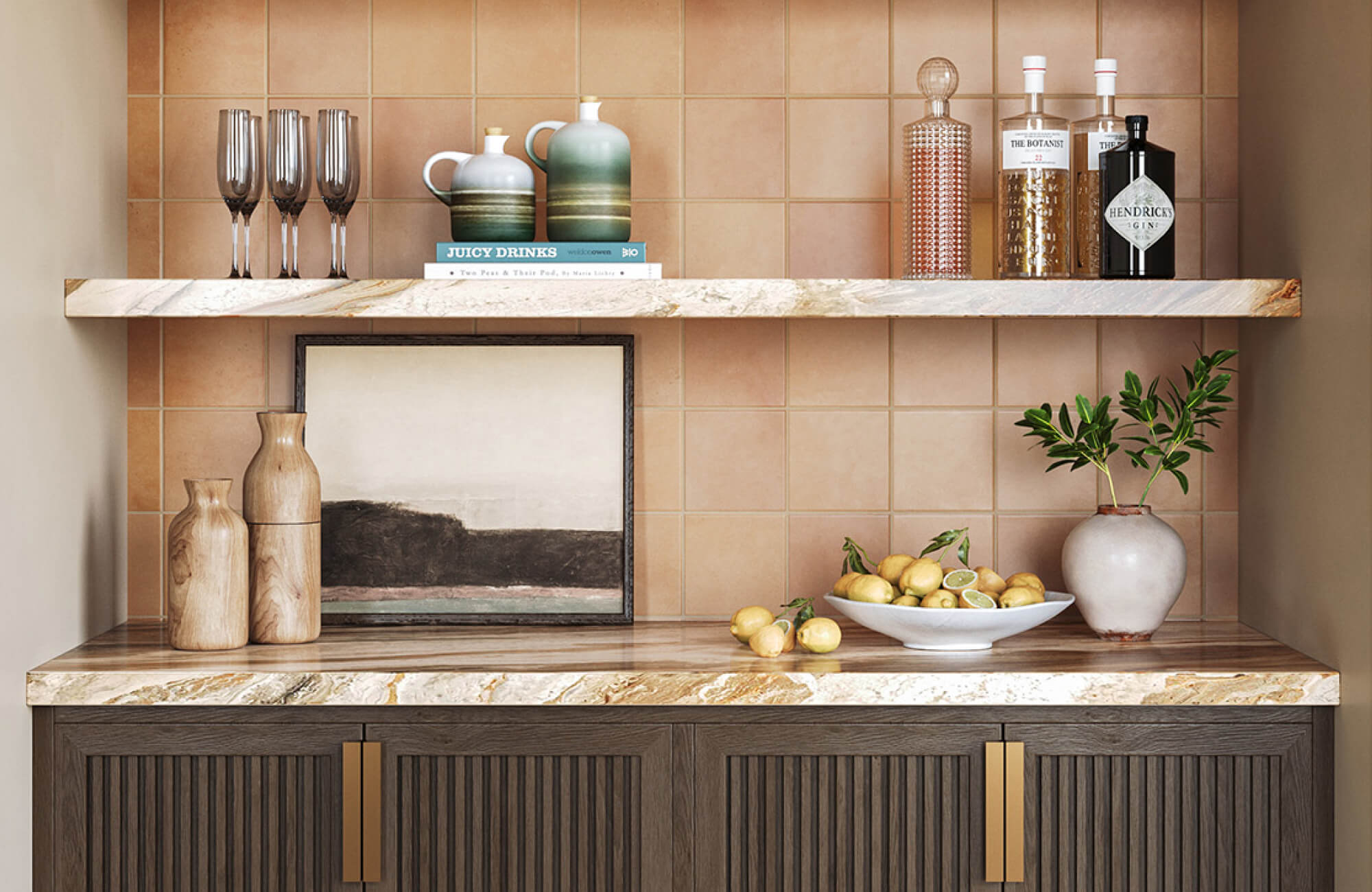
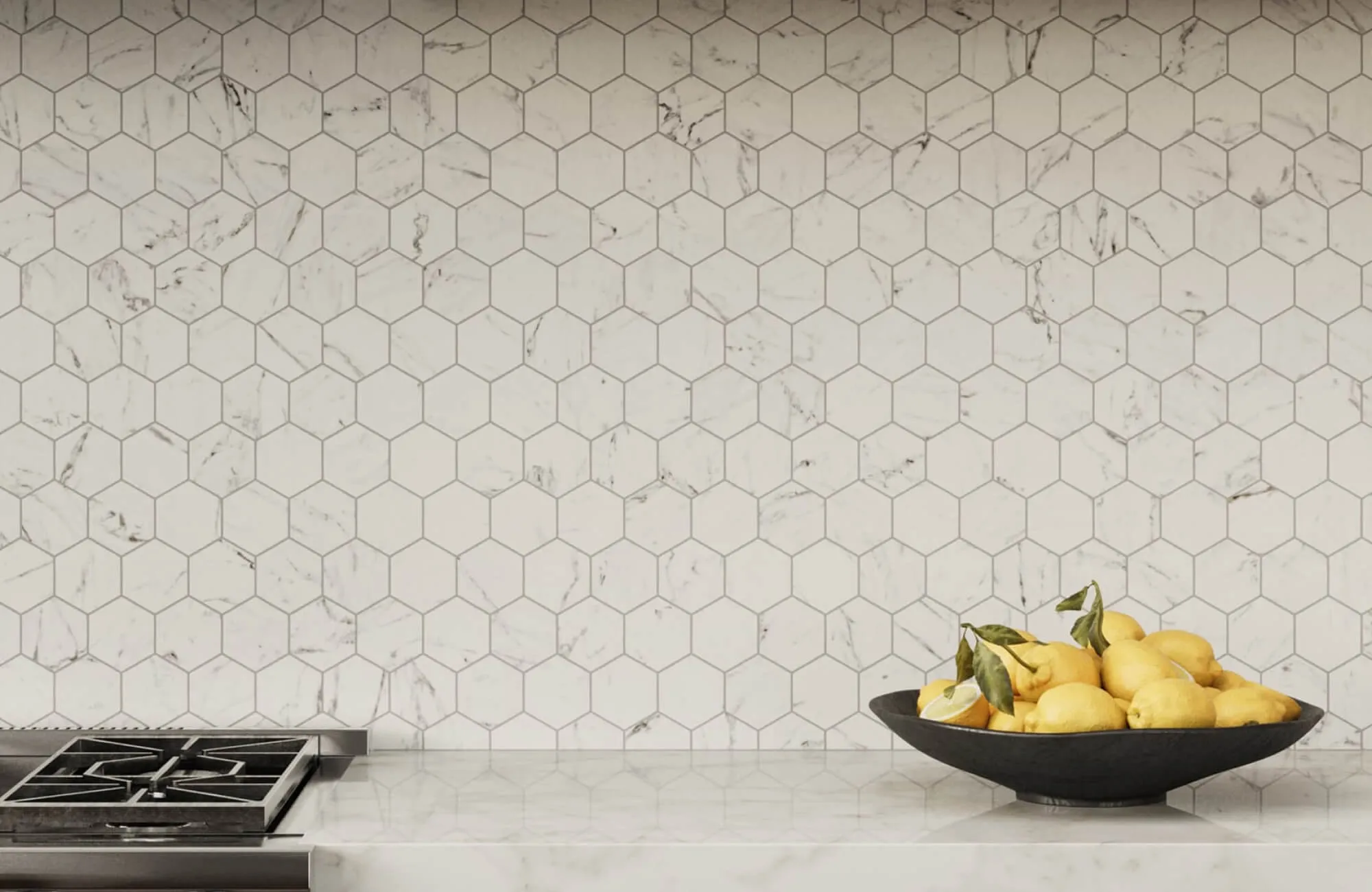
A shallow white ceramic bowl filled with lemons sits on a marble-edged counter, its low, open form keeping the fruit visible and the surface feeling composed, alongside wood vessels, a framed landscape, and Makenna 6 x 6 Matte Porcelain Tile in Cotto that gives the space its unhurried, lived-in character
Decorative Bowls By Function
Some decorative bowls are primarily visual; others bring genuine organizational purpose. Considering function alongside form makes it easier to choose a bowl that fits the way you actually live, rather than one that simply occupies space.
Centerpiece Bowls
Centerpiece bowls are intended to anchor a larger surface. They typically sit on dining tables, coffee tables, kitchen islands, or generous consoles where they have the space to be seen and appreciated.
Scale is essential. A bowl that is too small reads as accidental on a large surface. One that is too large may interfere with dining or everyday use. Low, wide bowls are often the most practical choice; they create presence without blocking sightlines. Filled with seasonal fruit, greenery, ornaments, or natural objects, a centerpiece bowl can shift character with the room across seasons.
Catchall Bowls
Catchall bowls are decorative pieces with a quietly organizational role. They are best suited to small items used most often, such as keys, coins, jewelry, watches, sunglasses, or everyday essentials that would otherwise scatter across a surface. This type of bowl works best near the places where items naturally collect. In an entryway, it holds keys and cards. On a dresser, it keeps jewelry composed. On a desk, it contains small supplies. Because catchall bowls are handled daily, choose materials that are durable and easy to clean, such as ceramic, metal, glass, or sealed wood.
Fruit Bowls
Fruit bowls are both decorative and practical, particularly in kitchens and dining rooms. They make fresh produce easy to reach while adding color and life to the surface they occupy. When selecting a fruit bowl, consider airflow, proportion, and food safety. A wide form prevents fruit from stacking too high, which reduces bruising. Ceramic, glass, metal, and food-safe wood are all appropriate choices. A fruit bowl is most effective when it is not overloaded; a simple arrangement of lemons, apples, or pears reads as considered rather than convenient.
Display Bowls
Display bowls are used to present decorative objects rather than everyday items. They introduce texture, color, or seasonal detail in a way that feels curated rather than accumulated.
A display bowl might hold beads, shells, stones, dried botanicals, moss spheres, or ornaments that relate to the room's palette and material. The contents should support the bowl rather than conceal it; the bowl itself should remain visible and part of the composition. A wooden bowl pairs naturally with pinecones or organic objects; a glass bowl may suit smooth stones or simple ornaments. The relationship between bowl and filler is what makes the arrangement feel intentional.
Empty Accent Bowls
Some decorative bowls are most beautiful when left empty. This is often true of bowls with strong veining, hand-painted interiors, carved surfaces, unusual silhouettes, or deeply textured finishes. An empty bowl can still enhance a room by contributing form, material presence, and a sense of considered restraint. It also keeps a surface from feeling busy, an openness that is itself a kind of refinement. Place an empty accent bowl where both the interior and rim are visible: a coffee table, console, open shelf, or sideboard where it can be appreciated fully.
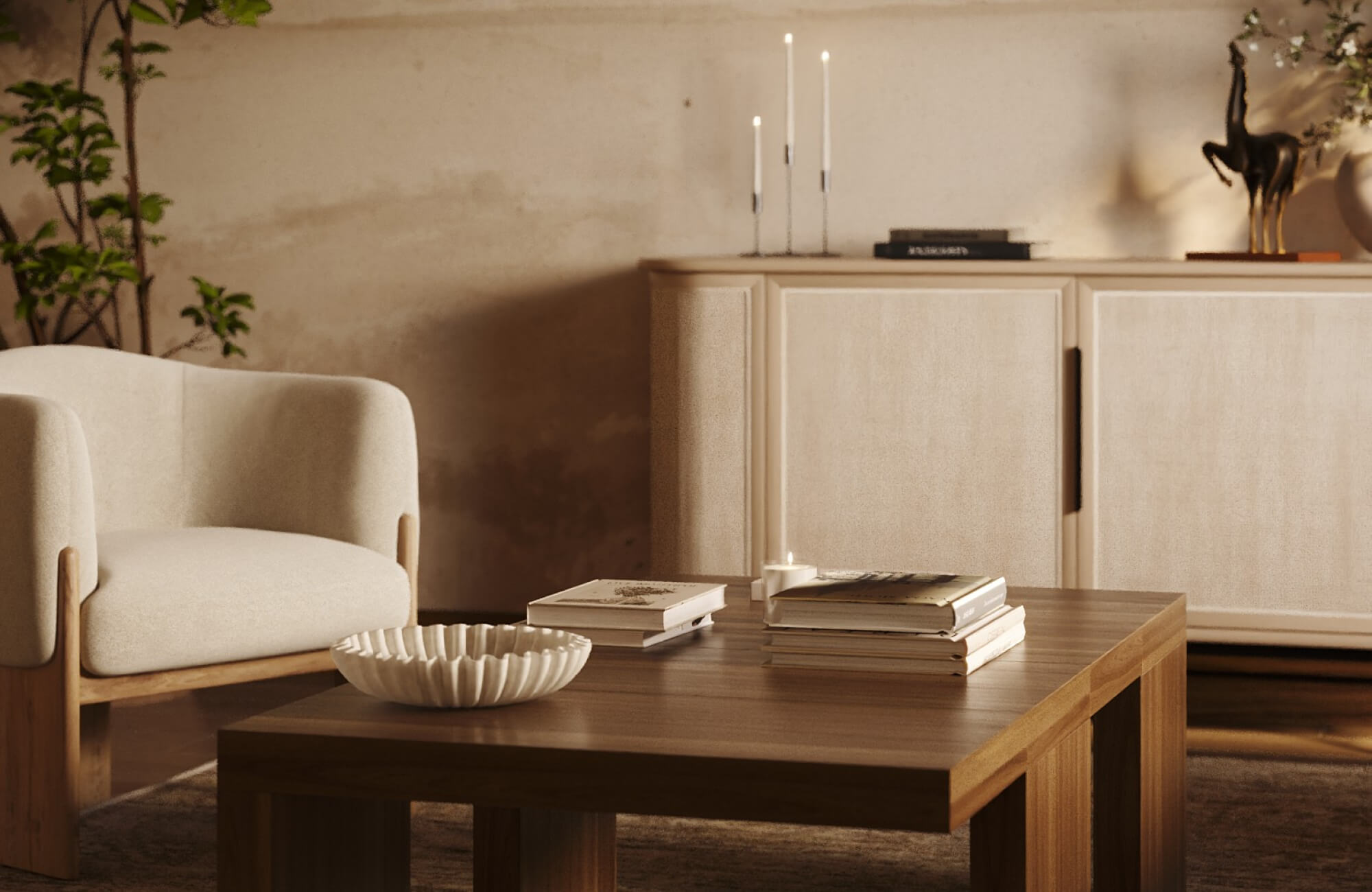
A ribbed ceramic bowl placed at the corner of the Ladrick Square Coffee Table in Light Walnut, 60", keeps the surface open and uncluttered; a low, considered accent within a living room where every element, from the Malvian Lounge Chair in Taupe to the tapered candles on the Vireza Sideboard, has been given its own place
Decorative Bowls By Room Placement
Where a decorative bowl is placed shapes what it should be, in size, material, and purpose. A bowl suited to a kitchen island will not always feel right on a nightstand. Matching the piece to how each room is actually used leads to selections that feel considered rather than collected.
Living Room Bowls
In the living room, decorative bowls most often sit on coffee tables, side tables, built-ins, or media consoles. Their role is to add form and material contrast while helping the room feel resolved.
A low bowl on a coffee table does not interrupt the sightlines across the seating area. On shelves, smaller bowls break up rows of books or framed pieces with a welcome curve. In rooms rich with soft materials, upholstery, rugs, and layered textiles, a stone, ceramic, or metal bowl introduces structure. In rooms with predominantly hard surfaces, a wood or woven bowl softens the composition.
Dining Room Bowls
Dining room bowls are often centerpieces, so proportion carries particular weight. The bowl should look complete when the table is bare and should not make the table feel crowded during a meal. A round bowl suits a round or square dining table with ease. An oval or elongated form works better on a rectangular surface. Height also matters; a low bowl keeps conversation easy and unobstructed, while a taller arrangement may need to be moved when guests sit down. The best dining room bowl looks complete with fruit, greenery, or nothing at all.
Kitchen Bowls
Kitchen bowls must balance aesthetic intention with everyday practicality. Since the kitchen is used constantly, the bowl should be stable, easy to clean, and suited to its purpose. A generous bowl on an island can create a focal point while holding fruit or vegetables. A smaller bowl near a prep area can hold garlic, onions, or wrapped items when the material is appropriate. In kitchens with refined cabinetry and stone surfaces, a wood or ceramic bowl introduces warmth. In kitchens with traditional finishes, glass or metal can offer a cleaner, more precise contrast.
Entryway Bowls
Entryway bowls are both welcoming and functional; they create a considered first detail while giving small essentials a natural place to rest. This makes the entry feel organized from the moment you arrive. A catchall bowl on a console can hold keys, cards, coins, or sunglasses. Because entry surfaces are often narrow, a compact round or oval bowl is usually more practical than a large centerpiece form. Heavier materials, such as ceramic, stone, or metal, stay in place with daily handling. Styled alongside a mirror, lamp, or tray, the bowl becomes part of a composed and intentional first impression.
Bedroom Bowls
Bedroom decorative bowls are typically smaller and attuned to the personal objects kept close at hand. They often sit on nightstands, dressers, vanities, or shelves, holding the small things that begin and end the day.
A small bowl can hold rings, earrings, a watch, fragrance, or keepsakes. Since the bedroom is meant to feel restorative, softer materials, such as ceramic, glass, alabaster, or smooth stone, tend to suit the room best. The right bedroom bowl adds quiet convenience without overwhelming the surface or making the space feel busy.
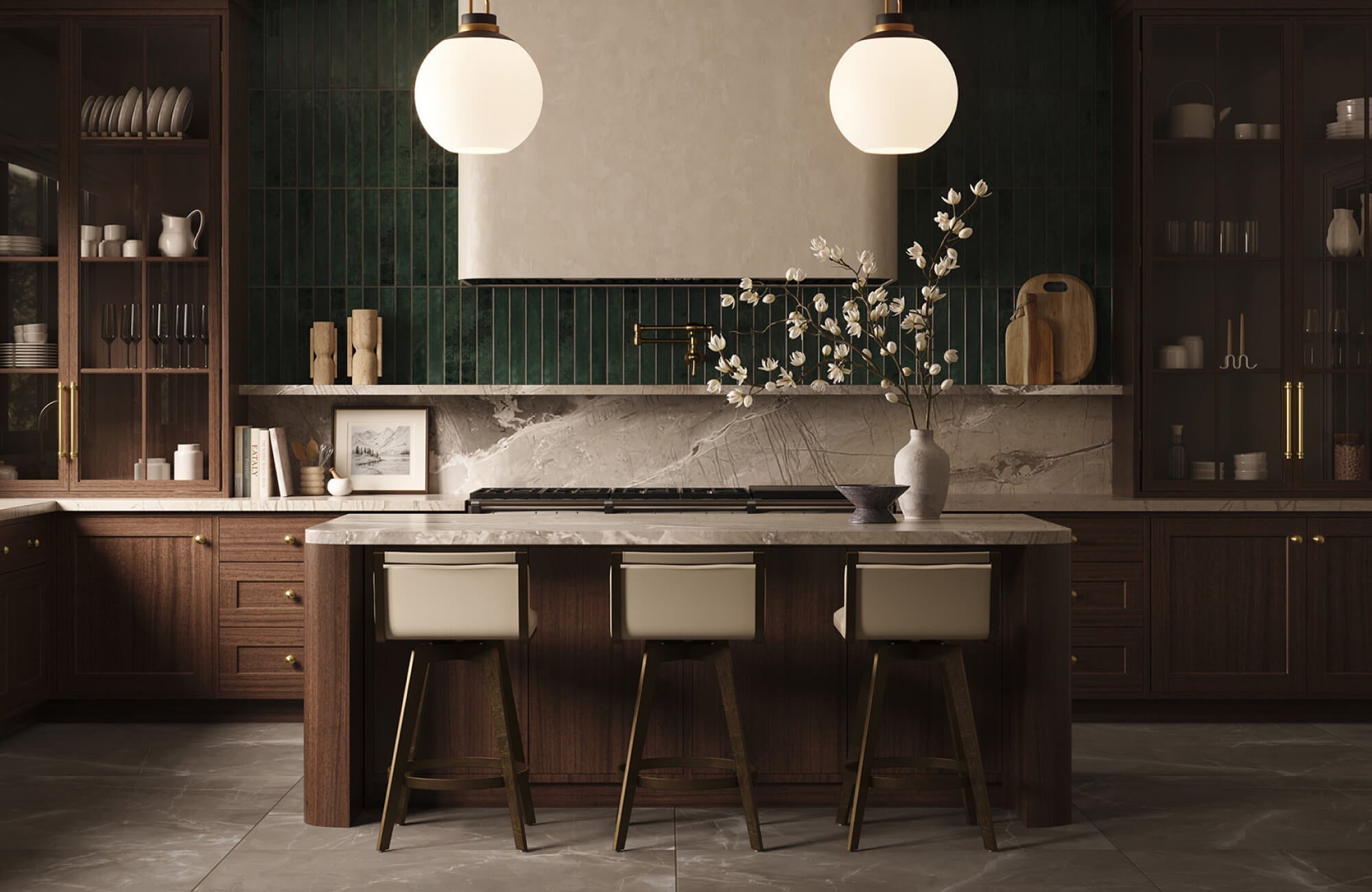
A small decorative bowl sits on a marble kitchen island alongside a ceramic vase, scaled precisely to the surface, adding material depth without competing with the Jaden 2.5 x 16 Glossy Ceramic Tile in Hunter, dark walnut cabinetry, and brass details that give the kitchen its richly layered character
How To Choose And Style Decorative Bowls
Once you understand the range of decorative bowls available, choosing the right one becomes a matter of matching form to space, deliberately and with a clear sense of what the room needs. The right bowl should suit the surface, complement the room's character, and serve a clear role, even when that role is to bring visual balance.
Match The Scale
Scale is one of the most important considerations when selecting a decorative bowl. The piece should feel proportionally related to the table, shelf, or surface beneath it. On a large dining table or kitchen island, a small bowl can look accidental. On a narrow shelf or nightstand, an oversized bowl makes the surface feel overwhelmed. Consider both width and height. Generous surfaces can carry larger forms; smaller surfaces need more compact pieces with cleaner profiles. Leaving space around the bowl allows the styling to feel considered rather than crowded.
Consider The Contents
The contents of a decorative bowl should suit both the room and the intended use. Fruit belongs in a kitchen or dining room; jewelry and small accessories feel more natural in a bedroom. When the bowl itself has a strong design presence, it may need nothing inside it. When the bowl is quieter, the contents can introduce texture or color. The essential quality is clarity; a bowl should not become a collection of unrelated objects. One type of filler or one practical purpose keeps the arrangement feeling resolved.
Balance Color And Texture
Color and texture determine whether a decorative bowl integrates with its surroundings or stands apart from them. In a room with many patterns, a simple neutral bowl provides visual relief. In a quieter palette, a colored or textured bowl introduces welcome depth. Texture is particularly useful when a space feels flat. A carved wood bowl, ribbed glass, hammered metal, or pitted stone can bring dimension without relying on color. In rooms with many strong finishes already, a smoother bowl prevents visual competition. This balance is what allows the bowl to feel purposeful rather than decorative for decoration's sake.
Layer With Other Decor
Decorative bowls often read best when styled alongside objects that vary in height and form. This gives the surface a sense of completeness rather than flatness. Edward Martin's Denwick Breccia Marble Small Bowl demonstrates this well. Its natural veining and quiet tonal depth let it hold its place within a layered arrangement without pulling focus from the pieces around it. The photo above shows how naturally it settles onto a kitchen counter alongside a vase and other considered objects, contributing material richness to the composition while letting each element remain distinct.
On a coffee table, a bowl can sit alongside stacked books and a slender vase. On a console, it can work with a lamp, framed art, or a tray. On a shelf, it can interrupt a row of vertical objects with a welcome curve. Each element should have a role. The bowl should not compete with everything around it; it should help the arrangement feel connected and calm.
Choosing The Right Decorative Bowl For Your Space
Decorative bowls encompass a wide range of forms, including ceramic, glass, wood, metal, stone, round, oval, shallow, deep, sculptural, centerpiece, catchall, display, and empty accent. Each brings a different combination of material, shape, purpose, and presence. The right bowl depends on where it will live, what it will hold, and how it contributes to the surrounding room.
When scale, material, function, and placement are considered together, a decorative bowl becomes more than a finishing detail. It becomes part of how the space feels, composed, layered, and quietly alive. If you would like guidance in selecting decorative bowls that feel cohesive and well-suited to your home, we invite you to reach out for personalized support. Our design services are available to help you style surfaces and compose interiors that feel refined, considered, and entirely your own.
Follow us on Instagram
@EDWARD.MARTIN
)
)
)
)
)
)
)
)
)
)
)
)
)
)
)
)