
)
)
)
)
)
)
)
)
Should Outdoor Dining Chairs Have Arms Or Be Armless?
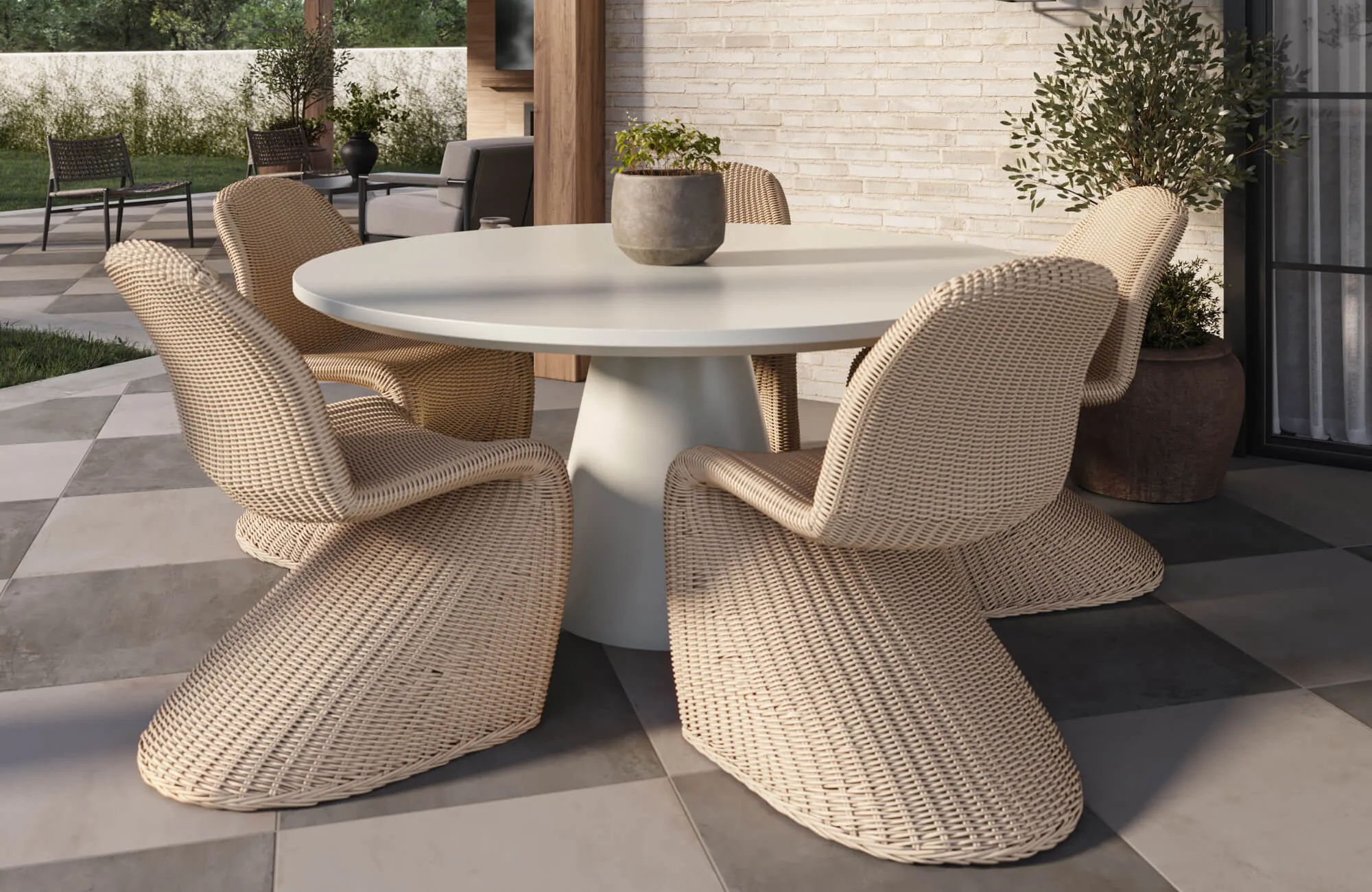
The decision between arms and armless rarely begins with function alone. It begins with how you want the space to feel — whether the table is a place to linger, to gather quickly, to host with intention, or simply to live in every day.
Outdoor dining chairs shape more than comfort. They define the scale of the arrangement, the ease of movement around the table, and the visual atmosphere of the space as a whole. A terrace designed for unhurried dinners has different needs than a compact balcony or a family patio that shifts between meals and gatherings. Understanding those needs through proportion, clearance, material, and use is what leads to seating that feels both considered and natural.
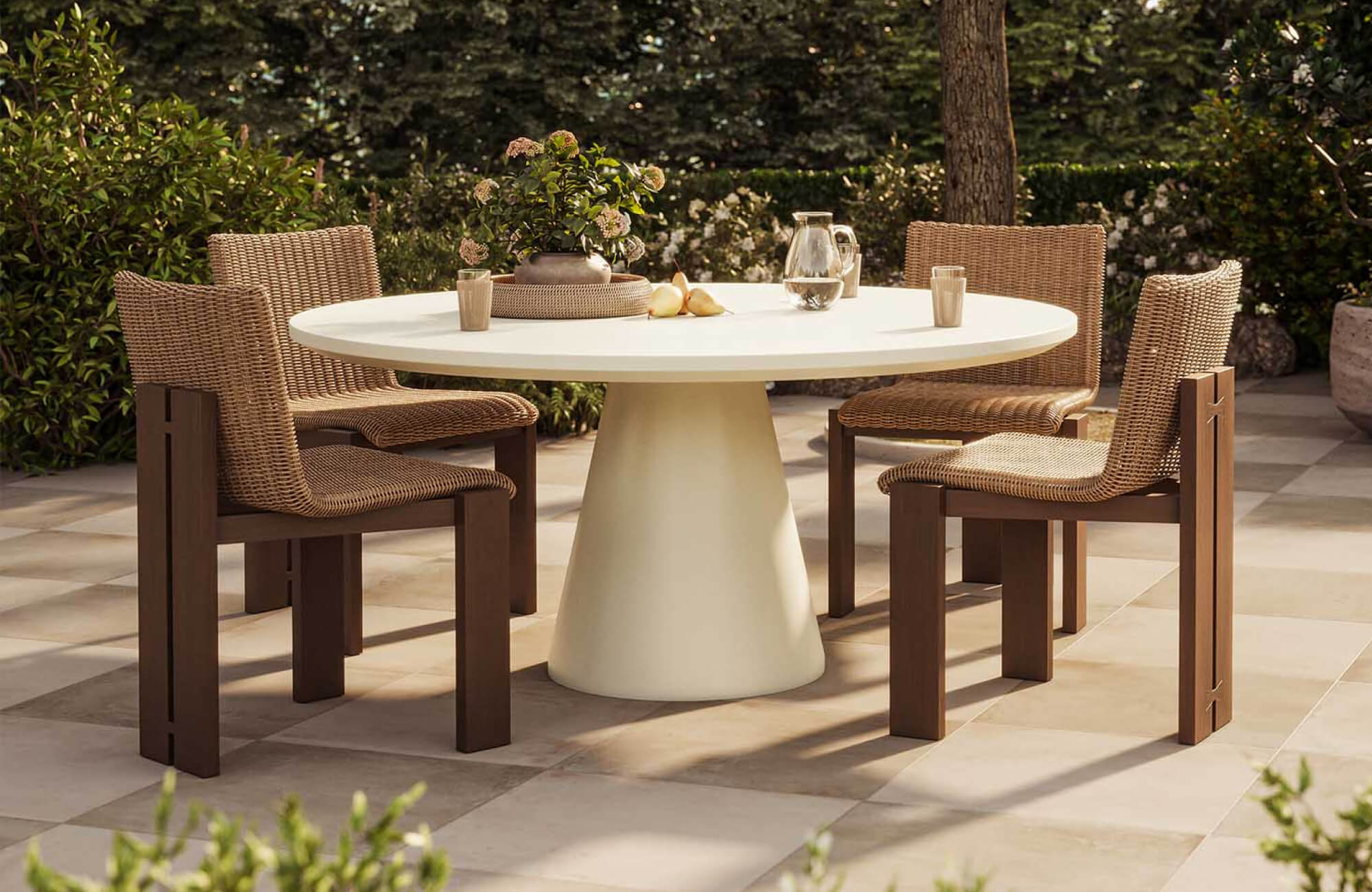
Marinell Outdoor Dining Chair in Faux Hyacinth and Linea Round Dining Table in Bone, 63" create a warm, relaxed outdoor setting with natural texture and sculptural balance
Comfort And Support For Outdoor Dining
Comfort is not simply softness. It is proportion, posture, and the way a chair holds the body through the length of a meal. When comparing armchairs to armless designs, the right choice depends on how long people sit, how formal or relaxed the experience should feel, and how freely guests need to move.
Armchairs For Longer, More Settled Dining
Outdoor dining chairs with arms are well-suited to spaces designed for lingering — long dinners, unhurried weekend brunches, or evenings that continue well past the meal. The arms offer a place to rest the forearms and ease the shoulders, reducing fatigue in ways that become noticeable over time. In these settings, the chair begins to feel less like a seat at a table and more like a considered invitation to stay.
That sense of ease, however, depends on scale. Armchairs with generous frames need room to breathe. They work best on larger patios, covered terraces, or at the end positions of a rectangular table, where their added width becomes a presence rather than an imposition.
Armless Chairs For Ease And Everyday Flow
Armless outdoor dining chairs carry a different quality; one of ease and adaptability. Without arms, guests can move in and out naturally, pull the chair close, shift posture, or slide it aside when the patio reconfigures. For everyday meals, family dining, compact balconies, and spaces that serve more than one purpose, this freedom of movement makes the dining area feel genuinely livable rather than ceremonial.
Their lighter silhouette also allows the arrangement to remain open and relaxed. Armless chairs tuck neatly under the table, move effortlessly between outdoor zones, and adapt to gatherings of different sizes. When flexibility and natural flow matter most, armless seating carries both comfort and quiet efficiency.
Edward Martin’s Marinell Outdoor Dining Chair in Faux Hyacinth, shown above, reflects this balance well. Its woven texture brings warmth and materiality to the arrangement, while the armless form keeps the chair easy to move, effortless to position, and naturally suited to a patio that lives and breathes with use.
Cushioning And Back Support Matter Too
Arms contribute to comfort, but they do not define it. Seat depth, back pitch, lumbar support, and cushion quality all shape how well a chair holds the body during a meal. A chair with arms but a shallow seat or an upright, unforgiving back can feel less considered than an armless chair with a well-resolved frame and supportive geometry.
For outdoor seating, cushioning deserves particular attention. The best outdoor cushions combine quick-dry construction, durable foam, and performance fabrics that resist moisture, fading, and mildew without sacrificing softness. Before choosing between arms and no arms, consider how the back angle supports an upright dining posture, how the seat height aligns with the table, and whether the cushion maintains its depth under regular use.
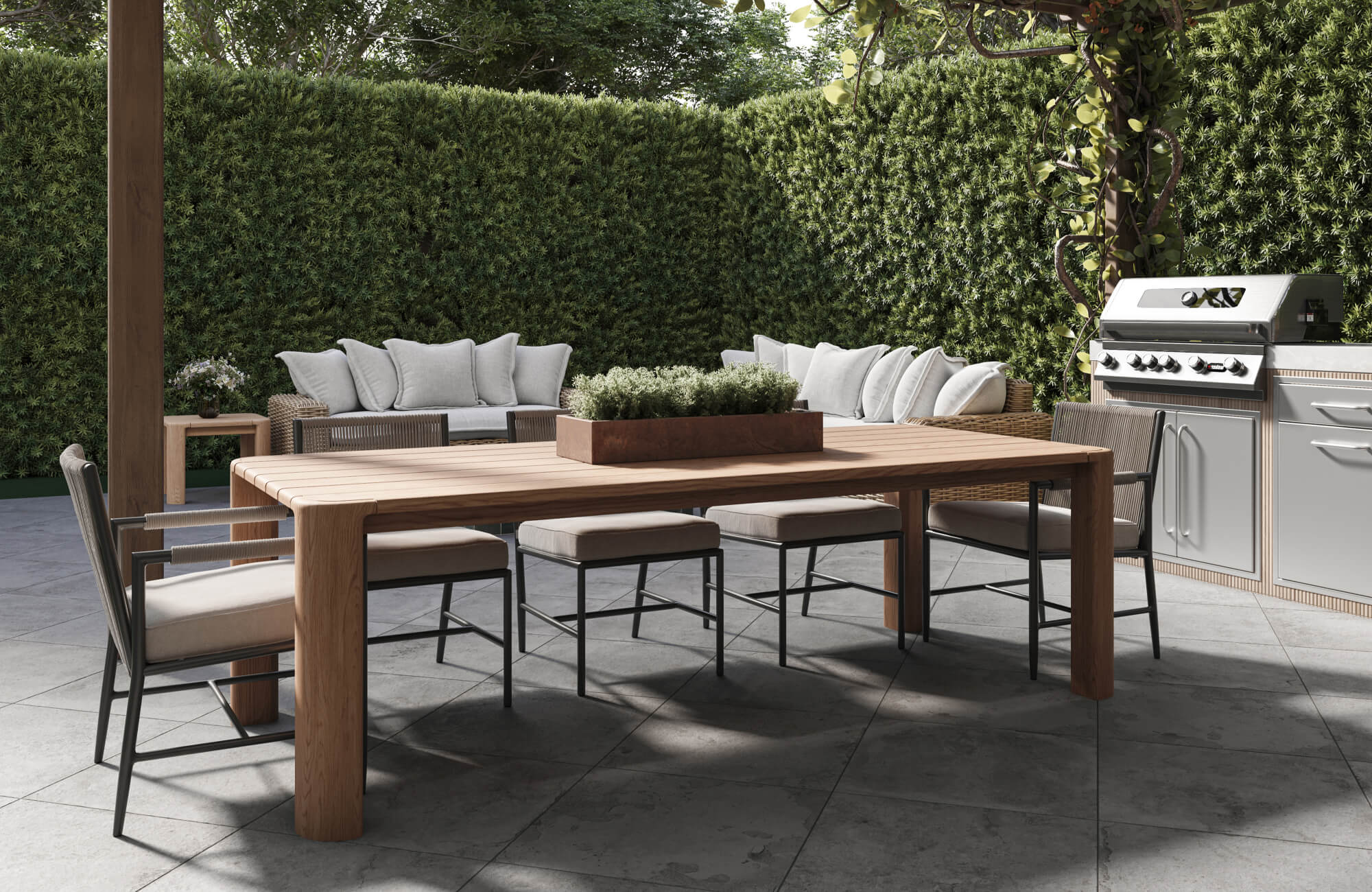
Vetra Dining Chair complements Maris Teak Rectangular Dining Table, 96" x 42", with slim modern framing, helping maintain comfortable flow around the table’s warm, substantial form
Space Planning Around The Dining Table
The space around the table shapes how comfortable and functional the dining area ultimately feels. Chair width, clearance behind each seat, table height, and nearby features all influence whether the arrangement flows naturally or begins to feel constrained.
Armchairs Require More Considered Placement
Outdoor dining chairs with arms are wider by nature. The arms extend the frame laterally, which adds a sense of presence but also requires more room per seat. When chairs are placed too close together, the dining area can feel compressed at the elbows — functional in form, but not in experience.
Before selecting armchairs, measure the full table length and consider how many seats need to fit comfortably along each side. Leave enough space between chairs for guests to sit naturally without encroaching on their neighbors. Edward Martin’s Vetra Dining Chair, seen above, demonstrates this balance. Its defined armchair frame brings structure and support to the arrangement, but is best suited to layouts where the table and surrounding patio provide enough room for its proportions to settle properly.
Armless Chairs Allow More Generous Seating
Because armless outdoor dining chairs have a slimmer profile, they allow more seats around the same table without compressing the arrangement. This makes them especially practical for rectangular, round, oval, and extendable tables where seating capacity matters and for households that regularly host additional guests.
Armless chairs can also be repositioned or added to a setting without disrupting the existing spacing as significantly as wider armchairs might. For patios that shift between intimate dinners and larger gatherings, this flexibility adds real value.
Clearance Behind Each Seat
Clearance behind the chairs deserves as much attention as the chairs themselves. Guests need room to pull the seat out, settle in, rise comfortably, and move around others without brushing the table or nearby furniture. A dining setup may appear well-spaced when chairs are tucked in, but it can feel cramped the moment the space comes to life.
When planning the layout, consider the full environment: patio doors, railings, planters, garden paths, outdoor kitchens, and pool edges. These boundaries limit movement, particularly in narrower outdoor settings. A well-resolved dining area maintains clear circulation even when every seat is occupied.
Arm Height And Table Clearance
Not every armchair slides cleanly beneath every table. Tables with low aprons, thick tabletops, or structural crossbars may prevent the arms from fitting underneath, causing chairs to sit farther out than intended and increasing the overall footprint of the arrangement.
Before purchasing, measure from the floor to the underside of the table and compare it against the arm height of the chair. Account for cushions, uneven patio surfaces, and any construction details that reduce clearance. Where armchairs cannot tuck fully under the table, armless chairs often provide a more practical and visually composed solution.
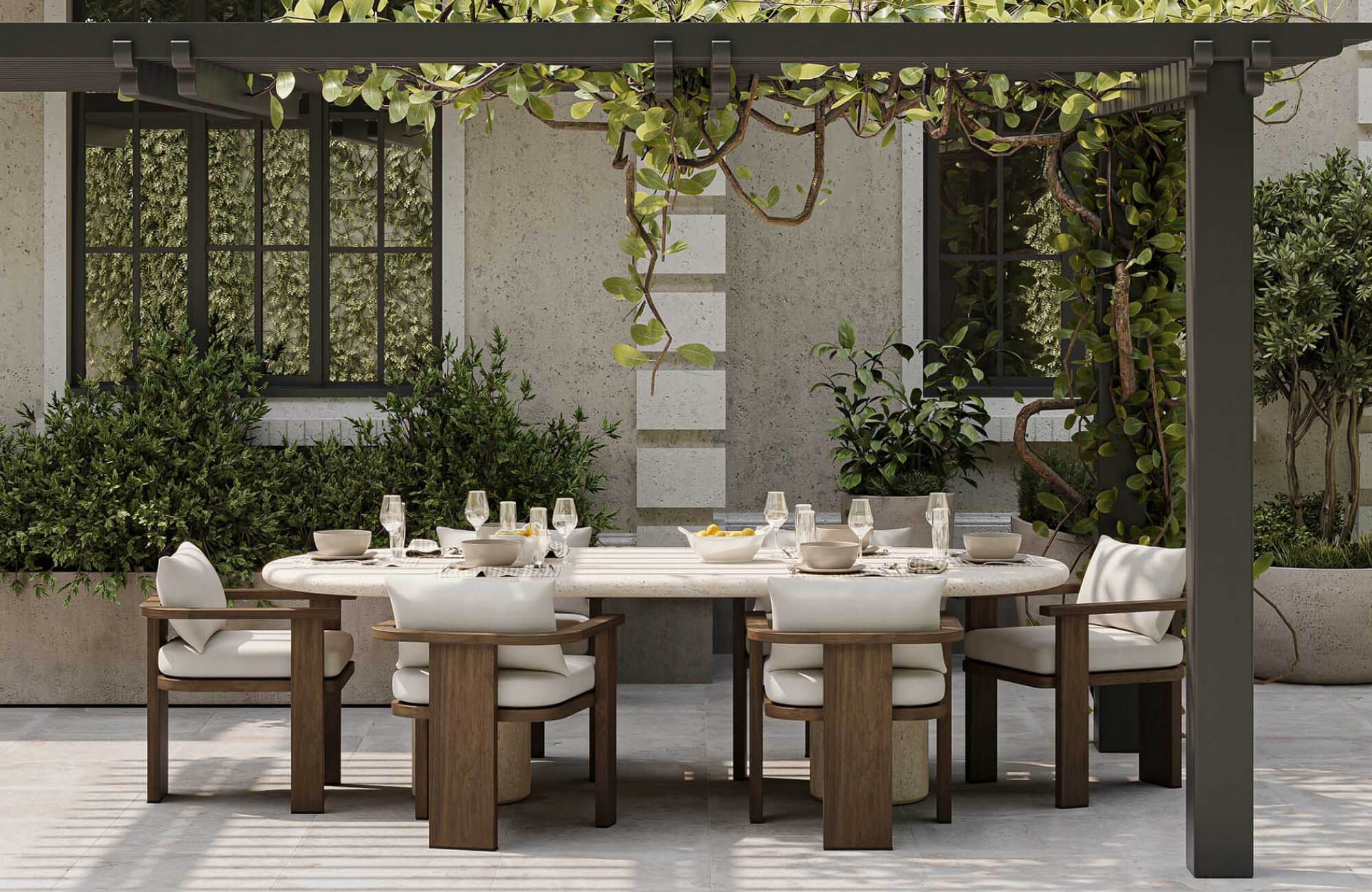
The white hues and gentle curves of Hightide Outdoor Dining Armchair in Stained Aged Grey/Alessi Linen and Seabrook Outdoor Dining Table, 102" give this outdoor space a stylish and balanced retreat
Style And Visual Balance
Chair silhouette contributes directly to the atmosphere of the space. The choice between armchairs and armless designs shapes whether the patio dining area feels grounded and substantial or open and effortlessly calm.
Armchairs For A More Anchored Presence
Outdoor dining chairs with arms bring visual weight to the table. Their wider frames anchor the arrangement and give the patio dining area a sense of permanence, closer in feeling to an outdoor room than a casual furniture grouping. Paired with a generous dining table, an outdoor rug, and layered lighting, armchairs contribute to a space that feels intentional from every angle.
For larger patios, formal dining terraces, and covered porches, this added presence is a strength. Edward Martin’s Hightide Outdoor Dining Armchair in Stained Aged Grey and Alessi Linen, shown above, brings exactly this quality — a cushioned seat, a defined lounge-like frame, and a sculptural silhouette that adds structure without excess. To keep the composition balanced, look for armchairs with open frames, woven details, or refined proportions that bring presence without visual heaviness.
Armless Chairs For A Lighter, More Open Composition
Armless outdoor dining chairs, such as the Alba Armless Dining Chair, create a cleaner visual rhythm. Without the added horizontal lines of arms, the table and its surroundings, the landscape, the flooring, the architectural frame remain more visible. This openness suits minimalist patios, narrow dining areas, compact balconies, and spaces where clarity of sightline is part of the design.
Their simpler form also gives the arrangement a natural ease. Chairs tuck in neatly, the table reads more cleanly when not in use, and the overall composition feels effortless. For modern outdoor settings with glass railings, slim pergolas, or considered paving, armless chairs preserve that sense of calm and openness.
Mixed Seating For A More Composed, Layered Look
Placing armchairs at the head of the table and armless chairs along the sides is a considered approach that offers visual hierarchy without sacrificing comfort or capacity. The end positions naturally have more room to accommodate the wider frame, and the mix gives the arrangement a more designed, editorial quality.
To make the combination feel cohesive rather than assembled, keep at least one element consistent across both chair types, such as material, finish, frame color, weave, or cushion fabric. That shared detail unifies the arrangement while allowing the silhouettes to create deliberate contrast.
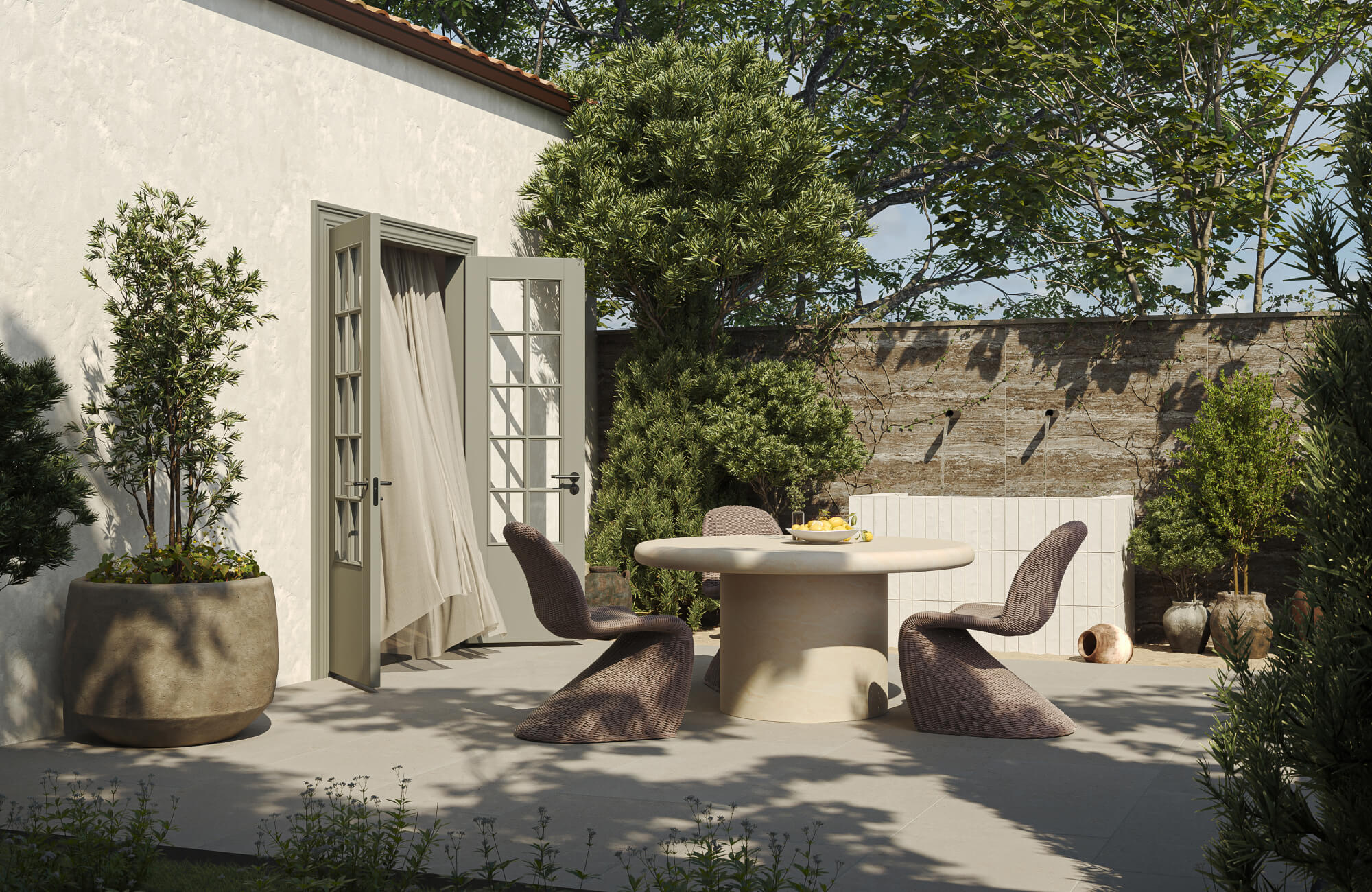
Calandor Outdoor Dining Chair in Tanned Weave adds comfortable woven texture around the Mysa Round Dining Table, 60", making the setting feel ready for casual meals and relaxed entertaining
Practical Use For Everyday Life And Entertaining
The best chair is the one that suits how the space is actually lived in. Hosting habits, daily routines, and the way people move through the patio all guide the decision toward armchairs, armless seating, or a thoughtful combination of both.
Armchairs For Hosting With Ease
Outdoor dining armchairs are well-suited to the kind of hosting that feels relaxed and generous, like dinner parties, holiday meals, and the slow Sunday brunch that lingers into the afternoon. The arms encourage guests to settle in and stay, giving each seat a quality that feels deliberate and welcoming. Around a well-composed table, armchairs help the dining area feel like a true extension of the space.
For patios designed to host with intention, armchairs contribute to that sense of occasion without requiring ceremony. Paired with an outdoor rug, layered lighting, and a coordinated serving setup, they help transform an outdoor dining area into a space that feels finished and genuinely livable.
Armless Chairs For Active Households And Flexible Gatherings
Armless outdoor dining chairs are better suited to the pace of everyday life. Without arms, guests can slide in and out freely, children can move in and out easily, and chairs can be repositioned quickly when the table needs to expand. For weeknight dinners, poolside meals, and informal gatherings where ease matters more than ceremony, armless seating serves the space naturally.
Edward Martin’s Calandor Outdoor Dining Chair in Tanned Weave, featured above, reflects this quality well. Its woven texture brings warmth and craft to the setting, while the armless profile keeps it adaptable and easy to shift to a casual table, carry to another area of the patio, or rearrange as the gathering changes shape.
Frame Weight And Ease Of Movement
For patios that regularly shift between dining, lounging, and entertaining, how easily a chair moves is a practical consideration worth taking seriously. Aluminum, resin, and woven or rope-style frames are generally lighter and easier to reposition than heavier wood or steel designs, allowing chairs to be pulled toward the table for meals, moved aside for open circulation, or grouped elsewhere after dining.
This advantage is most noticeable in armless chairs, whose simpler frame and slimmer profile usually make them easier to lift and store. Lightness, however, should not come at the cost of structure. The chair should still feel stable and well-made, grounded enough to sit with confidence, composed enough to suit the space it inhabits.
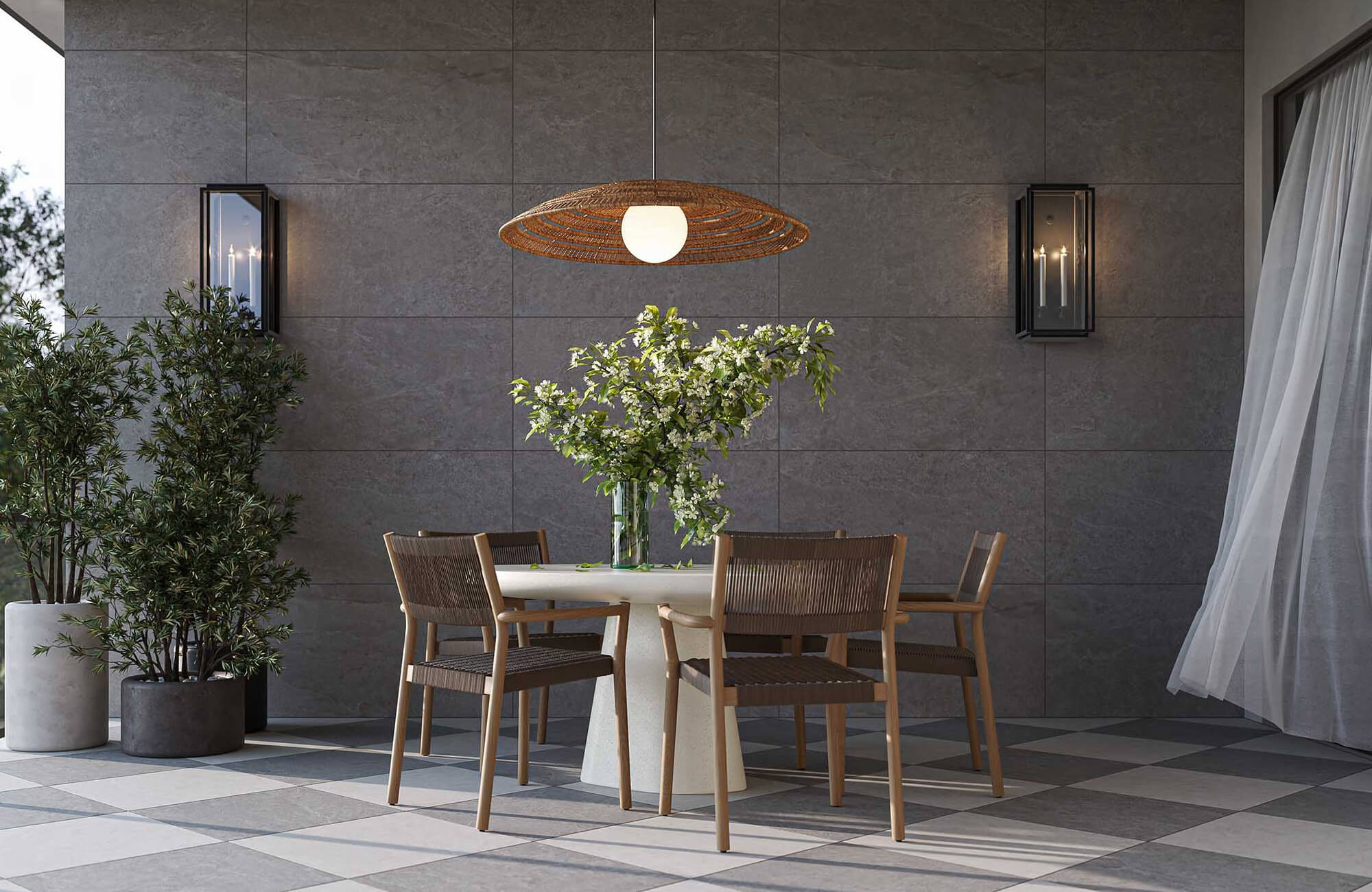
Kendra Outdoor Dining Chairs in Natural, Set of 2 add warm woven texture, complemented by the smooth sculptural form of Selena 55" Outdoor Dining Table in Cream, for an outdoor pairing that feels stylish and easy to maintain
Material And Care
Outdoor furniture is held to a higher standard. Sun exposure, moisture, temperature changes, and daily use all require materials chosen with care and honesty about how the furniture will actually be used. Armchairs tend to accumulate more wear at the arms, where hands and forearms rest through the length of every meal. Sunscreen, body oils, moisture, and food residue collect at these surfaces over time. For frequently used armchairs, materials that clean easily, like powder-coated aluminum, sealed teak, weather-resistant resin wicker, or performance rope, help preserve the chair's finish and appearance.
Armless chairs, with fewer horizontal surfaces and joints, are also easier to maintain between meals. Their simpler silhouette gives debris and moisture fewer places to settle. That said, construction still matters: smooth aluminum cleans quickly, while woven and rope designs may need more attention around fiber connections.
Climate should inform the final material decision. Teak, as seen in the Kendra Outdoor Dining Chairs in Natural, Set of 2 above, develops a beautiful natural patina but benefits from periodic care to maintain its warm tone. Aluminum is lightweight and rust-resistant. Steel requires a protective finish. Resin and synthetic wicker offer ease of care when UV resistance is strong. In coastal or rainy climates, rust-resistant frames, quick-dry cushions, and breathable construction deserve particular consideration.
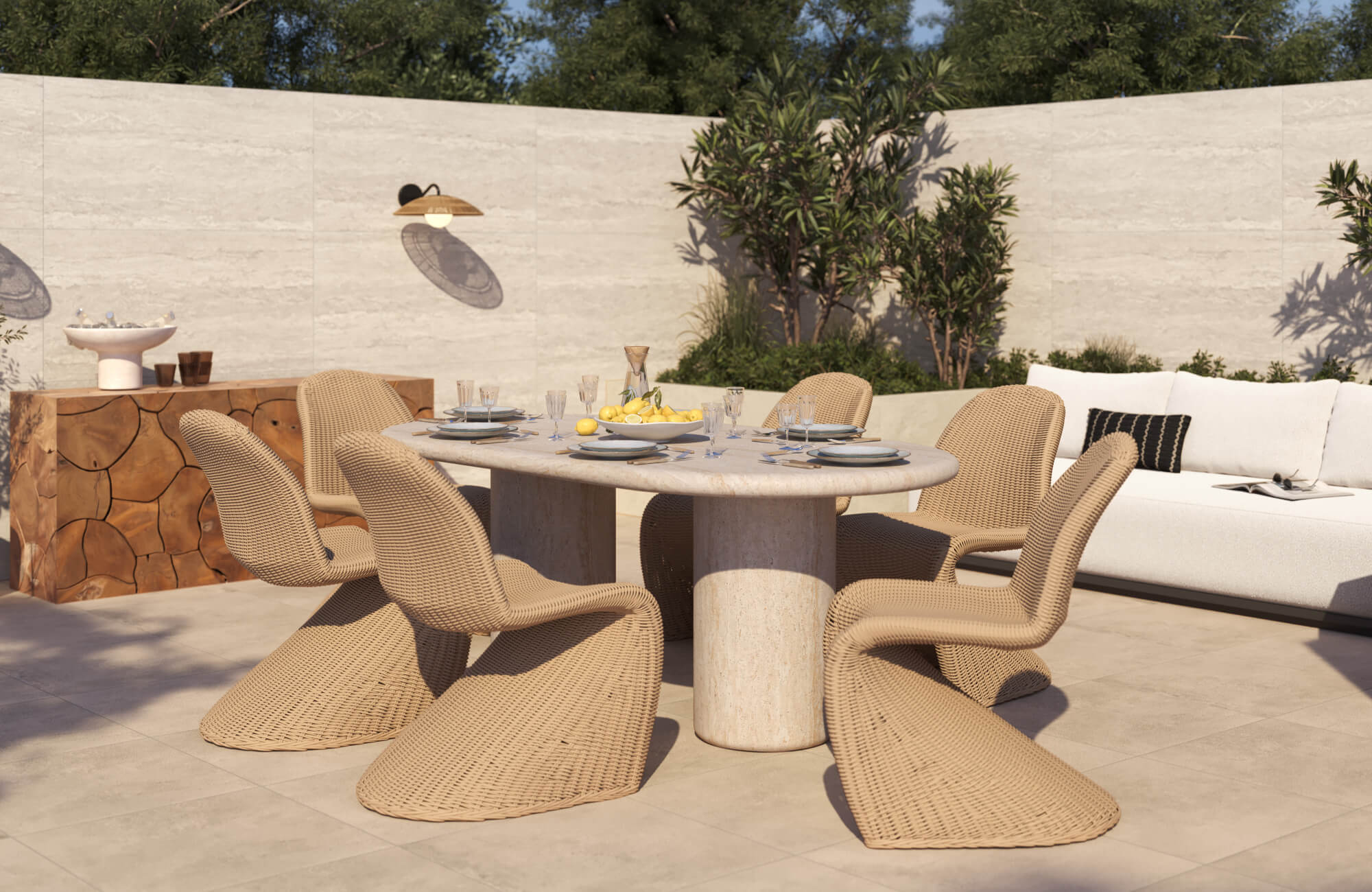
The Calandor Outdoor Dining Chair in Vintage Natural suits open-air dining with airy woven texture, complementing the Seabrook Outdoor Dining Table, 78", for a relaxed patio setting shaped by comfort and natural warmth
Choosing The Right Chair For Different Outdoor Spaces
Different outdoor settings have different needs in scale, proportion, material, and how the space is used day to day. Matching the chair to the environment is what makes the difference between a patio that looks composed and one that genuinely feels that way.
Small Patios And Balconies
In compact outdoor spaces, armless chairs such as the Delia Outdoor Dining Chair in Cream are almost always the more considered choice. They save width, tuck more neatly under the table, and preserve walking space when the set is not in use. In narrow layouts where railings, sliding doors, or planters already define the boundaries, this ease of movement is not incidental; it shapes the entire experience of the space.
Slim frames, stackable designs, and lightweight materials also make compact dining areas feel open rather than crowded. Chairs with woven details, open backs, or slender profiles help maintain that sense of air and ease that small patios deserve.
Large Patios And Outdoor Dining Rooms
Where space allows, armchairs can give the dining area a more substantial and resolved presence. Their wider frames suit larger tables, from rectangular, oval, to round, where the additional width is accommodated naturally. Edward Martin’s Aurelle Outdoor Dining Chair in Cream brings this kind of quiet generosity to a larger outdoor setting, offering a soft, tailored silhouette that feels composed without overpowering the arrangement.
To give a large patio the feeling of a true outdoor room, consider pairing armchairs with an outdoor rug, statement pendant lighting, lanterns, or a nearby serving console. The key is proportion, where the chairs should feel substantial enough to match the table and surrounding architecture, while remaining light enough in spirit to feel livable.
Poolside And Garden Dining Areas
Outdoor spaces near water or within a garden setting call for chairs that move easily, clean well, and sit naturally within the surrounding landscape. Armless chairs are often better suited to these environments; easy to shift away from splash zones, position along a casual table, or rearrange around a garden path without feeling heavy or fixed.
Material choices carry particular weight here. Moisture-resistant frames, quick-dry fabrics, and woven finishes designed for outdoor exposure are essential near pools and in garden settings. A piece like the Calandor Outdoor Dining Chair in Vintage Natural, featured in the photo above, reflects this sensibility well. Its sculptural armless form and woven texture feel breathable, casual, and naturally integrated into an open-air setting.
Mixed Seating For A More Considered Arrangement
When a dining area needs both comfort and capacity, mixing chair styles is a quietly effective solution. Armchairs at the ends, armless chairs along the sides — this arrangement creates visual hierarchy and a more design-led quality, while preserving generous side seating for everyday use and larger gatherings.
For the combination to feel intentional, a shared element should run through both chair types: frame material, finish color, weave style, or cushion fabric. That coherence gives the arrangement a sense of curation, where the contrast between silhouettes feels deliberate rather than assembled.
The Right Choice Comes From The Space Itself
Outdoor dining chairs with arms bring comfort, presence, and a more settled dining experience, which is well-suited to larger patios, long meals, and spaces designed for genuine hospitality. Armless chairs offer ease, flexibility, and a lighter visual composition, making them the more practical choice where space efficiency, movement, and seating capacity are priorities.
In many settings, the most considered solution is a thoughtful combination of both. The best decision begins with measuring the table, understanding the clearance, thinking honestly about how the space is used, and choosing seating that makes the patio feel as beautiful as it functions. For help finding outdoor dining chairs that suit your table, space, and the way you live outdoors, contact us. We're glad to guide you toward a combination that feels both refined and genuinely yours.
Follow us on Instagram
@EDWARD.MARTIN
)
)
)
)
)
)
)
)
)
)
)
)
)
)
)
)