A pool area places more demands on outdoor furniture than almost any other setting in a home. Chlorine, reflected UV exposure, standing moisture, and sustained heat all work on the same surfaces throughout the season, which means the wrong material or construction choice becomes apparent faster than it would in a standard garden or patio setting. Beyond durability, the layout and selection of furniture determine how well the space actually functions across lounging, dining, and gathering, and how cohesive it feels as an outdoor environment rather than a collection of separate pieces. In this blog, we'll cover the furniture options, materials, and placement decisions that make a poolside area work at its best.

What Poolside Furniture Actually Needs To Handle
Poolside furniture operates in one of the most demanding outdoor environments a piece can be placed in. Water, sun, heat, and chemical exposure all work on the same surfaces simultaneously, which means material and construction decisions carry more weight here than they do in almost any other part of an outdoor space.
How Constant Moisture And Chlorine Exposure Affects Outdoor Materials
A poolside setting means furniture is not just exposed to rain and humidity the way most outdoor pieces are. It is regularly splashed with chlorinated water, sits in an environment where moisture rarely fully dissipates, and in many climates faces that combination year-round. Chlorine is particularly aggressive on certain materials, accelerating the corrosion of metals that are not properly treated, breaking down synthetic fibers in cushion fabrics, and causing finishes to crack or fade faster than standard weathering alone would. Natural materials like untreated wood absorb moisture repeatedly and dry unevenly, which leads to warping, splitting, and the growth of mold or mildew in the joints and grain over time. Understanding how a specific material responds to chlorinated moisture rather than just general water exposure is one of the most important distinctions to make before selecting poolside furniture.
Why UV Exposure Behaves Differently In A Poolside Setting
Sun exposure affects all outdoor furniture, but poolside conditions intensify its impact in a specific way. Water reflects UV radiation back upward, which means furniture positioned near a pool receives UV exposure from both above and below simultaneously, accelerating the fading and degradation of surfaces and fabrics at a faster rate than furniture in a shaded garden or on a covered patio. Light-colored finishes and fabrics that might hold up well in a standard outdoor setting can lose their color and surface integrity noticeably faster when placed directly adjacent to a reflective water surface. Cushion fabrics, frame finishes, and any woven or coated surfaces all need to be rated for high UV exposure rather than standard outdoor use if they are going to maintain their appearance over multiple seasons. The difference between a fabric rated for standard outdoor use and one rated for high UV environments becomes visible within the first year in most poolside settings.
The Role Of Heat Retention In Choosing Poolside Seating
Certain materials absorb and retain heat in a way that makes them genuinely uncomfortable to sit or lie on during peak sun hours, which is a practical consideration that affects how usable poolside furniture actually is. Dark-colored metal frames, in particular, can reach temperatures that make direct skin contact painful after sitting in direct sunlight for an extended period. Stone and concrete surfaces behave similarly, storing heat through the day and releasing it slowly, which can make them uncomfortable as seating surfaces even after the sun has moved. Lighter-colored frames, natural teak, and resin wicker tend to stay cooler under direct sun because they reflect more heat than they absorb. For furniture that will be used primarily during the hottest parts of the day, heat retention is not a secondary concern but a primary one that directly affects whether the pieces will actually be used or simply avoided.
Why Drainage And Drying Speed Matter More Than They Seem
Furniture that holds water rather than releasing it quickly creates ongoing problems in a poolside setting that go beyond surface dampness. Cushions that do not drain and dry quickly develop mold and mildew inside the fill, which is not always visible on the surface until the damage is significant. Frame designs with hollow sections that trap water and do not fully drain can corrode from the inside out, which is one of the reasons poolside furniture fails structurally before it shows obvious surface wear. Seating surfaces with open weaves, perforated panels, or slatted construction dry faster than solid surfaces and reduce the amount of standing water that stays in contact with the material after each use. Drainage and drying speed also affect how quickly furniture can be used again after someone gets out of the pool, which makes it a comfort and usability consideration as much as a maintenance one.
Seating that allows water to move through the surface rather than collect on it makes a measurable difference in how quickly a poolside setup is ready to use again. Our Kova Daybed, pictured above, addresses this through its synthetic olefin rope weave, where the striated construction allows water to drain through the seat surface rather than pooling beneath the body. The powder-coated aluminum frame beneath it does not trap moisture internally the way hollow untreated frames do, which reduces the internal corrosion risk that causes poolside furniture to fail structurally before showing surface wear. Its high-density foam cushions are wrapped in durable fiber suited to outdoor conditions, keeping the seating comfortable through a full season of wet and dry use.

Choosing The Right Lounge Furniture For A Pool Area
Lounge furniture is the category that sees the most direct and sustained use in a poolside setting. People move between the water and the furniture repeatedly throughout the day, which means every decision about material, construction, and comfort needs to account for how the piece performs when it is wet, drying, and in use at the same time.
What Makes A Lounge Chair Work Well In A Poolside Setting
A poolside lounge chair needs to do more than look appropriate in an outdoor setting. It needs to hold its structure under regular wet use, dry quickly between uses, and remain comfortable for the kind of extended, relaxed sitting that poolside lounging involves. Frames that are welded rather than bolted hold up better under repeated moisture exposure because there are fewer joints where water can collect and begin to compromise the connection points over time. The seat surface itself matters as much as the frame. A slatted or woven surface allows water to drain away from the body rather than pooling beneath it, which makes the chair usable again far sooner after someone has been in the water. Weight is also worth considering, as a lounge chair that is too light will shift in the wind or when someone sits down abruptly, while one that is too heavy becomes difficult to reposition around the pool throughout the day.
Adjustability And Reclining Options For Extended Poolside Use
A lounge chair that sits at a single fixed angle serves a narrower range of uses than one that can be adjusted between upright, reclined, and fully flat positions. Poolside lounging rarely stays in one posture for the duration of a session. People sit upright to eat or drink, recline to read or rest, and lie flat to sun or sleep, which means adjustability directly affects how useful a lounge chair actually is across a full afternoon of use. Reclining mechanisms on poolside furniture need to be simple enough to operate single-handedly and durable enough to function reliably after repeated exposure to water and sun.
Mechanisms with too many small moving parts, or those made from materials that corrode or stiffen with moisture, tend to become difficult to operate within a season or two. The best poolside lounge chairs offer a straightforward adjustment system with no more positions than are genuinely needed, built from materials that can handle the environment they are placed in.
Our Vetra Chaise, seen above, delivers this through an adjustable back that moves with ease while its powder-coated aluminum frame resists the corrosion that poolside conditions accelerate over time. The all-weather heathered rope wrapped around the arms holds up against UV exposure and chlorinated moisture without stiffening or fading across seasons. Its dark gray metallic finish and clean tube frame also stay cooler under direct sun than solid dark metal surfaces typically do, which makes it a more comfortable choice for peak afternoon use than its tone might suggest.
How Cushion Fill And Fabric Affect Comfort After Water Exposure
Outdoor cushions used in a poolside setting face a different level of moisture exposure than those used on a covered patio or in a garden setting, and not all outdoor cushions are constructed to handle that difference. Quick-dry foam fills, typically open-cell polyester or resin-based foams, allow water to move through the fill and release rather than absorbing and retaining it the way standard upholstery foam does. A cushion with a standard foam fill that gets wet repeatedly will begin to hold moisture internally, which creates the conditions for mold and mildew growth that is difficult to address once it has taken hold inside the fill.
The fabric covering the cushion matters equally. Solution-dyed acrylic fabrics, where the color is embedded in the fiber rather than applied to the surface, resist fading and degradation from chlorine and UV exposure significantly better than coated or printed fabrics. A cushion built with the right fill and the right fabric will remain comfortable, dry, and presentable through a full season of poolside use in a way that a standard outdoor cushion simply cannot sustain.
When A Daybed Or Chaise Makes More Sense Than A Standard Lounge Chair
A standard lounge chair suits single-person use across a range of positions, but a daybed or wide chaise opens up uses that a lounge chair cannot accommodate. A daybed provides enough surface area for two people to sit together, for a single person to stretch out fully without feeling constrained, or for a space to serve as a place of genuine rest rather than just casual lounging. They work particularly well in pool areas where the intention is for the furniture to feel generous and relaxed rather than arranged in a regimented row of identical pieces.
A chaise, which is longer and typically narrower than a daybed, suits settings where the priority is full-body sun exposure and the user wants to lie completely flat without the raised back of a standard lounge chair limiting their position. Both options require more space than a standard lounge chair, which makes them better suited to larger pool decks where the extra footprint does not crowd the circulation path around the water.
Spacing And Placement Considerations For Lounge Furniture Around A Pool
How lounge furniture is positioned around a pool affects both how the space functions and how safe it feels to move through. Chairs placed too close to the pool edge create a situation where someone rising quickly or losing their balance has very little clearance before reaching the water, and most pool safety guidelines recommend a minimum clearance between furniture and the pool edge that is wider than most people instinctively leave. Spacing between individual lounge chairs also affects how comfortable the setting feels for the people using them.
Chairs placed too closely together remove the sense of personal space that poolside lounging is meant to provide, while chairs spaced too far apart can make a pool area feel sparse and disconnected. Sun orientation is worth considering as well, as positioning lounge chairs to face the sun's primary arc through the day means users do not have to constantly reposition the furniture to follow the light, which reduces wear on the pieces and keeps the arrangement looking intentional throughout the day.

Poolside Dining Areas And How To Furnish Them
A poolside dining area serves a different function from the lounge zone, and the furniture it holds needs to reflect that. Tables, chairs, and elevated seating all face the same environmental conditions as every other piece near the water, but they also need to perform reliably as functional surfaces and stable seating for people who are eating, drinking, and gathering rather than resting.
Selecting A Dining Table That Holds Up To Poolside Conditions
A poolside dining table needs a surface that can handle standing water, direct sun, and the kind of frequent wiping and cleaning that outdoor dining involves without the finish degrading or the surface warping over time. Teak, powder-coated aluminum, and sintered stone are among the surface materials that hold up most consistently in these conditions, each for different reasons. Teak develops a natural resistance to moisture through its oil content and does not absorb water the way softer woods do. Powder-coated aluminum resists corrosion and does not require seasonal maintenance to stay in good condition. Sintered stone surfaces are non-porous, which means they do not absorb water, staining agents, or cleaning chemicals, making them one of the most low-maintenance options available for a poolside dining surface.
Why Dining Chair Weight And Stability Matter Near A Pool
Dining chairs positioned near a pool need enough weight to stay in place when the wind picks up or when someone sits down with the kind of force that outdoor, wet-footed use tends to involve. A chair that slides or tips easily on a wet pool deck creates a safety concern that goes beyond inconvenience, particularly in settings used by children or in areas where the pool edge is close to the dining zone. Heavier chairs in teak or thick-walled aluminum tend to stay in position more reliably than lightweight resin or thin-profile metal chairs, which can shift underfoot on slick surfaces. Foot caps or rubber feet on chair legs also play a meaningful role here, protecting both the pool deck surface from scratching and preventing the chair from sliding on wet tile or stone.
The seat surface of a dining chair matters as much as its weight and stability. A solid seat that holds a puddle of water after rain or pool splash becomes uncomfortable to use without drying it first, which slows down how quickly the dining area can be reset and used. Slatted, perforated, or woven seat surfaces drain and dry far more quickly, which makes the chairs usable again sooner after the pool has been in active use. Stacking chairs are worth considering for poolside dining areas where the furniture needs to be moved or stored regularly, as they reduce the handling required without compromising stability during use.
Where Bar And Counter Stools Fit Into A Poolside Layout
Bar and counter stools work well in poolside settings where there is an outdoor kitchen, a bar counter, or a raised surface that creates a natural gathering point separate from the main dining table. They suit the more casual, social side of poolside entertaining, where people want to sit at a higher surface to talk, eat informally, or stay close to where food and drinks are being prepared without committing to a full seated dining arrangement. The height of the stool needs to be matched carefully to the counter or bar surface it is paired with, as a mismatch of even a few inches makes the seating uncomfortable for extended use. Stools with footrests are significantly more comfortable for longer periods of sitting than those without, because the legs have somewhere to rest rather than hanging unsupported.
For poolside use specifically, stools with open frames and slatted or woven seats drain and dry faster than those with solid seat surfaces that hold moisture after contact with wet swimwear. Swivel stools are a practical choice for poolside bar seating because they allow people to turn and engage with the broader space without having to reposition the stool itself, which reduces wear on both the stool and the floor surface beneath it. Keeping the stool finish consistent with the dining table and lounge furniture nearby ties the different zones of the poolside space together without requiring every piece to match exactly.
Stools positioned at an outdoor bar or counter need to hold their finish and fabric through consistent moisture exposure while remaining comfortable enough for the kind of extended social sitting that poolside entertaining involves. In the bar setting above, our Darcy Outdoor Counter Stool in Cream demonstrates how that balance can be achieved without sacrificing material quality. Its handwoven polyethylene wicker backrest resists fading in high UV conditions, while the solution-dyed boucle performance fabric on the seat is OEKO-TEX certified, antimicrobial, and constructed to resist moisture without the stiffness that outdoor fabrics often develop over time. The powder-coated aluminum base stays corrosion-resistant through poolside conditions, and the removable cushion makes cleaning straightforward after a full day of use near the water.
How To Define A Dining Zone Without Enclosing It
A poolside dining area benefits from having a clear sense of place within the broader outdoor space without being physically separated from it by walls, screens, or heavy structural elements that interrupt the open, connected feeling that outdoor living is meant to provide. An outdoor rug placed beneath the dining table and chairs is one of the most effective ways to define the zone because it establishes a boundary that reads visually without creating one physically. The placement of the dining table relative to the pool also contributes to how the zone reads. A table positioned at a slight remove from the pool edge, with a clear path between the two areas, naturally signals that this is a different part of the space without requiring any additional structure to make that separation legible.

Materials That Perform Best In A Poolside Environment
Material selection matters more in a poolside setting than in almost any other outdoor environment. The combination of water, chlorine, UV exposure, and heat means that materials that perform adequately in a standard garden or patio setting can fail noticeably faster when placed directly adjacent to a pool.
Teak And Hardwoods Around Water
Teak is one of the few wood species that performs reliably in a poolside environment without requiring heavy maintenance to stay in good condition. Its natural oil content repels water rather than absorbing it, which prevents the swelling, warping, and splitting that cause most wood furniture to deteriorate when exposed to repeated moisture. Left untreated, teak weathers to a silver-gray patina over time, a process that does not affect its structural integrity but does change its appearance, which is worth anticipating before choosing it for a setting where the original warm tone is part of the appeal.
Other dense hardwoods like eucalyptus and ipe share some of teak's resistance to moisture but generally require more consistent oiling to maintain their performance and appearance in a high-exposure poolside setting. Softwoods and engineered wood products are not well-suited to poolside use, regardless of how they are finished, as the finish eventually breaks down under sustained moisture and UV exposure and leaves the material underneath vulnerable.
Aluminum As A Lightweight And Corrosion-Resistant Option
Aluminum is one of the most practical frame materials available for poolside furniture because it does not rust, does not require seasonal treatment, and is light enough to reposition around the pool without significant effort. Unlike steel, aluminum does not corrode when exposed to chlorinated water or high humidity, which makes it a more reliable long-term choice for settings where moisture contact is frequent rather than occasional. Powder-coated aluminum adds a layer of color and surface protection that extends the life of the finish and makes the frame easier to clean, though the coating can chip or scratch over time if the furniture is dragged across hard surfaces rather than lifted.
Cast aluminum is denser and heavier than extruded aluminum and tends to feel more substantial, making it better suited to dining chairs and tables where a sense of solidity matters more than ease of movement. The combination of low maintenance, corrosion resistance, and availability across a wide range of styles makes aluminum one of the most consistently dependable materials for a poolside furniture program.
Wicker And Resin Weave In A Poolside Setting
Natural wicker is not suited to poolside use because it absorbs moisture, loses its flexibility over time when repeatedly wetted and dried, and eventually breaks down at the weave points where water collects. Resin wicker, which uses synthetic fiber woven over an aluminum or steel frame, addresses most of these limitations by using a material that does not absorb water and does not degrade in the same way under UV exposure. The quality of resin wicker varies significantly, with higher-density weaves using thicker fiber that holds its shape and color more consistently than thinner, lower-density alternatives that can fade and become brittle within a few seasons of direct sun exposure.
The frame beneath the weave matters as much as the weave itself. A resin wicker piece built over an aluminum frame will outlast one built over a steel frame in a poolside environment because the aluminum does not rust if the weave is ever damaged and water reaches the frame. Well-constructed resin wicker brings a texture and warmth to a poolside space that metal and stone cannot, which makes it a strong choice for lounge seating and occasional chairs where comfort and visual softness are the priority.
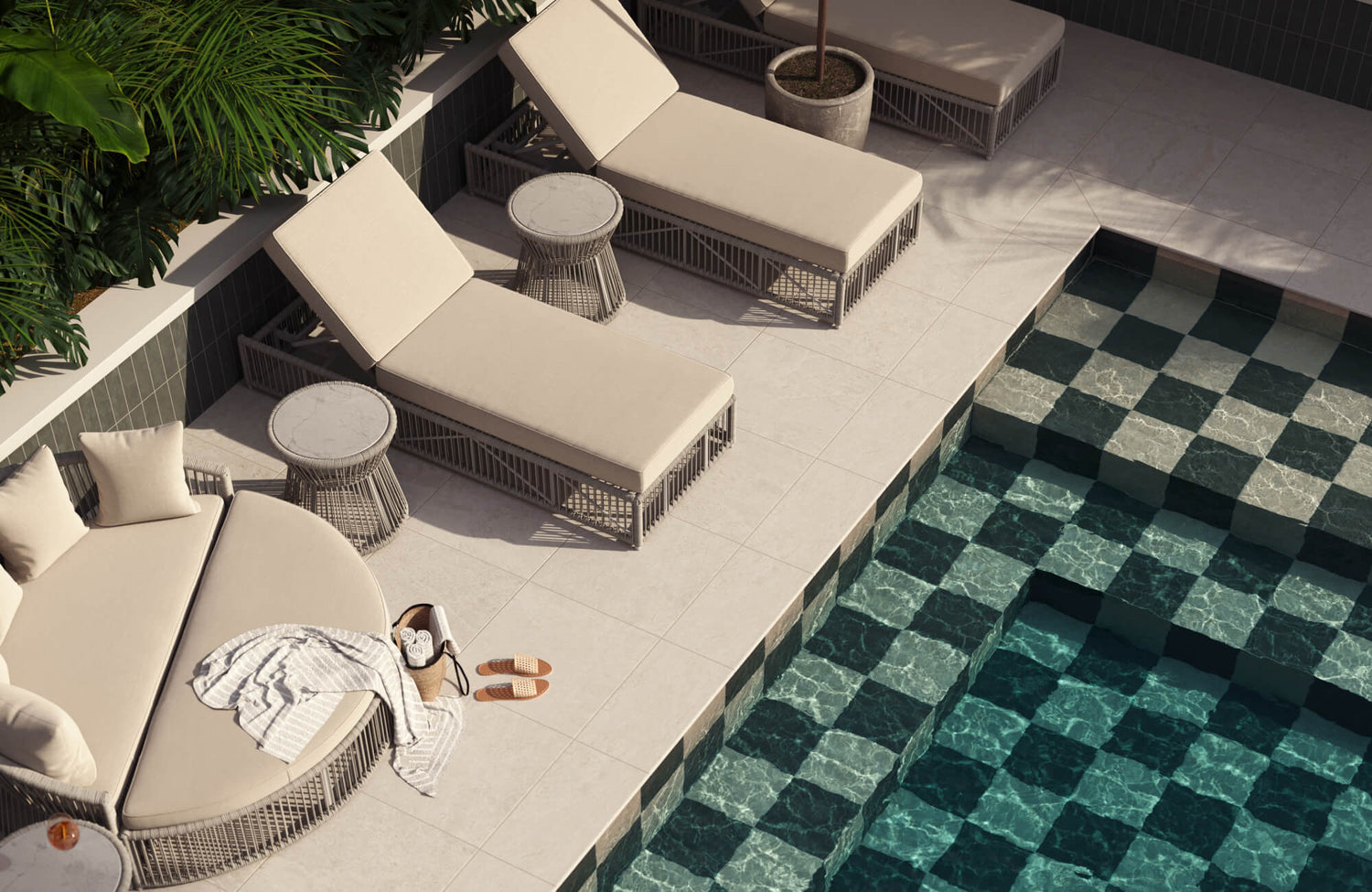
The two loungers with the warm golden wicker bases and cream cushions in the setting above are our Solena Outdoor Lounger in White, where the twisted rattan-style synthetic weave wraps the rounded aluminum frame in a way that resists fading and cleans easily without requiring seasonal treatment. The quick-drying foam seat construction addresses one of the most common failure points in poolside cushions, allowing moisture to release rather than settle into the fill where mold and mildew develop over time. Its powder-coated aluminum frame beneath the weave ensures that even if the surface is exposed to chlorinated water, the structure underneath does not corrode the way a steel-framed alternative would.
Stainless Steel And Powder-Coated Frames Near Chlorinated Water
Stainless steel performs well in most outdoor environments, but poolside conditions test it more specifically because chlorine accelerates the surface oxidation that can occur even on high-grade stainless alloys. Marine-grade stainless steel, typically 316-grade, is significantly more resistant to chlorine exposure than the more common 304-grade and is the more appropriate specification for furniture placed directly adjacent to a pool. Powder-coated steel offers a different trade-off. The coating itself provides strong protection against moisture and UV exposure as long as it remains intact, but any chip or scratch in the coating exposes the steel beneath to direct contact with chlorinated water, which can cause localized rust to develop and spread beneath the coating surface.
For this reason, powder-coated steel requires more monitoring in a poolside setting than aluminum does, and surface damage should be addressed quickly rather than left. Both materials can work well in a poolside environment when the grade and finish are appropriate for the conditions, but neither is as inherently forgiving as aluminum when the maintenance is inconsistent.
Concrete And Stone For Fixed Poolside Pieces
Concrete and stone are used most effectively in a poolside setting for pieces that are intended to stay in place rather than be moved or rearranged. Dining tables with concrete or stone tops, fixed benches, and built-in seating walls all benefit from the material's durability and resistance to moisture, UV exposure, and heat without the need for seasonal treatment or storage. The weight of concrete and stone is what makes them impractical as movable lounge or dining chairs, but well-suited to surfaces and structural seating elements that anchor the space.
Sealed concrete and natural stone, like granite and basalt, are non-porous enough to resist the staining and absorption issues that affect softer stones like limestone or sandstone in a chlorinated environment. The visual weight of concrete and stone also contributes to a poolside space in a specific way, grounding the area and providing a permanent architectural quality that lighter materials cannot replicate.

Sofas, Sectionals, And Coffee Tables In An Outdoor Poolside Space
A poolside lounge area built around a sofa, sectional, or coffee table creates a different kind of space from a row of lounge chairs. It invites longer, more social use and gives the pool area a living room quality that makes the outdoor space feel as considered as the interior it connects to.
How To Scale A Sofa Or Sectional To The Pool Area Without Overcrowding It
The scale of a sofa or sectional needs to be determined by the amount of usable deck space available after the pool itself, the lounge zone, and any circulation paths have been accounted for. A sectional that works proportionally in a large backyard can make a modest pool deck feel impassable, reducing the sense of openness that outdoor spaces rely on to feel comfortable rather than cluttered. As a general starting point, there should be enough clearance around the seating group for people to move freely between the furniture and the pool edge without having to navigate around the pieces. Modular sectionals are particularly well-suited to poolside settings because they can be configured to fit the specific geometry of the space rather than requiring the space to accommodate a fixed form. A sofa or sectional that leaves a generous open area between itself and the water tends to feel more intentional than one pushed to the edges of the deck to maximize seating capacity at the expense of the overall spatial flow.
The extended sweeping silhouette of our Sabine Outdoor Sofa in Cream, shown against the stone wall above, demonstrates how a generously scaled piece can still feel open rather than imposing when the frame is kept low, and the form does not push outward beyond its cushions. Its curved barrel back wrapped in intricately woven rattan keeps the visual weight of the piece contained to its outline, and the OEKO-TEX certified quick-dry foam cushions ensure the seating stays comfortable and usable through wet poolside conditions. The powder-coated aluminum frame beneath resists corrosion without requiring seasonal treatment, which matters in a setting where the furniture stays outdoors through extended periods of moisture exposure.
Using Ottomans As Flexible Seating And Surface Options
An ottoman in a poolside lounge area serves more functions than it does indoors because the setting demands flexibility in how the space is used throughout the day. It can act as additional seating when more people gather around the pool, as a surface for drinks and objects when a side table is not within reach, or as a footrest that extends the comfort of a sofa or lounge chair during longer periods of relaxation. Ottomans with firm, water-resistant tops, either in a tightly woven resin, a sealed hardwood slat surface, or an outdoor fabric over a quick-dry fill, transition between these uses more reliably than those with soft cushioned tops that compress under the weight of objects or become uncomfortable to sit on after moisture contact.
A large square ottoman placed at the center of a seating group can also function as a coffee table when a tray is placed on top, which reduces the number of separate pieces needed in the layout without sacrificing surface space. Keeping the ottoman finish consistent with the sofa or sectional it is paired with gives the lounge grouping a sense of cohesion that makes the arrangement feel planned rather than assembled from separate decisions.
Where Coffee And Side Tables Fit In A Poolside Lounge Setup
Coffee and side tables in a poolside setting need to earn their place in the layout without adding visual weight that makes the space feel dense or difficult to move through. A coffee table positioned at the center of a seating group gives the arrangement a clear focal point and provides a shared surface that anchors the conversation area, but its height, material, and size all affect how well it functions in an outdoor context. Low-profile coffee tables in aluminum, teak, or sintered stone work well because they are proportionally suited to the lower seat heights of most outdoor sofas and sectionals, and their materials handle moisture and sun without requiring protection or seasonal storage.
Side tables fill the gaps that a single central coffee table cannot reach, placing a surface within arm's reach of seating positions at the ends of a sofa or adjacent chairs where a centrally placed table is too far away to be practical. The most functional poolside lounge setups tend to use one coffee table as the anchor and one or two side tables to address the reach gaps, keeping the number of pieces low enough that the layout stays open and easy to move through.
Our Cielo Outdoor End Table, visible beside the sofa in the image above, is crafted from laminated teak root, where the mosaic of natural grain patterns, knots, and growth rings across its surface comes from the material itself rather than any applied finish. Teak's natural oil content makes it one of the few wood materials that resists moisture absorption in a poolside setting without requiring a protective coating to maintain that resistance. Its compact, clean-edged silhouette keeps it from competing with the sofa for visual weight, placing a functional surface exactly where it is needed without adding bulk to the layout.
Putting Your Poolside Furniture Selection Into Perspective
Furnishing a pool area well comes down to making decisions that account for the full reality of the environment rather than just how the furniture looks in a product image. The materials need to handle moisture, chlorine, heat, and sustained UV exposure without requiring constant attention. The lounge, dining, and conversation zones each need to be scaled and positioned in a way that makes the space feel open and easy to move through, rather than crowded with pieces competing for the same space. When those decisions are made in relation to one another rather than category by category, the pool area becomes an extension of the home that functions as well as it looks and holds up through seasons of actual use.
If you are comparing outdoor furniture options, materials, or trying to determine how different pieces might work together in your poolside space, our Personalized Design Consultation can help bring clarity to the process. Our team can offer tailored guidance based on your outdoor layout, your climate, and your design goals, helping you build a poolside environment that performs and feels exactly as it should.