
)
)
)
)
)
)
)
)
Should Your Throw Pillow Case Be The Same Size As The Insert?
A room that feels truly finished rarely happens by accident. It is built through small, deliberate decisions, the weight of a fabric, the way a form sits against another, the fullness of a pillow against the back of a sofa. These details are easy to overlook, but they are exactly what separates a space that looks styled from one that feels considered.
The relationship between a pillow case and its insert is one of those details. Get it right, and the pillow holds its shape, complements the space, and disappears into the room in the best possible way. Get it wrong and something feels off, even if you cannot immediately say why.
So, should the case and insert always match in size? Not necessarily. In many cases, an insert 1 to 2 inches larger than the cover creates the kind of fullness that makes a pillow look genuinely finished. A same-size insert, used with intention, produces something softer and more relaxed, equally valid in the right setting. The answer lives in the details, such as your cover, your fill, and the feeling you want the space to carry.
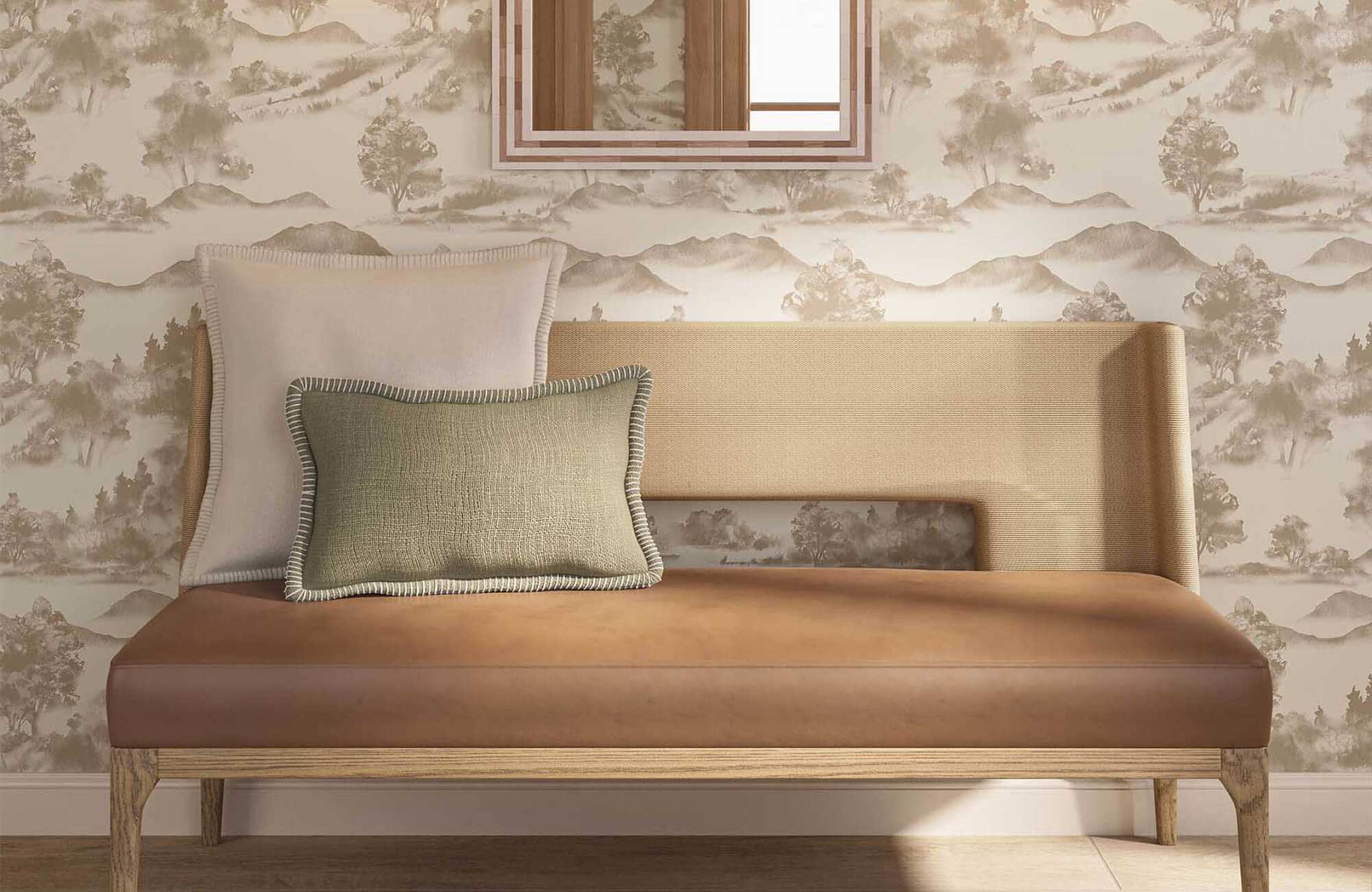
Corvello Banquette in Brown styled against soft toile wallpaper, where a fuller pillow at the back and a slimmer accent in front show how intentional sizing creates balance without overworking the arrangement
Start With the Most Reliable Sizing Rule
The case and insert do not need to be the same size. For most decorative pillows, choosing an insert 1 to 2 inches larger than the cover helps the pillow look full, structured, and quietly purposeful, though, like most things worth doing well, it comes down to intention over rule-following.
Size Up for Fullness
If you want a pillow that holds its shape and contributes real presence to a room, a slightly larger insert is usually the right choice. An 18-inch cover typically looks best with a 20-inch insert; a 20-inch cover often pairs well with a 22-inch insert. That added volume pushes the fill into the corners, prevents the cover from reading as hollow, and gives the pillow the kind of body that anchors a styled arrangement.
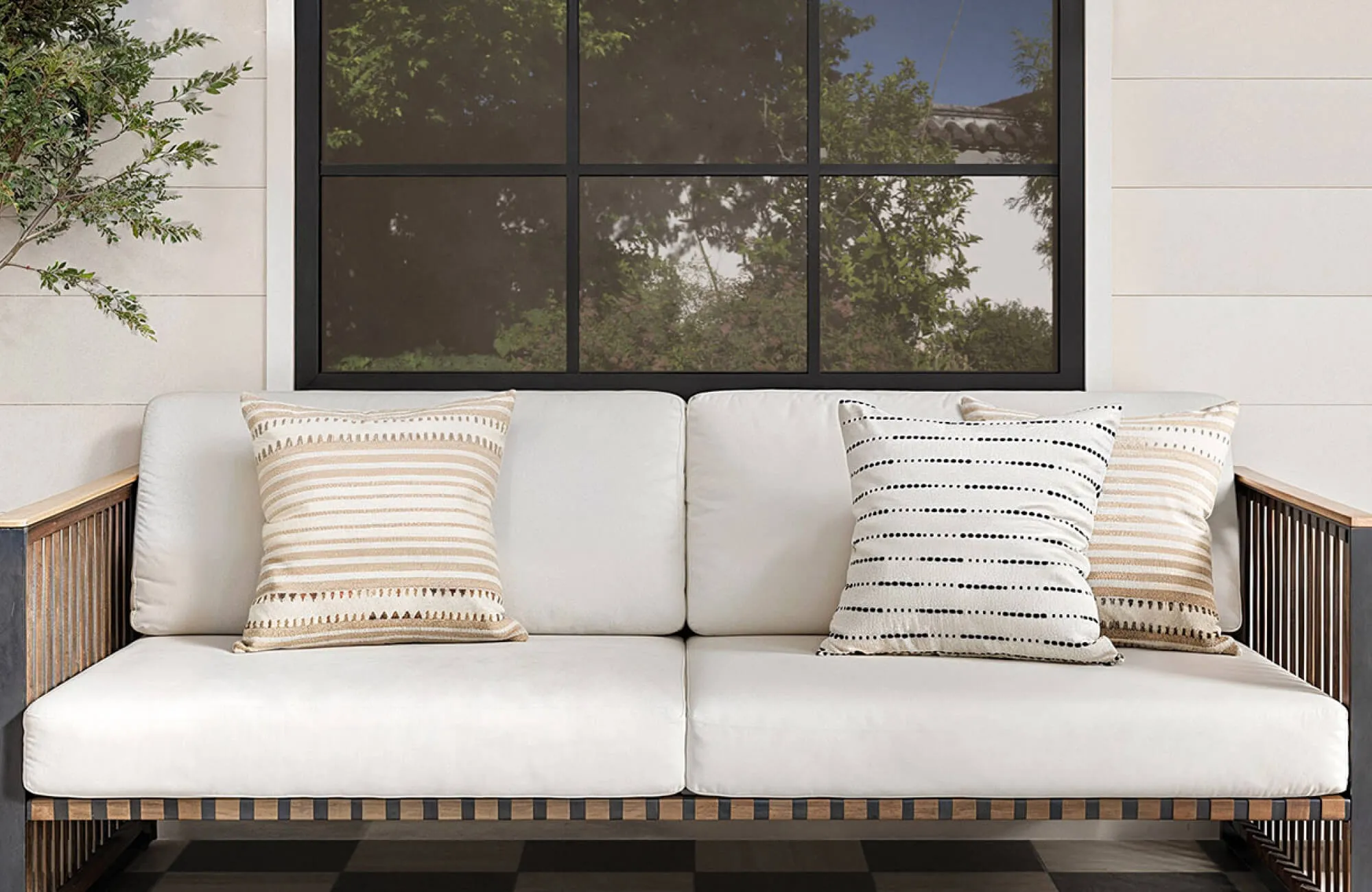
This works particularly well for pillows on sofas, beds, and accent chairs, anywhere the pillow is meant to carry visual weight. A pillow that holds its form upright, rather than sinking into the cushions behind it, simply looks more considered. Edward Martin’s Merelle 22" x 22" Down Pillow in Ivory, pictured above, is a fitting example; its down fill and generous sizing give it exactly the kind of quiet fullness that keeps a sofa arrangement feeling composed rather than flat.
Sizing up should still feel natural. If the insert is difficult to place or the zipper pulls across the seam, the pillow is overfilled. The goal is fullness that feels effortless, not excess.
Match Sizes for a Softer Feel
There are rooms and moments where comfort matters more than a crisp silhouette. In a family room, a reading corner, a primary bedroom used every day, a same-size insert often produces the most livable result. Softer, slightly flatter, easier to lean into. The kind of pillow that invites use rather than discourages it.
A same-size pairing also works well when you want the arrangement to feel relaxed rather than dressed. Not every pillow needs to announce itself. In certain spaces, a quieter pillow makes the room feel more natural, more like something lived in, rather than assembled.
Regardless of the sizing approach, insert quality matters. A same-size insert should still reach the corners and support the fabric. If the pillow looks limp from the start, the problem is almost always fill quality or loft, not the size relationship.
Avoid Inserts That Are Too Small
An insert noticeably smaller than the cover rarely produces a considered result. The corners stay soft and empty, the fabric folds rather than holds, and the pillow can look worn before it has ever really been used. An 18-inch insert inside a 20-inch cover, for example, leaves the fabric with nowhere purposeful to go; it gathers rather than settles, and the difference between unfinished and relaxed becomes immediately clear. If existing pillows look collapsed or shapeless, check the insert before replacing the cover. In most cases, a fuller insert is all it takes.
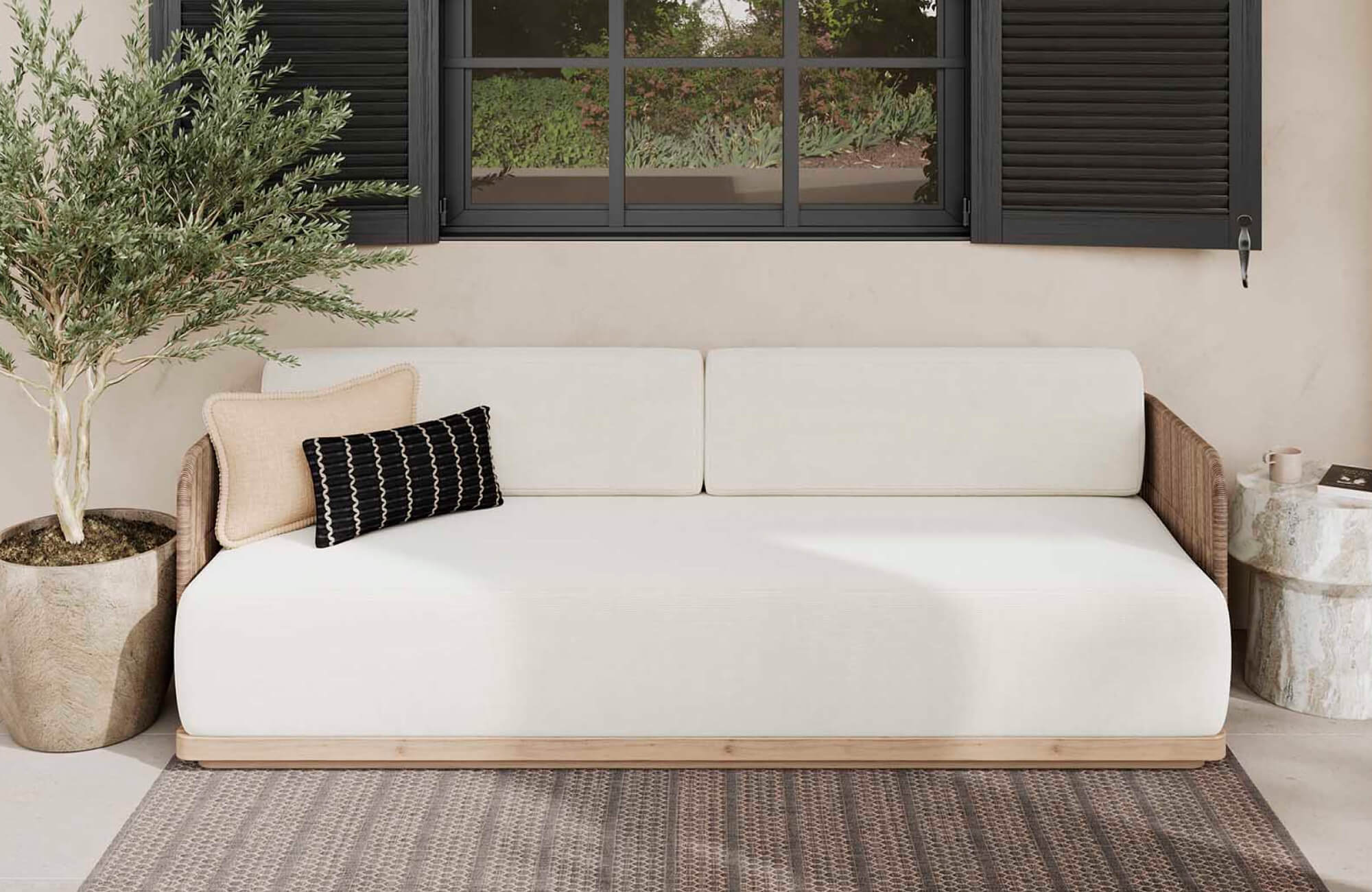
Corvin Outdoor Sofa in Cream, paired with Merelle 13" x 21" Pillow Cover in Tan at the back and a slim lumbar in front; two different shapes, each sized to suit its form, showing how the right insert brings out the best in every pillow without overcrowding the seat
Let the Pillow Shape Guide the Fit
Not all pillows are sized the same way, because not all pillows are the same. A square, a lumbar, and an oversized accent each hold fill differently, and the insert should reflect that.
Square Pillows
Square covers respond well to a slightly larger insert. Common sizes, 18, 20, 22 inches, typically look more balanced with an insert 2 inches larger. That added volume fills the corners evenly, so the pillow reads as consistent from edge to edge rather than full in the centre and soft at the sides.
This is why an 18-inch cover is so often paired with a 20-inch insert. The insert compresses naturally into the case, giving the pillow both structure and lift. If the pillow is primarily for comfort rather than styling, a same-size works well here too; the choice is simply about what you want the space to feel like.
Lumbar Pillows
Lumbar pillows ask for a different sensibility. Their shape is defined by proportion, length relative to height, and the goal is even, quiet support across the full span, not simply more volume.
A same-size insert often serves a lumbar cover best, keeping the lines clean and avoiding the rounding or side-seam pulling that comes from overfilling. Edward Martin’s Marisette 12" x 27" Pillow Cover in Black, as featured in the photo above, illustrates this well. Paired with a same-size insert, it sits with exactly the kind of slim, composed presence a lumbar is meant to have. If the fabric allows, a slight increase in length can work, but the insert should always follow the pillow's shape and not resist it. A lumbar should feel slim and quiet, not forced.
Oversized Pillows
With covers 24 inches or larger, the balance shifts toward quality over size. Large pillows already have a significant surface area, and too much fill can make them rigid and uncomfortable, particularly on beds, sectionals, or deep sofas where they are meant to be leaned against. A high-loft insert can give an oversized pillow body and softness without making it hard. Sizing up by a single inch, if at all, is usually enough. The pillow should feel generous, not like something that has been pushed past its natural form.
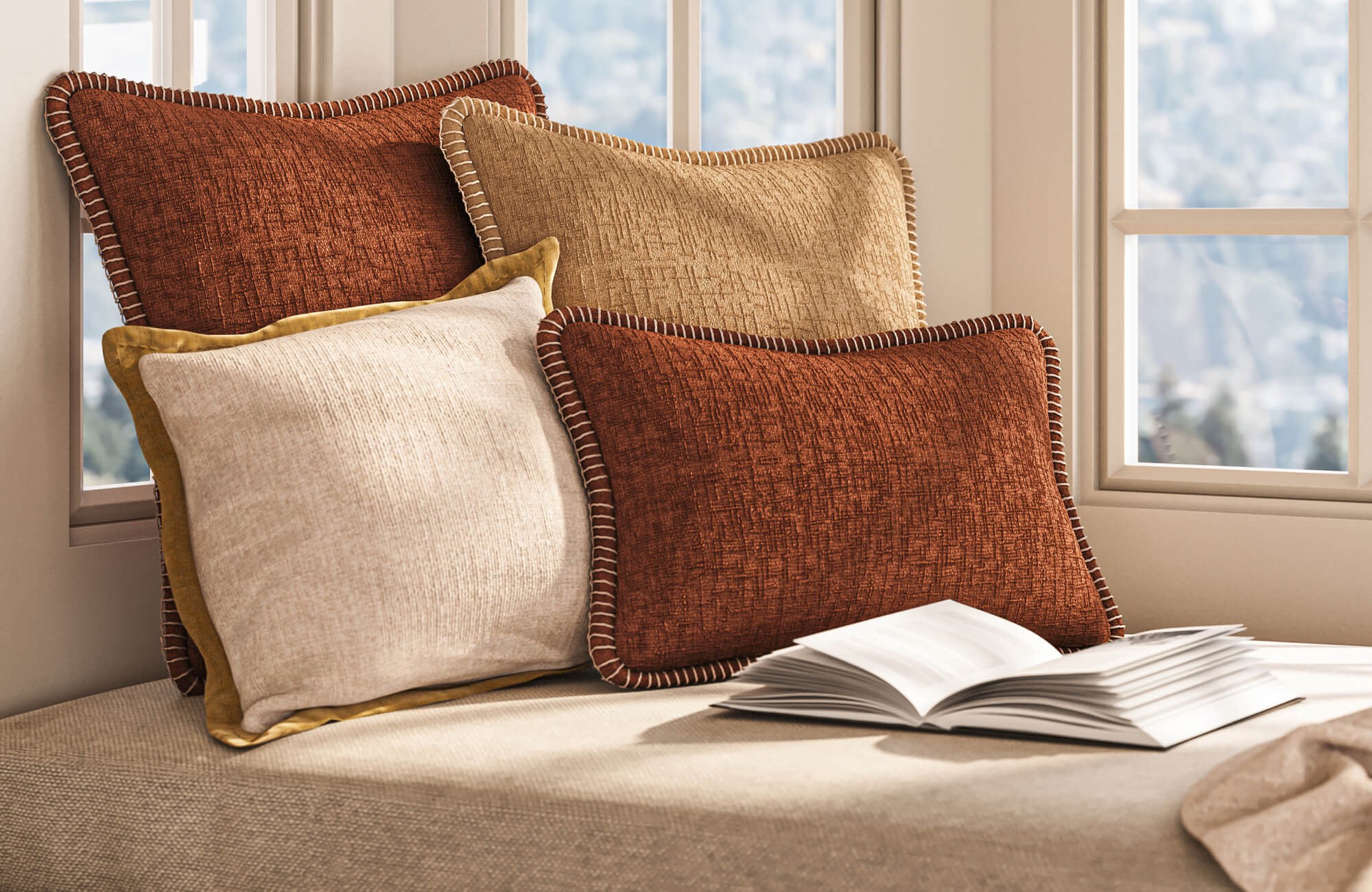
A sun-lit window seat layered with Merelle 22" x 22" Down Pillow in Terracotta and Merelle 22" x 22" Down Pillow in Tan, different weights and constructions arranged together, an illustration of how fabric choice shapes the way each cover holds its fill
Check the Fabric and Cover Construction
The fabric and construction of the cover matter as much as the measurements. Weight, seam strength, closure style, and surface detail all affect how much fill the cover can hold, and how it should hold it.
Heavy Fabrics
Velvet, bouclé, canvas, tapestry, and thick linen carry their own weight. Without adequate support from the insert, they can look heavy and slack, which works against the texture and presence these materials are chosen for. A slightly larger insert helps them hold a cleaner, more defined form. Before assuming a larger insert is always right, check the closure. If the zipper pulls across the seam, the insert may be too firm rather than too large.
Lightweight Fabrics
Thin cotton, silk blends, fine linen, and embroidered covers ask for more restraint. Too large an insert can stretch the fabric, distort surface detail, or place quiet but persistent strain on the stitching. A same-size insert is usually the more considered choice, one that allows the fabric to settle naturally without forcing the seams outward. Edward Martin’s Brielle 18" x 18" Down Pillow in Natural / Mustard, as featured in the photo above, shows this approach in practice; the fine linen cover sits with an easy, natural fullness, shaped by the insert without being stretched by it. With lighter fabrics, the goal is a pillow that looks filled but not pulled. Control, rather than volume, is what the material calls for.
Seams and Closures
Hidden zippers, envelope backs, and hand-finished seams are not always designed to accommodate extra pressure. If the insert is difficult to place or the closure does not sit flat, the sizing is too aggressive, regardless of what the measurements suggest. Edward Martin’s Merelle 22" x 22" Down Pillow in Terracotta, pictured above, features a hidden flap closure that keeps the back of the pillow as concealed as the front, hardware concealed, panels lying flat, with no visible tension along the seam. It is a detail that only works when the insert and cover are properly matched.
Envelope closures in particular deserve attention. When the insert is too large, the back panels gap rather than overlap cleanly, and the pillow looks unresolved from behind. A same-size insert almost always produces a neater, longer-lasting result for this construction.
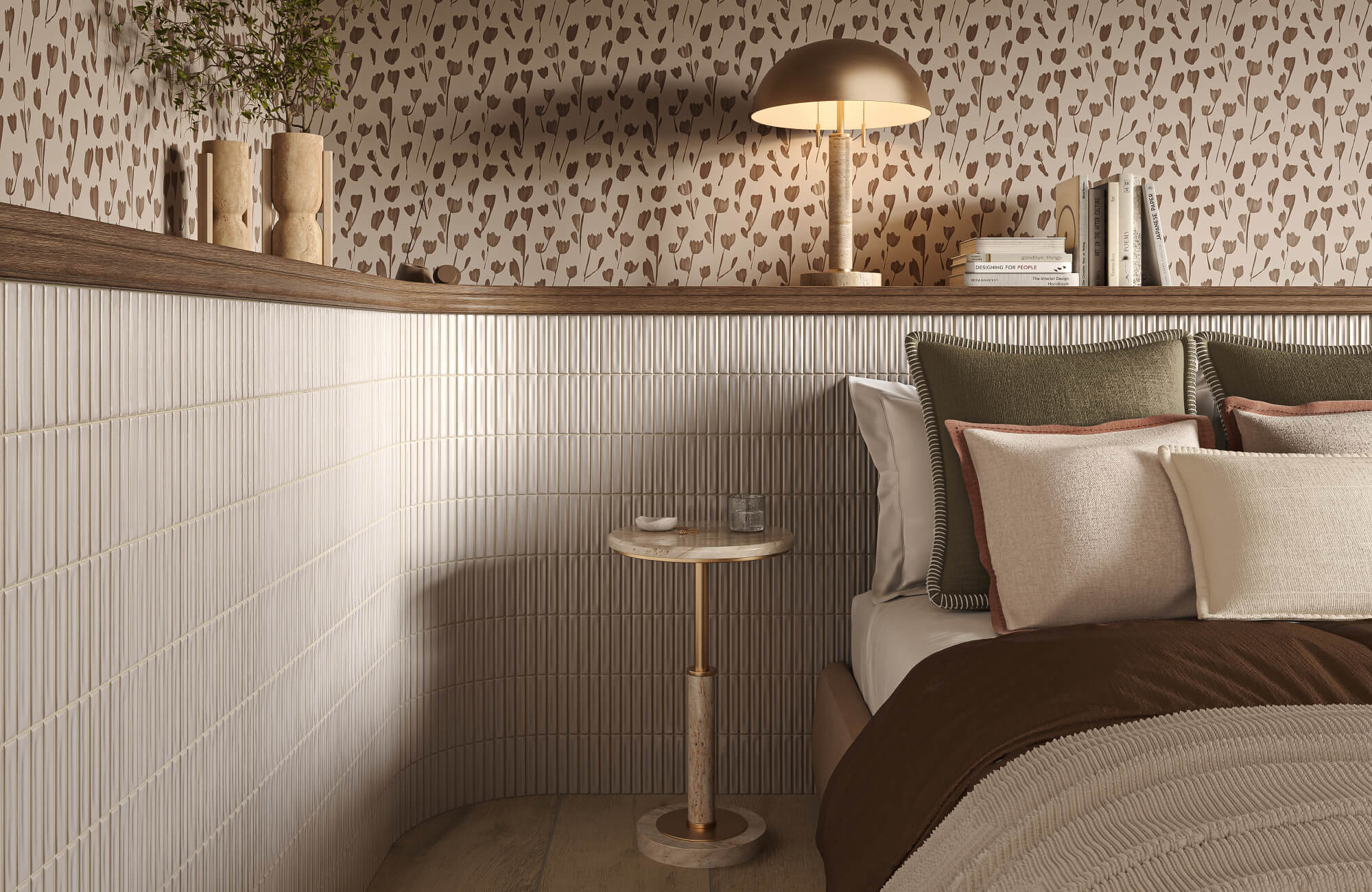
A layered bedroom arrangement against Celia 5 x 10 Glossy Ceramic Tile in Deep White and Petaline Wallpaper in Taupe I, 52" x 132", where fuller pillows at the back build height and structure, while softer accents in front create the kind of ease that makes a beautifully dressed bed feel just as comfortable to return to each night
Consider Where the Pillow Lives
Placement shapes the decision as much as the cover does. A pillow on a styled sofa is doing different work than one on a narrow chair, and the right insert should reflect that difference.
Sofa Pillows
Sofas generally call for a fuller insert, one that is 1 to 2 inches larger than the cover. A pillow with more body stays visible against the sofa cushions and holds the arrangement with quiet authority. On a deep sofa, especially, a flat pillow tends to disappear into the composition rather than contribute to it. In a layered arrangement, fuller pillows work best at the back, where they create height and structure. Softer pillows toward the front are easier to adjust and more comfortable to lean against, a balance that keeps the sofa feeling both composed and genuinely usable.
Bed Pillows
A well-considered bed arrangement benefits from varying levels of fullness. Euro or large square pillows at the back are well-suited to a fuller insert; their purpose is to build height and hold the composition in place. Smaller accent pillows toward the front tend to look and feel better with a same-size insert: softer, lighter, easier to move at the end of the day. Think about how the bed is actually used. A guest room can carry a more formal, fully dressed arrangement. A primary bedroom is better served by pillows that are as comfortable to handle every morning as they are beautiful to look at.
Chairs and Benches
On narrower seating, proportion matters more than fullness. An overfilled pillow on a chair or bench can push the sitter forward, reduce usable depth, or simply look too large for the piece it sits on. A same-size insert or a well-proportioned lumbar usually fits the space more honestly. Test the pillow in place before committing. If it looks right but makes the seat uncomfortable, the insert is not suited to that location, regardless of how the measurements read.
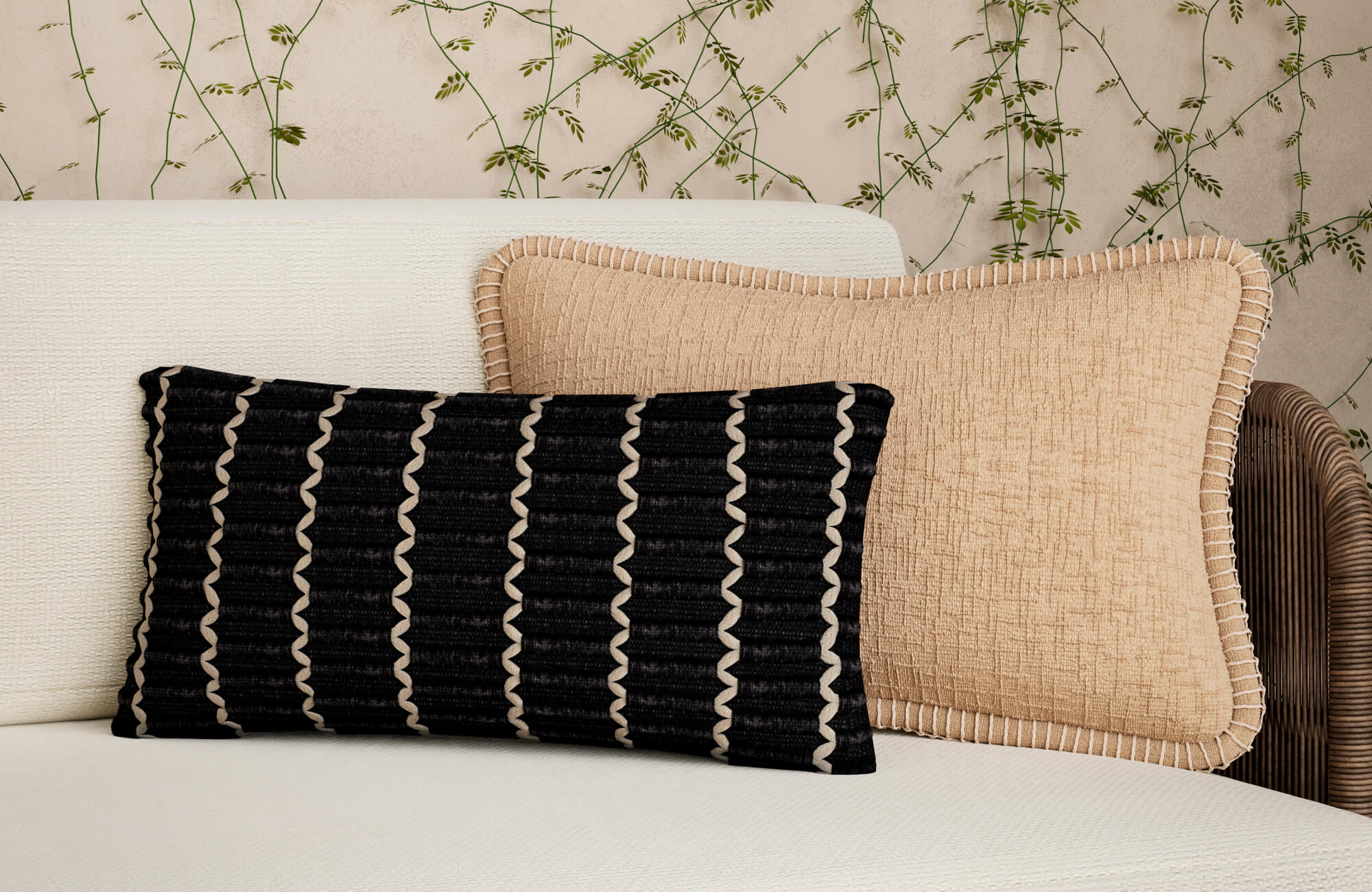
Two pillows placed side by side on a white outdoor sofa, the slim black lumbar and the Merelle 13" x 21" Pillow Cover in Tan tell two different stories about fill, form, and how the right insert brings each cover to life
The Fill Changes Everything
Two inserts with identical dimensions can behave entirely differently depending on what is inside them. Fill type affects how the pillow compresses, how it fills the corners, and whether sizing up creates beautiful body or unwanted rigidity.
Feather and Down
Feather and down fills compress easily and reshape well. Placed inside a slightly smaller cover, they fill the corners naturally without making the pillow feel hard, which is why a 22-inch feather-down insert inside a 20-inch cover can produce such a satisfying, full result. These inserts benefit from regular fluffing, as the fill settles gradually with use.
Down Alternative
Down alternative is a thoughtful choice for those who prefer an animal-free option. Fill quality varies significantly, however, and synthetic materials do not always compress the way feathers and down do. Edward Martin’s Merelle 13" x 21" Pillow Cover in Tan, as featured in the photo above, is available with either a poly fiber or down insert; a considered pairing that lets you choose the fill that best suits your space and preference without compromising on the cover's clean, finished look. If the insert feels firm rather than soft, matching the cover size is usually more comfortable than sizing up. The right down alternative should rebound gently after use, not hold a round, rigid form inside the case.
Polyester and Foam
Basic polyester inserts are widely available, but they tend to flatten with regular use. When that happens, the pillow can look underfilled even when correctly sized. Replacing the insert is almost always more effective than changing the cover. Foam inserts offer firm support but rarely suit decorative throw pillows well; they can make the pillow feel more like a bolster than a soft accent. If a foam insert is oversized, the pillow loses the softness that makes it worth having in the first place. For everyday use, investing in a better-quality fill will almost always produce a more enduring result than forcing a larger size.
Choose the Fit That Matches the Pillow’s Purpose
A throw pillow case does not need to match the insert in size. For a fuller, more structured look, an insert 1 to 2 inches larger is often the better choice, particularly with square pillows, heavier fabrics, and pieces meant to hold a room's arrangement together. For something softer and more relaxed, a same-size insert can be exactly right.
The decision is straightforward once you know what to look for. Let the cover, the fabric, the construction, the fill, and the placement speak. Each detail points toward the right answer, for the pillow, and for the space.
Above all, avoid inserts noticeably smaller than the cover. A pillow chosen and filled with intention should feel finished from every angle, full enough to hold its shape, comfortable enough to be used, and quietly at home in the room it belongs to. When the case and insert work together with care, the result is the kind of detail that makes a space feel not just styled, but genuinely considered. Naturally, effortlessly, and every day.
If you are working through a larger space and would like guidance on how the details come together, our design team is here to help. Contact us to explore our design services and find the combinations that are right for your home.
Follow us on Instagram
@EDWARD.MARTIN
)
)
)
)
)
)
)
)
)
)
)
)
)
)
)
)