
)
)
)
)
)
)
)
)
Outdoor Dining Table Guide: Materials, Sizes, And Styling Tips
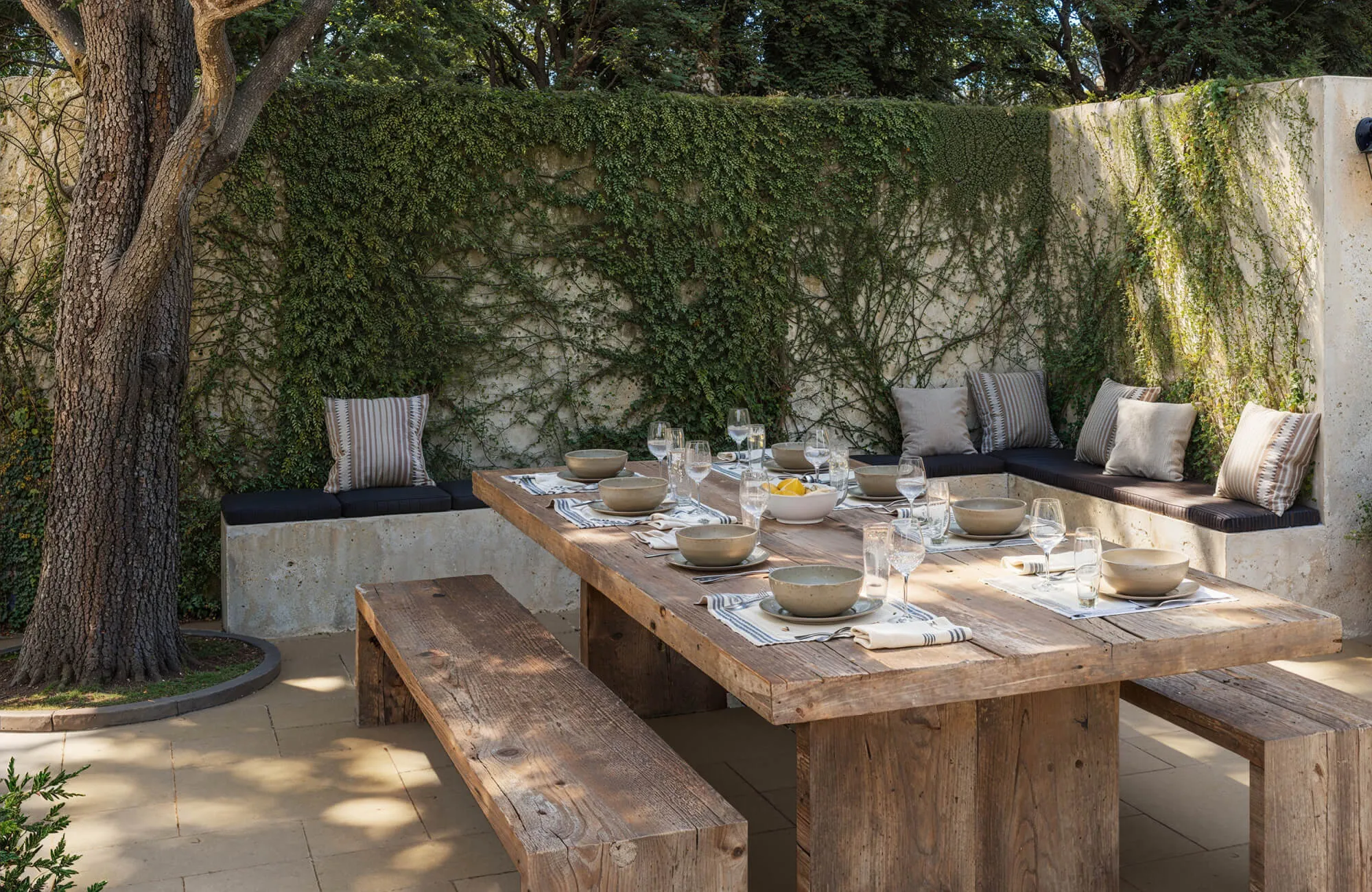
An outdoor dining table brings rhythm, comfort, and refinement to open-air living, turning patios, terraces, and garden spaces into elegant extensions of the home. More than a surface for meals, it shapes the experience of alfresco dining through proportion, material character, and long-term weather performance. From warm teak designs to streamlined powder-coated aluminum frames, each material choice influences how the space looks, feels, and functions.
A well-planned outdoor dining area also depends on accurate sizing, comfortable circulation, thoughtful placement, and coordination with the surrounding landscape. When these elements work together, the result is an outdoor setting that feels polished, practical, and beautifully composed.
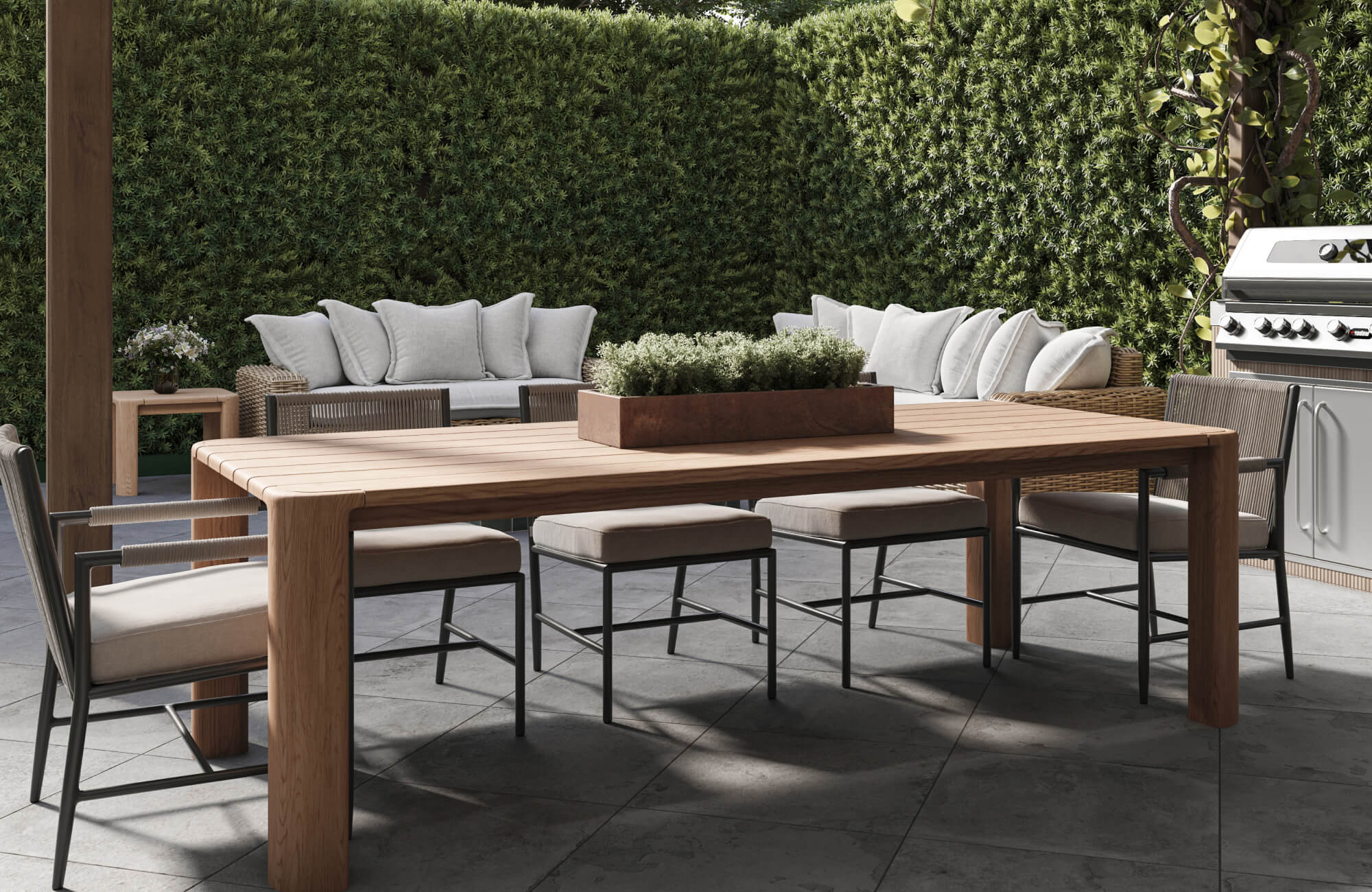
The Maris Teak Rectangular Dining Table, 96" x 42" shows how premium hardwood brings natural warmth and enduring outdoor durability to a generous dining arrangement, its rich grain and considered scale sitting comfortably within a landscaped setting
Choosing Outdoor Dining Table Materials For Weather Performance
The material an outdoor dining table is made from determines how it ages, performs, and responds to the elements over time. Understanding the strengths of each option makes it easier to choose a table that holds its character through sun, moisture, and seasonal change.
Teak And Premium Hardwood Outdoor Dining Tables
Teak remains a leading choice for luxury outdoor dining tables because it combines natural beauty with exceptional weather resistance. Its dense grain, natural oils, and silica content help limit moisture absorption, insect damage, and fungal growth. These qualities make it highly suitable for exposed patios and garden dining areas where the table faces direct environmental contact throughout the year.
Over time, sunlight gradually shifts teak from golden brown to a refined silver-gray patina, allowing the material to age gracefully without losing structural strength. Other premium hardwoods such as ipe, eucalyptus, and shorea also provide strong load-bearing capacity and rich organic character. Some options, such as eucalyptus, may require more frequent oiling or sealing than teak to preserve their original color, while denser choices like ipe and shorea offer comparable natural resistance with relatively similar care demands. For outdoor dining spaces that call for warmth, texture, and natural durability, hardwood tables offer a timeless and deeply adaptable solution.
Powder-Coated Aluminum And Stainless Steel Frames
Metal outdoor dining tables offer a cleaner architectural profile, making them especially effective in contemporary patios, poolside spaces, and outdoor kitchens. Powder-coated aluminum is valued for its lightweight structure and strong corrosion resistance. Its protective finish helps reduce chipping, fading, and surface oxidation. Unlike steel, aluminum does not rust because it contains no iron, which is why it performs reliably in humid climates and areas with frequent rain. Stainless steel, on the other hand, provides greater density and rigidity, giving larger dining tables a stable, engineered presence. In coastal locations, marine-grade stainless steel is particularly useful because it better resists salt-air corrosion. Together, these metals suit outdoor dining furniture designs where low maintenance, structural precision, and a refined aesthetic are equally important.
Stone, Concrete, And Composite Tabletop Materials
Stone, concrete, and composite tabletops bring a more substantial presence to outdoor dining areas, making them well-suited to spaces that benefit from visual weight and lasting stability. Granite, travertine, sintered stone, and fiber-reinforced concrete resist heat, UV exposure, and surface impact when properly specified for exterior use. Their weight can also work as an advantage in open patios where wind movement is a concern, though installation and repositioning require more planning.
Natural stone and concrete may need sealing to reduce staining, moisture absorption, and freeze-thaw damage in colder climates. Engineered composite materials offer a lower-maintenance alternative, mimicking wood or stone while resisting warping, splintering, and insect damage. For anyone seeking a high-performance outdoor dining table with refined texture and reduced upkeep, this category is a strong and practical choice.
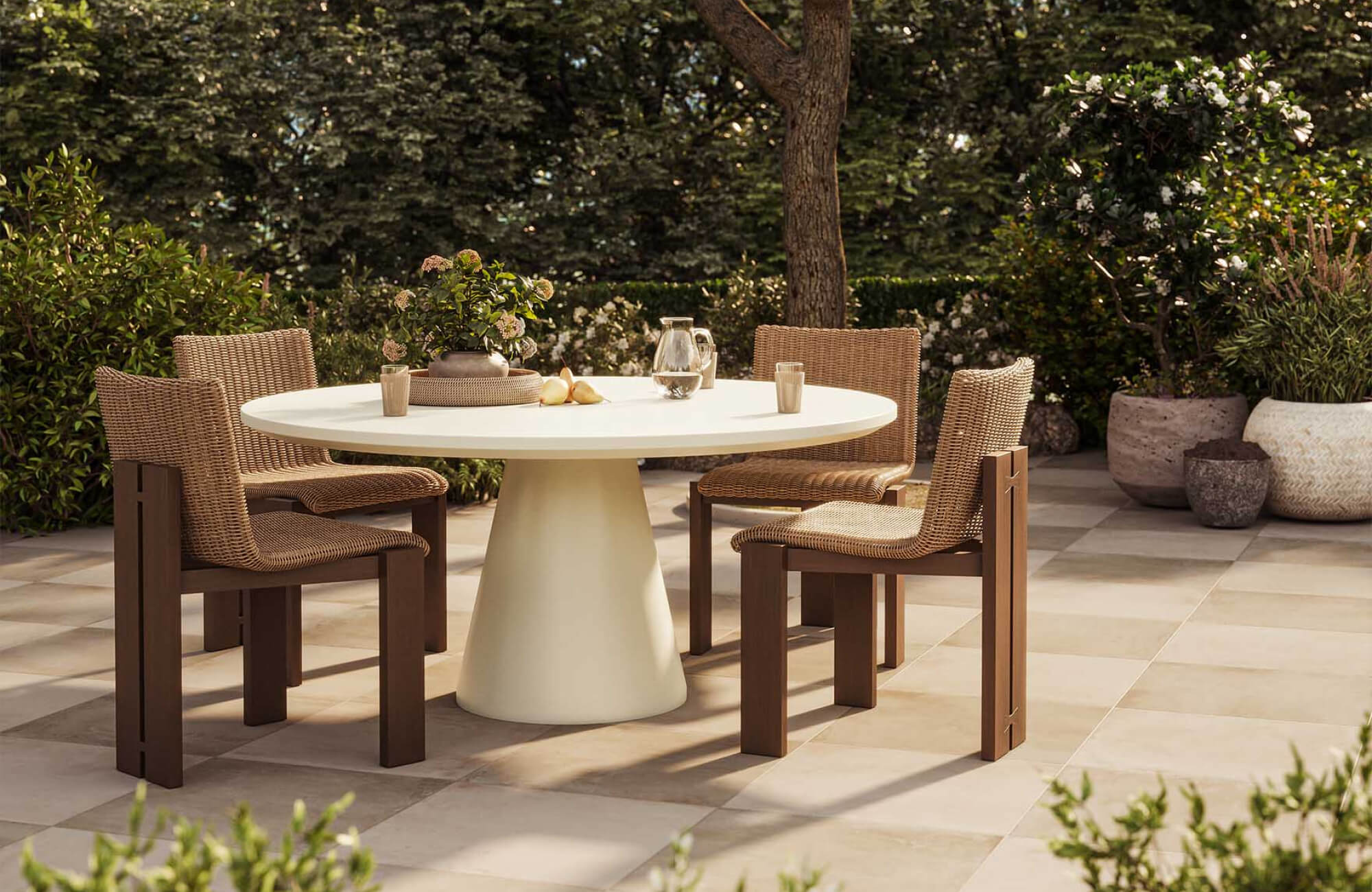
The Linea Round Dining Table in Bone, 63" illustrates how a round form encourages connection across the table while fitting comfortably within a balanced outdoor layout, its refined finish and open base sitting naturally within a garden courtyard
Selecting The Right Outdoor Dining Table Size And Shape
Size and shape determine how naturally an outdoor dining table integrates with the furniture, layout, and movement of the space around it. Getting these decisions right means thinking beyond seating count to consider chair dimensions, walkway clearance, and how guests move through the patio during a meal.
Determining Outdoor Dining Table Dimensions By Seating Capacity
Accurate table sizing begins with how many people the dining area needs to serve most often. A comfortable layout generally allows about 24 to 30 inches of table length per person, giving each diner enough room along the table's edge without making the surface feel oversized for everyday use.
Four-person outdoor dining tables commonly measure 48 to 60 inches long. Meanwhile, six-person tables often extend to about 72 inches, and eight-person designs usually require 84 to 96 inches, depending on the chair style and base configuration. Armchairs, thick cushions, and wide woven frames also require more spacing than slim armless chairs, so furniture proportions should always be measured together before deciding on a final table size. This approach keeps the outdoor dining area comfortable for daily meals while allowing flexibility for larger gatherings.
Rectangular, Round, And Oval Table Configurations
Table shape influences both seating efficiency and the overall mood of the dining area. Rectangular outdoor dining tables suit long patios, covered terraces, and outdoor kitchens well because they follow architectural lines and accommodate generous seating capacity. Round tables create a more intimate arrangement by keeping guests visually connected, which works especially well in compact patios, balconies, and garden corners.
Their curved perimeter also improves movement in tighter spaces because there are no sharp corners to navigate. Oval tables bridge both options, offering the length of a rectangular table with a softer, more sociable silhouette that encourages conversation across the full surface. Choosing the right configuration helps the dining zone feel connected to the surrounding layout rather than simply placed within it.
Planning Clearance And Circulation Around The Table
Clearance around the table determines whether the dining area feels open and relaxed or restricted during everyday use. A minimum of 36 inches between the table edge and nearby walls, railings, planters, or furniture allows basic chair movement. For more comfortable layouts, 48 inches provides better access when guests pull out chairs or walk behind seated diners.
Larger entertaining areas may also benefit from 60 inches of clearance, particularly near grills, outdoor kitchens, pool edges, and main patio pathways. These measurements help prevent the dining zone from interrupting the natural flow between cooking, lounging, and garden areas. With proper spacing in place, the table becomes an anchor within the layout rather than an obstacle within it.
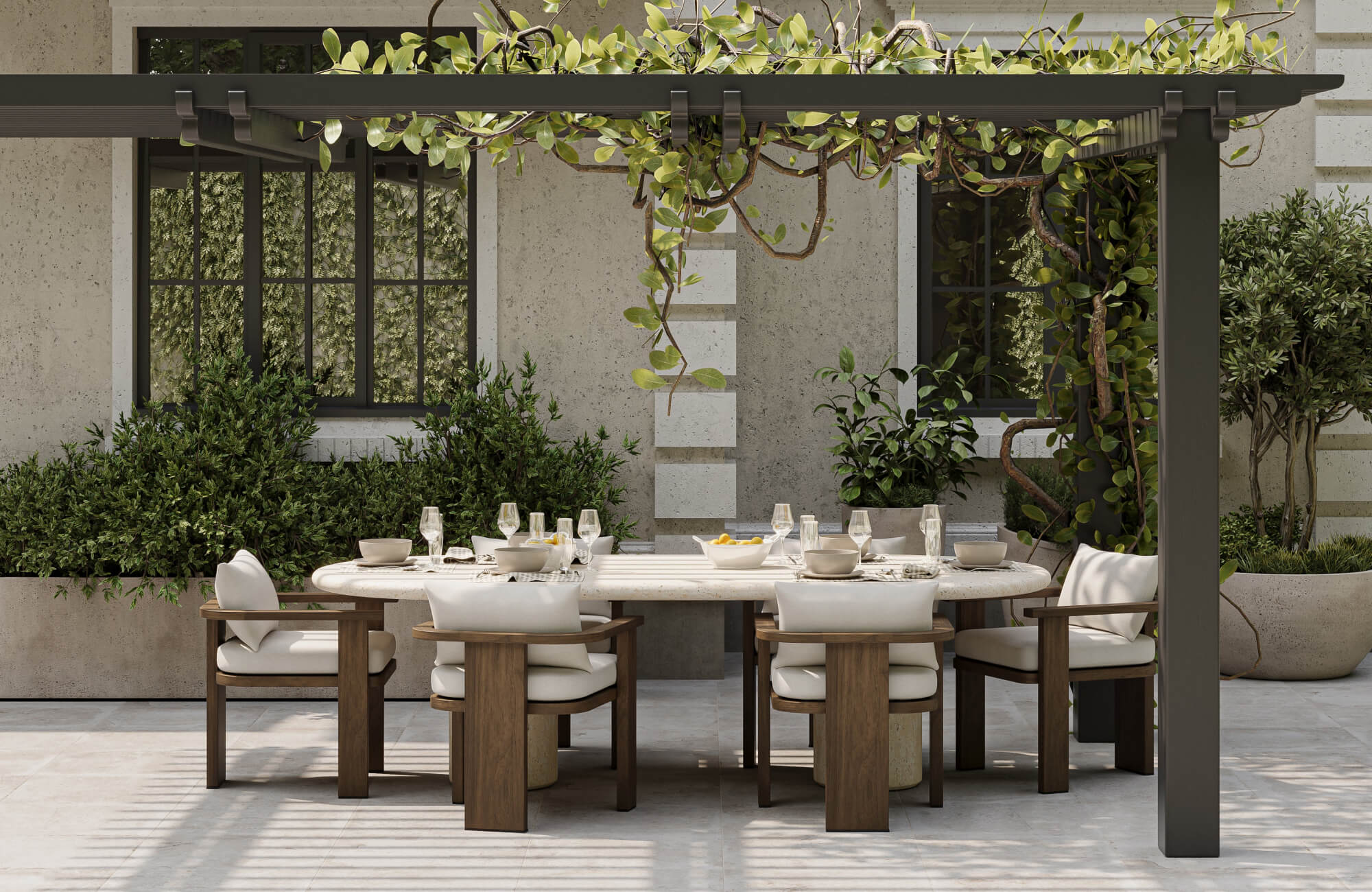
The Seabrook Outdoor Dining Table, 102" demonstrates how placement beneath a vine-draped pergola creates filtered shade and a sense of sheltered enclosure, improving comfort and usability throughout the day while keeping the dining area open and connected to its surrounding garden
Positioning Outdoor Dining Tables Around Climate, Shade, And Site Conditions
Where a table is placed shapes how comfortable it feels and how well it holds up through changing conditions. Sun path, wind exposure, drainage, and shade coverage all deserve consideration alongside size and material so the dining area remains both inviting and practical through every season.
Reading Sun Exposure Before Choosing Placement
Sun exposure should be evaluated before finalizing where an outdoor dining table will sit. Direct heat affects comfort, surface temperature, and finish longevity in ways that become more noticeable over time. West-facing patios, in particular, often receive intense afternoon sun, which can make metal tabletops uncomfortably hot and accelerate fading on cushions, umbrellas, and nearby textiles.
South-facing areas, on the other hand, may offer longer daylight exposure, making them useful in cooler climates but more demanding in warmer regions where shade becomes a priority. A dining zone beneath a pergola, canopy, umbrella, or mature tree also reduces glare and improves usability during peak daylight hours. Dense tree coverage, however, may increase pollen, sap, leaf debris, and moisture retention on the tabletop, so the trade-off is worth considering before committing to a position. Matching placement with the site's natural light pattern makes the dining area more comfortable, practical, and easier to care for over time.
Managing Wind, Drainage, And Surface Stability
Wind and drainage conditions are often overlooked, yet they strongly influence how secure and low-maintenance an outdoor dining table feels through repeated use. Open decks, rooftop terraces, and coastal patios may require heavier tables, weighted bases, or more sheltered placement to prevent shifting during strong gusts. Drainage matters equally, because standing water around table legs can contribute to corrosion, wood swelling, mildew growth, or surface staining over time.
Slightly sloped patios also help move water away from the dining zone naturally. The table itself should still sit level, though, to prevent wobbling and uneven pressure on the frame. Stable flooring materials such as porcelain pavers, concrete slabs, composite decking, and stone patios provide more reliable support than loose gravel or uneven soil. When wind control, drainage, and surface stability are considered together, the dining setup performs more consistently through every season.
Creating Comfort Through Shade, Ventilation, And Spatial Orientation
Comfort in an outdoor dining area depends not only on the table itself but on how the surrounding architecture and landscape interact with the space. A table placed near an exterior wall may benefit from natural wind protection. One positioned too close to heat-reflective surfaces, however, can feel noticeably warmer during sunny afternoons, which affects how long guests want to linger.
Good airflow reduces humidity, lingering cooking smoke, and trapped heat, especially around outdoor kitchens or covered patios. Partial enclosure from screens, hedges, or privacy walls can make the dining area feel more intimate without restricting ventilation. Orienting the table toward a garden view, pool edge, fireplace, or architectural focal point also deepens the visual experience of dining outdoors. With thoughtful placement, the table becomes a destination within the landscape rather than simply furniture set within it.
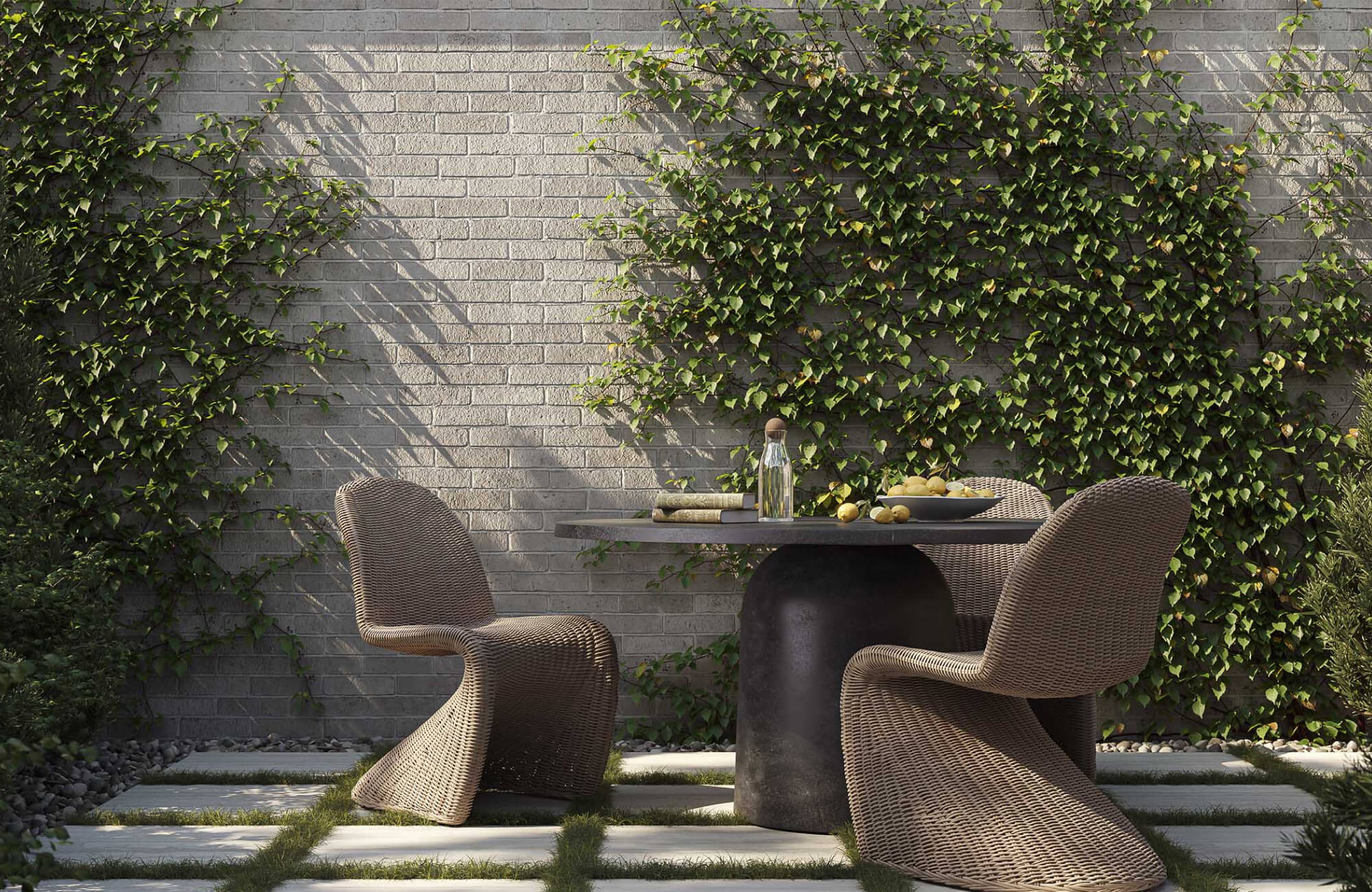
The Verdanta Outdoor Dining Table in Aged Grey, 60" speaks to the importance of stable base construction and considered engineering, its grounded pedestal form sitting with quiet confidence on a paved garden terrace softened by climbing vines and afternoon light
Evaluating Construction Quality And Structural Stability
A well-made outdoor dining table holds its form through repeated use, seasonal exposure, and the weight of daily life. Strong engineering, precise joinery, and corrosion-resistant components are what separate a table that endures from one that begins to show wear within a few seasons.
Frame Engineering And Load Distribution
A well-built outdoor dining table depends on a frame that distributes weight evenly from the tabletop to the base. Reinforced rails, cross-bracing, and internal support systems reduce flexing, which is especially important on longer tables or heavier surfaces. Stone, concrete, ceramic, and thick hardwood tabletops place greater stress on the frame than lighter materials, so the support structure beneath them needs to be engineered accordingly.
Welded metal construction adds rigidity when the welds are smooth, continuous, and properly finished. Wood frames should also show tight joinery and stable connections that handle seasonal expansion and contraction without loosening over time. When load distribution is properly engineered from the start, the table feels steady during use and holds its shape through years of exposure.
Hardware, Fasteners, And Corrosion Resistance
Hardware quality is often the difference between a dining table that lasts and one that weakens after a few seasons outdoors. Screws, bolts, brackets, and concealed connectors are exposed to moisture, heat, and temperature shifts even when they are not immediately visible. Stainless steel fasteners are also preferred for outdoor dining tables because they resist rust and maintain holding strength better than untreated alternatives.
Powder-coated or sealed components provide additional protection in humid, coastal, or rainy environments where standard hardware would deteriorate more quickly. Loose or corroded fasteners can lead to instability, misalignment, and surface damage if they are not identified and addressed early. The smallest construction details deserve close attention when comparing the long-term quality of outdoor furniture.
Base Designs And Seating Efficiency
The base design shapes how stable the table feels and how comfortably chairs fit around it during a meal. Four-leg tables, for example, provide dependable support and work well with many patio dining sets, though corner legs can limit seating flexibility at the ends of the table. Pedestal bases, on the other hand, create more open legroom, making them especially practical for round, square, and smaller dining tables where the center support frees up space around the perimeter.
Trestle bases also offer strong support for larger rectangular tables while creating a grounded, architectural presence that suits more formal outdoor settings. The best base design should match the table's weight, length, and intended seating arrangement. When stability and leg clearance are planned together from the start, the table becomes easier to use and more visually resolved within the space.
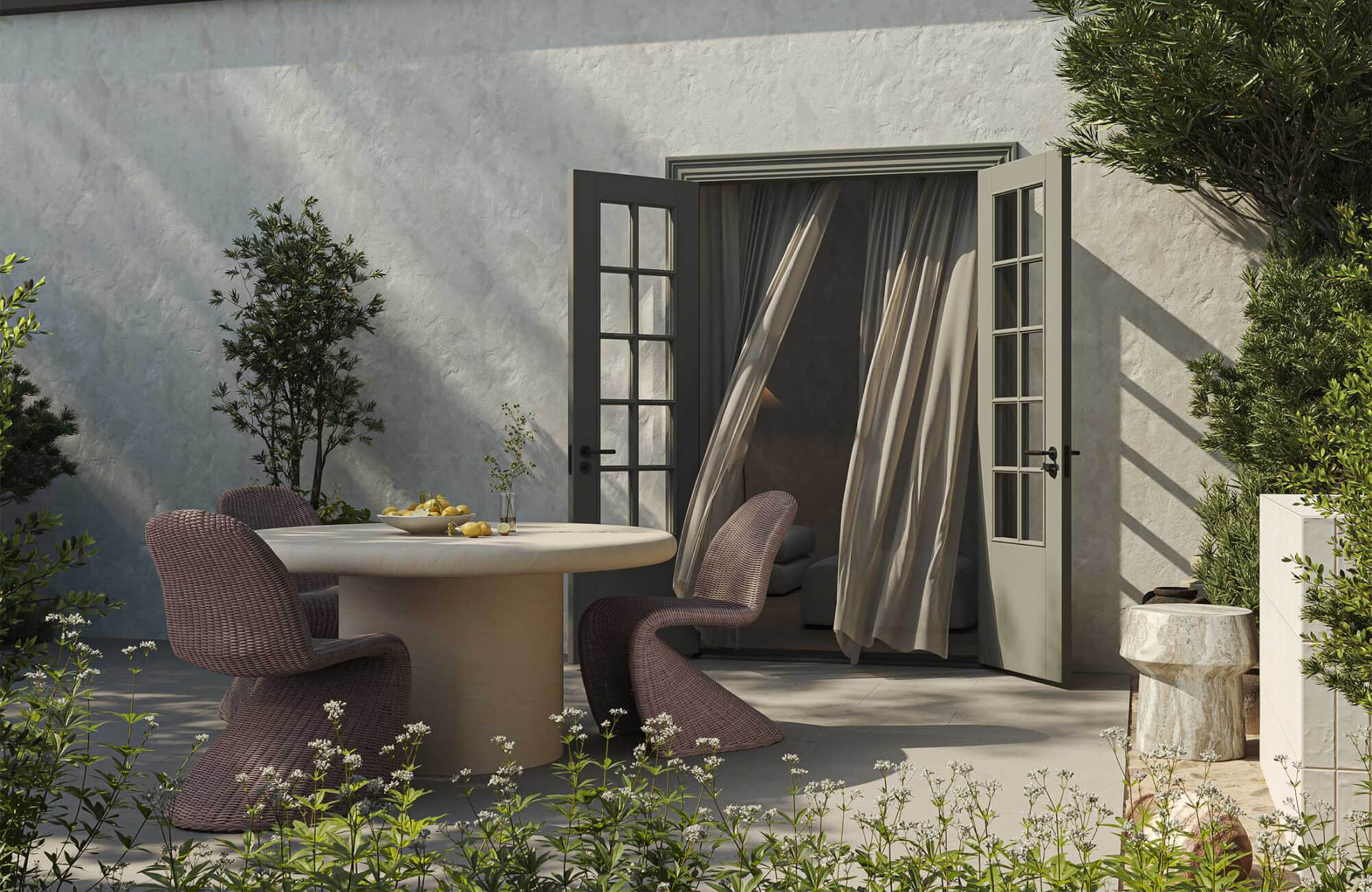
The Mysa Round Dining Table, 60" shows how coordinated forms, textures, and furnishings create a cohesive outdoor dining setting, its sculptural silhouette and curved woven chairs forming an intimate composition beside open French doors and layered garden plantings
Styling Outdoor Dining Tables For A Cohesive Patio Design
Once the functional decisions are in place, styling is what gives an outdoor dining area its sense of character and intention. Coordinated materials, well-scaled accessories, and layered lighting are what connect the table to the architecture and landscape around it.
Coordinating Materials And Furniture Finishes
A cohesive outdoor dining area starts with finishes and materials that relate to one another without appearing overly coordinated. Warm wood tones pair naturally with woven rope chairs, sling seating, or neutral performance cushions because the contrast draws out the richness of the material rather than flattening it. Heavier tabletop materials such as stone and concrete often work well alongside powder-coated metal chairs, creating a considered balance between visual weight and structural precision.
Repeating a limited palette of finishes, such as matte black metal, brushed bronze hardware, and soft neutral fabric, keeps the overall design organized and easy to read. Subtle contrast within that palette, though, prevents the space from feeling flat or overly uniform. This balance of material warmth, finish consistency, and intentional contrast is what makes an outdoor dining area feel genuinely composed rather than simply assembled.
Outdoor Dining Table Centerpieces And Decorative Elements
Decorative elements should enhance the table without reducing dining comfort or creating visual clutter. Low planters, shallow bowls, hurricane lanterns, and sculptural vessels add dimension while keeping sightlines open across the table. Materials such as ceramic, glass, woven fiber, and weather-resistant metal introduce texture without overwhelming the surface or interfering with everyday use.
Rectangular tables often look more balanced with a series of smaller accents arranged along the centerline, while round tables usually benefit from a single central piece that echoes the shape of the tabletop and draws the arrangement together. When accessories are scaled and positioned with care, they bring a finished quality to the outdoor dining setup while leaving enough room for serving and relaxed daily use.
Lighting Strategies For Outdoor Dining Areas
Lighting gives an outdoor dining area atmosphere, visibility, and a stronger sense of place once the sun goes down. Pendant fixtures work beautifully under covered patios and pergolas because they visually anchor the table from above and define the dining zone within a larger outdoor space. String lights, lanterns, sconces, and rechargeable lamps then add softer, more ambient layers around the dining area.
Warm light temperatures create a relaxed and inviting mood, while targeted illumination near serving areas improves function without disrupting the overall atmosphere. Landscape lighting around nearby planting beds or pathways also extends the sense of the dining area into the surrounding garden, making the transition between spaces feel seamless. With layered lighting, the outdoor table remains practical for meals while gaining the warmth and ambience that make evening entertaining feel effortless.
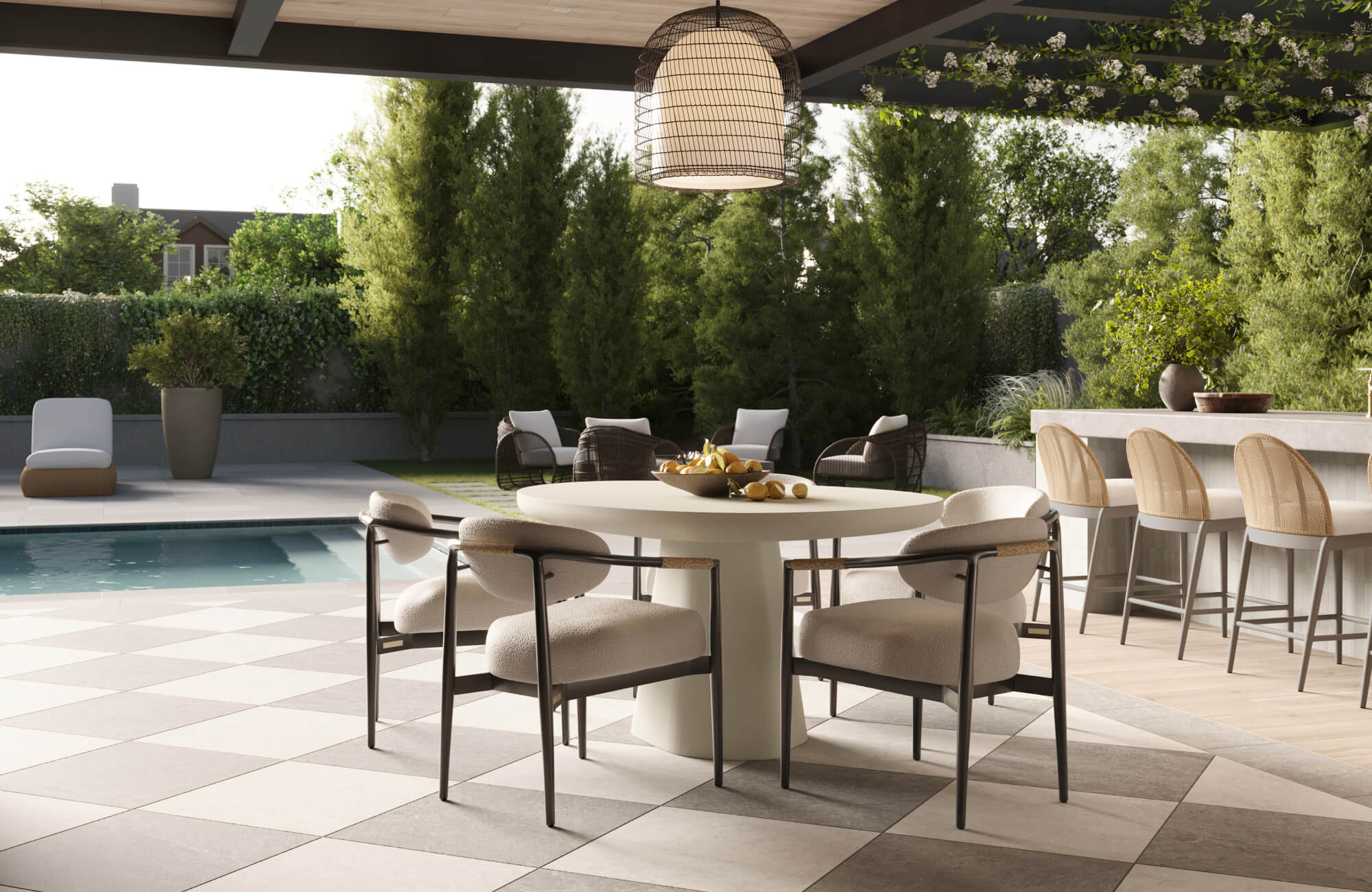
The Selena 55" Outdoor Dining Table in Cream reflects how proper shelter and consistent care preserve both the appearance and performance of outdoor dining furniture over time, its refined finish and well-proportioned form remaining quietly inviting beneath a covered poolside patio
Maintaining Outdoor Dining Tables For Long-Term Performance
Consistent care is what allows an outdoor dining table to hold its finish, material character, and structural integrity through years of seasonal exposure. The right maintenance routine depends on the material, but the principle is the same across all of them: small, regular attention prevents the kind of deterioration that becomes difficult to reverse.
Cleaning Techniques For Different Outdoor Table Materials
Regular cleaning removes pollen, dust, salt, mildew, and food residue before they settle into the surface and become harder to lift. Most outdoor dining tables respond well to mild soap, water, and a soft cloth or non-abrasive brush applied consistently throughout the season. Hardwood tables may benefit from gentle scrubbing along the grain to remove organic buildup without damaging the wood fibers.
Metal frames should be rinsed periodically in coastal or humid settings to prevent salt deposits and environmental residue from building up on the surface. Stone and concrete tabletops also require prompt attention after spills because porous materials absorb oils, wine, sauces, and acidic liquids more readily than sealed or coated surfaces. A steady cleaning routine preserves the table's appearance while reducing the likelihood of long-term surface deterioration.
Protecting Surfaces With Sealers And Furniture Covers
Protective treatments help outdoor dining tables resist damage before it becomes visible in the finish or structure. Natural stone and concrete often benefit from penetrating sealers that reduce water absorption and limit staining from everyday use. Hardwood tables may be oiled periodically to maintain a richer, warmer tone, though some owners prefer to let the wood weather naturally toward its silver-gray patina over time.
Breathable outdoor furniture covers add another layer of protection against UV exposure, rain, leaves, and airborne pollutants between uses. Covers should fit securely without trapping moisture, since poor ventilation beneath a cover can encourage mildew growth and accelerate finish breakdown. When surface treatments and covers are used together with care, they extend the life of the table while keeping its intended appearance intact season after season.
Seasonal Inspections And Preventive Maintenance
Seasonal inspections help identify small issues before they affect the table's stability or surface quality. Legs, bases, fasteners, welds, and support rails should be checked for any movement, rust, cracking, or loosening that may have developed through regular use or temperature change. Protective coatings should also be reviewed for scratches, chips, or worn areas where moisture could begin to penetrate.
In freeze-thaw climates, stone and concrete tables need extra attention because trapped moisture expands as it freezes. In concrete, this can cause spalling and surface cracking over time. In natural stone, the risk is more likely to appear as surface flaking, hairline cracks, or deterioration along joints and edges. Coastal environments call for more frequent checks on hardware and metal frames, where salt air accelerates corrosion. Addressing minor wear early keeps the outdoor dining table safe, attractive, and fully dependable through years of use.
Creating A Lasting Outdoor Dining Experience
A successful outdoor dining table brings together material durability, accurate sizing, thoughtful placement, solid construction, and refined styling in a way that supports both everyday meals and unhurried gatherings. When each element is chosen with genuine purpose, the dining area feels comfortable, balanced, and naturally connected to the patio or garden around it.
Weather-resistant materials provide the foundation. The right shape, clearance, and site orientation then improve movement, comfort, and daily usability. Lighting, well-scaled accessories, coordinated finishes, and consistent maintenance give the setting its atmosphere and long-term reliability, deepening the experience with each season that passes.
To further refine an outdoor dining space, Edward Martin's design services can help coordinate materials, layouts, and finishes that align with the surrounding architecture and landscape. For personalized guidance on creating a beautifully tailored outdoor environment, contact us to begin your design journey!
Follow us on Instagram
@EDWARD.MARTIN
)
)
)
)
)
)
)
)
)
)
)
)
)
)
)
)