
)
)
)
)
)
)
)
)
Is It Okay To Use Large Tiles In A Small Bathroom?
The age-old debate of whether large tiles are suitable for small bathrooms persists, often clouded by misconceptions and outdated design principles. While some may argue that smaller tiles are the only viable option for limited spaces, contemporary design trends and advancements in materials have challenged this notion. This article aims to dispel common myths and provide compelling reasons why large tiles can be an excellent choice for even the most compact bathrooms. Far from being overwhelming, these tiles can actually enhance their functionality and aesthetic when used thoughtfully.
The Pros of Large Tiles in Small Bathrooms
Large tiles offer several unexpected advantages that make them ideal for small bathrooms. Not only do they enhance the visual appeal by creating a sense of spaciousness, but they also simplify cleaning and maintenance. Below, we explore the key benefits of using large tiles in compact spaces.
Creating a Sense of Spaciousness
One of the most significant advantages of using large tiles in small bathrooms is their ability to create an illusion of space. By minimizing the number of grout lines, large tiles can visually expand the perceived size of a room. The clean, uninterrupted surfaces of these tiles draw the eye across a wider expanse, making the bathroom feel more open and airy. In a small bathroom, where every inch matters, this visual trick can make a significant difference.
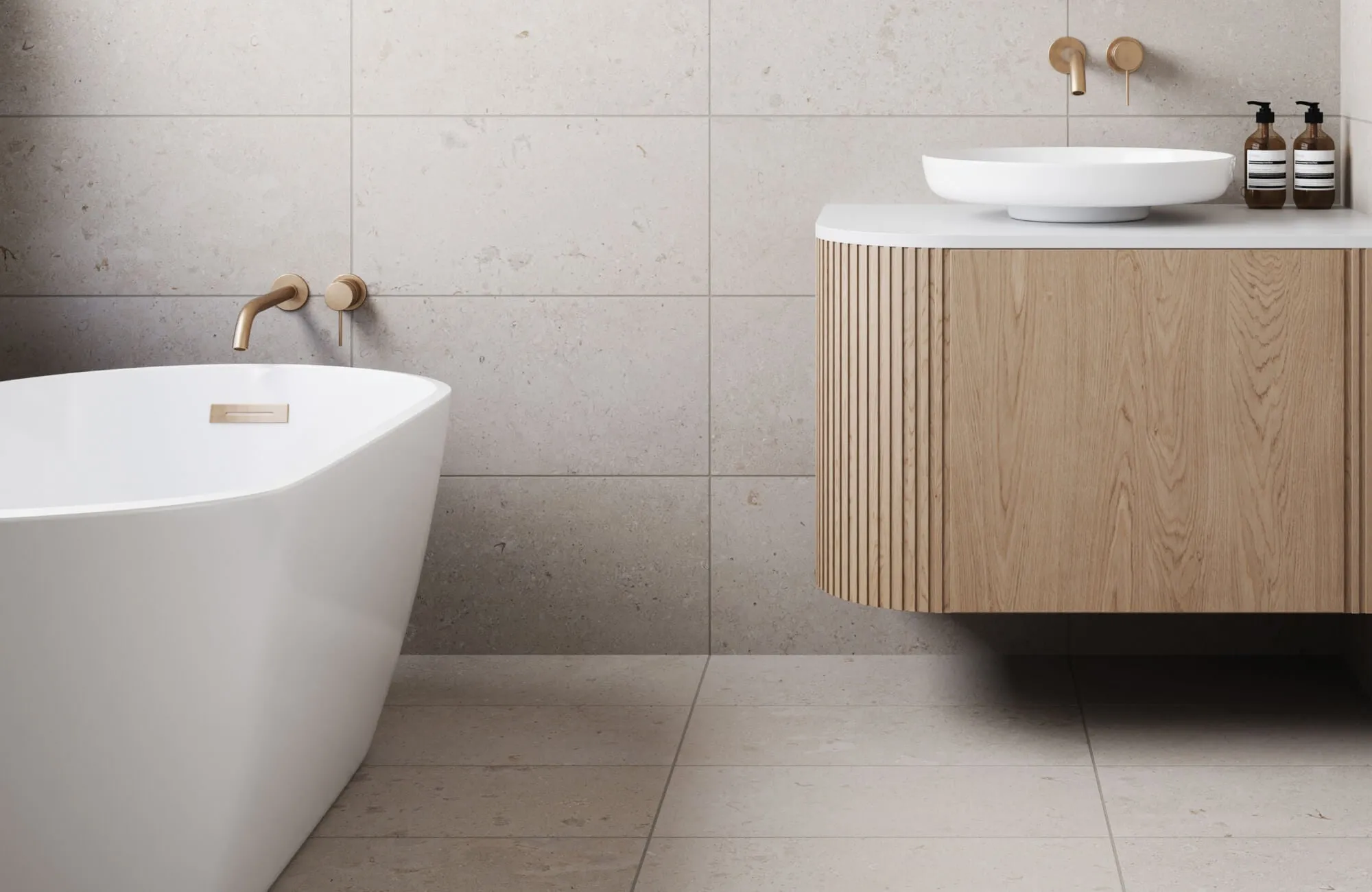
Additionally, the color of the tiles can greatly influence how spacious a room feels. Light-colored tiles, such as white, beige, or light gray, reflect light, making the room appear brighter and more open. This effect can be particularly beneficial in small bathrooms with limited natural light. For instance, the Blair 24x48 Matte Porcelain Tile in Oniciata Beige, as depicted in the image above, exemplifies how choosing a larger tile with a light, warm beige tone can enhance the brightness and openness of a compact space. The matte finish contributes to a sophisticated, understated look while helping to maintain the illusion of more space without the glare that glossier finishes might introduce.
A Modern and Sleek Aesthetic
Large tiles are synonymous with modern, sleek designs. Their expansive surfaces and minimal grout lines give off a clean, contemporary vibe that elevates the overall look of a bathroom. For those looking to achieve a luxurious, spa-like feel in their home, large tiles are often the go-to option.
In small bathrooms, large tiles can transform a cramped space into one that feels modern and inviting. Woven patterns also introduce texture and depth without overwhelming the room, striking a balance between simplicity and visual interest. These patterns on large tiles create a focal point, diverting attention from the room's size while maintaining a sleek, contemporary look.
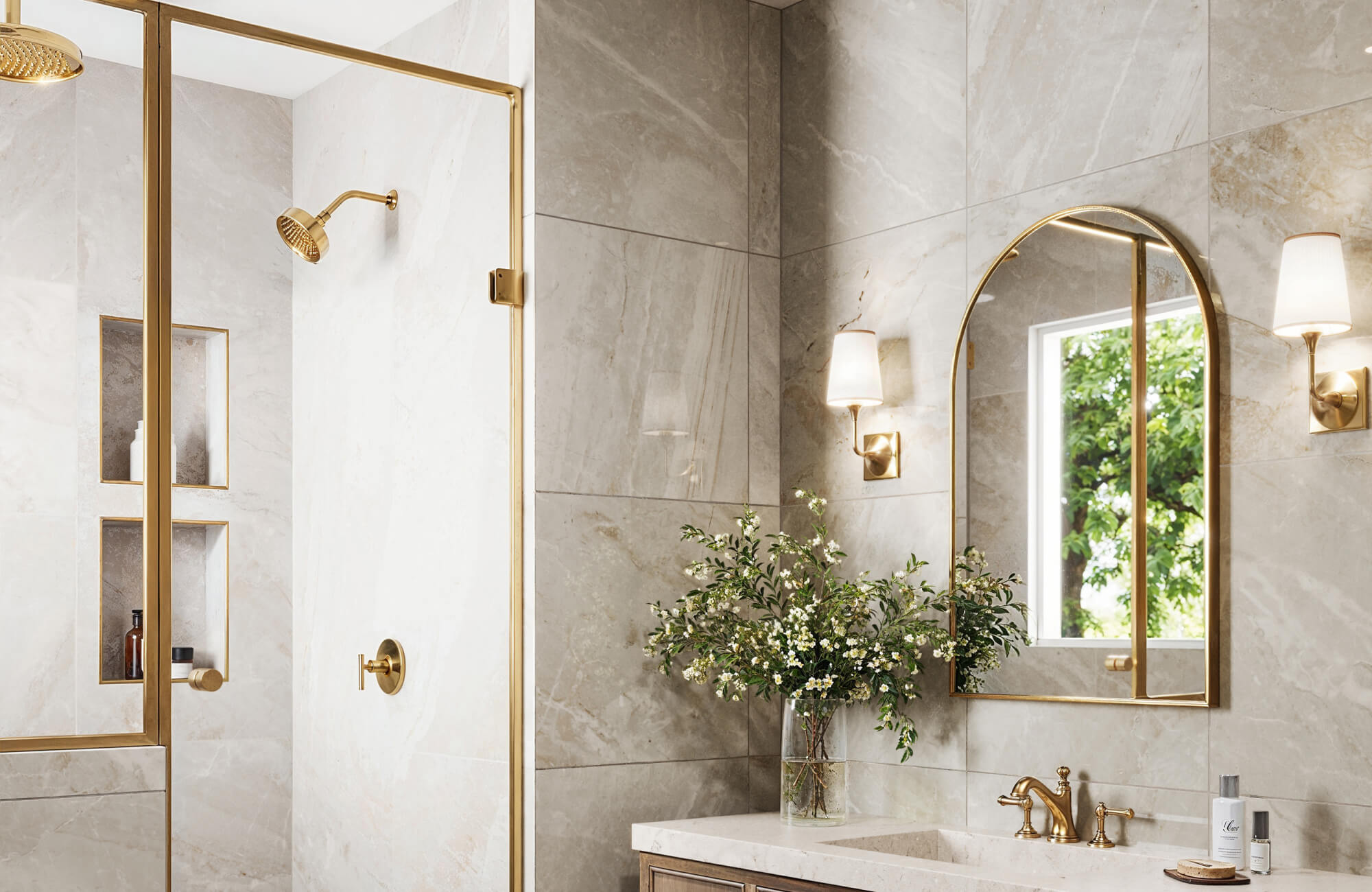
For instance, the Riley 24x48 Matte Porcelain Tile in Woven Pattern Cream embodies the elegance large tiles bring to small bathrooms. Its woven pattern adds texture and depth, while the neutral cream color keeps the space airy and open. This tile introduces a subtle, stylish character without overpowering the room.
Geometric patterns and textured large tiles are also becoming increasingly popular in bathroom designs. Consider experimenting with oversized hexagonal tiles or a large-scale herringbone pattern to give your small bathroom a trendy, sophisticated edge. These patterns can add both texture and visual interest without overwhelming the space.
Easier Cleaning and Maintenance
Large tiles offer practical advantages in bathroom maintenance due to their fewer grout lines, which significantly reduce the areas where dirt, mildew, and grime can accumulate. In a bathroom, where moisture is always present, large tiles are easier to clean than small ones because they have fewer grout lines to scrub. Homeowners who choose large tiles can enjoy a more efficient cleaning routine with less frequent upkeep.
Additionally, large tiles made from high-quality materials, such as those from Edward Martin, are resistant to moisture and stains, eliminating the need for sealing. This feature is especially beneficial in bathrooms, where tiles are regularly exposed to water and humidity. The durable surfaces of these tiles ensure long-lasting beauty, keeping your bathroom looking fresh and hygienic with minimal effort.
While large tiles offer numerous design and functional benefits in small bathrooms, there are still a few factors to consider before making your final choice. Let's now take a closer look at some common concerns and how to effectively address them.
Addressing Common Concerns
While large tiles offer many benefits, it’s understandable that some homeowners may have reservations about using them in small bathrooms. Common concerns like overwhelming the space, limited design choices, and potential costs can cause hesitation. However, with thoughtful design solutions, these challenges can be managed effectively. Let’s explore how you can incorporate large tiles without compromising on style or functionality.
Overwhelming the Space
A frequent concern with large tiles in small bathrooms is that they might dominate the room and make it feel claustrophobic. However, strategic tile placement, combined with careful attention to layout and color, can create the opposite effect. Large tiles, when used properly, can enhance the feeling of space and openness, making the room feel more expansive and balanced.
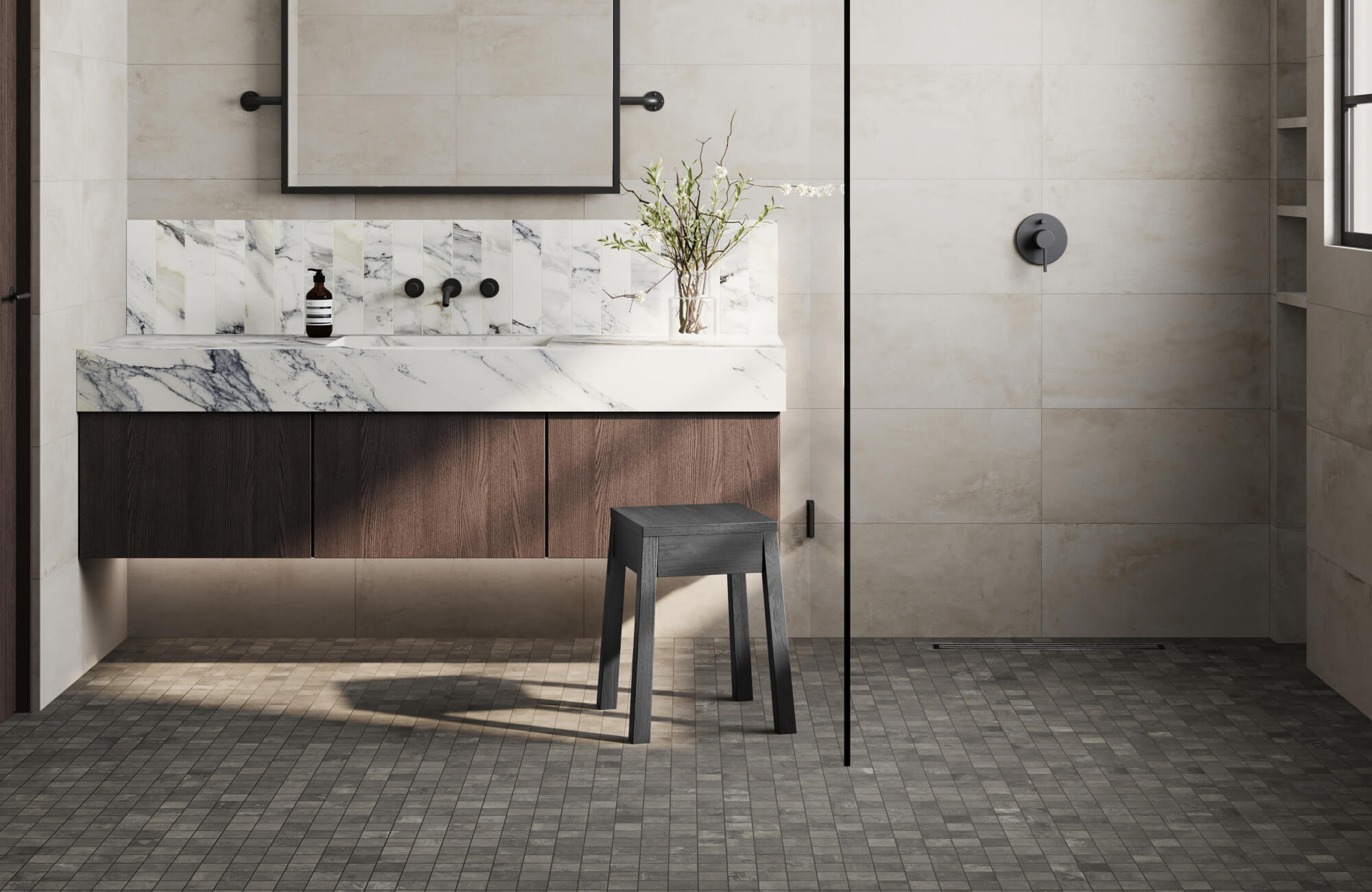
Using larger tiles on the walls and smaller tiles on the floor can help balance the space in small bathrooms, regardless of ceiling height. This approach creates a sense of verticality and openness, even in rooms with lower ceilings. In bathrooms with higher ceilings, large tiles further enhance the feeling of spaciousness and provide a sleek, modern aesthetic. Moreover, using smaller tiles on the floor, particularly mosaics, is highly recommended for safety reasons, as they offer increased grip and slip-resistant properties, making them both a practical and stylish choice for wet environments like bathrooms.
Tile color also plays an important role in preventing the space from feeling overwhelmed. As previously highlighted, light-colored tiles, especially in shades like white, beige, or light gray, make a room feel larger and more open, while darker tiles can make the room feel more intimate. By opting for neutral or lighter tones, you can create a visually spacious effect that avoids making the bathroom feel cramped.
If you are concerned about overwhelming a small bathroom, try using large tiles sparingly. For example, apply large tiles to one feature wall or within the shower surround while using smaller tiles elsewhere. This approach can create a focal point without dominating the entire room.
Limited Design Options
Contrary to the misconception that large tiles offer limited design choices, they actually come in a wide range of styles, patterns, and textures that suit various bathroom aesthetics. From sleek and minimalist designs to bold geometric patterns, large tiles can easily adapt to different preferences, making them a versatile option for bathrooms of any size.
Additionally, large tiles can be paired with smaller tiles to create visually interesting and dynamic designs. In bathrooms, this combination allows for intricate details or textured accents without overwhelming the space. For instance, smaller tiles like the Sarina 3x12 Glossy Ceramic Fishscale Tile can add character and complement the smooth surfaces of large tiles, achieving a balanced and cohesive look that enhances the overall aesthetic.
To further assist in overcoming these concerns, Edward Martin’s augmented reality (AR) tool provides an invaluable resource for homeowners. The AR tool allows you to visualize how large tiles will appear in your small bathroom, offering the opportunity to explore various layouts, tile sizes, and design options in real-time. By using this innovative tool, you can confidently make design decisions that suit both your space and personal style, all while alleviating fears of overwhelming the room or exceeding your budget.
Higher Costs
Large tiles are often perceived as more expensive than smaller ones, which can be a concern for budget-conscious homeowners. While it’s true that some large tiles may have a higher upfront cost, their long-term benefits can outweigh the initial investment.
Large tiles are typically more durable and require less frequent repairs or replacements than smaller tiles. Moreover, since fewer tiles are needed to cover the same area, installation time may be reduced, which can lead to savings in labor costs. Homeowners may also save money on grout since less is needed with large tiles.
For those on a budget, many retailers offer affordable options for large tiles, allowing you to enjoy the benefits of this design choice without breaking the bank. You may also want to explore salvage stores or discount outlets, where you can find high-quality tiles at reduced prices.
If cost is a concern, consider using large tiles only in key areas of the bathroom, such as the walls or shower, while using more affordable smaller tiles for other sections. This approach allows you to balance aesthetics with practicality while staying within your budget.
While tile size and layout are crucial considerations, grout also plays an equally important role in achieving the right look and functionality for your bathroom. Choosing the appropriate grout can enhance the overall design, ensuring that large tiles seamlessly blend into the space while remaining easy to maintain. Let’s explore how grout selection can impact both the aesthetic and practical aspects of using large tiles in a small bathroom.
Choosing the Right Grout for Large Tiles in Small Bathrooms
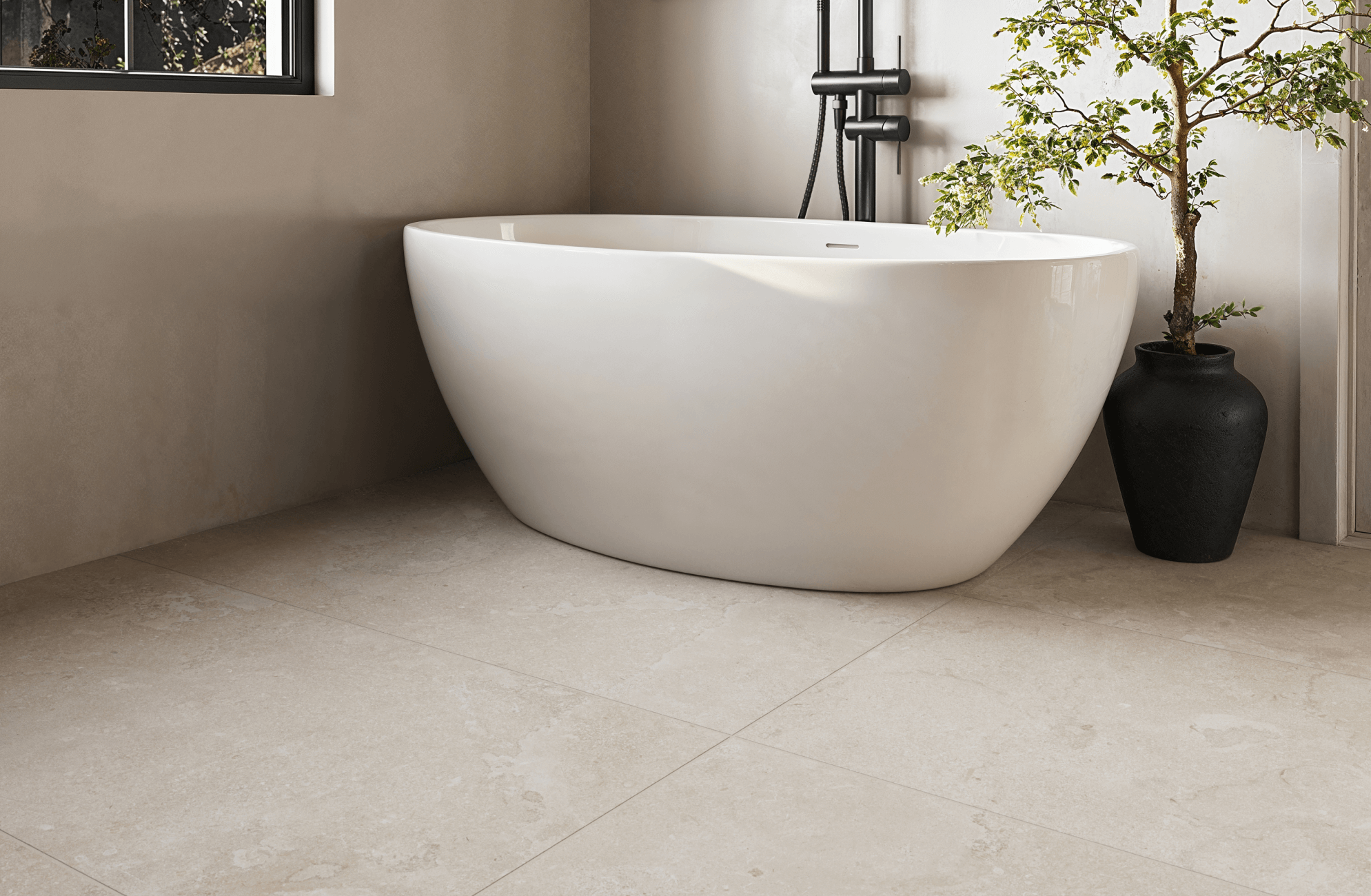
Choosing the right grout for large tiles in a small bathroom is a crucial yet often overlooked aspect of design. Grout not only impacts the visual appeal but also affects the functionality of the bathroom. The color and width of the grout lines can either enhance the sense of space or add contrast to highlight the tile's pattern. For example, light-colored grout paired with light tiles can make a small bathroom feel more open and continuous, while darker grout can create a striking, graphic contrast.
However, the choice of grout isn't purely aesthetic—practical factors like maintenance also come into play. In constantly damp spaces like bathrooms, lighter grout may stain more easily. Opting for darker grout or using a sealant can help keep the space looking clean. Epoxy grout, which is more resistant to stains and mildew, is another excellent option for bathrooms, as it reduces the need for constant upkeep, making the space not only stylish but also easy to maintain.
For best results, consulting a professional during installation ensures that the grout is applied correctly and maintained properly over time. Additionally, professionals can advise on the most suitable type of grout for your specific bathroom conditions, helping extend the longevity of both the grout and the tiles.
Now that we’ve covered the importance of grout choice, let's move on to additional key considerations when using large tiles effectively in a small bathroom. From tile size to layout and lighting, thoughtful planning will ensure that your space feels both stylish and functional.
Maximizing Impact with Large Tiles in Small Bathrooms
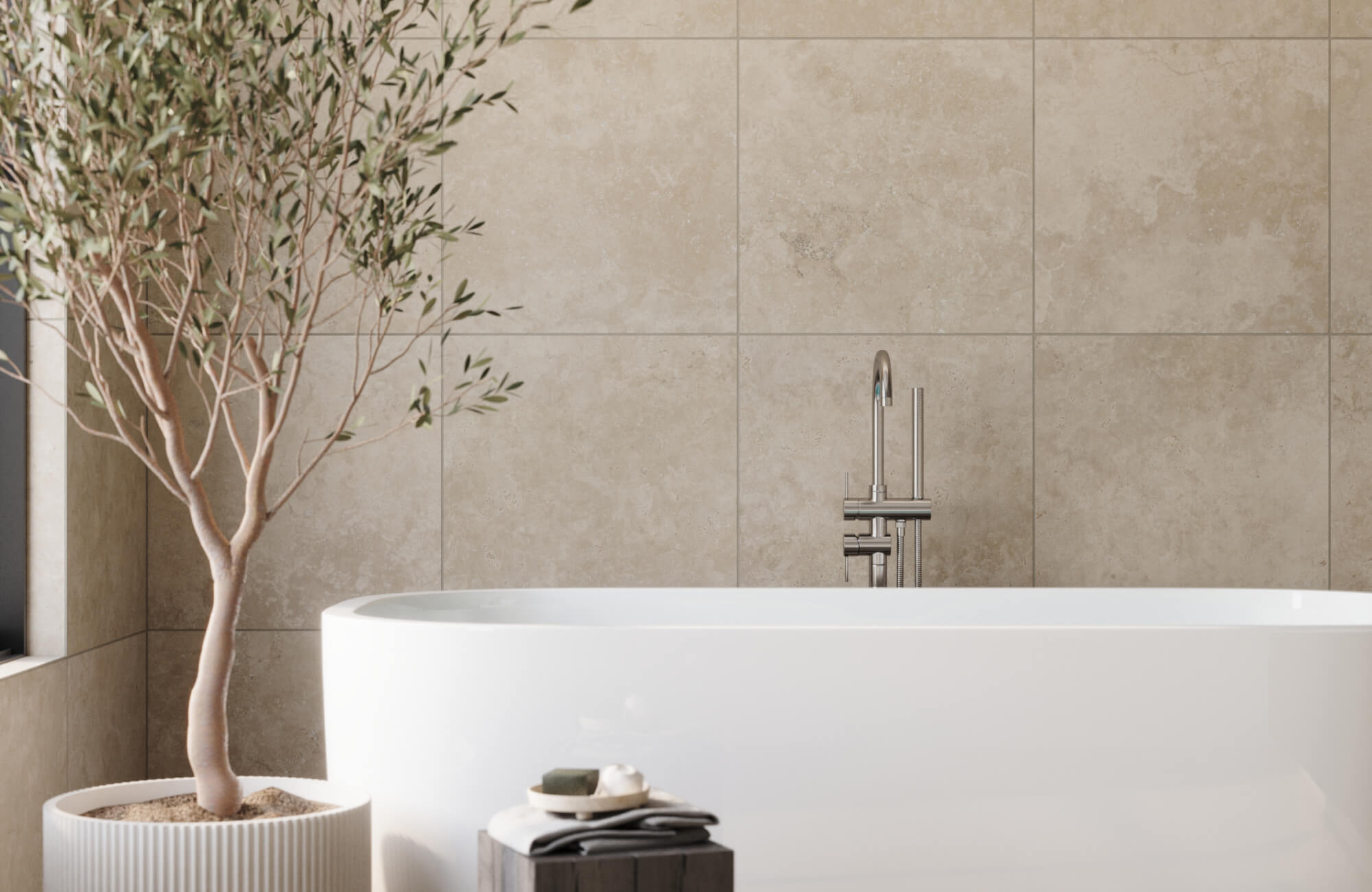
Successfully incorporating large tiles in a small bathroom requires thoughtful planning and attention to detail. From selecting the right tile size to coordinating design elements, each choice contributes to creating a harmonious and visually appealing space. These strategies will help you maximize the impact of large tiles and ensure your bathroom feels both stylish and functional.
Choosing the Right Tile Size
Selecting the right tile size is essential to achieving a harmonious and visually appealing design in a small bathroom. The size of the tiles should be proportionate to the room's dimensions, ensuring that the space feels balanced. Large tiles can visually expand a small bathroom, but in particularly narrow or irregularly shaped spaces, experimenting with different tile sizes can help create a more cohesive and open look.
Consider using square tiles, such as 24x24, as their balanced dimensions can create a cohesive, grid-like appearance that enhances the room's symmetry. Large-format square tiles with minimal patterning provide a smoother, uninterrupted surface, which is particularly effective in enhancing a small bathroom's sense of openness. Keep in mind that square tiles also reduce the need for intricate cutting around fixtures, simplifying installation and minimizing tile waste.
Additionally, consider the size of the other elements in your bathroom, such as cabinetry, mirrors, and fixtures. If you have a lot of large fixtures or cabinetry, large tiles can create a streamlined look. On the other hand, if the room has many small elements, you may want to consider mixing large and small tiles to maintain visual balance.
Creating a Cohesive Design
To create a cohesive design in a small bathroom, it's essential to carefully balance the various elements, such as tile size, finishes, and fixtures. The key is to ensure that all components work together to enhance the overall space, rather than competing for attention. Consider how the tile finish—whether matte, glossy, or textured—aligns with the bathroom's lighting and other surfaces like countertops and cabinetry.
In addition, pay attention to color coordination between the tiles and key fixtures such as sinks, faucets, and shower enclosures. By maintaining consistency in finishes and tones, you can create a seamless flow throughout the bathroom, making the space feel unified and visually pleasing. Small design touches, like using matching grout or aligning tiles with existing architectural features, can further enhance the cohesive look.
Maximizing Natural Light
Natural light can significantly enhance the perceived size of a small bathroom. To maximize natural light, it’s important to choose light-colored tiles that reflect sunlight, such as white, cream, or light gray. These reflective surfaces will make the room feel brighter and more spacious.
If your bathroom has limited natural light, ensure that you have adequate artificial lighting. Overhead lighting combined with task lighting at the vanity and near the shower can ensure that the room remains well-lit. Light-colored tiles will work in harmony with artificial lighting to amplify the sense of space.
For those with the ability to remodel extensively, consider enlarging windows or adding skylights to bring in more natural light. However, balance the desire for openness with privacy considerations, especially in urban settings where the bathroom may face other homes.
Transforming Small Bathrooms with Large Tiles
Large tiles are a viable and often advantageous design choice for small bathrooms. By carefully considering factors such as tile size, color, layout, and lighting, homeowners can create a space that feels larger, more luxurious, and visually appealing. Large tiles also offer several benefits, including a modern aesthetic, easy maintenance, and long-term durability. While there may be concerns about costs or overwhelming the space, these can be addressed through thoughtful design planning. Don’t let the size of your bathroom limit your creativity—large tiles may just be the key to making your small space feel grand.
To explore how these tiles can transform your small bathroom, consider requesting a sample from Edward Martin. Our high-quality 4" x 4" samples accurately reflect the color and finish of all tile sizes within each collection, ensuring you receive a true representation of our premium products. By ordering a sample, you can confidently move forward with your design choices, knowing you’ve selected the perfect tile to suit both your style and your space.
Follow us on Instagram
@EDWARD.MARTIN
)
)
)
)
)
)
)
)
)
)
)
)
)
)
)
)