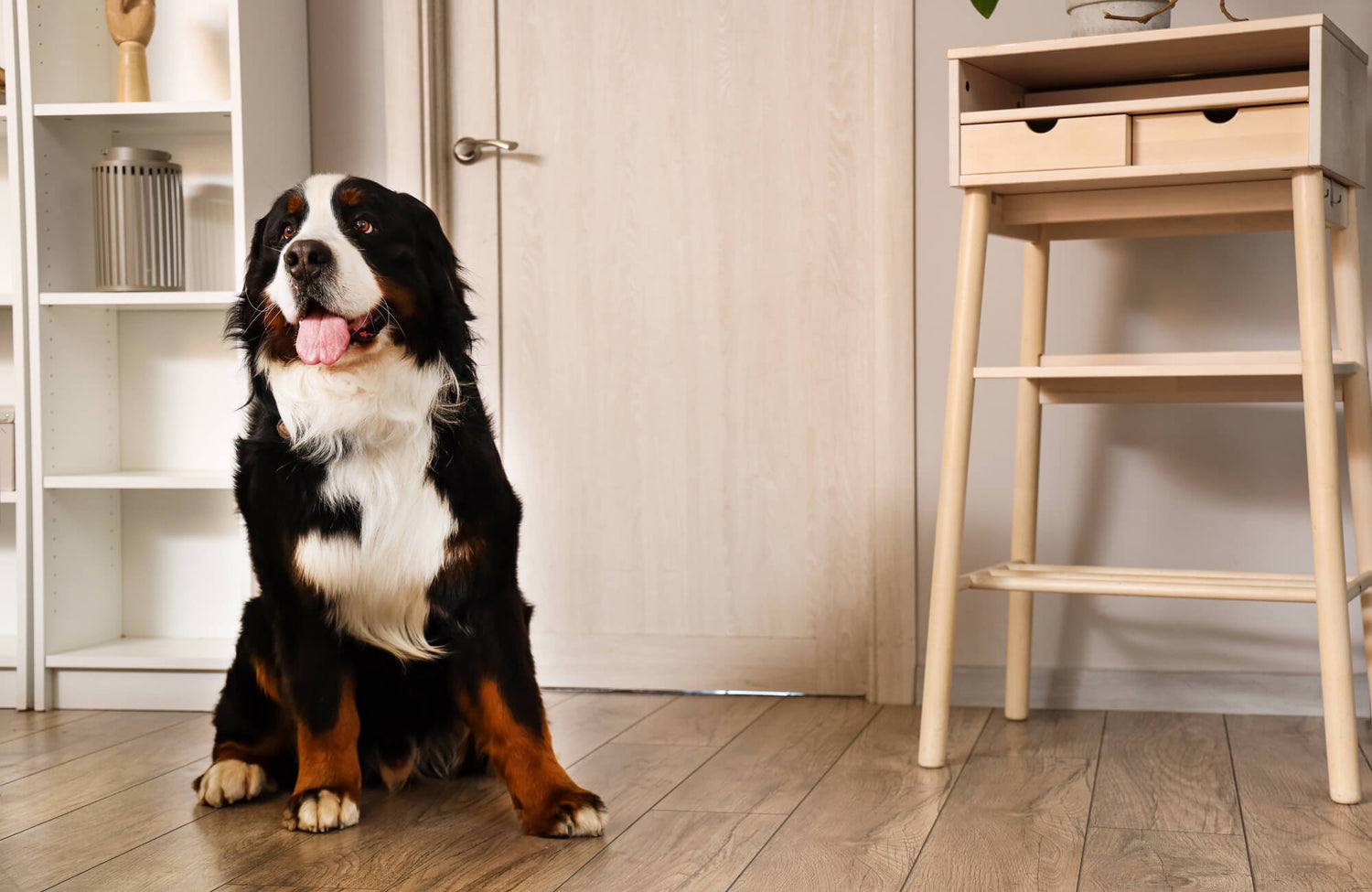
Large-breed dogs bring an incredible amount of joy into a home, but they also introduce challenges that many flooring materials simply aren’t built to handle. Claws, weight, energetic play, and the occasional spill or accident place continuous stress on the surfaces they live on.
Homeowners who love the warmth of hardwood often assume they need to choose between beauty and durability, yet modern wood look porcelain tile has changed that equation entirely. Its ability to replicate natural wood while outperforming it in strength, moisture resistance, and longevity makes it a compelling option for dog-friendly households. Understanding the science behind its durability helps homeowners make confident, informed decisions when planning a remodel.

Understanding The Hardness Difference Between Wood And Porcelain
The durability of any floor under canine activity begins with its hardness, because claws and weight distribution create concentrated impact forces. Hardwood species vary widely, and while some dense woods withstand abrasion better than others, they still cannot match the structural resilience of fired porcelain.
Comparing Janka Hardness To Ceramic Density
When homeowners compare wood and porcelain, they often reference the Janka scale, which measures the force required to embed a steel ball into a wood sample. It offers valuable insight into how easily a surface may dent or scratch. Even harder species like hickory or Brazilian cherry eventually show wear under repeated claw contact, while softer varieties such as pine mark almost immediately. Porcelain tile, by contrast, is not evaluated on the Janka scale because its durability is governed by ceramic density rather than organic cellular structure. During firing, porcelain is compressed and vitrified, creating a material that resists indentation to a degree no natural wood can rival. Large dogs exert pressure with every step, especially when pivoting or running, but high-density porcelain remains unmoved, maintaining its surface integrity year after year.
Why Porcelain Ratings Matter For Pet Owners
Porcelain tiles undergo standardized testing to determine their resistance to abrasion, moisture absorption, and surface wear. The Porcelain Enamel Institute (PEI) rating, in particular, reveals how well a tile stands up to foot fall and scratching. For homes with large dogs, tiles rated for heavy residential or even light commercial use offer an exceptional level of protection. These ratings ensure that a dog's nails, which can behave like small chisels on softer materials, will not penetrate or significantly dull the tile’s finish. Pet owners benefit from this quantifiable durability, knowing the installed floor has been engineered specifically to withstand demanding conditions.
The Science Of Glaze Versus Polyurethane
Traditional hardwood relies on polyurethane coatings to defend against scratches and moisture. While these coatings improve performance, they function as sacrificial layers that eventually wear down and require refinishing. Dogs accelerate this process through constant contact, often scuffing the finish long before the wood itself is compromised. Wood look porcelain tile relies instead on a fired glaze or, in the case of unglazed porcelain, the inherent strength of the tile body itself. Because glaze is fused to the surface at extremely high temperatures, it becomes part of the tile rather than a temporary protective film. This integrated finish does not separate, peel, or erode in the same manner as polyurethane, which eliminates the cycle of sanding and refinishing that hardwood demands. For families with active dogs, this difference alone often makes porcelain the more practical long-term choice.

Analyzing Water Resistance And Accident Protection
A major concern for dog owners is moisture, both predictable sources such as water bowls or wet paws and unpredictable events like accidents. While hardwood offers timeless warmth, it remains an organic material vulnerable to swelling, staining, and long-term moisture damage. Porcelain, being non-porous and impervious, provides a fundamentally different level of security.
Why Porosity Levels Determine Stain Risks
Porosity dictates how easily a liquid can penetrate a surface. Hardwood, even when sealed, absorbs moisture over time. This makes pet accidents especially problematic, because lingering liquids can darken the wood, cause odor retention, or leave rings that require extensive refinishing to correct. Porcelain tiles have an absorption rate of less than 0.5 percent, which means liquids remain on the surface rather than seeping in. As shown with Edward Martin’s Jameson 8x48 Matte Porcelain Tile in Ash in the image above, homeowners can wipe spills at their convenience without racing against the clock to prevent permanent staining. This low porosity allows the tile to retain its beauty without the chronic anxiety many pet owners experience with more sensitive flooring options.
The Freedom Of Heavy Duty Cleaning Products
Large dogs introduce messes that routinely push cleaning routines beyond what delicate materials can tolerate. Muddy paw prints, shed hair, drool residue, and tracking from the backyard can require products that may degrade natural hardwood finishes over time. Porcelain’s resistance to chemical corrosion empowers homeowners to use stronger cleaners without hesitation. Solutions formulated for disinfecting or removing stubborn stains will not compromise the tile’s appearance or structure. This freedom offers peace of mind during stressful cleanup moments, especially for households managing puppies, aging dogs, or breeds prone to drooling or frequent outdoor activity.
Eliminating The Risk Of Warping And Cupping
Warping and cupping represent two of the most significant vulnerabilities of wood in pet environments. Repeated exposure to moisture causes planks to swell along their edges, altering the floor’s shape and compromising its stability. Even conscientious cleaning cannot always prevent these effects when accidents occur frequently or moisture levels fluctuate. Porcelain’s dimensional stability eliminates these risks entirely. Because it does not expand or contract with changes in humidity, pet-related moisture does not distort the floor. This consistency is particularly beneficial in busy areas like mudrooms, kitchens, and entryways where dogs tend to bring in water or linger after baths. Homeowners gain a floor that remains perfectly level and uniform, regardless of daily canine activity.

Ensuring Safety And Comfort For Aging Dogs
Durability alone does not define a pet-friendly floor. As dogs age, they require surfaces that support mobility, joint comfort, and stability. Wood look tile offers a surprising range of benefits that enhance the well-being of senior dogs who may struggle with traction or regulating body temperature.
Selecting The Right Texture For Traction
Aging dogs often experience reduced joint strength and decreased balance, making slick surfaces a potential hazard. Many homeowners assume tile is inherently slippery, but modern wood look porcelain is manufactured with varying textures that improve grip. Lightly textured finishes mimic the feel of natural wood grain, providing just enough resistance underfoot to help dogs maintain stability. This prevents the slipping and sliding commonly associated with glossy flooring materials. Selecting the right surface texture ensures the tile remains safe even when dogs transition from carpeted areas or become excited during greetings and play.
Using Grout Lines As Natural Grip Zones
Grout lines create subtle interruptions in the surface that function as natural traction points. For dogs with mobility challenges, these small ridges can significantly improve footing. Unlike hardwood boards, which present broad and uniform planks, tile installations incorporate predictable spacing that helps dogs navigate busy areas more confidently. The warm, rich tones of Edward Martin’s Jameson 8x48 Matte Porcelain Tile in Umber, featured in the image above, work seamlessly with these grout intervals to support stability. In spaces where dogs frequently turn or shift weight, grout lines can reduce strain on joints and minimize the risk of slipping.
Thermal Properties For Canine Comfort
Porcelain’s ability to maintain a cool surface can be a welcome relief for dogs, especially large breeds that tend to overheat easily. In warm climates or sun-exposed rooms, tile floors provide a naturally comfortable space for dogs to rest. When a warmer environment is desired, porcelain is compatible with radiant heating systems, offering gentle warmth without creating hot spots. This dual capability means wood look tile can remain comfortable for dogs throughout seasonal changes. Homeowners can tailor the flooring environment to support pets’ comfort while maintaining the desired aesthetic for the room.

Evaluating Long Term Value And Maintenance
Floors chosen for homes with large dogs must stand the test of time. Beyond immediate durability, homeowners need to consider refinishing costs, long-term appearance, and the feasibility of repairs. Wood look tile excels across all categories, providing both economic and aesthetic advantages.
The Cost Benefit Of Zero Refinishing
While hardwood brings natural beauty, it also requires periodic refinishing to remain presentable, especially in homes with large dogs. Claw marks, worn polyurethane, and dented boards accumulate until sanding and re-coating become necessary. These processes are disruptive and costly, often requiring homeowners to vacate the space temporarily. Wood look porcelain tile avoids these expenses entirely because its surface does not wear down in the same manner. Once installed, it retains the same appearance without additional treatments. Over the lifespan of the home, the absence of refinishing represents substantial savings, financially and logistically.
Aesthetic Longevity And UV Resistance
Sunlight poses another challenge for natural materials. Hardwood can fade, amber, or discolor in UV-exposed rooms, creating uneven coloration over time. Dogs often choose sunny areas for napping, which can concentrate wear on specific planks. Porcelain’s colorfast surface remains stable under prolonged sunlight, preserving the consistency of the design pattern. This durability is evident with Edward Martin’s Jameson 8x48 Matte Porcelain Tile in Camel shown in the image above, which maintains its warm, wood-inspired aesthetic even in bright, open-concept homes. The ability to hold its original tone makes wood look tile a reliable choice for south-facing spaces or rooms with expansive windows.
Repairing Individual Tiles Versus Whole Floors
Accidents can happen in any home, even with the strongest materials. When a section of hardwood becomes damaged, repairs typically require refinishing a large area to achieve a seamless look. In contrast, tile allows for localized replacement without affecting the rest of the installation. A single tile can be removed and substituted with minimal disruption, allowing homeowners to maintain the floor’s appearance indefinitely. This repairability contributes to long-term savings and peace of mind, especially in busy households with active pets, and tools like the Edward Martin Augmented Reality (AR) Visualization Tool make it easy to preview how a replacement will blend with the existing room before ordering an Edward Martin tile sample to confirm the choice in person.
The Ultimate Pet Proof Foundation
For homeowners who adore the natural warmth of wood but need a floor resilient enough for large dogs, wood look porcelain tile delivers an exceptional balance of beauty and performance. Its hardness surpasses that of even the most durable hardwood species, and its impervious surface simplifies life in households where spills, accidents, and heavy activity are part of daily routines. By providing traction, thermal comfort, and outstanding longevity, it supports both the needs of pets and the design goals of their owners.
As families plan remodels with canine-friendly features in mind, wood look porcelain tile stands out as a flooring solution capable of preserving style without compromising durability. It offers a foundation built not just to withstand the presence of large dogs but to enhance the life shared with them, a dependable, elegant surface ready for every moment a beloved pet brings into the home.