Placing a large rug under a dining table may seem simple at first, but it has a powerful impact on both the comfort and visual flow of your dining space. The right rug anchors the table, strengthens the room’s layout, and instantly elevates the overall aesthetic, turning a basic dining setup into a polished, intentional design. However, achieving this seamless result requires more than picking a rug you like. It also calls for an understanding of proportions, movement, materials, and how the rug interacts with the architecture around it.

Rug Size and Table Proportions
Understanding how rug size and table proportions work together is essential for creating a dining area that feels balanced, comfortable, and visually cohesive. A well-sized rug does more than sit beneath your furniture; it frames the dining set, guides movement, and supports the room’s overall design language. By selecting a rug that echoes the shape of your table and extends far enough to keep chairs stable as they slide in and out, you create a layout that feels intentional rather than improvised. This careful attention to proportion also ensures that the rug becomes an integrated part of the dining experience, not an afterthought.
Achieving the right fit requires planning for real-life use rather than relying solely on static measurements. Chairs must remain fully supported even when pulled back, which is why adding 24 to 30 inches beyond the tabletop is essential. Additionally, the rug’s scale must relate not only to the table but also to the room itself, especially in open-concept homes where the rug acts as a visual boundary. When the rug is sized to accommodate both chair movement and spatial flow, it anchors the dining area confidently without overwhelming or disappearing within the larger space. With these considerations in mind, the result is a dining setup that feels harmonious, functional, and seamlessly connected to the architecture around it.
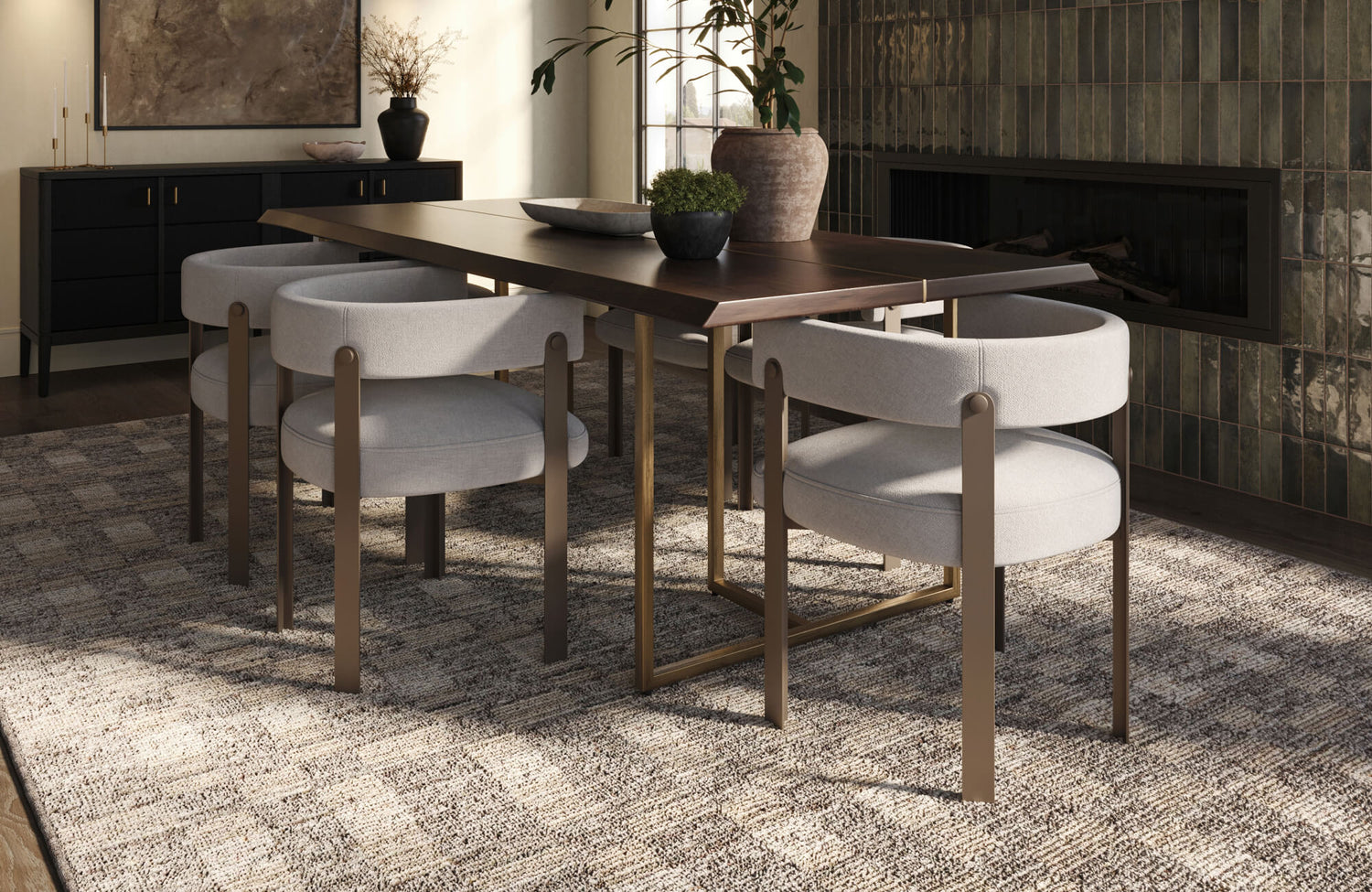
In spaces like the dining room shown above, the right rug choice reinforces the room’s warmth, tone, and visual grounding. The design is anchored by our Davies Wool Nylon Rug in Dove / Stone, a beautifully understated foundation whose soft weave of browns and rich, varying tones of beige hue complements the room’s earthy palette and the rich depth of the dining table. Its generous size also ensures every chair remains supported in both seated and pulled-back positions, demonstrating how a thoughtfully proportioned rug can unify the furniture arrangement while enhancing comfort and flow.

Placement Strategies for Different Room Configurations
The shape and structure of your dining area play a large role in determining how a rug should be positioned beneath the table. Whether your dining zone is enclosed, defined by architecture, or part of a broader open layout, thoughtful alignment and proportion help create balance and intent.
Centering the Rug in Rectangular Dining Rooms
In a rectangular dining room, a centered and symmetrical placement creates a sense of order and flow. Aligning the rug with the room’s long axis immediately establishes balance, especially when the ceiling fixture, such as a pendant or chandelier, sits above the table. When the rug sits directly under this lighting point, it visually anchors the dining set and prevents the arrangement from feeling offset or drifting within the room.
It also helps to pay attention to wall spacing. Rectangular rooms typically frame the dining set with parallel walls, so maintaining equal floor margins on both sides strengthens the sense of symmetry. Architectural cues such as window placement, ceiling beams, or built-in shelving can guide your alignment decisions. When the rug, table, and room architecture work in harmony, the dining space feels cohesive and grounded.
The dining room seen above demonstrates how the right rug enhances this sense of centered balance. The space features our Quinton Wool Blend Rug in Ash, whose mix of brown and gray tones and subtly textured weave complements the natural light, wood detailing, and symmetrical forms throughout the room. Its generous proportions ensure every chair remains fully supported, allowing the rug to reinforce the room’s architecture while tying together the table, seating, and lighting into one harmonious focal point.
Working with Square Dining Rooms
Square dining rooms call for an approach that emphasizes centrality and equilibrium. A square rug naturally mirrors the room’s footprint, creating clean lines that effortlessly reinforce balance. However, choosing a round rug can also introduce a gentle softness that breaks up the room’s rigid geometry without sacrificing symmetry, especially when placed precisely under the table’s center.
Regardless of shape, the rug should maintain equal clearance on all four sides. This even spacing ensures the dining set feels perfectly framed, preventing the room from appearing lopsided or crowded. When the rug is centered and proportionate, the entire dining area takes on a calm, composed quality that enhances both movement and visual comfort.
For rooms that need both visual harmony and dependable everyday performance, a rug with soft tonal variation can serve as an elegant link between the table and surrounding architecture. Our McGowan Polyester & Polypropylene Pile Rug in Moss / Sand offers just that—its canvas of beige and grayish-green hues with subtle yellow gold accents introduces gentle warmth and texture while remaining durable enough for frequent chair movement. When placed centrally beneath the table, it reinforces symmetry while adding a grounded, welcoming foundation to any square dining layout.
Integrating Rugs in Open-Concept Layouts
In open-concept homes, the dining rug plays a crucial role in defining the dining zone within a larger shared space. Because there are no walls to create boundaries, the rug becomes the visual marker that distinguishes the area. To maintain harmony with surrounding furnishings, align the rug with significant elements like the centerline of a nearby kitchen island, the edge of a sofa, or major architectural sightlines. This alignment helps the dining area feel integrated without blending indistinctly into neighboring zones.
At the same time, it is important to preserve a clear buffer around the rug so each zone retains its own identity. Too much overlap with adjacent furniture can disrupt the flow, while a well-scaled rug creates a smooth transition from one functional area to the next. When placed thoughtfully, the rug not only anchors the table and chairs but also supports the overall choreography of movement and sightlines in an open-plan environment.

Material Considerations for Dining Room Rugs
The dining room is a busy environment where spills, repeated chair movement, and daily use all influence how well a rug performs over time. Because of this, choosing the right material becomes essential to ensuring long-term beauty and easy upkeep. By understanding how different fibers and constructions behave, you can select a rug that suits your lifestyle while still complementing your dining space’s style.
Choosing Between Natural and Synthetic Fibers
Natural fibers offer warmth and authenticity, and wool remains one of the most desirable choices for its soft feel and inherent resilience. Wool naturally repels mild spills and resists crushing, which keeps it looking fresh for years. However, deeper stains can be more difficult to remove, and its absorbency means it requires prompt attention to avoid permanent marks. Cotton, on the other hand, provides a comfortable, washable option, but its softness also makes it more prone to wear, especially in areas where chairs slide frequently. As a result, natural fibers work best when your dining room sees relaxed, moderate use rather than constant activity.
Synthetic fibers like polypropylene and PET (polyethylene terephthalate) provide a more practical solution for dining rooms that experience daily movement and meals. These materials are engineered to withstand moisture, stains, and fading far better than many natural fibers. Polypropylene, in particular, is valued for its excellent resistance to spills, easy cleanability, and ability to handle busy conditions without matting or wear, making it especially well-suited for active dining spaces. If your dining area sees frequent use or lively gatherings, a synthetic rug will likely offer the balance of comfort, durability, and low maintenance you need.
Flatweave vs Medium Pile for Chair Movement
Pile height significantly affects how your chairs interact with the rug, which directly influences comfort and ease of use. Flatweave rugs or low-pile options under a quarter inch allow chairs to glide smoothly across the surface without catching, dragging, or sinking. Because these weaves are tighter and more structured, they also stand up better to repeated chair movement, reducing friction-related wear over time. This makes them especially well-suited for households where the dining table is used daily, whether for meals, homework, or gatherings.
Medium and high-pile rugs, while plush and visually appealing, create challenges in dining settings. The extra height causes chair legs to press more deeply into the rug, making the pull-out motion feel heavy and often uneven. Over time, this repeated friction can lead to matting, pilling, or erosion in heavily used areas. For a dining experience that remains smooth and frustration-free, low-profile and tightly woven rugs offer the best long-term comfort and practicality.

Styling And Visual Impact Techniques
Beyond its practical role, a dining rug has the power to shape the room’s personality and visual flow. The right blend of shape, color, and pattern can dramatically influence the dining area’s atmosphere, helping the furniture feel grounded while adding character and depth. By treating the rug as a key design element rather than just a functional surface, you can transform the entire room with intention and style.
Coordinating Rug Styles with Table and Chair Frames
A well-styled dining space pays attention to visual weight, and your rug plays a crucial role in balancing it. If you have a substantial table made of thick wood or finished in deep tones, a lighter rug or one with intricate patterns can soften the heaviness and introduce visual breathing room. This contrast prevents the dining set from feeling overwhelming and adds a layer of sophistication. On the other hand, light or transparent tables, such as those with slender legs, glass tops, or airy silhouettes, often benefit from rugs that carry richer tones or bolder motifs. These grounding designs keep the table from feeling like it is floating and bring a sense of structure to the space.
Your rug should also function as a visual bridge that ties the entire dining arrangement together. Colors that complement the table and chairs create cohesion, while subtle contrast helps each piece stand out without competing. By choosing a palette that supports the furniture’s aesthetic, you craft a unified design story that feels polished, inviting, and purposeful.
The dining room picture displayed above offers a perfect example of how a rug can reinforce both atmosphere and balance. Our Hutchinson Polyester Face Rug in Burgundy / Denim grounds the round dining table with its rich palette of dark red and denim blue, with warm beige and golden yellow accents, introducing depth and warmth while harmonizing with the wood tones and arched architectural details. Its traditional pattern also adds visual texture without overwhelming the space, helping the chairs, table base, and surrounding decor feel cohesively connected.
Using Color and Pattern to Anchor the Dining Area
Color and pattern do far more than add decoration. They define the emotional tone of your dining room and influence how the space is perceived. A rug with bold colors or graphic motifs can inject energy and serve as a striking focal point, especially in minimalist interiors that benefit from a sense of vibrancy. These rugs draw the eye immediately and can make the dining area feel like a curated centerpiece within the space.
Conversely, neutral rugs or tone-on-tone patterns help anchor the dining zone quietly, which is ideal when the room already incorporates plenty of texture or visual interest. Soft gradients, subtle patterns, or understated colors create harmony, allowing the furniture and architecture to shine. Whether your goal is to make a statement or maintain calm, the key is balance. The rug should enhance the room’s mood without overpowering the overall design.
Rug Shape Selection for Aesthetic Cohesion
The shape of your rug has a surprisingly strong impact on how the dining room feels and functions. In practice, different silhouettes influence the room in distinct ways. A rectangular rug, such as our Liddy Polyester Pile Rug in Graphite / Pearl, naturally elongates a narrow dining area, guiding the eye along the room’s length and creating a sense of spaciousness. Its refined black and gray tones add subtle depth while reinforcing the clean, linear flow that rectangular rugs are known for. By contrast, round or oval rugs soften hard architectural lines and introduce a more fluid, relaxed energy, especially when paired with round tables or used to counteract sharp angles. Meanwhile, square rugs reinforce structure and symmetry, making them particularly effective in square rooms where equal proportions matter.
To choose the right shape, consider the room holistically rather than focusing solely on the table. Observe how the space flows, where visual anchors already exist, and how the rug can either echo those lines or provide contrast in a way that enhances harmony. When the rug’s shape works in tandem with the furniture and the room’s architecture, it becomes an understated yet powerful design tool that elevates the entire dining experience.

Safety, Comfort, And Maintenance Factors
A dining room rug should do more than complete the look of the space. It must stay securely in place, withstand daily use, and remain easy to care for. A high-quality rug pad plays a major role in this, as it prevents slipping, minimizes buckling, and adds a soft layer of cushioning that supports long-term comfort. Natural rubber or felt-rubber pads offer reliable grip without damaging floors, whereas inexpensive plastic pads can break down, leave residue, or even discolor the surface beneath. Alongside stability, consistent upkeep keeps the rug looking its best. Immediate blotting helps stop stains from settling, and routine vacuuming prevents crumbs and debris from becoming embedded in the fibers. Addressing deeper stains with the right cleaners for your rug type and following manufacturer recommendations also ensures it stays vibrant and structurally sound for years.
Comfort and acoustics also matter, especially in a room where meals, conversations, and gatherings naturally unfold. A cushioned rug makes dining more pleasant, particularly if you enjoy sitting barefoot or prefer a softer step underfoot. Just as importantly, rugs help absorb sound in rooms filled with hard surfaces like wood floors, glass, and stone. This dampening effect reduces echo, softens the scrape of chairs, and creates a warmer, more intimate atmosphere. When your rug supports safety, cleanliness, and comfort, it becomes more than a decorative layer. It also transforms your dining area into a welcoming and practical space where daily routines feel smoother and shared moments feel even more enjoyable.
Making the Best Rug Placement Choice
The best placement for a large dining rug results from understanding your room’s needs, your table’s proportions, and the practical demands of daily use. When you size the rug to support full chair movement, choose materials that withstand spills and constant use, and align it thoughtfully with the room’s architecture, the rug becomes a clear design anchor that enhances both form and function. By combining proportion, comfort, and intentional styling, you create a dining area that feels beautifully framed, cohesive, and welcoming, allowing the rug to elevate the entire experience of gathering around the table.
If you’re still unsure which size, material, or layout will work best for your dining room, personalized guidance can make the decision much easier. Our team is always available to help you compare options, assess your room’s unique needs, and choose a rug that complements both your lifestyle and your design vision. You can reach out anytime through our Contact Us page for tailored support and expert recommendations.