Lighting is one of the most transformative design elements in any home, shaping mood, functionality, and visual impact. Choosing the right fixtures means understanding lighting layers, color temperature, lumens, and spatial dynamics to achieve a balanced environment. Each room benefits from a tailored approach: kitchens need focused task lighting for precision, living rooms thrive on layered illumination for ambiance, bathrooms require balanced, glare-free brightness, and outdoor spaces depend on durable, weather-resistant fixtures for safety and atmosphere. By understanding how light behaves in different environments, you can create beautiful, efficient, and functional lighting that elevates both aesthetics and daily comfort throughout your home.

Kitchen Lighting Design
The kitchen functions as both a workspace and a social hub, demanding a lighting design that blends precision with warmth. A layered approach that balances ambient, task, and accent illumination creates a seamless flow between practicality and atmosphere, ensuring every area performs beautifully under the right light.
Layered Lighting for Performance and Ambiance
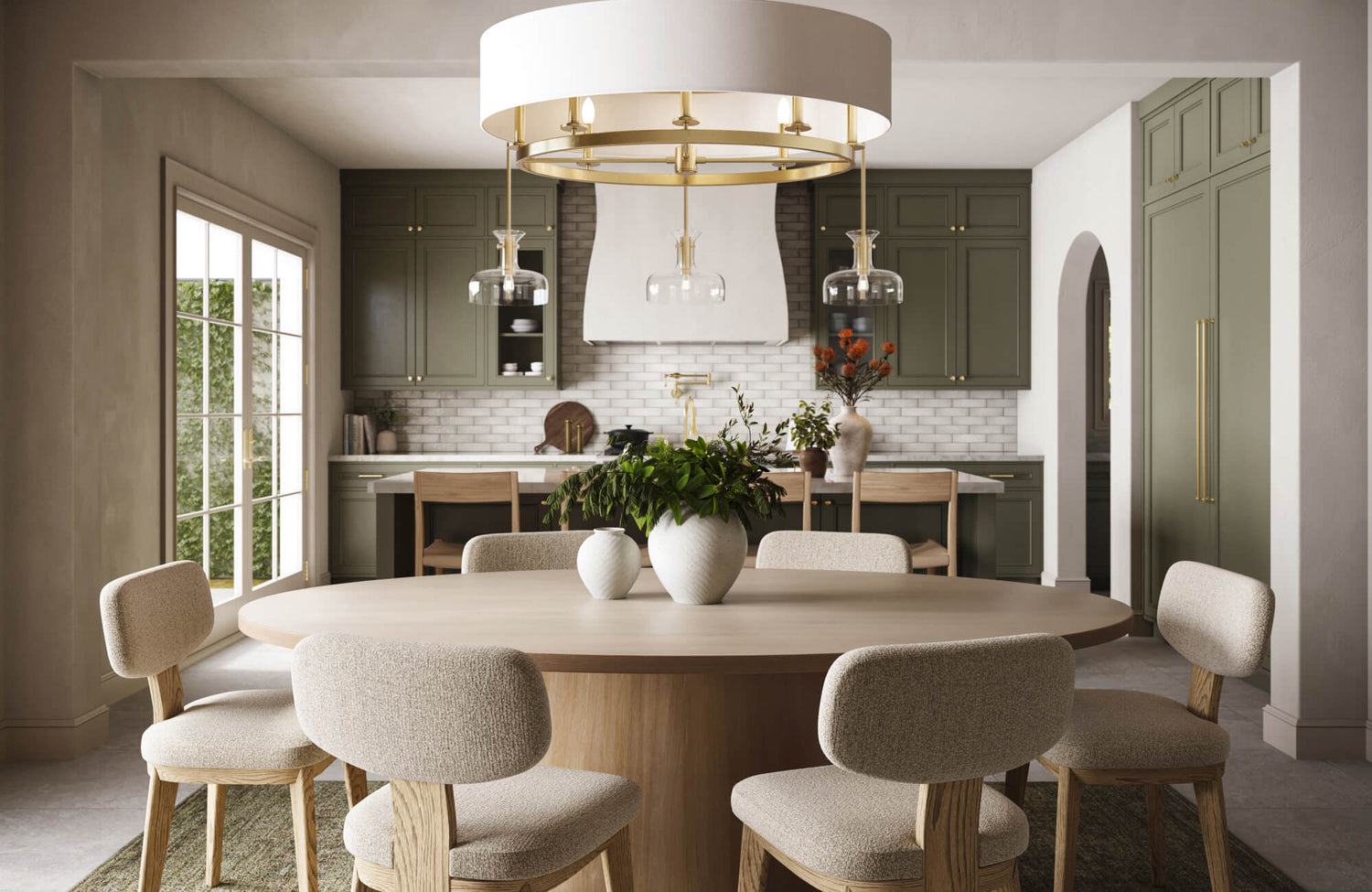
A well-balanced kitchen lighting layout begins with layering, which creates depth while supporting different visual needs. Ambient lighting, achieved through recessed LEDs or linear ceiling fixtures, establishes a consistent foundation of brightness across the room. To enhance visibility during meal preparation, under-cabinet LED strips with a color temperature between 3000K and 4000K also ensure shadows are minimized and details remain crisp.
Above the island, in the photo displayed above, Edward Martin’s Rosa Triangular Pendant in Aged Brass introduces both warmth and sculptural form, casting a soft, diffused glow that enhances the marble surface below while anchoring the space with refined elegance. Along the back wall, the McAvoy 24" Picture Light in Aged Brass also adds a focused accent that draws attention to the shelving and textured backsplash, subtly balancing task precision with visual depth. Together, these layered sources create a lighting composition that transitions effortlessly between performance and ambiance, blending functionality with timeless sophistication.
Fixture Selection and Placement Optimization
Every fixture plays a vital role in balancing form and illumination, making thoughtful placement key to both performance and proportion. Pendant lights above kitchen islands, for instance, positioned 30–36 inches above the countertop, provide focused brightness while maintaining a sense of spatial rhythm. Selecting fixtures with a Color Rendering Index (CRI) above 90 also ensures that colors in food, finishes, and décor appear vibrant and true to life. Meanwhile, diffused lenses or frosted glass shades help distribute light evenly, reducing glare and visual fatigue.
As illumination transitions from ceiling fixtures to under-cabinet lighting, it naturally guides the eye, establishing a smooth visual flow across the kitchen. When integrated with smart systems such as Zigbee or Casambi, brightness and warmth can be fine-tuned throughout the day for optimal comfort. The result is a lighting composition that feels intuitive, adaptive, and beautifully balanced.
Energy Efficiency and Smart Control Integration
Today’s kitchen lighting thrives on efficiency and adaptability, ensuring comfort without unnecessary energy use. LED technology, known for reducing energy consumption by up to 75%, offers long-lasting performance with consistent output. When combined with occupancy sensors and daylight-harvesting systems, lighting also adjusts automatically to available natural light, maintaining efficiency throughout the day.
Smart lighting controls allow homeowners to personalize brightness and color temperature through mobile apps or voice commands, creating the perfect balance of mood and visibility. Complementing this convenience, ENERGY STAR-rated fixtures deliver dependable performance and consistent light quality over time. Flicker-free, dimmable LEDs further enhance comfort by providing smooth, gradual shifts in illumination throughout the day. Together, these innovations make the modern kitchen not only beautifully lit but also energy-efficient and effortlessly responsive.

Living Room Lighting
In the living room, lighting should balance versatility and ambiance, supporting moments of conversation, entertainment, or relaxation. When layered thoughtfully, it establishes a visual hierarchy that guides the eye naturally while enhancing texture, warmth, and architectural character.
Ambient and Decorative Lighting Synergy
The foundation of living room lighting design lies in ambient light, which provides an even baseline that enhances comfort and visibility. Recessed ceiling fixtures or flush-mounted LEDs ensure even distribution, eliminating shadows that can disrupt balance. Complementing these are statement chandeliers or pendant fixtures, which also serve both decorative and functional roles by anchoring the room’s design focal point.
Finishes like brushed brass or frosted glass soften illumination, blending technical precision with inviting warmth. To maintain flexibility, dimmable LED systems allow for adjustments that suit both daytime brightness and evening intimacy. This seamless interplay between general illumination and decorative form also establishes a cohesive, layered aesthetic that elevates the living space from purely functional to emotionally engaging.
Accent and Task Lighting Integration
Accent and task lighting add depth and character by shaping how architectural elements and textures are experienced. Wall washers and directional track lights, for example, gently draw attention to fireplaces, artwork, or textured walls, creating visual dimension without overwhelming the space. In reading nooks or conversation areas, adjustable floor and table lamps fitted with 2700K–3000K warm-white LEDs offer localized comfort while blending seamlessly with the room’s overall tone.
Thoughtful control of beam angles also keeps illumination precise yet soft, minimizing glare while enhancing focal points. When layered thoughtfully, these lighting types create fluid transitions between tasks, moods, and times of day, enriching the living room’s versatility. By balancing brightness and warmth through layered control, the space achieves both functional clarity and an effortlessly welcoming ambiance.
Smart Systems and Scene Control
Integrating smart lighting systems transforms the living room into a dynamic, energy-efficient space that intuitively adapts to daily life. Platforms like Google Home or Alexa can synchronize brightness and color temperature, automatically adjusting to the time of day or specific activities. Advanced dimming protocols such as DALI and Zigbee ensure consistent performance across multiple fixtures, eliminating flicker and preserving color harmony throughout the room.
With customizable scene presets, shifting from “movie night” to “reading mode” takes just a single command, maintaining both comfort and atmosphere. These intelligent systems not only enhance convenience but also promote sustainability through scheduled dimming and occupancy-based control. By merging smart technology with layered design, the modern living room becomes effortlessly responsive—beautiful, functional, and perfectly attuned to contemporary living.

Bathroom Lighting
Bathroom lighting demands clarity and safety without compromising atmosphere. Through a combination of precise placement, proper color temperature, and moisture-resistant materials, lighting enhances both functionality and the overall sense of tranquility.
Task and Vanity Lighting for Accuracy
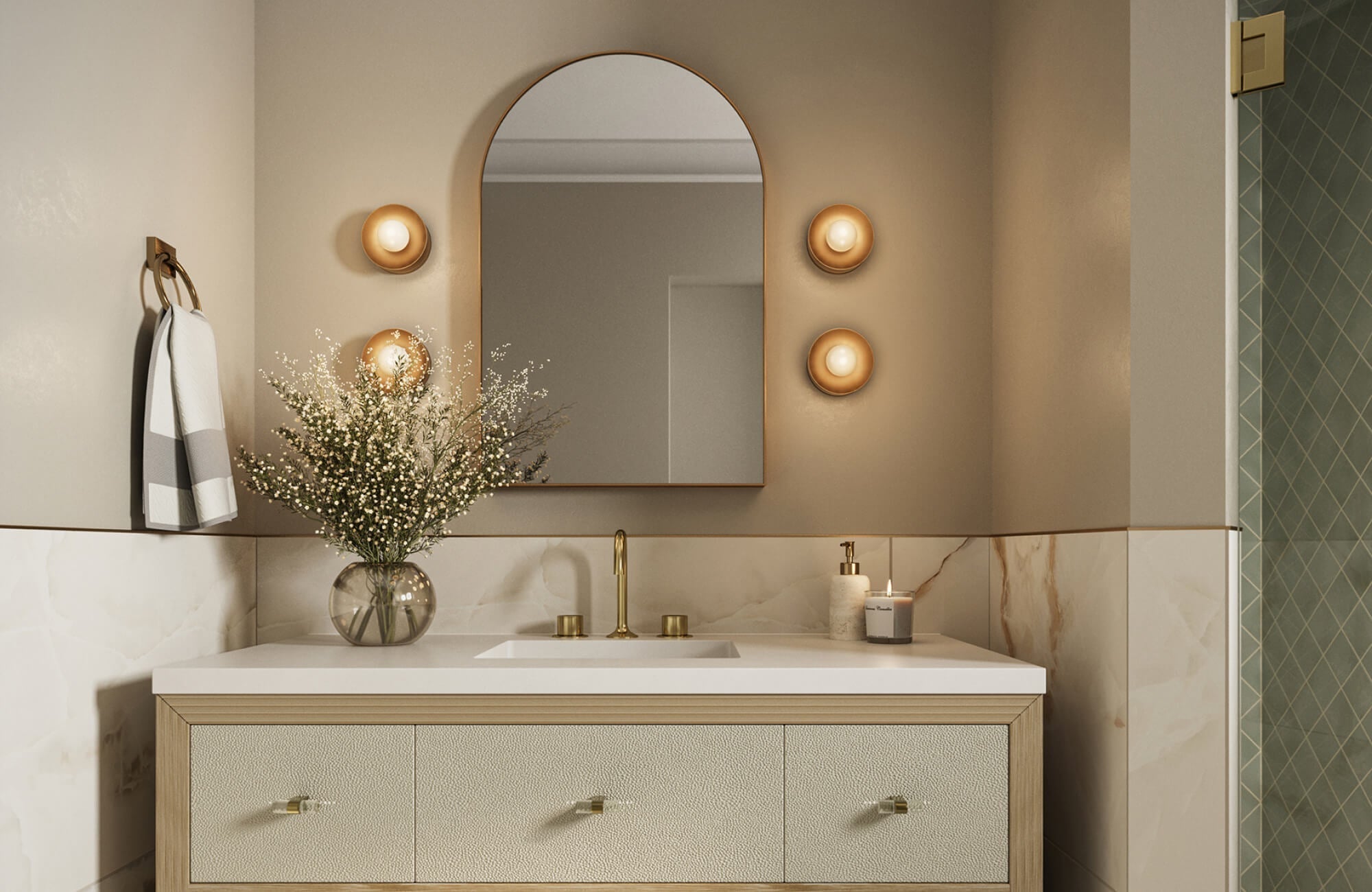
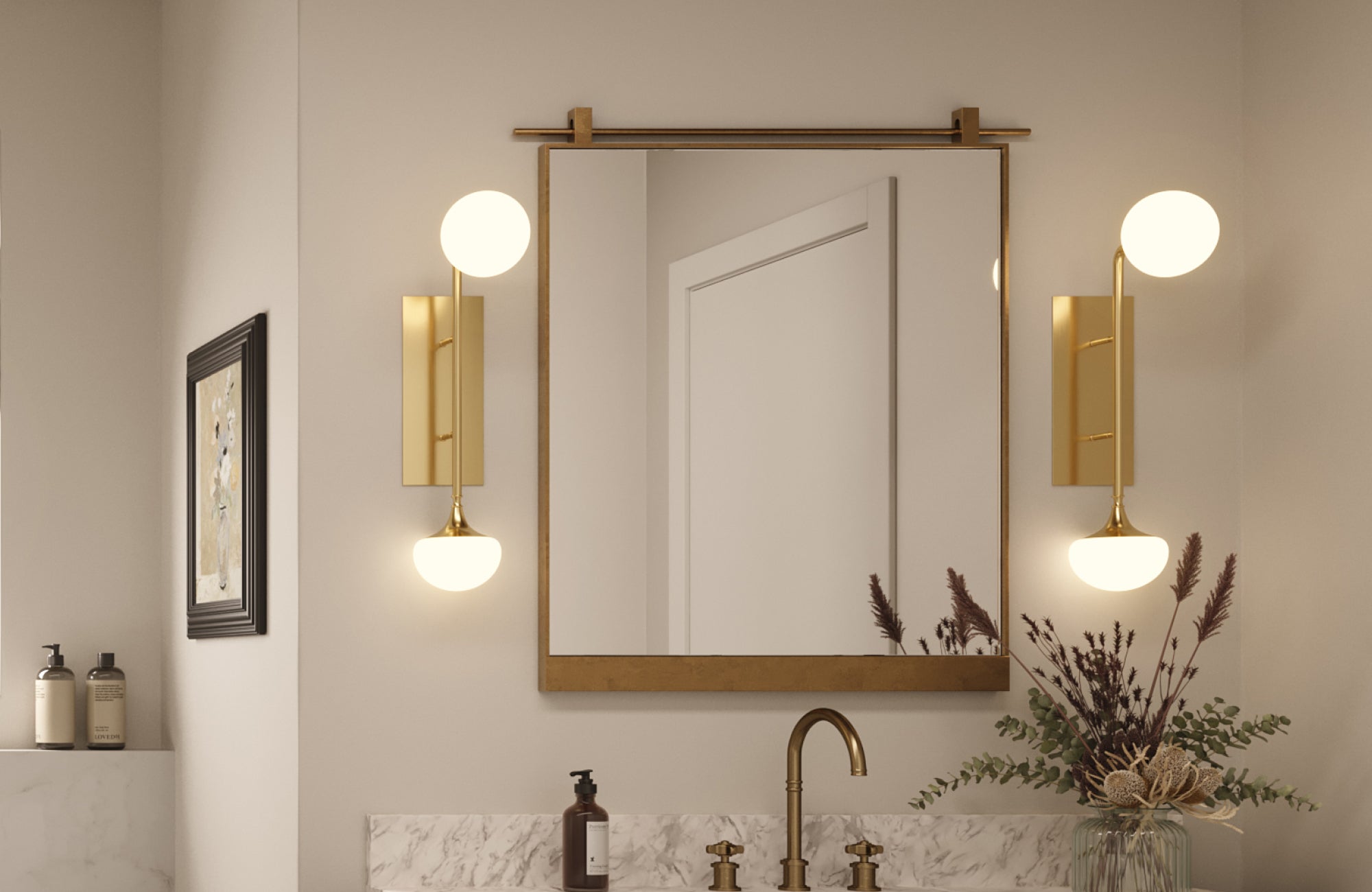
Successful bathroom vanity lighting ensures visibility that’s accurate, balanced, and flattering. Vertical sconces mounted 36–40 inches apart on either side of the mirror cast even light across the face, reducing unflattering shadows and enhancing comfort during grooming.
In the photo shown above, this principle comes to life through the Wilma Wall Sconce in Aged Brass, whose refined silhouette blends timeless design with a soft, diffused glow that enriches the bathroom’s serene ambiance. Over the tub, the Kaley 16" Pendant in Aged Brass also introduces a graceful focal point, adding gentle overhead illumination that complements the sconces’ balanced light. Together, these fixtures bring precision and tranquility to the space, transforming daily rituals into moments of calm sophistication.
Ambient and Accent Lighting Layers
Beyond vanity lighting, a layered approach transforms the bathroom into a space that’s both functional and visually engaging. Ambient illumination from recessed ceiling LEDs or subtle cove lighting establishes an even foundation of brightness throughout the room. To introduce depth and dimension, backlit mirrors, toe-kick LEDs, and niche accents cast a gentle glow that softens surfaces while highlighting architectural details. Choosing 2700K–3000K warm-white LEDs also creates a soothing, spa-like atmosphere, while dimmers allow smooth transitions from invigorating morning light to a tranquil evening ambiance. Together, these layers create a balanced environment—bright when needed, calming when desired, and perfectly attuned to the rhythm of daily life.
Moisture Resistance and Safety Standards
Every bathroom light fixture must be designed to endure high humidity and comply with strict electrical safety standards. Fixtures placed near water sources should carry an Ingress Protection (IP) rating of 44 or higher to ensure resistance against splashes and condensation. Durable materials such as sealed glass, anodized aluminum, and silicone gaskets also safeguard internal components while maintaining optical clarity. Moreover, adhering to the National Electrical Code (NEC) guarantees proper placement and grounding within wet zones, while pairing GFCI outlets with low-voltage LED systems enhances safety without sacrificing brightness. Together, these measures extend fixture longevity, maintain consistent light quality, and keep the bathroom safe, luminous, and visually cohesive over time.

Outdoor Lighting
Outdoor lighting bridges functionality and beauty, illuminating pathways, façades, and landscapes with balance and purpose. By integrating durability, layered illumination, and smart technology, exterior lighting transforms outdoor spaces into inviting nighttime extensions of the home.
Material and Fixture Durability
Durability begins with materials that can endure fluctuating weather while maintaining aesthetic integrity. Marine-grade stainless steel, solid brass, and powder-coated aluminum, in particular, resist corrosion and UV degradation, ensuring fixtures retain performance over time.
As shown in the photo above, our Wilder Exterior Wall Sconce in Textured Black exemplifies this resilience through its jet-black powder-coated metal frame, whose subtle dimensional grain brings a sleek, industrial character while withstanding outdoor exposure. Its softly tapered, semi-opaque glass shade is suspended within a dark geometric frame accented by a curved hook-like detail—an elegant nod to historic iron lanterns reinterpreted for modern design.
The balance of airy openness and glowing translucence also adds height and visual depth, creating a look that feels both timeless and versatile. While bulbs are not included, the fixture pairs effortlessly with your preferred lighting style, offering flexibility in ambiance. Through enduring materials and refined craftsmanship, outdoor lighting like the Wilder delivers reliable performance and lasting beauty year after year.
Layered Illumination for Safety and Aesthetics
A thoughtfully layered outdoor lighting plan enhances both visibility and visual interest. Path and step lights provide safe navigation, while uplights and wall grazers draw attention to textures and architectural details. Subtle in-ground fixtures also extend this effect along walkways, maintaining a seamless sense of continuity. To balance aesthetics with practicality, motion-activated floodlights add security without disrupting the design’s cohesion. Moreover, the interplay between focused and ambient light introduces rhythm and depth, guiding movement and highlighting key features. Together, these layers create an exterior environment that feels secure, dynamic, and beautifully illuminated after dusk.
Smart and Sustainable Lighting Strategies
Sustainability and intelligence now define the next generation of outdoor lighting systems. For example, solar-powered fixtures and low-voltage LED circuits (12V) minimize energy usage while maintaining steady illumination. Smart sensors and dusk-to-dawn controls also automate brightness based on ambient light levels, enhancing efficiency and convenience. For eco-conscious design, dark-sky compliant luminaires with shielded optics reduce glare and prevent upward light spill. Integration with mobile applications further allows real-time adjustments for security or ambiance. These technologies ensure outdoor lighting remains efficient, adaptable, and environmentally responsible while elevating the beauty and safety of every exterior space.

Achieving Cohesive and Intelligent Lighting Design
A well-planned lighting strategy unites aesthetics, comfort, and efficiency, transforming each space into a purpose-driven environment that enhances daily living. Whether illuminating kitchens, living rooms, bathrooms, or outdoor spaces, the goal is to achieve harmony between light and architecture, where each beam enhances texture, mood, and safety. Ultimately, a cohesive lighting design doesn’t simply brighten interiors—it defines how a home feels, functions, and inspires every day.
With Edward Martin’s expert lighting design services, you can achieve this balance through tailored guidance and curated fixture selections that elevate both form and function. Contact us to bring your vision to life with lighting solutions that blend precision, beauty, and enduring comfort!