Clean lines, balanced form, and architectural simplicity define the enduring appeal of square mirrors. As interior design trends continue to embrace minimalism and geometric precision, these square mirrors are once again in the spotlight for their versatility and refined presence. In this article, we’ll look at how square mirrors complement today’s spaces, from bathrooms and entryways to decorative wall displays, and why their timeless appeal keeps them relevant in both classic and contemporary interiors.

Why Geometric Mirrors Are Back in Style
Interior design today favors form, proportion, and visual harmony. Square mirrors embody this trend, offering clarity and balance to modern spaces.
The Appeal of Symmetry
Symmetry naturally creates a sense of harmony and visual ease. When placed above a vanity, sofa, or console, a square mirror instantly establishes balance between the mirror and its surroundings. This equilibrium helps the eye rest, making a room feel intentional and composed, whether in a modern apartment or a more traditional home. The effect is perfectly captured by Edward Martin’s Clancy Small Mirror in Antique Brass, as seen in the photo above, whose centered placement above the vanity reinforces a calm, symmetrical look that feels both refined and thoughtfully balanced.
Minimalism and Clean Design
As interiors lean toward minimalism, square mirrors reflect that same sense of quiet refinement. Their clean silhouette allows surrounding elements, like lighting, texture, and materials, to take center stage. Whether framed in slim metal or left frameless, they blend effortlessly into spaces that value simplicity, allowing reflection, light, and proportion to define the look.
Contemporary Versus Classic Use
Square mirrors transition effortlessly between design styles. In contemporary spaces, frameless or slim metal-bordered versions can create a sleek, integrated look. Traditional interiors, on the other hand, often feature beveled or carved wood frames that add warmth and texture while preserving the mirror’s crisp geometry. This versatility also keeps square mirrors relevant; they adapt to the space instead of defining it.

How a Square Mirror Changes the Feel of a Room
A mirror does more than reflect; it also shapes the way a space is perceived. The balanced geometry of a square mirror adds structure and cohesion, helping a room feel more intentional and visually grounded.
Framing the Space
A square mirror functions like an architectural frame within a room. When positioned with care, it helps define areas such as a vanity, console, or dining nook without creating physical barriers. This subtle framing adds clarity and structure, organizing the space while maintaining an open, airy feel. Edward Martin’s Tristan Square Mirror in Polished Brass perfectly illustrates this concept, as shown in the photo above; its structured form visually frames the vanity and draws focus to the heart of the design while keeping the space open and cohesive.
Creating Visual Weight
With their balanced proportions, square mirrors naturally anchor a wall and draw the eye. They hold visual weight, offering a sense of completion that a round or irregular mirror may not provide. When hung over a sofa, a fireplace, or a sideboard, they serve as a steadying element that balances the entire composition. Their structure also enhances visual rhythm, helping larger rooms feel more grounded and cohesive.
Mixing Shapes for Balance
While square mirrors bring structure and definition, pairing them with other shapes introduces movement and visual rhythm. You can layer one beside a round mirror or position it near a curved sculpture to soften its geometry. This combination keeps the design from feeling static and achieves a balanced interplay between form and flow, creating a space that feels both dynamic and intentionally designed.

The Role of Square Mirrors in Bathroom Design
Bathrooms are where square mirrors truly excel. Their proportions align beautifully with the clean lines of vanities, tiles, and lighting fixtures, creating a sense of order and cohesion. Aside from their aesthetic appeal, they also offer practical advantages: easy to position, proportionate to most layouts, and well-suited to both compact and spacious bathrooms alike.
Proportion and Functionality
Square mirrors align neatly with both single and double vanities, offering a balanced reflection area without overwhelming the wall. Their geometry echoes the shape of the countertop, reinforcing order and proportion within the space. This alignment enhances usability, ensuring that every angle feels deliberate and centered. For those who appreciate clean lines and practicality, square mirrors can also bring both structure and visual comfort to everyday routines.
Framed or Frameless Styles
The choice between framed and frameless designs depends on the atmosphere you want to achieve. Framed mirrors introduce contrast and definition, especially when the finish complements your fixtures. Black against white tile or brass paired with marble creates a striking, cohesive look. Frameless mirrors, in contrast, feel lighter and more seamless, ideal for creating spa-inspired environments where serenity and simplicity take precedence. As featured in the photo above, Edward Martin’s Tristan Square Mirror in Rustic Black illustrates how a slim, dark frame can subtly define the vanity area while maintaining a clean, open aesthetic. Both styles can elevate a bathroom’s design, each offering a distinct interpretation of elegance.
Lighting That Complements the Shape
Lighting plays a vital role in how a square mirror is perceived and used. Backlit mirrors can create a soft, even glow that minimizes shadows and adds a contemporary touch; meanwhile, wall sconces placed symmetrically on either side enhance the mirror’s form and provide flattering illumination. This thoughtful pairing further enhances both function and atmosphere, turning the mirror into a focal point that balances beauty with everyday practicality.
Pairing with Fixtures and Finishes
To maintain visual cohesion, consider how the mirror interacts with the surrounding materials and details. A brushed nickel frame can subtly mirror the tone of your faucet, while matte black adds definition against pale tiles or countertops. Square mirrors also harmonize beautifully with geometric tile layouts and linear hardware, reinforcing the room’s structure. When these elements share a unified visual language, the entire space feels more curated, cohesive, and thoughtfully composed.

Bringing Square Mirrors Into Living Rooms and Entryways
Aside from the bathroom, square mirrors are making their mark as statement pieces in shared spaces. Their structured form adds rhythm and refinement, tying a room’s elements together while enhancing natural light and creating a greater sense of depth.
Making a Statement in the Living Room
A large square mirror above a mantel or sofa can serve as a striking centerpiece, much like a piece of art. It reflects light and motion, adding depth and dimension without overpowering the room. In living areas that need a sense of balance, a single, well-placed mirror can anchor the space and unify the surrounding furniture and décor. Its reflective surface also enhances natural brightness, making the room feel more open and connected to its surroundings.
Balancing Entryway Designs
In an entryway, a square mirror blends practicality with style. It provides that quick final check before leaving home, but it also grounds the console table below, lending structure to what might otherwise be an overlooked area. The clean edges suggest neatness, giving guests an immediate impression of balance and order. When paired with a statement light fixture or vase, it can instantly elevate the space and create a polished, welcoming atmosphere.
Creating Wall Displays
If you prefer a more artistic approach, try grouping several smaller square mirrors. Arranging them in a grid creates a contemporary, gallery-like display. Varying the sizes or finishes introduces a layer of visual interest without breaking harmony. This approach works particularly well in hallways or dining areas where you want to enhance light and texture in a subtle, creative way. By reflecting different parts of the room, these mirrors can also add rhythm and dimension, transforming an ordinary wall into a design focal point.

Choosing Frames and Finishes That Set the Mood
The style of a square mirror goes beyond its shape. Frame materials, finishes, and edge details can completely transform its character. Whether you prefer the sleek appeal of metal or the warmth of natural wood, these choices define how the mirror enhances and harmonizes with your space.
Sleek Metallic Frames
Metal frames in brass, bronze, or matte black instantly enhance the presence of a square mirror. Brass conveys refinement and timeless appeal, bronze introduces warmth, and matte black offers bold, contemporary contrast. These finishes complement both modern and transitional interiors, allowing the mirror to stand out while maintaining visual balance. Edward Martin’s Tristan Square Mirror in Polished Brass, as featured in the photo above, exemplifies this sleek metallic aesthetic, its radiant frame coordinating seamlessly with matching fixtures to create a cohesive, elevated look throughout the space.
Warm Wood and Natural Textures
Wood-framed square mirrors bring a natural warmth to structured interiors. Lighter tones, such as oak or ash, soften minimalist spaces, while darker woods, such as walnut, add depth and richness. For a relaxed, organic feel, rattan or bamboo brings texture and warmth, offsetting the mirror’s sharp lines with a more grounded aesthetic. Incorporating wood also bridges traditional and contemporary elements, resulting in a balanced and enduring aesthetic.
Beveled and Floating Options
A beveled edge gently catches and reflects light, adding a hint of shimmer without unnecessary embellishment. Floating mounts, where the mirror sits slightly away from the wall, introduce depth and shadow for a lighter, more dimensional look. Together, these subtle details lend an architectural quality to the design, enriching the texture of a modern interior while preserving its crisp, refined simplicity.
Frameless and Mirror-on-Mirror Styles
For a seamless, contemporary aesthetic, frameless mirrors integrate effortlessly with surrounding surfaces, highlighting clarity and openness. Mirror-on-mirror designs, where a raised reflective panel rests atop a base mirror, add quiet sophistication while maintaining a minimalist feel. Both options enhance light and space, making them ideal for smaller rooms or streamlined interiors where every detail supports a calm, refined atmosphere.

How to Style Square Mirrors for a Polished Look
Styling a square mirror is about achieving balance and cohesion. With thoughtful placement, it becomes a refined focal point that elevates the entire room.
Pairing with Lighting Fixtures
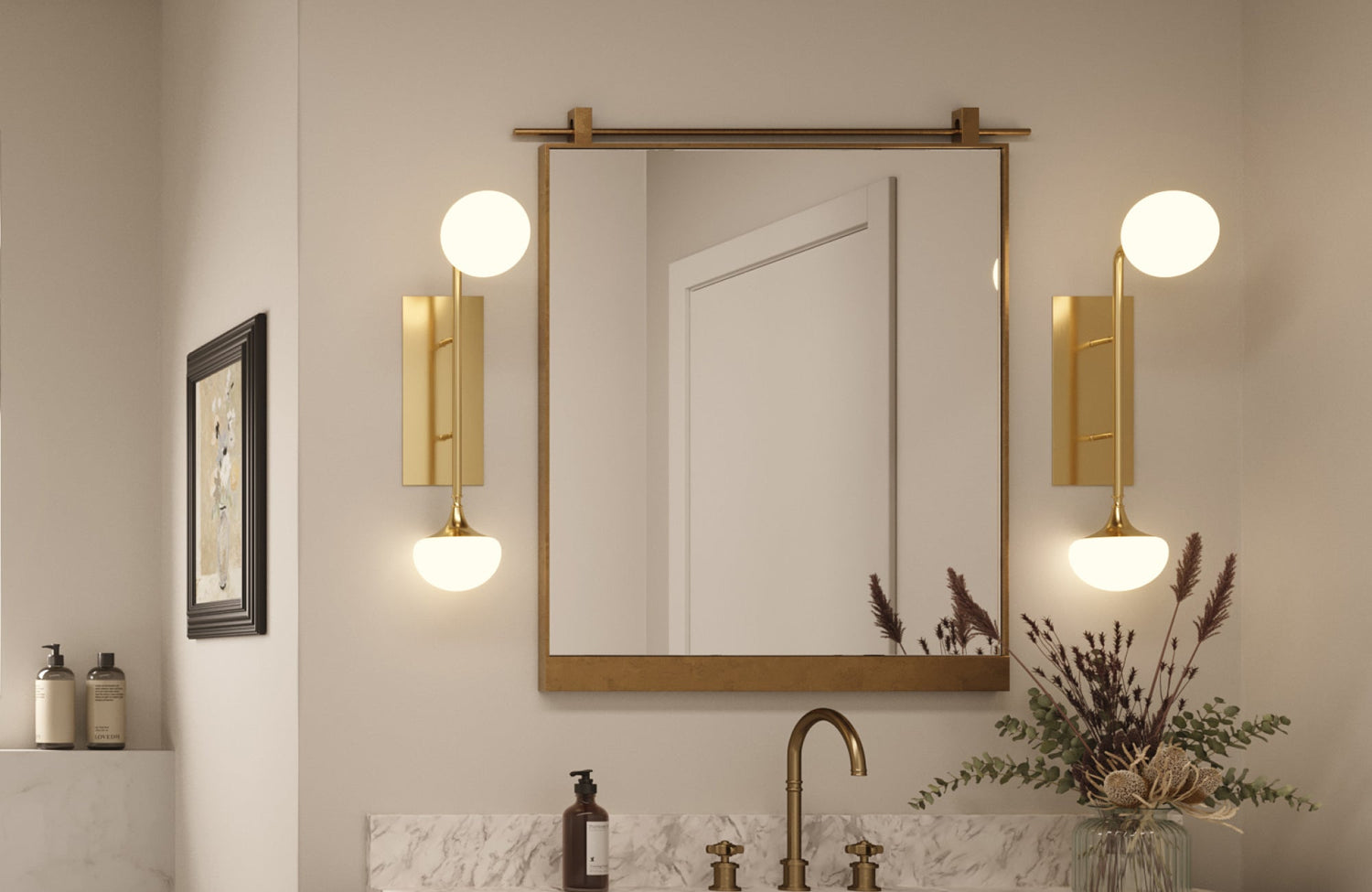
When positioned near lighting, square mirrors double the impact. Linear sconces or pendant lights can draw attention to the mirror’s edges and amplify brightness. If you prefer ambient light, a backlit square mirror creates an even, flattering glow that feels modern yet inviting. The interplay between light and reflection not only enhances visibility but also adds depth, making the space feel brighter and more expansive.
In the photo displayed above, Edward Martin’s Odessa Wall Sconce in Aged Brass beautifully illustrates how lighting can enhance the presence of a square mirror. Its soft, diffused glow enhances the mirror’s reflection while adding warmth and balance, resulting in a cohesive and inviting atmosphere that feels both elegant and intentional.
Choosing Wall Colors That Highlight Shape
The wall color behind a mirror can significantly influence how it’s perceived. A dark or textured wall behind a square mirror emphasizes its crisp edges, while a lighter tone allows it to blend more subtly with the surroundings. Choosing a complementary shade ensures the mirror feels intentional within your color palette. You can also experiment with contrast to make the mirror a focal point, turning a simple wall into a statement feature.
Balancing with Art and Accessories
If you enjoy layering, try pairing your square mirror with nearby artwork or sculptural accents. Mixing angular mirrors with round or curved pieces softens the look and adds visual depth. The aim is not perfect symmetry but harmony—a thoughtful mix that expresses your personality and taste. Adding touches like greenery, ceramics, or metallic accents enhances texture and warmth, creating a cohesive and inviting arrangement.
The Timless Appeal of Square Mirror
Square mirrors are still in style, valued for their balance, versatility, and enduring elegance. Their clean geometry complements both modern and traditional interiors, bringing structure and visual harmony to any room. As design trends evolve, their simplicity allows them to adapt effortlessly, proving that true style lies in form, proportion, and timeless design.
To learn more about incorporating square mirrors into your space, contact our team or explore our professional design services for personalized guidance and inspiration.