Outdoor lounge furniture for daily use has to meet a higher standard than seating chosen only for occasional guests or seasonal styling. It needs to feel comfortable during long afternoons, hold its shape through repeated use, respond well to sun and moisture, and fit the outdoor space without making the area feel crowded or difficult to use.
The strongest choices come from looking at the furniture as part of a larger outdoor routine. Frame materials, cushion construction, fabric performance, climate exposure, maintenance expectations, and spatial fit all shape how well a sofa, sectional, lounge chair, or chaise will perform over time. When these details are considered together, outdoor lounge furniture becomes more than a decorative addition. It becomes a practical extension of the home.

Marlow 24x48 Grip Porcelain 2cm Paver Tile in Navona grounds the outdoor kitchen with a pale stone look, while Kai 3x12 Matte Porcelain Tile in Buttercup and Grayson Outdoor Pendant add warm texture above the woven counter seating.
Understand How Your Outdoor Space Is Used Every Day
Choosing outdoor lounge furniture should begin with the way the space will actually be used. Daily-use furniture has different priorities than seating selected for occasional entertaining. It must support repeated sitting, easy upkeep, changing weather, and the small routines that make an outdoor area feel comfortable from morning through evening.
A covered porch used for coffee and reading may need deep lounge chairs, a small side table, and cushions with a softer indoor-outdoor feel. In the outdoor kitchen scene, Edward Martin’s Cassian Outdoor End Table in Cream shows how a compact surface can support daily use without visually crowding the surrounding furniture, while the Elysia Counterstool brings woven texture and relaxed seating to a bar-height gathering area. A poolside area may require chaises, quick-drying cushions, and materials that can handle wet towels, direct sun, and frequent movement. A family patio may need a sofa or sectional with supportive cushions, durable upholstery, and enough room for children, pets, or guests to use the space without feeling constrained.
Think about who will use the outdoor area most often. A couple may need flexible lounge chairs and a compact table arrangement, while a larger household may benefit from a sectional or sofa grouping that can support longer periods of shared seating. Multi-generational households may also need a balance of relaxed lounge depth and easier seat heights that do not feel too low or difficult to rise from.
Exposure should shape the decision just as much as lifestyle. Uncovered patios, balconies, pool decks, covered porches, and outdoor rooms all place different demands on furniture. Pieces used in full sun or rain need stronger attention to UV resistance, drainage, and frame durability, while sheltered spaces can place more emphasis on cushion comfort and visual coordination. The furniture also needs to fit the outdoor area physically, with enough room for surrounding tables, doors, planters, and everyday movement.
For more complex outdoor settings, Edward Martin’s design services can help translate daily routines, scale, material preferences, and spatial constraints into an outdoor arrangement that feels intentional without overcomplicating the space.

Ramsey 24x24 Checkerboard Grip 2cm Porcelain Paver Tile in Ash & Chalk brings graphic contrast to the covered patio, complemented by Wilder Exterior Wall Sconce In Textured Black and the sofa’s slim dark frame.
Choose Furniture Types That Match Daily Seating Needs
Once the daily use pattern is clear, the next step is matching the furniture type to the way people sit, gather, and relax. This is also the point where scale should be checked carefully. A piece may suit the way people want to lounge, but it still needs to fit the patio, porch, balcony, or poolside area with enough space around nearby tables, doors, planters, railings, and other outdoor features. Choosing by furniture category and placement together helps prevent oversized pieces from making the setting feel constrained.
Outdoor Sofas For Consistent Shared Seating
Outdoor sofas work well when the space needs a reliable seating anchor. They suit covered patios, outdoor living rooms, and conversation areas where two or three people regularly sit together. A sofa also creates a clear focal point, especially when paired with lounge chairs, a coffee table, an outdoor rug, or nearby planters. In the covered patio image, Edward Martin’s Vetra Sofa and the Vetra Coffee Table illustrate this kind of grounded arrangement, with the slim dark frame, cream cushions, and broad table surface giving the seating area a clear center without adding visual weight.
For daily use, comfort depends on more than cushion softness. Seat depth, back support, cushion thickness, and arm height all affect how the sofa feels over time. A very deep seat can feel relaxed and generous, but it may not suit every body type or every setting. A more upright back angle may be better for conversation, while deeper proportions may suit lounging, reading, or stretching out. Outdoor sofas are most successful when they feel proportionate to the setting. On a narrow balcony or compact patio, a full sofa may limit flexibility or leave little room for a side table, planter, or clear entry path. In a larger outdoor room, it can create the same sense of structure that an indoor sofa brings to a living space.
Outdoor Sectionals For Flexible Everyday Lounging
Outdoor sectionals are useful for households that spend extended time outside or frequently gather with family and guests. L-shaped configurations can define a corner of a patio, while U-shaped arrangements create a more enclosed lounge zone. Modular sectionals add flexibility because individual pieces can be adjusted as the use of the space changes.
The main consideration is scale. Sectionals can make outdoor lounging feel generous, but they require careful measurement beyond the seating footprint alone. The full arrangement should account for coffee tables, side tables, doors, planters, pool edges, railings, and the open space needed around the furniture. A sectional that is too large can make a patio feel compressed, even when its listed dimensions technically fit.
For daily use, modular designs can be especially practical. They allow a space to shift from quiet lounging to casual hosting without replacing the main furniture. Look for stable connections, supportive cushions, and frame construction that feels substantial enough for frequent rearranging.
Lounge Chairs And Chaises For Individual Comfort
Lounge chairs and chaises are ideal when flexibility matters. A pair of lounge chairs can create a reading corner, expand a sofa arrangement, or offer comfortable individual seating without taking over the layout. They are also easier to move, store, or reposition than larger sofas and sectionals.
Chaises serve a more specific purpose. They are well suited to pool decks, sunlit patios, and quiet outdoor areas where reclining comfort is the priority. For daily use, cushion drying time, frame stability, and surface temperature become especially important, since chaises are often placed in exposed locations. Individual pieces can also help balance a layout. Instead of filling a patio with one large seating group, lounge chairs and chaises can create smaller zones for reading, conversation, and relaxation. This approach is especially useful when the outdoor area needs to feel open while still offering genuine comfort.
|
Furniture Type |
Best Daily Use |
What To Consider |
|
Outdoor sofa |
Shared seating and outdoor living rooms |
Seat depth, back support, cushion quality, and surrounding clearance |
|
Outdoor sectional |
Larger patios and frequent lounging |
Full footprint, configuration, table placement, and open space around the arrangement |
|
Lounge chair |
Flexible individual seating |
Back angle, portability, support, and ease of repositioning |
|
Chaise |
Poolside lounging and reclining |
Drainage, sun exposure, cushion drying, and available length |
|
Modular seating |
Changing layouts and multi-use spaces |
Connection points, stability, adaptability, and room to reconfigure |

Ramsey 24x24 Checkerboard Grip 2cm Porcelain Paver Tile in Ash & Chalk creates a structured garden setting, while Karina 5.5x5.5 Matte Porcelain Tile in Cotto adds warmth to the fireplace surround.
Evaluate Frame Materials For Strength And Weather Exposure
Frame material affects how outdoor lounge furniture handles repeated use, moisture, sunlight, and seasonal changes. Rather than choosing based on appearance alone, it is better to consider how each material performs in the specific setting where the furniture will live.
Aluminum For Lightweight Rust Resistance
Powder-coated aluminum is widely used for outdoor lounge furniture because it is lightweight, rust resistant, and easy to move. These qualities make it practical for patios where chairs or modular pieces may need to shift during the season. Its clean profile also works well in contemporary, transitional, and coastal-inspired outdoor spaces. In the fireplace seating scene, Edward Martin’s Caldra Outdoor Lounge Chair in Cream pairs an open, rounded frame with light cushions, while the Alina Outdoor Coffee Table in White adds a smooth sculptural surface that keeps the arrangement visually calm around the central fire feature.
Quality should still be evaluated carefully. A strong aluminum frame should feel stable rather than overly light or hollow. Frame thickness, welded joints, coating consistency, and hardware quality all influence long-term performance. A durable powder-coated finish helps protect the metal, but scratches or chips should still be addressed according to the manufacturer’s care guidance. Aluminum is often a strong choice for daily use because it balances practicality with a refined visual presence. It can support slim silhouettes without feeling visually heavy, making it useful for both compact patios and larger outdoor seating arrangements.
Teak For Natural Durability And Visible Grain
Teak is valued for its density, natural oils, and ability to weather outdoors. Its visible grain gives outdoor lounge furniture warmth and material character, especially when paired with neutral cushions, stone surfaces, woven accents, or textured outdoor rugs. In a daily-use setting, teak can bring a grounded quality that feels substantial without appearing overly bulky.
One of teak’s defining characteristics is the way it changes over time. If left untreated, it typically develops a silver-gray patina. Some buyers prefer this softened appearance, while others want to preserve the wood’s warmer golden tone. Maintaining that original color usually requires more regular care, so expectations should be clear before purchase. Teak works particularly well where the furniture is meant to feel connected to natural materials. It can complement garden settings, poolside spaces, and outdoor rooms that use stone, tile, or warm architectural finishes. Its beauty comes partly from its aging process, which should be viewed as part of the material rather than a flaw.
Resin Wicker For Texture And Casual Comfort
Resin wicker, often described as all-weather wicker, offers woven texture with better outdoor suitability than natural wicker. It can soften the look of lounge furniture and make a seating area feel more relaxed, especially in covered patios, garden spaces, and transitional outdoor rooms.
The construction beneath the weave matters. High-quality resin wicker is usually supported by a durable interior frame, often aluminum, which gives the furniture stability. The weave should feel secure and consistent, not brittle, loose, or thin. Lower-quality resin can become dry or fragile after extended UV exposure, particularly in hot, sunny climates. Resin wicker is often chosen for its texture and comfort-forward appearance. For daily use, it should be evaluated for flexibility, frame support, and ease of cleaning. Dust, pollen, and debris can settle into woven surfaces, so regular light maintenance is part of keeping the material looking fresh.
Steel And Mixed Materials For Specific Conditions
Steel can provide strength and visual weight, but it requires more caution outdoors than aluminum, especially in wet, humid, or coastal environments. If steel is used, the finish should be outdoor rated, properly sealed, and maintained when scratches or chips appear. Moisture exposure can become a concern if protective coatings are compromised.
Mixed-material designs can add depth to outdoor lounge furniture. Metal frames with wood arms, woven panels, stone-look tabletops, or ceramic-inspired surfaces can create a more layered composition. These combinations can be visually strong, but each material may respond differently to sun, moisture, salt air, or seasonal storage. In coastal settings, salt air can be especially hard on metal finishes, hardware, and exposed fasteners, so corrosion resistance and care instructions deserve close attention.
Before assuming any material is suitable for every outdoor condition, review the product’s care instructions and specifications. Material performance depends on climate, exposure, finish quality, care routine, and manufacturer guidance. This is especially important for furniture placed in uncovered, humid, coastal, or high-sun settings. For product-specific questions about dimensions, finishes, cushion construction, or outdoor suitability, Edward Martin’s contact page can help readers clarify details before making a final selection.

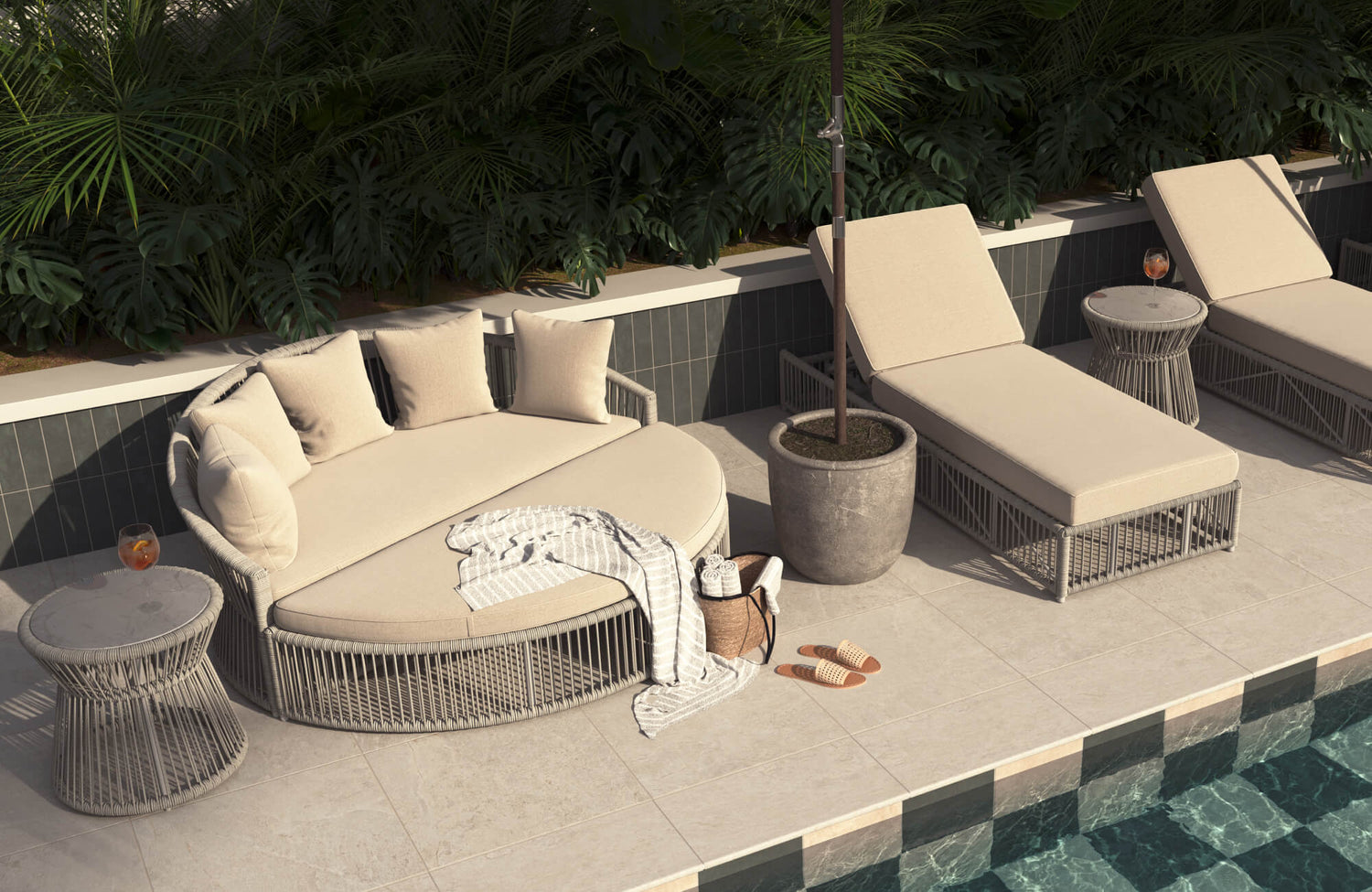
Vesper 24x24 Grip Porcelain 2cm Paver Tile in Sand softens the sunlit patio floor, with Marlow 24x48 Matte Porcelain Tile in Roman forming a quiet backdrop for the low-profile sofa and layered greenery.
Prioritize Cushions Built For Comfort And Outdoor Performance
Cushions often determine whether outdoor lounge furniture remains comfortable in daily use. A durable frame is important, but the seating experience depends on cushion support, fabric performance, moisture behavior, and how well the cushions hold their shape through repeated sitting.
Look At Cushion Support And Thickness
A thicker cushion is not automatically a better cushion. Comfort depends on density, resilience, and support. A cushion that feels soft at first may compress too quickly, while one with better internal structure can feel more comfortable over longer periods. For daily use, the cushion should recover after sitting and maintain enough support for extended lounging. Edward Martin’s Sabine Outdoor Sofa in Cream, shown with a continuous low-profile seat and broad back cushions, gives this section a useful visual reference for how cushion volume can feel generous without overwhelming the frame.
Seat depth and back angle should be considered at the same time. Deep seats encourage a more relaxed posture, while shallower seats can feel more upright and conversational. A sofa or lounge chair used for reading may benefit from a slightly more supportive back, while a chaise should allow the body to recline without feeling unsupported. Edward Martin’s Marisette 12" x 27" Down Pillow in Black adds a smaller layer of support and contrast in the same setting, showing how accent pillows can refine comfort without changing the main cushion structure. Cushion construction also affects the overall silhouette of the furniture. Overly bulky cushions can make a refined frame feel heavy, while cushions that are too thin may make the piece feel less inviting. The best outdoor cushions balance comfort, proportion, and durability.
Choose Outdoor Fabrics That Resist Fading And Moisture
Outdoor fabrics need to handle sunlight, humidity, body contact, and routine cleaning. Performance fabrics, olefin, polyester, and solution-dyed acrylic are commonly used for outdoor cushions because they can offer varying degrees of UV resistance, fade resistance, mildew resistance, and cleanability.
For spaces exposed to strong sun, fade resistance should be a priority. Direct sunlight can weaken fibers and shift fabric color over time. In damp climates, moisture behavior becomes just as important. Fabrics that resist mildew and dry efficiently are better suited to furniture used after rain, near pools, or in shaded outdoor rooms where airflow may be limited. Even durable outdoor fabric needs care. Cushions should be brushed free of debris, cleaned according to manufacturer instructions, and protected during harsh weather when appropriate. Outdoor-rated does not mean the fabric can be ignored indefinitely.
Consider Drainage And Drying Time
Moisture management is one of the most important cushion details for daily-use patio furniture. Cushions may be exposed to rain, humidity, wet swimsuits, pool splashes, and morning condensation. If moisture lingers inside the cushion, comfort and cleanliness can suffer.
Quick-dry foam, mesh undersides, ventilated construction, and breathable fabric layers can help water move through the cushion more efficiently. These details are especially valuable in humid, rainy, or poolside environments. Removable covers can also make cleaning easier, provided they are handled according to care instructions.
Cushions and pillows should be stored dry during storms, extended periods of nonuse, or harsh seasonal weather. Storage should also allow ventilation, since sealing damp textiles in a closed space can create additional moisture problems.
Terms such as weather-resistant, water-resistant, and quick-dry should not be read as waterproof or maintenance-free. Cushions may still need to be placed upright after heavy rain, stored during storms, or protected with breathable covers. Always follow the manufacturer’s care guidelines for cleaning, drying, and storage, since foam cores, fabric treatments, and removable covers can vary by product.

Maris Teak End Table introduces a natural wood accent beside the woven seating, while Makenna 6x6 Glossy Porcelain Tile in Forest gives the fire pit a deep green focal point.
Match Outdoor Lounge Furniture To Your Climate
Climate should guide both material selection and care expectations. Outdoor lounge furniture that performs well in a dry covered setting may need different construction or maintenance in full sun or heavy humidity. The goal is not to find a single material that works everywhere, but to match the furniture’s frame, cushions, fabrics, and care requirements to the conditions it will face most often.
Sunny And Hot Climates
In sunny and hot climates, UV-resistant fabrics and fade-resistant finishes should be central to the decision. Direct sun can affect fabric color, surface temperature, and finish longevity. Dark frames and dark upholstery may absorb more heat, which can make seating less comfortable during the warmest parts of the day.
Shade can help extend comfort and reduce exposure. Covered patios, umbrellas, pergolas, and shade screens can make outdoor lounge furniture easier to use throughout the day. Lighter upholstery may feel cooler visually and physically, although it may require more frequent cleaning depending on the household and setting. In the hedge-lined seating area, Edward Martin’s Elysia Sofa and the Elysia Mid Sofa use light cushions against woven frames, creating a softer impression in a bright outdoor setting while still offering the depth needed for daily lounging. For daily use, choose materials that can tolerate repeated sun exposure without requiring constant intervention. This does not eliminate maintenance, but it helps align the furniture with the environment.
Humid And Rainy Climates
Humid and rainy climates place greater emphasis on drainage, mildew resistance, and rust-resistant frames. Cushions should dry efficiently, frames should resist corrosion, and furniture placement should allow air to move around the pieces. Shaded areas can feel cooler, but they may also slow drying after rain.
Aluminum frames, quick-drying cushion construction, and mildew-resistant outdoor fabrics can be especially useful in these conditions. Breathable covers may help protect furniture during storms or periods of nonuse, but they should not trap moisture against cushions or frames. Daily care often involves small habits. Brushing away leaves, allowing cushions to dry fully, and keeping furniture out of areas where water collects can help maintain comfort and appearance over time.
Choosing Outdoor Lounge Furniture For Daily Use Comes Down To Fit, Comfort And Care
Choosing outdoor lounge furniture for daily use is ultimately about fit. The right pieces should suit the space, support the way people relax, respond well to the climate, and offer a care routine that feels realistic over time.
Start with daily habits, then evaluate furniture type, frame material, cushion construction, fabric performance, climate exposure, scale, placement, and maintenance expectations. A well-chosen outdoor sofa, sectional, lounge chair, or chaise should feel comfortable through repeated use, look connected to its surroundings, and remain practical in the conditions it will face. When those elements work together, the outdoor area becomes a dependable extension of the home rather than a space used only when conditions are ideal.