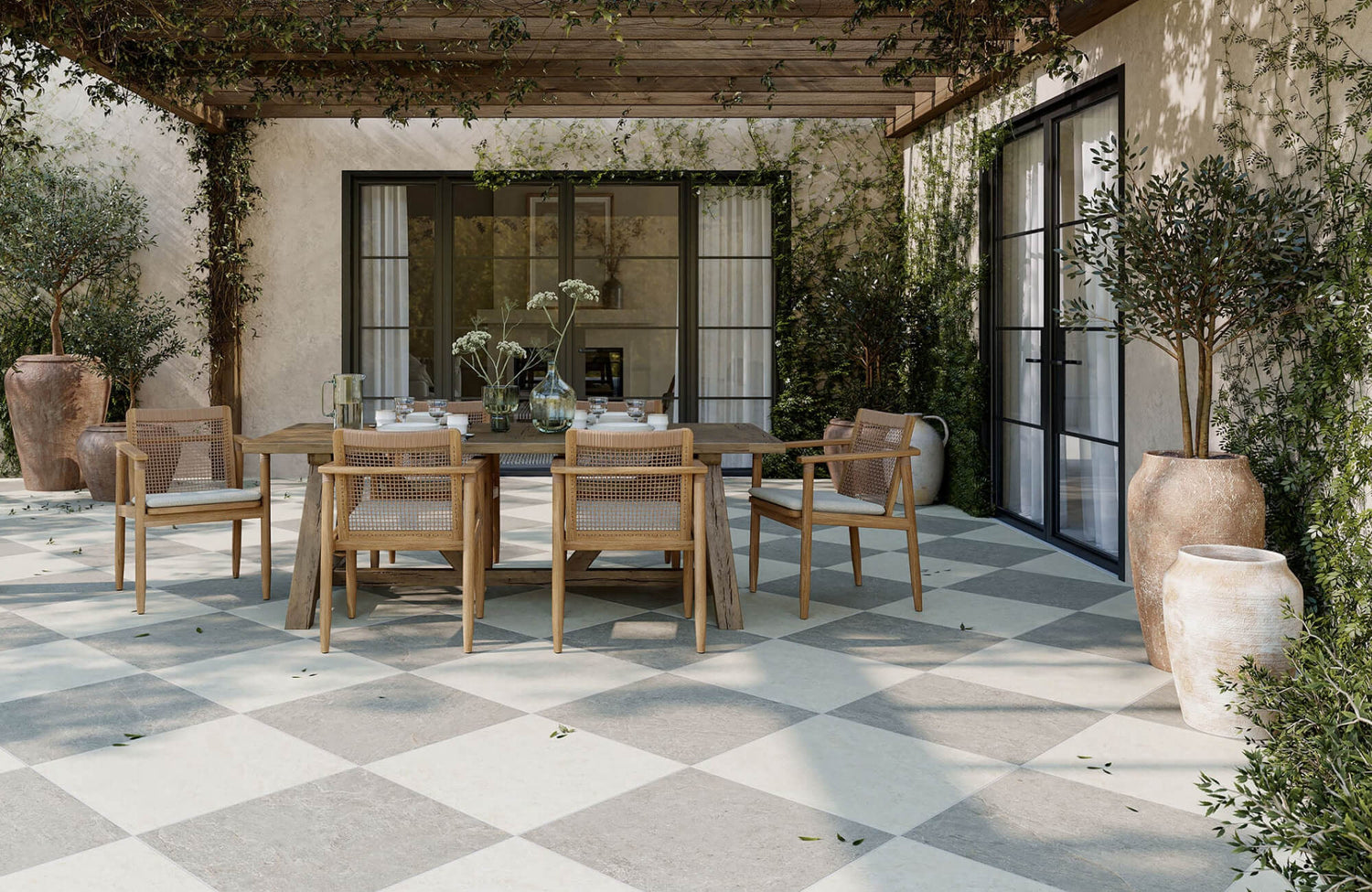
Choosing the right outdoor dining table length begins with how many people you want to seat comfortably, but that is only part of the decision. Your available space, chair size, table shape, serving needs, and entertaining habits all influence which length will feel comfortable and practical.
As a general guide, allow about 24 inches of table length per person for comfortable dining. If you prefer a more relaxed setup, especially with larger outdoor chairs or longer meals, 26 to 30 inches per person gives everyone a little more room. In practical terms, a 48-inch table usually seats 4 people, while a 60- to 72-inch table works well for 6. For larger gatherings, an 84- to 96-inch table typically seats 8, and a 108- to 120-inch table can seat around 10, depending on chair width and table base.
The best outdoor dining table is not simply the longest one your patio can hold. It should fit your space naturally, leave room to move and serve, and make outdoor meals feel comfortable.

Start With How Many People You Want to Seat
The best way to choose an outdoor dining table length is to start with how many people you usually want to seat. Rather than choosing the largest table that fits, focus on how you use your outdoor dining area in everyday life.
Seating Basics
For comfortable everyday dining, allow about 24 inches of table length per person. This gives each diner enough room for a plate, glass, utensils, and elbow space, without making the table feel too large for the group. For a more relaxed setup, especially outdoors where meals often last longer, 26 to 30 inches per person can feel better. This extra room is helpful if you use wide chairs, serve multiple courses, or like to keep drinks, small plates, and serving pieces on the table.
Outdoor dining also tends to involve more than the meal itself. Guests may set down sunglasses, phones, extra drinks, or shared dishes, so a table that feels roomy indoors can feel tighter outside during casual entertaining.
Common Table Lengths
A 48-inch outdoor dining table usually seats 4 people comfortably. It is a practical choice for small patios, balconies, breakfast areas, or garden corners where you want a dedicated place to eat without overwhelming the space.
For 6 people, a 60- to 72-inch table usually works well. This size gives most households enough room for family meals, weekend lunches, or casual dinners with a few guests. Edward Martin’s Verdanta Outdoor Dining Table in Aged Grey, 60", as featured in the photo above, is a good example of this scale, offering a compact yet comfortable setup for a covered patio or intimate outdoor dining area. If you are deciding between 60 and 72 inches, 72 inches often feels more comfortable with armchairs or wider outdoor seating.
For 8 people, an 84- to 96-inch table is usually a comfortable choice. This length suits larger patios, pergolas, or outdoor kitchens where the table serves as a main gathering spot. For bigger groups, a 108- to 120-inch table can seat about 10 people, though comfort still depends on chair width, leg placement, and usable space at the ends.
Everyday Use First
It can be tempting to choose a table for the biggest gathering you might host, but everyday comfort should come first. If your household usually seats 4 to 6 people, a table made for 10 may feel oversized most of the time, especially if it makes the patio harder to use. A better approach is to choose a length that fits your regular meals, then use flexible seating when extra guests come over. Benches, stackable chairs, or an extendable outdoor dining table can help you host larger groups without making your daily setup feel crowded.
This matters even more when your outdoor space serves several purposes. If your patio also includes a grill, lounge chairs, planters, or a path to the garden, the dining table should support the layout rather than take it over.
When to Size Up
A longer table makes sense when outdoor dining is part of your routine. If you eat outside several times a week, host weekend dinners, or simply prefer more space between place settings, sizing up can make the area feel more comfortable. You may also need a longer table if your chairs are wide, cushioned, or have arms. Larger chairs take up more room along the table edge, so a table listed for 6 may feel better for 4 or 5 when paired with bulkier seating.
Sizing up also helps if you prefer a fuller table setting. Placemats, chargers, glassware, serving bowls, and candles all take up surface space, so a few extra inches can make the table feel balanced rather than crowded.

Match the Table Length to Your Outdoor Space
Once you know how many people you want to seat, compare that table length with the actual size of your patio, deck, balcony, or garden area. A table may seat the right number of people on paper, but it can still feel too large if there is not enough room around it.
Clearance Around the Table
A comfortable outdoor dining setup needs room around the table, not just enough space for the tabletop. As a practical rule, allow at least 36 inches of clearance on all sides so chairs can slide out and guests can sit down with ease. Near doors, stairs, grills, outdoor kitchens, or main walkways, 42 to 48 inches is often better. These areas need extra space because people may be carrying plates, opening doors, or moving around seated guests.
This becomes especially important with larger rectangular tables, such as Edward Martin’s Maris Teak Rectangular Dining Table, 96" x 42", as featured in the photo above. Its generous length suits a spacious patio, but the surrounding area is what keeps the setup comfortable, especially with chairs on all sides and nearby outdoor features.
Measure this clearance from the edge of the table, not from the center of the area. For example, if the table is 72 inches long, the full usable space should include the table length plus clearance at both ends. Without that extra room, even a well-sized table can feel awkward to use.
Measuring the Dining Zone
Before choosing a table, measure the area you can actually use for dining, not just the full patio size. Planters, railings, posts, steps, built-in grills, and outdoor sofas can all reduce the space available for a table and chairs.
Start by measuring the length and width of the spot where the table will sit. Then subtract the clearance needed on each side. What remains is your realistic maximum table footprint.
For example, if your dining area is 12 feet long and you want 3 feet of clearance at each end, the longest practical table would be about 6 feet, or 72 inches. This simple method helps you avoid buying a table that technically fits the patio but does not leave enough room to use it comfortably.
Narrow Patios and Decks
Long rectangular tables can be efficient, but they may feel tight on narrow patios and decks. Even when the length fits, the table width and chair depth can leave too little room along the sides. In tighter spaces, a slim rectangular table is often more practical than a wide one. Benches can also help because they tuck in more neatly than individual chairs. If the area is very compact, a round or square table may feel easier to use, even if it seats fewer people.
The goal is to make the dining area comfortable from every angle. You should be able to pull out a chair, sit down, and move around the table without having to shift other furniture each time.
Visual Proportion
Table length also affects how balanced your outdoor area feels. A table that is too short can look underwhelming on a large patio, while one that is too long can make a smaller deck feel crowded and stiff. Look at how the table relates to the surrounding features. A longer table may look natural beneath a pergola or beside an outdoor kitchen, while a smaller table may be better suited to a quiet corner, balcony, or courtyard.
Material can also change how large a table appears. A thick concrete or solid teak table may feel more substantial than its measurements suggest, while a slim metal or open-base design can look lighter at the same length. That is why choosing the right size is not only about inches, but also about how the table sits visually in the space.

Choose a Length That Fits the Table Shape
Table shape affects how length is used, how many people can sit comfortably, and how easily the dining area feels to navigate. Two outdoor dining tables with similar measurements can feel very different depending on whether the shape is rectangular, oval, round, or extendable.
Rectangular Tables
Rectangular tables are a practical choice when you want to seat more people. Their long sides make chair placement simple and predictable, which is why they work especially well on larger patios and dedicated outdoor dining areas.
A rectangular table also works well when your outdoor space follows the same long, narrow shape. It can line up neatly with a deck, pergola, wall, railing, or outdoor kitchen, helping the layout feel clean and organized. If you want to seat 6, 8, or 10 people, this shape usually offers the most seating for its length.
However, the base design matters. Corner legs, trestle bases, and thick supports can affect where chairs fit and how much legroom guests have. Before choosing a rectangular outdoor dining table, make sure the base allows comfortable seating along the sides and at the ends.
Oval Tables
Oval tables give you the length of a rectangular table with a softer outline. They can feel easier to use in outdoor spaces where sharp corners might look too strong or get in the way. Because the ends are curved, an oval table may seat slightly fewer people than a rectangular table of the same length. The rounded ends reduce some usable seating space, but the trade-off can be worth it if you want the table to feel more open and relaxed.
Edward Martin’s Seabrook Outdoor Dining Table, 102", as featured in the photo above, shows how an oval table can bring generous seating to an outdoor dining area without making the setting feel too rigid. Its curved ends soften the long silhouette, helping the table feel balanced beneath the pergola while still offering enough room for a larger group.
Oval tables also work well when the dining area sits near other furniture. Their curved shape helps the space feel less boxy, which is useful on patios that combine dining, lounging, and garden features.
Round Tables
Round tables are measured by diameter rather than length, but they are still important when comparing outdoor dining sizes. A round outdoor dining table often works best for smaller groups because everyone can see and talk to one another easily. A 48-inch round table usually seats 4 people comfortably, while a 60-inch round table can often seat 6. Larger round tables can still work, but serving across them may be less convenient because the center is farther from each diner.
This shape is especially useful for square patios, small courtyards, and intimate garden spaces. If conversation matters more than maximum seating, a round table may feel more natural than a long rectangular one.
Extension Tables
An extension table is a practical choice if your guest count changes throughout the year. It can stay compact for everyday meals, then expand when you host family or friends. When choosing an extendable outdoor dining table, measure it both closed and fully extended. A table may fit most days, but feel too long once the leaves are added. It is also worth checking where the extra chairs will go when the table is fully expanded.
Extension tables are especially helpful in outdoor spaces that need flexibility. They let you keep a comfortable daily setup without losing the option to host larger meals when needed.
Material and Base Style
The same table length can feel different depending on the material and base design. A long stone, concrete, or thick teak table often feels more substantial, while a slim aluminum or open-frame design can appear lighter at the same size. The base affects comfort as much as appearance. A pedestal base can make end seating easier, while trestle supports may limit knee room in certain spots. Corner legs offer a classic, stable look, but they can affect how closely chairs fit at the ends.
Before deciding on length, look beneath the tabletop as well as across it. A good outdoor dining table should give you enough surface area for dining and enough legroom for guests to sit comfortably.

Account for Chair Size and Seating Style
Your choice can affect the ideal table length more than you might expect. A table that feels roomy with slim armless chairs may feel too short once you pair it with wider, cushioned, or armed outdoor dining chairs.
Chair Width
Outdoor dining chairs come in a wide range of sizes. Many standard chairs are about 18 to 24 inches wide, while larger cushioned styles can take up more room along the edge of the table. Because of that, seating capacity should not be based only on the table. If a 72-inch table is meant to seat 3 people along each side, each chair needs to fit comfortably within that space. Narrow chairs may work well, but wider chairs may make the same table feel better with only 2 people per side.
Before buying, compare the chair width with the table length. This quick check helps you avoid overcrowding and choose a setup that feels comfortable once all the chairs are in place.
Armchairs
Armchairs add comfort, but they also need more room. The arms increase the chair’s overall width and can make it harder to place chairs close together. If you like the look and comfort of armchairs, consider placing them at the heads of the table. Then use slimmer side chairs along the longer edges to preserve seating capacity. This mix can give the table a polished look without taking up too much space.
Edward Martin’s Leticia Dining Chair in Cream, as shown in the photo above, shows how armchairs can affect spacing around a table. Its cushioned seat and supportive arms add comfort and presence, but they also need more room than a slimmer side chair.
Arm height matters as well. Some chair arms may not slide under the tabletop, which means the chairs will sit farther out when not in use. Checking this detail before buying can help the outdoor dining area look neater and feel easier to use.
Benches
Benches can make an outdoor dining table more flexible. They allow people to sit a little closer when needed and often tuck under the table more neatly than individual chairs. A bench works especially well for families, casual meals, and narrow patios. It creates a relaxed setup while reducing the number of chair backs around the table, which can make a smaller dining area feel more open.
However, benches can be less comfortable for long or formal meals because guests may need to slide along the seat or step around the bench to sit down. They work best when you want flexible, casual seating rather than a more structured place setting for each guest.
End Seating
End seating can add extra places without increasing the table length. Depending on the table base and available clearance, one chair at each end can turn a 6-seat table into an 8-seat arrangement. The main thing to check is knee room. Some tables have legs or supports that make end seating uncomfortable, even when there seems to be enough space. A pedestal, inset-leg, or open-base design can make the ends easier to use.
If you plan to use end chairs regularly, test the fit before choosing the table. Guests should be able to sit comfortably without bumping their knees against supports or feeling squeezed between the table and nearby furniture.

Think About Serving Space and Dining Comfort
Table length should support the whole dining experience, not just the number of chairs. Once you add plates, glasses, serving dishes, condiments, and outdoor accessories, the table can feel smaller than it looked at first.
Place Setting
Each diner needs enough room for a plate, utensils, glassware, a napkin, and a comfortable amount of personal space. If you use larger dinner plates, placemats, chargers, or multiple glasses, a longer table can help each setting feel more comfortable. Outdoor meals often include items you may not need indoors. Guests may set down sunglasses, hats, small bags, or extra drinks near their seats, so a slightly longer table can keep these items from crowding the dinnerware.
This is where the 24-inch rule becomes a starting point rather than a fixed answer. If your dining style is more layered or relaxed, allowing more space per person will make the table easier to use.
Center Space
Table width matters just as much as table length. Even a long table can feel crowded if it is too narrow for serving pieces in the center. The middle of the table often holds platters, bowls, pitchers, candles, lanterns, planters, or an umbrella pole. If the table is too narrow, these items can crowd each diner’s place setting.
Edward Martin’s Linea Round Dining Table in Bone, 63", as featured in the photo above, shows how generous center space can support both function and styling. Its round surface leaves room for fruit, drinks, and decorative pieces while still giving each seat a clear place around the edge.
For outdoor dining, center space is especially important because the table often doubles as a serving area. If you enjoy shared dishes or a styled table, choose a width that keeps the center useful without making it difficult for guests to reach across.
Family Style Meals
If you often serve food directly on the table, you may need more surface area than the seating count alone suggests. Family-style meals need room for serving bowls, platters, bread baskets, sauces, and drinks, so a longer table can help keep everything within reach without crowding each place setting. This extra space also makes the meal feel more relaxed. Guests can pass dishes, refill glasses, and settle in without constantly rearranging plates to make room.
If you usually serve from a sideboard, outdoor kitchen counter, or buffet table, you may not need as much tabletop space. In that case, the table length can prioritize seating comfort rather than extra serving space.
Outdoor Accessories
Outdoor dining tables often need to accommodate features you would not usually use indoors. Umbrella poles, fire bowls, built-in coolers, lazy Susans, and large centerpieces can all reduce the usable surface area. For example, an umbrella hole may take up the center space where serving dishes would normally sit. A fire feature can create a cozy setting, but it may also limit where plates, glasses, and shared dishes can go.
Before choosing a table length, picture the table fully set. Include the chairs, place settings, serving pieces, lighting, shade, and any accessories you plan to use. This will give you a clearer sense of how much table space you actually need.
Weather and Storage
Longer outdoor tables can require more care throughout the year. They often need larger covers, more cleaning time, and extra space if you plan to store or protect them during heavy rain, storms, or the off-season. Weight is another detail to consider. A long table made from teak, stone, concrete, or metal may be difficult to move once it is in place. That weight can be helpful in windy areas, though it may make the table harder to move if you like rearranging your patio often.
Think about how the table will hold up outdoors, not just how it looks on the first day. The right length should feel manageable to clean, cover, protect, and maintain over time.

Make the Final Table Length Easy to Decide
Once you factor in seating, space, shape, chairs, serving needs, and upkeep, choosing the right table length becomes much easier. The goal is to find an outdoor dining table that works for everyday meals while still giving you enough flexibility for larger gatherings.
Use a Simple Sizing Formula
Start with about 24 inches of table length per person for comfortable dining. For a roomier setup, especially with wider chairs or a more relaxed table setting, allow 26 to 30 inches per person. Then adjust based on the details that affect comfort. Wider chairs, armchairs, larger place settings, and frequent entertaining may call for a longer table, while smaller patios, narrow decks, and compact seating may work better with a shorter or slimmer design.
This formula gives you a practical starting point, but it should always be checked against your actual space. A table length only works well if it fits with the chairs, clearance, and surrounding outdoor layout.
Check the Full Footprint
Before buying, look at the full footprint of the dining setup, not just the table length. This includes the table width, chair depth, clearance on each side, and any extra space needed near doors, steps, grills, or outdoor cabinets. One helpful method is to mark the table size on the patio with tape, string, or temporary furniture. Then place chairs or similar objects around it to represent seating, so you can see how the setup will feel in the actual space.
This step is especially useful when choosing a long table. A size that looks reasonable in a product photo can feel very different once it is placed in your outdoor area.
Plan for Lifestyle Changes
Your outdoor dining needs may change over time. Your household may grow, your entertaining habits may shift, or your patio may eventually include a pergola, outdoor kitchen, or lounge area. If you expect those changes, consider a table with some flexibility. An extension table, a bench-and-chair setup, or a slightly longer table can give you more flexibility without requiring a full replacement later.
At the same time, avoid choosing a table only for a future possibility. The best option should work well for your current routine while giving you enough flexibility for occasional changes.
Choose the Right Outdoor Dining Table Length
A good outdoor dining table length starts with about 24 inches per person, with extra room for wider chairs, relaxed spacing, or shared dishes. As a general guide, a 48-inch table comfortably seats 4 people, while a 60- to 72-inch table is usually a better fit for 6. For larger groups, an 84- to 96-inch table usually seats 8, and a 108- to 120-inch table can seat about 10.
Aside from the numbers, the table should fit your patio comfortably, leave enough room for chairs to slide out, and support the way you actually dine outside. The best choice is a table that feels comfortable for everyday meals, looks balanced in your space, and gives you enough flexibility when guests join. For help choosing the right size, layout, or style for your outdoor dining area, contact us or explore our design service for personalized guidance.