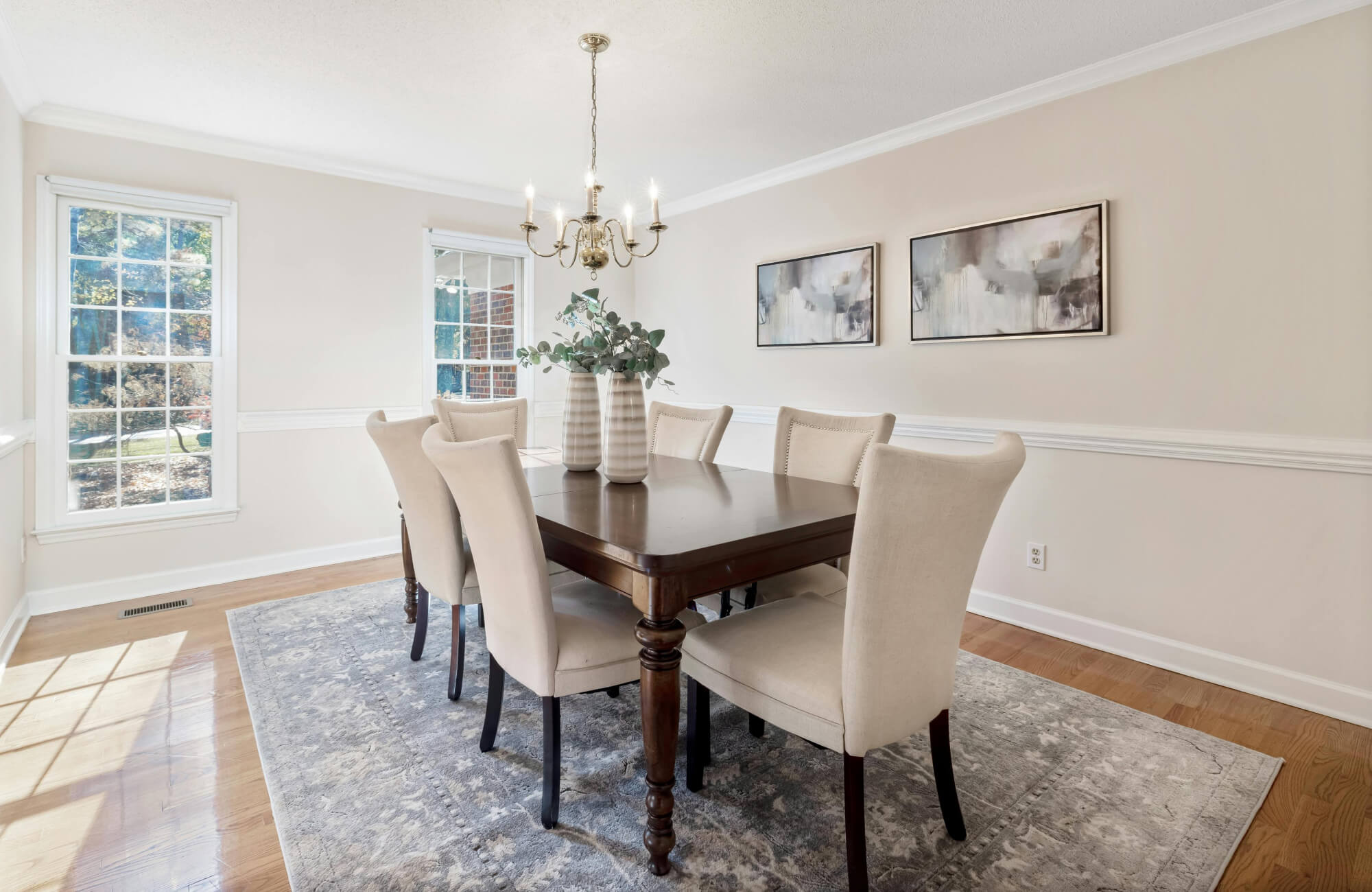
Choosing the right height for a dining room mirror shapes much more than your wall decor. It influences how the room feels, how light moves through the space, and how seamlessly the design comes together. When a mirror is hung with intention, it can brighten the room, create balance, draw attention to architectural details, or quietly enhance the dining atmosphere. Because dining rooms are experienced differently from living rooms or hallways, the height you choose should reflect not only aesthetics but also how the space functions during meals, gatherings, and everyday moments.

Standard Hanging Heights And Eye-Level Placement
Standard hanging guidelines offer a helpful foundation, yet dining rooms operate differently from other spaces. Because this environment is experienced primarily from a seated position, traditional “eye-level” rules must be thoughtfully reinterpreted. Instead of relying on conventions designed for standing viewpoints, effective placement requires paying attention to how the mirror will be perceived during meals and gatherings. By shifting focus toward the seated vantage point and the actual dynamics of the room, you create a placement that feels both intuitive and visually harmonious.
With this perspective in mind, the concept of eye level becomes more fluid and context-specific. Rather than centering the mirror solely according to the common 57–60 inch rule, it becomes essential to prioritize the seated eye-height range, typically between 42 and 48 inches. This adjustment ensures that the mirror reflects meaningful elements such as faces, lighting, and the ambiance of the dining experience, rather than ceilings or unintentional empty space. At the same time, considering the mirror’s overall scale and its relationship to nearby furniture allows you to maintain balance across the wall. For instance, oversized mirrors may require a slightly elevated center point to avoid crowding the ceiling, while smaller or mid-sized mirrors can sit lower to align naturally with the dining environment. By blending these considerations, you ensure the mirror supports both visual appeal and practical visibility, resulting in a placement that elevates the room’s atmosphere with intention.

Coordinating Mirror Height with Dining Furniture And Architectural Features
Your dining room mirror should feel naturally connected to the room’s existing architectural lines and furniture rather than floating independently on the wall. When its height acknowledges and complements these surrounding elements, the mirror becomes an integrated part of the composition, enhancing balance and visual flow. By treating the mirror as one piece within a larger framework, you can create a polished, intentional presentation that supports both style and spatial harmony.
Positioning Above Sideboards or Buffets
When you hang a mirror above a buffet or sideboard, the goal is to create a cohesive vignette that feels visually anchored. If the gap between the top of the furniture and the bottom of the mirror is too tight, the arrangement looks cramped and unsettled. On the other hand, leaving an overly large gap makes the mirror appear disconnected, as if it is floating without a meaningful relationship to the furniture below. The ideal spacing creates a comfortable visual bridge, helping the mirror and the buffet read as a unified pairing.
In modern spaces, a tighter gap of about 6 to 8 inches maintains a crisp, tailored look that supports streamlined décor. By contrast, transitional and traditional rooms often benefit from a slightly wider span of 10 to 12 inches, which allows space for decorative accents such as lamps, greenery, or sculptural items. Regardless of style, maintaining a thoughtful amount of separation ensures a sense of proportion and eliminates visual tension. The result is a balanced grouping where both the furniture and the mirror support each other’s presence.
The dining room image shown above demonstrates how the right mirror can complete the composition with elegance and intention. Our Esmeralda Wide Mirror in Polished Brass brings a refined glow that complements the warm wood tones of the sideboard and surrounding architecture. Its generous width and soft arch also create a striking yet harmonious focal point, reinforcing the vertical balance between the furniture and the wall while enhancing light and depth throughout the space.
Working Around Wainscoting, Chair Rails, and Wall Molding
Architectural features such as wainscoting, chair rails, or paneled walls introduce horizontal lines that influence where your mirror should sit. These elements break the wall into defined sections, and your mirror should respect those boundaries rather than interrupting them. If your dining room includes paneled sections, centering a piece like our Tristan Round Mirror in Polished Brass within one panel maintains architectural rhythm and enhances the sense of order in the room. This alignment also creates a pleasing symmetry and prevents the mirror from competing with the wall’s geometry.
When it comes to chair rails or wainscoting, avoid hanging the mirror so low that its bottom edge touches or intersects the molding. This placement typically looks awkward and disrupts the intended hierarchy of the wall. Instead, allow the mirror to float 6 to 10 inches above the molding. This spacing preserves the wall’s original design intent and lets the mirror act as an intentional layer rather than an intrusion.
Aligning with Windows, Door Frames, and Ceiling Lines
Nearby architectural lines provide valuable cues for mirror placement, especially when you want the space to feel orderly and well-composed. If your dining room features tall windows or door frames, aligning the top of the mirror with the header of these openings creates a unified horizontal line that brings calm and consistency to the wall. Choosing a style like our Clancy Arch Mirror in Antiqued Iron further enhances this effect—the arched silhouette echoes the graceful geometry of window curves, while the black frame provides a refined architectural presence. This alignment also helps the mirror feel proportionate to the scale of the architecture, preventing it from appearing too small or too tall in comparison.
Equally important is maintaining breathing room between the top of the mirror and the ceiling or crown molding. Leaving at least 12 to 18 inches of clearance keeps the mirror from feeling squeezed upward and allows it to sit comfortably within the wall’s vertical span. This spacing ensures the mirror maintains its presence without overwhelming the room’s height. When its placement harmonizes with doors, windows, and ceiling details, the mirror becomes a seamless component of the dining room’s architectural rhythm.

Using Mirror Height to Shape Light, Reflection, And Ambiance
Using mirror height intentionally allows you to influence not only the appearance of your dining room but also the overall feeling of the space. When positioned thoughtfully, a mirror can enhance brightness, encourage the eye to move toward key focal points, and contribute to a mood that feels warm, open, or intimate, depending on your goals. This begins with understanding how the mirror interacts with natural light. Placing it where it catches soft, indirect daylight helps amplify brightness without creating harsh glare, while testing the mirror at various heights ensures it reflects light in a gentle, flattering way. At the same time, adjusting the height allows you to curate what appears in the mirror’s “view,” whether that’s the dining table and centerpiece for a cozy, grounded feel or a chandelier, artwork, or outdoor scenery to elevate elegance and depth. Ensuring the reflection is intentional prevents visual distractions and reinforces the room’s aesthetic cohesiveness.
Height also plays an essential role in shaping the room’s proportions and guiding how the space is perceived. Hanging the mirror slightly higher can draw attention upward, making low ceilings seem taller and highlighting architectural features like crown molding or dramatic lighting. Conversely, lowering the mirror keeps the visual emphasis closer to the table, creating a more intimate and welcoming atmosphere, ideal for rooms with tall ceilings or spaces where you want to emphasize comfort over formality. By balancing light, reflection, and spatial perception through thoughtful height adjustments, the mirror becomes a powerful design tool that enhances both function and ambiance, resulting in a dining experience that feels intentional, harmonious, and beautifully attuned to the room’s character.

Choosing the Ideal Height Based on Mirror Shape, Orientation, and Scale
The shape and orientation of your dining room mirror play a major role in determining how high it should be hung. Each form interacts with the wall differently, influencing balance, visual weight, and how smoothly the mirror integrates with surrounding furniture. By tailoring the height to the mirror’s geometry, you create a placement that feels intentional and proportionate, enhancing both the room’s character and its functionality.
Round Mirrors
Round mirrors naturally draw attention to their center point, which becomes your most reliable guide for height placement. Because the dining room is experienced from a seated viewpoint, positioning the center of the mirror around 42 to 48 inches from the floor keeps the reflection at a comfortable and meaningful level. Designs like our Esmeralda Round Mirror in Polished Brass ensure that faces, ambient lighting, and decor appear beautifully framed, while the brass finish adds a warm, elegant glow to the reflection.
Circular mirrors also tend to leave more negative space above and below them, so they often look best when hung slightly lower than their rectangular counterparts. Lowering the mirror helps it feel more connected to any nearby buffet, console, or dining table while preventing it from floating awkwardly in the upper portion of the wall. With the right placement, a round mirror becomes a soft, inviting focal point that brings balance and fluidity to the room.
Rectangular or Oversized Mirrors
Rectangular and especially oversized mirrors introduce additional vertical weight, so both the top and bottom edges must be treated with care. Keeping the bottom of the mirror 8 to 12 inches above any furniture below creates a strong visual foundation without feeling cramped. At the same time, the top edge needs space to breathe to prevent the mirror from overwhelming the wall or competing with ceiling features.
Applying the Rule of Thirds can also help guide placement. Avoid letting the top edge fall within the upper third of the wall space above your buffet or table, as this often makes the mirror feel disproportionately tall or top-heavy. Oversized mirrors particularly benefit from a slightly lower hanging height that keeps the reflective area comfortably within your seated sightline. This approach preserves visual balance and allows the mirror to enhance the room’s ambiance rather than dominate it.
Arched or Organic Shapes
Arched and organic mirrors have unique silhouettes that require more nuanced placement. Instead of relying solely on the geometric center, use the “shoulders” of an arched mirror—the points where the curve begins—as your alignment reference. Matching these shoulders with nearby window headers or door frames creates harmony and supports a cohesive architectural rhythm. This strategy avoids awkward mismatches between the mirror’s curve and surrounding straight lines.
The apex of the arch should also remain well below the crown molding to prevent the mirror from appearing cramped or forced upward. Irregular or organic-shaped mirrors benefit from centering the visually heaviest portion at seated eye level, allowing the curved or asymmetric edges to float naturally. Incorporating a design such as our Shirley Small Mirror in Antique Brass Iron achieves this beautifully. The warm antique brass iron frame enhances the mirror’s sculptural presence while complementing the surrounding architecture. When these mirrors are hung with careful attention to their forms, they bring artistry and elegance to the dining space.

Style Goals And Functional Outcomes to Guide Your Height Decision
The ideal height for a dining room mirror depends on the atmosphere you want to create and how the room functions in everyday life. When you align practical guidelines with your stylistic goals, the mirror becomes more than décor; it becomes an integral part of the dining experience. For those aiming to create a bold statement, hanging the mirror slightly higher draws the eye upward and gives it the presence of art, especially when the frame or shape is distinctive. In contrast, lowering the mirror allows it to act as a subtle backdrop that blends into the environment, reflecting soft light and enhancing openness without dominating the room. This range of height possibilities allows you to support your aesthetic vision, whether you prefer dramatic impact or quiet cohesion.
Equally important is how the mirror interacts with the room’s symmetry, centering, and daily activities. Careful placement, such as aligned with furniture, architectural elements, or lighting, reinforces visual rhythm and helps the dining space feel polished and harmonious. The height you choose should also reflect how the room is used: lower placements enhance intimate seated meals by capturing the glow of candles or the ambiance of a prepared table, while slightly higher placements better suit lively gatherings or occasions where guests regularly stand and move around. By combining style preferences with functional needs, you create a mirror height that feels intentional, useful, and beautifully attuned to your dining room’s character.
Determining the Perfect Height for Your Dining Room Mirror
The perfect mirror height emerges when reflection, proportion, and purpose work together, allowing the mirror to support your dining room’s atmosphere with clarity and intention. By considering eye level, architectural features, furniture placement, light sources, and your stylistic goals, you can choose a height that feels natural and elevates both form and function, ultimately creating a dining space that looks cohesive, feels inviting, and reflects your design vision with confidence.
If you need help selecting the right mirror, whether you’re deciding between shapes, sizes, or frame styles, our team can guide you toward options that suit both your dining room’s proportions and your overall aesthetic. From choosing a mirror that enhances natural light to finding one that becomes a striking focal point, expert support can make the process much simpler. You can connect with us anytime through our Contact Us page for personalized recommendations.