A well-chosen rug can elevate a dining room by improving comfort, structure, and visual balance. When you place a rug beneath a dining table, you can create a space that feels grounded, welcoming, and effortless to use each day. By understanding how rugs influence both function and design, you can shape a dining area that feels cohesive, comfortable, and thoughtfully arranged.
In this article, we’ll explore how a dining room rug contributes to the overall space, how to choose the right size, the best ways to position it, how to coordinate it with your style, which materials work best for a dining room, and the techniques that can help maintain long-term stability and appearance.

The Role of a Dining Room Rug
A dining room rug offers much more than a surface beneath the table. It shapes the atmosphere of the room, softens sound, and helps define how the dining area connects with the rest of your home. Before choosing a size or layout, it’s useful to understand the role a rug plays in creating a comfortable and cohesive dining experience.
Defining the Purpose
When you bring a rug into a dining room, it instantly establishes the dining zone by giving the table and chairs a clear, purposeful boundary. This helps the furniture feel grounded rather than adrift in the space, especially in open layouts. The rug also absorbs sound, making conversations more comfortable and reducing the echoes common in larger or minimally furnished rooms.
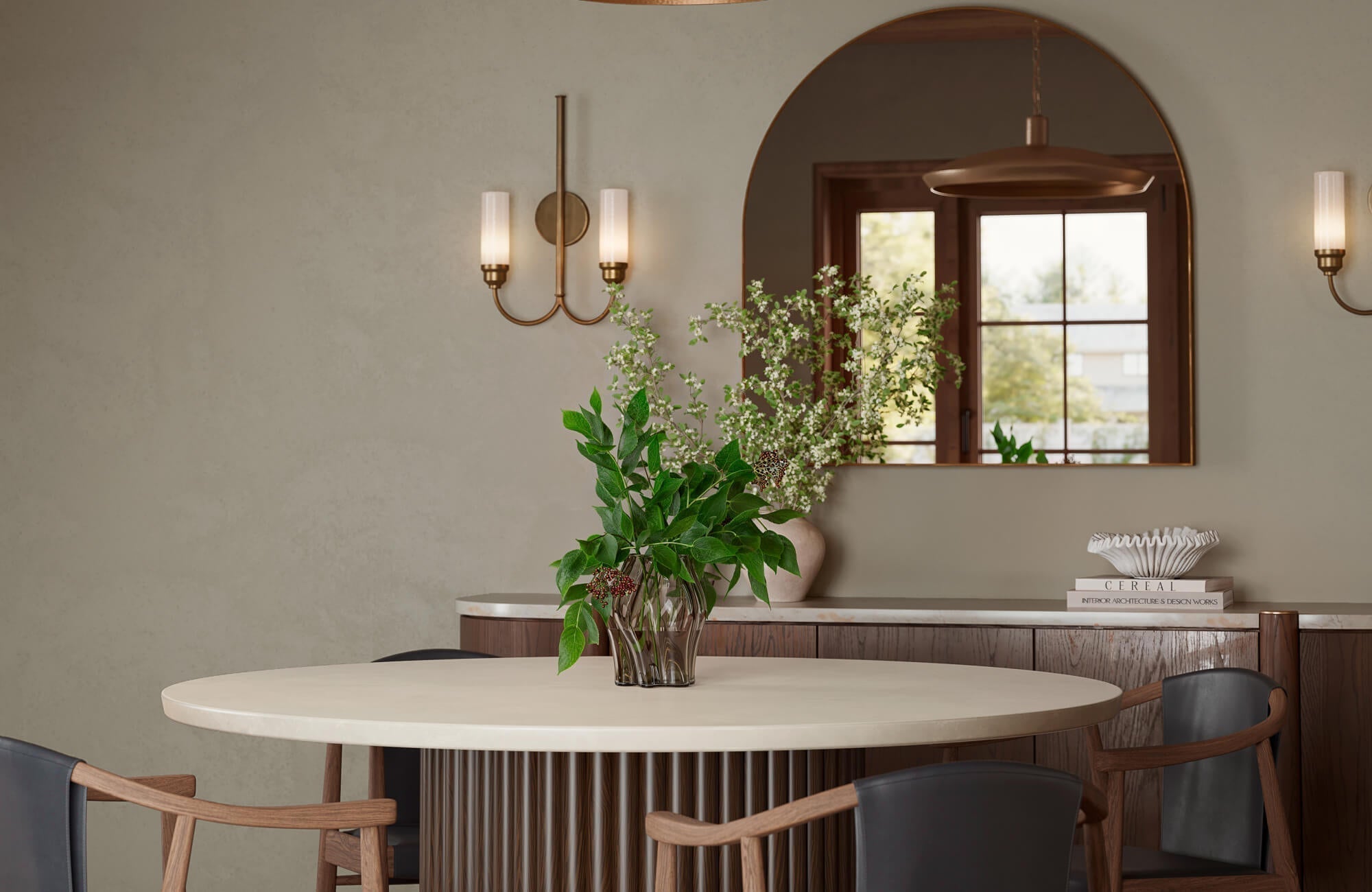
Anchoring the table visually creates a central point that organizes the rest of the room around it. You can see this effect in the photo displayed above, featuring Edward Martin’s Hutchinson Rug in Sage / Graphite, where the rug defines the space and supports the overall arrangement. This is also the foundation for placing a rug in a dining room: position it so the table sits at the center, allowing enough space around the edges for chairs to slide in and out comfortably without leaving the rug’s surface.
Enhancing Comfort
A rug adds a noticeable sense of comfort underfoot while you’re seated, something many people only appreciate once they experience it. Pile height also influences how easily chairs glide in and out. A lower, flatter pile allows chairs to move smoothly without catching or dragging. This small detail improves daily comfort, especially if you host often or have children who tend to shift their chairs.
Supporting Proportion
The right rug helps balance the visual weight of the dining table, allowing the room to feel more unified and intentional. Without it, the table can appear disconnected from the floor, which disrupts the room’s overall rhythm. When the rug is sized and positioned well, it brings the table, chairs, and nearby furniture into a cohesive arrangement that feels orderly rather than scattered.

Choosing the Right Rug Size
Rug size influences both the comfort of your dining experience and the visual balance of the room. The aim is to select dimensions that allow chairs to move easily while complementing the proportions of the table and the surrounding space. Because dining rooms vary in shape and layout, different setups benefit from specific sizing considerations.
Rectangular Table Size Guide
For a rectangular dining table, the rug should extend about 24 to 30 inches beyond each side of the tabletop. This added coverage keeps chairs fully supported when you pull them back, preventing the legs from catching on the rug’s edge and preserving a smooth, even surface. Measuring your table and adding this recommended extension helps you determine the rug dimensions that will work best for your space.
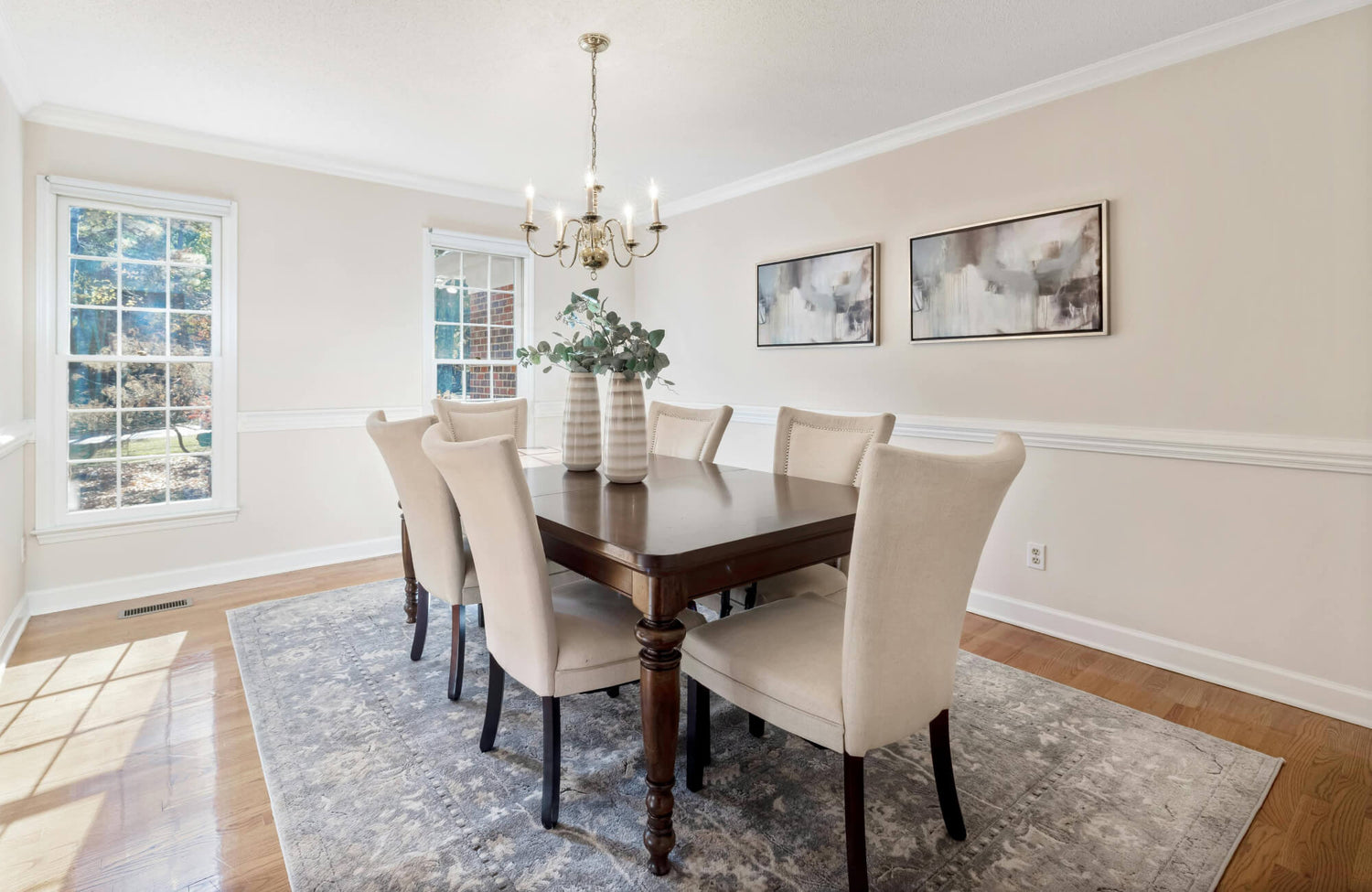
In the photo displayed above, Edward Martin’s Quinton Rug in Ash paired with the Rebecca 86" to 120" Dining Table in Greige demonstrates this approach well, as the rug’s ample sizing provides the necessary clearance for chair movement while maintaining balanced proportions throughout the dining area.
Round Table Size Guide
Round dining tables pair naturally with rugs that mirror their shape. A circular rug reinforces visual harmony and brings a sense of balance to the room. To find the appropriate size, measure your table’s diameter and add at least 24 inches on all sides. This measurement gives you the minimum rug diameter required for comfortable chair movement. The symmetry of a round rug beneath a round table enhances cohesion and creates a unified dining area.
Long, Narrow, or Oversized Rooms
Not all dining rooms align neatly with standard rug dimensions. In long or narrow spaces, selecting a rug that visually stretches or widens the room can make the layout feel more purposeful. A slightly longer rug beneath a rectangular dining table can help balance a room that feels overly extended, while opting for a wider rug in a tighter space softens the narrowness and creates a more open, comfortable impression.
When the Table Has Leaves
If your dining table includes leaves or extensions, it’s best to size the rug for the table’s longest setup. This ensures the rug supports the table comfortably, whether you use it in its everyday form or expanded for gatherings. A rug that’s too small for the extended table can make seating feel crowded and uneven. Choosing dimensions that accommodate the table at full length provides comfort and consistency in all situations.

Positioning the Dining Room Rug
Proper rug placement affects how comfortably and easily you can use the dining room. You want the rug to support steady chair movement while avoiding spots where it might shift or wear too quickly. By paying attention to the surrounding walkways and nearby features, you can create a layout that feels natural, balanced, and simple to navigate.
Chair Clearance
It’s important to ensure chairs remain fully supported when they’re pulled out for seating. You can test this by sliding a chair back as you normally would; if any legs move off the rug, the placement or size may need adjusting. When chairs sit on a stable, even surface, you reduce wobbling and create a more comfortable dining experience. This simple check helps confirm that the rug suits the way you use the space each day, and it also guides how you place it: center the table on the rug and allow enough space around the edges for chairs to remain on the rug when in use.
A dining room styled with Edward Martin’s Davies Rug in Ash / Sand, as displayed in the photo above, demonstrates how a well-sized rug supports full chair movement while creating a balanced, cohesive foundation for the table and seating.
Accounting for Walkways
If there are open walkways around your dining table, consider how the rug fits within those routes. At the same time, the rug should not extend so far that it interrupts the natural flow of movement, yet it should remain large enough to anchor the dining set. By positioning the rug with consistent margins on all sides, you can create a balanced look and clear pathways. Additionally, taking a moment to observe how people naturally move through the room can help you place the rug in a way that feels intuitive and unobtrusive.
Multi-Zone Dining Areas
In open-plan homes, the dining room often shares space with the living area or kitchen. In these settings, a rug helps clearly define the dining zone and distinguish it from surrounding spaces. Position the rug where it outlines the dining area without intruding into other functional zones. This approach gives each part of the room its own identity while maintaining a cohesive, harmonious layout.
Aligning With Doors and Adjacent Openings
Dining rooms often include patio doors, side entrances, or openings to nearby rooms. Place the rug so that doorways remain clear and the corners do not become snag points. When a rug sits too close to an opening, it is more likely to shift or bunch. Leaving a modest buffer between the rug and these areas helps maintain stability and creates a layout that feels intentional and well considered.

Styling the Rug to Complement Your Dining Room
While function guides how a rug should be placed, style plays an equally important role in shaping the room’s character. Selecting patterns, colors, and textures that suit your dining space enhances the atmosphere and strengthens the overall design. Each stylistic choice influences how the rug interacts with the table, flooring, and lighting, helping the room feel cohesive and thoughtfully composed.
Coordinating With Table Shape and Base
The shape of your dining table can be a helpful starting point when coordinating a rug style. For instance, rectangular tables often look best with linear or directional patterns that highlight their length. Similarly, round dining tables work well with designs that draw the eye toward the center. If you have a pedestal base, consider patterns that frame it gently rather than compete for attention, ensuring the table remains the focal point.
Working With Existing Flooring
Hardwood, tile, or concrete floors often establish the visual foundation of a dining room. A rug can enhance these surfaces or provide a softer contrast, depending on your desired look. If your flooring features noticeable grain or patterning, a more understated rug can help balance the room. On the other hand, if the flooring feels quiet, a rug with more texture or pattern can add dimension and character.
Harmonizing With Lighting
Lighting can significantly influence how a rug’s color reads throughout the day. Overhead fixtures may cast warm or cool tones that interact with the rug’s palette, while natural light can brighten hues or create gentle shifts across the surface. Selecting a rug with colors that remain appealing under your usual lighting conditions helps the room feel cohesive and visually balanced.
Pattern Strategy
The scale of a rug’s pattern plays a key role in how lively or calm the room feels. Larger patterns create a wide visual impact and often work well alongside substantial furniture. Smaller or more compact patterns offer a gentler texture, which is especially effective under glass tables where the rug is more visible. By choosing a pattern scale that complements the table’s visual weight, you help maintain a balanced and harmonious dining space.

Choosing the Right Rug Materials
In a dining room, the materials and construction of a rug matter greatly, as the space experiences regular use and occasional spills. Selecting materials that suit your lifestyle helps preserve the rug’s appearance and keeps care manageable. Different constructions react uniquely to chair movement and everyday activity, so understanding these distinctions can guide you toward the most practical choice for your home.
Low Pile and Flatweave Options
Low-pile and flatweave rugs are well-suited to dining rooms because chairs move easily across them. These constructions maintain their shape without bunching and respond well to regular cleaning. A stable surface is also helpful if you have young children or host frequently. Additionally, their thinner profiles make them less likely to catch on chair legs, which keeps the dining experience smooth and consistent. As a result, these options often offer a practical balance between comfort, durability, and ease of upkeep.
Performance Fibers
Performance fibers such as polypropylene or solution-dyed synthetics resist stains and are easy to maintain. They hold color well and can withstand repeated cleaning. If you are looking for something practical and dependable, these materials offer a balance of durability and ease of care. They also tend to dry quickly after spot cleaning, which is helpful in households where spills happen from time to time. Their resilience makes performance fibers a reliable option for dining rooms used daily.
Natural Fiber Consideration
Materials such as jute, sisal, and wool offer different qualities that affect their suitability for dining spaces. For example, jute and sisal rugs can bring appealing texture and a natural look, but they can be less forgiving when spills occur. Wool rugs, by contrast, naturally repel moisture and provide a soft, comfortable feel, though they may require occasional professional cleaning to maintain their appearance. It also responds well to chair pressure, allowing the rug to retain a neat, refreshed look. By understanding these differences, you can choose a natural fiber that aligns with your dining habits and expectations for upkeep.
Stain-Resistant Treatments
Some rugs feature protective finishes that repel spills, making maintenance more manageable. These treatments help preserve color and surface quality over time, even with frequent use. If you value simple maintenance, selecting a synthetic rug with built-in protection, such as Edward Martin’s Hutchinson Rug in Burgundy / Denim, as featured in the photo above, can help keep the surface looking clean and well cared for. Soft yet highly durable, this 100% polyester material resists fading, holds its shape, and dries quickly, offering reliable long-term performance. These finishes are also helpful in households where meals, gatherings, or children may introduce occasional messes, providing a practical layer of insurance that keeps the rug looking its best with less effort.

Rug Care and Stability Tips
Once your rug is in place, maintaining its stability and cleanliness helps it continue to enhance the room. A rug that stays steady supports daily comfort and prevents unnecessary shifting. With a consistent care routine, you can preserve its appearance and extend its longevity, ensuring it remains a reliable part of your dining space. For best results, always refer to the manufacturer’s care recommendations, as specific materials and constructions may require tailored maintenance.
Using Rug Pads
Rug pads provide cushioning and keep the rug from slipping, creating a more comfortable and secure surface. They protect the floor from scratches and help the rug settle smoothly, which improves both its appearance and usability. Choosing the right pad for your specific flooring material can make a noticeable difference in how well the rug performs. Additionally, a quality pad helps prolong the rug’s lifespan by minimizing friction with the floor. This extra layer of support also helps the rug maintain its shape, especially in dining rooms where chairs are moved frequently.
Managing Curling or Sliding
If you notice the corners curling, a bit of gentle steaming or light weighting can help them return to a flat position. Rugs that slide can often be stabilized by adjusting the pad or ensuring the rug lies fully flat. Small adjustments like these usually correct the issue without altering the rug’s appearance. In some cases, checking for uneven flooring or debris underneath can also prevent recurring movement. Taking a moment to address these minor concerns early on helps the rug stay secure and comfortable to use over time.
Cleaning Practices
Regular vacuuming prevents debris from settling into the fibers, keeping the rug fresher between deeper cleanings. Spot cleaning spills as soon as they occur helps avoid stains, while seasonal deep cleaning restores the rug’s overall appearance. These simple habits keep the rug in good condition throughout the year. It can also be helpful to rotate the rug occasionally so wear distributes evenly across the surface. By staying consistent with these practices, you support both the rug’s longevity and its day-to-day appeal in your dining room.
Creating a Balanced Dining Room
A well-placed dining room rug shapes both comfort and visual harmony, making the space feel grounded and inviting. By centering the table on the rug, allowing enough room for chairs to remain supported when pulled out, and choosing a size and style that complement the room, you can create a layout that functions smoothly and looks cohesive. When combined with materials suited to everyday use and consistent care, your rug becomes a lasting foundation for enjoyable meals and meaningful gatherings. If you need guidance selecting the right rug or planning your dining room layout, feel free to contact us or explore our design services for personalized assistance.