Renovating a small bathroom into a space that feels open and inviting begins with understanding how design choices influence perception. Even without expanding the room’s physical footprint, you can dramatically change its atmosphere by rethinking the way light, color, layout, and storage work together. Each element has the power to shift how your eye moves through the space and how freely you can navigate it.
As you explore the strategies in this article, you will see how thoughtful adjustments not only enhance functionality but also create a sense of calm spaciousness. From opening sightlines to selecting cohesive materials, every decision contributes to a bathroom that feels brighter, more efficient, and surprisingly expansive. With the right approach, even the smallest bath can feel like a refreshing retreat.

Rethinking The Bathroom Layout For Better Flow
Rethinking your bathroom layout is one of the most effective ways to make a small space feel more open and intuitive. By identifying and removing unnecessary barriers, you create clearer sightlines and smoother movement throughout the room. Elements like pony walls, bulky chases, and traditional swinging doors often take up more space than you realize, interrupting the natural flow and making the bathroom feel unnecessarily cramped. However, once these obstacles are addressed, whether by removing non-load-bearing partitions or replacing a hinged door with a pocket or barn-style alternative, the entire room immediately feels more unified. This newfound openness not only improves daily use but also shifts your overall perception of the room’s size.
Furthermore, thoughtful fixture selection and strategic repositioning elevate how spacious the bathroom feels without expanding its physical footprint. Compact and wall-hung fixtures, such as slim-profile vanities, corner sinks, or wall-mounted toilets, reduce bulk and reveal more floor area, creating the illusion of additional space. At the same time, even minor adjustments like nudging a vanity away from the shower or repositioning towel bars and outlets can dramatically improve circulation. As each element falls into a more intuitive relationship with the others, the bathroom begins to function with ease and efficiency. This combination of removing barriers, choosing appropriately scaled fixtures, and refining placement results in a bathroom that feels brighter, more comfortable, and significantly more open.
To further enhance this sense of openness, you can reinforce the layout with pieces that balance warmth, texture, and clean lines. If you want to renovate a space similar to the one shown above, our Sasha 60" Double Vanity in Mid Century Walnut with 3 cm White Zeus Quartz Top provides a grounded focal point that still keeps the room feeling open, especially when paired with the natural warmth of our Preston 8x48 Matte Porcelain Tile in Chestnut, a wood look floor in reddish brown that adds depth without visual heaviness. On the walls, the vertical movement and deep green shade of our Jaden 2.5x16 Glossy Ceramic Tile in Hunter, and the refined, mid-gray marble look of our Chantel 24x48 Matte Porcelain Tile in Imperial work together to elongate the room and draw the eye upward. To complete the look, the gently curved Shirley Large Mirror in Antique Brass Iron and the softly illuminated Noelle Wall Sconce in Vintage Brass introduce light, elegance, and warmth, ultimately creating a cohesive environment that feels brighter, airier, and effortlessly more spacious.

Using Light, Color, And Reflection To Expand Visual Space
Design choices that influence light and perception can dramatically change how large your bathroom feels. When you layer lighting and incorporate reflective, soft-colored surfaces, the room becomes brighter, more open, and visually expansive.
Layering Light Sources To Remove Shadows
When you rely solely on a single overhead light, shadows tend to collect in corners and along the edges of fixtures, which makes the room feel smaller and more enclosed. By introducing multiple layers of lighting, you create a more evenly illuminated space that feels naturally spacious. Ambient fixtures help brighten the overall room, while task lighting around the mirror ensures clarity where you need it most. Toe-kick LEDs and recessed lights further eliminate dark pockets, allowing every corner to feel accessible and open.
Dimmable fixtures such as our Arlette 23" LED Wall/Vanity Light in Natural Brass, Universal Voltage, also give you the ability to shift the mood depending on the time of day or your personal needs. This increased control enhances the functionality of your bathroom and influences its perceived size. With the right lighting design, the room feels larger, more inviting, and easier to navigate.
Choosing Color Schemes That Stretch The Walls
Color plays a major role in shaping the room’s perceived dimensions. Low-contrast, high-LRV shades such as soft whites, pale greys, or light blues reflect more light and blend seamlessly across surfaces, creating a smooth, uninterrupted flow. When the eye encounters fewer stark transitions, the bathroom feels broader and more cohesive. This gentle palette also helps blur the borders of the room, giving you the illusion of more space even when the floor plan remains compact.
Additionally, you can enhance this visual expansion through subtle vertical color transitions. Applying lighter tones higher on the walls naturally draws the eye upward and creates a sense of height. This approach encourages a vertical lift within the room, allowing the ceiling to feel farther away and the overall environment more dimensional. Through deliberate color placement, you gain a soft yet powerful tool for opening up a small bathroom.
For a standout example of how the right color can transform a compact space, the bathroom image seen above uses the soothing pastel green tone of our Maisie 2.5x16 Glossy Ceramic Tile in Pistachio. Its fresh, airy hue reflects light beautifully while maintaining a calm, continuous backdrop along the walls. By choosing a gentle, light-reflective color like this, you reinforce the sense of openness and create a serene atmosphere that feels both spacious and uplifting.
Strategic Mirror And Glass Use To Amplify Space
Mirrors offer one of the most effective ways to increase the perceived size of your bathroom. A mirror above the vanity amplifies natural and artificial light, visually pushing the walls outward. When the surface reflects both the room and its illumination, it creates a sense of depth that makes the space feel almost doubled. A mirrored medicine cabinet can also serve this purpose while offering concealed storage, maintaining functionality without adding bulk.
To elevate this effect even further, an LED-enhanced mirror can transform both brightness and spatial perception. Our Jenny 37" LED Vanity Mirror in White provides built-in illumination that spreads light evenly across the room, reducing shadows and increasing clarity around the vanity. Its dimmable feature also allows you to adjust the brightness to match the time of day or the atmosphere you want to create. This flexibility heightens the sense of openness and ensures the mirror serves as both a functional tool and a visual enhancer.
Moreover, transparent materials like frameless glass shower enclosures help maintain clear sightlines from one end of the bathroom to the other. Unlike opaque curtains or solid dividers, these glass panels prevent the space from feeling segmented, allowing your eyes to travel freely across the room. This uninterrupted line of vision also gives the entire bathroom a sleeker, more expansive look.

Maximizing Storage Without Sacrificing Openness
Effective storage is essential, yet in a small bathroom, it must stay subtle and integrated. By choosing solutions that tuck neatly into underused areas or lift storage upward, you can stay organized without closing in the room or disrupting its visual flow.
Building Storage Into Underused Wall Cavities
When every inch counts, the space within your walls becomes a valuable asset. By using the hollow areas between studs, you can incorporate recessed shelving, shower niches, and flush-mounted medicine cabinets that sit seamlessly within the wall. These built-ins provide the storage you need for daily essentials while keeping surfaces smooth and unobstructed. Because nothing protrudes outward, your bathroom maintains clear circulation paths and uninterrupted wall planes, both of which help it feel more spacious.
Furthermore, recessed features add convenience without contributing to clutter. Shower niches hold toiletries right where you need them, preventing bottles from gathering along ledges or floors. Medicine cabinets set into the wall also protect the room from visual crowding and keep your most-used items accessible yet discreet. By embracing built-in design, you create a sense of calm orderliness that supports an open, airy atmosphere.
Multifunctional Vanities That Stay Streamlined
A well-designed vanity can significantly improve both storage and the overall perception of space. In particular, floating vanities are especially effective because they reveal more visible floor area, which immediately makes the bathroom feel lighter and less confined. As you incorporate this style, the benefits extend beyond appearance. Despite their slender profile, these vanities can hold a surprising amount when you optimize the interior layout. For instance, U-shaped drawers that wrap around plumbing components help you reclaim areas that would otherwise go unused. In addition, custom dividers keep items organized so you don’t have to rely on deep, bulky cabinets to stay tidy, ultimately maintaining both clarity and efficiency within the space.
The vanity you choose also shapes how visually open your bathroom feels. Streamlined hardware or integrated handles prevent visual disruption and keep the silhouette clean, supporting the minimalist aesthetic that smaller spaces depend on. In the bathroom picture displayed above, the wall-mounted Abigail 36" Single Vanity in Light Natural Oak with 3 cm White Zeus Quartz Top illustrates how lifting the vanity off the floor enhances openness while still delivering functional storage. Its warm wood tone and soft, rounded detailing also align seamlessly with the streamlined approach, proving how the right vanity can reinforce both openness and organization.
Adopting Vertical And Over-Door Storage Approaches
When floor space is limited, moving upward becomes one of the most effective ways to expand your storage capacity. Tall linen towers and slim ladder shelves make excellent use of height without crowding the walkway. Because these pieces draw the eye upward, they also contribute to a sense of increased vertical space. Over-the-door hooks or towel racks offer additional storage for linens and accessories while staying completely off the floor, keeping the room feeling clean and unobstructed.
However, it’s important that these vertical elements maintain an airy presence. Open shelving, light materials, or narrow frames prevent them from feeling heavy or intrusive. When these pieces blend into the background rather than dominate the room, they allow you to store what you need without shrinking the space visually. Through thoughtful vertical placement, you gain both efficiency and openness, creating a bathroom that feels organized yet spacious.

Upgrading Materials And Finishes To Create Cohesion And Continuity
Material choices play a powerful role in determining how open and unified your bathroom feels. When you minimize visual breaks and maintain consistency across surfaces, the entire room appears larger, calmer, and more intentional.
Choosing Large Format Tiles To Reduce Visual Divides
Large format tiles immediately create a sense of expansiveness because they require fewer grout lines, and therefore fewer points where the eye stops. When surfaces flow uninterrupted, the room feels smoother, cleaner, and more open. Pairing these tiles with closely matched grout colors enhances this effect, allowing the eye to travel across walls and floors without distraction. As a result, even a compact bathroom gains a broader, more continuous visual field.
The orientation of these tiles also influences how the room is perceived. When you lay rectangular tiles horizontally, they visually widen the walls, making the bathroom feel broader. Conversely, arranging them vertically encourages the eye to move upward, adding a sense of height and spaciousness. Through thoughtful tile selection and placement, you can subtly adjust the proportions of your bathroom in ways that feel effortless yet effective.
Because both tile scale and layout influence how open your bathroom appears, it can be incredibly helpful to preview these combinations in your actual space. Our augmented reality (AR) tool allows you to virtually place different tiles on your walls or floors, giving you a clear sense of how size, pattern direction, and overall coverage work together to expand the room visually. By seeing how these elements interact in real time, you can confidently create a cohesive, seamless look that supports the spacious atmosphere you want to achieve.
Selecting Low-Profile Hardware And Fixtures
Hardware and fixtures often determine whether a bathroom feels sleek or cluttered. Low-profile hardware with clean, simple lines helps maintain a minimalist appearance that supports visual openness. Slim faucets, for instance, introduce elegance without drawing unnecessary attention, while push-latch vanity drawers eliminate the need for protruding handles. These understated details allow surfaces to remain calm and unobstructed.
Streamlined fixtures serve the same purpose by creating smooth transitions and reducing visual noise, which helps the room feel more open. For example, linear drains blend discreetly into the floor, preventing the shower area from appearing too segmented or busy. As these elements work together, they reinforce a quiet and cohesive design language that enhances spaciousness throughout the room. In turn, the materials and overall architecture can take center stage, allowing the bathroom’s natural flow to shine without unnecessary hardware competing for attention.
Creating A Continuous Floor And Shower Surface
A continuous floor surface is one of the most effective ways to make a small bathroom feel larger. A curbless shower, for example, extends the main floor directly into the shower zone without a step or break. This seamless transition removes physical and visual barriers, allowing the eye to take in the space as one uninterrupted surface. As a result, the bathroom feels more open and unified from the moment you step inside.
Using the same flooring, or a closely coordinated variation, throughout the room further strengthens this cohesive effect. When materials shift too abruptly, the space risks feeling fragmented, but continuity creates balance and harmony. You can extend this approach by carrying your vanity countertop material up the wall as a backsplash or accent. This repetition also reinforces the sense of connection between surfaces and adds an elevated, custom look.
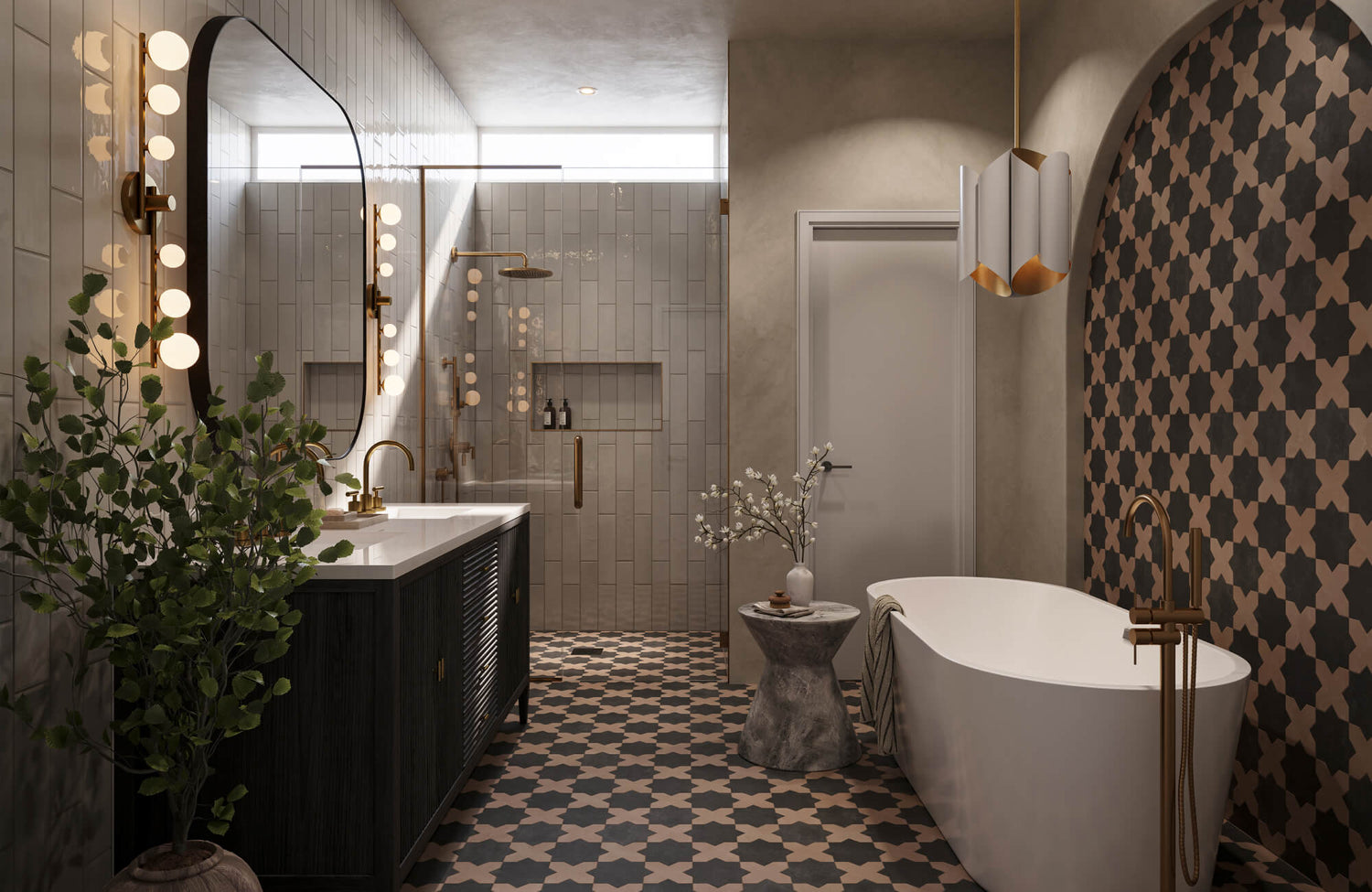
A continuous design approach becomes even more impactful when supported by materials that naturally complement one another, even when a subtle curb defines the shower threshold. In the beautifully composed space above, the rich texture of our Graham 3x6 Glossy Ceramic Tile in Moss, in lush forest green, provides a deep, reflective backdrop that visually anchors the room while still maintaining vertical flow. This is balanced beautifully by the striking movement of our Aniston 24x48 Matte Porcelain Tile in Calacatta Viola, featuring a white base with sweeping brown and beige veins that draw the eye from floor to ceiling. Beneath it all, the geometric pattern of our Isabel 11x11 Matte Porcelain Tile in Star Charcoal and Cross Charcoal, presented in a sophisticated dark gray tone, adds subtle depth without disrupting the cohesive palette. Together, these surfaces maintain visual harmony across zones, reinforcing the seamless connection and giving the bathroom a fluid, thoughtfully unified look.

Enhancing Architectural And Decorative Details To Draw The Eye Upward
In a small bathroom, shifting the visual focus upward can dramatically change how the space feels. Through subtle architectural choices and carefully selected decor, you can emphasize height and reduce attention on the limited floor area.
Incorporating Vertical Lines And Patterns To Create Height
Vertical elements are powerful tools for elongating the room and making the ceiling feel higher. When you use vertically stacked tile patterns, your eye naturally travels upward, creating a sense of lift. This effect works especially well in showers, where uninterrupted vertical lines can counterbalance tight footprints. Tall wainscoting and slim beadboard also reinforce the same visual rise, adding character while still serving the practical needs of a bathroom. These features help stretch the room visually, making narrow dimensions feel more balanced and intentional.
Furthermore, vertical detailing adds rhythm without overwhelming the small space. The repetition of long, lean lines introduces gentle movement, preventing the room from feeling static or boxed in. Because these details work quietly in the background, they expand the visual field without demanding attention. As these lines subtly guide the gaze upward, the ceiling begins to feel higher, and the room instantly takes on a more spacious atmosphere.
Using Minimalist Decor That Avoids Visual Weight
Decor plays a significant role in shaping how open or confined a bathroom feels, and therefore, choosing the right pieces becomes essential. By keeping accessories minimal and lightweight, you allow the architecture and finishes to shine without interference. Slim towel hooks, for example, offer the necessary function while barely interrupting the wall surface. Likewise, light-framed artwork adds personality without contributing visual bulk, and narrow open shelves provide display space without encroaching on valuable square footage. Together, these elements support the room’s visual clarity and prevent distractions, helping the space feel calm, open, and intentionally designed.
Moreover, a cohesive approach to decor prevents the eye from bouncing around the room. Dense patterns, oversized accessories, or heavy frames create unnecessary visual weight that can make the bathroom feel cluttered. When you choose streamlined pieces and limit the number of decorative items, the entire space feels calmer and more open. This minimalist mindset reinforces the upward focus you’ve created through architectural details, helping the room feel taller and more harmonious.
Highlighting Ceilings To Pull The Gaze Upward
The ceiling is often overlooked, yet it can be one of your strongest assets in making a small bathroom feel larger. A great example is seen in the photo above, where the vertical movement of our Makenna 3x11 Glossy Porcelain Tile in Indigo in a deep blue tone helps guide the eye upward and enhances the sense of height. Painting the ceiling a shade lighter than the walls then amplifies this effect, as the lighter tone visually recedes and creates an airy lift above the space. This simple shift can make the ceiling feel higher and the entire room more expansive. Adding subtle crown molding also provides just enough definition to highlight the vertical transition without adding heaviness or visual clutter.
Incorporating natural light from above further enhances this effect. A skylight or sun tunnel introduces soft, diffused light that fills the room from the top down, naturally pulling attention upward. This not only brightens the bathroom but also increases the perception of height and openness. As you direct focus toward the ceiling through light, color, and subtle detailing, the room’s overall proportions feel more generous and inviting, even without increasing its footprint.
Unlocking Space Without Adding Square Footage
A small bathroom can feel significantly larger when you combine smart layout choices, cohesive materials, layered lighting, discreet storage, and upward-focused design. By removing visual barriers, enhancing brightness, and streamlining fixtures and decor, you create a unified environment that feels open and comfortable. As these strategies work together, the room gains a sense of spaciousness that elevates both function and aesthetics, proving that thoughtful design can make even the most compact bathroom feel remarkably generous.
A truly transformative result becomes even more achievable when you have expert guidance throughout the process. Our design services support you from concept to execution by helping you translate your vision into a cohesive plan tailored to your space. Whether you need assistance selecting materials or choosing the right finishes, our team provides personalized recommendations that align with your style and spatial goals. With this level of professional insight, every design decision works more harmoniously, allowing your small bathroom to reach its fullest potential in both beauty and functionality.