Decorative vases are small relative to sofas, tables, or artwork, and yet they change how a room feels in ways that are difficult to trace back to a single source. Through height, shape, color, texture, and placement, they bring structure to flat surfaces, soften angular furniture, introduce natural movement, and give shelves, consoles, tables, and corners a sense of quiet intention.
Because vases can be styled empty, filled with branches, arranged with florals, or layered into a larger vignette, they offer both beauty and flexibility. When chosen with attention to scale, material, color, and room function, they become more than finishing touches. They help connect the room's furniture, finishes, artwork, and atmosphere into something that feels composed and complete.

Farrow Porcelain Vase, Large brings a rounded sculptural form, graphic pattern, and floral height to the countertop, creating an artful kitchen focal point
Creating Visual Height And Shape Variation
Vases are useful precisely because they introduce vertical movement, sculptural form, and proportion shifts into a room. The right height, silhouette, and scale can break up flat surfaces, guide the eye upward, and make a styled area feel more dynamic and considered rather than assembled.
Tall Vases
Tall vases are most effective when a room needs vertical emphasis or visual lift. On consoles, pedestals, mantels, and large sideboards, they help draw the eye upward and create a stronger relationship between the surface below and the wall or architecture above it. This matters most near low furniture, blank walls, large windows, or wide entryways where the room would otherwise read as horizontally heavy.
Scale remains essential. A narrow console may call for a slim vertical form, while a generous foyer or open living room can support something more substantial. Tall vases can be styled with branches, long stems, or dried grasses to extend their height further, but the arrangement should remain proportional to the surrounding furniture so it reads as intentional rather than overreaching.
Rounded Vases
Rounded vases add softness to interiors that contain many straight lines, hard edges, or angular furniture silhouettes. Their bulbous, curved, or organic forms create visual contrast against rectangular sofas, square coffee tables, linear shelving, and sharp architectural details, making them especially valuable in modern, minimalist, or highly structured rooms that need a gentler counterpoint.
On a coffee table, dresser, or dining console, a rounded vase softens the composition and prevents the vignette from feeling too rigid. For a balanced arrangement, pair it with objects of different profiles like stacked books, trays, framed artwork, or taper holders so the surface holds both softness and structure.
Narrow Vases
Narrow vases are suited to smaller surfaces where height is needed but space is limited. Their slim profiles work well on bedside tables, shelves, narrow consoles, bathroom counters, windowsills, and built-ins, adding vertical interest without crowding the area or sacrificing the function of the surface itself.
Because they carry a lighter visual footprint, narrow vases are well-suited to refined accent styling. A single stem, a small branch, or a minimal arrangement creates an elegant detail without overwhelming the surrounding decor. They can also be grouped with wider vessels or lower decorative objects to create contrast in height and proportion, giving the overall vignette a more layered and considered quality.

Foxley Porcelain Vase, Large and Foxley Porcelain Vase, Medium add texture through a porcelain finish and expressive black brushwork, giving the rounded forms bold decorative depth
Adding Texture Through Material And Finish
The material of a vase affects far more than its surface appearance. Ceramic, glass, stone, marble, metal, and woven finishes each introduce a different tactile quality, making a room feel handmade, airy, grounded, polished, or naturally layered depending on how they are used.
Ceramic and Porcelain Vases
Ceramic and porcelain vases are particularly effective when a room needs warmth, character, and a more artisanal quality. Ceramic surfaces can include matte clay finishes, reactive glazes, ribbed detailing, hand-thrown irregularities, or subtle color variation, qualities that give the vase a softer, more tactile presence. Porcelain tends to feel more refined, with a smoother body and elegant finish that suits interiors that call for a cleaner or more elevated decorative accent.
On shelves, coffee tables, dining consoles, mantels, and bedroom dressers, a glazed ceramic vase can bring subtle shine to a neutral vignette. An unglazed or textured piece complements linen upholstery, wood furniture, woven rugs, and plaster-style walls. A porcelain vase also adds a more delicate note beside books, trays, branches, or smaller sculptural objects, giving the overall styling a layered, unhurried quality.
Glass Vases
Glass vases bring a lighter, more reflective quality to interior styling. Clear glass can almost dissolve into a vignette, allowing stems, branches, or the surrounding decor to remain the focus. Tinted, ribbed, smoked, or frosted glass adds more visual interest while still maintaining that quality of lightness. Because glass responds to natural and artificial light, it can help a room feel brighter, more open, and less visually dense.
This makes glass vases particularly effective in smaller rooms, bright interiors, and spaces where elegance without bulk is the goal. A clear vase on a dining table can hold fresh florals without blocking sightlines. A smoked or ribbed glass vase brings subtle sophistication to a console or bathroom vanity. To keep glass from feeling too delicate within the arrangement, balance it with grounding materials like wood, stone, ceramic, or woven accents.
Stone And Marble Vases
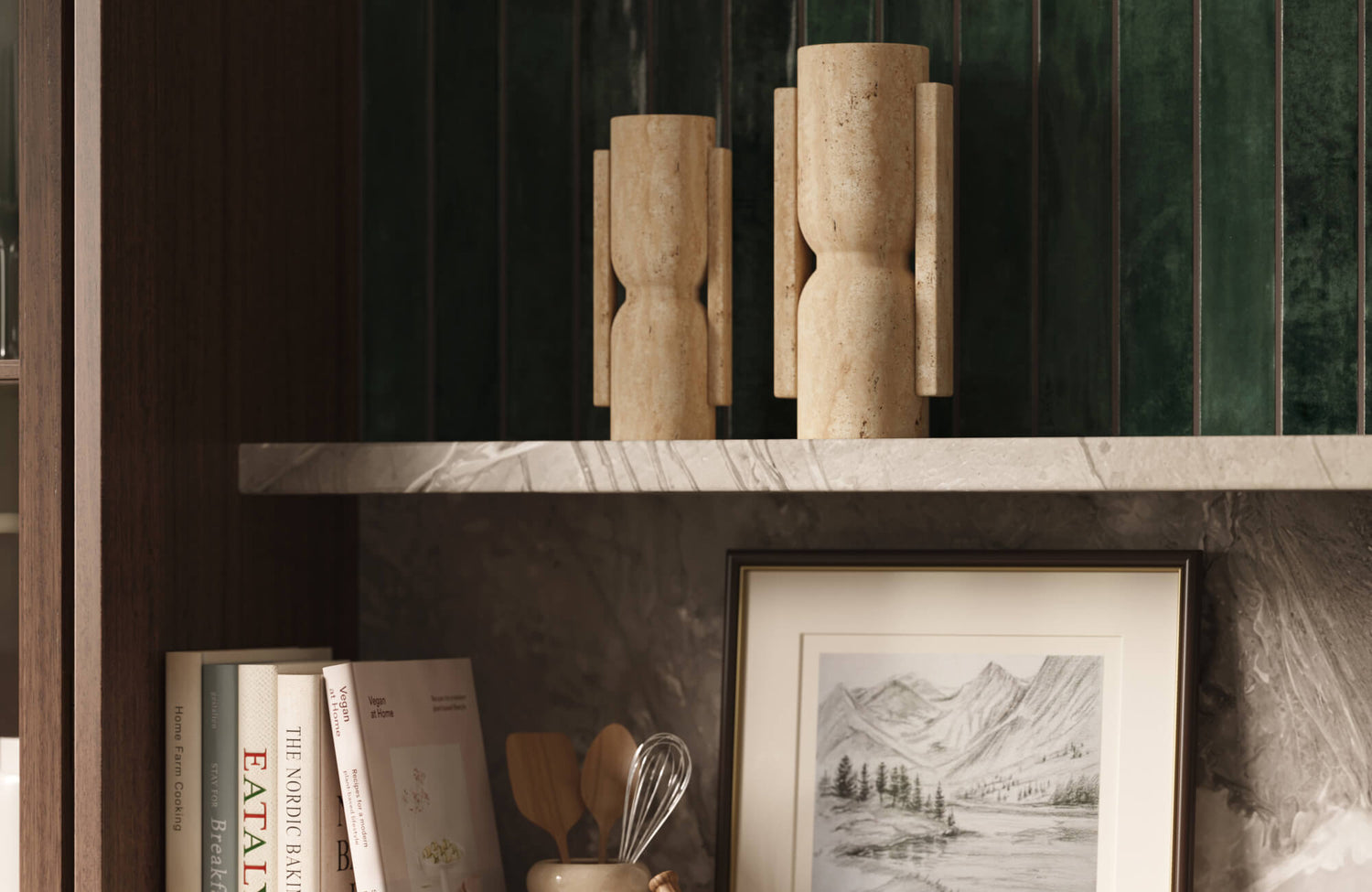
Stone, marble, travertine, and concrete look vases add weight, permanence, and architectural character. Their natural veining, mineral variation, and solid silhouettes make them feel more substantial than most lighter decorative objects, effective when a space needs visual grounding or a sense of quiet, material luxury.
On entry tables, mantels, sideboards, coffee tables, and large consoles, these pieces can be appreciated for their texture and presence. They pair well with wood, linen, leather, metal, and neutral upholstery, adding contrast without relying on bold color. In a minimalist room, a marble vase can become a refined focal point. In an organic interior, travertine or concrete look finishes reinforce a natural, collected atmosphere.
Metal Vases
Metal vases introduce shine, definition, and a more tailored edge. Brass and bronze add warmth and richness. Iron, blackened metal, and brushed finishes create stronger contrast and structure. Because metal naturally reflects or absorbs light depending on its finish, it can make a vignette feel more polished and visually defined.
These vases are most effective when they echo existing details in the room, such as lighting, cabinet hardware, mirror frames, table legs, or decorative trays. A brass vase can pick up the warmth of nearby sconces or drawer pulls. A matte black or iron vase connects to window frames, accent furniture, or graphic artwork. For balance, pair metal vases with softer materials like florals, linen, wood, or ceramic so the arrangement retains warmth alongside its structure.

One of the Ingram Porcelain Vase Sets strengthens the beige and terracotta palette, giving the floral arrangement and patterned wall a calm, earthy mood
Strengthening Color Palettes And Room Mood
Vases can reinforce a room's color story or introduce a controlled accent without requiring major design changes. Small but visually noticeable, they are particularly useful for adjusting mood, adding contrast, or drawing together colors already present in artwork, textiles, furniture, and finishes.
Neutral Vases
Neutral vases in white, ivory, beige, taupe, gray, and black support timeless styling because they contribute form and texture without overwhelming the palette. These shades belong naturally in minimalist, transitional, Scandinavian, organic modern, and classic interiors where cohesion matters more than contrast. A white or ivory vase brightens a shelf. Beige and taupe soften a warm neutral room. Gray reads calm and contemporary. Black adds quiet definition to a pale arrangement. To prevent neutral vases from feeling plain, choose pieces with interesting proportions, ribbed surfaces, matte glazes, carved details, or handmade profiles that give them presence even within a restrained palette.
Earth-Toned Vases
Earth-toned vases in terracotta, clay, olive, sand, rust, ochre, and brown bring warmth and grounded character to interior styling. These colors are closely tied to natural materials, making them effective in organic modern, rustic, Mediterranean, desert-inspired, and nature-focused interiors. A terracotta or clay vase adds sunbaked warmth. Olive introduces a botanical note. Sand softens a neutral palette. Rust or brown brings richer depth alongside wood, linen, stone, and leather. Paired with woven rugs, rattan accents, plaster-style walls, wood furniture, ceramic lighting, or dried stems, earth-toned vases create a relaxed, tactile mood connected to the natural world.
Colorful Vases
Colorful vases can quietly energize a room by introducing a small but intentional accent. Blue, green, amber, burgundy, mustard, and deep teal can give a vignette more personality, particularly when the surrounding furniture and walls are neutral. Because a vase is smaller than a sofa, rug, or painted wall, it allows color to be introduced in a controlled way without committing the room to it. For the strongest effect, connect the vase color to artwork, throw pillows, upholstery, bedding, table linens, or an area rug, making it a color bridge that helps the room feel expressive, balanced, and fully considered.

Cavendry Travertine Vase Set uses sculptural height and open space to frame simple branches, complemented by Petaline Wallpaper in Taupe I, 52" x 132" for a softly layered floral backdrop
Styling Vases With Florals, Branches, And Negative Space
A vase can be styled empty or filled, depending on the visual effect needed. Branches, stems, florals, and open space all affect the balance of a composition, helping the vase feel sculptural, seasonal, dramatic, or quietly refined.
Empty Vases
A decorative vase does not always need flowers to feel complete. When the silhouette is strong, the texture distinctive, the glaze expressive, or the material finish exceptional, the vase functions as a sculptural object in its own right, particularly on consoles, mantels, shelves, coffee tables, and sideboards. Empty vases are also useful when the surrounding arrangement already includes books, candles, artwork, bowls, or other decorative accents, since adding florals can tip the surface into feeling busy. For the most resolved effect, choose a vase with enough presence to stand alone: a ribbed ceramic vessel, a rounded stone form, a matte black piece, or a glazed vase with subtle tonal variation.
Branches
Branches are ideal when a room needs height, movement, and natural drama without the fullness of a floral bouquet. Olive branches, eucalyptus, cherry blossoms, magnolia stems, willow, or dried varieties can extend the line of the vase upward and outward, giving the arrangement an architectural quality. This works especially well in entryways, dining rooms, large consoles, and open living areas where a smaller arrangement would feel under-scaled. For a refined composition, match the branch shape to the vase size and embrace slight asymmetry for a more organic, unhurried effect.
Fresh Florals
Fresh florals shift the mood of a room quickly, introducing color, softness, fragrance, and seasonal character that no permanent object can replicate. Spring flowers feel light and cheerful. Summer blooms add fullness and warmth. Autumn arrangements bring depth. Winter florals create elegance through whites, greenery, or richer tones. Because the vase becomes part of the floral composition, its size, color, and shape should support the arrangement rather than compete with it. Smaller vases suit nightstands and bathroom counters. Low arrangements belong on dining tables. Taller stems are better placed on sideboards, mantels, or entry consoles where they can add presence without obstructing daily function.
Dried Stems
Dried stems offer texture, movement, and longevity with less maintenance than fresh florals. Pampas grass, preserved grasses, dried hydrangeas, seed pods, wheat, bunny tails, and dried eucalyptus belong naturally in neutral, rustic, coastal, organic modern, and nature-inspired interiors. Because dried stems can have strong volume or delicate structure, proportion and placement matter. Tall floor vases handle dramatic pampas or dried branches. Smaller ceramic vessels suit short grasses or seed pods. To keep the arrangement polished, avoid overfilling the vase; let the stems breathe so their natural shape and texture remain visible and appreciated.

Ingram Porcelain Vase Set builds a balanced vignette on the Cielo Outdoor Console Table, pairing floral height with a smaller vessel, sculptural lighting, and warm wood texture
Building Balanced Vignettes With Decorative Vases
Vases are often most effective when styled as part of a larger arrangement. When combined with books, trays, candles, artwork, bowls, and other objects, they help create a vignette with height, rhythm, proportion, and visual depth, each piece with a clear role, the whole feeling considered.
Use Odd Numbers For Natural Rhythm
Groups of three or five tend to feel more natural and visually dynamic than symmetrical pairs, because they encourage the eye to move between objects rather than stop at a rigid center point. When styling vases on coffee tables, consoles, mantels, or built-ins, vary the height, width, material, and finish of each piece so the arrangement avoids reading as flat. For example, place a tall ceramic vase alongside a lower bowl and a small candle, or group a narrow glass vase with stacked books and a sculptural object. The goal is a composition where each piece has a distinct role while still feeling related through color, texture, or design language.
Pair Vases With Books And Trays
Books and trays create horizontal grounding for the vertical form of a vase, making the arrangement feel more stable and complete. A vase naturally draws the eye upward; stacked books add height variation and introduce color, texture, or subject matter that supports the room's mood. Trays are especially useful for containing smaller objects like candles, coasters, bowls, or decorative accents, so the vignette feels organized rather than gathered. A small or medium vase placed on stacked books, or a taller vase positioned beside a tray, also creates contrast between vertical and horizontal lines while keeping the surface functional as well as beautiful.
Balance Vases With Artwork And Mirrors
Vases can connect tabletop styling with wall decor by adding depth in front of framed art, mirrors, or leaning pieces. When a vase sits on a console below artwork or in front of a mirror, the wall and surface begin to feel visually related rather than separate. Vase height should be chosen with the wall feature in mind — a taller vase bridges the space between the tabletop and artwork, while a shorter vase supports a quieter, more restrained arrangement. If the artwork or mirror is bold, choose a simpler vase. If the wall decor is minimal, a more sculptural vase can add the shape and dimension the composition needs.
Allow Negative Space To Do Its Work
A strong vignette depends as much on what is left out as on what is placed. Too many vases, candles, books, bowls, and accessories can make a surface feel crowded even when each individual piece is beautiful. Leave open space around the vase so its silhouette, material, and color can be fully appreciated. On a coffee table, preserve room for everyday use. On consoles and mantels, clear gaps between objects give the arrangement room to breathe. Editing matters most when the vases themselves are bold, since strong forms, textured finishes, and saturated colors often need less surrounding decor, not more, to make their impact felt.

Ingram Porcelain Vase Set turns the bathroom stool into a purposeful floral moment, complementing Celia 5 x 10 Matte Ceramic Tile in Sage without crowding the compact space
Choosing Vase Placement By Room
The right vase placement depends on the room's function, available surfaces, and how much visual emphasis the space needs. By considering location, scale, and styling approach for each room, decorative vases can feel practical, polished, and naturally integrated.
Entryways
An entryway vase sets the tone for everything that follows, often one of the first decorative elements a guest encounters. Placed on a console, pedestal, bench table, or entry cabinet, it can introduce height, texture, color, or seasonal greenery before the rest of the space unfolds. Tall stems, sculptural ceramics, or coordinated vases work well when the entry needs polish without many small accessories. Since entryways are transitional spaces with limited surface area, scale is particularly important. A tall vase with branches can bring vertical emphasis to a blank wall. A rounded ceramic vase can soften a narrow console without interfering with circulation or daily use.
Living Rooms
Living rooms offer several surfaces where vases can add texture and dimension, such as coffee tables, side tables, mantels, consoles, and built-ins. Because these spaces are layered with seating, rugs, pillows, artwork, and lighting, vases can help connect the room's materials and palette. A ceramic vase adds warmth to a coffee table. A glass vase lightens a side table. A taller vessel on a mantel or console introduces vertical movement. For a collected but edited look, vary vase sizes, shapes, and materials rather than repeating the same form throughout the room, and leave enough open space so surfaces remain both useful and beautiful.
Dining Rooms
In the dining room, vases can serve as centerpieces, sideboard accents, or quiet anchors that make the room feel resolved between meals. On the dining table, low arrangements are most practical since they allow conversation to flow without obstruction. Taller vases belong on sideboards, buffets, bar cabinets, or dining consoles, where they add height and connect the tabletop to artwork, mirrors, sconces, or chandeliers above. For cohesion, choose vase materials that relate to the dining table finish, chair material, lighting, tableware, or rug so the arrangement feels part of the dining composition rather than placed alongside it.
Bedrooms
Bedrooms call for quieter, smaller-scale vase styling in service of a room that should feel restful and uncluttered. A small vase on a nightstand, dresser, windowsill, or shelf adds softness and personality without demanding attention. Muted colors, rounded forms, matte ceramics, clear glass, and simple stems support a calm atmosphere rather than creating visual distraction. Placement should also preserve function. A compact vase with one or two stems often feels most refined beside a lamp, book, tray, or other everyday essentials, where it becomes a considered detail rather than a decorative interruption.
Decorative Vases Bring Form, Texture, and Balance To Interior Styling
Decorative vases enhance a room by adding sculptural form, material texture, color balance, and thoughtful visual height. They draw the eye upward, soften angular furniture, introduce handmade warmth, and make everyday surfaces feel more layered and complete. They work equally well as stand-alone sculptural objects, vessels for branches or florals, or supporting pieces within a broader vignette of books, trays, mirrors, and artwork.
Chosen with attention to scale, finish, placement, and room function, vases help connect furniture, lighting, artwork, and natural elements, giving a space the polished, personal quality that comes from styling that feels genuinely thought through. For help selecting pieces that suit your surfaces, materials, and palette, contact us. We're glad to help you compose something that feels refined and naturally yours.