A 9x12 rug is often celebrated as the go-to choice for creating a living room that feels both grounded and inviting. Its generous size has the power to anchor your furniture, define your seating area, and set the tone for the entire space. Yet choosing this size involves more than simply appreciating its dimensions. The right fit depends on how it interacts with your room’s proportions, usage flow, and overall design vision.
In this article, you will explore how a 9x12 rug can influence layout, style, and comfort while also learning what to watch for before making a purchase. From balancing scale with furniture placement to selecting materials that suit your lifestyle, each section offers practical insights to help you decide if this size truly complements your living room. By the end, you will have the clarity to choose a rug that not only fits the space but also enhances it in every way.

Exploring Standard Rug Size Proportions in Living Rooms
Before committing to a 9x12 rug, it’s important to understand how its dimensions will interact with your furniture arrangement and the overall scale of your living room. When a rug is proportioned correctly, it doesn’t just cover the floor. It also frames the space, supports the layout, and creates a sense of visual harmony that makes the room feel intentional. Getting these proportions right ensures the rug works with the architecture rather than against it.
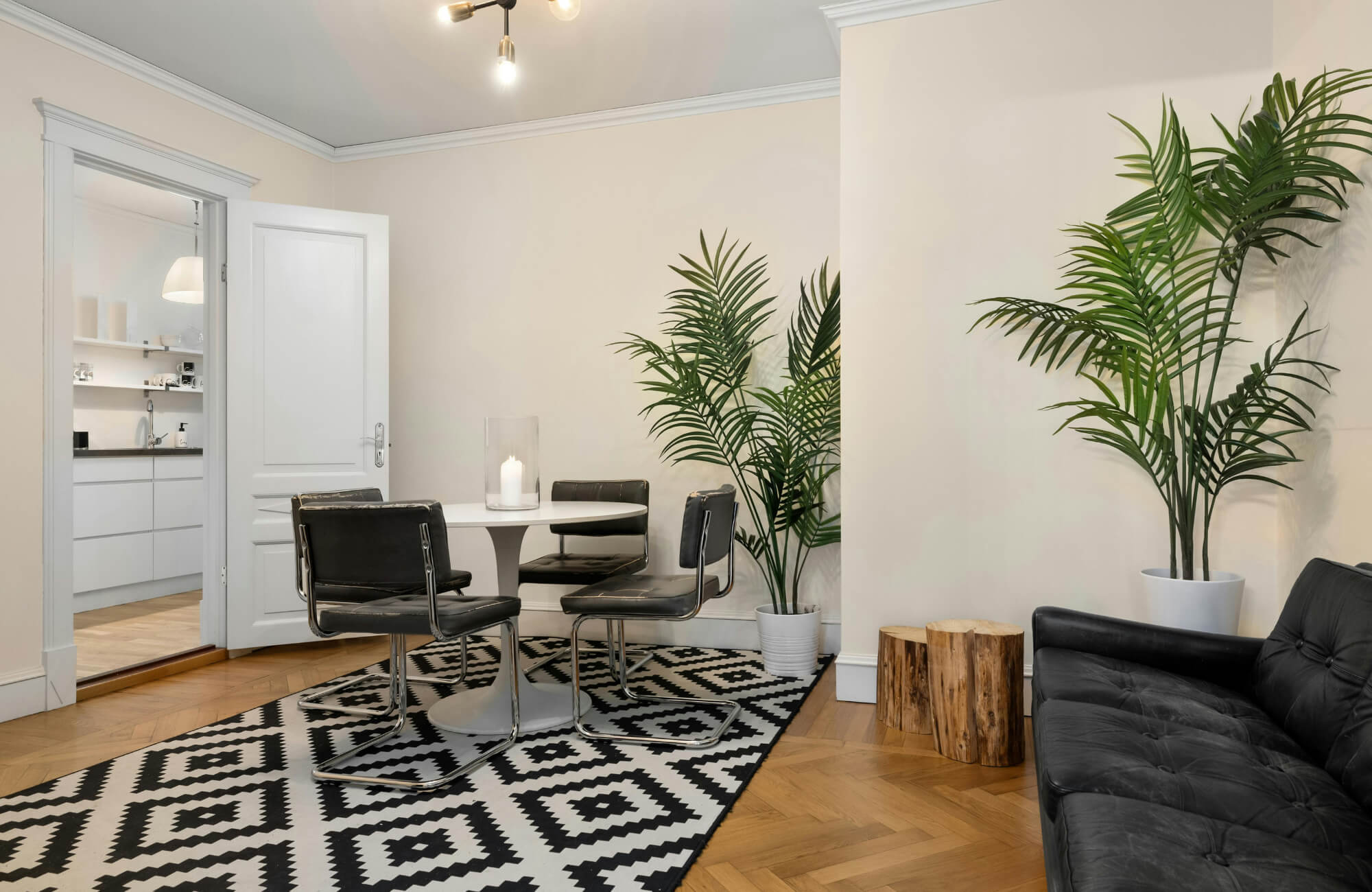
A 9x12 rug is generous enough to bring an entire seating area together into one cohesive visual unit. In the image shown above, our 9x12 Georgette Polyester Pile Rug in Navy / Rose shows how a balanced size and harmonious mix of deep blue and soft pink tones can connect neutral seating, warm wood accents, and architectural features into a unified, welcoming space. Even in open floor plans, a 9x12 provides enough coverage to add structure without overwhelming the surrounding area, resulting in a comfortable and balanced look.
When compared to other standard sizes, the 9x12 often strikes the ideal balance between coverage and proportion. An 8x10 may work better for smaller rooms under 150 square feet, while a 10x14 suits expansive or open-plan layouts with multiple seating areas. For most living rooms in the 150–250 square foot range, the 9x12 offers ample space for full furniture placement while leaving a visible border of flooring around the edges. This floor frame also prevents the rug from visually overpowering the room, delivering that sought-after sweet spot of scale, function, and elegance.

Assessing Room Dimensions and Flow
Even if a 9x12 rug appears to be the right fit based on measurements, the shape of your living room and the way people move through it can influence whether it truly works in practice. Taking the time to evaluate spatial flow ensures the rug enhances your layout rather than creating congestion.
One of the most important considerations is wall clearance. Leaving 12–18 inches of bare floor between the rug’s edges and the walls creates a clean visual frame that gives the rug breathing room while keeping the room’s architecture visible. This open border also supports daily functions by preserving walkways. With enough clearance, you can move naturally between seating areas or cross the room without bumping against furniture or stepping awkwardly on rug edges. This balance of coverage and openness is key to making the space feel intentional rather than cramped.
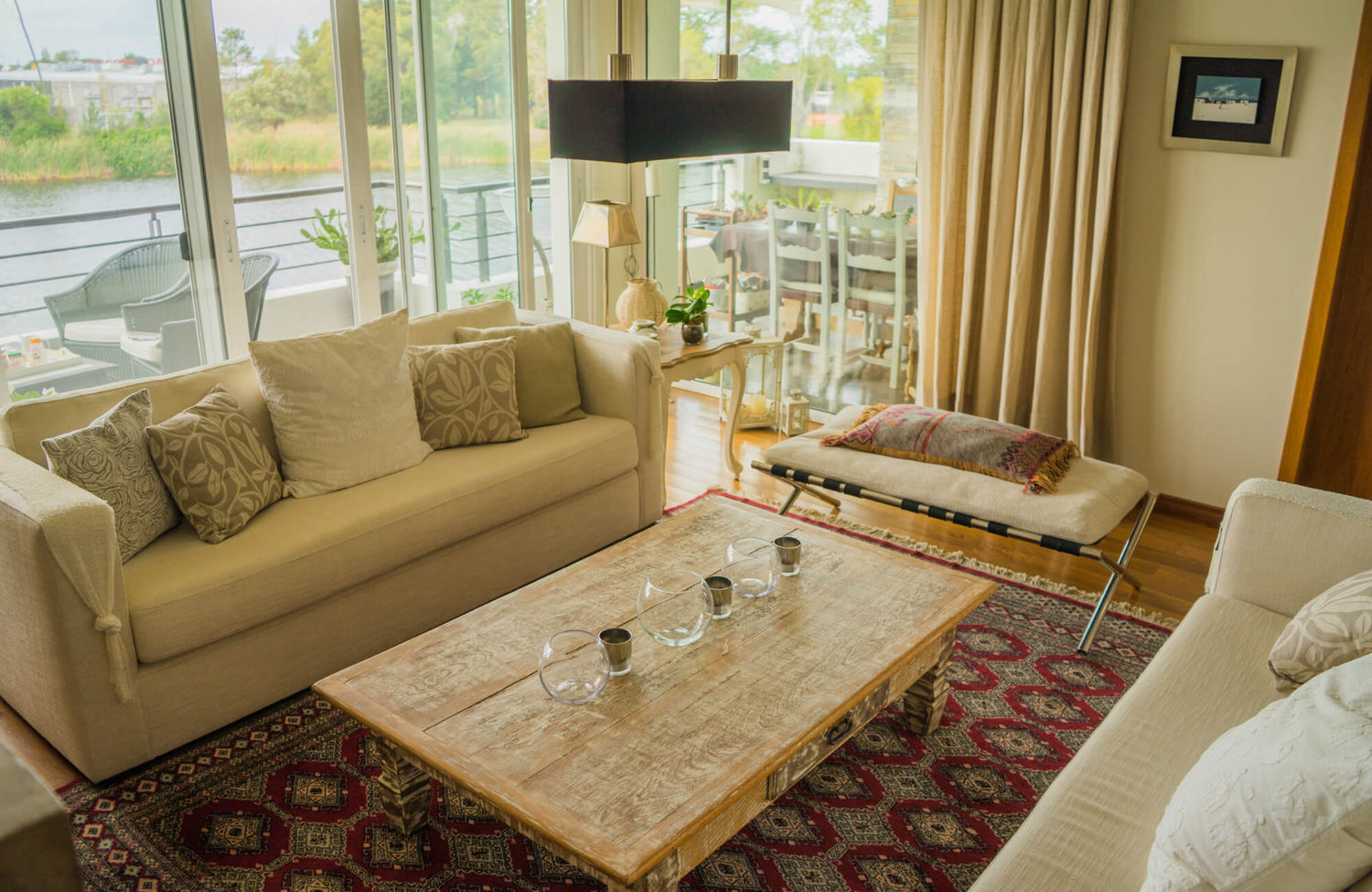
In the photo seen above, our 9x12 Georgette Polyester Pile Rug in Clay / Navy demonstrates how the right rug can work with a room’s flow. Its blend of earthy red and deep blue tones adds richness to a neutral seating arrangement while the visible border of terracotta tile flooring keeps the space light and open. The generous size also grounds the furniture grouping without encroaching on walkways, striking the right balance between coverage and movement.
In smaller living rooms, however, a 9x12 can dominate the floor if it extends too close to the walls or furniture. This can make the room feel visually heavy and restrict natural movement patterns, leading to tight, uncomfortable walkways. In these situations, scaling down to an 8x10 or even a 6x9 may be more effective. Pairing a smaller rug with the “front-legs-on” placement, where only the front legs of sofas and chairs rest on the rug, can also still provide a cohesive anchor for the seating area while allowing more light, air, and visual breathing space. This adjustment maintains comfort and proportion, ensuring the rug works in harmony with both the room’s dimensions and its everyday use.

Impact on Furniture Placement and Arrangement
The dimensions of your rug influence how you arrange and experience your furniture. A 9x12 rug offers enough surface area to shape seating layouts, guide usage flow, and create a sense of order in the room.
Full Furniture Placement on the Rug
Placing all major furniture pieces entirely on a 9x12 rug creates a strong, grounded look that instantly anchors the space. Sofas, armchairs, side tables, and a coffee table all share the same surface, forming a unified zone that feels complete and intentional. This approach works especially well in larger living rooms where the seating arrangement is meant to act as the focal point.
Beyond aesthetics, full placement offers practical benefits. With every step landing on the rug, you gain consistent comfort underfoot and avoid the jarring transition from soft to hard flooring when moving around the seating area. It also gives the arrangement a polished, designer-level finish that feels deliberate rather than improvised.
Partial Placement for Flexible Layouts
If you want to connect your furniture visually to the rug without committing to full coverage, the “front-legs-on” method is a versatile solution. In this layout, only the front legs of your sofas and chairs rest on the rug, while the back legs remain on the bare floor. The result is a balanced, cohesive look that still gives you more flexibility to adjust or reconfigure your seating as needed.
This approach is especially effective in irregularly shaped rooms or when you anticipate changing your layout over time. It provides a sense of connection between pieces while allowing you to keep the rug size appropriate for the space. Even with less coverage, the 9x12’s generous proportions also ensure the seating area still feels anchored and defined.
Creating Defined Zones in Open-Concept Spaces
In an open-concept layout, a 9x12 rug can serve as a subtle yet powerful way to define specific areas without the need for walls or partitions. By placing the rug under your primary seating arrangement, you visually separate the living area from the dining room, kitchen, or entryway, creating a sense of structure within the larger space.
This boundary not only enhances visual organization but also makes the living area feel more inviting and intimate, even within a wide, open floor plan. The edges of the rug act as a natural marker for where the living room begins and ends, helping the area feel both purposeful and connected to the rest of the space.
A perfect example is the seating area displayed in the picture above, which is grounded by a 9x12 rug with a rich interplay of deep wine red and denim blue, tones that echo the warmth of the leather sofa and the earthy wood finishes. This piece, our Hutchinson Polyester Face Rug in Burgundy / Denim, adds depth, color harmony, and a visual anchor that naturally defines the living zone without disrupting the open, airy feel of the room.

Style and Design Influence of a 9x12 Rug
A rug of this scale can completely shift the mood, balance, and visual flow of your living room. When chosen thoughtfully, a 9x12 becomes both a functional anchor and a design centerpiece.
Enhancing Visual Balance and Scale
In rooms with tall ceilings or oversized furniture, a 9x12 rug plays a crucial role in grounding the space. Without it, the vertical height and large-scale pieces can make the room feel hollow or top-heavy. The generous dimensions of the rug also help distribute visual weight across the floor, creating a sense of proportion that feels more inviting and stable.
This balance is especially noticeable when the rug is paired with substantial seating, such as a deep sectional or a pair of large armchairs. By tying all elements together in a single, well-proportioned frame, the rug ensures the room feels cohesive from floor to ceiling, no matter how grand the scale.
Pattern and Color Considerations for Larger Rugs
Because of its size, a 9x12 rug naturally commands attention, which means your choice of pattern and color will have a significant impact on the overall aesthetic. Our Georgette Polyester Pile Rug in Desert / Multi shows how a warm blend of earth tones and soft neutrals can add depth without overpowering the space. As depicted in the image above, its subtle pattern complements the stone fireplace, natural wood elements, and neutral sofa, creating a harmonious foundation that lets the rest of the décor breathe. Opting for a rug with this type of palette also allows you to maintain visual interest while still keeping the room adaptable to different accessories over time.
If you choose a statement rug, balance is key. Keep your surrounding décor more subdued so the space feels harmonious rather than overwhelming. This way, the rug remains a highlight while the rest of the room provides quiet support, letting your chosen design shine without creating visual chaos.
Layering Rugs for Added Texture and Interest
Layering offers an easy way to refresh the look of a 9x12 rug without replacing it entirely. By starting with a neutral base, you can add a smaller patterned or textured rug on top to introduce seasonal variety or an extra pop of color. This approach allows you to experiment with style shifts while keeping the foundational layout intact.
The layered look also brings depth and tactile richness to the room. Whether it’s a soft sheepskin draped at an angle over the corner or a vibrant kilim centered under the coffee table, the combination creates visual intrigue without overpowering the overall design. It’s a strategy that blends practicality with personality, making your living space feel both dynamic and intentional.

Material and Maintenance Implications of a Large Rug
When choosing a 9x12 rug, size is only part of the equation. The material you select and how you plan to care for it will determine how well it performs and how long it lasts in your living room.
Choosing Materials for Longevity and Comfort
The right material can make a noticeable difference in both durability and daily comfort. Natural fiber rugs, such as wool, jute, and sisal, each bring their own benefits to a 9x12 rug. Wool is animal-based, naturally strong, and soft underfoot. Its fibers bounce back from heavy furniture and frequent use, making it a smart investment for living rooms that see constant activity.
Jute and sisal, on the other hand, are plant-based fibers that offer a distinctly different feel and appearance. Jute has a softer, more relaxed texture that works well in casual settings, while sisal is coarser and extremely durable, making it a great choice for busy zones. Both also lend an organic, textured look to a room and are considered sustainable options, though they are generally more prone to staining than wool and are best placed in low-moisture, lower-spill areas.
Beyond natural fibers, synthetic options like polypropylene or nylon provide a budget-friendly alternative without sacrificing performance. They’re highly stain-resistant, easy to clean, and less prone to fading, which makes them a practical option if you have children, pets, or a busy household. Although they may not have the same luxurious feel as wool, their resilience and ease of care often outweigh that difference for many living spaces.
Cleaning and Care Challenges
The sheer size of a 9x12 rug makes cleaning more demanding. Vacuuming regularly is essential to keep dirt from settling deep into the fibers, especially in busy areas. Promptly addressing spills and stains can also prevent long-term damage, but due to the rug’s size, maneuvering it for spot-cleaning can be tricky. To keep your efforts effective and safe for the rug, it’s important to follow the manufacturer’s care instructions, as these will outline the best methods and products for the specific materials and construction.
For a thorough refresh, professional cleaning is often the most effective option, particularly for natural fibers like wool. Scheduling a deep clean every year or two not only preserves the appearance but also extends the lifespan of the rug. Considering this maintenance from the start helps you plan realistically for both time and cost.
Making the Right 9x12 Rug Choice for Your Living Room
A 9x12 rug can transform your living room when it aligns with the space’s scale, layout, and daily use. By measuring carefully, allowing for wall clearance, and considering how the rug will interact with your furniture, you set the foundation for a balanced and cohesive design. Choosing a style and material that complements your décor while meeting your maintenance needs also ensures lasting comfort and appeal. When all these elements work together, a 9x12 rug becomes more than just a floor covering but a defining feature that elevates your living room’s beauty and function.
If you are ready to explore options or need personalized guidance in selecting the perfect rug, reaching out to a knowledgeable team can make the process easier. Our experts can answer your questions, offer tailored recommendations based on your room’s dimensions and style, and help you find a 9x12 rug that meets both your aesthetic vision and practical needs. This way, you can move forward with confidence knowing your choice will bring lasting value to your space.