A black and white rug offers timeless versatility, working seamlessly across design styles from modern minimalism to classic interiors. Its high-contrast palette naturally draws the eye, creating a focal point that can anchor a room’s layout. The geometric, abstract, or traditional patterns often found in these rugs also add depth and visual interest without overwhelming a space.
Beyond aesthetics, material choice, whether plush wool, durable polypropylene, or handwoven cotton, affects both comfort and longevity. Thoughtful pairing with surrounding textures, colors, and furniture ensures a cohesive look. Below, we’ll discuss expert strategies to style a black and white rug in any setting.

Understanding Your Rug's Role
Before diving into color schemes or furniture placement, it’s important to see your rug as more than just a surface covering; it’s the visual and functional anchor of the room. Understanding how it sets the tone will help guide every design choice that follows.
Choosing the Right Design
Once you understand the rug’s role, the next step is selecting a pattern that works in harmony with the space. Geometric motifs like chevrons or herringbone bring movement to modern interiors, while damask or medallion designs lend traditional elegance. In open-plan layouts, repeating patterns can subtly define functional zones, whereas minimalist designs keep the focus on architectural details. Edward Martin’s Liddy Polyester Pile Rug in Dove / Multi, as shown in the photo above, is a perfect example, featuring a distressed checkered pattern inspired by Moroccan motifs. Its nuanced blend of gray, black, and muted accents makes it equally at home in bold, contemporary rooms or softer, layered designs.
Scale and Proportion in Your Room
With the pattern established, proportion becomes essential for a polished result. The rug should ground the furniture without visually breaking up the room. In living areas, placing the front legs of seating on the rug connects the grouping, while a full-coverage layout creates a more expansive feel. For dining rooms, allow 24–30 inches beyond the table’s edge so chairs slide back comfortably. In bedrooms, extend the rug 18–24 inches beyond the sides and foot of the bed to balance the layout and add comfort underfoot.
Texture and Durability
The final consideration in this foundation stage is material, which impacts both performance and aesthetics. Wool offers resilience, soil resistance, and a plush feel, ideal for busy areas. Polypropylene, for instance, delivers stain resistance and affordability, making it a practical choice for busy households or outdoor settings. On the other hand, handwoven cotton brings a relaxed, casual texture but requires more upkeep. In black and white rugs, tighter weaves maintain sharp contrast over time, while looser constructions create a softer, more lived-in appearance.

Building a Color Palette Beyond Black and White
Once you’ve defined your rug’s role, the next step is expanding its impact through a thoughtful color palette. By layering complementary hues and tones, you can enhance the rug’s contrast while creating a cohesive mood for the space.
Adding Pops of Color with Accessories
Small yet intentional bursts of accent colors can bring new energy to a black and white foundation. Accent pillows, artwork, or ceramics in shades like cobalt, emerald, or mustard can create visual interest without overpowering the room. To maintain harmony, repeat each chosen accent hue in at least three different places. Metallic finishes such as brushed brass or chrome can also function as “color” in a neutral context, catching light and adding subtle dimension.
Embracing Neutrals
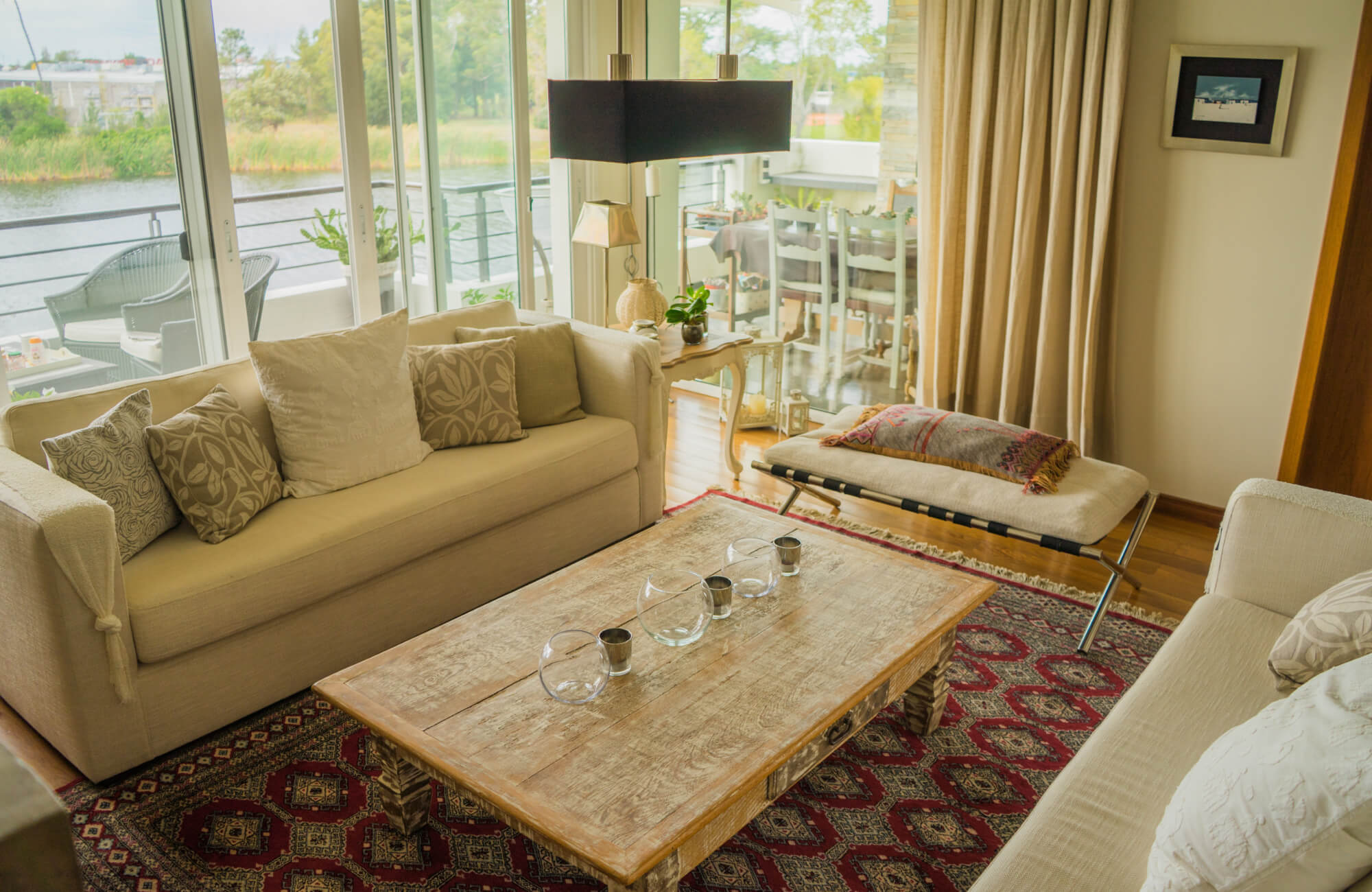
For those seeking a quieter aesthetic, extending the monochrome theme with tonal neutrals can produce a refined, timeless look. For example, gray, taupe, and ivory soften the rug’s contrast while smoothing transitions between walls, furniture, and flooring. Layering varied textures, linen drapery, matte paint, or nubby wool upholstery also adds richness without shifting the color scheme. Edward Martin’s McGowan Polyester & Polypropylene Pile Rug in Graphite / Mist, as featured in the photo above, captures this balance with its muted, distressed pattern and plush texture, perfectly complementing a layered neutral palette.
Warm vs Cool Tones
Shifting the palette’s temperature changes the room’s personality. Warm tones such as terracotta, ochre, or blush introduce comfort and pair beautifully with the depth of black. Conversely, cool tones like slate blue, sage, or charcoal amplify the crispness of white and create a sense of airiness. Blending the two can be effective, but it works best when one temperature dominates and the other appears in small, deliberate accents for contrast and cohesion.

Furniture and Layout
With your colors in place, it’s time to arrange the room so the rug works seamlessly with your furniture. Strategic placement and balanced proportions will ensure the space feels both visually connected and comfortable to use.
Anchoring Your Furniture
A simple yet effective guideline, the “Rule of Two Legs,” calls for placing at least the front two legs of a sofa, chair, or table on the rug. This visually ties the furniture grouping to the rug while keeping its edges visible. In compact rooms, the approach prevents overcrowding, while in larger spaces, extending the rug beneath all legs can create a more expansive, unified effect.
Balancing Boldness with Simpler Pieces
Once the rug is anchored, the surrounding furniture should enhance rather than compete with it. A high-contrast black and white design naturally draws attention, so opt for upholstery in solid, muted tones or subtle textures to let the pattern stand out. Clean-lined silhouettes, whether mid-century, contemporary, or transitional, help maintain equilibrium. Incorporating wood, glass, or matte metal finishes also introduces visual relief, softening the rug’s graphic strength without diminishing its impact.
Defining Zones in Open Concept Living
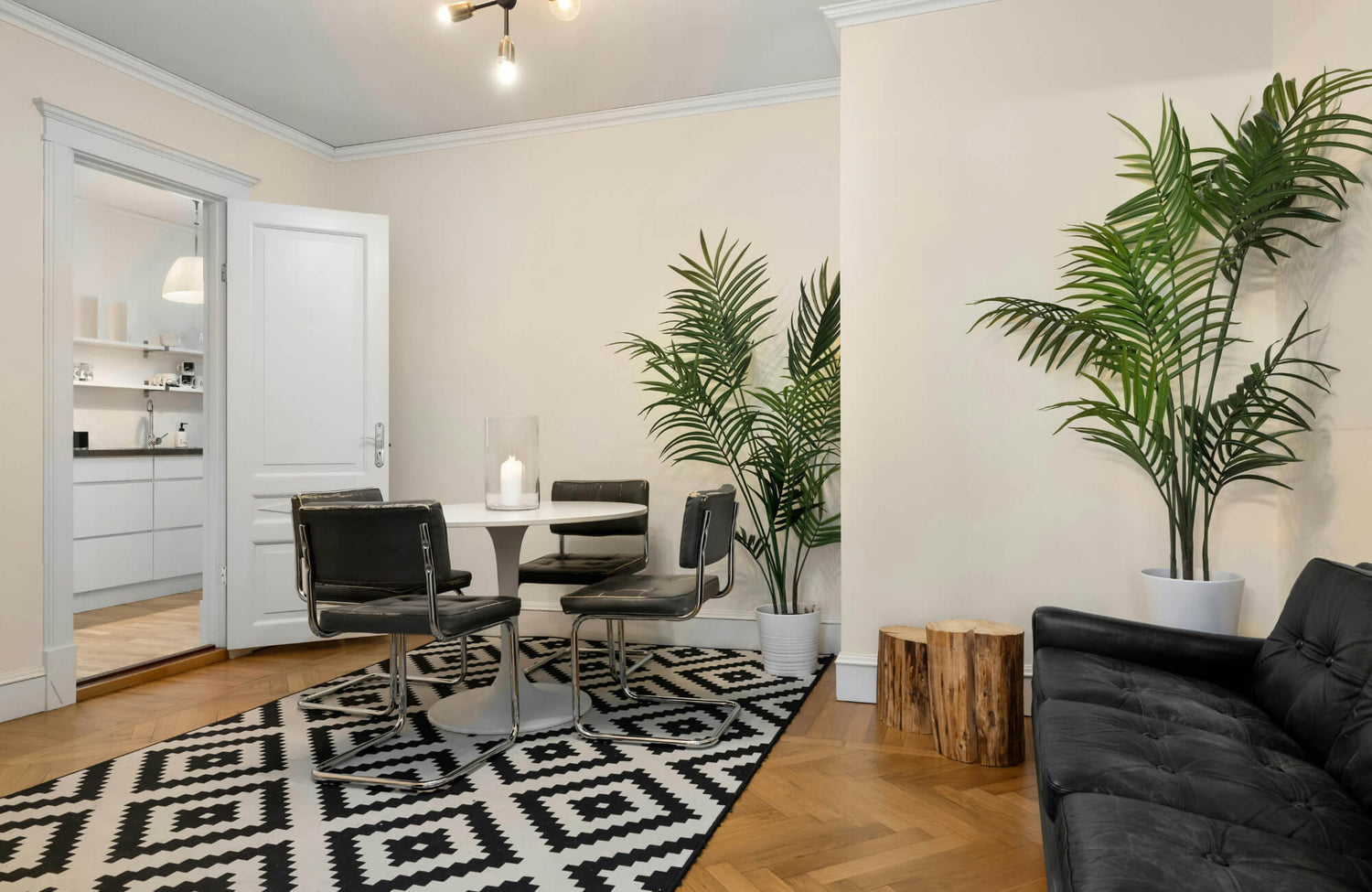
In open-plan layouts, rugs can do more than ground a seating area; they can define entire zones. When each rug is proportionate to its furnishings, the result feels deliberate and cohesive. Combining different textures or pile heights within a shared palette subtly distinguishes areas without breaking the flow. Edward Martin’s Lafferty Wool Blend Rug in Midnight, as displayed in the photo above, demonstrates this beautifully: its flatweave texture, diamond lattice pattern, and contrasting borders establish clear boundaries while blending effortlessly with surrounding elements.

The Finishing Touches
After the major elements are set, the last step is to add depth and character through texture and layered details. These final accents bring warmth, dimension, and personality, tying the whole design together.
Layering with Other Textiles
Textiles beyond the rug, such as throw blankets, cushions, and drapery, can soften strong geometric lines while adding tactile variety. Mixing materials like linen, velvet, boucle, or knitted cotton enriches the sensory experience. Layering rugs is another way to refine the look; for example, placing a smaller patterned black and white rug over a larger neutral sisal or jute base can temper boldness and expand the sense of scale. This approach also improves acoustics by absorbing sound in spaces with many hard surfaces.
Introducing Natural Elements and Organic Textures
Natural materials bring balance to a high-contrast rug by adding warmth and irregularity. For example, rattan, wicker, unfinished wood, or leather can soften clean lines, while plants, whether tall statement trees like fiddle-leaf figs or trailing varieties on shelves, introduce movement and biophilic benefits. Blending smooth and coarse finishes, such as pairing a polished marble table with a chunky wool throw, also enhances the room’s tactile depth and visual interest.
The Power of Artwork and Wall Decor
Artwork and wall treatments can seamlessly tie a rug into the larger design story. Black-and-white photography, line drawings, or abstract pieces echo its palette, while natural wood or metal frames add nuanced contrast. In addition, sculptural and three-dimensional art can introduce shadow and depth. Our Micah Wool Blend Rug in Natural / Graphite, as featured in the picture above, provides a strong foundation for such displays; its bold yet organic diamond pattern naturally aligns with artwork placement, creating a cohesive visual rhythm throughout the space.
Mastering the Black and White Rug
Styling a black and white rug is an exercise in balance, where proportion, pattern, material, and complementary colors all work in concert. A thoughtful layout grounds the furniture, while layered textures and natural accents add richness and dimension. Accent hues or tonal neutrals can shift the room’s mood, and carefully chosen accessories ensure the rug integrates seamlessly into the overall scheme.
For those seeking expert guidance, Edward Martin’s design consultation service offers tailored advice to help you make confident design decisions. Whether you’re looking for recommendations or need help with tile, rug, or furniture selections, you can contact Edward Martin for professional insight that brings your vision to life!