The classic checkerboard pattern, known for its rhythmic visual appeal and timeless style, is enjoying renewed popularity in outdoor design. Once reserved for interiors, this iconic motif is now making a bold statement in patios, walkways, and pool decks. When paired with the strength and versatility of porcelain paver tiles, checkerboard patterns offer not just a refined look but long-lasting functionality. However, choosing this style for exterior applications raises practical questions. Are checkerboard porcelain pavers a smart and sustainable option outdoors? This article explores their design potential, durability, installation needs, and style flexibility to help guide your decision.

The Visual Impact of Checkerboard Patterns Outdoors
Checkerboard tiles bring a distinctive aesthetic to outdoor settings, transforming basic surfaces into visually dynamic, thoughtfully curated spaces.
Classic Meets Contemporary
The checkerboard pattern bridges timeless design with a modern sensibility. Its alternating square layout is instantly recognizable, evoking a sense of tradition, while its use in outdoor spaces, such as patios, courtyards, or terraces, adds a fresh, updated twist. This balance of nostalgia and clean simplicity allows it to complement a wide range of design styles, from classic to contemporary.
Creating Depth and Movement
In addition to its aesthetic familiarity, the checkerboard layout brings dynamic visual interest to outdoor areas. The interplay of contrasting or tonal colors creates a sense of depth and movement, guiding the eye across the surface. This effect can define distinct zones in larger layouts or make smaller areas feel more expansive and structured. It’s a practical yet visually compelling way to add rhythm and dimension to exterior designs.
Tailoring the Mood With Color Choices
The color combination within the checkerboard pattern significantly shapes the atmosphere. High-contrast pairs like black and white make a bold, sophisticated statement, ideal for dramatic outdoor settings. For a quieter, more refined mood, low-contrast duos like charcoal and light gray offer understated elegance. Meanwhile, warm pairings such as terracotta with cream or shades of brown and tan deliver an organic, earthy feel that harmonizes with nature. Each palette evokes a different emotional tone, allowing you to personalize your outdoor design with intention.

Material Benefits of Porcelain in Outdoor Use
Porcelain pavers are engineered to handle the demands of outdoor environments, offering several advantages that support both visual and functional goals.
Durability and Resistance to the Elements
Porcelain’s dense, non-porous composition makes it exceptionally durable for exterior use. With minimal water absorption (typically under 0.5%), it resists cracking, chipping, and spalling caused by freeze-thaw cycles. This resilience makes porcelain an ideal choice for regions with variable weather conditions, promising long-term performance without significant wear.
Fade and Stain Resistance
Unlike some materials that lose vibrancy over time, porcelain retains its color thanks to through-body coloration and high-temperature firing. Even in direct sunlight, porcelain pavers resist fading. Their surface also repels stains, preventing discoloration from spills, debris, or outdoor pollutants, ensuring that the checkerboard pattern remains sharp and vibrant over time.
Slip Resistance and Safety
Safety is a top priority in outdoor areas, particularly in spaces exposed to moisture such as pool decks, patios, and walkways. Outdoor-rated porcelain tiles are specifically engineered with textured surfaces and high slip-resistance ratings (R-ratings), offering secure footing even when wet. This makes them a practical and reliable choice for ensuring traction and reducing the risk of slips in frequently used exterior environments.

Styling Applications and Design Versatility
Checkerboard porcelain pavers adapt to a wide range of outdoor styles, from modern rooftops to cozy garden paths.
Modern Terraces and Rooftop Patios
In urban environments, checkerboard pavers offer both function and style for compact terraces and rooftop patios. High-contrast combinations like black and white or charcoal and oat create a bold, modern look that pairs well with contemporary architecture. A great example is our Wren 12x12 Checkerboard Grip 2cm Porcelain Paver Tile in Charcoal & Oat, which offers a refined yet graphic surface that enhances both style and function. Its subtle texture and color variation bring depth to smaller spaces, helping delineate lounge or dining zones while maintaining a cohesive outdoor flow.
Cottage Gardens and Vintage-Inspired Courtyards
Checkerboard designs can also bring classic charm to cottage-style gardens or vintage courtyards. Opting for muted color pairings, such as soft green and cream or warm terracotta and beige, creates a subtle, time-worn elegance. These gentle tones integrate effortlessly with greenery, natural materials, and traditional garden features, offering a nod to historic European courtyards while maintaining a soft, serene atmosphere.
Pool Decks and Outdoor Dining Areas
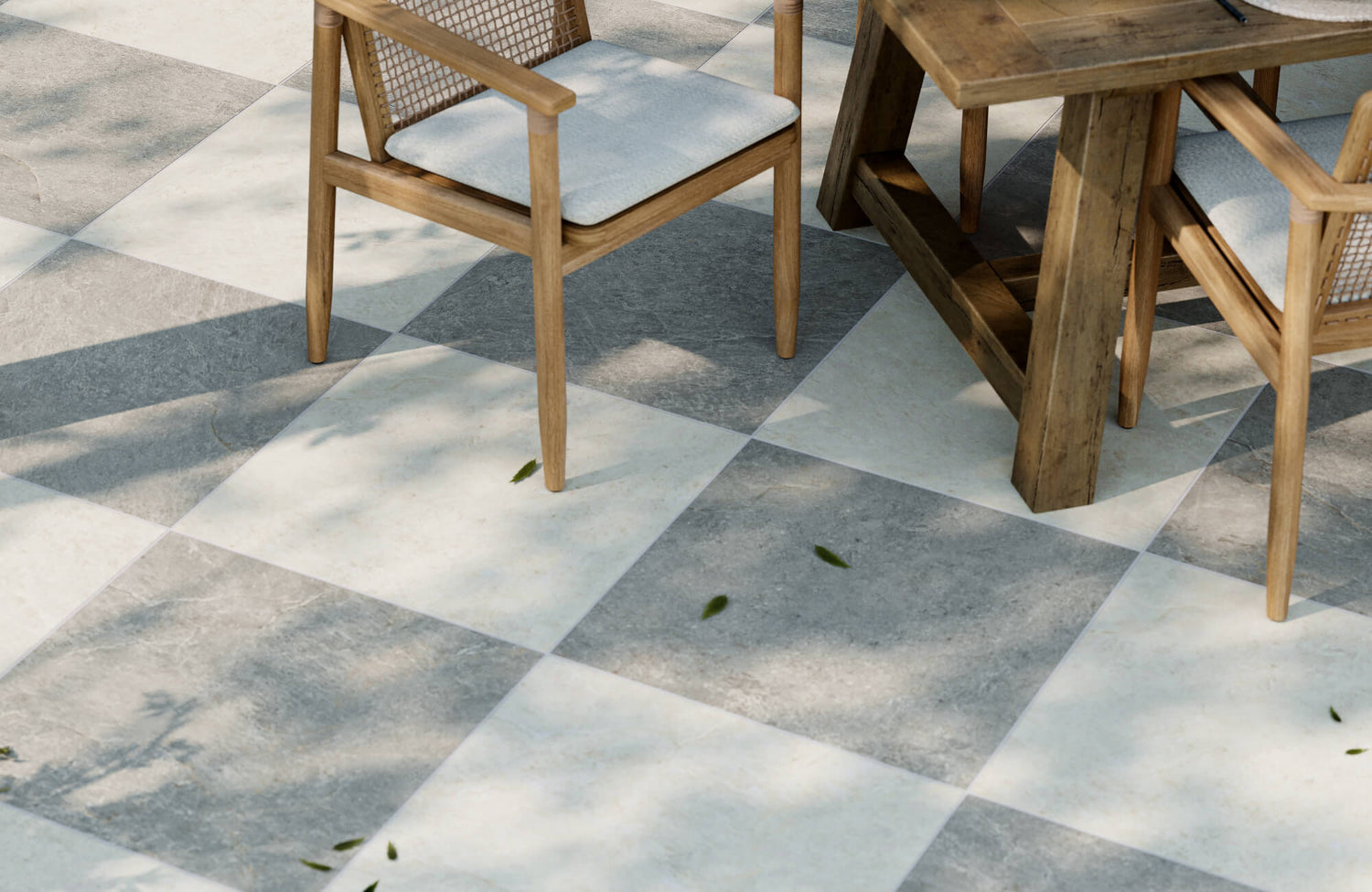
Around pools and dining areas, checkerboard pavers combine style with practical benefits. Porcelain’s textured surface enhances safety in wet areas, while the alternating pattern provides visual rhythm that can naturally distinguish between functional zones, such as separating lounge seating from walking paths or dining setups. In the image above, our Dawson 24x24 Checkerboard Grip 2cm Porcelain Paver Tile in Ash & Alabaster creates a balanced, elegant foundation for a shaded patio dining space. The soft contrast between tiles not only adds visual interest but also pairs beautifully with natural materials like wood and greenery, resulting in a refined yet relaxed setting. This thoughtful layout evokes resort-inspired elegance while delivering long-lasting comfort and slip-resistant performance outdoors.
Integrating with Landscaping and Furniture
To fully harmonize checkerboard pavers with the surrounding design, it's essential to balance their geometric structure with softer, organic elements. Incorporate flowing plant beds and natural landscaping to offset the sharp lines of the tiles. Choose furniture that either echoes the paver colors or introduces warm textures, such as wood or wicker, for contrast. This layered approach ensures that the checkerboard pattern enhances the overall setting rather than dominating it, resulting in a cohesive and welcoming outdoor environment.

Practical Considerations for Installation and Maintenance
Beyond durability, checkerboard porcelain pavers offer flexibility in installation and long-term ease of maintenance.
Installation Flexibility With Outdoor Pavers
Porcelain pavers offer impressive flexibility for various outdoor applications. For patios and walkways, a dry lay method over compacted gravel and sand provides effective drainage. Pedestal systems are ideal for rooftop terraces or uneven ground, offering support and allowing space for utilities. For a more permanent solution, mortar-set installations over concrete ensure stability. Thanks to their uniform size and thickness, porcelain tiles help achieve a clean, precise checkerboard layout—something that’s more difficult with uneven materials. For best results, especially with patterned layouts, it’s wise to consult a professional installer.
Leveling, Layout, and Pattern Precision
Laying out a flawless checkerboard pattern outdoors takes more than simply alternating tiles—it requires thoughtful preparation and attention to detail. A properly graded and compacted sub-base is essential for stability and to prevent shifting over time. Even minor irregularities in the base can affect how tiles sit, undermining both the look and the longevity of the surface. Precision in layout is also equally important. Accurate measurements, grid lines, and careful planning are key to ensuring that the pattern remains consistent and aligned throughout the space. This step often benefits from professional expertise, especially when the visual impact of the checkerboard design depends so heavily on crisp, clean transitions and symmetrical spacing.
Low Maintenance Appeal
Porcelain pavers are a low-maintenance choice for outdoor spaces. Their dense, non-porous surface resists stains and discourages the growth of moss or mildew. Unlike natural stone or concrete, they don’t require sealing. Simple sweeping and occasional rinsing with mild soap are usually sufficient to keep them looking fresh, making them a practical long-term solution for outdoor living.

Comparing Alternatives and When to Choose Checkerboard Porcelain
To make an informed decision, it's beneficial to weigh checkerboard porcelain pavers against other common outdoor materials and understand the specific design contexts where they truly shine.
Versus Natural Stone or Concrete Pavers
Checkerboard porcelain pavers stand out when compared to natural stone and concrete alternatives. While natural stone offers unique texture and organic variation, it is often porous, requiring regular sealing and more maintenance due to susceptibility to staining, moss growth, and freeze-thaw damage. It also tends to be more expensive. Concrete pavers are typically more affordable and durable, but they are more prone to fading, water absorption, and efflorescence over time.
Porcelain pavers, on the other hand, are highly durable, non-porous, and stain-resistant. Their consistent sizing and color make them ideal for achieving the sharp, clean lines of a checkerboard layout. Although they may come with a higher upfront cost than basic concrete, their longevity and low maintenance needs often make them more cost-effective in the long run.
When to Avoid Checkerboard Patterns
Despite their appeal, checkerboard patterns may not suit every setting. In areas already filled with complex patterns, intricate mosaics, or highly curvilinear layouts, introducing a checkerboard floor can overwhelm the visual balance. Similarly, in designs striving for a subtle, organic, or minimalist aesthetic, a bold geometric pattern may feel out of place. In such cases, a solid-color paver or one with a more natural, textured appearance may better support the overall design intent.
Ideal Scenarios for Checkerboard Porcelain Use
Checkerboard porcelain pavers are most effective in structured, clearly defined areas like patios, walkways, and outdoor dining zones. Their precision and contrast make them ideal for organizing space, guiding movement, and creating focal points. Whether used in modern, transitional, or even vintage-inspired designs, this pattern adds both clarity and personality. Opt for checkerboard porcelain when you want to make a confident visual statement—one that blends timeless appeal with contemporary refinement.
A Timeless Choice for Outdoor Spaces
Checkerboard porcelain pavers combine timeless design with modern performance, making them a standout option for outdoor flooring. Their classic pattern adds visual interest and a refined aesthetic that bridges traditional charm with contemporary style. Beyond appearance, porcelain offers impressive practical benefits—resisting weather, fading, and stains, while providing reliable slip resistance for safe outdoor use.
With minimal maintenance and long-lasting durability, these tiles are as functional as they are stylish. When selected to suit your home’s aesthetic and installed with care, checkerboard porcelain pavers can transform outdoor areas into elegant, enduring spaces. Consider your climate, layout, and design goals to determine whether this distinctive, eye-catching option is the right fit for your outdoor retreat. If you have questions or need help finding the best style for your project, feel free to contact us—we're happy to assist.