Mirrors are essential elements in bathroom design. Beyond their functional use for daily grooming, mirrors contribute significantly to a bathroom's perceived space, lighting, and overall aesthetic. As homeowners plan renovations or optimize existing layouts, a common question arises: Is a single mirror enough, or could adding more improve both utility and style? The answer depends on multiple factors. This article explores how layout, functionality, lighting, and design goals influence the ideal number of mirrors in a bathroom.

Exploring Mirror Needs by Use Case
Before exploring design considerations, it’s important to prioritize how the bathroom will be used. Understanding these practical requirements helps guide the number and placement of mirrors.
Personal Grooming and Practicality
At its core, a bathroom mirror supports daily grooming, including brushing teeth, shaving, applying makeup, and more. For individual users, one well-sized mirror positioned above the sink usually suffices. A piece like Edward Martin’s Everdale Small Mirror in Gunmetal offers a clean, modern profile that fits comfortably above most vanities, combining practicality with understated style. It should match the width of the vanity and be positioned at a comfortable height to ensure clarity and convenience.
In shared bathrooms, a single mirror can become a point of congestion. If two or more people frequently use the bathroom simultaneously, consider assigning a dedicated mirror to each user. This improves efficiency and ensures a smoother morning routine.
Shared Spaces and Dual Vanities
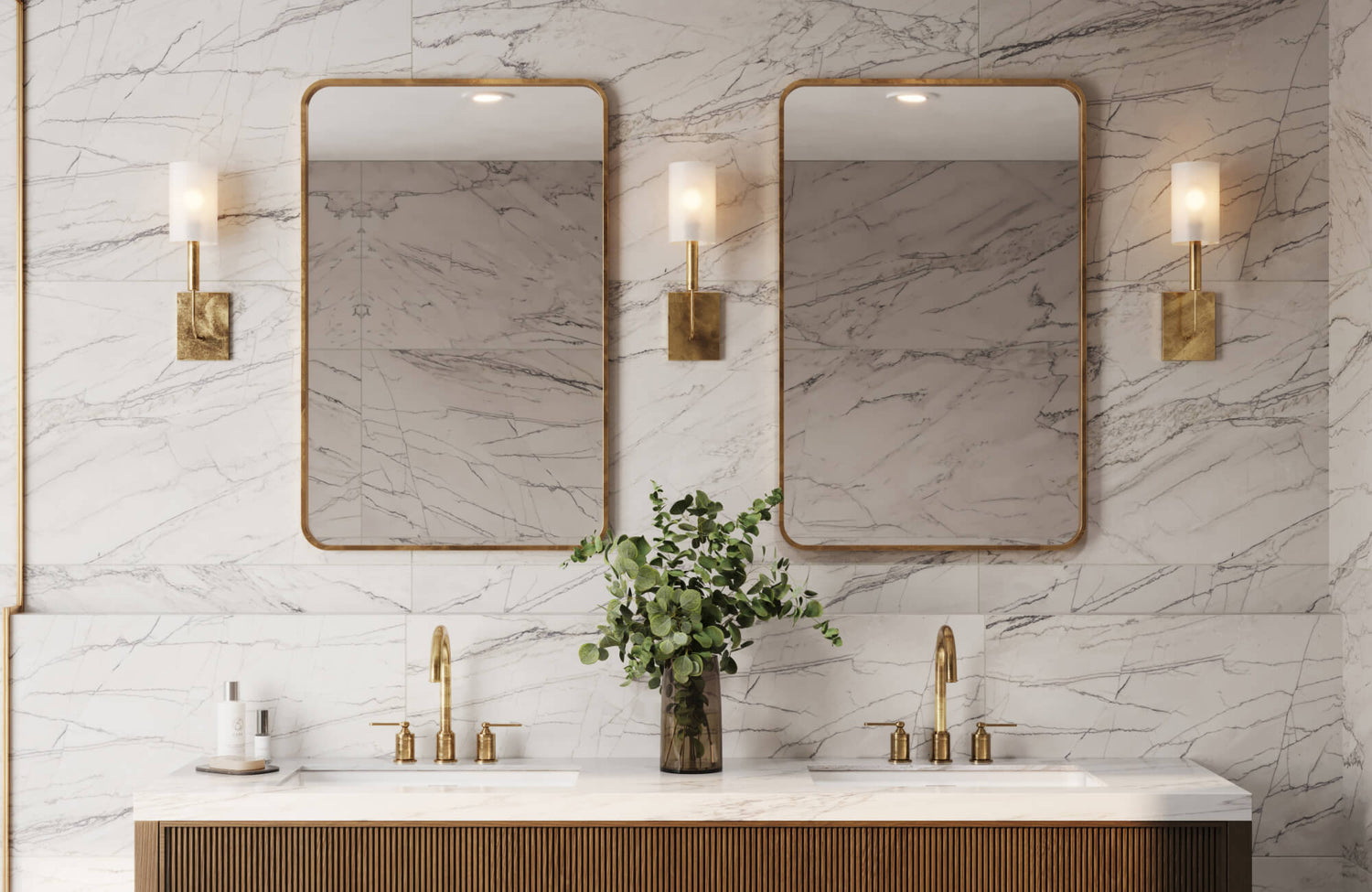
Modern bathroom design often incorporates dual vanities to meet the functional needs of shared spaces. In layouts where two sinks or side-by-side grooming areas are present, installing two separate mirrors is typically the most effective solution. A great example is our Clancy Small Mirror in Antique Brass, as shown in the photo above, which offers a balanced scale and timeless finish—ideal for pairing over each sink in a double vanity setup.
This arrangement ensures that each individual has a dedicated reflective space, allowing for simultaneous use without interruption. In addition to improving daily usability, dual mirrors create a sense of symmetry and balance that visually enhances the space. This symmetrical arrangement also emphasizes the width and openness of the vanity area, contributing to a more luxurious and polished aesthetic. For master bathrooms or larger family bathrooms, where multiple users share the space regularly, dual vanities paired with individual mirrors offer both practical convenience and refined design appeal.
Family Bathrooms and Guest Baths
The role of a bathroom within the home significantly affects mirror requirements. In guest bathrooms or powder rooms, where use is typically less frequent and limited to quick tasks like handwashing or touch-ups, a single mirror above the vanity is usually sufficient. Here, the mirror may serve more of a decorative function while still fulfilling basic utility. Conversely, family bathrooms, especially those shared by several household members, could benefit from a more expansive mirror setup.
A wide, wall-spanning mirror above the vanity can accommodate multiple users at once, improving functionality during busy mornings. Additionally, incorporating a full-length mirror elsewhere in the room adds practical value for outfit checks and enhances the overall usability of the space.

The Impact of Bathroom Size and Layout
The bathroom’s dimensions and layout significantly influence how many mirrors can be used effectively without disrupting the space.
Small Bathrooms
In compact bathrooms, mirrors play a vital role in visually expanding the room and enhancing available light. A single mirror above the vanity is standard, but adding a second, smaller mirror, even a smaller decorative one placed on an adjacent wall, can help reflect light and open up the space. The key is to avoid overcrowding; one or two well-placed mirrors are usually sufficient to achieve this expansive effect without making the space feel cluttered or overwhelming. The goal is visual expansion, not a hall of mirrors.
Large or Open Concept Bathrooms
Larger bathrooms, particularly those with open layouts, can benefit greatly from the inclusion of multiple mirrors. A single mirror may look disproportionately small in a spacious setting. In these cases, using a mirror above each vanity sink not only supports daily functionality but also contributes to a more harmonious and anchored visual layout. A design like our Clancy Small Mirror in Antiqued Iron, featured above, with its subtle arched shape and iron frame, pairs beautifully with detailed vanities like the one shown above, offering both contrast and cohesion in light-toned, textural bathrooms.
Adding a full-length mirror on an open wall or near a dressing area provides extra utility and reinforces a sense of luxury. Strategically placed mirrors also help distribute natural and artificial light evenly, preventing dark zones and making the room feel thoughtfully designed rather than sparse or cavernous.
Wall Positioning and Doorways
Architectural features such as doorways, windows, and sloped ceilings influence both the number and placement of mirrors. These elements can limit available wall space and affect sightlines and lighting. For instance, mirrors placed too close to doors may create awkward reflections or interfere with movement. Sloped ceilings can restrict mounting height, while windows, though beneficial for natural light, can interrupt wall continuity and reduce placement options.
Evaluating these structural factors ensures that mirrors are installed in locations that enhance rather than hinder the bathroom’s overall design and functionality. Careful planning leads to a cohesive look where mirrors feel naturally integrated into the space.

Design Style and Aesthetic Goals
Beyond mere function, the overarching design style and specific aesthetic goals for a bathroom heavily influence the choice of mirror quantity and their visual presentation.
Symmetry and Visual Balance
For bathrooms designed with classic, traditional, or modern formal aesthetics, symmetry is a defining feature. In such styles, mirrors play a key role in establishing visual balance. For example, placing identical mirrors above each sink in a double vanity not only provides individual functionality but also reinforces a sense of harmony and order. When aligned precisely with vanities and lighting fixtures, these mirrors contribute to a clean, polished, and cohesive look. This structured approach suits spaces that value elegance, refinement, and intentional design, making multiple mirrors a natural and fitting choice.
Statement Pieces and Artistic Mirrors
In more eclectic or creative bathrooms, mirrors are often used as decorative focal points rather than just functional tools. Here, quantity and placement are driven by visual impact. A curated arrangement of varied mirrors on a blank wall, featuring different shapes, sizes, and frames, can resemble an art installation, introducing layers of texture and reflection. Alternatively, a single oversized or uniquely designed mirror can make a bold statement, becoming the centerpiece of the room.
Our Esmeralda Wide Mirror in Polished Brass, as seen above, for example, would draw the eye instantly with its elegant finish and substantial scale, similar to the rounded mirror shown above, which anchors the vanity wall and adds a touch of sculptural refinement to the overall space. These artistic uses transform mirrors from practical elements into defining features of the overall decor.
Minimalist and Contemporary Styles
Minimalist and contemporary styles prioritize simplicity, clarity, and open space. In these bathrooms, a single, thoughtfully selected mirror often serves both aesthetic and practical needs. A large frameless mirror or one with a clean-lined frame typically spans the vanity, providing sufficient reflection without adding visual clutter. Rather than using multiple mirrors, the focus is on seamless integration and subtle elegance. This restraint supports the calm, spacious atmosphere central to minimalist design, proving that less can indeed be more when it comes to mirror placement.

Lighting Considerations and Reflection Strategy
Mirrors and lighting work hand-in-hand. Proper mirror placement enhances both natural and artificial illumination, improving the room’s overall brightness and ambiance.
Enhancing Natural and Artificial Light
Positioning mirrors opposite or adjacent to windows reflects natural sunlight deeper into the space, making the room feel larger and more open. In the example above, the rounded mirror captures natural light from the nearby window, brightening the vanity area and contributing to the room’s airy feel. A great example is our Fitz Mirror in Antique Brass, shown above, which pairs a warm metallic finish with a simple, curved silhouette—ideal for reflecting both natural and artificial light without overwhelming the design. Mirrors can also help disperse illumination from overhead fixtures or sconces, reducing shadows and enhancing visibility, especially in bathrooms with limited daylight.
Avoiding Glare and Poor Angles
While mirrors can improve brightness, overusing them or placing them without intention can lead to problems such as glare or unwanted reflections. Excessive mirrors may bounce light in harsh or distracting ways, creating hot spots or drawing attention to less desirable views, like toilets or cluttered storage areas. Instead of focusing on quantity, it’s more effective to prioritize placement. A single, well-positioned mirror can have a greater positive impact than multiple poorly located ones. Designers should always consider sightlines, lighting direction, and reflective surfaces to ensure mirrors enhance comfort and clarity, not visual chaos.

Creative Ways to Add More Mirrors Without Overdoing It
If you’d like to incorporate more mirrors but are concerned about overwhelming the space, consider these integrated and low-profile options.
Mirrored Cabinets and Fixtures
Integrating mirrors into functional elements, such as medicine cabinets, is a clever way to expand reflective surfaces without crowding the design. A mirrored cabinet above the vanity offers both grooming visibility and hidden storage. Some contemporary versions even feature mirrored interiors or sides for added reflection. Smaller touches like mirrored trays or accessories can subtly contribute to the room’s brightness and cohesiveness without drawing too much attention.
Full-Length and Accent Mirrors
In larger bathrooms, full-length mirrors serve a practical role in outfit checks while also helping to open up the space visually. These can be mounted on doors, built into closets, or simply leaned against a wall for a relaxed, modern feel. Accent mirrors, often chosen for their unique frames or shapes, offer decorative appeal and help reflect light or design elements without adding bulk. Though less functional for grooming, they can enrich the room’s character.
Floating or Layered Mirrors
For a refined and dimensional effect, floating or layered mirrors offer a sophisticated solution. Floating mirrors, mounted slightly off the wall, bring a sense of lightness and modernity. Layered mirrors, where one smaller mirror is placed over a larger one or a mirrored wall, create depth and visual intrigue without overcrowding the room. These techniques enable the addition of multiple reflective surfaces in a way that feels intentional, artistic, and balanced, making them ideal for more design-driven spaces.
Determining the Ideal Number of Bathroom Mirrors
There is no universal rule for how many mirrors a bathroom should have. The ideal number depends on the room’s size, users, layout, and design vision. A well-placed single mirror can be just as effective as multiple mirrors if it meets all functional and stylistic needs. Likewise, multiple mirrors can enhance utility and elegance when used with intent.
Ultimately, thoughtful planning and balance between function and form will help you choose the right mirror setup. Whether you're designing a cozy powder room or a sprawling master bath, the right number and placement of mirrors can elevate the space and make daily routines more enjoyable. If you need help selecting the best option for your layout, feel free to contact us for personalized guidance.