An outdoor lounge area can contain all the expected pieces and still feel strangely unwelcoming. A sofa may be in place, the chairs may coordinate, and the patio may look finished from a distance, yet no one naturally chooses to sit there for long. For many people, the question is not whether the space has furniture, but why the furniture does not seem to create the relaxed, comfortable atmosphere they imagined.
That disconnect matters because outdoor spaces are no longer treated as secondary areas of the home. A patio, deck, porch, or poolside lounge is often expected to function like an open-air living room, with enough comfort for daily use and enough refinement to feel connected to the rest of the property. When the area feels awkward, exposed, empty, or visually cold, the cause is usually not one isolated mistake. It is the relationship between layout, comfort, scale, protection, and atmosphere that determines whether an outdoor lounge area feels truly inviting.

The Vetra Club Chair pairs with Ramsey 24 x 24 Grip Porcelain 2cm Paver Tile in Chalk to create a clean outdoor lounge setting grounded by soft upholstery, pale stone tones, and surrounding greenery.
The Space Has Furniture, But No Clear Reason to Stay
An outdoor lounge area needs more than a place to sit. It needs a clear purpose that tells people how to use the space, whether that means quiet reading, casual conversation, hosting, poolside lounging, or gathering around a fire feature. When furniture is placed simply to fill a patio or deck, the result can feel visually complete but emotionally flat. A more inviting lounge area begins with understanding what kind of experience the space is meant to support.
Outdoor Seating Should Support a Specific Behavior
The most successful outdoor lounge areas are planned around behavior before furniture. A pair of lounge chairs angled toward a garden view creates a different experience than a sectional arranged for conversation. A deep outdoor sofa near a fireplace suggests lingering, while chaise lounges beside a pool imply rest, sun, and casual movement between seating and water.
Problems often begin when the furniture does not match the way the space is meant to be used. A narrow porch with oversized club chairs may look generous in theory, but it can make sitting and moving through the area feel cumbersome. A large patio with only two small chairs may feel underdeveloped, even if the chairs themselves are attractive. The issue is not always style. It is whether the arrangement gives people a reason to settle in.
Before choosing or rearranging outdoor lounge furniture, it helps to define the primary use of the area. Is it for morning coffee, evening conversation, reading, entertaining, or watching children in the pool? A lounge area can support more than one activity, but it still needs a dominant purpose. Without that purpose, furniture becomes a placeholder rather than a design tool.
Inspiration Photos Often Ignore Real-Life Use
Outdoor inspiration images are useful for identifying a mood, material palette, or overall direction, but they rarely show the daily realities of a specific home. A photographed patio may have perfect light, generous proportions, controlled styling, and a view that naturally anchors the composition. The same layout may feel uncomfortable when copied onto a shaded city terrace, a windy deck, or a compact backyard.
Real outdoor spaces have constraints that photographs often hide. Sun angles change throughout the day. Neighbors may overlook the seating area. Door swings, steps, pool edges, grill zones, and planting beds all affect placement. Even the way a family moves through the space can make a beautiful arrangement feel inconvenient.
This is why an outdoor lounge area can look “correct” but still feel wrong. It may be styled for appearance rather than use. A layout meant for a catalog can prioritize symmetry and open sightlines, while a livable outdoor room needs comfort, access, shade, and surfaces within reach. The goal is not to reject inspiration, but to translate it through the proportions and habits of the actual setting.
A Lounge Area Needs a Natural Anchor
A lounge area feels more inviting when the furniture gathers around something. Indoors, walls, fireplaces, windows, and built-ins often provide that structure automatically. Outdoors, the anchor has to be created more deliberately.
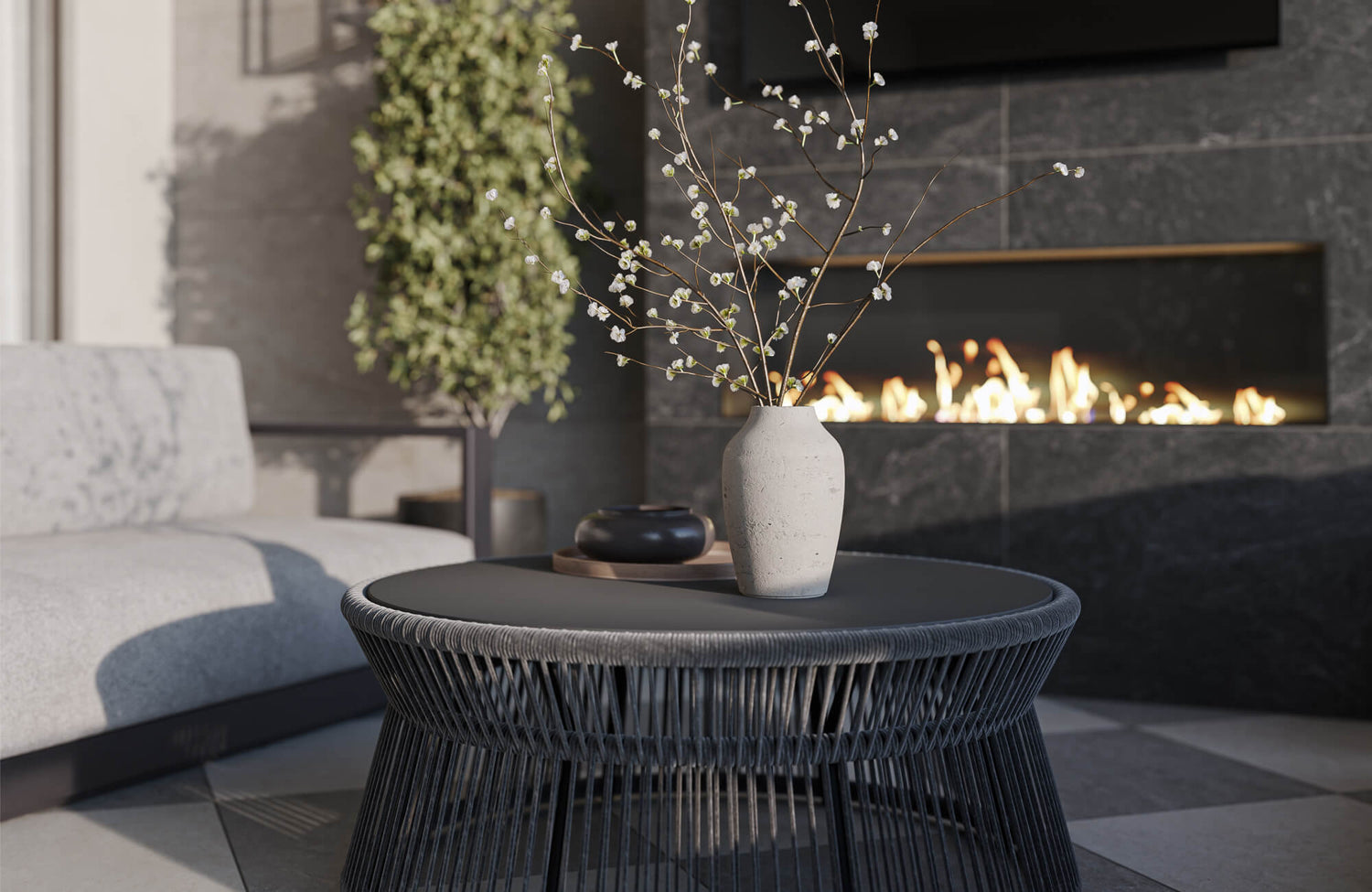
An outdoor coffee table can give seating a center of gravity. Edward Martin's Mysa Coffee Table illustrates this well because its broad, rounded top and grounded pedestal form create a natural midpoint without feeling visually harsh. In an outdoor lounge composition, a piece like this helps surrounding chairs turn toward one another, while its pale, stone-like surface introduces enough visual weight to make the seating arrangement feel intentional. A fire pit can create a similar pull, while a garden view, pool, fireplace, pergola, or large planter grouping can establish orientation in a different way. Even an outdoor rug can help signal where the lounge zone begins and ends.
The anchor does not need to be dramatic. A low table placed at the right distance from a sofa can be enough to make the setting feel usable. A pair of lounge chairs angled toward a small side table can create an intimate reading corner. The important point is that the furniture should feel arranged around an experience, not scattered across available square footage.

The Marisette 12" x 27" Down Pillow in Black adds contrast to the light seating, while Vesper 24 x 24 Grip Porcelain 2cm Paver Tile in Sand gives the lounge area a warm, structured foundation.
The Layout Does Not Make People Feel Comfortable Together
Once a lounge area has a purpose, the next issue is whether the furniture arrangement supports the way people naturally gather. Outdoor spaces can feel uninviting when seats are too far apart, face the wrong direction, or leave people unsure where to sit. Unlike indoor rooms, patios and decks do not have walls to guide placement, so the furniture has to create its own sense of enclosure and connection. A welcoming layout makes conversation, movement, and relaxation feel effortless.
Seating That Faces Away From Itself Can Feel Disconnected
One of the most common reasons outdoor seating feels awkward is poor orientation. Chairs lined along a wall, a sofa facing empty space, or seats arranged only toward a view can make the lounge area feel more like a waiting zone than a place for conversation. The furniture may be neatly arranged, but it does not invite interaction.
A more effective layout considers where people will look, speak, and place their bodies. For conversation, seating should usually turn inward or angle toward a shared center. A sofa can face two chairs across a coffee table. Four lounge chairs can form a loose square around a fire pit. A sectional can define one side of the area while accent chairs complete the gathering shape. Edward Martin's Sabine Outdoor Sofa in Cream shows why this kind of orientation matters: its long, clean silhouette creates a clear seating plane, while the cream cushions, dark frame, and woven side panels give the arrangement enough presence to act as one side of a defined lounge zone rather than a piece left floating on the patio.
Views still matter, especially in gardens, pool areas, and scenic backyards. The best outdoor layouts often balance the view with human connection. Seats can be angled rather than lined up rigidly, allowing people to enjoy the surroundings without feeling separated from one another. When the arrangement supports both looking outward and gathering inward, the space feels more natural.
Spacing Can Make a Lounge Area Feel Too Empty or Too Crowded
Spacing affects how people experience a lounge area before they sit down. If chairs are too far apart, the setting can feel formal and disconnected. If furniture is too close together, the space may feel difficult to enter or uncomfortable to move through. Outdoors, where boundaries are less defined, these spacing issues become especially noticeable.
A coffee table should be close enough to use without stretching awkwardly. Chairs should be near enough for conversation but not so tight that knees and arms compete for space. Walkways should move around the lounge zone rather than cutting through the center of it. On a large patio, pushing furniture to the edges often makes the middle feel empty, while grouping pieces into a defined zone can make the same area feel more intimate.
The table below shows how common layout issues change the feel of an outdoor lounge area.
|
Layout Problem |
How It Feels |
Better Approach |
|
Seats too far apart |
Formal, cold, disconnected |
Pull seating into a tighter conversation zone |
|
Furniture too close together |
Crowded, hard to move through |
Create clear walking paths around the lounge area |
|
Sofa faces nothing |
Unfinished, aimless |
Add a focal point or opposing seating |
|
Chairs line the perimeter |
Waiting-room effect |
Angle seating inward around a table or rug |
|
Walkway cuts through seating |
Interruptive, uncomfortable |
Shift circulation around the zone |
The best spacing often feels almost invisible. People can enter easily, set down a drink, turn toward one another, and move through the area without noticing the layout. That ease is one of the quiet markers of a well-designed outdoor room.
Outdoor Rooms Need Boundaries, Even Without Walls
Outdoor lounge areas often feel uninviting when they lack a sense of boundary. The space may be open and attractive, but without edges, it can feel unresolved. A seating group placed on a broad expanse of stone or decking needs something to define it as a room.
Rugs are one of the most effective tools for this. An outdoor rug can visually gather a sofa, chairs, and table into a single composition. Planters can create height and softness around the perimeter. Pergolas, privacy screens, low walls, lighting, or shifts in flooring material can also help establish where the lounge area belongs.
When flooring or hardscape is part of the design, surface choices should be considered alongside furniture. Tile samples, for instance, can help compare outdoor floor color, texture, and finish against furniture frames, rugs, cushions, and nearby architecture before a larger commitment is made. Visualization tools may also help clarify how surfaces and proportions will feel in context, especially when the patio, furniture, and surrounding materials need to work as one composition.
Outdoor surface suitability depends on slip resistance, climate, installation method, and manufacturer specifications. For built patios, terraces, or tiled outdoor areas, professional guidance is especially valuable when performance, drainage, and long-term wear are part of the decision.

The Elysia Mid Sofa brings woven texture and soft cushioning into the garden setting, creating a lounge composition that feels casual, grounded, and closely connected to the surrounding greenery.
The Furniture Scale, Comfort, or Material Choice Feels Wrong
A patio can have the right general layout and still feel uninviting if the furniture itself does not suit the space. Scale affects whether a lounge area feels balanced, while comfort determines whether people actually want to remain seated. Material choices also shape the mood of the area, especially outdoors where metal, wood, wicker, stone, fabric, and tile interact with sunlight and surrounding landscape. The most inviting lounge furniture looks appropriate, feels comfortable, and performs well in the conditions where it is placed.
Furniture Can Technically Fit and Still Look Wrong
One of the subtler challenges in outdoor design is the difference between physical fit and visual fit. A sectional may fit within the patio dimensions, yet still feel too bulky for the architecture. A pair of slim chairs may leave enough room to walk, yet feel too small against a wide deck or expansive lawn. Measurements matter, but they do not tell the whole story.
Scale describes how a piece relates to the size of the space. Proportion describes how the parts relate to one another. Visual weight refers to how heavy, light, solid, or open a piece appears. A dark, deep-framed outdoor sofa may carry more visual weight than a lighter woven chair with open sides, even if their footprints are similar.
When furniture scale is wrong, the area often feels uncomfortable before anyone uses it. Oversized pieces can make a compact patio feel crowded and immovable. Undersized pieces can make a large outdoor area feel temporary or underfurnished. Low-profile seating may look elegant, but if the surrounding architecture is tall or substantial, it may feel visually lost. The most inviting spaces balance the size of the furniture with the size of the outdoor room, the height of nearby walls or railings, and the openness of the surrounding landscape.
Attractive Outdoor Furniture Is Not Always Comfortable
Outdoor lounge furniture often has to do more than look good. It needs to support longer periods of sitting, shifting, leaning, and gathering. A chair with a striking silhouette may not feel inviting if the seat is too shallow, the back is too upright, or the arms sit at an awkward height. A low sofa may photograph beautifully but feel difficult for some people to get in and out of.
Comfort is shaped by several details working together. Seat depth affects whether a piece feels upright or relaxed. Cushion firmness affects support. Back angle influences how naturally the body reclines. Arm height changes how restful the seating feels. Ottomans, pillows, and nearby tables can also change whether a lounge area supports lingering or only brief sitting.
The surrounding conditions matter as well. A comfortable sofa placed in direct sun may still go unused. Cushions that are difficult to keep dry can make the area feel less practical. If every seat lacks a place to set down a drink, book, or phone, the space may feel incomplete even when the seating itself is well chosen. True comfort outdoors is physical, environmental, and functional at the same time.
Materials Influence Both Durability and Atmosphere
Materials shape the emotional character of an outdoor lounge area as much as its durability. Warm wood tones, woven textures, and soft performance fabrics can create a relaxed atmosphere. Powder-coated aluminum may feel clean and contemporary. Stone, concrete, ceramic, or tile surfaces can add permanence and structure. Each choice changes how the lounge area relates to the house, landscape, and surrounding light.
A space can feel cold when too many hard or sleek materials are used together. Metal seating on pale stone, with minimal cushions and no rug, may feel crisp but not necessarily inviting. A patio can also feel visually heavy if dark frames, bulky cushions, and dense furniture forms dominate a small area. The right mix usually includes contrast: hard and soft, open and solid, warm and cool, structured and relaxed. Edward Martin's Maris Teak End Table is a useful example of this balance because its compact square form, rounded edges, and visible wood grain introduce warmth beside woven seating and light cushions. The piece does not dominate the arrangement, but its natural material character helps the lounge area feel less stark and more settled.
|
Design Issue |
Possible Furniture Cause |
What to Reconsider |
|
Space feels cramped |
Furniture is too deep or bulky |
Lower-profile seating or fewer pieces |
|
Space feels empty |
Furniture is too small or too scattered |
Larger rug, sectional, or paired chairs |
|
Space feels cold |
Materials are too hard or minimal |
Add wood tones, cushions, rugs, or plants |
|
Space feels stiff |
Seating is too upright or formal |
Deeper seats, ottomans, softer textiles |
|
Space feels visually heavy |
Dark, bulky frames dominate |
Lighter frames or more open silhouettes |
Durability should be evaluated with the same care as appearance. Performance varies by climate, exposure, maintenance habits, construction quality, and manufacturer specifications. Teak, aluminum, resin wicker, performance fabric, and stone each have advantages, but no material performs identically in every setting. A covered porch, coastal terrace, shaded garden patio, and uncovered pool deck all place different demands on outdoor furniture.

The Kova End Table complements Dawson 24 x 24 Grip Porcelain 2cm Paver Tile in Alabaster, balancing woven furniture, soft textiles, and planted privacy within a layered outdoor lounge area.
The Area Feels Too Exposed to Sun, Weather, or Surroundings
Even beautiful outdoor lounge furniture will go unused if the setting feels uncomfortable. Exposure changes how people experience a space: harsh sun, wind, glare, noise, lack of privacy, and nearby views can make a seating area feel less relaxing than it looks. This is where outdoor design differs most from indoor decorating. A successful lounge area has to account for the physical environment as much as the furniture arrangement.
Shade Often Determines Whether the Space Gets Used
Shade is one of the most important factors in whether an outdoor lounge area feels inviting. A seating group placed in full afternoon sun may look appealing in a photograph, but it can become unpleasant during the hours when people would otherwise use it. Heat buildup on cushions, glare from pale surfaces, and hot metal frames can all make a space feel less comfortable.
Shade can come from architecture, trees, umbrellas, pergolas, covered patios, or shade sails. The right solution depends on the exposure and the character of the home. A large umbrella may suit a flexible seating area, while a pergola can create a stronger sense of enclosure. Existing trees may soften the space beautifully, though they can also introduce pollen, leaves, or uneven shade. Edward Martin's Kova Daybed demonstrates why protection matters for furniture intended for long, relaxed use. Its curved profile, low lounge form, and layered cushions suggest lingering, but that invitation becomes far more convincing when paired with shade and planted enclosure rather than left exposed to harsh sun.
The goal is not to cover every inch of the lounge area. It is to make the seating usable during the times of day that matter most. Morning coffee, afternoon reading, and evening entertaining may each require different levels of protection. When shade is planned around actual use, the outdoor lounge area feels more intentional and more comfortable.
Privacy Helps a Lounge Area Feel More Relaxed
A lounge area can feel uninviting when it feels too visible. People are less likely to settle into a space if they feel exposed to neighbors, street views, nearby windows, or open property lines. The furniture may be beautiful, but the body reads the area as unprotected.
Privacy does not always require a full enclosure. Tall planters, trellises, outdoor curtains, layered greenery, low screens, or carefully placed furniture can soften sightlines without making the space feel closed. In some settings, even a single planted edge behind a sofa can create enough psychological comfort to make the seating feel more relaxed.
The best privacy solutions feel integrated rather than defensive. A row of planters can add texture and seasonal interest. A screen can become part of the material palette. A pergola with climbing greenery can filter views while adding shade. When protection is designed gracefully, the lounge area feels calmer without losing its connection to the outdoors.
Weather and Maintenance Affect How Inviting the Space Feels
Outdoor spaces are shaped by weather every day, even when the design looks still. Wind can scatter pillows. Rain can leave cushions damp. Humidity can affect materials. Salt air, pollen, dust, tree debris, and seasonal temperature shifts can all change how easy the space feels to use.
A lounge area that requires too much effort before each use may slowly become less inviting. If cushions have to be retrieved from storage every time, covers are difficult to remove, or surfaces always need cleaning, the space begins to feel less spontaneous. Good planning reduces friction. Covered storage, durable performance fabrics, furniture covers, washable cushion materials, and smart placement can all help the area remain ready for use.
Maintenance guidance should always be checked against manufacturer recommendations, especially for cushions, frames, covers, rugs, and specialty finishes. Fire pits should be placed according to manufacturer clearances and local codes. Built-in shade structures may require permits or professional installation, and wired outdoor lighting should be installed according to applicable code by qualified professionals. Around pools, safe circulation, water exposure, and slip resistance should remain part of the design conversation.

Caldra Outdoor Lounge Chair in Cream and Karina 5.5 x 5.5 Matte Porcelain Tile in Cotto shape a warm outdoor fireplace setting, where woven seating, soft cushions, and tiled surfaces create a defined gathering zone.
The Design Lacks Warmth, Layers, and a Connection to the Home
After layout, comfort, and exposure are addressed, the final reason an outdoor lounge area may feel uninviting is atmosphere. Outdoor spaces often start with hard surfaces, open air, and durable materials, which can make them feel visually cold without softer design layers. Rugs, lighting, pillows, planters, tables, and color continuity help the area feel more settled and intentional. The goal is not to decorate the patio heavily, but to give it enough detail to feel like a natural extension of the home.
Rugs, Textiles, and Plants Make the Space Feel Settled
Outdoor lounge areas often need softness to counterbalance hardscape, architecture, and weather-resistant materials. A rug can define the seating zone and make the furniture feel connected. Pillows can add support, color, and texture. Planters can introduce height, movement, and a sense of life around the edges of the space.
These layers are not merely decorative. They tell people the area is meant to be occupied. A sofa without pillows may feel bare. A seating group without a rug can appear to float. A patio without plants may feel detached from the landscape, even when it is outdoors. Each layer helps the lounge area feel more complete, but the effect should still feel edited.
The most refined outdoor spaces use layers with restraint. A few substantial planters can be more effective than many small pots. A rug should relate to the furniture footprint rather than sit like an isolated mat. Pillows should support the color palette instead of overwhelming it. Warmth comes from cohesion, not accumulation.
Lighting Changes the Mood After Sunset
An outdoor lounge area that works only in daylight has limited appeal. Lighting extends the usefulness of the space and changes how it feels after sunset. Without it, even a well-furnished patio can disappear into darkness or feel too stark under a single harsh fixture.
Layered outdoor lighting usually feels more inviting than one bright source. Sconces can define architecture. Lanterns can bring light closer to seating. Path lights can make movement feel safer. String lights may soften casual spaces, while outdoor-rated table lamps can make covered areas feel more like interior rooms. Fire features can add warmth and atmosphere when they are appropriate for the setting. Edward Martin's Wilder Exterior Wall Sconce In Textured Black is a clear example of how exterior lighting can contribute to both structure and mood. Its black lantern-style frame gives the wall a defined vertical accent, while the warm, diffused light supports the fireplace setting without overwhelming the surrounding plants, chairs, and tiled surfaces.
The quality of light matters as much as placement. Overly bright lighting can flatten the mood and make a lounge area feel exposed. Gentle, distributed light creates depth and encourages people to stay. When lighting is planned with the same care as furniture, the outdoor room feels usable, comfortable, and visually composed.
Indoor-Outdoor Continuity Makes the Lounge Area Feel Intentional
An outdoor lounge area feels more refined when it relates to the home behind it. The relationship does not need to be literal. Outdoor furniture does not have to match the interior exactly, but it should feel connected through color, material, proportion, or level of formality.
A modern home may suit clean-lined lounge furniture, structured planters, and a restrained palette. A traditional home may feel better with warmer materials, classic silhouettes, or softer textile choices. A coastal property might call for lighter finishes and relaxed textures. The strongest outdoor spaces borrow enough from the interior to feel intentional while still responding to weather, landscape, and open air.
Views from inside are also part of the design. Furniture seen through glass doors or large windows affects the feeling of adjacent rooms. If the outdoor palette clashes with interior finishes, the transition can feel abrupt. If the materials, colors, and silhouettes are thoughtfully related, the patio becomes part of the home’s visual rhythm. For projects that involve coordinating outdoor furnishings with rugs, lighting, surfaces, and decor, Edward Martin’s design services can help bring those decisions into a cohesive plan without treating the outdoor area as an afterthought.
A More Inviting Outdoor Lounge Area Starts With Better Design Relationships
An outdoor lounge area rarely feels uninviting because one item is missing. The real issue is usually the relationship between the furniture, the people using it, the home behind it, and the environment around it. A beautiful sectional cannot compensate for harsh sun, poor spacing, missing tables, or a layout that does not encourage conversation. When comfort, proportion, protection, and atmosphere work together, the lounge area begins to feel less like unused patio furniture and more like a place people naturally want to occupy.
A refined outdoor lounge area is not created by adding more for the sake of more. It is shaped by decisions that support the experience of staying outside. The furniture should invite people in, the layout should make gathering feel natural, and the surrounding details should connect the space to the home with clarity and intention. For project-specific questions about coordinating outdoor furnishings, surfaces, lighting, and decor, the Edward Martin contact page can be a practical starting point for finding the right support.