Lighting in a bathroom influences more than just how the space looks. It also determines how safe, comfortable, and usable it really is. Whether you're getting ready in the early morning or winding down after a long day, the lighting choices you make impact everything from visibility and safety to mood and design cohesion. But with so many options on the market, it can be difficult to know what’s right for each part of your bathroom.
This article takes the guesswork out of the equation. By breaking down specific lighting types, safety zones, performance features, and aesthetic strategies, you'll gain a clear understanding of how to light your bathroom with both practicality and personality in mind. From choosing moisture-safe fixtures to blending ambient, task, and decorative layers, every section is designed to help you create a space that works beautifully in every sense.

Understanding Bathroom Lighting Zones and Safety Standards
Bathrooms present unique challenges due to the presence of both water and electricity. To protect users, international safety regulations divide the bathroom into zones that correspond with how close each area is to water sources. These zones determine what types of fixtures and what level of moisture protection, measured by Ingress Protection or IP ratings, are appropriate. As with any electrical work, it’s essential to consult a qualified electrician and follow local building codes to ensure safety and compliance.
Identifying Bathroom Zones and IP Ratings
In any bathroom, moisture can quickly become a threat if not properly accounted for, which is why lighting regulations define specific safety zones.
Zone 0
Zone 0 refers to areas inside a bath or the base of a shower where full submersion is possible. Any light you install must be extra low voltage, typically 12 volts or less, and carry a minimum IPX7 rating, meaning it can safely handle temporary immersion. These lights are also often fully sealed, recessed into the floor or walls, and commonly integrated as part of a waterproof LED system that delivers soft, ambient lighting right where water is most concentrated.
Zone 1
Zone 1 covers the vertical space directly above the bath or shower, extending up to 2.25 meters. This zone faces constant exposure to steam, splashes, and condensation, so it demands lighting fixtures with at least an IPX4 rating. However, IP65-rated downlights are often preferred because they provide superior water and dust protection. You’ll frequently see these fixtures installed directly into the ceiling above the shower or tub, often accompanied by vapor-sealed casings to ensure longevity.
Zone 2
Zone 2 spans 0.6 meters horizontally beyond Zone 1 and also reaches up to 2.25 meters high. Although this space is slightly less vulnerable, it still encounters regular humidity, so lights rated IPX4 or IP44 are recommended. Wall sconces, illuminated mirrors, and semi-flush ceiling lights are commonly placed in Zone 2, as long as they’re appropriately rated to withstand dampness.
Unzoned Area
Outside of Zones 0, 1, and 2 lies what is known as the unzoned area. Although this space is farther from direct water sources, it's still subject to the humid conditions of a functioning bathroom. In these areas, fixtures rated IP20 or higher are typically acceptable, though many opt for IP44 throughout the space for consistency and added protection. Even in larger or well-ventilated bathrooms, moisture can also spread easily, so it's wise to err on the side of caution and select fittings that resist corrosion and perform reliably in a humid atmosphere.
Matching Lights with Proper Zones
Selecting lighting that corresponds with each bathroom zone isn’t just about meeting legal standards. It’s about keeping you safe while ensuring long-term fixture performance. In Zone 0, the most appropriate choices are waterproof, low-voltage LED units that carry at least an IPX7 rating. These can be seamlessly embedded into shower floors or bath walls, offering subtle mood lighting that transforms the space without compromising safety. Because these fixtures operate at Safety Extra Low Voltage (SELV), they also drastically reduce any risk of electric shock even under direct contact with water.
In Zone 1, where fixtures are exposed to heavy splashes and steam, the go-to solution is IP65-rated recessed downlights. These sealed units are installed directly above showers or baths, delivering bright, focused light while remaining tightly protected against water jets and airborne moisture. Shower lights combined with ventilation fans are also an efficient option, provided they meet zone-specific ratings and are correctly installed. Ensuring that all connections are watertight is crucial, as even the best-rated fixtures can fail if moisture infiltrates the housing through gaps or loose wiring.
Zone 2 offers you a little more freedom in style and placement. This is the zone where you can get creative with mirror lights, wall-mounted fixtures, or even certain decorative options, as long as they meet at least an IP44 rating. This rating ensures that your lights will resist condensation and occasional splashes. In these positions, choose materials like powder-coated aluminum or treated plastics that resist corrosion and retain their finish in a humid setting.
Beyond the defined zones, you can consider a broader range of lighting options, such as hanging pendants or sculptural ceiling fixtures. These can enhance the visual appeal of your bathroom, especially in dry corners or near entrances. However, even in these seemingly safe spots, many still recommend using fixtures with at least an IP44 rating for peace of mind, especially if your bathroom lacks adequate ventilation. This is because humidity doesn’t respect invisible boundaries, and condensation often settles in the most unexpected places.
Avoiding Common Safety Mistakes
When planning your bathroom lighting, one of the most important steps is to avoid underestimating the role of IP ratings. A common and dangerous mistake is installing decorative ceiling lights or pendant fixtures with an IP20 rating in areas exposed to moisture. These types of fixtures, although appealing in style, are simply not built to withstand the damp conditions of a bathroom. If installed near bathtubs or showers, they become hazardous and could pose a serious electrical risk or violate local building codes.
Equally concerning is the misuse of high-voltage lighting in areas that demand SELV systems, particularly in Zones 0 and 1. Installing a 230V fixture in a wet area creates a severe safety risk, even if the fitting appears sealed. Moisture and electricity are also a dangerous mix, and when voltage isn't properly reduced, the consequences can be catastrophic. To stay safe, ensure any necessary transformers are placed well outside the wet zones, ideally in an adjacent room or dry section of the bathroom. This precaution minimizes the chance of moisture exposure to critical components.
Even when the right fixtures are chosen, improper installation can compromise everything. Gaps around fittings, loose cable entries, and incompatible back boxes can all allow moisture to seep in. To prevent these issues, use waterproof sealants and gland fittings during installation. A well-sealed fixture will maintain its IP rating, resist corrosion, and continue to perform for years. Taking the extra time to get this step right protects not only your lighting investment but also your personal safety every time you step into the bathroom.

Task Lighting That Enhances Function and Clarity
Effective task lighting transforms the bathroom into a highly functional space, enabling grooming tasks like shaving, skincare, and makeup application to be done with confidence and precision. To get the most out of your daily routine, it's essential to consider not just how bright your lighting is, but also where and how it's placed.
Best Placements for Vanity Lighting
Positioning is everything when it comes to vanity lighting. If you've ever noticed shadows under your eyes or chin while using the bathroom mirror, chances are the light source was poorly placed. The most effective setup typically involves placing lights on both sides of the mirror, at roughly eye level. This creates balanced, shadow-free illumination that lights your entire face evenly. Vertical sconces or narrow LED light strips mounted on the wall or integrated into the mirror frame work exceptionally well for this purpose.
Take, for instance, the setup in the image shown above, which features a pair of gracefully arched mirrors flanked by elegant vertical sconces. These are the Prudence 1-Light Wall Sconce in Aged Brass, a timeless choice that combines both form and function. The aged brass finish brings a soft golden warmth to the space, complementing the whitewashed walnut vanity and neutral-toned tile for a look that feels refined yet inviting. Positioned at eye level, these sconces also eliminate harsh shadows and deliver the kind of clear, balanced illumination that makes detailed grooming both easier and more accurate.
For wider vanities or larger mirrors, side lighting may need to be supplemented with an overhead fixture. However, caution is key—lights placed too high or too far back can cast downward shadows that distort your appearance. To avoid this, ensure that any top-mounted lights are pulled slightly forward, angling the beam directly onto your face. When the placement is right, you'll find grooming tasks easier and more accurate, whether you're lining up a beard or blending foundation.
Choosing Color Temperature for Grooming Accuracy
Color temperature affects not only how your bathroom looks but also how you look in the mirror. For grooming purposes, the sweet spot is around 5000 Kelvin, which is a neutral daylight tone that closely mimics natural sunlight. This lighting allows your eyes to perceive skin tones, makeup colors, and hair detail with incredible accuracy. It becomes especially important when you're applying foundation or trying to spot blemishes, where true-to-life visibility is essential.
Using the wrong color temperature can have frustrating consequences. Lighting that's too warm (below 3000K) can give everything a yellow-orange cast, leading to makeup that looks overly heavy or uneven once you step outside. On the flip side, overly cool light above 6000K introduces a stark, bluish tint that can wash out your skin and make you appear tired or pale. To fine-tune accuracy even more, look for fixtures with a high Color Rendering Index (CRI) of 90 or above. This ensures that the light source reproduces colors faithfully, giving you confidence in how you look before you walk out the door.
Integrating Dimmable Task Lighting
Task lighting doesn’t have to be rigid. Adding dimmable controls can transform how you use your bathroom throughout the day. In the early morning, you might want crisp, bright light to kickstart your routine and illuminate every detail of your face. But as evening sets in, the same intense lighting can feel jarring and overstimulating. This is where dimmable fixtures shine, allowing you to adapt the light intensity to match your mood and time of day.
You can take it a step further with smart mirrors or vanity cabinets that include integrated LED lighting and touch-sensitive controls. Many of these setups offer not only dimming features but also the ability to shift between color temperatures. You might prefer a cool, energizing tone in the morning and a warmer, calming hue before bed. With a single touch or swipe, these adaptive features help you create a more personalized and enjoyable experience, all while keeping functionality front and center.

Ambient Lighting for Overall Illumination
Ambient lighting serves as the backbone of your bathroom’s lighting scheme, providing a consistent and comfortable base layer of brightness. It supports both functionality and mood, creating a well-lit environment that makes everyday tasks feel effortless and the space more inviting.
Recessed Ceiling Lights and Spacing Strategies
Recessed ceiling lights continue to be a favorite in bathroom design because of their clean, minimal look and strong overall light distribution. When properly spaced, they create a uniform wash of light that eliminates dark zones while preserving visual harmony. Ideally, these lights should be arranged in a grid formation and spaced about three to four feet apart, closer than standard recommendations for other rooms. This tighter configuration also compensates for the smaller size and reflective surfaces typical of bathrooms, helping to maintain even illumination from wall to wall.
To avoid harsh lighting effects, keep the fixtures at least one to two feet from the walls. Placing them too close can lead to shadowy scallops or highlight imperfections in tile or paint. You’ll also want to choose recessed lights with a wide beam angle, as this provides broader coverage and prevents intense bright spots. When paired with dimmers, these lights give you even more control, allowing you to adjust the mood to suit different times of day or personal preferences.
Using LED Panels or Flush-Mount Fixtures
In bathrooms with low ceilings or where space is at a premium, flush-mount fixtures and slim LED panels offer a smart and stylish solution. These options are designed to sit directly against the ceiling, eliminating the need for deep housing or cut-outs, which can be especially beneficial in renovations or concrete ceilings. Edge-lit LED panels, in particular, provide a smooth, diffuse light that mimics daylight and enhances the perception of space, making smaller bathrooms feel brighter and more open.
A great example of this approach is shown in the photo above, where a minimal, sculptural ceiling fixture anchors the ambient lighting plan without overwhelming the design. This is the Clementine Semi-Flush in Gold Leaf, a refined piece that adds a touch of understated elegance with its soft, gold leaf finish. Its compact profile and diffused glow make it ideal for bathrooms seeking both style and space-saving functionality, reinforcing the importance of thoughtful ambient lighting in everyday routines.
These panels are also incredibly practical. Most come with dimming capabilities and multiple color temperature settings, allowing you to customize the brightness and tone for any time of day. Additionally, many models are designed with a sealed, moisture-resistant casing, which makes them perfectly suited for the humid conditions of a bathroom. Combine this durability with long lifespan and low energy use, and you have a lighting choice that balances performance with cost-effectiveness.
Softening Shadows with Layered Ambient Sources
Although overhead lighting does much of the heavy lifting, it can sometimes create a flat or clinical atmosphere if used alone. To combat this and bring warmth into the space, layering ambient light sources is an effective strategy. Instead of relying solely on ceiling lights, you can introduce additional elements like wall-mounted uplights or integrated cove lighting to spread light more softly and naturally.
Wall uplights also direct illumination toward the ceiling, which then reflects the light back down in a gentle, diffused glow. This technique reduces stark contrasts and creates a more serene ambiance. Similarly, cove lighting, often hidden within architectural niches or ledges, provides a subtle backlight effect that enhances depth and reduces the appearance of harsh shadows.
For an extra layer of refinement, consider adding linear LED strips behind vanities or beneath floating fixtures. These hidden lights offer a glow that feels luxurious while complementing the main sources of ambient light, rounding out a design that’s both functional and inviting.

Accent and Decorative Lighting for Style and Personality
Beyond everyday functionality, your bathroom lighting can become a reflection of your personal style. Accent and decorative lighting allow you to spotlight architectural features, add elegance, and create an atmosphere that feels as carefully designed as any other room in your space.
Highlighting Architectural Features with Accent Lights
Accent lighting is your opportunity to draw attention to the details that make your bathroom special. Whether it’s a textured tile wall, a sculptural tub, or a recessed shelf, targeted lighting can make these elements stand out beautifully. Small, directional spotlights are ideal for illuminating tiled feature walls or alcoves, casting shadows that enhance the texture and pattern. Meanwhile, installing LED strips along the edges of floating vanities or beneath shelving can create a subtle wash of light that adds dimension and a touch of drama.
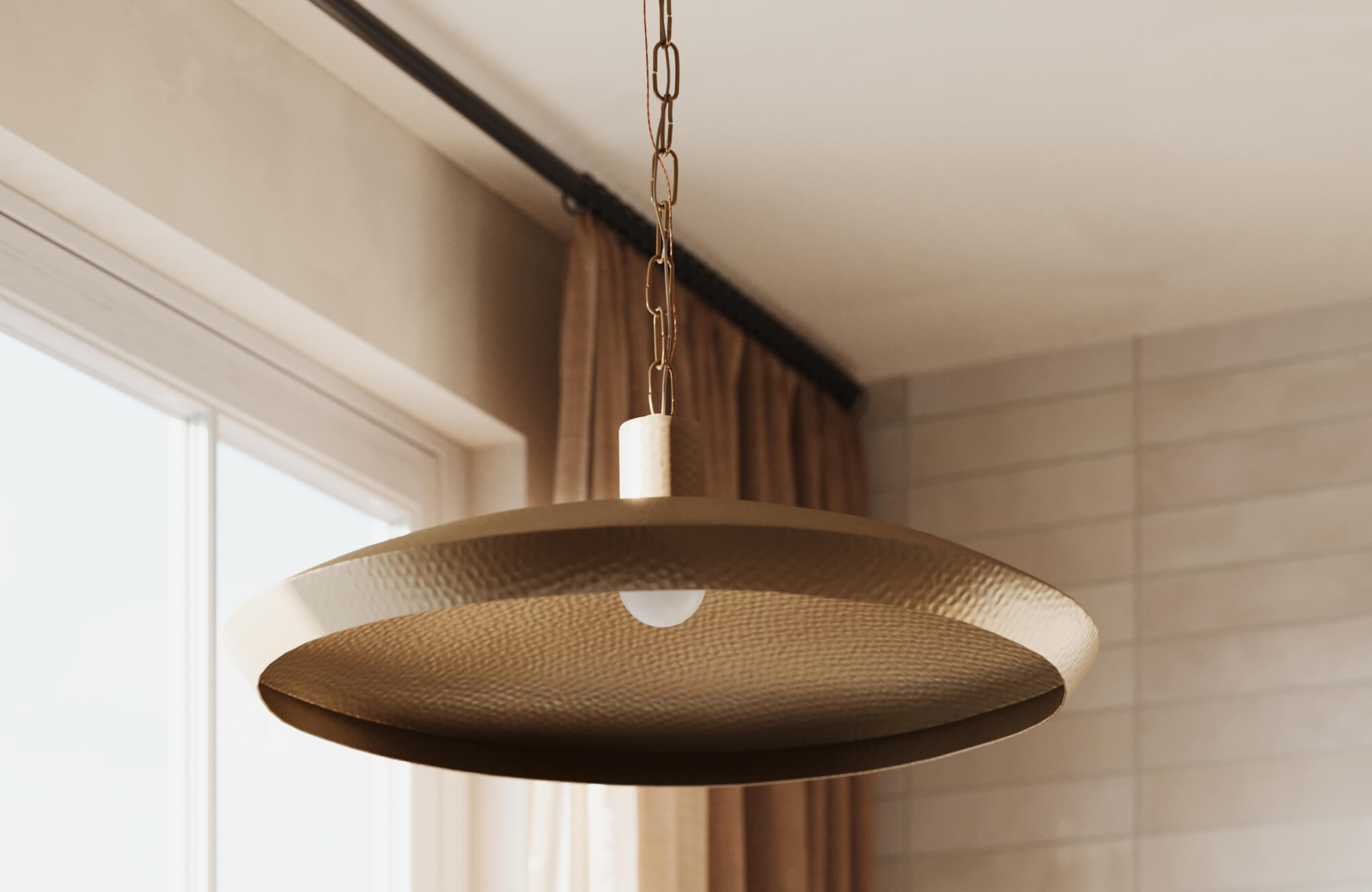
In spaces with high ceilings or distinctive architectural lines, pendant lighting can serve as a striking accent element. Edward Martin’s Theodore Pendant in Vintage Brass offers a sculptural presence with its crisp geometry and warm vintage brass finish, making it a natural complement to both modern and transitional spaces. Its focused downlight not only adds depth and ambiance but also spotlights the architectural surfaces beneath, turning everyday materials into standout design features.
Selecting Statement Light Fixtures
Introducing a statement light fixture can completely redefine the atmosphere of your bathroom. A bold pendant suspended above a freestanding tub, for instance, creates a luxurious centerpiece that instantly draws the eye, while a chandelier placed in a bathroom with tall or vaulted ceilings adds grandeur and elegance. In smaller bathrooms, you don’t need a scale to make a statement. Artful sconces flanking the vanity or positioned around niches can also bring just as much impact when designed with sculptural lines or rich finishes.
A perfect example is illustrated in the picture above, where sleek, cylindrical sconces are mounted on either side of a round mirror for a refined yet modern touch. These are the Russell Wall Sconce in Old Bronze, featuring a crisp white glass shade paired with a deep old bronze finish that provides bold contrast against the light tile backdrop. With its architectural silhouette and classic-meets-contemporary palette, this fixture brings just the right amount of drama and elegance to elevate the vanity wall into a statement feature.
To ensure that your statement pieces work with the rest of the space, consider their scale in relation to the room. A fixture that’s too large can overwhelm, while something too small may feel underwhelming and out of place. Placement also matters just as much. Hang pendants where they won’t interfere with movement or mirror visibility, and aim to reduce glare by choosing frosted or diffused glass. When thoughtfully selected and positioned, statement lights can elevate your bathroom into a truly design-forward environment.
Mixing Finishes and Styles Strategically
Combining different finishes and styles in bathroom lighting can create a layered, curated aesthetic that feels rich and deliberate. Rather than matching every element, look for ways to balance contrast, such as pairing matte black light fixtures with warm brass accents or mixing polished chrome hardware with frosted glass pendants. The key is to stay intentional: limit your finishes to two or three and repeat them across different elements like mirrors, faucets, or drawer pulls for a cohesive look.
One versatile example of this approach is the Ryder Wall Sconce in Aged Brass, which bridges classic and contemporary influences through its streamlined silhouette and aged brass finish. Its timeless form also makes it easy to pair with a variety of other finishes, helping to anchor an eclectic mix of styles while still contributing to a unified, well-considered design.
For help achieving this level of design cohesion, consider exploring our design services, where professionals can guide you in selecting lighting that reflects your style while maintaining balance and functionality. If done well, this mix-and-match approach further brings warmth, depth, and a personalized feel to your bathroom, ensuring that every fixture contributes to a space that’s as stylish as it is functional.

Color Rendering and Light Quality in Bathroom Design
Light quality doesn’t just influence how your bathroom looks. It also affects how you feel in it and how well you can perform daily tasks. When you understand the right lighting metrics, such as CRI, lumens, and diffusion, you’re better equipped to design a space that looks great and works seamlessly.
Understanding CRI and Why It Matters
The Color Rendering Index, or CRI, is a critical yet often overlooked factor when choosing bathroom lighting. This measurement tells you how accurately a light source reveals colors in comparison to natural daylight. A CRI rating of 90 or higher is ideal for bathrooms, especially around vanities where color accuracy is essential. When grooming or applying makeup, lighting with poor color rendering can also make it difficult to see true skin tone or accurately judge how products will appear in natural light.
Furthermore, high CRI lighting helps reveal subtle details, from the undertones in your complexion to the precise finish of your tiles and hardware. With better visibility comes fewer mistakes—no more over-blending makeup or misjudging the evenness of a shave. This level of accuracy not only boosts your confidence but also enhances the entire atmosphere of the room. You’ll notice that materials and surfaces feel richer and more defined, making the bathroom feel polished and thoughtfully lit.
Balancing Brightness and Comfort with Lumens
Brightness in the bathroom is about finding the right level of illumination for the size and layout of your space. Lumen output is the metric that tells you how much visible light a fixture emits, and it’s essential for creating a lighting plan that’s both functional and pleasant. For a small bathroom, 300 to 500 lumens may be sufficient, especially if the space is primarily used as a guest powder room. In medium-sized bathrooms, you’ll likely need between 500 and 800 lumens spread across various fixtures to avoid overly bright or dim zones.
If your bathroom is large or includes multiple functional areas like a double vanity, freestanding tub, or walk-in shower, you’ll need a layered lighting approach that adds up to over 1000 lumens. Rather than relying on one powerful source, distribute light through recessed ceiling fixtures, vanity lights, and ambient panels to maintain comfort and eliminate glare. This balance also prevents visual strain and ensures every corner of the room is usable and welcoming, no matter the time of day.
Choosing Diffused Versus Direct Lighting
Not all light is created equal when it comes to comfort and usability. Direct lighting, which shines intensely from a single source, can be great for spotlighting, but overuse can lead to glare and sharp shadows that make tasks harder rather than easier. This is especially noticeable when light bounces off glossy surfaces or mirrors, creating hot spots that strain your eyes.
That’s where diffused lighting comes in. By using frosted glass, opal lenses, or integrated diffuser panels, you soften the light and spread it more evenly across the space. This approach also reduces harsh contrasts and gives your bathroom a more calming, spa-like ambiance. Fixtures with built-in diffusion are particularly helpful around mirrors and in ambient lighting, providing gentle illumination that supports both visual clarity and relaxation. With the right combination of direct and diffused light, you create a setting that feels balanced, comfortable, and easy to use, no matter what the task at hand is.
Designing Bathrooms That Shine with the Right Lighting
The best bathroom lighting blends safety, performance, and style into one cohesive system. By understanding moisture zones, selecting the proper IP-rated fixtures, and combining ambient, task, and accent lighting, you ensure your space is not only functional but visually refined. When you match thoughtful placement with quality light output and intentional design, your bathroom becomes more than a utility. It also becomes a daily retreat that enhances every moment you spend in it.
If you’re ready to bring your vision to life or need expert guidance on choosing the right lighting for your space, our team is here to help. Whether you're refining a design plan or starting from scratch, our product specialists can assist with recommendations tailored to your layout, style, and installation needs, ensuring your bathroom lighting not only looks exceptional but performs beautifully day after day.