Kitchen rugs have become a defining layer in seasonal interiors, where texture, pattern, and performance converge to elevate the heart of the home. During the holiday season, kitchens demand surfaces that feel inviting underfoot while standing up to constant movement, moisture, and entertaining. Today’s most sought-after kitchen rug styles balance visual warmth with technical precision, transforming functional floor coverings into design statements. From washable low-pile runners to ergonomic comfort mats, each trend reflects a shift toward materials and construction methods engineered for real life. This article explores the kitchen rug styles trending this holiday season, highlighting how thoughtful design and performance-driven craftsmanship shape modern culinary spaces.

Washable Low-Pile Kitchen Rugs
Holiday kitchens experience heightened activity, making washable low-pile rugs an essential foundation rather than a decorative accessory. These designs succeed by pairing understated aesthetics with construction features that support durability, safety, and ease of maintenance.
Performance-Driven Fiber Technology
Washable low-pile kitchen rugs trending this season are predominantly crafted from solution-dyed polyester or polypropylene, fibers valued for their stain resistance and long-term color stability. Because pigments are embedded at the polymer level, these materials maintain vibrancy even after repeated laundering and exposure to household cleaners. Their hydrophobic structure limits moisture absorption, allowing spills to sit on the surface long enough for quick removal—an essential advantage in active cooking zones.
Rugs such as Edward Martin’s Hutchinson Rug in Sage / Graphite, as displayed in the photo above reflect this performance-driven approach, using a polyester face that delivers both visual softness and resilience under frequent use. The muted sage and graphite tones further help mask everyday debris while maintaining a refined appearance. As a result, synthetic fiber kitchen rugs for busy areas continue to define seasonal trends focused on practicality and longevity.
Construction and Safety Specifications
Beyond fiber selection, low-pile construction plays a pivotal role in kitchen safety and functionality. With pile heights typically under 0.25 inches, these rugs reduce tripping hazards while accommodating appliance clearance. This slim profile also allows chairs and stools to glide smoothly at islands and dining counters. To further enhance stability, many designs incorporate thermoplastic rubber or latex backing systems. These backings increase friction on tile, LVP, and sealed hardwood floors, reducing lateral movement. As a result, non-slip washable kitchen runner rugs for hardwood floors remain a preferred choice for active households.
Maintenance Efficiency for Busy Seasonal Use
Ease of care further distinguishes washable low-pile rugs during the holiday season. Their lightweight construction allows for quick removal and machine washing without professional cleaning services. Rapid drying times also minimize downtime between uses, which is especially beneficial during consecutive gatherings. Moreover, stain-resistant fibers reduce the need for aggressive spot treatments that can degrade textiles over time. This efficiency supports consistent cleanliness in high-visibility kitchen zones. Consequently, easy-care washable kitchen rugs for entertaining kitchens offer both practicality and peace of mind.
Vintage-Inspired and Persian-Style Kitchen Rugs
As contemporary kitchens lean toward sleek cabinetry and stone surfaces, vintage-inspired rugs reintroduce warmth and character. Their appeal lies in a balance of ornamental richness and modern performance capabilities.
Visual Camouflage Through Pattern Density
Persian-style and distressed kitchen rugs excel at concealing everyday debris through layered patterning and tonal variation. Intricate medallions, fractured borders, and intentionally faded fields break up the surface, preventing crumbs, dust, and minor spills from standing out. This visual complexity is especially effective in long kitchen runs and high-use prep zones, where uniform surfaces would quickly show wear.
Rugs like the McGowan Rug in Midnight / Sand showcase this benefit perfectly, pairing a softly distressed medallion with a harmonious blend of deep charcoal, warm sand, and muted taupe tones that help conceal everyday wear. As shown in the photo above, the pattern density works seamlessly against light cabinetry and wood flooring, maintaining a composed appearance even in active areas. For this reason, vintage-inspired kitchen runners with layered pattern density remain a practical and stylish choice for busy holiday kitchens.
Contemporary Manufacturing Methods
While the look references heritage weaving, modern production methods ensure performance suited for kitchens. Most designs are power-loomed or digitally flatwoven to maintain consistent yarn tension and structural integrity. Moreover, synthetic fibers replace wool to improve stain resistance and reduce shedding. Controlled distressing is also applied through printing techniques rather than wear, preserving durability. Low-profile construction further supports easy cleaning and appliance access. This fusion of tradition and technology defines durable traditional kitchen rugs for busy homes.
Color Palettes That Complement Modern Kitchens
Holiday-ready vintage rugs increasingly feature softened, neutral-forward palettes rather than heavy jewel tones. Muted reds, washed indigos, and warm taupes integrate seamlessly with modern cabinetry and quartz surfaces. These restrained hues also prevent visual competition with seasonal décor and countertop displays. In addition, subtle contrast allows patterns to remain expressive without overwhelming the space. This balance enhances long-term versatility beyond the holidays. As a result, neutral vintage kitchen rugs for contemporary interiors maintain broad design appeal.

Refined Geometric and Striped Kitchen Rugs
Geometric and striped rugs remain a strong trend as kitchens favor clarity, proportion, and order. These designs enhance spatial perception while maintaining visual restraint during busy holiday seasons.
Spatial Optimization Through Pattern Orientation
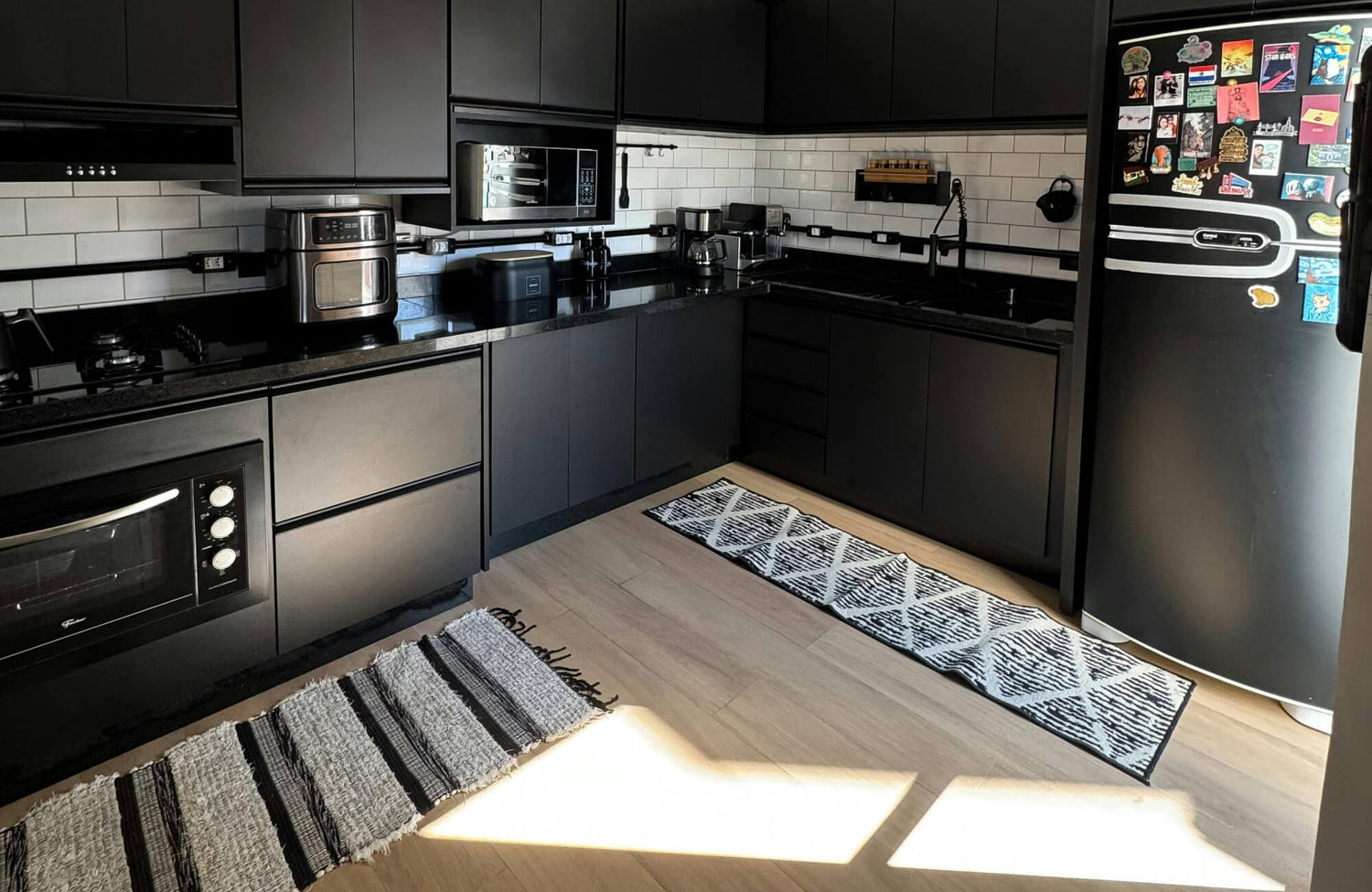
Linear and geometric patterns subtly influence how a kitchen is experienced. For instance, longitudinal stripes guide the eye forward, visually elongating narrow galley kitchens. In open layouts, grids and plaids also reinforce alignment with cabinetry and tile lines. This architectural harmony creates cohesion across surfaces. At the same time, neutral tones ensure the pattern complements rather than dominates the space. Consequently, striped kitchen runner rugs for galley kitchens remain highly effective.
Flatweave and Low-Loop Advantages
The popularity of geometric rugs is closely tied to flatweave and low-loop construction methods. These structures minimize fiber lift, preventing debris from embedding deeply. Cleaning also becomes more efficient, an important consideration during frequent holiday use. In addition, low-profile designs improve chair mobility and reduce edge curl, while tightly bound yarns resist snagging from footwear and stools. These benefits sustain demand for geometric flatweave kitchen rugs that are easy to clean.
Compatibility With Modern Cabinetry and Tile Layouts
Geometric rugs pair especially well with shaker cabinets, slab fronts, and rectilinear tile patterns. Their structured motifs echo grout lines and cabinet reveals, reinforcing design continuity. This alignment creates a visually organized kitchen environment even during peak activity. Subtle repetition across surfaces also enhances perceived order. The result is a kitchen that feels intentional rather than busy. Modern geometric kitchen rugs for streamlined interiors continue to resonate with design-forward homeowners.

Organic Curves and Handcrafted Texture Rugs
As kitchens continue to favor clean lines and architectural precision, organically shaped rugs are emerging as a counterbalancing design element. Curved silhouettes and handcrafted textures introduce softness and warmth, helping kitchens feel more inviting during the holiday season.
Rounded and Free-Form Rug Shapes That Soften Structured Kitchen Lines
Rounded and free-form rugs naturally offset the linear geometry of cabinetry, countertops, and tile layouts, while circular and oval silhouettes interrupt rigid sightlines, creating a more relaxed visual rhythm within the space. This softening effect is especially impactful in kitchens dominated by straight edges and sharp angles. By redirecting the eye, curved rugs prevent the space from feeling overly mechanical or stark. Their shapes also define zones subtly without relying on bold contrast. Rounded kitchen rugs for open layouts support a more fluid and welcoming design language.
Fringed and Braided Edge Details That Introduce Artisanal Character
Fringed and braided edges bring a handcrafted sensibility that softens kitchens dominated by hard materials and straight lines. Rather than relying on bold pattern, these rugs use texture and edge detail to create visual interest, making them feel relaxed yet intentional. Braided fringe also highlights the construction of the rug itself, reinforcing an artisanal, woven quality that reads as authentic rather than decorative.
As featured in the picture above, the Lafferty Rug in Ocean exemplifies this approach, pairing a subtle geometric field with thick, hand-tied fringe that adds dimension along the perimeter. Its braided fringe creates a gentle transition between the rug and the floor, enhancing warmth without disrupting flow. Fringed kitchen rugs with handcrafted detailing continue to resonate for organic, design-forward interiors seeking tactile depth.
Natural-Fiber and Woven Constructions That Enhance Organic Design Flow
Natural-fiber rugs constructed from jute, seagrass, or woven blends reinforce an organic design narrative. Their visible fibers and tonal variation add depth without overwhelming surrounding finishes. Woven constructions also introduce a subtle texture that complements wood cabinetry and stone surfaces. These rugs ground the space visually while maintaining a light, breathable aesthetic. Their understated presence supports layering with other kitchen textiles. Natural fiber kitchen rugs for organic interiors remain a favored choice for balanced, tactile design.

Transitional Kitchen Rugs That Bridge Traditional and Modern Styles
As holiday kitchens are styled to feel both welcoming and current, transitional rugs have emerged as a versatile design solution. By blending classic motifs with contemporary restraint, these rugs support spaces that need to feel cohesive across open layouts and evolving décor.
Simplified Traditional Motifs Adapted for Contemporary Kitchens
Transitional kitchen rugs often reference traditional elements such as borders, medallions, or repeating motifs, yet they are rendered with softened detail. Ornamentation is intentionally scaled back to avoid visual heaviness, allowing the rug to complement modern cabinetry and streamlined hardware. This restrained approach also preserves warmth without overwhelming clean-lined kitchens. The result is a rug that feels familiar yet updated. Such designs integrate seamlessly with both classic and contemporary finishes. Simplified traditional kitchen rugs for modern homes continue to gain seasonal relevance.
Balanced Color Palettes That Support Holiday Styling
Color plays a defining role in transitional rug design, particularly during the holiday season. Muted neutrals, warm taupes, soft charcoals, and desaturated reds provide subtle festivity without seasonal excess. These palettes also allow holiday accents to stand out while maintaining year-round versatility. The balance prevents the rug from feeling overly thematic or temporary. This flexibility is especially valuable in open-concept kitchen and dining spaces. Transitional kitchen rugs with neutral holiday-friendly colors offer enduring appeal.
Understated Material Choices That Bridge Classic and Contemporary
Transitional kitchen rugs rely on material selections that feel familiar yet refined. Blended fibers, such as cotton-polyester or wool-look synthetics, offer a softened hand without introducing heavy texture. These materials also echo traditional rug craftsmanship while supporting the durability expectations of modern kitchens. Moreover, subtle fiber variation adds depth without visual noise, allowing patterns to remain restrained. The result is a surface that feels elevated but approachable. Understated material choices in transitional kitchen rugs help unify classic warmth with contemporary clarity.
A Thoughtful Finish for Holiday Kitchens
Kitchen rugs trending this holiday season reflect a refined balance of design expression and performance-driven construction. By prioritizing washable materials, supportive ergonomics, and pattern strategies that enhance space, homeowners elevate both comfort and visual appeal. Each rug style contributes to a kitchen that feels intentional, welcoming, and resilient under seasonal demands. Thoughtful selection also ensures these rugs support daily routines while enhancing festive gatherings. Ultimately, well-chosen kitchen rugs become enduring elements of a space designed for beauty, function, and lasting comfort.
For tailored guidance on selecting rugs that align with your layout, lifestyle, and design vision, Edward Martin’s design services offer expert support—contact us to bring a refined, performance-driven finish to your holiday kitchen!