Small bathrooms often come with big design anxieties. Homeowners worry that bold choices will overwhelm the space, make it feel cramped, or quickly fall out of style. Patterned Moroccan tiles, with their intricate geometry and rich cultural history, are frequently admired but rarely chosen for compact baths for exactly this reason.
Yet when used thoughtfully, these tiles can do the opposite of what many fear. Rather than shrinking a room, they can expand it visually, create depth, and transform a modest bathroom into a space with intention and personality. The key lies in understanding how pattern, scale, and placement interact within tight quarters and how the surrounding design elements support that choice.

The Visual Science of Patterns in Compact Rooms
Pattern has a psychological and spatial impact that goes far beyond decoration. In small bathrooms, where every visual decision carries more weight, Moroccan tiles can become a powerful design tool rather than a risky indulgence. Their ability to guide the eye, define surfaces, and introduce rhythm strongly influences how the room is perceived.
Redirecting the Eye with Bold Focal Points
In compact spaces, the eye naturally searches for a focal point. When one is absent, attention scatters across fixtures, corners, and functional elements, making the room feel cluttered and disjointed. Patterned Moroccan tiles solve this by anchoring the gaze. A bold tile installation immediately gives the eye something intentional to rest on, which reduces visual noise elsewhere. Instead of noticing the limited square footage, visitors register the artistry of the pattern first. This redirection is especially effective in powder rooms and small primary baths, where a single wall or surface can carry the entire design narrative.
Blurring the Floor Boundaries with Continuous Design
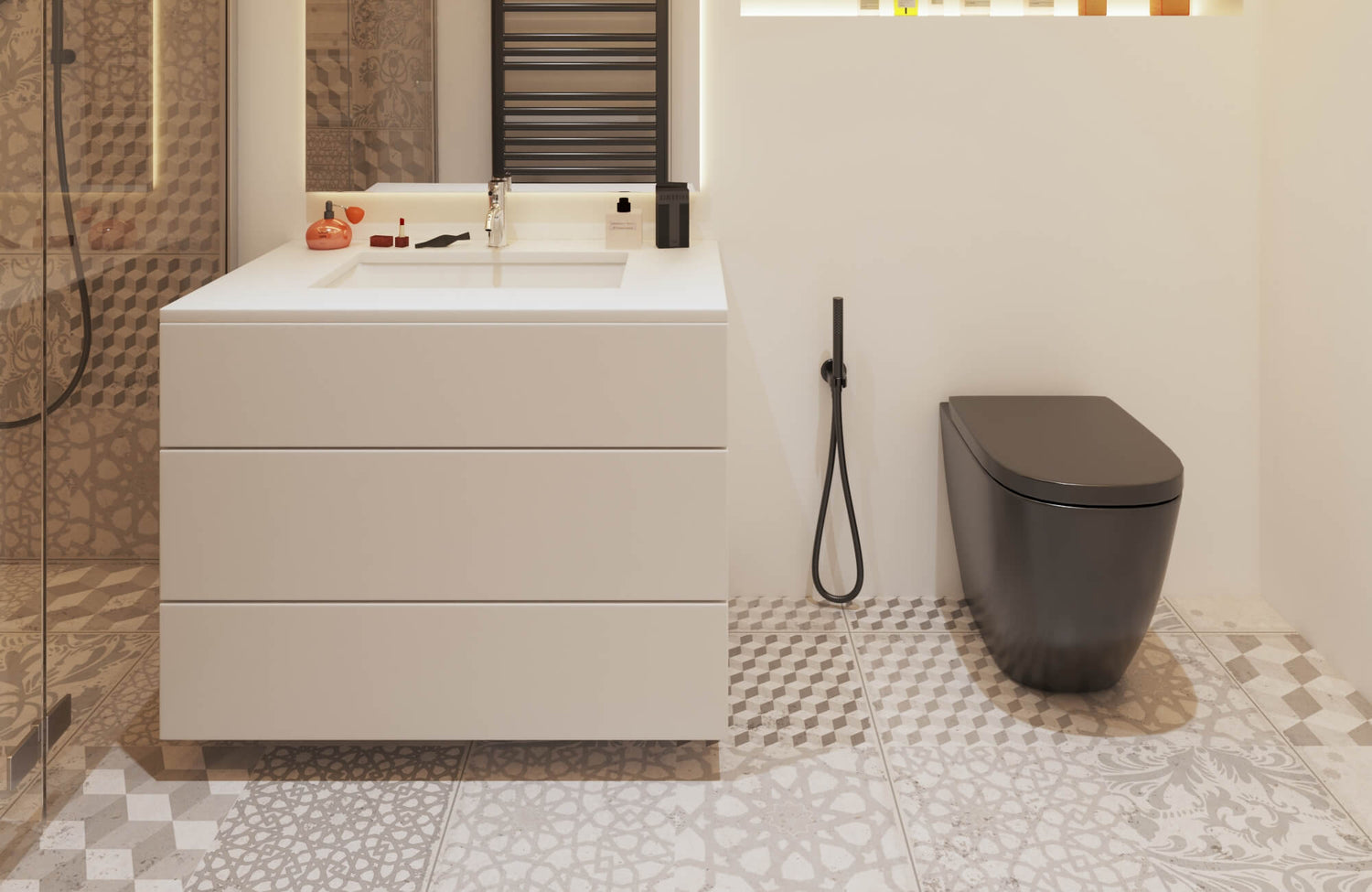
One of the most common reasons small bathrooms feel confined is the clear visibility of where surfaces begin and end. Patterned tiles, particularly when laid wall to wall or extending into adjacent zones, soften these boundaries. Moroccan patterns are inherently repetitive and continuous, which encourages the eye to move fluidly across the surface rather than stopping abruptly at edges. This effect is especially evident with Edward Martin’s Brielle 8x8 Matte Porcelain Tile in Nouveau Stone, shown in the image above, where the seamless pattern helps dissolve visual breaks. When the floor is treated as a single uninterrupted plane, the room feels broader and more cohesive. This visual continuity subtly enlarges the perceived footprint of the bathroom.
Understanding Scale and Proportion for Tight Quarters
Scale is often misunderstood when it comes to pattern. Many assume small spaces require small motifs, but overly tiny patterns can create visual static that feels busy and oppressive. Moroccan tiles often feature medium-scale geometry that strikes a balance between detail and legibility. In a small bathroom, this clarity is crucial. Patterns that are easy to read from a distance allow the space to breathe, even when the design itself is intricate. Choosing a pattern that feels intentional rather than crowded ensures that the room feels designed, not overworked.

Smart Layout Strategies for Pattern Application
Knowing where and how to apply Moroccan tiles is just as important as selecting the pattern itself. Strategic placement can enhance architectural features, define zones, and elevate the entire bathroom without overwhelming it.
Using the Floor as Your Canvas
The floor is often the most effective place to introduce patterned Moroccan tiles in a small bathroom. It acts as a grounding element that ties the room together while leaving the walls visually lighter. A patterned floor creates instant character and can make even the simplest vanity and wall treatment feel elevated. Designs like Edward Martin’s Isabel 11x11 Matte Porcelain Tile Star in Charcoal and Cross in Rosewood demonstrate how a balanced contrast can anchor the space without overpowering it. Because the floor occupies a consistent plane, the pattern reads as intentional and contained, allowing the rest of the space to remain calm and functional. In small bathrooms, this approach offers maximum impact with minimal visual risk.
Defining the Shower Zone with Contrast
In bathrooms with walk-in showers or wet-room layouts, patterned Moroccan tiles can be used to subtly define the shower area without physical barriers. By applying the pattern to the shower floor or back wall, you create a visual distinction that separates the zone while maintaining an open feel. This technique is particularly effective in small spaces where glass enclosures or curtains can interrupt sightlines. The contrast introduced by the pattern adds depth and structure, making the bathroom feel layered rather than boxed in.
Vertical Installations to Heighten the Ceiling
Vertical surfaces offer an opportunity to manipulate perceived height, which is often lacking in small bathrooms. Installing Moroccan tiles vertically, whether as a full accent wall or within a shower surround, draws the eye upward and emphasizes ceiling height. Patterns with strong vertical rhythm or repeating motifs naturally encourage this movement. When executed thoughtfully, a vertical tile installation can make a low ceiling feel taller and the room more spacious, all while adding a striking design feature.

Curating the Surrounding Decor for Balance
Patterned tiles are most successful when the elements around them are carefully curated to provide balance. In small bathrooms, restraint in other areas allows Moroccan tiles to shine without competing for attention.
Selecting a Quiet and Complementary Paint Color
Wall color serves as an essential backdrop when bold tiles are involved. Neutral, subdued paint tones allow the pattern to remain the focal point while contributing to a cohesive palette. Soft whites, warm creams, and muted earth tones often pair beautifully with Moroccan tiles, echoing their artisanal roots without overpowering them. The goal is to create harmony rather than contrast, ensuring that the tile feels integrated into the overall design rather than standing apart from it.
The Importance of Minimalist Fixtures and Hardware
Fixtures and hardware should quietly complement patterned tiles rather than compete with them. In small bathrooms, overly ornate faucets or bulky hardware can create visual clutter that detracts from the tile’s impact. Clean-lined fixtures in finishes like brushed brass, matte black, or polished chrome provide a modern counterpoint to the traditional nature of Moroccan patterns. This balance between old and new keeps the space feeling curated and intentional, rather than themed or dated.
Utilizing Mirrors to Double the Pattern Depth
Mirrors are essential in small bathrooms, not only for function but also for their ability to amplify light and space. When positioned to reflect patterned tiles, mirrors effectively double the visual presence of the design. In the image above, Edward Martin’s Brielle 8x8 Matte Porcelain Tile in Reine gains added depth when paired with the Esmeralda Small Mirror in Polished Brass, creating a layered visual effect without adding physical elements. This reflection adds depth and complexity without requiring additional square footage. A well-placed mirror can make a patterned floor or wall feel expansive, enhancing the immersive quality of the tile while maintaining an open atmosphere.

Choosing the Right Material for Your Lifestyle
Beyond aesthetics, the material composition of Moroccan tiles matters greatly in a bathroom environment. Small bathrooms experience concentrated moisture, frequent use, and limited ventilation, making material choice a practical consideration as well as a design one.
Why Zellige Glazes Are Perfect for Darker Baths
Zellige tiles, with their hand-cut edges and luminous glazes, are particularly well-suited for small or darker bathrooms. Their reflective surfaces bounce light around the room, counteracting the lack of natural light often found in compact spaces. This quality is clearly illustrated with Edward Martin’s Jojo 2x6 Glossy Ceramic Tile in Ice, where the subtle sheen introduces brightness without overwhelming the palette. The variation in glaze adds depth and movement without relying solely on pattern, making it an excellent option for homeowners who want visual interest without excessive contrast. In a small bath, this light-enhancing quality can make the difference between cozy and claustrophobic.
The Durability of Cement for Busy Floors
Cement Moroccan tiles are known for their durability and rich, matte appearance. In small bathrooms that see daily use, especially those shared by multiple household members, cement tiles offer resilience without sacrificing style. To ensure the right fit before committing, Edward Martin’s AR Visualization Tool allows homeowners to preview how a selected cement pattern will look in their own space, helping assess scale and placement with confidence. From there, ordering tile samples makes it easy to confirm the color, texture, and finish in person. Their weight and texture provide a sense of permanence that grounds the space, while patterns remain crisp and defined over time. With proper sealing, cement tiles perform exceptionally well in wet environments, making them a practical choice for busy homes.
Navigating Maintenance in a Small Wet Room
Maintenance concerns often deter homeowners from choosing patterned tiles, but small bathrooms can actually simplify upkeep when designed correctly. Fewer square feet mean less surface area to clean, and high-quality Moroccan tiles are designed to withstand moisture and wear. Regular sealing and gentle cleaning routines keep both glazed and cement tiles looking their best, though for care, maintenance, or general upkeep, it’s always best to consult the manufacturer’s guidelines for optimal results. When maintenance expectations are understood upfront, patterned tiles become a manageable and rewarding choice rather than a burden.
Bold Design Belongs in Small Spaces
Small bathrooms are not limitations; they are opportunities for focused, expressive design. Patterned Moroccan tiles prove that bold choices do not require expansive square footage to succeed. When applied with an understanding of visual flow, scale, and balance, these tiles can elevate a compact bathroom into one of the most memorable spaces in the home. Rather than fading into the background, a small bathroom can become a design statement that reflects confidence and creativity. Embracing pattern in tight quarters is not about excess, but about intention, and Moroccan tiles offer a timeless way to make even the smallest space feel thoughtfully and beautifully complete.