Decorative pillows play an important role in shaping the comfort, texture, and visual balance of interior spaces, but selecting the correct pillowcase size is essential for achieving a polished and well-proportioned look. From sofas and beds to accent chairs and benches, understanding standard decorative pillowcase dimensions helps ensure better fit, fuller inserts, and more cohesive styling throughout the space.

The warm brown tones of the Sandro Outdoor Stool echo the subtle trim of the Brielle Down Pillow, creating a cozy and beautifully coordinated seating nook
Understand Common Standard Pillowcase Dimensions
Standard decorative pillowcase sizes vary according to pillow shape, furniture scale, and styling purpose. Understanding the most commonly used dimensions helps create arrangements that feel balanced, comfortable, and visually cohesive across sofas, beds, accent chairs, and layered seating areas.
Standard Square
Square decorative pillowcases remain the most commonly used option in interior styling because they adapt easily across a wide range of furniture types and decorative arrangements. Among the most standard dimensions, 18x18-inch pillowcases are often used on accent chairs, compact sofas, and smaller seating areas where larger pillows could overwhelm the proportions of the furniture. Their smaller scale introduces softness and decorative layering while still preserving openness within tighter layouts.
Larger dimensions such as 20x20-inch and 22x22-inch pillowcases are especially popular for full-sized sofas and sectional seating because they create a more substantial visual presence and improve lounging comfort. In oversized living rooms or deep seating environments, 24x24-inch pillowcases help anchor larger furniture silhouettes while contributing a more relaxed and luxurious appearance. Designers frequently layer multiple square pillow sizes together to establish visual hierarchy, positioning larger pillows toward the back and smaller accents toward the front to create greater depth and dimension throughout the arrangement.
Lumbar
Lumbar decorative pillowcases introduce a distinctly different silhouette that helps balance traditional square pillow arrangements. Their elongated horizontal proportions create visual contrast while also providing ergonomic support for lower backs, making them especially useful on sofas, lounge chairs, benches, and layered bedding arrangements. Standard lumbar sizes such as 12x20 inches work particularly well as compact accent pieces that introduce texture, subtle pattern variation, or tonal contrast without dominating the overall composition.
Larger lumbar pillowcase dimensions, including 14x24 inches and 16x26 inches, are often used in more expansive seating arrangements or oversized beds where additional width helps balance surrounding furniture proportions. These longer pillow shapes naturally guide the eye horizontally across the arrangement, contributing a cleaner and more tailored appearance that contrasts effectively with larger square pillows. In contemporary interiors, lumbar pillows are frequently used to simplify decorative styling while still maintaining softness and visual layering within the space.
Euro and Oversized Decorative Pillowcases
Euro-style and oversized decorative pillowcases are commonly associated with more layered and elevated interior styling, particularly within bedrooms and oversized lounge spaces. Euro pillowcases typically measure 26x26 inches and are most often used as foundational back layers on beds because of their supportive structure and substantial scale. Their larger proportions help create fuller bedding compositions while softening the visual transition between the headboard and smaller decorative accents placed in front.
Oversized decorative pillowcases are also widely used on deep sofas and expansive sectional seating where smaller pillows may appear visually under-scaled. Larger pillows help soften broad furniture lines while contributing a more relaxed and inviting atmosphere suited to contemporary and modern organic interiors. However, maintaining proportional balance remains essential when working with oversized pillowcases. Designers often pair larger pillows with smaller square or lumbar accents to preserve dimensional contrast and ensure the arrangement feels layered rather than overcrowded.

Merelle 22" x 22" Down Pillow in Ivory pairs beautifully with the Merelle 13" x 21" Down Pillow in Olive, creating a layered contrast that complements the warm wood and caramel upholstery of the bench
Match Pillowcase Sizes To Different Furniture Types
The ideal decorative pillowcase size often depends on the proportions and scale of the surrounding furniture. Choosing dimensions that relate appropriately to sofas, beds, chairs, and benches helps arrangements feel more balanced, comfortable, and visually intentional rather than overcrowded or under-styled.
Sofas
Larger sofas and sectional seating generally require more substantial decorative pillowcase sizes to maintain proper visual proportion across the arrangement. Dimensions such as 22x22 inches or even oversized pillowcases work especially well on deep seating because smaller pillows can appear visually insignificant against expansive furniture silhouettes. Larger decorative pillows also contribute greater lounging comfort while helping soften broad upholstered surfaces commonly found in contemporary living rooms.
Apartment sofas, loveseats, and compact seating layouts typically benefit from more restrained pillowcase dimensions such as 18x18 inches or 20x20 inches. These smaller sizes preserve usable seating space while still introducing decorative layering and texture. When combining multiple pillows on sofas, designers often vary sizes gradually to create depth without making the arrangement feel cluttered. Larger pillows are commonly positioned toward the outer corners or back of the sofa, while smaller square or lumbar accents help create visual rhythm toward the center.
Beds
Decorative pillowcase sizing often changes significantly depending on bed dimensions and the level of layering desired within the bedding arrangement. Twin beds typically require fewer decorative pillows and smaller dimensions to maintain proportion, while queen and king beds can comfortably accommodate larger Euro shams, oversized square pillows, and elongated lumbar accents. Selecting pillowcases that align with mattress width and headboard scale helps bedding arrangements feel more cohesive and properly structured.
Layering also plays a major role in decorative bed styling. Euro shams are frequently positioned at the back of the arrangement because their larger dimensions help establish softness and visual fullness against the headboard. Standard square decorative pillows are then layered in front to introduce color, pattern, or texture variation, while lumbar pillowcases often serve as the finishing accent that visually ties the arrangement together. This progression of scale creates a more dimensional and professionally styled appearance without making the bed feel excessively crowded.
Accent Chairs and Benches
Smaller furniture pieces such as accent chairs, entryway benches, and dining banquettes generally benefit from more restrained decorative pillowcase dimensions. Compact pillow sizes help maintain balance within tighter seating arrangements while preserving functional seating space. Pillowcases measuring 18x18 inches or smaller lumbar designs often work especially well because they introduce softness and decorative interest without overwhelming the furniture silhouette.
Oversized decorative pillowcases can easily dominate smaller seating pieces, making chairs and benches feel cramped or visually disproportionate. In narrow or compact layouts, a single thoughtfully selected pillow often creates a cleaner and more intentional appearance than multiple layered accents. You can also use lumbar pillowcases on benches because their elongated proportions align naturally with the horizontal shape of the furniture while contributing comfort, texture, and visual continuity throughout the surrounding interior space.
The image above offers a balanced example of decorative pillow scaling on compact seating, featuring the Merelle 22" x 22" Down Pillow in Ivory layered behind the smaller Merelle 13" x 21" Down Pillow in Olive. Together, the varied proportions introduce softness, texture, and visual depth without overwhelming the slender bench silhouette or limiting usable seating space. The larger square pillow helps anchor the arrangement, while the smaller lumbar design creates contrast and reinforces the bench’s elongated form, resulting in a composition that feels both refined and comfortably proportioned.

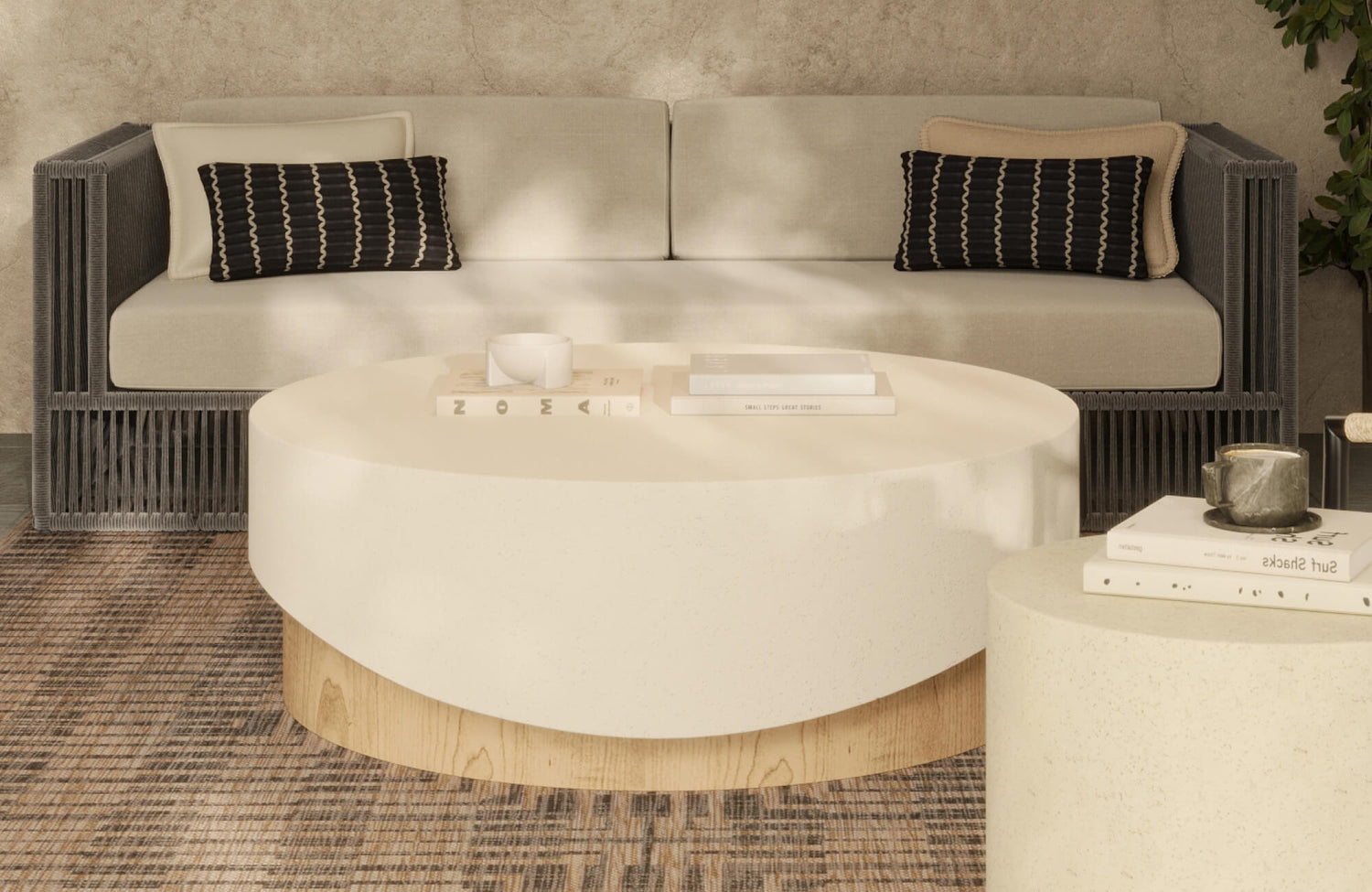
The bold black tones of the Marisette Down Pillow create a striking contrast against the soft cream upholstery of the Sabine Outdoor Sofa
Improve Decorative Pillow Fullness and Fit
The relationship between pillow inserts and pillowcase sizing plays a major role in how decorative pillows look, feel, and maintain their shape over time. Properly fitted inserts help pillows appear fuller, more supportive, and visually structured while improving the overall quality and polish of the arrangement.
Understand Insert Sizing Recommendations
Decorative pillow inserts are commonly selected slightly larger than the pillowcase itself in order to create a fuller and more tailored appearance. In most cases, designers recommend using inserts that measure 1 to 2 inches larger than the pillowcase dimensions because the additional fill helps eliminate looseness and creates more defined edges. For example, a 20x20-inch pillowcase often pairs best with a 22x22-inch insert, while a 12x20-inch lumbar cover may require a 13x21-inch or 14x22-inch insert depending on the desired fullness.
This sizing approach helps decorative pillows maintain stronger shape retention while preventing the slouched appearance commonly associated with undersized inserts. Fuller pillows also contribute more visual structure within layered arrangements because they stand upright more effectively against sofas, beds, and lounge seating. In professionally styled interiors, proper insert sizing is often one of the most noticeable details distinguishing tailored decorative arrangements from flatter, less refined compositions.
Prevent Sagging and Flattened Pillow Shapes
Undersized inserts frequently create loose corners, wrinkled fabric, and flattened pillow shapes that reduce both comfort and visual appeal. Decorative pillowcases without adequate internal support often collapse inward over time, making seating arrangements appear less polished and diminishing the dimensional layering that decorative pillows are intended to provide. This issue becomes especially noticeable with larger square pillowcases where insufficient fill can leave corners visibly empty or uneven.
Maintaining structured pillow shapes requires ongoing attention to insert quality, proper sizing, and routine fluffing. Down and feather inserts naturally compress with repeated use, while synthetic fills may gradually lose loft if lower-density materials are used. Designers often recommend rotating and reshaping decorative pillows periodically to maintain consistent fullness and preserve cleaner silhouettes. Tailored piping, knife-edge seams, and boxed construction can also help reinforce sharper pillow edges that maintain a more architectural appearance within contemporary interiors.
Choose Fill Materials Based on Pillowcase Size
Different insert fill materials influence not only comfort but also how decorative pillows hold their shape and interact with surrounding furniture. Down and feather blends are widely favored in luxury interiors because they create a softer, more relaxed appearance with greater moldability and comfort. These fills work especially well in larger decorative pillowcases where a plush, lounge-oriented aesthetic is desired. However, feather-based inserts typically require more frequent fluffing to maintain their structure over time.
Polyester and performance fiber fills, by contrast, often provide firmer support and stronger shape retention with less maintenance. These materials are commonly used in smaller accent pillows or busy environments where durability and resilience are priorities. Performance fills additionally resist moisture absorption and compression more effectively, making them particularly practical for outdoor decorative pillows or frequently used family spaces. Selecting the appropriate fill material based on pillowcase size, furniture function, and desired styling effect also helps create decorative arrangements that remain both visually balanced and comfortable throughout long-term use.

Merelle 22" x 22" Down Pillow in Terracotta and Merelle 13" x 21" Down Pillow in Terracotta bring warmth and depth to the arrangement, while Merelle 22" x 22" Down Pillow in Tan and Brielle 18'' x 18'' Down Pillow in Natural / Mustard create a balanced layered palette
Create Layered Decorative Pillow Arrangements
Decorative pillowcase sizes play a major role in how layered arrangements feel visually balanced, comfortable, and intentionally styled within a space. Combining different dimensions thoughtfully helps introduce depth, texture, and variation while preventing sofas, beds, and seating areas from feeling either overly sparse or excessively crowded.
Layer Multiple Pillowcase Sizes Effectively
Layering multiple decorative pillowcase sizes helps establish visual hierarchy and dimensional contrast throughout a furniture arrangement. Larger square pillowcases are typically positioned at the back of sofas or beds because they create foundational structure and softness, while smaller square or lumbar designs are layered toward the front to introduce variation in scale. This progression of size helps arrangements feel more dynamic and balanced rather than flat or repetitive.
The arrangement shown in the photo above demonstrates how layered decorative pillow sizes can create depth and visual rhythm without overwhelming the seating area. The larger Merelle 22" x 22" Down Pillow in Tan and Merelle 22" x 22" Down Pillow in Terracotta establish a soft foundational backdrop, while the smaller Brielle 18'' x 18'' Down Pillow in Natural / Mustard and Merelle 13" x 21" Down Pillow in Terracotta introduce contrast in both scale and texture toward the front. Together, the varied proportions and earthy tonal palette create a composition that feels balanced, inviting, and thoughtfully layered while maintaining a relaxed contemporary warmth.
On sofas, a common layering approach often combines 22x22-inch pillows with smaller 20x20-inch or lumbar accents to create depth without overcrowding the seating area. Beds frequently use larger Euro shams as the back layer, followed by standard square decorative pillows and a lumbar pillow positioned at the center front. These layering formulas help guide the eye naturally across the arrangement while preserving comfort and usable space. Proper scale transition between pillow sizes is especially important because abrupt size changes can make layered compositions feel visually disjointed rather than cohesive.
Balance Symmetry and Asymmetry in Pillow Styling
Symmetrical pillow arrangements typically create a more formal and structured appearance, making them especially popular in traditional, transitional, and luxury-inspired interiors. Matching pillowcase sizes positioned evenly on both sides of a sofa or bed contribute a sense of order and visual stability that works well in spaces emphasizing refinement and balance. Symmetry also helps larger furniture pieces feel more grounded because the arrangement distributes visual weight evenly across the composition.
Asymmetrical pillow styling, by contrast, often creates a more relaxed and contemporary atmosphere. Instead of mirroring identical pillow combinations, asymmetrical arrangements introduce subtle variation through differing pillowcase sizes, textures, or placements while still maintaining overall balance. This styling approach works particularly well in modern organic and casual interiors where the goal is to create a more effortless and collected appearance. However, even asymmetrical arrangements require careful proportion control to prevent the composition from feeling visually scattered or unintentional.
Mix Textures and Patterns Across Pillowcase Sizes
Varying pillowcase sizes helps distribute texture, color, and pattern more effectively throughout a layered arrangement. Larger decorative pillows often serve as foundational elements featuring more neutral tones or broader textures that anchor the composition visually. Smaller square and lumbar pillowcases can then introduce accent colors, woven detailing, embroidery, or patterned fabrics that create contrast without overwhelming the arrangement.
In modern organic interiors, designers frequently combine oversized neutral linen or boucle pillowcases with smaller lumbar designs featuring earthy tones, subtle stripes, or woven textures to create a relaxed layered effect. Contemporary spaces often rely on cleaner tonal palettes with restrained pattern variation, allowing pillow size differences and material contrast to provide visual interest instead. Transitional interiors commonly blend tailored solids with traditional patterns across varying pillow dimensions to balance classic and contemporary influences. Through thoughtful distribution of texture and pattern across different pillowcase sizes, layered arrangements feel more curated, dimensional, and visually engaging.

Merelle 22" x 22" Down Pillow in Olive add depth to the bedding arrangement, while the soft neutrals of the Brielle 18'' x 18'' Down Pillow in Natural / Brown and Merelle 13" x 21" Down Pillow in Ivory create a warm layered contrast
Support Different Interior Design Styles Through Pillowcase Sizing
Decorative pillowcase dimensions influence more than comfort because they also shape the overall visual language of an interior. Different pillow sizes, layering techniques, and proportions naturally align with specific design aesthetics, helping spaces feel more cohesive, intentional, and stylistically balanced.
Modern and Contemporary Interiors
Modern and contemporary interiors often favor oversized decorative pillowcases because they create cleaner, more streamlined arrangements with fewer individual pillows. Larger dimensions such as 22x22 inches, 24x24 inches, or oversized lumbar designs contribute a more relaxed and elevated appearance while reducing visual clutter across sofas and sectionals. This restrained approach aligns well with contemporary interiors that prioritize simplicity, openness, and carefully controlled layering.
The bedroom shown above illustrates how the Merelle 13" x 21" Down Pillow in Ivory can soften a contemporary bedding arrangement while maintaining the restrained layering often associated with modern interiors. Positioned in front of the larger textured square pillows, its elongated lumbar silhouette introduces subtle contrast in scale without disrupting the clean composition or visually overcrowding the bed. The neutral woven texture and soft ivory tone also reinforce the room’s warm tonal palette, allowing the layered arrangement to feel elevated, balanced, and comfortably refined.
Oversized pillows also help soften the strong geometric lines commonly associated with modern furniture silhouettes. Deep seating, low-profile sectionals, and angular upholstery benefit from larger decorative pillows because they introduce visual softness and improve overall lounging comfort without interrupting the clean architectural structure of the furniture. Neutral-toned oversized pillowcases in linen, boucle, or textured woven fabrics are especially common in contemporary and minimalist interiors where subtle material variation provides visual interest in place of heavy pattern layering.
Traditional Spaces
Traditional interiors frequently rely on smaller decorative pillowcase groupings layered more formally across seating and bedding arrangements. Dimensions such as 18x18 inches and smaller lumbar designs are often combined symmetrically to create a more tailored and refined appearance that complements classic furniture silhouettes. This styling approach works particularly well with rolled arms, tufted upholstery, carved wood frames, and other decorative details commonly found in traditional interiors.
Decorative finishes also play a larger role within traditional pillow styling. Tailored edges, contrast piping, tassels, fringe trim, embroidery, and patterned fabrics help reinforce the layered richness associated with classic interiors. Rather than relying primarily on oversized scale, traditional arrangements achieve depth through coordinated repetition, balanced symmetry, and intricate detailing distributed across multiple decorative pillows. As a result, smaller pillowcase dimensions help preserve structure and elegance while supporting a more formal visual composition.
Casual and Organic Interiors
Modern organic and coastal-inspired interiors often combine varied pillowcase dimensions to create a more relaxed and collected appearance. Mixing larger square pillows with smaller lumbar accents introduces natural variation that feels less rigid and more adaptable compared to highly symmetrical arrangements. This layered approach helps seating areas feel approachable and comfortable while still maintaining visual depth and balance throughout the space.
Textured fabrics and earthy color palettes further reinforce the casual atmosphere commonly associated with these interiors. Oversized linen pillowcases, woven cotton blends, boucle textures, and soft neutral tones frequently serve as foundational layers, while smaller accent pillows introduce subtle stripes, organic patterns, or muted coastal hues. Rather than emphasizing perfect symmetry, these arrangements prioritize softness, tonal layering, and material contrast to create interiors that feel warm, effortless, and visually grounded.
Create More Cohesive Interiors With Proper Pillowcase Sizing
Selecting the correct standard pillowcase size for decorative pillows helps furniture arrangements feel more balanced, comfortable, and visually intentional. From choosing proportional dimensions for sofas and beds to layering textures and maintaining proper insert fullness, pillowcase sizing affects both aesthetics and functionality throughout a space. By understanding common decorative pillow dimensions and coordinating them thoughtfully with interior styles and furniture scale, you can create arrangements that feel polished, inviting, and professionally styled.
If you need help selecting decorative pillows that complement your furniture scale and overall interior aesthetic, Edward Martin offers thoughtfully designed options in a variety of sizes, textures, and versatile color palettes. Pairing properly proportioned decorative pillows with coordinated materials and layered styling can further enhance the balanced, polished, and inviting atmosphere created through intentional pillowcase sizing. For additional product guidance or styling recommendations tailored to your space, visit the Edward Martin contact page. Our team can help you create layered arrangements that feel cohesive, comfortable, and visually refined throughout your space.