
)
)
)
)
)
)
)
)
What Wall Art Is Best For A Bathroom?
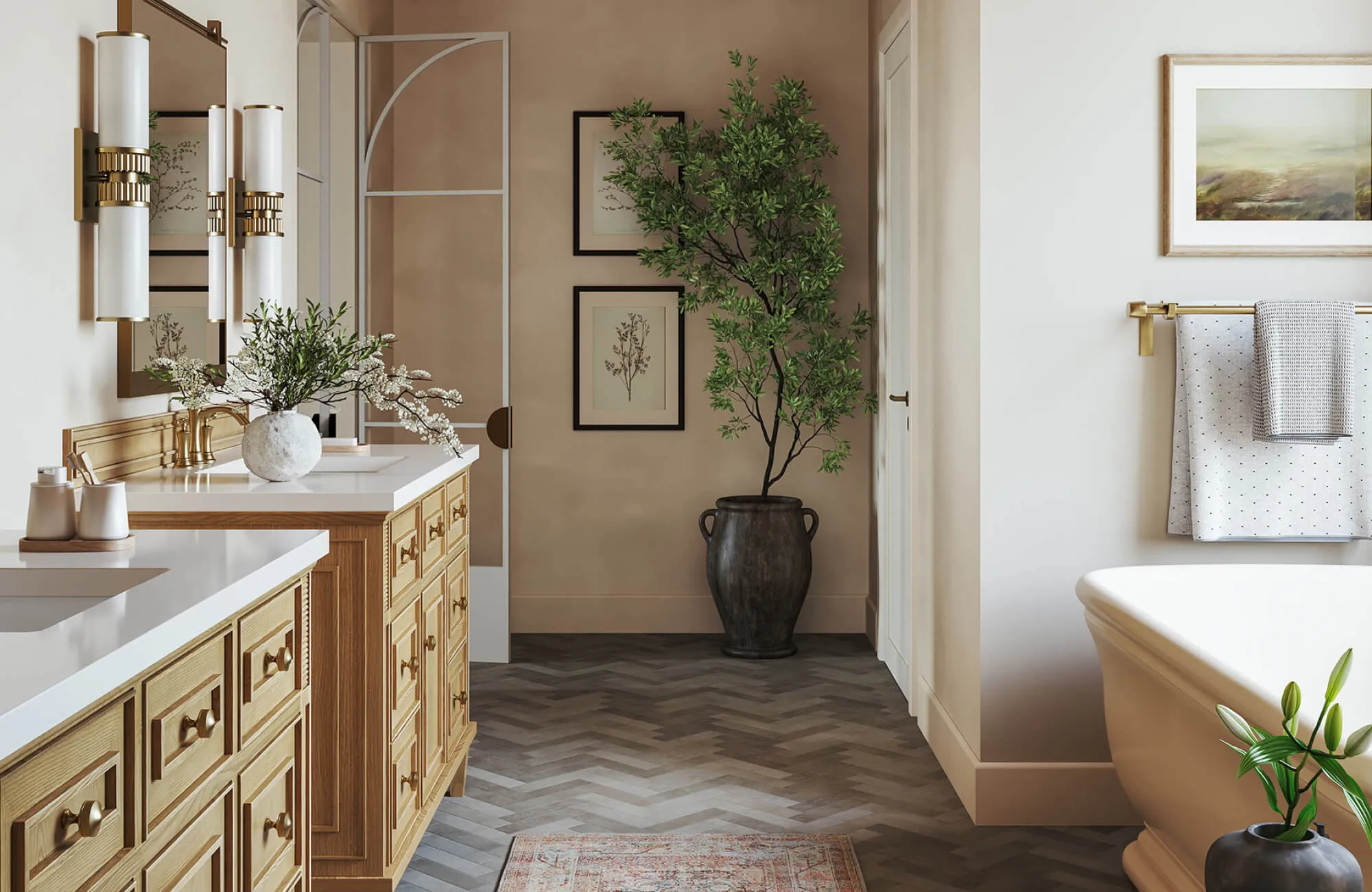
Bathrooms often receive less decorative attention than living rooms, bedrooms, or kitchens, yet they benefit just as much from thoughtful styling. The right wall art can soften hard surfaces, introduce personality, and make the room feel more complete without requiring a major renovation. Whether you are decorating a spacious primary bathroom or a compact powder room, artwork helps shape the atmosphere and gives the space a more finished appearance.
At the same time, bathroom wall art needs to do more than look attractive. Humidity, changing temperatures, and regular moisture can gradually wear down wall art over time, making durability just as important as style. By selecting the right materials, colors, placement, and design approach, you can create a bathroom that feels balanced, practical, and visually inviting.
Choosing Bathroom-Friendly Art Materials
Bathrooms expose wall art to humidity, steam, and changing temperatures, so selecting moisture-resistant materials helps preserve both appearance and durability over time. At the same time, the artwork’s finish and texture can influence the overall atmosphere, from clean and modern to warm and relaxed.
Moisture-Resistant Prints
Moisture-resistant prints are among the most practical choices for bathroom wall art because they combine durability with design flexibility. Framed artwork sealed behind glass or acrylic helps reduce direct exposure to steam, which protects the print from discoloration and moisture damage over time.
Metal wall art and acrylic-mounted photography perform particularly well in bathrooms with frequent humidity because they resist warping more effectively than traditional paper artwork. Their smooth surfaces are also easier to clean, which helps maintain a polished appearance with less upkeep.
If you prefer a softer decorative look, treated canvas artwork can work well in bathrooms when properly sealed. Canvas introduces texture that pairs naturally with wallpaper, wood finishes, or spa-inspired bathrooms while still offering improved moisture resistance.
Waterproof Wall Decor
Bathrooms with limited ventilation often benefit from fully waterproof decorative pieces. Resin wall panels, ceramic artwork, and aluminum-mounted prints tolerate steam and occasional water exposure more effectively than traditional framed pieces.
Ceramic artwork works especially well when you want to introduce texture into the room without adding delicate materials that may absorb moisture. Since bathrooms already feature porcelain and tile surfaces, ceramic decor feels naturally integrated into the overall design.
Waterproof photography prints are another practical choice for areas near sinks or bathtubs where water exposure is more common. Choosing decorative materials designed for humid environments helps your bathroom remain visually refined without becoming difficult to maintain.
Frames That Hold Up Well
Frames affect both the durability and appearance of bathroom wall art. Certain materials absorb humidity easily, which may lead to peeling, swelling, or gradual discoloration. Choosing moisture-resistant frames helps preserve the artwork while supporting the overall bathroom design.
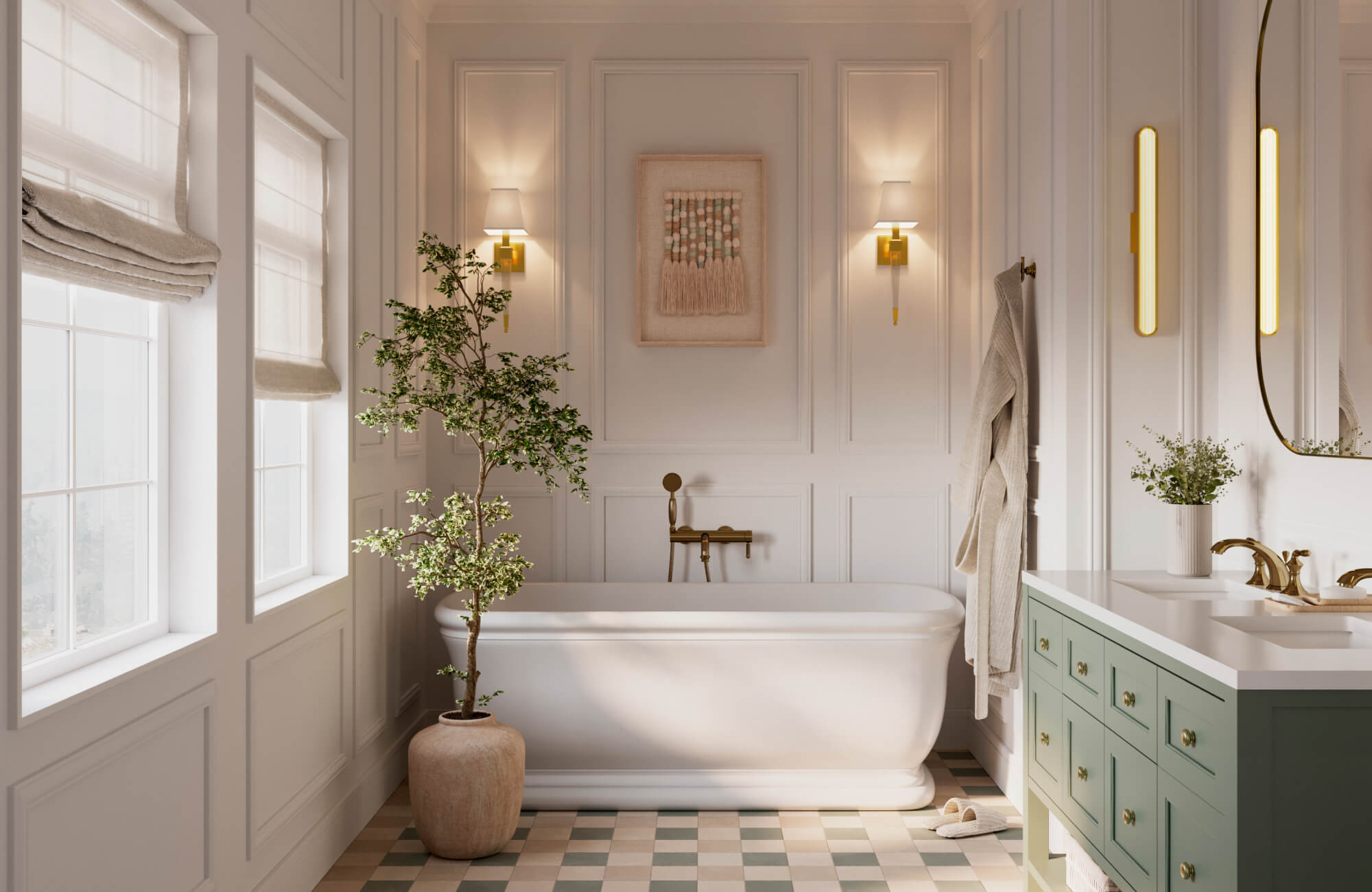
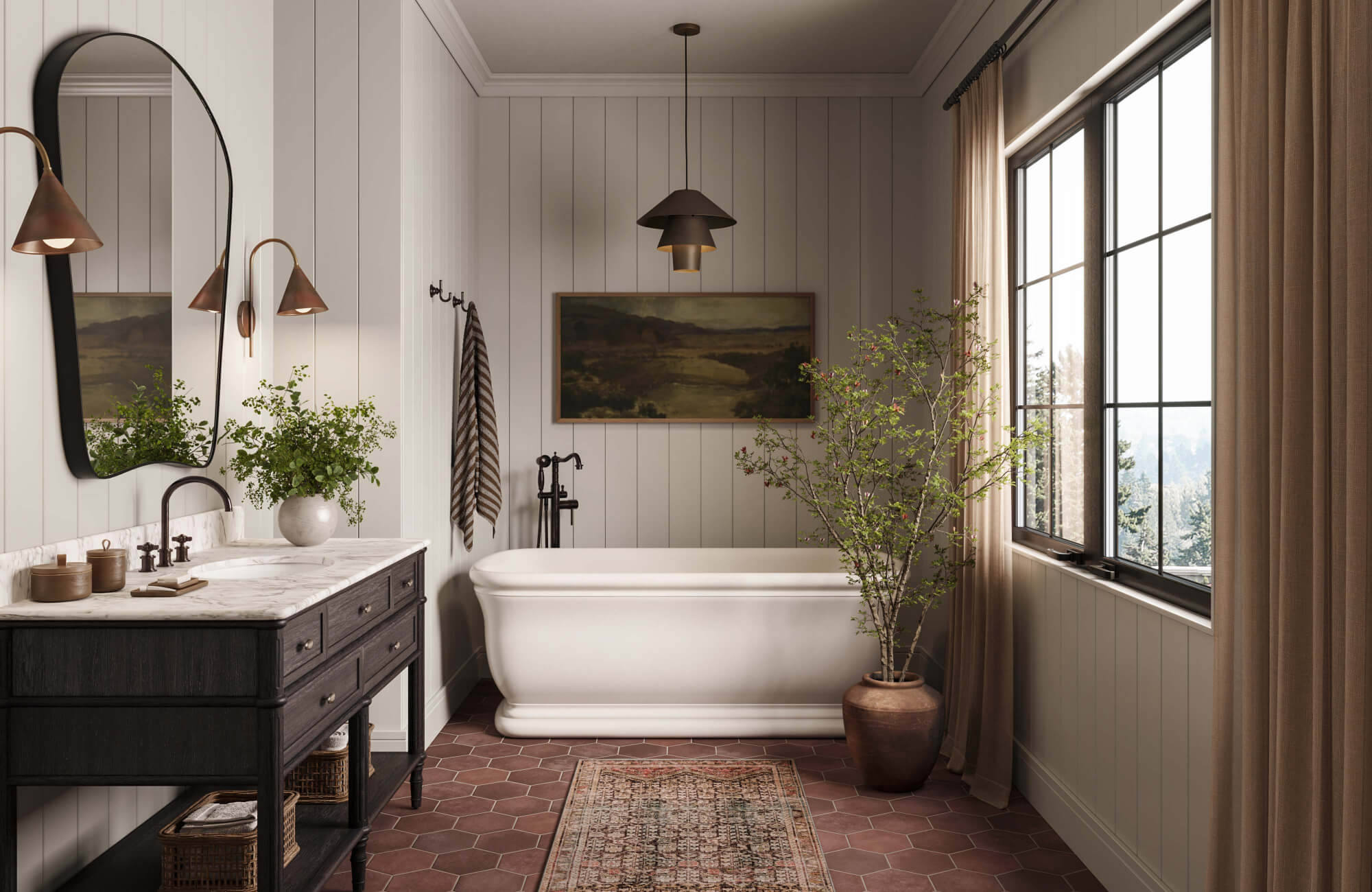
Powder-coated metal frames are highly durable and pair well with modern fixtures and contemporary finishes. Sealed wood frames can also work well in bathrooms with warmer tones or natural textures, provided they are properly finished to handle humidity. A great example is Edward Martin’s Golden Drift Wall Art, shown in the photo above, which demonstrates how a wooden frame can work beautifully in moisture-prone areas, such as above a bathtub, while adding warmth and texture to the bathroom’s refined finishes. Untreated wood, however, is usually best avoided because prolonged exposure to moisture may cause it to warp over time.
Acrylic and composite frames are useful for smaller bathrooms because they are lightweight, durable, and easy to clean. Simpler frame profiles also help compact spaces feel less visually crowded.
Easy Maintenance Choices
Bathrooms benefit from easy-to-maintain artwork since decorative surfaces are regularly exposed to humidity. Smooth finishes such as acrylic, metal, and sealed glass can typically be cleaned quickly without damaging the artwork itself. This becomes particularly useful in shared bathrooms or guest spaces where decorative surfaces require more frequent upkeep. Artwork that resists dust buildup and water spots helps the bathroom look cleaner and more polished throughout everyday use.
If your bathroom already features textured wallpaper or patterned tile, low-maintenance artwork can help keep the space feeling balanced rather than overly busy. Cleaner decorative finishes create a better balance while keeping the space approachable and functional.
Matching Wall Art To Bathroom Style
Bathroom wall art looks most effective when it complements the room’s overall style and atmosphere. The right artwork can add personality and depth while helping the space feel more cohesive and thoughtfully designed.
Minimalist Bathroom Artwork
Minimalist artwork works especially well in bathrooms because it complements the clean lines often found in modern interiors. Simple line drawings, abstract neutral compositions, and black-and-white photography introduce visual interest without making smaller bathrooms feel cluttered.
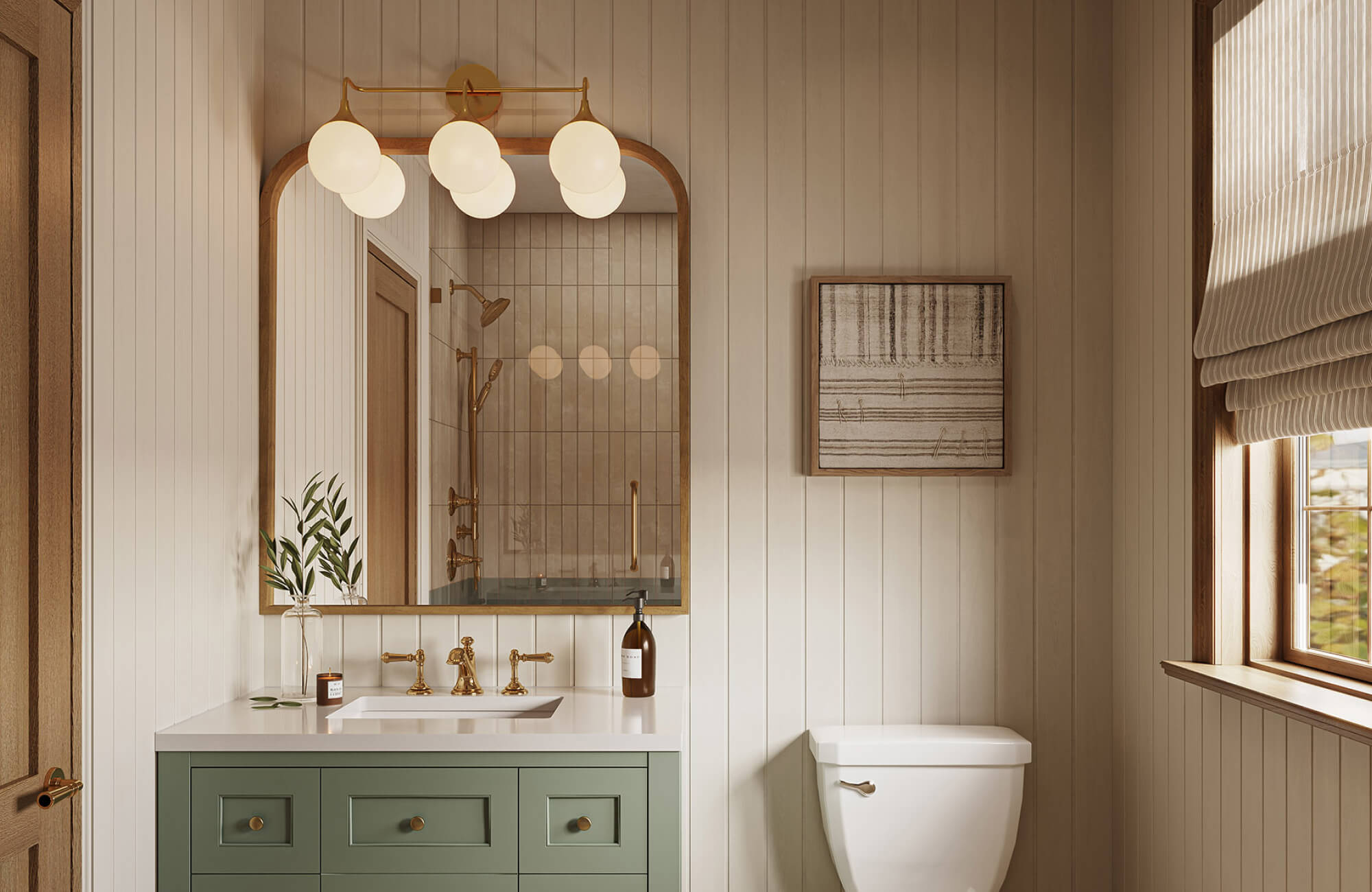
Bathrooms already contain several functional elements, including mirrors, vanities, fixtures, and tile patterns. Because of this, restrained artwork helps smaller bathrooms feel calmer and more open while still adding personality. Edward Martin’s Shadow Orchard Wall Art, as shown in the photo featured above, reflects this approach with its neutral palette and understated design that blends naturally with the bathroom’s vertical wall detailing and soft finishes. Neutral artwork also pairs particularly well with textured wallpaper or patterned surfaces because it allows surrounding details to remain the visual focus.
Coastal Inspired Pieces
Coastal-inspired artwork remains popular in bathrooms because it creates a calm and airy atmosphere. Ocean photography, watercolor seascapes, and botanical seaside illustrations introduce softer colors that naturally complement bathrooms designed around relaxation.
The most successful coastal bathrooms avoid overly themed decor. Instead of relying on decorative signs or obvious nautical imagery, softer references to natural landscapes tend to feel more refined and timeless. Artwork featuring dunes, grasses, or soft shoreline textures creates a relaxed atmosphere without overwhelming the room.
Bathrooms with white tile, light wood vanities, or pale wallpaper often pair well with coastal-inspired wall art as the softer palette helps the space feel warmer and more inviting.
Vintage And Traditional Looks
Vintage and traditional artwork adds warmth and character to bathrooms with classic finishes or decorative architectural details. Antique botanical prints, softly aged illustrations, and historical sketches complement marble countertops, detailed moldings, and traditional cabinetry particularly well. Decorative mirrors and framed typography can also contribute to a more layered appearance. These elements help bathrooms feel collected and personal rather than overly styled or generic.
Traditional bathrooms generally benefit from artwork with softer tones and subtle texture. This keeps the room feeling elegant without overwhelming the overall design.
Contemporary Statement Art
Contemporary statement art introduces stronger visual contrast into bathrooms with modern layouts and minimal finishes. Oversized abstract wall art, geometric artwork, and sculptural wall installations create a focal point that immediately draws attention within the room. Large statement pieces work best when surrounding finishes remain relatively simple. Neutral tile, floating vanities, and frameless mirrors provide a quieter backdrop that allows the artwork to stand out without creating visual clutter.
In many bathrooms, one oversized piece creates a more refined appearance than several smaller artworks arranged together. This approach keeps modern interiors feeling clean while still adding personality and visual depth.
Finding The Right Art Size And Placement
The size and placement of bathroom wall art can greatly affect how balanced and cohesive the space feels. Thoughtful positioning helps artwork complement the room’s layout while improving visual flow around mirrors, vanities, and empty walls.
Above The Toilet Placement
The wall above the toilet is one of the most common locations for bathroom artwork because it often remains visually empty. However, selecting the correct size is essential. Artwork that is too small may look disconnected, while oversized pieces can make the area feel crowded.
In most bathrooms, artwork should fill roughly two-thirds of the available wall width above the toilet. Leaving enough open space around the frame helps the arrangement feel cleaner and more balanced.
Simpler frames often work best in this location because they avoid adding unnecessary visual weight to smaller spaces. Horizontal artwork can also create a calmer appearance than multiple stacked pieces.
Decorating Empty Vertical Walls
Tall, narrow walls can be difficult to decorate because standard horizontal artwork may leave too much unused space. Vertical artwork helps draw the eye upward, which can make ceilings appear higher and bathrooms feel more spacious overall. Stacked frames are another effective solution for narrow wall areas. Two or three coordinated pieces arranged vertically create movement while keeping the arrangement visually organized. Long vertical spaces near showers or doorways may also benefit from narrow sculptural pieces or slim wall panels that add texture without extending too far from the wall.
Art Around Vanity Areas
Vanity areas already contain several visual elements, including mirrors, lighting fixtures, countertops, and hardware. Because of this, artwork near vanities should complement the arrangement rather than compete with it. Smaller framed pieces beside mirrors often work better than large artwork directly above sinks, where moisture exposure is higher. In bathrooms with double vanities, symmetrical artwork placement can also create a cleaner and more polished look.
Leaving enough space between artwork, mirrors, and lighting fixtures also prevents the area from feeling visually crowded. Balanced spacing helps the bathroom feel more refined and functional.
Using Large-Scale Pieces
Large-scale artwork creates a stronger focal point and often feels calmer and more sophisticated than several smaller pieces spread throughout the room. This approach works especially well in spacious primary bathrooms or powder rooms with uninterrupted wall space. In bathrooms with simpler finishes, large artwork can introduce depth and personality without requiring additional decorative accessories.
Proper spacing remains important when using oversized art. Leaving enough open wall area around the piece prevents the room from feeling visually heavy and allows the artwork to stand out naturally.
Choosing Colors That Work In Bathrooms
Artwork colors can influence whether a bathroom feels calm, bright, cozy, or dramatic. Since bathrooms often include reflective surfaces and hard finishes, the right color palette helps create a more balanced and cohesive atmosphere.
Soft Colors For Relaxed Spaces
Soft color palettes work particularly well in bathrooms because they create a calmer and more comfortable atmosphere. Muted blues, sage greens, warm neutrals, and earthy tones pair naturally with spa-inspired interiors and lighter finishes. Lighter artwork also reflects available light more effectively, which helps smaller bathrooms feel brighter and more open.
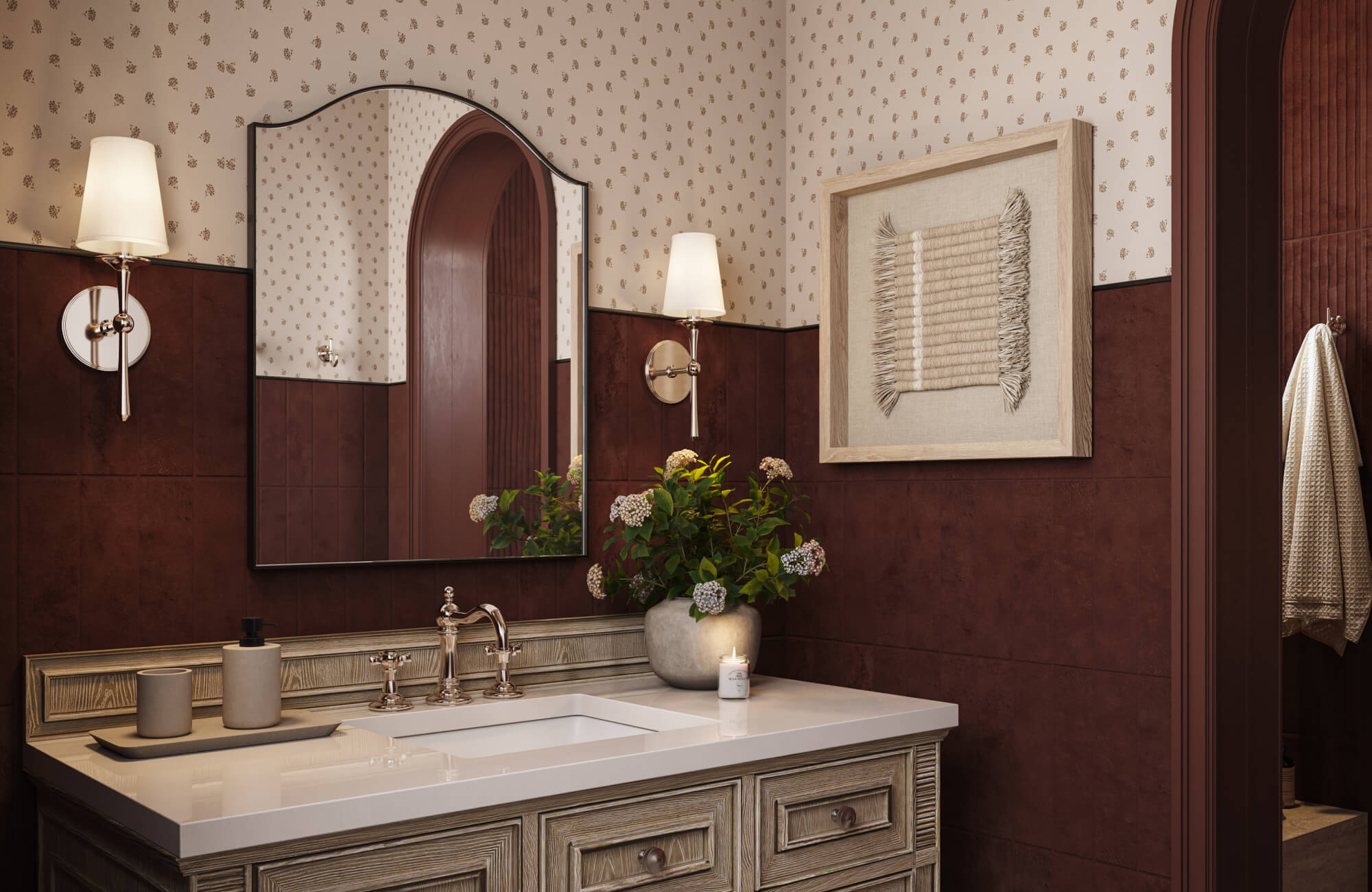
Edward Martin’s Earthbound Trace Wall Art, as featured in the photo above, reflects this softer approach through its warm neutral tones and subtle texture, helping the bathroom feel relaxed without competing with the patterned wallpaper and darker wall paneling. Watercolor prints and soft abstract wall art can also introduce movement without creating visual heaviness, making them especially effective in bathrooms with layered finishes and textured surfaces.
Dark Art With Contrast
Bathrooms with pale walls or marble finishes often benefit from darker artwork because it creates a stronger visual contrast. Black-and-white photography, charcoal sketches, and deeper abstract pieces can add depth while helping the artwork stand out more clearly within the space.
To keep the bathroom from feeling too enclosed, it helps to balance darker artwork with lighter surrounding elements. Mirrors, reflective fixtures, and lighter tile surfaces maintain brightness throughout the room, while slim metal frames or floating acrylic mounts give darker pieces a cleaner and more modern appearance.
Bright Accents That Add Energy
Bathrooms with neutral finishes sometimes benefit from brighter artwork that introduces personality into the space. Colorful abstract prints, vibrant photography, and playful illustrations can prevent white or gray bathrooms from feeling flat. Brighter artwork works especially well in guest bathrooms and powder rooms, where decorative styling often feels more expressive. Even one colorful piece can shift the atmosphere significantly without requiring major design changes elsewhere. To maintain balance, artwork with one or two dominant accent colors usually feels more refined than highly multicolored designs.
Coordinating With Tile And Fixtures
Bathroom artwork should complement surrounding finishes without appearing overly matched. Looking at the undertones of tile, cabinetry, countertops, and fixtures helps create a more cohesive palette throughout the room. Warmer artwork tones generally pair well with brass fixtures and natural wood finishes, while cooler palettes often complement chrome hardware, gray tile, or concrete surfaces. Instead of focusing only on wall color, consider the bathroom’s entire material palette. This creates artwork selections that feel naturally integrated into the space.
Creating Personality Through Bathroom Art
Bathroom artwork can make the space feel more welcoming and personal instead of purely functional. Thoughtful decorative choices help reinforce the room’s atmosphere while creating a stronger connection with the rest of your home.
Nature-Inspired Themes
Nature-inspired artwork remains one of the most versatile choices for bathrooms because it softens hard surfaces while creating a calmer atmosphere. Botanical prints, floral sketches, and landscape photography pair naturally with stone, tile, and wood finishes. Nature-inspired artwork introduces organic shapes and scenery that soften the bathroom’s structured surfaces. Forest scenes, grasses, and soft landscape imagery help create a quieter visual mood that feels restorative. Natural themes pair especially well with wallpaper textures and neutral palettes as they can reinforce a grounded, cohesive design approach.
Typography And Humorous Prints
Typography artwork can add personality to a bathroom in a subtle and approachable way. Minimalist quotes, refined graphic text, or understated humor work particularly well in guest bathrooms and powder rooms. The key is selecting typography that complements the room’s overall style. Clean sans-serif prints often suit modern bathrooms, while softer scripts pair better with traditional interiors.
Subtle humor generally ages better than heavily trend-driven phrases. Choosing simpler designs also helps the bathroom maintain a polished appearance over time.
Gallery Walls In Small Bathrooms
Gallery walls can work surprisingly well in smaller bathrooms when arranged carefully. A compact grouping of coordinated artwork helps transform narrow wall areas into stronger focal points without requiring oversized pieces. Consistency is important for keeping gallery walls visually organized. Matching frame finishes, repeated colors, or related artwork styles help the arrangement feel cohesive instead of cluttered. Vertical gallery layouts often work best in narrow bathrooms because they guide the eye upward while maximizing limited wall space.
Decorative Mirrors As Art
Decorative mirrors function as both practical fixtures and artistic focal points within a bathroom. Sculptural frames, unusual shapes, and textured finishes allow mirrors to add visual interest while still serving an essential purpose. Round mirrors soften bathrooms with sharper lines, while oversized rectangular mirrors create a cleaner and more contemporary effect. In smaller spaces, statement mirrors can also reduce the need for additional wall decor.
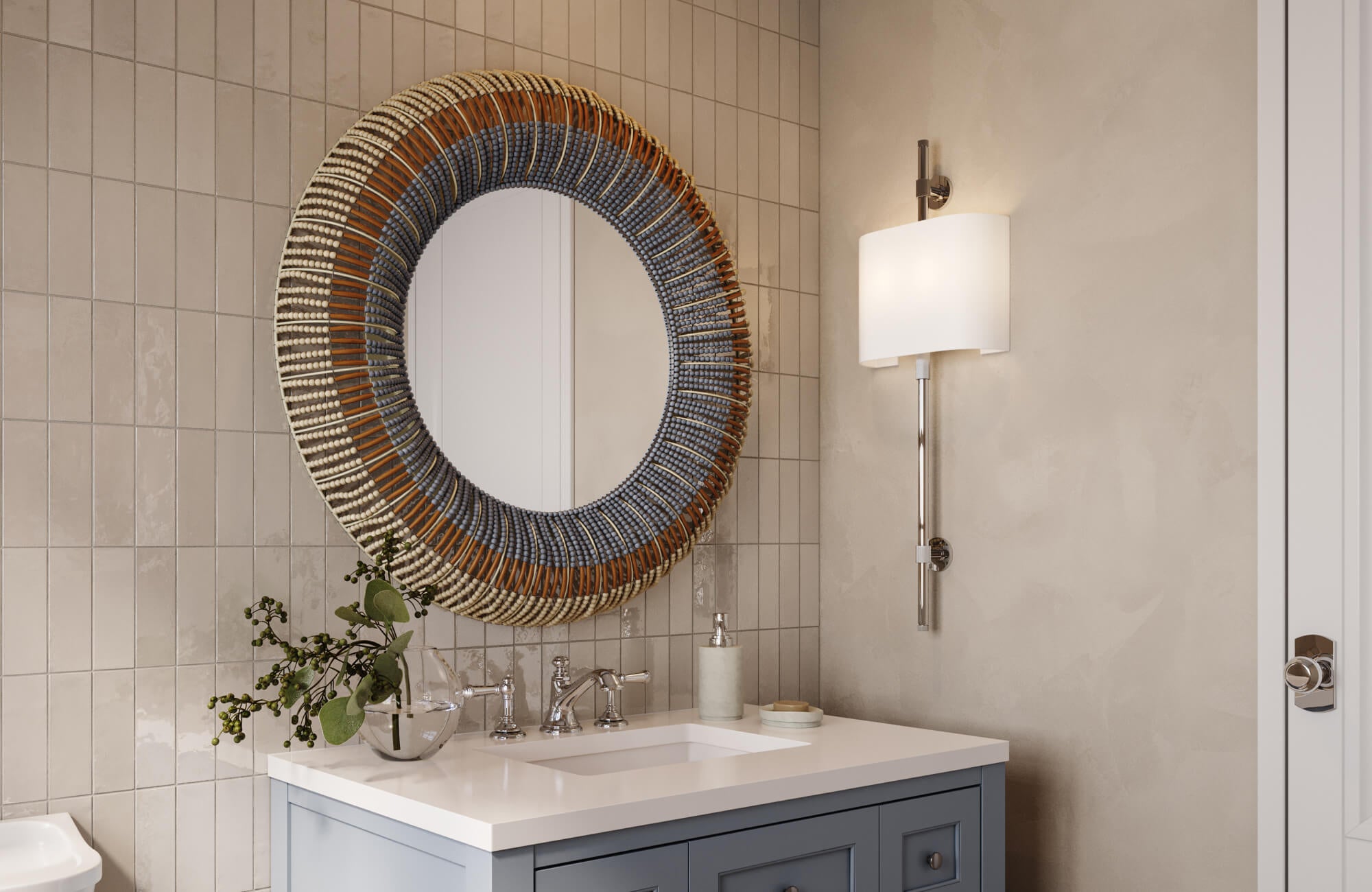
As shown in the photo above, Edward Martin’s Olivienne Mirror in Natural/Blue introduces woven texture and organic detail that complement the bathroom’s soft palette and tiled surfaces. Paired with the Bridgette 36" Single Vanity in Serenity Blue with 3 cm White Zeus Quartz Top, the mirror helps create a layered vanity area that feels refined without overwhelming the compact layout.
Because mirrors reflect both light and surrounding finishes, they can also make bathrooms feel brighter and more open. Choosing a mirror with artistic detailing helps enhance the space while maintaining everyday functionality.
Making Bathroom Art Feel Cohesive
The best wall art for a bathroom combines style with practicality, helping the space feel polished, balanced, and comfortable for everyday use. Artwork that suits the bathroom’s moisture levels, complements the overall design, and fits the room will always feel more natural and visually cohesive. Whether you prefer soft nature-inspired prints, minimalist artwork, vintage pieces, or bold contemporary designs, the right selection can bring warmth and personality into the space without overwhelming it. Even a simple artwork update can make a bathroom feel more inviting, thoughtfully styled, and better connected to the rest of your home.
If you are unsure which artwork styles, colors, or finishes work best with your bathroom design, our team can help guide you through the process. Feel free to contact us or explore our design services for personalized recommendations that complement your wallpaper, finishes, and overall interior style.
Follow us on Instagram
@EDWARD.MARTIN
)
)
)
)
)
)
)
)
)
)
)
)
)
)
)
)