
)
)
)
)
)
)
)
)
How To Choose Outdoor Throw Pillows For Style, Comfort, And Durability
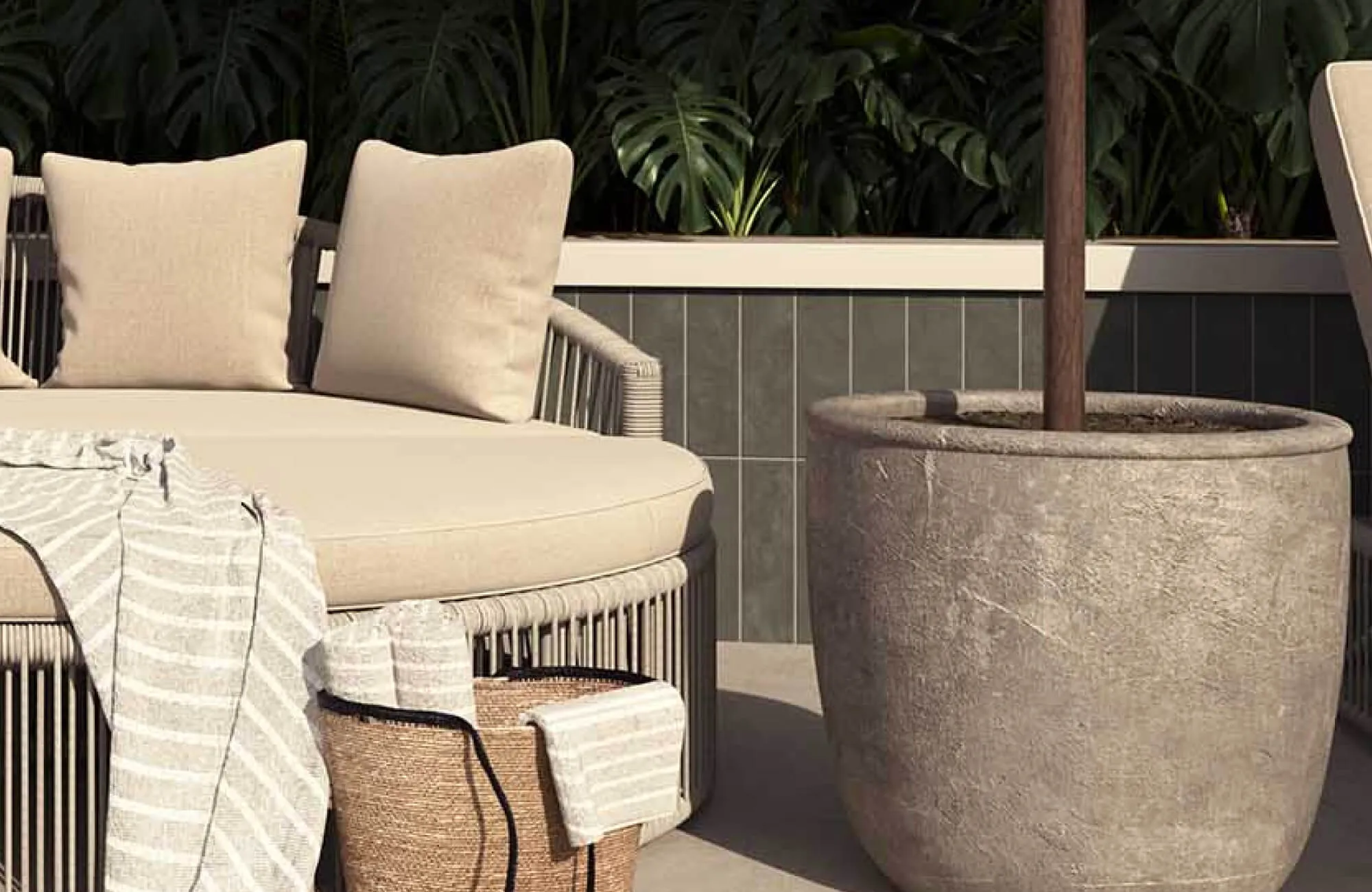
Outdoor throw pillows bring a finished, inviting layer to patios, porches, balconies, and poolside retreats, turning exterior seating into a more comfortable extension of the home. Their appeal depends not only on color and pattern but also on performance fabrics, resilient inserts, and construction details designed to hold up through changing outdoor conditions. When chosen thoughtfully, they soften furniture lines, introduce tactile dimension, and support a more polished outdoor living space that feels decorative, comfortable, and durable all at once.
From sunlit lounge areas to shaded garden corners, each material and silhouette should contribute to both visual harmony and everyday function, and when those choices are made with genuine care, the result is a seating arrangement that feels as considered outside as it does within the home.
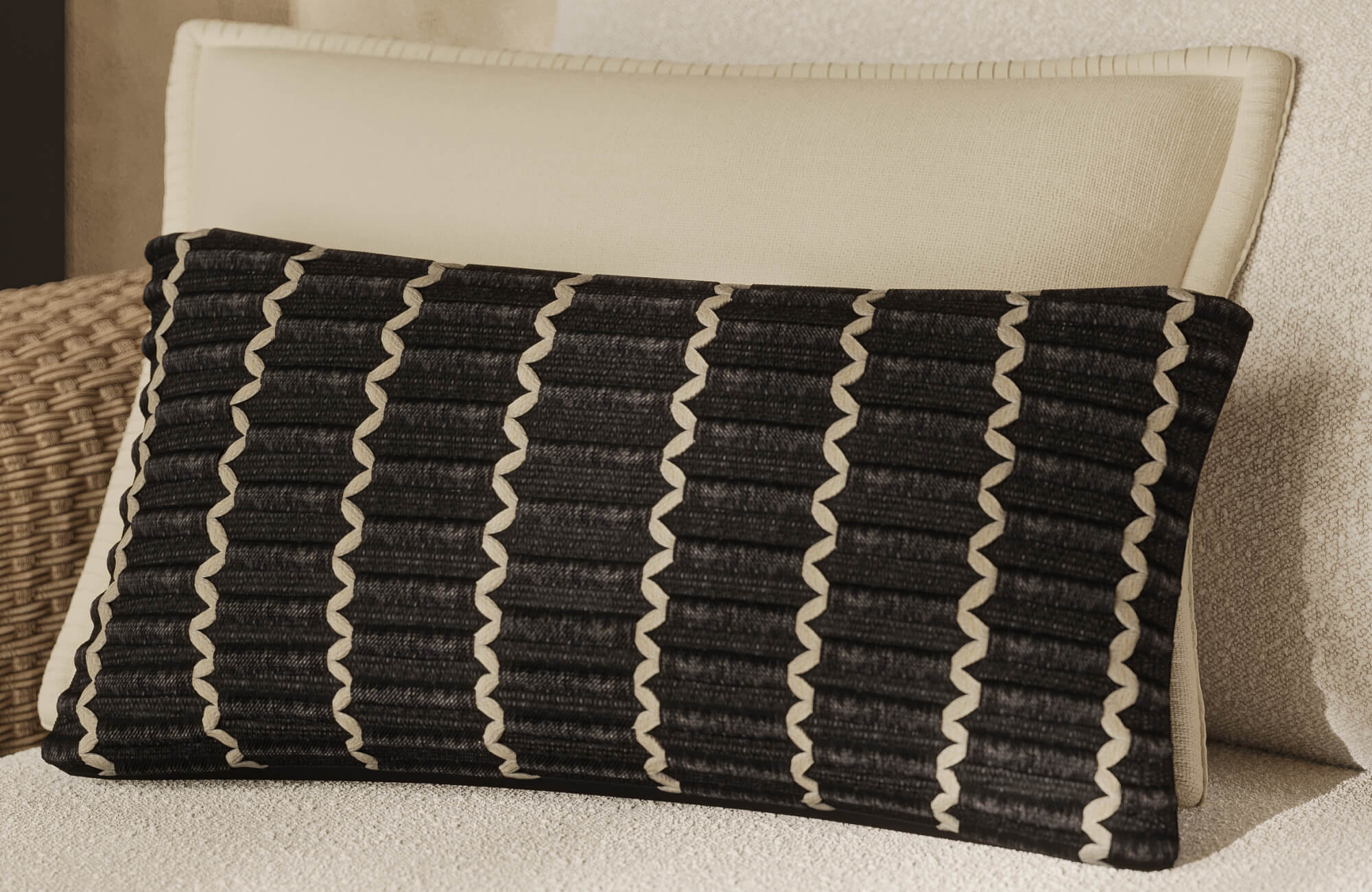
The Marisette 12" x 27" Pillow Cover in Black shows how a well-constructed outdoor fabric can do two things at once, holding up against the elements while bringing texture and quiet visual contrast to the seating arrangement
Start With Outdoor Pillow Materials That Can Handle Weather Exposure
The cover is the first layer exposed to weather and daily use, which makes fabric selection the most consequential decision in building a durable outdoor pillow. Choosing a material suited to your specific climate and sun exposure sets the foundation for long-term appearance and performance across every other quality that follows.
Solution-Dyed Acrylic for Premium Fade Resistance
Solution-dyed acrylic is a high-performance outdoor fabric known for exceptional fade resistance in sunny spaces. Its pigment is incorporated before the fibers are formed, so the color becomes part of the fiber structure rather than resting only on the surface. This helps it maintain richness even on open patios, poolside lounges, and outdoor sofas exposed to strong UV rays. Beyond color retention, solution-dyed acrylic has a soft hand that gives patio throw pillows a more elevated, residential feel suited to luxury outdoor furniture where comfort and appearance need to last through repeated seasonal use. For outdoor throw pillows in full sun, this material offers one of the strongest combinations of colorfastness, softness, and durability available.
Olefin for Moisture and Stain Resistance
Olefin, also known as polypropylene, performs particularly well in damp outdoor settings because it absorbs very little moisture, allowing pillows to dry more quickly after humidity, light rain, or pool splash. Its surface also resists many common stains, making it practical for outdoor dining areas, family patios, and frequently used lounge spaces where easy maintenance matters. Its abrasion resistance adds another layer of practicality, helping the fabric tolerate repeated contact with furniture frames and regular handling without showing early signs of wear. While solution-dyed acrylic is often the preferred choice for premium fade resistance, olefin earns its place through consistent everyday performance, making it a dependable option for outdoor pillows that need to stay clean, dry efficiently, and hold up through active use.
Outdoor Polyester for Budget-Friendly Versatility
Outdoor-grade polyester is a practical option for decorative patio pillows when style flexibility and affordability are priorities, offering a wide range of prints, colors, and woven effects that make it easy to refresh an outdoor seating area without a significant investment. Protective coatings and UV inhibitors can also improve its resistance to fading and moisture, especially in covered patios or shaded decks, though polyester is generally better suited to moderate exposure rather than intense, full-day sun. This makes it well-suited to seasonal styling, protected porches, and spaces where pillows may be updated more often, providing useful versatility when placed thoughtfully within the right environment.
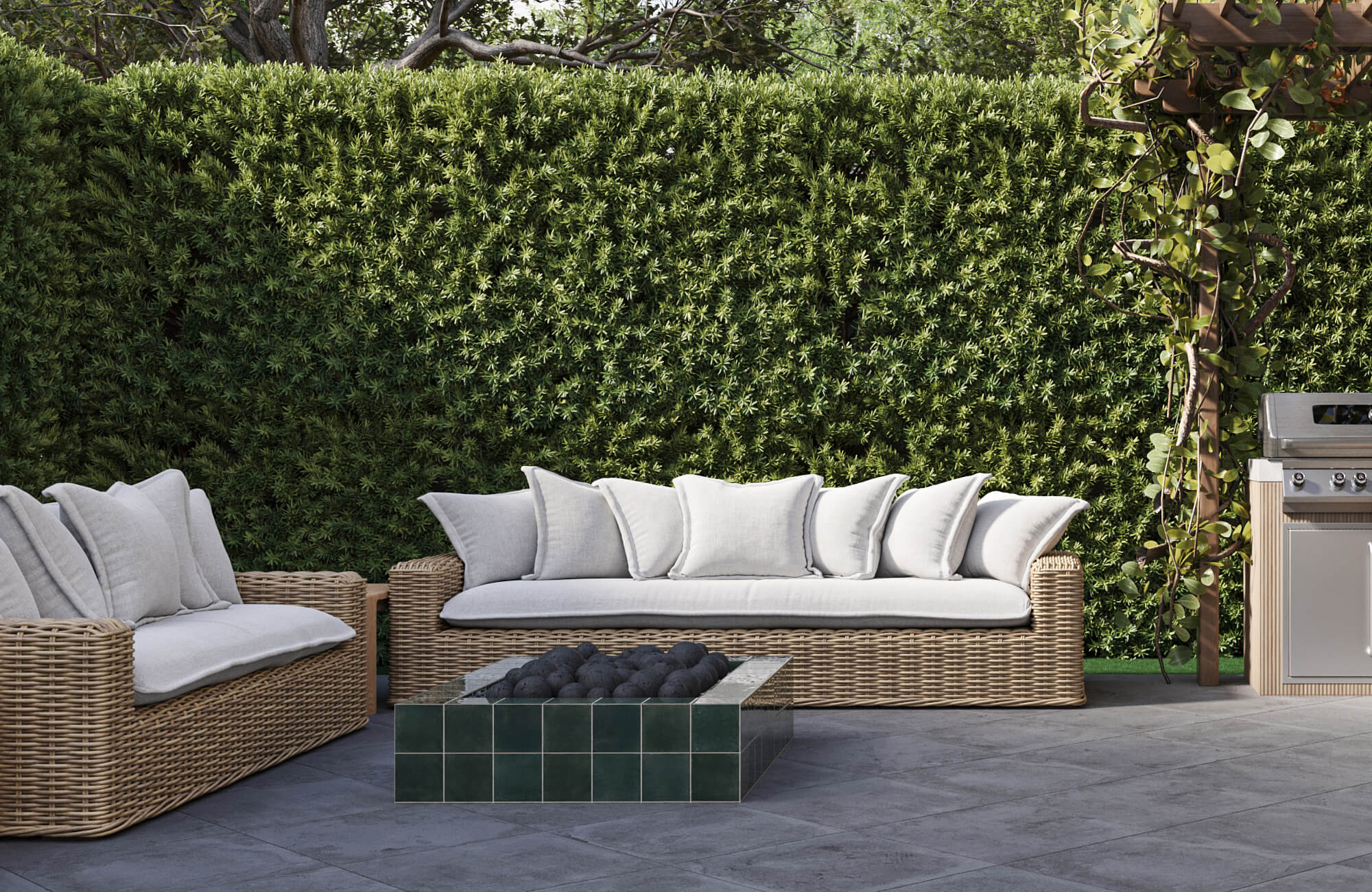
The Elysia Sofa showcases generously filled outdoor pillows that maintain consistent loft and shape, demonstrating how quality inserts contribute to both lasting comfort and a polished seating arrangement
Evaluate Comfort Through Fill Type, Loft, and Shape Retention
Once a durable fabric is in place, the insert determines how the pillow feels, supports the body, and recovers after use. A well-suited fill should align with the furniture's purpose, whether the priority is soft decoration, structured support, or fast drying in frequently damp conditions.
Polyester Fiberfill for Soft Decorative Comfort
Polyester fiberfill gives outdoor throw pillows a plush, lightweight feel that works well for casual lounging. Its flexible structure adapts easily to sofas, porch swings, and balcony chairs for a relaxed and comfortable seating experience. Since it is softer than structured foam, it is best used for decorative layering rather than firm back support, and outdoor-rated fiberfill is preferable because it handles light moisture more effectively than standard indoor inserts. Over time, lower-density fiberfill may compress with heavy or damp use, so for soft outdoor accent pillows where visual fullness and a relaxed feel are the main goals, polyester fiberfill is a practical and approachable choice, particularly when a higher-density option is selected to better hold its shape through regular use.
Foam-Core Inserts for Better Support
Foam-core inserts provide a firmer, more structured feel for larger outdoor pillows, with a foam center that helps the pillow maintain its shape and a fiber wrap that adds surface softness for comfortable lounging. This construction works especially well on outdoor sectionals, patio daybeds, and deep seating furniture, where pillows support the back as well as complete the design. Compared with loose fiberfill, foam-core inserts are less likely to collapse or look uneven after repeated use. Their defined shape also gives oversized pillows a cleaner, more tailored silhouette, making them a more supportive and visually resolved choice for seating that needs both comfort and structure.
Quick-Dry Foam for High-Moisture Areas
Quick-dry foam, also called reticulated foam, is designed with an open-cell structure that allows water and air to move freely through the insert, helping pillows dry faster after rain, pool splash, or heavy humidity. Because moisture does not remain trapped inside for long periods, the risk of mildew, odor, and interior breakdown is significantly reduced, making this insert especially practical for poolside pillows, coastal patios, uncovered decks, and outdoor lounge areas exposed to frequent dampness. Its breathable construction also prevents the pillow from feeling heavy after moisture exposure, offering the most practical insert performance available for wet climates and open-air spaces.
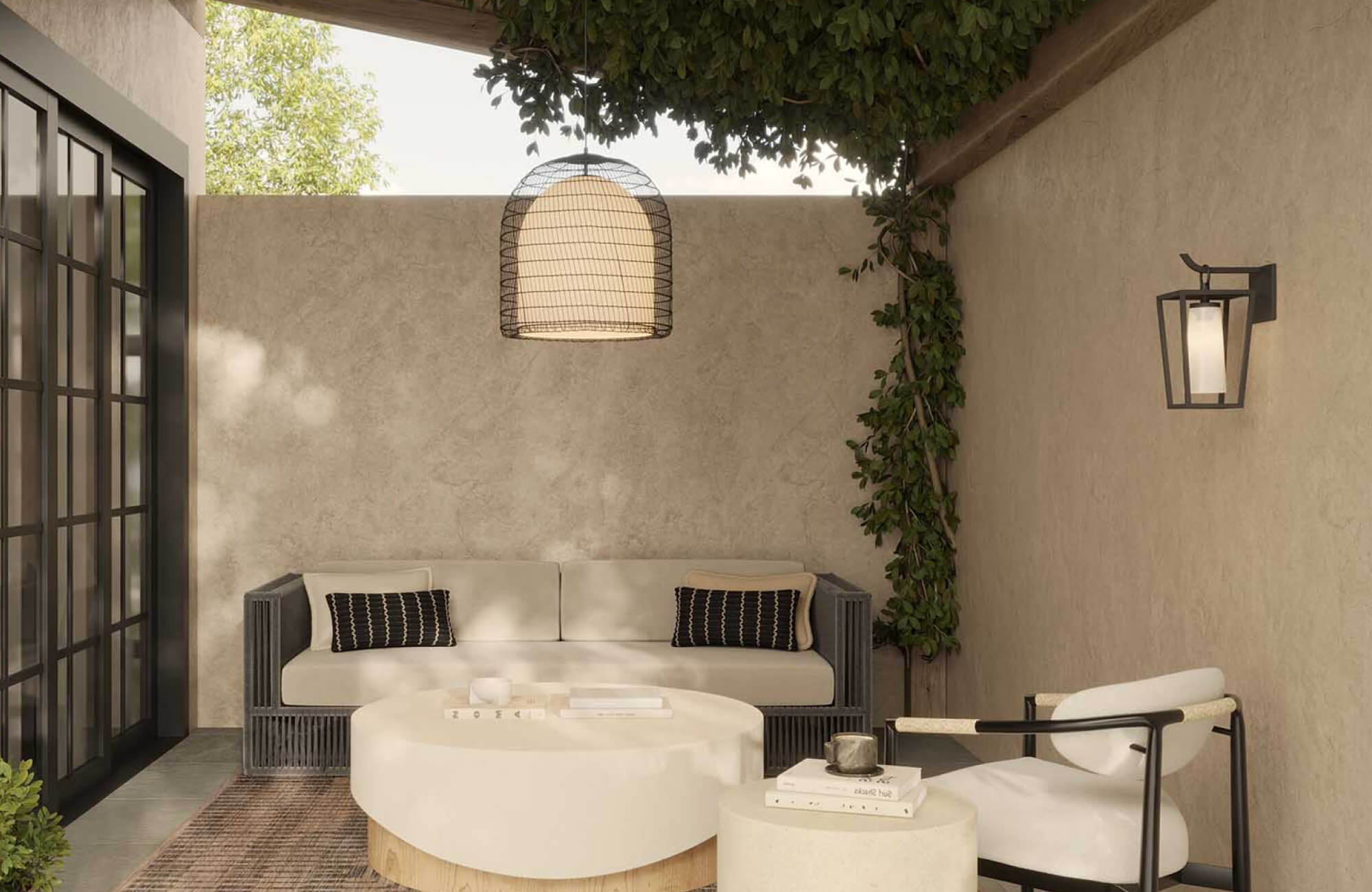
The Merelle 13" x 21" Down Pillow in Ivory demonstrates how lumbar-sized pillows can add support and visual balance to a compact seating arrangement, their proportions complementing the sofa's scale without crowding the space
Match Pillow Size, Shape, and Proportion to Outdoor Furniture
With material and comfort needs established, size and shape determine how naturally the pillows integrate with the furniture around them. Proper proportion keeps the arrangement comfortable, visually balanced, and easy to use without crowding the seating area or disrupting the overall composition.
Square Pillows for Layered Outdoor Seating
Square pillows form the foundation of most outdoor furniture arrangements because they suit sofas, loveseats, club chairs, and sectionals equally well. Sizes such as 18-inch, 20-inch, and 22-inch give the arrangement room to scale up or down depending on the furniture it is built around. Larger pillows anchor the back of wide patio sofas and create a fuller, more generous look, while smaller ones work better for compact chairs, balcony furniture, or front-layer accents where too much volume would feel crowded. Placing larger pillows behind smaller ones also adds depth without reducing comfort, and that layered approach is what makes square pillows the most flexible and reliable starting point for any outdoor seating arrangement.
Lumbar Pillows for Back Support and Visual Structure
Lumbar pillows add targeted lower-back support while introducing a clean horizontal line to outdoor seating. Their rectangular profile makes them particularly useful on dining benches, lounge chairs, porch swings, and deep sofas where standard square pillows might feel too bulky. Because they occupy less vertical space, they improve comfort without overwhelming the furniture, and they also break up repeated square shapes so the arrangement looks more considered and professionally styled. Lumbar pillows work well in solid fabrics, stripes, textured weaves, or restrained patterns, depending on the surrounding design, offering both function and tailored structure for outdoor furniture that needs a refined finish.
Bolster Pillows for Lounge Comfort and Sculptural Detail
Bolster pillows bring a rounded form that softens the straight lines of outdoor furniture, their cylindrical shape working especially well on chaise lounges, patio daybeds, porch swings, and poolside seating, where the design is centered on relaxation. They can also support the neck, arms, or lower back, giving them a more specialized comfort role than purely decorative pillows. Visually, bolsters introduce a resort-style detail that feels elegant precisely because of their restraint, and that quality is best preserved by treating them as accents within the arrangement rather than the primary shape, since too many rounded forms competing at once can quickly tip the composition from curated into cluttered.
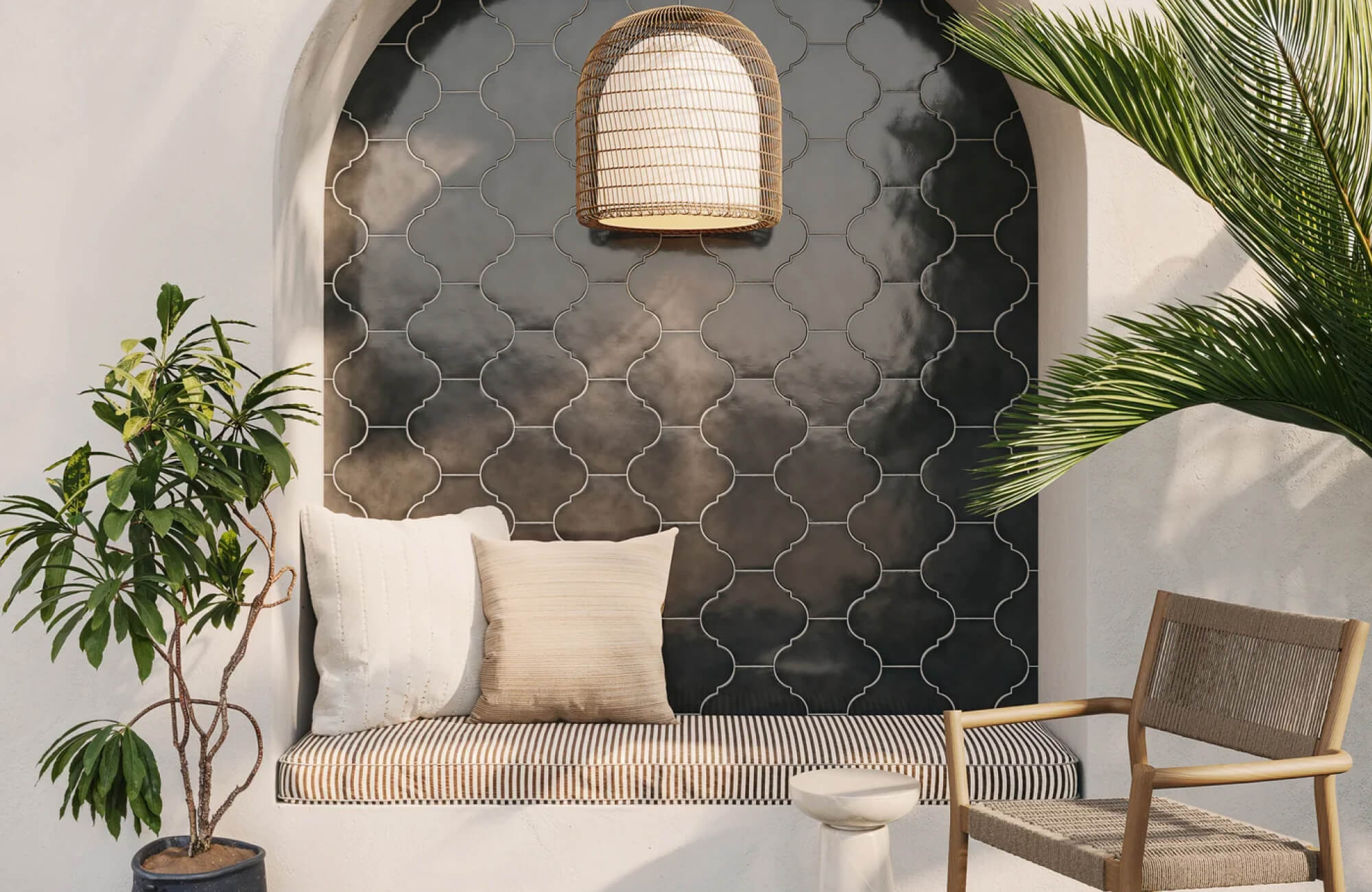
A built-in bench framed by an arched niche combines layered neutral cushions, striped upholstery, and the Amaya 10 x 11 Glossy Porcelain Lantern Tile in Midnight as a backdrop, creating a striking contrast between soft textiles and bold architectural pattern
Build a Cohesive Outdoor Design With Color, Pattern, and Texture
With the functional choices in place, the design direction should connect the pillows to the surrounding architecture, landscape, and furniture finishes. Color, pattern, and texture work best when they build continuity across the space rather than competing for attention within it.
Coordinate With Existing Outdoor Elements
A strong outdoor pillow palette begins with the materials already shaping the space. Wood decking, metal frames, wicker seating, stone pavers, concrete flooring, cushion fabric, and exterior paint all influence which colors will feel naturally at home, so reading those elements first makes every color decision that follows feel more grounded. Neutral furniture can also support richer shades such as terracotta, navy, sage, rust, or deep green, while colorful upholstery often benefits from calmer accent tones that let the existing palette breathe.
Repeating colors from nearby landscaping, rugs, umbrellas, or architectural finishes deepens that connection further, helping the pillows feel like a natural part of the space rather than something added after the fact. The result is a coordinated outdoor living area where cohesion comes from connection, not from making every element match exactly.
Use Pattern Scale for Visual Balance
Pattern mixing becomes more refined when each print occupies a distinct scale and rhythm. Since a large botanical motif, a medium geometric design, and a narrow stripe can work together, they do not compete at the same visual level. This variation gives the arrangement movement while keeping it controlled and readable, and a shared color running across the patterns helps unify the mix without making the composition feel too deliberate. The pattern style should also reflect the mood of the space, whether coastal, modern, tropical, traditional, or organic, so that the design feels like a natural extension of the setting rather than a layer placed on top of it.
Add Texture for Depth and a More Elevated Look
Texture adds depth to outdoor pillows, and this quality becomes especially important when the color palette is soft, monochromatic, or neutral. In particular, basketweave fabrics, ribbed surfaces, slub yarns, canvas textures, and performance bouclé-inspired materials create subtle variation without relying on bold prints. These tactile details also help soften hard outdoor surfaces such as metal, stone, concrete, tile, and glass. When paired with smooth cushions or sleek furniture frames, textured pillows make the seating area feel warmer and more layered, and in modern patio decor, tactile contrast often provides the finishing detail that makes the entire composition feel complete.
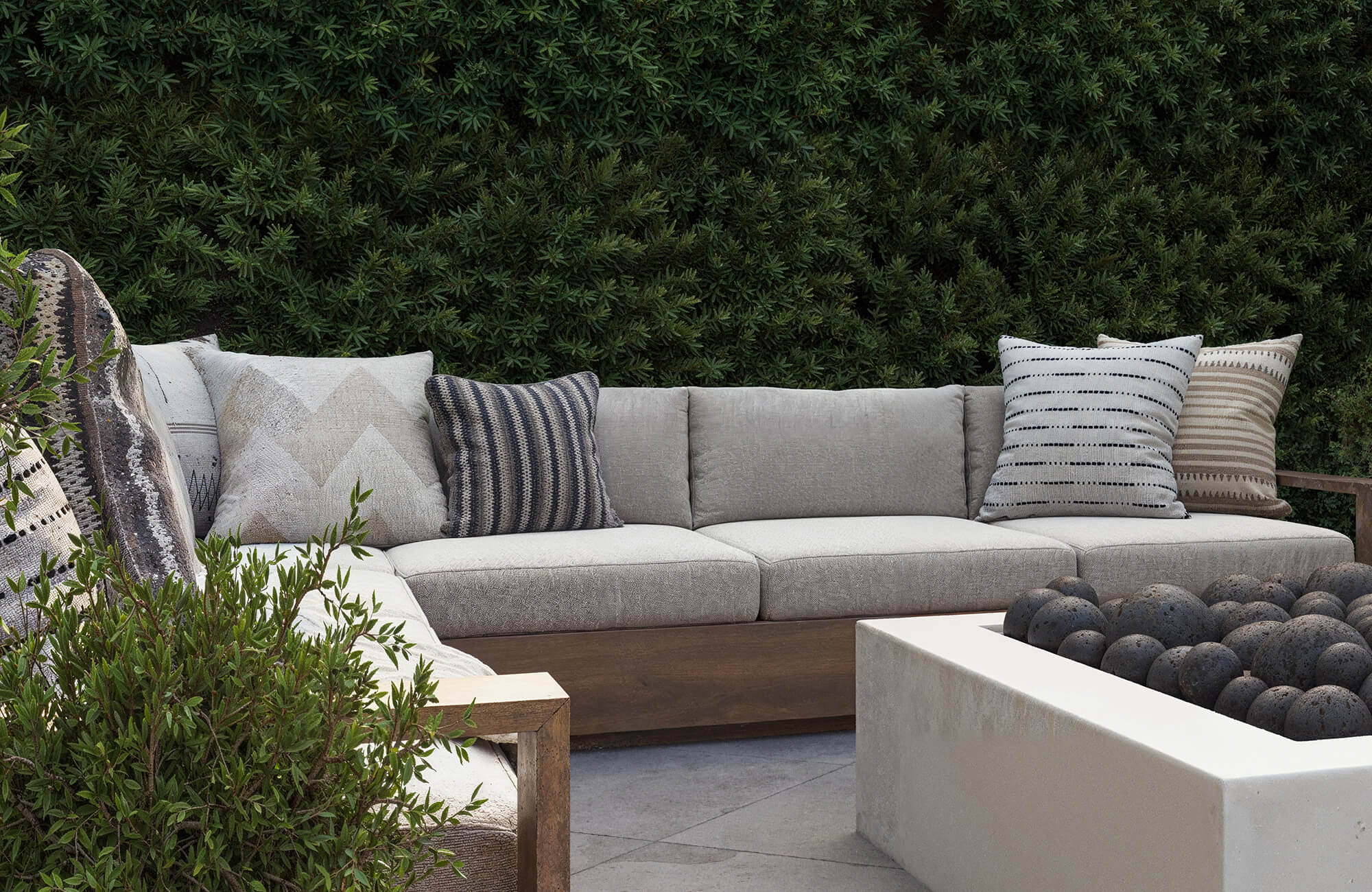
Choosing high-quality outdoor textiles and maintaining them properly helps preserve comfort, appearance, and performance through changing seasons
Prioritize Maintenance, Storage, and Long-Term Durability
Even well-made outdoor pillows need consistent care to preserve their color, fabric strength, and insert performance over time. Thoughtful habits around cleaning, drying, rotation, and storage make a meaningful difference in how long the pillows hold their shape and freshness through repeated seasonal use.
Choose Removable Covers and Durable Closures
Removable covers make outdoor pillow maintenance more practical by allowing easier cleaning, drying, and insert replacement. Zippered closures are especially useful for spot treatment or seasonal washing when care instructions permit. Covered or hidden zippers also protect the closure from direct moisture while keeping the pillow's appearance clean. Reinforced seams matter just as much, since outdoor pillows are frequently compressed, moved, and adjusted during daily use. UV-resistant thread supports seam durability further by reducing the risk of sun-related weakening over time. Together, these construction details help the cover perform as reliably as the fabric itself, season after season.
Clean Pillows Before Dirt Becomes Embedded
Outdoor pillows naturally collect pollen, dust, soil, sunscreen residue, tree sap, and airborne debris throughout the season. Light routine cleaning prevents these particles from settling deeper into the weave, where they become harder to remove and more likely to affect the fabric over time. For most performance fabrics, mild soap, clean water, and a soft-bristle brush are enough, provided the manufacturer's care instructions are followed.
Harsh cleaners should also be avoided unless specifically approved, as they can strip protective finishes or reduce colorfastness in ways that are difficult to reverse. After cleaning, pillows should dry completely before being returned to use or storage. Moisture left inside the cover or insert creates the right conditions for mildew and deterioration, undoing the care that was just put in.
Store Pillows During Severe Weather and Off-Seasons
Outdoor pillows last longer when they are protected from prolonged heavy rain, snow, extreme heat, and freezing temperatures, and having a dedicated storage solution makes that habit easier to maintain. A ventilated deck box, storage bench, or dry indoor area also helps preserve fabric integrity, seam strength, and insert loft through periods of non-use.
Before storing, pillows should be fully dry, since even slight moisture trapped inside the cover or insert can lead to mildew and lingering odors. Seasonal storage is especially important for decorative patio pillows that are not intended for year-round exposure. During active months, rotating pillows across the arrangement helps distribute sunlight and compression more evenly, so color fading and wear develop gradually rather than concentrating on a single area.
Creating Outdoor Comfort That Lasts Beautifully
Choosing outdoor throw pillows is most effective when style, comfort, and durability are treated as connected parts of the same design decision rather than separate considerations. Performance fabrics protect against sun and moisture, while the right insert provides the softness, support, or drainage suited to the setting. Proportion, color, pattern, and texture refine the arrangement so it feels intentional within the larger outdoor living space.
With proper cleaning and seasonal storage, durable patio pillows can maintain their shape, color, and comfort through repeated use, resulting in an exterior setting that feels inviting, well-composed, and beautifully prepared for everyday relaxation.
For those seeking a more cohesive outdoor living environment, Edward Martin's design services can help bring together materials, furnishings, and decorative details with confidence. Contact us to explore personalized design guidance tailored to your space and aesthetic vision!
Follow us on Instagram
@EDWARD.MARTIN
)
)
)
)
)
)
)
)
)
)
)
)
)
)
)
)