Many people don’t realize how much the shape of a dining table can change the way a room feels until they compare a few options side by side. The right shape affects how easily people move around the space, how comfortable meals feel, and how naturally the table fits into your daily rhythm. In this guide, we’ll explore today’s most popular table shapes, when each one works best, and how materials and sizing play a role in creating a balanced, inviting dining setup.

Why Dining Table Shape Matters in Your Space
The shape of your dining table influences how easily people move around the room and how comfortable it feels when everyone sits together. It also affects how well the table fits into the layout, especially in homes where the dining area shares space with the living room or kitchen.
How Table Shape Impacts Movement
The way a table is shaped influences how naturally people can navigate around it, especially when the room is tight or shared with other furniture. A well-chosen shape creates smoother pathways and reduces bottlenecks during meals or gatherings. When movement flows comfortably, the dining area feels more open and relaxed. This also helps the room function better during busy moments, like hosting or family meals. Choosing a shape that supports movement makes the space easier to use overall.
Seating Capacity and Comfort
Table shape plays a major role in how many people you can seat comfortably and how evenly the space is distributed among guests. The right shape helps each person feel like they have enough room without bumping elbows or feeling crowded. This balance also makes conversations easier since everyone sits at a natural distance from one another. When seating feels comfortable, mealtime becomes more enjoyable and relaxed. A table that supports good spacing makes the whole room work better for everyday use.
Matching Table Shape With Room Size
The size and proportions of your dining room heavily influence which table shapes feel natural in the space. A well-fitted shape helps the room feel neither too cramped nor too empty, creating a layout that feels visually balanced. This also affects how other pieces of furniture fit around the table, including chairs, cabinets, or nearby living room elements. When the table shape aligns with the room’s overall dimensions, the entire area feels more cohesive. This harmony makes the dining space more inviting and easier to style.

The Most Popular Dining Table Shapes Today
Some dining table shapes continue to stay popular because they fit well into modern layouts and support both everyday use and hosting. Each shape brings its own balance of comfort, style, and functionality, which is why certain designs appear more often in contemporary homes. Below, we’ll look at today’s most common shapes and what makes each one so appealing.
Round Dining Tables
Round dining tables are popular because they create a sense of closeness and make conversations feel more natural. Their curved design also helps improve movement in smaller dining rooms since there are no corners to bump into. Many homeowners choose round tables for open-concept layouts, too, because they soften the overall look of the space. This shape works well for both casual meals and special gatherings.
A great example of this is our Alice 54" Round Dining Table in Light Oak above, which shows how a round silhouette instantly creates a more inviting and conversational dining experience. Its gently curved surface encourages everyone to sit at an equal distance, helping the room feel more open and comfortable. The solid oak build and softly whitewashed finish bring natural warmth to the space, making it a beautiful fit for modern, minimalist, and cozy interiors alike.
Rectangular Dining Tables
Rectangular tables remain the most common choice because they naturally fit the layout of many dining rooms. Their longer surface gives you more seating flexibility, which is helpful for families or people who host often. This shape also pairs well with benches or multiple chair styles, adding versatility without feeling too formal. In open spaces, rectangular tables help define the dining area more clearly. Their classic, adaptable design is a big reason they’re consistently in demand.
Oval Dining Tables
Oval tables offer the elegance of a rectangular shape with the softer edges of a round design. This makes them easier to walk around, especially in narrower rooms. They seat more people than round tables of the same width, too, which makes them a comfortable option for medium-sized spaces. The gentle curves help the room feel more relaxed and visually fluid, which strikes a great balance between function and style.
Square Dining Tables
Square tables work well in smaller or perfectly proportioned rooms where symmetry matters. They offer equal spacing for everyone, which creates a balanced and comfortable dining experience. Square tables are also great for casual meals or smaller households. In compact homes, they maximize usability without overwhelming the space. Their clean, structured look fits modern and minimalist interiors especially well.
Rectangular Extension Tables
Extension tables are popular because they adapt easily to changing needs. They work like a standard rectangular table, but expand when you’re hosting more people. This flexibility is ideal for smaller homes that need to save space during everyday use. The extended surface creates a comfortable layout for larger gatherings. When not in use, the table returns to a more compact form that fits effortlessly into the room.

When Each Table Shape Works Best
The right dining table shape depends on how you use your space every day, how many people you seat regularly, and how much room you have to move around. Different shapes support different lifestyles, so choosing the right one keeps the dining area comfortable and practical.
Best Shapes for Small Dining Rooms
Round and square tables work especially well in small dining rooms because they use space more efficiently and feel less bulky. Their compact footprint keeps the room from feeling crowded, and their proportions help maintain a clean, balanced layout. Round tables are great if you want easier movement, too, since there are no corners to navigate around. Square tables offer a structured look that fits neatly into tighter spaces. Both options create a cozy and functional setup without overwhelming the room.
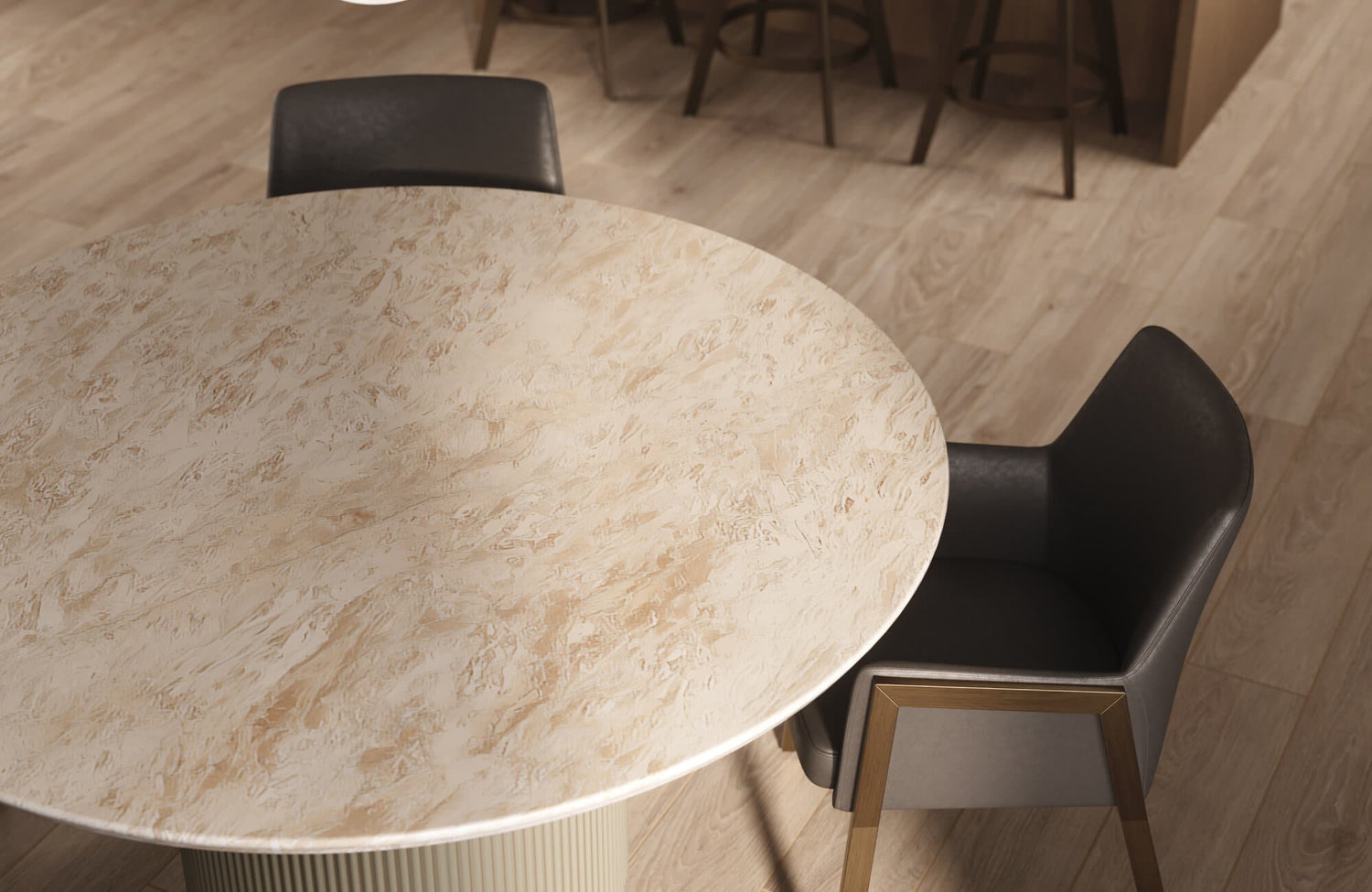
A great example of this is our Leonardo 59" Dining Table in Brown above, which shows how a rounded silhouette can make a compact dining room feel more open and inviting. Its creamy marble top softens the visual weight of the space, while the fluted solid oak base adds depth without overwhelming the layout. The circular design also keeps movement comfortable because there are no sharp corners interrupting the flow.
Best Shapes for Open-Concept Spaces
Rectangular and oval tables tend to shine in open-concept layouts because they help define the dining zone without relying on walls. Their longer shape creates a natural visual anchor, which keeps the space feeling organized and intentional. Oval tables soften the look, too, making the transition between living, dining, and kitchen areas feel smoother. Rectangular tables work well when you want clear direction and structure in a wide, open room. Both shapes bring balance and clarity to larger layouts.
Shapes That Work Well for Families
Families often appreciate rectangular and oval tables because they offer more seating and make it easier for everyone to sit comfortably. These shapes provide extra room for shared dishes, homework sessions, or everyday clutter that builds up around mealtime. Oval tables help reduce the sharp corners that younger kids might bump into, too. Rectangular tables give predictable, evenly spaced seating that works well for growing households. Both shapes offer durability and practicality for busy routines.
Shapes for Hosting and Entertaining
If you love hosting, round and extension-style rectangular tables are some of the most flexible choices. Round tables make conversation feel more natural since everyone can see each other clearly. For larger gatherings, extension tables are incredibly helpful because they can expand when needed and return to a smaller size afterward. Oval tables also keep the flow smooth because guests can move around them easily. These shapes help create a warm, welcoming atmosphere that supports different hosting styles.

Dining Table Materials That Influence Style and Durability
The material you choose for a dining table has a major effect on how long it lasts, how easy it is to maintain, and how it shapes the overall mood of your space. Each material brings its own personality and level of care, so picking the right one helps you match both your lifestyle and your design goals.
Solid Wood Tables
Solid wood tables remain one of the most trusted choices because they offer warmth, character, and long-term strength. They develop a richer look over time, especially in hardwoods like oak, walnut, and maple. Wood is also easier to refresh through refinishing or light repairs, which makes it a long-lasting investment. Its natural texture adds comfort and depth to dining rooms of any style.
A great example of this is our Alice 84" Oval Dining Table in Light Oak above, which shows how beautifully solid wood can anchor a dining space with both style and longevity. Its expansive oval top brings a soft, inviting presence to the room, while the conical base adds sculptural interest without feeling heavy. The gentle whitewash highlights the oak’s natural grain, giving the table a warm, organic character that only becomes richer over time.
Glass Dining Tables
Glass tables bring an airy, open feel to the dining area, making them ideal for smaller rooms or spaces that need visual lightness. They reflect light beautifully, which helps brighten the room and prevent the table from feeling heavy. Tempered glass also holds up well to daily use, although it benefits from regular cleaning to stay clear and streak-free. The sleek surface pairs effortlessly with modern bases in metal or wood. For a clean, contemporary look, glass is a great option.
Marble or Stone Tables
Marble and stone tables introduce a luxurious, sculptural feel that instantly elevates the dining room. Their natural veining and organic patterns can make the table the focal point of the space. These materials are highly durable, but they also require mindful maintenance because stone can be porous or sensitive to acidic spills. With proper care, however, they maintain their elegance for decades. For homeowners who love bold, high-end design, marble and stone bring a striking presence.
Metal or Industrial-Style Tables
Metal tables offer modern durability with a clean, structured look that works well in industrial or contemporary spaces. They resist daily wear and hold up well in high-use environments, making them a practical option for busy households. Many designs mix metal bases with wood or stone tops, giving you a blend of warmth and edge. Metal pieces also bring a sleek, architectural feel that balances both style and strength. If you want a table that feels bold and reliable, metal is a strong contender.
Ceramic or Porcelain-Topped Tables
Ceramic and porcelain tables are gaining popularity because they combine impressive durability with easy maintenance. These surfaces resist heat, stains, scratches, and moisture, which makes them ideal for everyday dining and entertaining. They also come in a variety of finishes, including stone-look designs that mimic marble without the upkeep. The surface stays smooth and consistent over time, even with frequent use. For a modern and low-maintenance choice, ceramic and porcelain tops deliver both beauty and resilience.

How Your Interior Style Affects the Best Table Shape
The shape of your dining table can help reinforce the overall style of your home, whether you lean modern, traditional, or somewhere in between. Choosing a shape that flows naturally with your interior theme keeps the room feeling intentional and well-balanced.
Shapes for Modern & Minimalist Homes
Modern and minimalist homes often benefit from clean, streamlined table shapes that keep the space feeling open and uncluttered. Rectangular and oval tables work especially well because their long, simple lines match the structured feel of modern interiors. Round tables also fit beautifully in minimalist spaces when you prefer softer, understated curves. These shapes maintain a clear visual flow while still offering enough presence for the dining area. If your home leans modern, smooth geometry and simplicity are your best guides.
Shapes for Classic or Traditional Layouts
Traditional interiors often look their best with rectangular or square tables that echo the symmetry and structure of classic design. These shapes bring a sense of formality and grounded presence to the room, especially when paired with decorative lighting or upholstered dining chairs. Round tables also work in traditional spaces when you want a slightly softer, more welcoming feel. Their timeless silhouette blends naturally with heritage-style moldings or warm-toned furniture. If your home leans classic, table shapes that feel balanced and familiar are the most fitting.
Shapes for Scandinavian & Organic Designs
Scandinavian and organic-inspired spaces favor shapes that feel natural, gentle, and calming. Round and oval tables are strong choices because their curved edges soften the room and encourage easy movement. Organic-shaped tables with flowing, asymmetrical lines also pair well with this style, adding a relaxed, nature-inspired touch. These silhouettes complement light wood tones, soft textures, and airy layouts. If you gravitate toward a warm, serene aesthetic, choose shapes that feel fluid and welcoming.
Shapes for Industrial or Urban Spaces
Industrial and urban interiors benefit from table shapes that echo their structured, architectural feel. Rectangular tables are often the go-to because they mirror the clean lines of exposed beams, metal details, and loft-style layouts. Square tables also work well when you want a bold, compact presence that anchors the room. For smaller spaces, round tables help soften the look without losing the industrial edge, especially when paired with metal bases. If your home leans urban, choose shapes that feel strong, streamlined, and intentional.

Choosing the Right Size to Match Your Dining Table Shape
Finding the right table size helps the dining area feel balanced, comfortable, and easy to move through. It also ensures the shape you choose actually works with your room instead of overpowering it. Below, we’ll walk through the key sizing guidelines so your dining table feels proportionate and practical in everyday use.
How to Choose the Right Table Diameter or Length
Choosing the right size begins with knowing how each shape occupies space. Round tables depend on diameter, and selecting one that’s too wide can make movement feel tight even when the room seems spacious. Rectangular and oval tables rely more on length, so the overall footprint affects how they sit in longer rooms. Measuring the available area first helps you picture what will fit comfortably.
A good approach is to choose the smallest size that still fits your daily seating needs. This prevents the table from overwhelming the room or limiting where chairs can go. When your size choice matches both the room layout and your household routine, the table feels more natural in the space. It also makes styling easier since décor and seating can sit comfortably around it.
Clearance and Walking Space Tips
Proper clearance helps the dining area stay easy to navigate, which is especially helpful in smaller or open spaces. A general guideline is to keep at least 36 inches of space around the table so chairs can pull out comfortably. This extra room supports smoother movement during meals and daily activities. When the area feels open, the entire dining setup becomes more inviting.
It also helps to think about nearby paths and how people naturally move around your home. Leaving enough space between the table and surrounding furniture prevents tight corners and awkward walkways. This improves the flow between the dining area and adjoining rooms, especially during gatherings. With the right clearance, the room feels organized and effortless to use.
Seating Capacity by Shape and Size
Different shapes support different seating capacities, so matching the size to your usual number of diners makes a big difference. Round tables typically seat fewer people at smaller diameters but become more accommodating as they increase in size. Rectangular and oval tables can handle larger groups more comfortably because of their extended length. Picking a size that mirrors your daily routine helps the space feel more practical.
Planning for occasional guests can also guide your size decision. Some shapes offer more flexibility for adding extra chairs without making the setup feel crowded. Wider tables allow diners to sit comfortably without feeling too close, while narrower ones encourage a cozy setting. When your table size aligns with how you host and dine, the entire room feels more intuitive and balanced.
Creating a Dining Room That Works Beautifully Every Day
A well-chosen dining table shape can make your entire space feel more comfortable, balanced, and easier to move around. Once you understand how movement, seating, and room size work together, it becomes much clearer which shapes support your everyday routine. Whether you prefer something compact for a small nook or a longer silhouette for open layouts, the right shape helps the room feel more natural and inviting. When your table fits both the space and the way you use it, the dining area becomes a place people enjoy gathering around.
If you want help choosing a table shape that fits your lifestyle and works with the layout of your home, our team can walk you through options that match your space. A design consultation lets you explore styles, compare proportions, and see which pieces bring the best balance to your dining room. Book a design consultation today and start creating a dining space that feels beautifully planned and easy to enjoy.