There’s a familiar hesitation many homeowners feel the moment they gravitate toward dark bathroom tiles. The fear is almost instinctive: Will this make the space feel small, sunken, or cave-like? While it’s an understandable concern, the truth is far more nuanced. Dark wall tiles behave differently than most people expect, and with the right design choices, they can create a luxurious, modern atmosphere that feels calming rather than confining.
Dark tones, when approached thoughtfully, have the power to elevate the room’s character, introduce an element of visual drama, and transform an ordinary bathroom into something that feels intentionally crafted. Understanding the mechanics of color, light, and balance is the first step in embracing deeper hues with confidence.

Understanding How Dark Colors Actually Affect Spatial Perception
Before deciding whether dark tiles will overwhelm your bathroom, it helps to understand how the eye interprets deeper tones in a space. Dark colors don’t behave the way most people assume, and their impact on depth, dimension, and overall mood is surprisingly nuanced. This foundation makes it easier to approach design choices with confidence.
Creating An Infinity Effect By Blurring The Corners
One of the most surprising qualities of dark wall tiles is their ability to soften the edges of a room. When lighter walls are used, a clear definition forms at the corners, making each plane feel fixed and structured. Dark tiles, on the other hand, obscure those transitions by absorbing light rather than reflecting it sharply. As a result, the corners seem to dissolve and merge into one another, producing what many designers refer to as an “infinity effect.” Instead of feeling closed in, the eye drifts more gently across the surfaces, giving the illusion of greater depth. This becomes especially impactful in bathrooms with few architectural interruptions, where the seamless flow of dark surfaces creates a backdrop that feels continuous rather than segmented.
This visual effect also helps conceal irregularities or awkward angles that might otherwise stand out in a lighter palette. When the boundaries visually retreat, the room gains a fluidity that feels more spa-like and serene. The dark tone becomes a unifying force that draws the elements of the space together, allowing fixtures, lighting, and décor to stand in soft contrast against a cohesive background. Many homeowners find that this sense of visual continuity ultimately makes the space feel more intentional and modern, not smaller.
Why Dark Colors Recede Instead Of Closing In
Contrary to the myth that darker shades shrink a space, deeper tones often appear to move away from the viewer. The eye naturally brings lighter colors forward and pushes darker colors back, a principle used frequently in interior design to control spatial perception. When applied to vertical surfaces like bathroom walls, this effect can lend surprising dimension to rooms that might otherwise feel flat. In the image above, the depth you see behind the vanity is enhanced by Edward Martin’s Mikayla 5x5 Glossy Ceramic Tile in Espresso, which creates a soft shadowed backdrop that recedes gently rather than advancing into the room.
This receding quality becomes even more effective when paired with strategic lighting, allowing shadows to settle where they naturally want to fall. The result is a room that feels layered and atmospheric rather than constricted. In some cases, choosing dark tiles actually masks the room’s true dimensions, allowing it to feel larger because the walls don’t visually advance toward the center of the space. Homeowners often discover that what they feared might feel cave-like instead feels enveloping and luxurious, like stepping into a high-end boutique hotel.
Redefining The Difference Between Cozy And Cramped
The line between cozy and cramped depends more on lighting, contrast, and proportion than on color alone. A cramped bathroom is one where every surface feels too close and visually busy, while a cozy bathroom envelops you in warmth and softness. Dark tiles tend to fall into the latter category when used correctly, because they quiet visual noise rather than amplify it. They help the eye settle rather than dart between competing details.
A bathroom that is painted or tiled in stark white with little texture can feel hard and sterile, especially if the space is small. In contrast, a dark tile with depth, richness, or subtle pattern adds warmth without overwhelming the senses. The key is finding harmony in the elements around those darker surfaces. When balanced thoughtfully, dark tiles offer a cocooning comfort that feels deliberate and restorative, defining the difference between a space that feels thoughtfully intimate and one that simply feels tight.

Mastering The Lighting Strategy For A Dark Bathroom
Once you understand how dark tones shape the perception of space, the next step is making sure light works with those colors rather than against them. Effective lighting becomes the bridge that transforms dark tiles from dramatic to truly functional. With the right strategy, you can highlight the richness of deeper hues without letting them overpower the room.
Why Layered Lighting Is Non Negotiable With Dark Walls
Lighting is the backbone of any successful dark-tile bathroom, and layering it effectively prevents shadows from becoming too heavy. Because dark surfaces absorb rather than reflect light, a single overhead fixture rarely provides enough illumination to show off the room’s features. Instead, incorporating multiple light sources at different levels creates dimension and clarity. Ambient light sets an overall glow, task lighting gives precision where it’s needed, and accent lighting enhances texture or architectural elements. When these layers overlap, the room gains movement and depth, ensuring that the dark tiles feel rich rather than overpowering.
This layered approach doesn’t just brighten the space; it elevates it. Light interacting with dark surfaces creates subtle gradients that add sophistication and drama. The shadows fall gracefully rather than harshly, sculpting the features of the room in a way that feels luxurious. Homeowners often find that the right lighting scheme unlocks the full potential of dark walls, turning them from a bold choice into a refined asset.
Utilizing Glossy Finishes To Bounce Light Around The Room
Glossy and semi-gloss finishes introduce an essential counterbalance to the light-absorbing nature of dark tiles. When these surfaces catch a glow from a sconce or pendant, they reflect soft highlights across the room, breaking up the visual weight of deep colors. This interplay between shadow and shine adds movement to the walls, helping the space feel more expansive and alive. You’ll notice this effect clearly in the image above, where Edward Martin’s Jaxson 4x21 Glossy Ceramic Tile in Pine throws subtle reflections that lift the richness of the green tone without diminishing its depth.
Glossy floors, polished countertops, and reflective trims all contribute to this effect by helping carry light along the major surfaces of the room. Even something as simple as a glazed ceramic tile can act as a light-sharing surface, creating a delicate sparkle that helps lift the overall ambiance. When curated well, these finishes prevent the room from ever feeling static, ensuring each lighting element contributes to an elegant and cohesive glow.
Strategic Mirror Placement To Amplify Natural Light
Mirrors are among the most powerful tools for counteracting the heaviness that homeowners sometimes associate with dark walls. A well-placed mirror amplifies existing light, spreads brightness across the room, and visually expands the space. When positioned opposite a window, a mirror can effectively double the amount of natural light entering the room. Even in bathrooms with limited daylight, a mirror can redirect artificial light sources, giving the illusion of a wider, more open environment.
Larger mirrors create the strongest impact, though even a thoughtfully sized or unusually shaped mirror can serve as an architectural feature that complements the dark backdrop beautifully. The contrast between the polished mirror surface and the surrounding deep tones enhances the crisp reflections, making the mirror a focal point that adds clarity and brightness. When balanced with the lighting layers, this reflective surface becomes integral to the success of the design.

Balancing Dark Tones With High Contrast Elements
After establishing a strong lighting plan, the room benefits most when dark walls are complemented by contrasting elements that add clarity and structure. These bright or reflective touches keep the design visually balanced and prevent the space from feeling too saturated in deeper tones. Thoughtful contrast is what brings dimension and polish to a dark-tile bathroom.
Keeping The Floor Lighter To Ground The Space
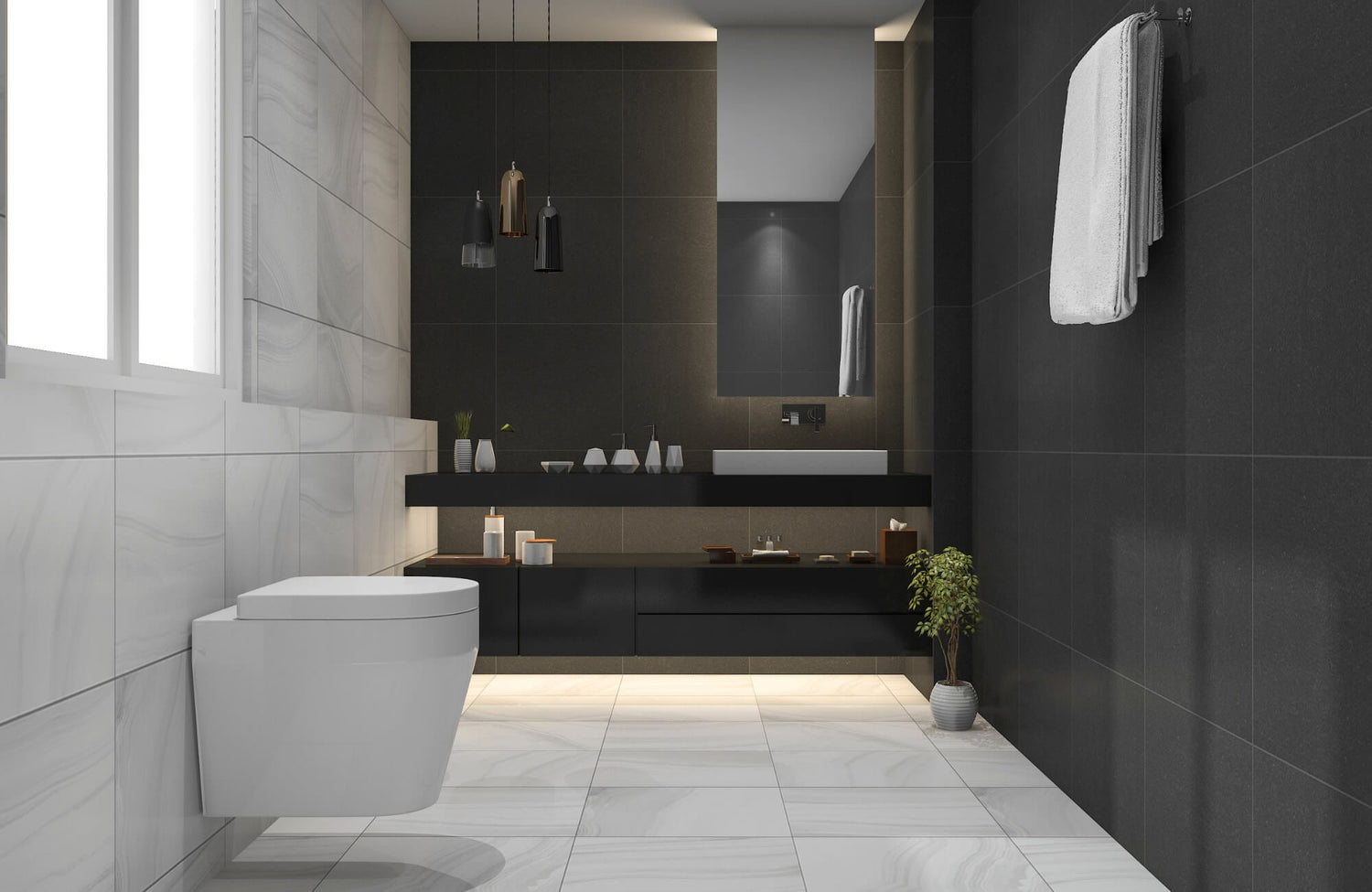
A lighter floor can anchor the room and provide essential contrast against darker walls. This creates a visual foundation that prevents the space from feeling too bottom-heavy or submerged in shadow. Light stone, pale wood-look tile, or soft gray porcelain introduces lift and airiness that complements the depth of darker vertical surfaces. The contrast draws the eye upward, reinforcing the height of the room and maintaining visual structure.
This grounding effect ensures that the space feels balanced from floor to ceiling. It also introduces a layering of tones that enriches the overall design. The combination of a bright floor and darker walls mimics natural lighting principles, where floors often receive the most illumination. This subtle cue helps the bathroom feel more open and intuitive, creating harmony between the deep and light elements of the environment.
Using Metallic Hardware As Jewelry For The Room
Metallic finishes add a sense of precision and glamour that pairs beautifully with darker tiles. Brushed brass, polished chrome, and matte black each offer their own personality, but they all function as visual punctuation within the space. When surrounded by deep hues, these reflective elements sparkle more intensely, becoming decorative accents that elevate the overall aesthetic. In the image above, the warm brass fixtures stand out even more against Edward Martin’s Tatum 1x3 Matte Porcelain Mosaic Tile in Vein-Cut Ash, turning small details into intentional design moments.
These fixtures also help define the room’s architectural lines. A brass faucet against a charcoal wall, for example, becomes a sculptural moment that highlights contrast and craftsmanship. The interplay between metal and tile adds a dynamic tension that keeps the space visually engaging. Even simple hardware choices can help the room feel intentional and richly layered when paired with the right dark tile backdrop.
The Importance Of A Bright Ceiling To Maintain Height
The ceiling significantly shapes the way a bathroom’s height is perceived. Keeping it bright, even when the walls are dark, preserves a sense of vertical openness. A clean white ceiling allows light to bounce more effectively, mitigating any risk of the room feeling compressed. It creates a natural upward lift, drawing the eye toward the highest point in the space.
This separation between dark walls and a light ceiling introduces a sense of scale that balances the room beautifully. It allows the dark tiles to shine without overwhelming the vertical volume. The combination of darker walls and a lighter ceiling becomes a sophisticated contrast that maintains spatial clarity while preserving the dramatic impact of deep tones.

Strategic Placement Ideas For Dark Wall Tiles
With lighting and contrast working in harmony, the final step is deciding where dark tiles will have the most impact. Their placement can completely change how the room feels, whether you’re aiming for full immersion or a more balanced approach. Knowing how to position deep tones lets you create a bathroom that feels intentional, inviting, and beautifully composed.
Using A Single Dramatic Feature Wall For Depth
A single dark feature wall can transform a bathroom without committing the entire space to a deeper palette. Positioning one wall in a rich tone draws the eye toward it, creating a sense of depth that visually expands the room. This approach works especially well behind a vanity, freestanding tub, or built-in shelving, where the dark backdrop enhances the presence of the main focal point.
This technique introduces sophistication without overwhelming the senses. The remaining lighter walls provide balance, while the dark feature wall contributes drama and contrast. For homeowners who love the allure of deep hues but prefer a more gradual design commitment, this focused application offers a perfect middle ground.
Installing Half Height Tile To Maintain Airiness
Half-height tile allows you to enjoy the richness of dark tones without covering the entire vertical surface. By tiling only the lower portion of the wall, you preserve spaciousness and brightness near the ceiling, which keeps the bathroom feeling open. This split approach introduces visual layering that adds architectural appeal and interest. The darker lower half grounds the room, while the lighter upper half maintains a sense of lift, and tools like Edward Martin’s AR Visualization Tool make it easy to preview this balance in your own space before committing.
This style works beautifully in bathrooms that benefit from contrast but require a gentler approach to color saturation. It preserves the drama and elegance of dark tile while respecting the need for lightness and air circulation within the upper visual field. The transition between tile and wall also creates an opportunity to introduce molding, decorative finishes, or additional texture for a refined, tailored look, and once you’ve explored options virtually, ordering Edward Martin tile samples helps confirm the tone and texture in real light.
Defining The Shower Zone As A Separate Focal Point
Tiling the shower in a dark color can turn this area into an immersive, spa-like retreat. The enclosed nature of the shower works harmoniously with the depth of dark tiles, creating a cocooning atmosphere that feels intimate and calming. Because the shower is often already separated by glass, the darker tones read as a distinct zone without affecting the airiness of the rest of the room. This is especially evident in the image above, where Edward Martin’s Mikayla 2.5x5 Glossy Ceramic Tile in Espresso defines the shower as a rich focal point that contrasts beautifully with the softer neutrals around it.
This strategy allows for a visually dynamic layout where the shower becomes a destination. The contrast between the darker shower walls and the lighter surroundings adds structure and flow to the overall design. When paired with intentional lighting, such as a soft waterproof LED strip or an overhead spotlight, the shower transforms into a sanctuary within the sanctuary.
Be Bold And Build Your Sanctuary
Dark wall tiles are not the enemy of space; they are the architect of atmosphere. With thoughtful lighting, layered contrast, and strategic placement, they create a bathroom that feels enveloping, luxurious, and visually expansive. Instead of shrinking the room, they reshape it, softening corners, adding depth, and introducing a soothing richness that is hard to achieve with lighter palettes alone.
The key lies in understanding the balance between light and dark, between contrast and cohesion. By embracing deeper tones with intention, you give yourself the opportunity to design a bathroom that feels custom, timeless, and deeply personal. Rather than fearing the cave effect, you can lean into the immersive quality dark tiles offer and allow the space to become a sanctuary where sophistication meets serenity. The boldness pays off, not only in style but in the emotional experience of stepping into a room that feels elevated and beautifully composed.