As we age, even everyday tasks like brushing our teeth or washing our hands can become more difficult without the right setup. One of the most important but often overlooked details is the height of the bathroom vanity. Choosing the right height not only enhances comfort but also supports independence and reduces strain. In this article, we’ll walk you through what to consider when selecting the ideal vanity height for seniors, from standard industry options to personalized adjustments that can make daily routines easier and safer.

Today’s Standard Vanity Heights
To make an informed and thoughtful choice, it’s helpful to begin with a clear understanding of what’s typically considered standard. Vanity heights have evolved over the years, and understanding that evolution can also help you spot the difference between what’s common and what’s right for you or your loved ones.
What Counts as Standard
Most bathroom vanities available today range in height from 30 to 36 inches. Traditionally, models between 30 and 32 inches were the norm, intended to suit the average adult without specific ergonomic considerations. However, these measurements weren’t designed with aging bodies or mobility challenges in mind. While this height can still work for some, it may not provide the comfort or support seniors often need, particularly those experiencing limited flexibility or balance issues. Understanding the origin of these standard dimensions also helps us see where thoughtful adjustments can make a real difference.
How Trends Have Shifted
In recent years, bathroom design has shifted toward taller vanities, often referred to as “comfort-height” or “counter-height” models. Typically ranging from 34 to 36 inches, these styles aim to reduce the need for bending, particularly for taller adults. While they can also offer some benefits for seniors by easing strain on the lower back, they aren’t always the right fit on their own. Without complementary accessibility features, a taller vanity can still present challenges. That’s why it’s important to look beyond design trends and consider how the vanity will be used and by whom. A practical, senior-focused approach is far more valuable than simply following what’s popular.

Choosing the Right Vanity Height for Everyday Use
There’s no one-size-fits-all height that works for every senior, but certain ranges tend to offer better comfort and function depending on how the vanity is used. Whether someone stands or sits while using it, the main priorities remain the same: ease of access, stability, and long-term comfort. Let’s take a closer look at how to find the height that best fits your needs.
Height for Standing Use
For seniors who remain upright and mobile during daily routines, a vanity height between 34 and 36 inches typically provides the most comfortable and practical fit. This range supports a natural standing posture, helping to avoid unnecessary bending or strain. It also brings the sink and countertop within easy reach, making everyday tasks like washing hands or brushing teeth more manageable. For those who occasionally need to lean for balance, this height offers a steady surface at an accessible level, promoting both comfort and stability during use.
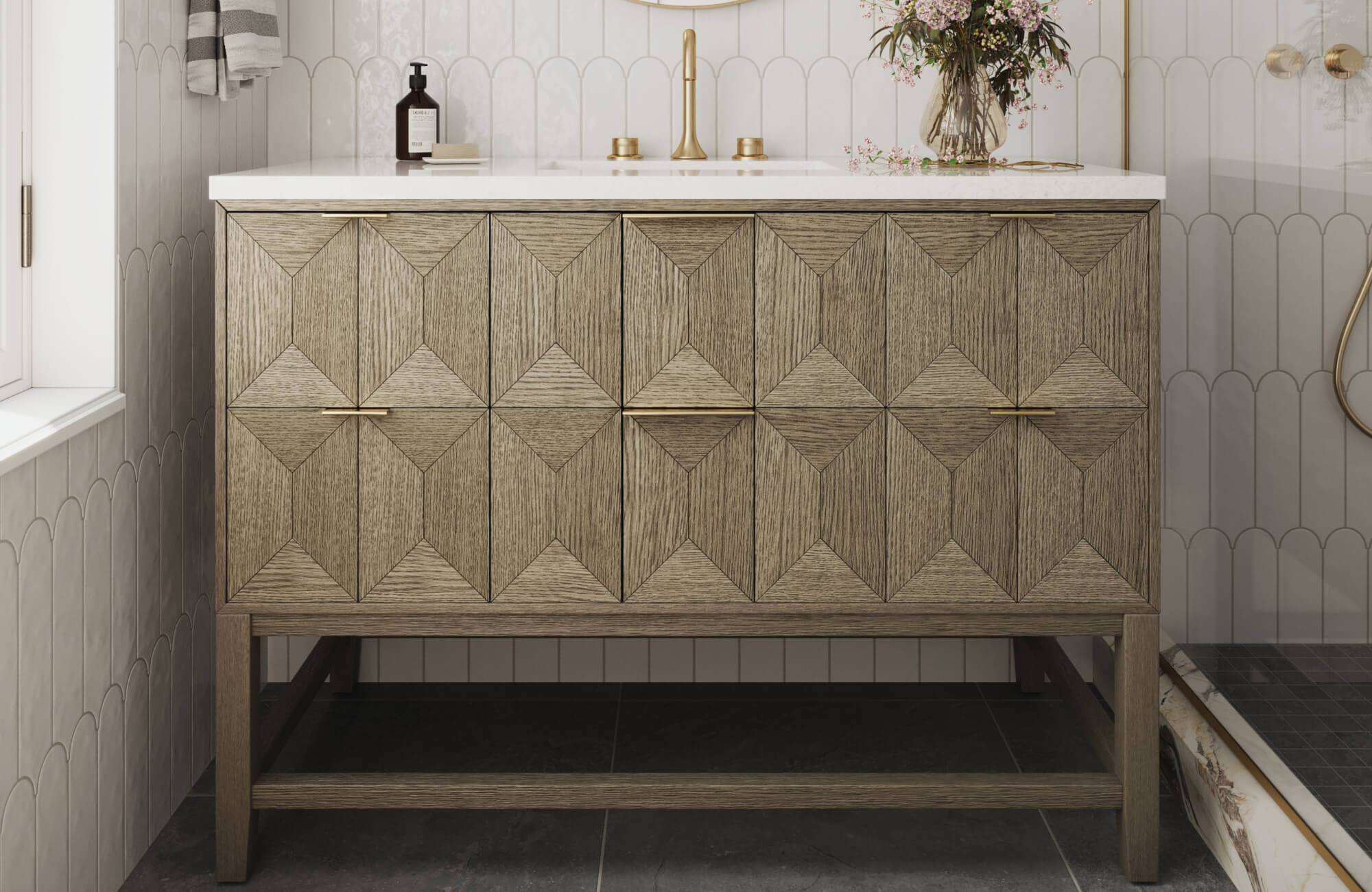
A fitting example of this is Edward Martin’s Colton 36" Single Vanity in Sable with 3 cm White Zeus Quartz Top, as shown in the photo above. Standing at 35.88 inches high and designed as a freestanding unit, it comfortably fits within the recommended range for seniors who use the vanity while standing. Its sturdy base and clean, streamlined design not only enhance stability but also add a refined touch to the space. By combining visual elegance with functional comfort, a vanity like Colton supports daily use while seamlessly complementing a modern, senior-friendly bathroom.
Height for Seated Access
When the vanity is intended for seated use, whether from a wheelchair or a shower chair, a lower height, typically between 30 and 32 inches, tends to offer better accessibility. Just as important as the surface height is the space beneath it. For comfortable, forward-facing access, the design should provide at least 27 inches of vertical knee clearance. This allows users to pull in close without straining or turning awkwardly to the side. Taking these dimensions into account also helps create a setup that supports ease of use for individuals with varying mobility needs, ensuring that the vanity remains functional and inclusive.
Custom and Adjustable Setups
In households where users have varying mobility needs or where you're planning for potential changes, custom or adjustable vanity setups can be a practical solution. Wall-mounted vanities, such as our Royce 36" Single Vanity in Chestnut with a 3 cm White Zeus Quartz Top, can be installed at a user-specific height while leaving open space underneath for seated access when needed. Some designs even feature manual or mechanical adjustability, making it possible to modify the height over time without a full renovation. Although these options may involve more planning during installation, they can also offer valuable flexibility and adaptability for evolving lifestyles.

Making the Vanity Safer and Easier to Use
While height plays a key role, it’s only one part of creating a truly senior-friendly vanity. To support comfort and independence, the design should also include thoughtful features that make everyday tasks easier and safer. From faucet styles to lighting choices, these small yet impactful details can significantly improve the overall experience.
Lever Faucets and Touchless Options
For seniors, especially those with arthritis or limited hand strength, traditional faucet knobs can be difficult to turn and uncomfortable to use. Lever-style faucets offer a practical alternative, requiring minimal grip and movement to operate. For added convenience, touchless models provide a hands-free option that responds to motion, reducing physical effort while also supporting better hygiene. Both solutions can help make daily routines easier and more accessible, with less strain on the joints.
Rounded Countertop Edges
At first glance, sharp countertop corners might not raise concern, but for seniors, a minor stumble near a vanity can quickly turn into a safety risk. Hard, angular edges increase the chance of injury during a fall or misstep, particularly in the bathroom, where stability can be compromised. Rounded edges, on the other hand, offer a softer, safer alternative that helps minimize cuts or bruises while creating a more inviting, approachable design.
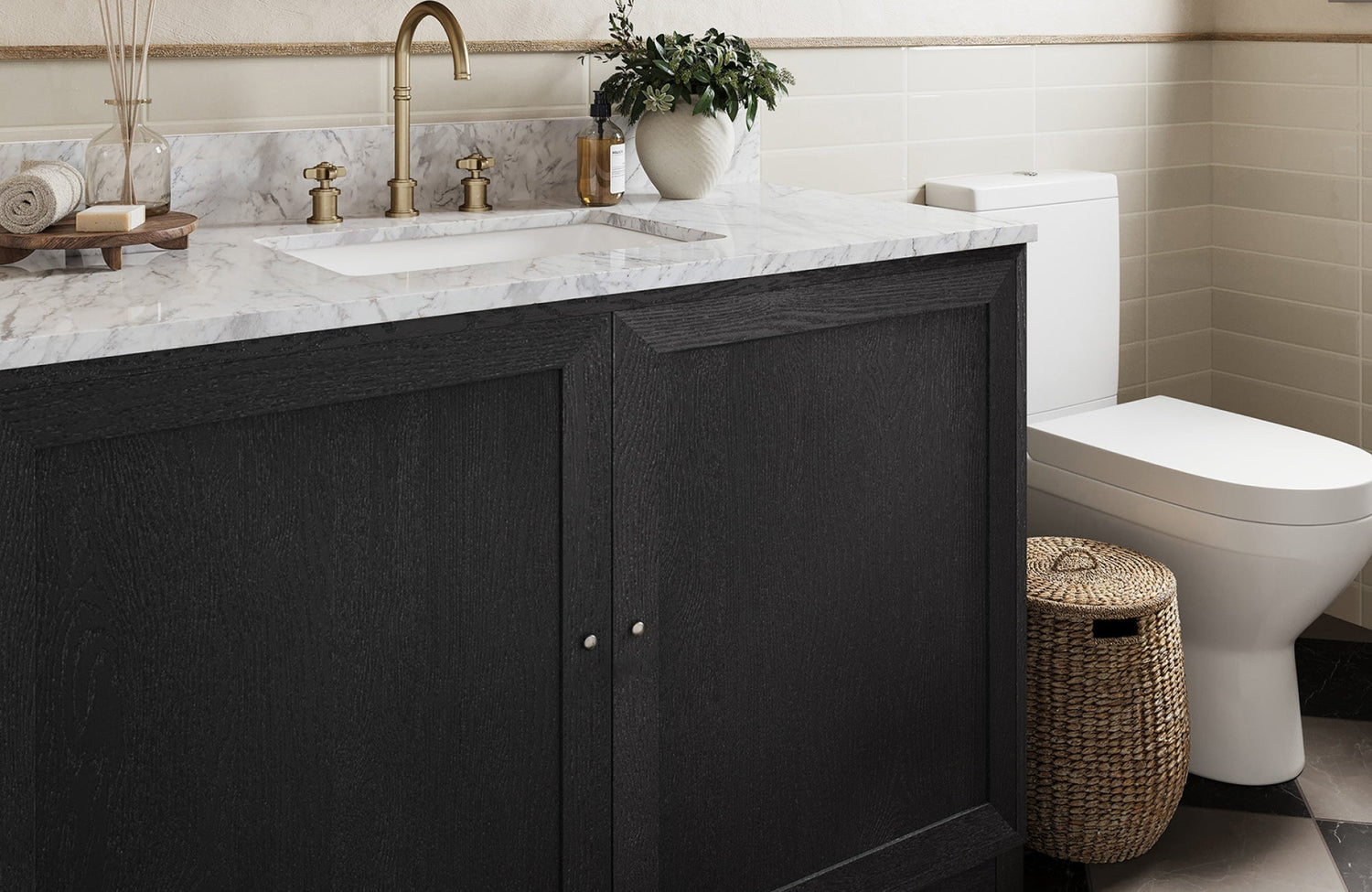
This balance of safety and style is well represented by Edward Martin’s Gemma 36" Single Vanity in Washed Blonde Oak Veneer with Carrara Marble Top, as displayed in the photo above. Its gently curved edges not only reduce impact risk but also contribute to a sleek, contemporary look. When paired with a slip-resistant floor surface, this kind of design becomes both a practical and visually appealing choice for senior-friendly bathrooms.
Built-In Lighting and Visual Cues
Proper lighting plays a vital role in helping seniors move through the bathroom with greater confidence and ease. Rather than relying on a single ceiling fixture, incorporating task lighting around the vanity can significantly improve visibility. One effective option is using wall sconces placed on either side of the mirror, which provide even, focused illumination at face level. This helps reduce shadows, making tasks like shaving or brushing teeth more comfortable and precise.
Additionally, soft, bright lighting directed toward the sink and countertop improves depth perception and highlights surface edges. Visual contrast also makes a difference; selecting a countertop color that stands out from the surrounding walls or cabinetry can help those with declining vision better distinguish surfaces. Together, these thoughtful lighting choices enhance both the safety and functionality of the vanity area.

Coordinating Vanity Height With Bathroom Layout
The right vanity height is only effective if it works in harmony with the rest of the bathroom. The layout also plays a role in how easily the space can be used, especially for those who rely on mobility aids or require additional room to move safely and comfortably.
Mirror and Lighting Placement
Once you've chosen the ideal vanity height, it’s just as important to ensure the mirror and lighting are positioned to match. A mirror that sits too high or too low can undermine the vanity’s functionality, making grooming tasks more uncomfortable or difficult to perform. Proper lighting placement is equally crucial; fixtures should cast soft, even light across the face and hands without creating glare or harsh shadows. Positioning lights alongside the mirror, rather than relying solely on overhead fixtures, often leads to better clarity and comfort.
This thoughtful combination is well illustrated in the photo above, where Edward Martin’s Esmeralda Small Mirror in Polished Brass is paired with the Nicholson Wall Sconce in Aged Brass. The sconces flank each mirror at face level, providing balanced illumination that enhances visibility while reducing shadowing, especially useful for seniors who need clear, consistent lighting during everyday routines. The setup not only improves function but also adds a warm, refined touch to the overall design.
Flooring and Threshold Adjustments
While often overlooked, flooring has a significant impact on bathroom safety, particularly around the vanity area. Surfaces should be slip-resistant, providing reliable traction even when wet. Glossy tiles, raised thresholds, or unsecured rugs can all contribute to instability and increase the likelihood of slips or falls. In some cases, simply leveling the floor or replacing slick materials with textured alternatives also makes a noticeable difference. These modest updates may seem minor, but they can offer meaningful improvements in both safety and confidence for daily use.
Fixture Spacing and Clearance
Proper spacing around the vanity is essential for ease of movement and overall accessibility. There should be ample clearance between the vanity and nearby fixtures such as the toilet, bathtub, or grab bars to allow for safe and comfortable navigation. When space is too tight, it can make turning, stepping back, or maneuvering with a walker or wheelchair more challenging. By designing a layout that allows for open, unobstructed movement, you can create a more functional environment that accommodates a wide range of mobility needs.

Installation Tips and Long-Term Planning
The final step in choosing the best vanity height is making sure it’s installed correctly. Even a well-chosen vanity can fall short if the setup doesn't align with real-life use. It’s also important to think beyond the present and consider how those needs may change over time, allowing the setup to remain functional and supportive for years to come.
Work With Experienced Contractors
When installing a vanity for senior use, partnering with professionals who specialize in aging-in-place or universal design can make a meaningful difference. These experts are well-versed in adapting vanity height, positioning, and layout to suit the user’s daily habits and physical needs. They can offer guidance on important details such as required clearances, stable mounting, and safe, durable materials. Working with knowledgeable contractors not only enhances functionality but also provides added reassurance that the space will remain comfortable and accessible over time.
Test With Temporary Setups
Before committing to a final installation, it’s a good idea to test out different vanity heights to find what feels most comfortable. Using simple tools like risers, blocks, or mock installations can help simulate the experience of daily use. This hands-on approach allows you or your loved one to evaluate comfort, reach, and ease of access, helping ensure the chosen height truly supports day-to-day needs before any permanent changes are made.
Modifying Existing Vanities
If a full replacement isn’t necessary or feasible, there are still practical ways to improve an existing vanity for better accessibility. Adding risers beneath the cabinet base is an easy and effective way to raise the vanity height, improving comfort for those who use it while standing. For users who require seated access, modifying the cabinet’s underside or replacing it with a thinner countertop can also help provide the necessary knee clearance for a more comfortable fit. These targeted adjustments require less time and cost than a full remodel, yet they can significantly enhance the vanity’s usability and comfort.
Creating a Comfortable, Age-Friendly Bathroom
Choosing the right vanity height for seniors goes beyond aesthetics; it’s also a meaningful investment in comfort, independence, and safety. As physical needs change with age, the bathroom should evolve to meet those needs. From selecting an appropriate vanity height to integrating features that support balance, visibility, and accessibility, each thoughtful decision contributes to a space that feels good to use and functions reliably every day.
With proper planning, the bathroom can become a supportive, age-friendly environment that adapts over time without compromising on style or practicality. If you’re ready to get started or need expert guidance along the way, contact us or take advantage of our complimentary design services to create a bathroom that’s both beautiful and built to last!