A bathroom vanity may seem like a purely functional feature, but its color can dramatically influence how your space looks, feels, and even ages over time. The right hue has the power to open up a small bathroom, create a calming atmosphere, or become a bold focal point in an otherwise quiet design. And because vanities bridge both style and practicality, choosing a color isn’t just a matter of taste. It’s also about making a smart, lasting decision.
This article explores every angle that matters: how lighting alters perception, how to coordinate with materials already in your bathroom, how trends compare to timeless classics, and even how to strike the right balance between personal expression and resale value. Whether you're designing a forever home, commercial area, or a space to love for just a few years, the right vanity color can tie everything together beautifully.

The Influence of Light on Vanity Color Choice
Light dramatically affects how colors appear in a space, especially in a bathroom where natural light may be limited. Understanding how lighting shifts the tone and depth of your vanity color helps you make choices that work throughout the day and across all lighting conditions.
Daylight vs Artificial Illumination
The way your bathroom vanity looks at noon might be entirely different from how it appears at night, and that’s largely due to the kind of light it’s exposed to. Natural daylight, particularly from windows or skylights, gives the truest sense of your vanity’s color. It also reveals undertones you may not have noticed under showroom lighting and highlights finishes with clarity. This is especially helpful when you’re working with nuanced shades like greige, navy, or even charcoal, which often shift in tone depending on how much light they receive.
On the other hand, artificial lighting tends to influence color perception in subtle but impactful ways. Warm incandescent bulbs can make cool tones like blue or gray feel muddier or more beige, while cool LEDs may drain warmth from taupes and creams, making them look sterile or flat. Because bathrooms often rely on artificial light for daily routines, it’s important to test your vanity color under the actual conditions of your space, not just in daylight or in-store. Observing how your chosen finish reacts throughout the day also helps you avoid costly surprises and ensures your bathroom looks just the way you envisioned, morning to night.
Light Direction and Placement
The quality of light in your bathroom doesn’t depend solely on brightness or temperature. It also comes down to how light interacts with surfaces. Directional lighting plays a crucial role in how your vanity color reads in real life. Overhead lighting, for example, can cast downward shadows that mute color richness, causing bold shades to appear flatter than they actually are. If you’ve chosen a deep forest green or matte black, overhead light alone might dull its visual impact.
To illustrate how lighting impacts the appearance of vanity finishes, consider how beautifully a warm wood vanity responds to both natural and artificial light. In the image above, our Maxine 72" Double Vanity in Washed Natural Veneer with Carrara Marble Top demonstrates this perfectly. The soft, washed oak tone subtly shifts in depth depending on the time of day, with natural light highlighting its texture and warmth, while the overhead and side lighting enhance its richness without washing it out.
Furthermore, incorporating side lighting such as sconces mounted beside each mirror builds on this effect by reducing harsh shadows and enhancing color accuracy. This type of lighting complements overhead sources by revealing the full depth and texture of your vanity’s finish from multiple angles. Whether you're working with a warm wood tone like brushed oak or a painted shade like ivory, balanced lighting allows these finishes to appear more vibrant and dimensional. By layering ambient, task, and accent lighting, you not only enhance the vanity’s appearance but also elevate the overall experience of the space, making it both functional and visually refined.

Coordinating with Fixed Bathroom Elements
To achieve a cohesive bathroom design, your vanity color must integrate seamlessly with existing materials like tile, flooring, countertops, and sinks. Every fixed element in the room influences how your vanity is perceived, and aligning those finishes creates a space that feels curated, not chaotic.
Synergizing with Tile and Flooring Patterns
Your bathroom’s tile and flooring choices set the visual rhythm of the space, so your vanity color should complement, not compete with them. If your floor or wall tiles are highly patterned, especially with intricate mosaics, geometric designs, or bold textures, it’s wise to choose a vanity in a more restrained shade. Soft white, light gray, or natural wood tones help keep the room grounded while allowing those detailed surfaces to shine. This balance also prevents the space from feeling overly busy or overwhelming.
Conversely, if your tiles are more minimalist, like large format porcelain, subtle subway tile, or muted concrete-look finishes, you have more freedom to go bold with your vanity color. Rich, saturated hues like emerald green, deep navy, or even plum can act as a statement piece, anchoring the room with personality and depth. Since the tile serves as a quiet backdrop, your vanity also becomes a visual anchor that adds contrast and sophistication without disrupting harmony. This is especially true for floating vanities, which create the illusion of more space, and freestanding vanities, which bring architectural weight and presence to the room. One example is our Gemma 55" Single Vanity in Washed Blonde Oak Veneer with Carrara Marble Top, shown in the picture above. Its warm blonde wood finish pairs effortlessly with understated tiles and softens the room’s tone while still commanding visual attention.
Complementing Countertop and Sink Materials
Your countertop and sink materials directly influence the tone and elegance of the vanity area, making it essential that your vanity color supports rather than clashes with these features. If your countertop has veining or variation like marble, quartzite, or patterned quartz, a vanity in a soft, understated color will enhance rather than distract from that natural movement. Shades like dusty blue, greige, or even pale sage allow the countertop’s pattern to take center stage while still offering visual cohesion. One piece that beautifully illustrates this pairing is our Maxine 36" Single Vanity in Washed Natural Veneer with Carrara Marble Top, which uses warm oak tones and a classic white marble surface to bring out the best in both color and material.
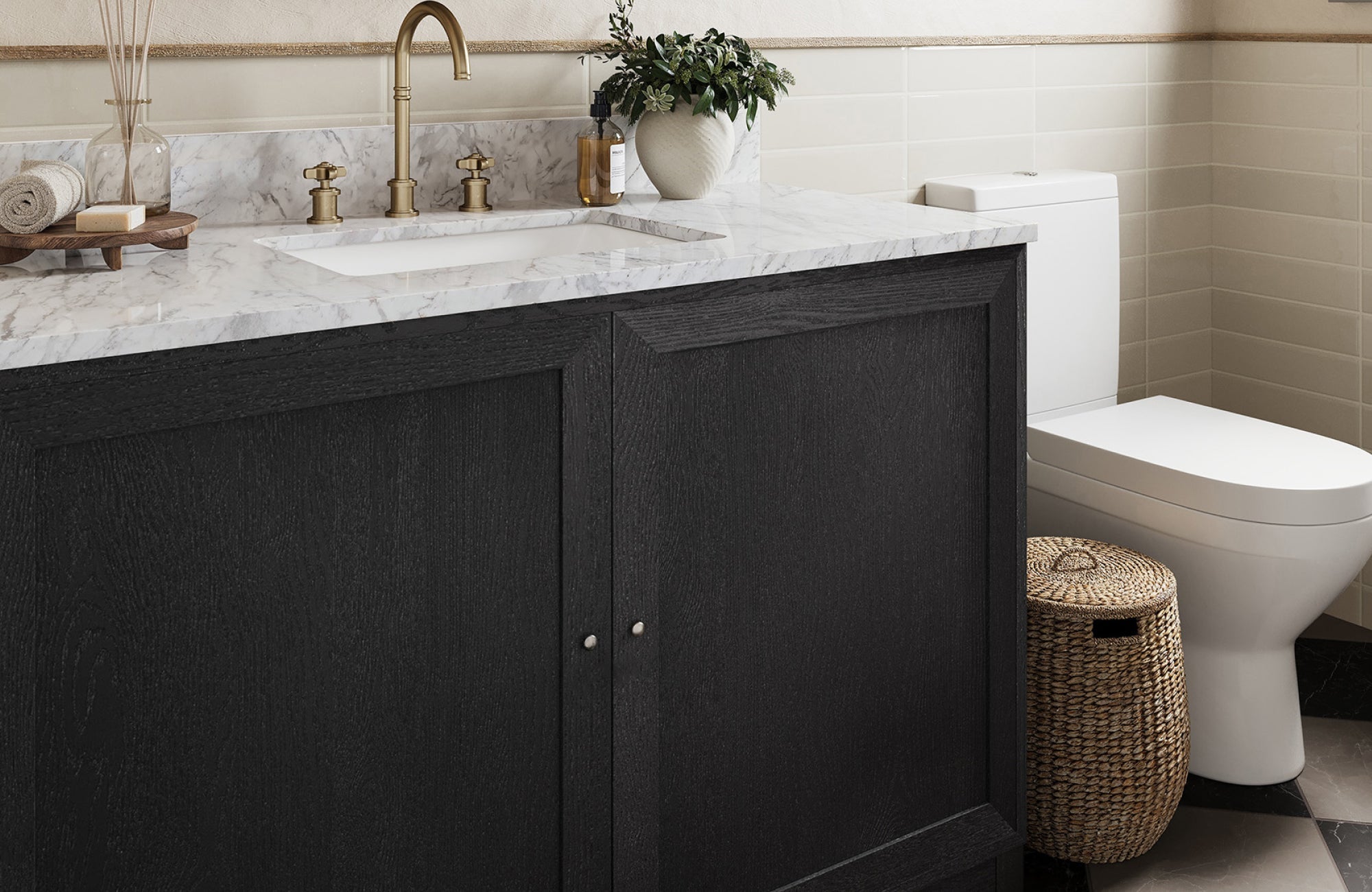
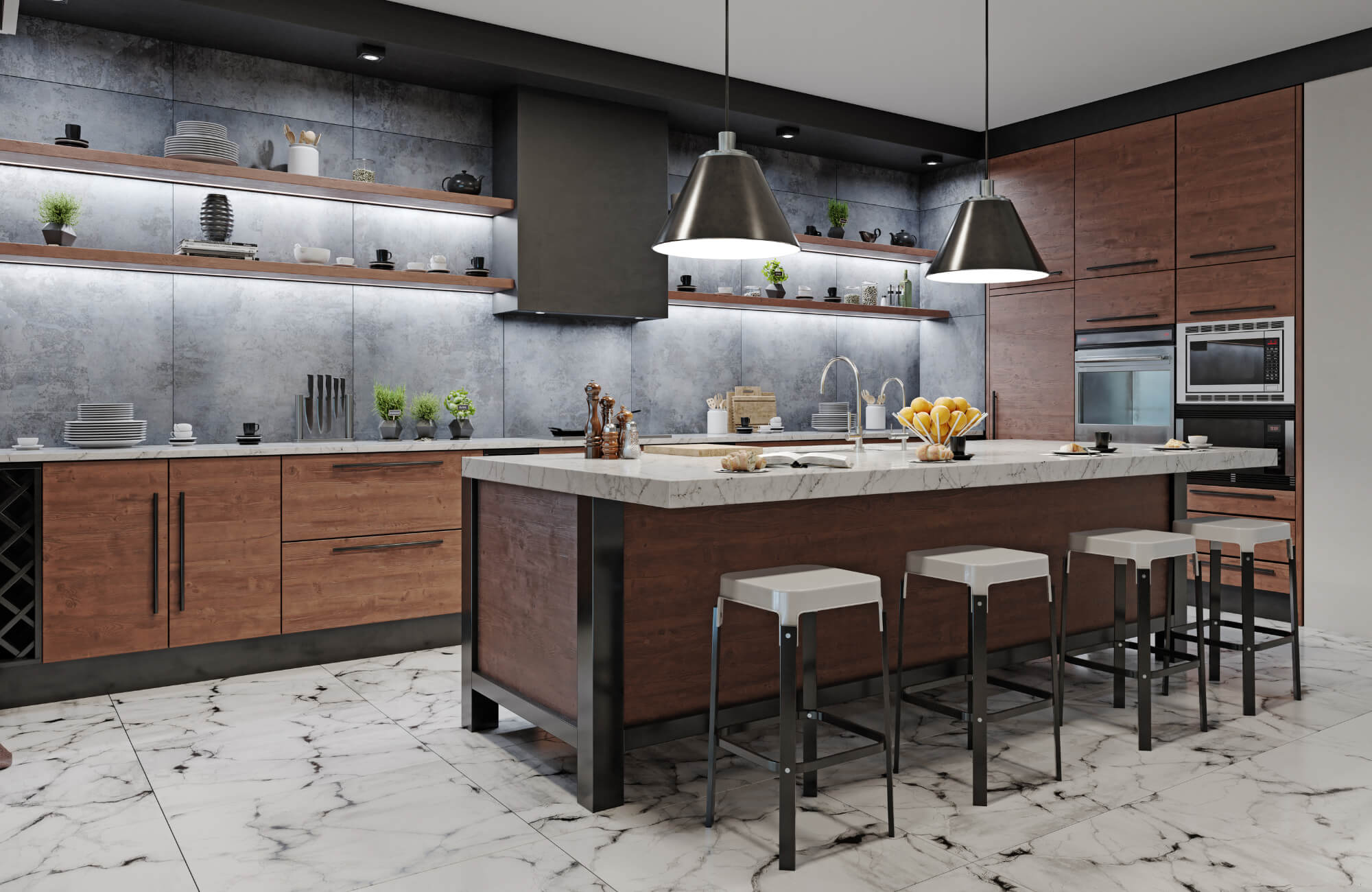
On the other hand, if you’re working with bold countertop choices such as a black stone slab, poured concrete, or a uniquely textured vessel sink, you can use deeper vanity colors to ground the space. Matte black, espresso, or charcoal gray introduce a sense of structure and modern edge, complementing those heavier materials with intentional contrast. The key is to maintain visual balance by ensuring the vanity enhances the surrounding materials rather than competing for attention. When done thoughtfully, this coordination also ties the entire bathroom together into a seamless, stylish whole.

Trend-Driven vs. Timeless Vanity Colors
Some colors dazzle in the moment, others stay relevant for years. This section helps you decide between on-trend shades and enduring classics based on your goals, your design preferences, and how long you intend to keep your bathroom as-is.
Embracing the Moment Trending Colors
If you’re looking to make a bold, modern statement, trend-driven vanity colors offer instant impact. Shades like earthy green, midnight blue, and matte black have become standout favorites in contemporary bathrooms. These deeper hues also add richness and contrast, especially when paired with on-trend hardware like brushed brass, matte black, or knurled metal pulls. The result is often a high-style space that feels dramatic, luxurious, and visually curated.
However, with their popularity comes a degree of risk. Design trends evolve quickly, and what feels fresh now might feel outdated in just a few years. If you plan to sell your space or refresh your bathroom soon, it’s wise to use these colors in a way that’s easy to change, such as painting a vanity cabinet rather than purchasing a custom piece. This lets you enjoy a trend-forward look now without limiting your future flexibility or resale appeal down the road.
Enduring Appeal Timeless Neutrals
On the flip side, timeless vanity colors remain relevant no matter how trends shift. Classic whites, soft grays, and natural wood finishes have long been the backbone of elegant, adaptable bathroom design. These colors offer incredible versatility, working effortlessly in a wide range of styles, from modern farmhouse and Scandinavian to transitional or minimalist. They also provide a calm, uncluttered backdrop that lets other design elements, like tile patterns or lighting, take center stage when desired.
One great example of this timeless approach is our Bridgette 36" Single Vanity in Bright White with White Zeus Quartz Top. Its crisp white finish brings a sense of freshness and clarity to the room, while the elegant quartz top adds subtle luxury. Set against checkerboard flooring and muted wall tones as seen in the photo above, this single vanity anchors the space with classic simplicity that won’t fall out of style.
Choosing a neutral vanity color doesn’t mean sacrificing personality. Subtle variations in tone, texture, or wood grain can add warmth and depth while still maintaining that timeless quality. More importantly, these shades are easy to update with accessories, hardware, or wall color changes over time. If your goal is to create a bathroom that looks refined today and still feels stylish five or ten years from now, timeless neutrals are a smart, enduring choice.

Personal Style as a Design Driver
Your bathroom vanity should reflect your personality. Color plays a powerful role in bringing your individual taste to life, whether your style leans modern and minimal or bold and vintage-inspired.
Modern Minimalism
If your style is rooted in simplicity, a minimalist vanity color can reinforce that sense of calm and clarity. Minimalist bathrooms thrive on clean lines, open space, and a limited, cohesive palette. In this setting, colors like crisp white, graphite gray, or soft beige provide a fresh and balanced foundation. Wood tones such as light oak or walnut also work beautifully, offering warmth without cluttering the visual field.
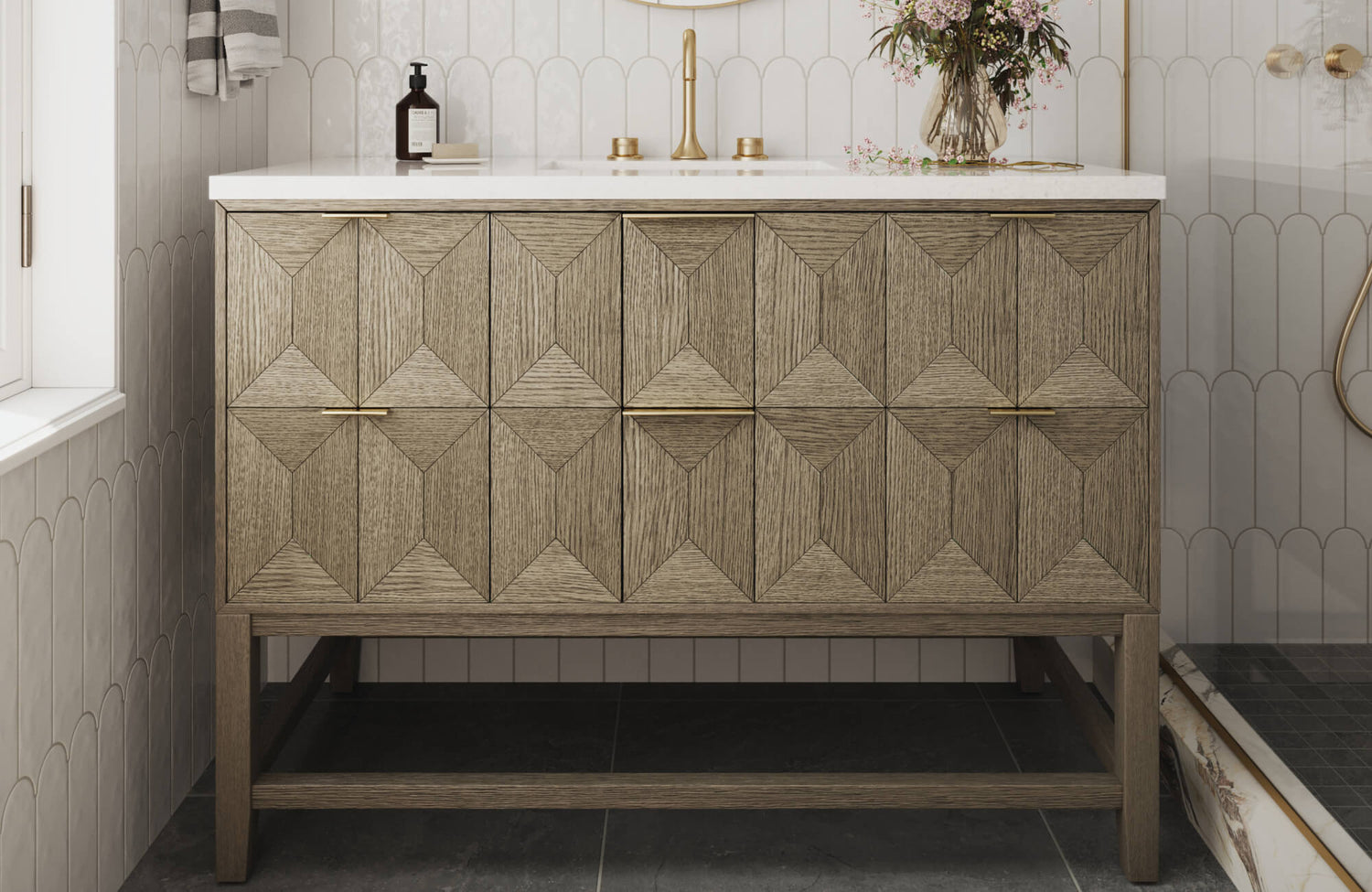
The vanity featured in the picture above is a perfect example of how minimalism and natural texture can work in harmony. With its soft Seaside Oak finish and clean-lined design, our Delilah 72" Double Vanity in Seaside Oak with 3 cm White Zeus Quartz Top strikes a balance between warmth and simplicity. Its woven-style drawer fronts and open shelf also add visual interest while maintaining the room’s serene, uncluttered atmosphere.
The key is to let the materials and forms speak for themselves. Monochromatic accents, like matching mirrors or subtle matte finishes, enhance the understated elegance of the space without adding visual noise. When your vanity color aligns with a minimalist aesthetic, it contributes to a soothing, effortless atmosphere, one that invites relaxation while still feeling elevated and intentional.
Eclectic or Vintage Looks
If you’re drawn to rooms with personality and charm, your vanity color is the perfect opportunity to express that. Eclectic or vintage-inspired designs thrive on bold choices, and jewel-toned vanities such as emerald green, sapphire blue, or deep burgundy offer rich, eye-catching depth. These colors also create instant drama, giving your vanity a focal point status that draws the eye and energizes the room.
That said, boldness doesn’t always have to come in bright colors—moody neutrals can be just as expressive. Our Sasha 60" Double Vanity in Carbon Oak with 3 cm White Zeus Quartz Top exemplifies this with its deep, smoky wood tone and strong silhouette. It channels a refined vintage sensibility while still feeling grounded and contemporary, making it a perfect fit for bathrooms that lean classic but crave a touch of edge.
To complete the look, consider pairing these expressive tones with decorative elements that support your chosen aesthetic. An antique mirror, vintage-inspired lighting, or patinated hardware like brass or copper adds layers of character. You might even repurpose an old dresser or cabinet and give it new life with a fresh coat of color, blending old-world charm with modern function. When your vanity reflects your personal style in a bold and cohesive way, the result is a space that feels authentically yours—creative, curated, and full of soul.

Strategic Design Balancing Style and Resale Value
If you're renovating with resale in mind, your vanity color should strike a balance between personal style and broad market appeal. By making thoughtful, reversible choices, you can create a space that feels like yours today, without limiting its value tomorrow.
Appealing to the Masses Safe Neutrals
Neutral vanity colors remain a smart and strategic choice when future resale is on your radar. Shades like white, light gray, and greige tend to resonate with the widest range of buyers because they offer a sense of cleanliness, spaciousness, and design flexibility. These tones also create a blank canvas that allows potential buyers to envision their own style in the space, whether it’s modern, traditional, or somewhere in between.
Beyond visual appeal, neutral colors also convey care and thoughtfulness in design. A well-maintained vanity in a classic color suggests the space has been updated with intention, which can be reassuring for someone considering a purchase. And while neutral doesn’t have to mean boring, staying within this palette makes your bathroom feel universally polished and move-in ready, qualities that can tip the scales in your favor when it comes time to sell.
Injecting Individuality Reversible Customization
Just because you're thinking ahead to resale doesn't mean you have to sacrifice personality. The key is knowing where and how to add color in ways that are easily changeable later. One of the best approaches is to choose a neutral base for your vanity and introduce bolder elements through hardware, drawer fronts, or decorative details like open shelving or unique knobs. These accents can inject vibrancy and character into the space without committing to a permanent aesthetic.
This approach also lets you enjoy a vanity that reflects your personal taste now, with the freedom to scale it back when listing the space. A coat of paint, a hardware swap, or even styling with different accessories can completely change the look in just a few hours. By focusing your bold choices on non-fixed elements, you create a bathroom that feels customized yet resale-ready; a thoughtful blend of present-day joy and future planning.
Choosing the Right Vanity Color
The best bathroom vanity color isn’t just about what looks good. It’s also about what works best for your space, lifestyle, and long-term vision. When you thoughtfully consider lighting, surrounding materials, current trends, and even future buyers, you make a choice that feels both personal and practical. Whether you opt for the simplicity of soft neutrals, the richness of a deep jewel tone, or the warmth of natural wood, your vanity color should enhance the space in meaningful ways. Let it serve as a centerpiece that reflects your taste, supports your design goals, and continues to elevate your bathroom for years to come.
If you’re still unsure which color direction to take or want expert guidance to narrow down your options, our team is here to help. Whether you're planning a full renovation or updating a single element, you can reach out to us for personalized support, product recommendations, or design advice tailored to your vision!