Subway tiles may look similar at a glance, but the material behind them can completely change how they hold up once your space is in daily use. A backsplash that’s easy to wipe down, a shower wall that resists moisture, or a feature wall that keeps its finish over time all depend on choosing the right type from the start. Some materials stay consistent with minimal upkeep, while others require more attention to keep them looking the same. In this blog, we’ll break down how ceramic, porcelain, glass, and natural stone actually perform, so you can choose based on how your space works, not just how it looks.

Durability and Longevity
Understanding the durability and longevity of subway tile materials is essential for making an informed decision. Different materials offer varying levels of resistance to moisture, scratches, and wear, which directly affect their long-term performance and visual appeal.
Ceramic and Porcelain Subway Tiles
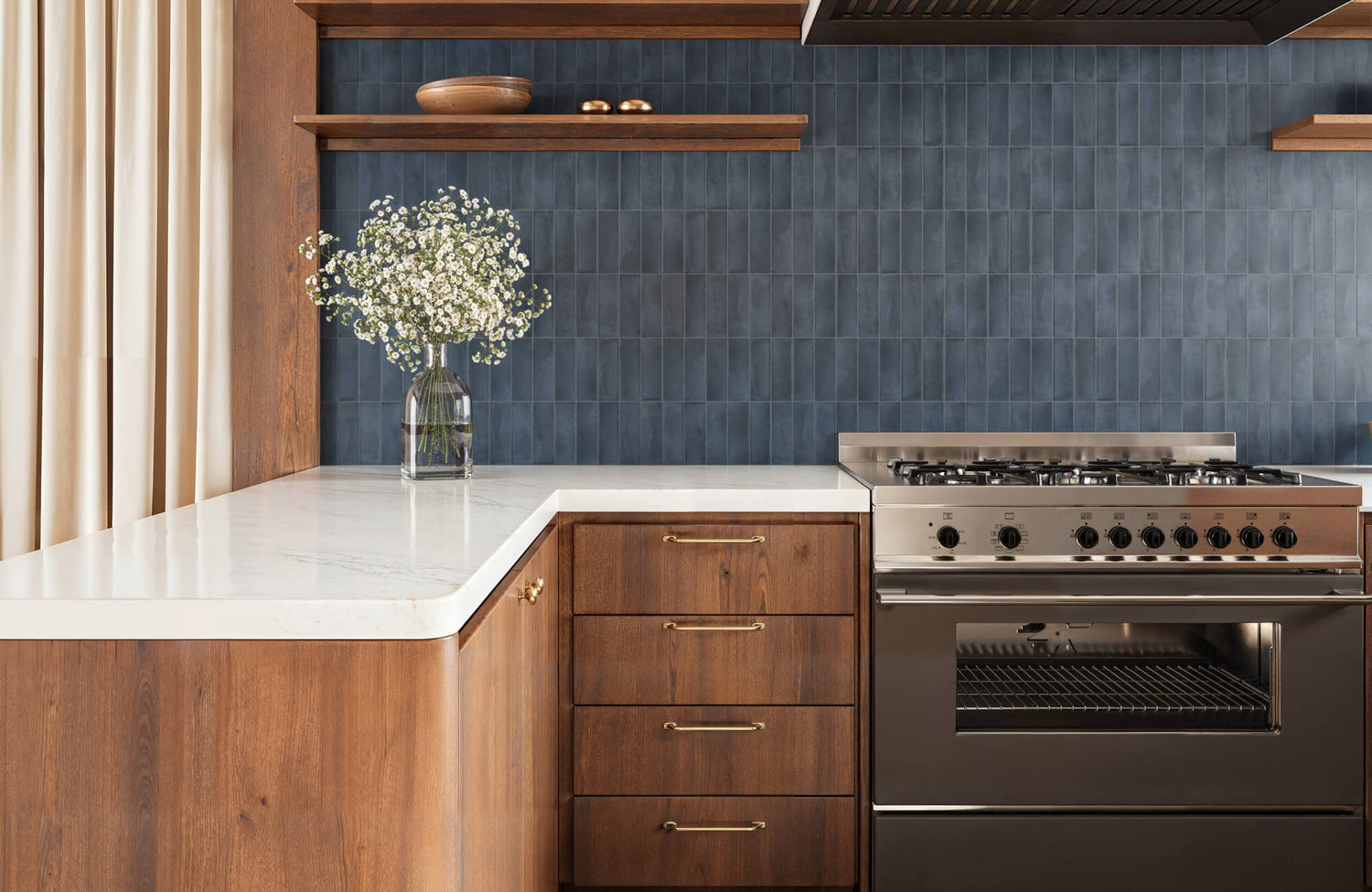
Both ceramic and porcelain subway tiles offer strong durability, but they perform slightly differently depending on where they’re used. Ceramic tiles are a reliable option for many areas, especially where moisture exposure is more controlled. Subway tiles like our Jaden 2.5x16 Glossy Ceramic Tile in Dove, shown above, handle everyday wear well, resisting fading, stains, and minor surface scratches. Their lighter composition also makes them easier to install, while still holding their appearance over time. Because they’re slightly less dense than porcelain, they tend to have a softer, more handcrafted feel that works well in kitchens, backsplashes, and similar spaces.
Porcelain subway tiles are built for more demanding conditions. Fired at higher temperatures, they become denser, harder, and more resistant to water. With an absorption rate of less than 0.5%, they perform well in areas where moisture is constant, such as showers, entryways, and even outdoor installations. They also resist scratches, stains, and temperature changes more effectively, which helps maintain their look over time. Our Chantel 3x12 Matte Porcelain Tile in Apuano is a strong example, combining a clean, modern finish with a surface that holds up in busy or wet environments. Both materials are durable, but porcelain tends to be the better fit when the space demands more from the surface.
Glass and Natural Stone Subway Tiles
Glass and natural stone subway tiles bring a different kind of appeal, but they require more awareness when it comes to durability. Glass tiles, known for their reflective surface, resist moisture and staining, which makes them suitable for backsplashes and feature walls. At the same time, their surface is more prone to scratches, especially in areas where contact is frequent. Because of that, they’re usually better suited for vertical applications where wear is minimal.
Natural stone tiles, including marble, travertine, and slate, offer a more organic look with natural variation in tone and texture. That variation is part of their appeal, but it also comes with added maintenance. Since stone is more porous, it can absorb moisture and stains more easily, which is why sealing is necessary to protect the surface. Compared to ceramic or porcelain, stone requires a more careful cleaning routine to maintain its condition. While both glass and natural stone can elevate a space visually, they work best when used in areas where their maintenance needs are taken into account.

Aesthetics and Style
The material you choose for subway tiles plays a pivotal role in defining the aesthetic of your space. Whether you seek a timeless, modern, or bold design, different materials can help you achieve your desired look.
Ceramic and Porcelain Subway Tiles
Both ceramic and porcelain subway tiles offer a wide range of design possibilities, allowing homeowners to achieve anything from a classic to a modern aesthetic. Ceramic subway tiles, known for their versatility, come in an extensive selection of colors, patterns, and finishes. Whether opting for classic white for a timeless appeal or experimenting with bold hues like emerald green or turquoise, ceramic tiles provide endless opportunities for creative expression. Their lightweight nature also makes them easier to cut and install, making intricate layouts like herringbone, vertical stacks, and diagonal patterns more accessible without significantly increasing labor costs.
Porcelain subway tiles, on the other hand, are synonymous with modern sophistication. Their sleek, refined appearance is ideal for contemporary and minimalist spaces, offering a polished, seamless look that enhances a room’s openness. Available in glossy, matte, and textured finishes, porcelain tiles provide tailored aesthetics to suit any interior style. Glossy porcelain enhances brightness and creates a luxurious feel, while matte options offer a more understated elegance.
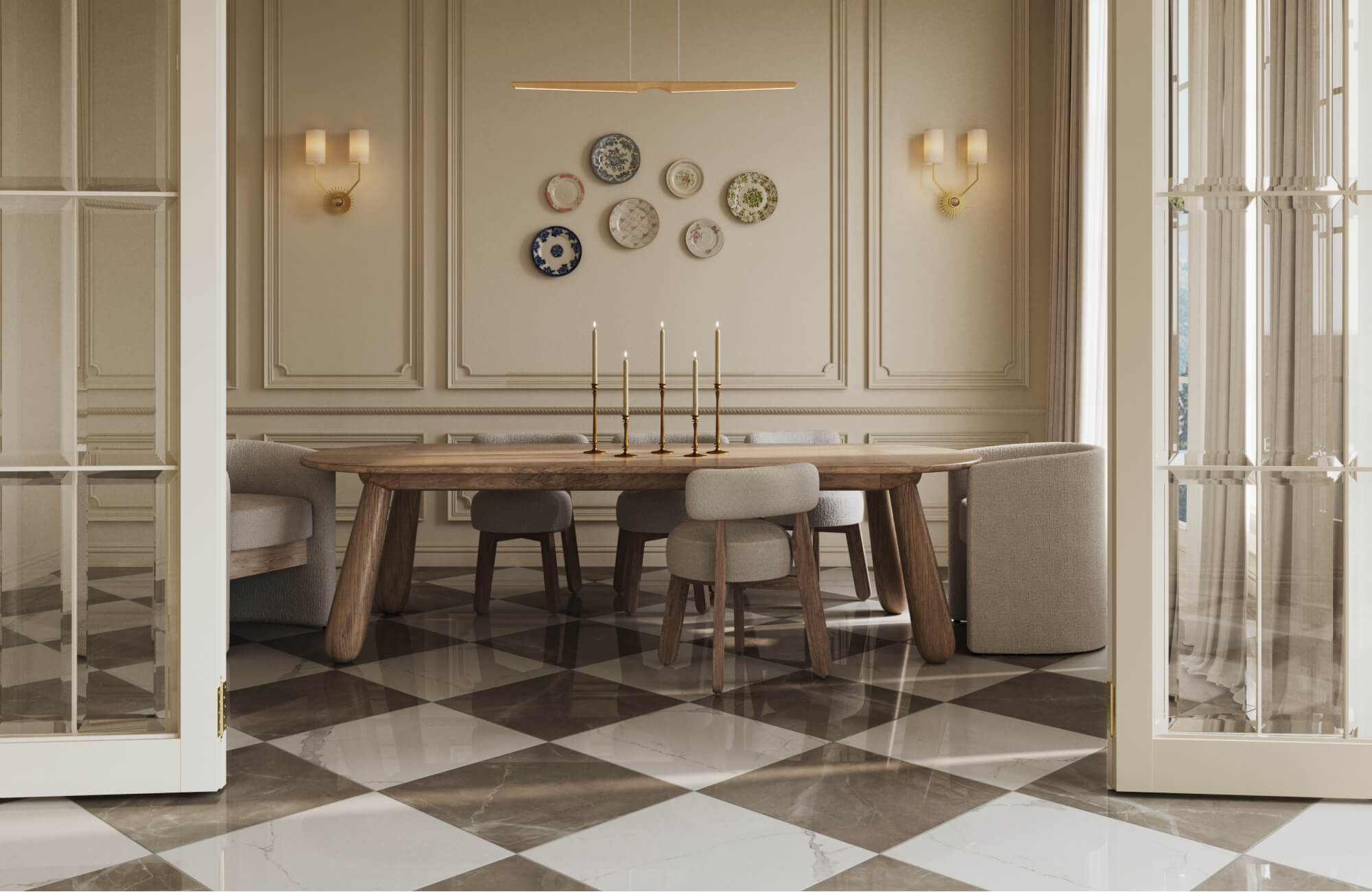
A perfect example is our Aniston 3x12 Polished Porcelain Tile in Calacatta Antico, displayed in the photo above, which blends striking veining with a glossy finish to create a bold yet sophisticated statement in kitchens and bathrooms. With color choices ranging from soft neutrals to deep, bold shades, porcelain subway tiles remain a stylish and timeless addition to any space. Whether you prefer the traditional charm of ceramic or the modern refinement of porcelain, both materials allow for stunning, personalized designs that elevate any interior.
Glass and Natural Stone Subway Tiles
Glass and natural stone subway tiles each bring a distinct visual quality, but they behave differently once installed. Glass tiles are known for their smooth, reflective surface, which helps bounce light around the room and makes smaller spaces feel more open. Available in glossy, frosted, and iridescent finishes, they work well as backsplashes or feature walls where light can highlight their surface.
Iridescent glass, in particular, creates subtle shifts in color depending on the angle and lighting, giving the space a more dynamic feel without changing the overall palette. While they resist moisture and staining, their surface can scratch more easily, which is why they’re better suited for vertical applications rather than areas with frequent contact.
Natural stone subway tiles, such as marble, travertine, and slate, offer a more grounded and textured look. Each piece carries its own variation in tone and veining, which gives the surface a less uniform, more organic feel compared to glass. This natural variation adds depth, but it also comes with additional care requirements. Because stone is more porous, it needs to be sealed to protect against moisture and staining, and it responds best to gentler, stone-safe cleaning methods.
When used together, glass and stone can create a balanced contrast, where the reflective quality of glass offsets the heavier, textured look of stone, resulting in a layered design that feels both structured and natural. To simplify the selection process, our innovative augmented reality (AR) technology allows you to visualize your chosen tiles in your own space before making a final decision. This tool ensures your design aligns perfectly with your vision, helping you create a cohesive and stunning interior.

Maintenance and Cleaning
How a subway tile looks on day one is only part of the decision. What matters more is how it holds up after repeated cleaning, exposure to moisture, and everyday use. Some materials stay consistent with minimal effort, while others require more controlled care to avoid buildup, staining, or surface wear.
Ceramic and Porcelain Subway Tiles
Ceramic and porcelain subway tiles are often chosen for how easy they are to maintain once installed. Their surfaces are dense and non-porous, which means dirt, moisture, and everyday residue stay on the surface instead of soaking in. Because of that, routine cleaning usually comes down to a simple wipe with a damp cloth or a quick mop with mild soap. This makes them a practical option for kitchens, bathrooms, and other areas where spills or humidity are part of daily use. They hold their finish well, even with regular cleaning, which helps the surface stay consistent over time.
That said, grout lines still need attention since they tend to collect moisture and build up more easily than the tile itself. Light, regular cleaning with a soft brush and a tile-safe cleaner helps prevent discoloration before it sets in. Occasional sealing also adds a layer of protection, especially in areas exposed to water more often. Keeping up with these small steps makes a noticeable difference, since it’s usually the grout, not the tile, that shows wear first. With consistent care, both ceramic and porcelain tiles remain one of the more low-maintenance options available.
Glass and Natural Stone Subway Tiles
Glass subway tiles are relatively easy to clean, but they require a bit more attention to keep them looking clear and streak-free. Their glossy surface doesn’t absorb dirt or moisture, so most residue can be removed with a gentle cleaner or mild soap solution. However, that same reflective quality makes smudges, fingerprints, and water spots more visible, especially under direct lighting. Because of that, they often need more frequent wiping compared to other materials to maintain a clean, even finish.
Natural stone tiles require a more careful approach due to their porous surface. Unlike glass or porcelain, stone can absorb moisture and react to certain cleaning products, especially acidic ones. Regular sealing helps protect against stains and water damage, but it also needs to be maintained over time. Cleaning should be done with pH-neutral products to avoid surface damage, and buildup in grout lines should be addressed early to prevent long-term discoloration. With the right care routine, stone maintains its natural depth and texture, but it does require more consistency compared to other tile materials.

Budget Considerations
Budget plays a bigger role than just choosing a price range. It affects how much flexibility you have with layout, how far the material can go across your space, and what kind of maintenance costs you might deal with later. Ceramic subway tiles, typically priced between $2 and $7 per square foot, are often the most accessible starting point. They make it easier to cover larger areas without pushing costs too far, which is why they’re commonly used in full wall installations, backsplashes, and renovation projects. Porcelain tiles, usually ranging from $6 to $10 per square foot, sit slightly higher but offer added durability and moisture resistance, which can justify the cost in areas that need more performance.
Comparing Costs Across Tile Materials
When comparing materials, the difference isn’t just in upfront pricing but in how each option is typically used. Glass subway tiles can range from $7 to $30 per square foot, depending on finish and design, and are often used more selectively as accents or feature areas rather than full installations. Natural stone tiles, such as marble or travertine, fall between $5 and $35 per square foot, with pricing influenced by variation, sourcing, and finish. These materials tend to be chosen for their visual impact rather than coverage, since using them across larger areas can quickly increase the overall budget. In contrast, ceramic and porcelain are more commonly used for full surfaces because they balance cost with consistency and durability.
Looking beyond material cost, installation and maintenance also play a role in the overall budget. Porcelain, while slightly more expensive to install due to its density, often requires less long-term upkeep compared to natural stone, which may need regular sealing and more careful cleaning. Glass tiles can also increase labor costs because of the precision needed during installation. When these factors are considered together, ceramic and porcelain often provide a more predictable total cost, while glass and stone tend to be more situational choices depending on how they’re used in the design.
Finding the Perfect Subway Tile Material for Your Space
Choosing the right subway tile material comes down to how your space is actually used, not just how it looks at first. Each option, whether ceramic, porcelain, glass, or natural stone, brings a different balance of durability, maintenance, and visual impact. Porcelain stands out for its ability to handle moisture, wear, and daily use without much upkeep, which makes it a dependable choice in areas that need consistency. At the same time, other materials can still work well when placed intentionally, especially when their strengths match the conditions of the space.
What matters most is making sure your selection fits both your layout and how you plan to live with it over time. That includes everything from moisture exposure and cleaning routines to how the tile interacts with light and surrounding materials. If you want to avoid second-guessing those decisions, our personalized design consultation helps you narrow down the right material, layout, and finish based on your actual space. That way, you’re not just choosing a tile that looks good today; you’re setting up a surface that holds up, stays consistent, and continues to work long after installation.