Checkerboard tiles are a design classic that has endured for centuries, valued for their bold geometry, visual clarity, and remarkable versatility. Defined by their alternating pattern and strong contrast, they bring structure and rhythm to a space while adapting effortlessly across styles, from traditional interiors to modern minimalism. This article explores the enduring popularity of checkerboard tiles through their historical roots, visual impact, adaptability, and practical advantages, revealing why this iconic pattern continues to shape interior design today.

A Time-Tested Pattern
Checkerboard patterns have a rich history spanning cultures and eras, reinforcing their enduring appeal. Their continued presence across centuries reflects a rare design quality: the ability to remain relevant despite changing styles and preferences. Early geometric motifs appeared in ancient Egyptian art and architecture, where repeating patterns symbolized order and balance. In ancient Rome, checkerboard-like mosaics adorned villas and public spaces, blending decorative artistry with functional design—an early example of the pattern’s versatility.
During the Middle Ages, the pattern flourished in Islamic art through intricate tilework and wood carvings, while in Europe it appeared in stained glass, manuscripts, and stone flooring. The Renaissance further refined its use through materials like terrazzo and encaustic tiles, emphasizing symmetry and proportion.
In the modern era, checkerboard patterns gained renewed prominence through movements like Art Deco and mid-century modern design, both of which embraced bold geometry and contrast. Today, designers continue to reinterpret the pattern through new materials, scales, and color combinations, highlighting its ability to evolve while maintaining its core identity and reinforcing its continued relevance in modern design.

Why the Checkerboard Pattern Visually Works
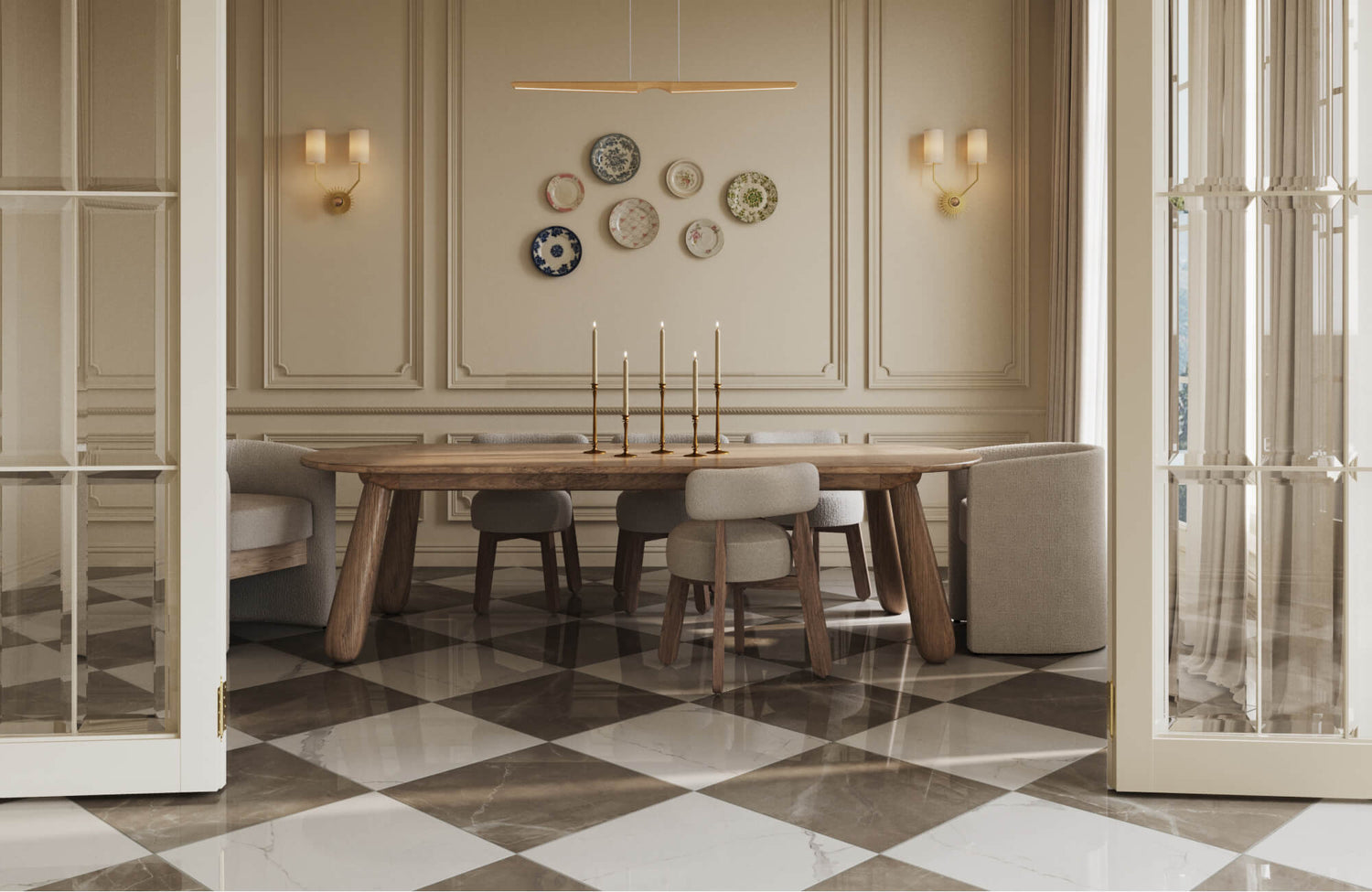
A key reason for the popularity of checkerboard tiles lies in how they are perceived visually. The alternating pattern creates immediate contrast, enhancing clarity and making spaces feel more structured and intentional—qualities that naturally appeal to both designers and homeowners. This effect is beautifully illustrated by Edward Martin’s Leona 12x12 Checkerboard Polished Porcelain Tile in Calacatta and Amani Bronze, as featured in the photo above, where the refined tonal contrast and polished finish contribute to a cohesive yet visually engaging space. The repetition of equal squares introduces rhythm and balance, giving interiors a grounded and harmonious appearance that integrates effortlessly with surrounding materials and furnishings.
Checkerboard layouts can also influence spatial perception. Straight grid installations emphasize symmetry and stability, while diagonal layouts introduce movement and energy, subtly guiding the eye across a room. This ability to feel both structured and dynamic further reinforces its enduring popularity.

Works Seamlessly in Any Space
One of the defining reasons for the popularity of checkerboard tiles is their ability to enhance a wide range of interior settings. Whether used to ground a room, introduce contrast, or create a focal point, the pattern adapts effortlessly across different areas of the home, making it a practical and widely used design choice.
Kitchens
In kitchens, checkerboard tiles bring structure and visual contrast to a space often defined by cabinetry and appliances. When used on floors, they can help anchor the room and establish a sense of order, while on backsplashes, they add a more graphic and decorative element. This effect is well illustrated by Edward Martin’s Leona 12x12 Checkerboard Matte Porcelain Tile in Marfil and Amani Grey, as seen in the photo featured above, where the soft tonal contrast enhances the room’s depth while complementing the surrounding finishes. At the same time, the pattern adds character without overwhelming the space and remains easy to coordinate with a wide range of materials, making it a versatile design choice.
Bathrooms
In bathrooms, checkerboard tiles are especially effective, as their crisp geometry enhances a sense of cleanliness and symmetry. When used on floors, they can create a polished, enduring look, while smaller-scale applications can subtly highlight showers or vanity areas. This balanced composition contributes to a refined and cohesive atmosphere. As a result, the pattern works effortlessly across both traditional and contemporary bath designs.
Entryways and Hallways
In entryways and hallways, checkerboard tiles can create an immediate visual impact, setting the tone as one moves through the space. The pattern naturally draws the eye inward, guiding movement while establishing a clear sense of rhythm. At the same time, its durability makes it particularly well-suited for these areas, while the pattern helps subtly conceal everyday wear and maintain a clean, composed appearance.
Living and Dining Areas
In larger living or dining spaces, checkerboard flooring introduces a sense of cohesion while adding visual interest. It can also subtly define zones within open layouts, distinguishing dining areas from lounge spaces without partitions. This approach helps organize the space without disrupting its openness. In addition, it maintains a visually balanced and harmonious environment.

Design Flexibility and Material Choices
Checkerboard tiles offer a wide range of design possibilities through material and color selection, making them a highly adaptable choice across different interiors. This flexibility allows the pattern to meet both functional needs and aesthetic preferences, contributing to its continued popularity among designers and homeowners.
Material Options for Different Needs
Material selection plays an important role in both the performance and overall appearance of checkerboard tiles. Ceramic and porcelain are widely favored for their durability, moisture resistance, and low maintenance, making them well-suited for kitchens, bathrooms, and frequently used areas. This balance is exemplified by Edward Martin’s Leona 24x24 Checkerboard Matte Porcelain Tile in Calacatta and Nero Marquina, as shown in the photo featured above, which captures the elegance of natural stone while offering greater ease of care. For a more elevated aesthetic, natural stone such as marble introduces a sense of refinement and luxury, though it requires more attentive upkeep to preserve its finish over time.
Color Combinations That Shape the Mood
Color selection plays a defining role in shaping the overall impact of the checkerboard pattern. The classic black-and-white pairing offers strong contrast and enduring appeal, while softer combinations, such as neutrals or tonal variations, can create a more subtle and calming atmosphere. For a more expressive approach, bolder palettes can introduce energy and personality. This range of options allows the pattern to adapt seamlessly to both timeless and contemporary interiors.
Customization Through Layout and Pairing
Aside from material and color, checkerboard tiles can be further tailored through layout choices and their interaction with surrounding elements. Adjustments in tile size, orientation, or contrast level can shift the pattern from bold and graphic to more understated and refined. This level of flexibility allows the design to respond to different spatial and stylistic needs. In turn, checkerboard tiles can either serve as a striking focal point or integrate seamlessly into the overall composition.

Durability and Easy Maintenance
Aside from aesthetics, checkerboard tiles remain popular for their practicality. Porcelain and ceramic tiles are highly durable, wear-resistant, and well-suited for busy or moisture-prone areas such as kitchens, bathrooms, and entryways. This is well demonstrated by Edward Martin’s Leona 12x12 Checkerboard Matte Porcelain Tile in Calacatta and Amani Grey, as shown in the photo featured above, where its refined appearance is paired with the resilience needed for everyday use.
Maintenance is straightforward. Regular cleaning with mild solutions helps preserve their appearance, while proper grout care minimizes staining and discoloration. In well-ventilated spaces, moisture-related issues such as mold can also be reduced. For best results, following the manufacturer’s care guidelines for both tile and grout helps ensure lasting performance. Together, these practical benefits make checkerboard tiles a reliable long-term choice, balancing visual appeal with everyday functionality.

Continues to Shape Contemporary Design
Checkerboard tiles continue to evolve as designers reinterpret the pattern in modern contexts. Large-format tiles have become increasingly popular, offering a more streamlined look with fewer grout lines, which enhances the pattern’s graphic quality while maintaining a clean aesthetic. This approach is reflected in Edward Martin’s Leona 24x24 Checkerboard Matte Porcelain Tile in Marfil and Amani Bronze, as featured in the photo above, where the generous scale and warm tonal contrast create a refined yet contemporary presence.
Color experimentation is also redefining the traditional checkerboard. While black and white remains widely used, contemporary palettes introduce richer tones and softer contrasts, allowing the pattern to adapt to a broader range of interiors.
Designers are also exploring variations in scale, proportion, and layout to create fresh interpretations of the classic grid. At the same time, sustainability is becoming a growing focus, with tiles increasingly produced using recycled materials and environmentally conscious processes.
The Enduring Appeal of Checkerboard Tiles
Checkerboard tiles remain popular because they strike a balance between timeless design and practical versatility. Their long-standing presence across different eras reflects an ability to adapt, while their structured pattern brings clarity, rhythm, and visual interest to a wide range of spaces. At the same time, their flexibility allows them to suit both traditional and contemporary interiors, balancing aesthetic appeal with everyday functionality. Whether used in a classic black-and-white scheme or reinterpreted through modern variations, checkerboard tiles continue to resonate for their ability to combine character, adaptability, and lasting appeal.
If you're considering incorporating checkerboard tiles into your space, our AR tool allows you to visualize different styles and layouts in real time, helping you make more confident design decisions. For more personalized guidance, feel free to contact us—our team is here to help you select the right materials and create a look that aligns with your vision.