
)
)
)
)
)
)
)
)
What Is The Best Material For Outdoor Dining Table And Chairs?
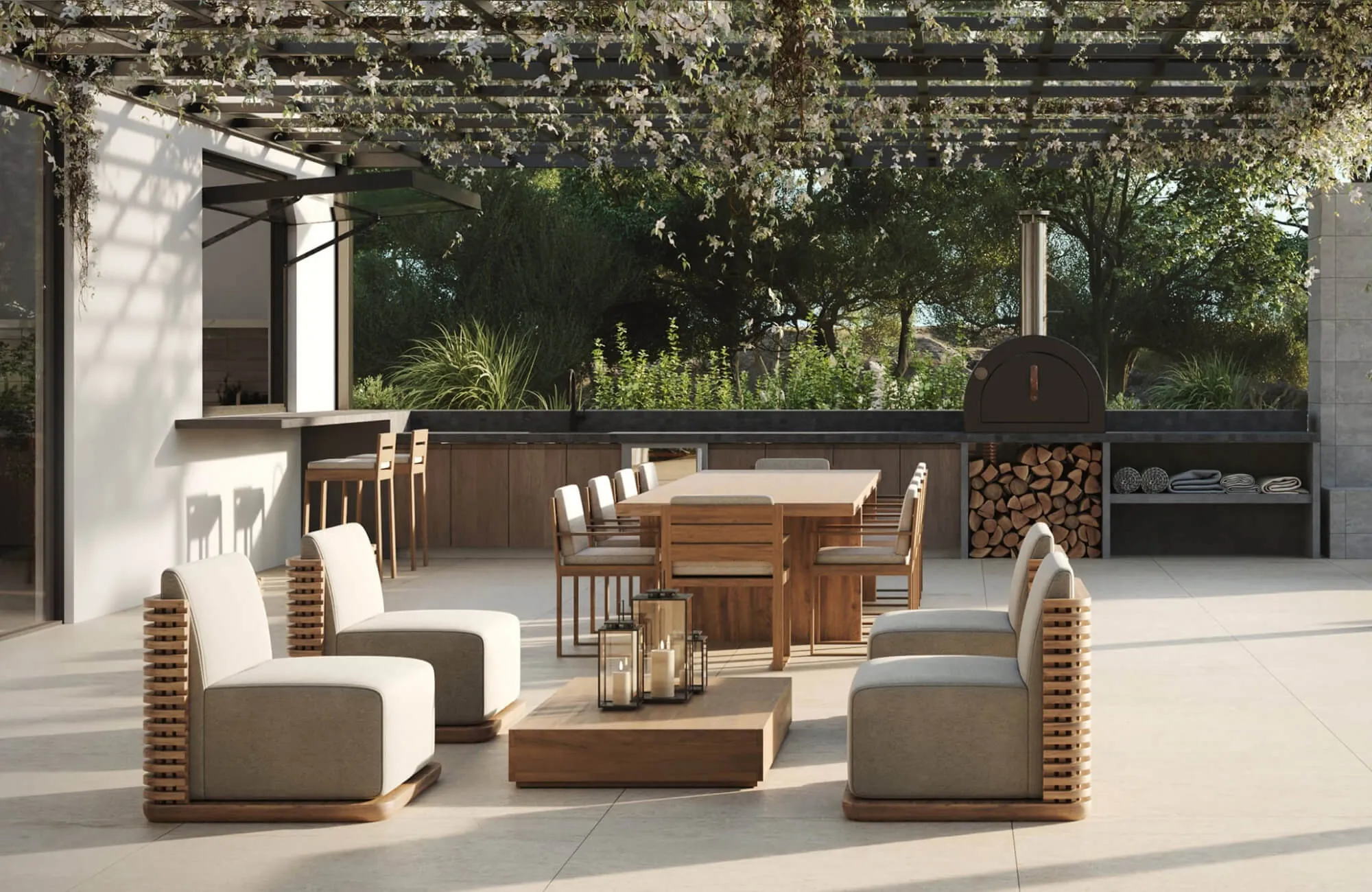
Choosing outdoor dining furniture is rarely as simple as it first appears. Once you begin comparing teak, powder-coated aluminum, HDPE, resin wicker, concrete, and glass, the decision becomes less about picking a material and more about understanding how each one lives, how it responds to the elements, holds up through daily use, and contributes to a space that feels considered rather than assembled.
The right choice is never purely functional, but also aesthetic. The material you select shapes the character of your outdoor dining environment; its warmth, its weight, its relationship to light and to weather. This guide will help you understand how the most refined outdoor materials perform in real conditions, so you can make a decision that reflects both how you live and how you want your space to feel.
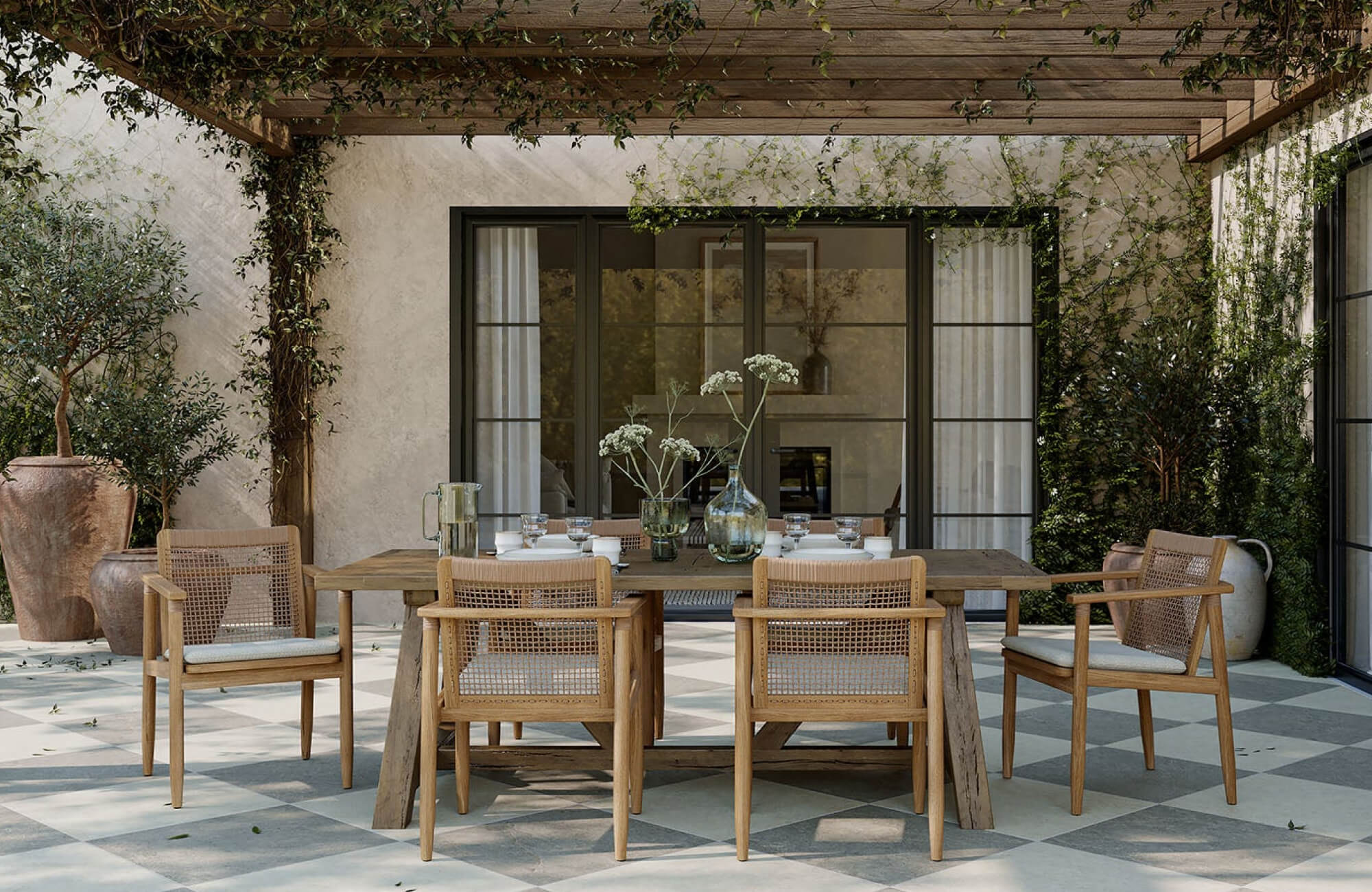
A covered outdoor dining space shows how placement, shade, and material choice shape comfort, durability, and everyday use
Start With How Your Outdoor Space Is Used
Before you evaluate materials, look honestly at your space, how exposed it is, how often it is used, and what you want it to feel like through every season. A material chosen with this clarity will always perform better and age more gracefully than one chosen for appearance alone.
Climate Conditions
Climate is one of the most important considerations because weather acts on every material differently, and over time, those differences become visible. In humid, coastal, or rain-heavy environments, moisture resistance and rust prevention should take precedence over surface detail. Powder-coated aluminum and HDPE lumber are both well-suited to these conditions because they resist moisture without demanding constant attention.
In sun-exposed spaces, fading and heat retention matter. Metal surfaces can become warm underfoot and in hand during peak hours, while darker tabletops may hold heat longer than lighter ones. Teak, with its dense grain and natural oils, manages sun exposure well, but it will gradually shift from its warm honey tone toward a silvered gray unless cleaned and oiled regularly. That patina, for those who appreciate it, is part of the material's quiet beauty.
Wind is often overlooked. Lightweight aluminum chairs move easily, which is convenient for rearranging; however, in an open, exposed patio, heavier materials like wrought iron, sealed concrete, or dense HDPE furniture offer more stability and a stronger sense of permanence.
Dining Frequency
How often you dine outdoors shapes which material will truly serve you. For daily use, choose surfaces that clean effortlessly and maintain their appearance through regular contact: smooth aluminum, sealed stone, HDPE, and tempered glass are all practical choices that hold up without drama.
For families and frequent hosts, chairs deserve as much consideration as the table. Supportive backs, well-proportioned seats, and outdoor-rated cushions make long meals feel comfortable rather than compromised. Stackable chairs offer flexibility when you need to reclaim the space after dining.
If outdoor entertaining is occasional, you have more latitude. A wood that requires seasonal care or a wicker-style set that benefits from storage when not in use can both be reasonable choices, particularly when the furniture is protected between uses. That said, low-maintenance materials will always feel easier to live with over time.
Covered Or Exposed Placement
A covered porch or roofed terrace offers natural protection that extends the life of nearly any material. In these environments, wood, quality resin wicker, and mixed-material dining sets can remain beautiful for years with less effort. The shelter does much of the work.
Fully exposed patios demand more considered selection. If your dining set will sit open to rain, direct sun, and shifting temperatures, choose materials engineered for those conditions: powder-coated aluminum, HDPE, sealed concrete, outdoor ceramic, and quality synthetic wicker are all suited to uncovered placement. Untreated wood and natural wicker are not.
Placement also determines the nature of your maintenance. Furniture beneath trees collects pollen, sap, and debris. Poolside furniture is exposed to chlorine and moisture daily. In both cases, surfaces that clean easily and frames that resist moisture make upkeep feel effortless rather than burdensome.
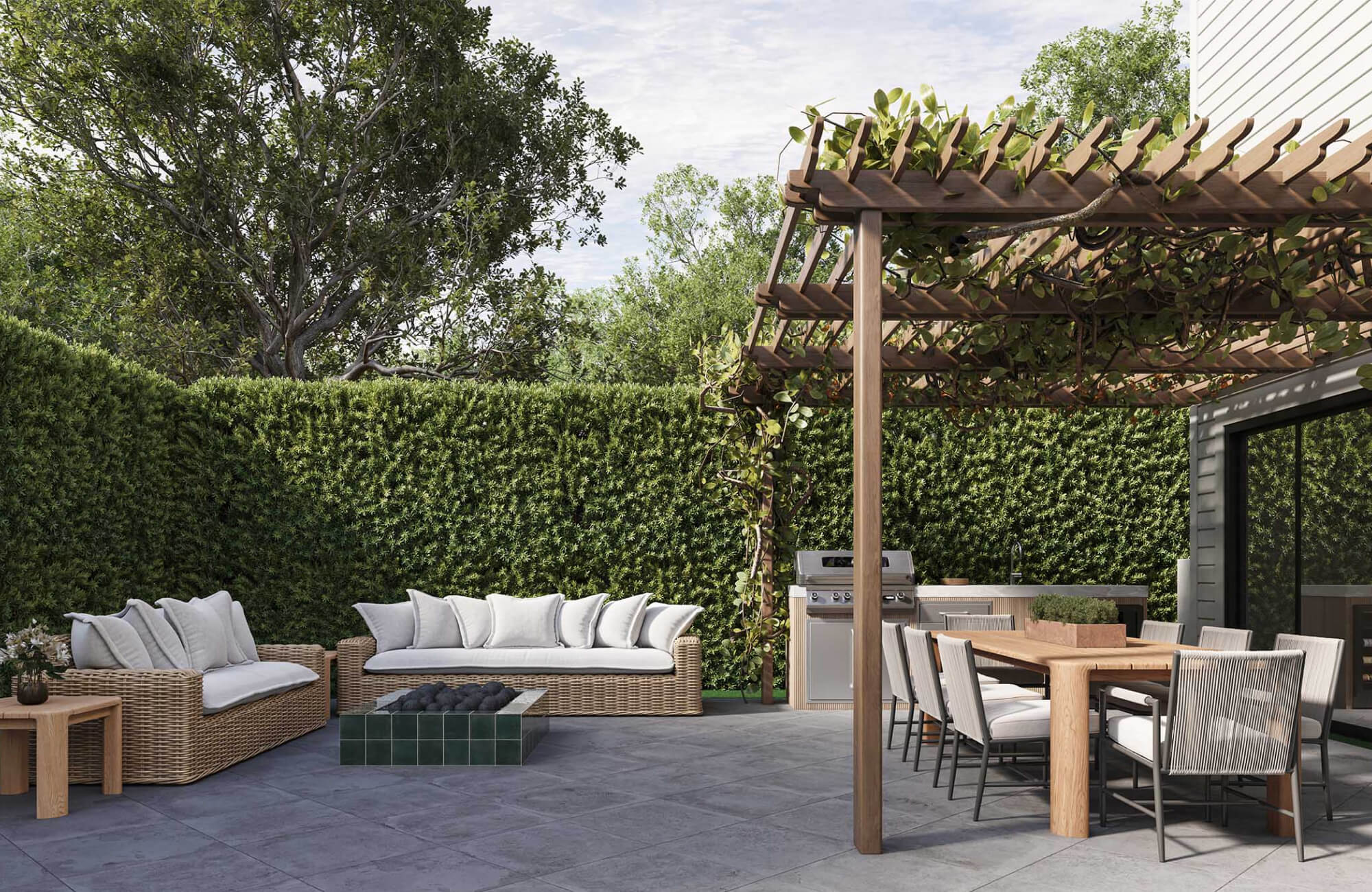
A teak dining table and Vetra Dining Chairs create a defined meal area beneath a vine-covered pergola, with lounge seating and an outdoor kitchen nearby
Teak And Other Outdoor Woods
Wood brings an irreplaceable warmth to outdoor dining, texture, depth, and a natural quality that no synthetic material fully replicates. Its long-term performance, however, depends on the species, the construction, and the care you are willing to provide.
Teak
Teak is widely regarded as one of the finest materials for outdoor furniture, and with good reason. Its dense grain and natural oils give it an inherent resistance to moisture, insects, and outdoor wear that most other woods simply cannot match. This is why teak has long been used not only in patio furniture, but on boat decks and architectural exteriors where durability is non-negotiable.
That quality translates beautifully into dining environments. Edward Martin's Maris Teak Rectangular Dining Table, 96" x 42" captures exactly this: a surface that feels substantial and warm, with the kind of natural character that only solid teak can offer. The photo featured above shows how well teak anchors an outdoor dining space, grounding the setting with material richness while remaining entirely at ease within its surroundings.
Left untreated, teak develops a silvered-gray patina over time, a natural and distinguished transformation that many find preferable to artificial preservation. This weathering is not a sign of failure. It is the material aging with integrity. For those who prefer teak's original warm tone, regular cleaning and oiling will maintain it.
Teak commands a higher price than most alternatives, but its longevity and low intervention over time make it a sound investment. For those who want a natural material that endures outdoor dining with minimal compromise, teak remains one of the strongest choices available.
Acacia And Eucalyptus
Acacia and eucalyptus offer the warmth and visual richness of wood at a more accessible price point than teak. Both can perform well outdoors, particularly in covered or partly shaded settings, but they require more consistent care to remain in good condition.
Acacia has a rich, varied grain and a sturdy feel, but it is more sensitive to moisture fluctuations than teak. Eucalyptus benefits from sealing and seasonal attention. These materials are well-suited to homeowners who do not mind thoughtful maintenance and are prepared to protect the furniture during wetter or colder months.
When choosing either wood, pay close attention to the finish. A quality protective coating will slow cracking, drying, and staining, but it will need refreshing. When the surface begins to look dull or dry, clean it and reapply an appropriate oil or sealer before the wood deteriorates further.
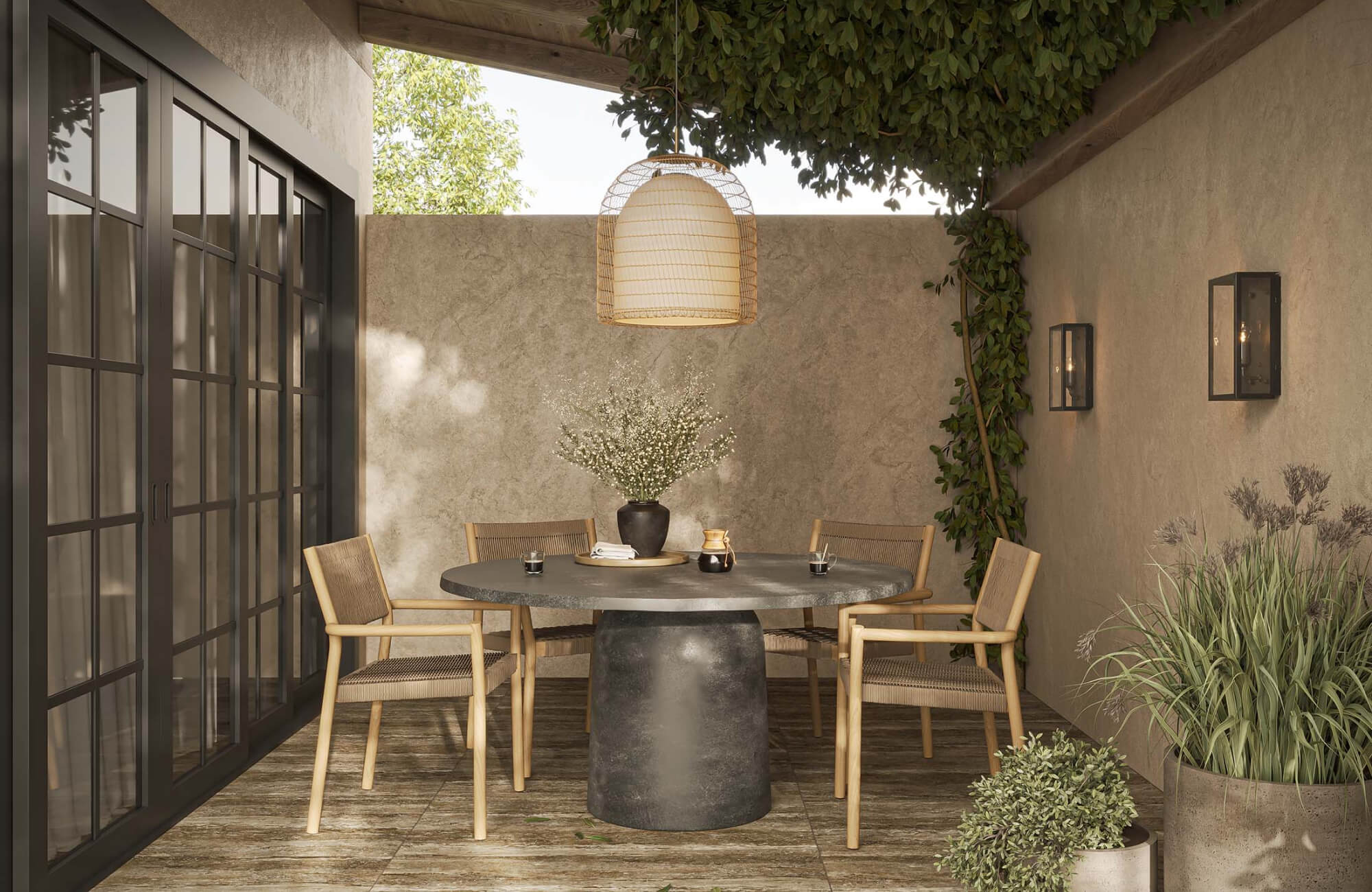
A round outdoor dining table paired with Kendra Outdoor Dining Chairs in Natural, Set of 2, creates a compact dining nook with a clean metal-supported silhouette and a sheltered, intimate setting
Aluminum, Steel, and Wrought Iron
Metal outdoor dining furniture offers strength, design versatility, and a refined presence across a wide range of patio aesthetics. The right choice depends on how much weight, rust resistance, and maintenance the space can accommodate.
Aluminum
Powder-coated aluminum is one of the most practical and enduring materials for outdoor dining furniture. Lightweight, rust-resistant, and easy to maintain, it performs particularly well in humid, rainy, and coastal environments where untreated or poorly coated metals quickly deteriorate.
Its lightness makes it easy to reposition, useful for flexible seating arrangements, smaller terraces, or households that shift their outdoor layout with the seasons. In more exposed or windy settings, placement should be considered, as lighter chairs benefit from some shelter.
What aluminum also does well is support other materials. Many of the most refined outdoor dining tables pair an aluminum base with a stone, ceramic, or concrete top, combining the frame's practicality with the surface's visual weight. Edward Martin's Verdanta Outdoor Dining Table in Aged Grey, 60", is a compelling example of this thinking. The photo featured above shows how the table's sculptural concrete top and considered form come together to create a dining environment that feels grounded, composed, and quietly elevated, the kind of result that comes from choosing materials with intention rather than convenience.
The quality of the powder coat matters. Look for a smooth, even finish with no exposed edges or visible chips. Addressing any scratches early protects the frame and preserves the set's appearance over time.
Steel
Steel has more presence than aluminum; heavier, more solid, with a structural quality that grounds a patio without overpowering it. Its profiles can remain refined and slim while still feeling substantial beneath a meal.
The consideration is its coating. Steel can rust if the protective finish is damaged, so regular inspection matters. Scratches and worn areas should be addressed before moisture reaches the metal beneath. Steel is best suited to covered patios or protected outdoor areas, and for those who prefer the weight and presence of a heavier material without the ornate quality of wrought iron. Choose powder-coated or galvanized steel specified for outdoor use.
Wrought Iron
Wrought iron has a timeless, architectural character and a weight that anchors a dining space, both literally and aesthetically. Its mass keeps tables and chairs firmly in place, making it particularly useful in open or wind-exposed settings.
Maintenance is the primary consideration. A protective finish prevents rust, and that finish should be checked and refreshed as needed. Chips and worn spots should be addressed promptly. Because wrought iron retains heat in direct sunlight, cushions are generally necessary for comfortable dining, and they add a layer of softness that balances the material's inherent formality. For those drawn to decorative frames and a more established, traditional character, wrought iron can endure for many years with attentive care.
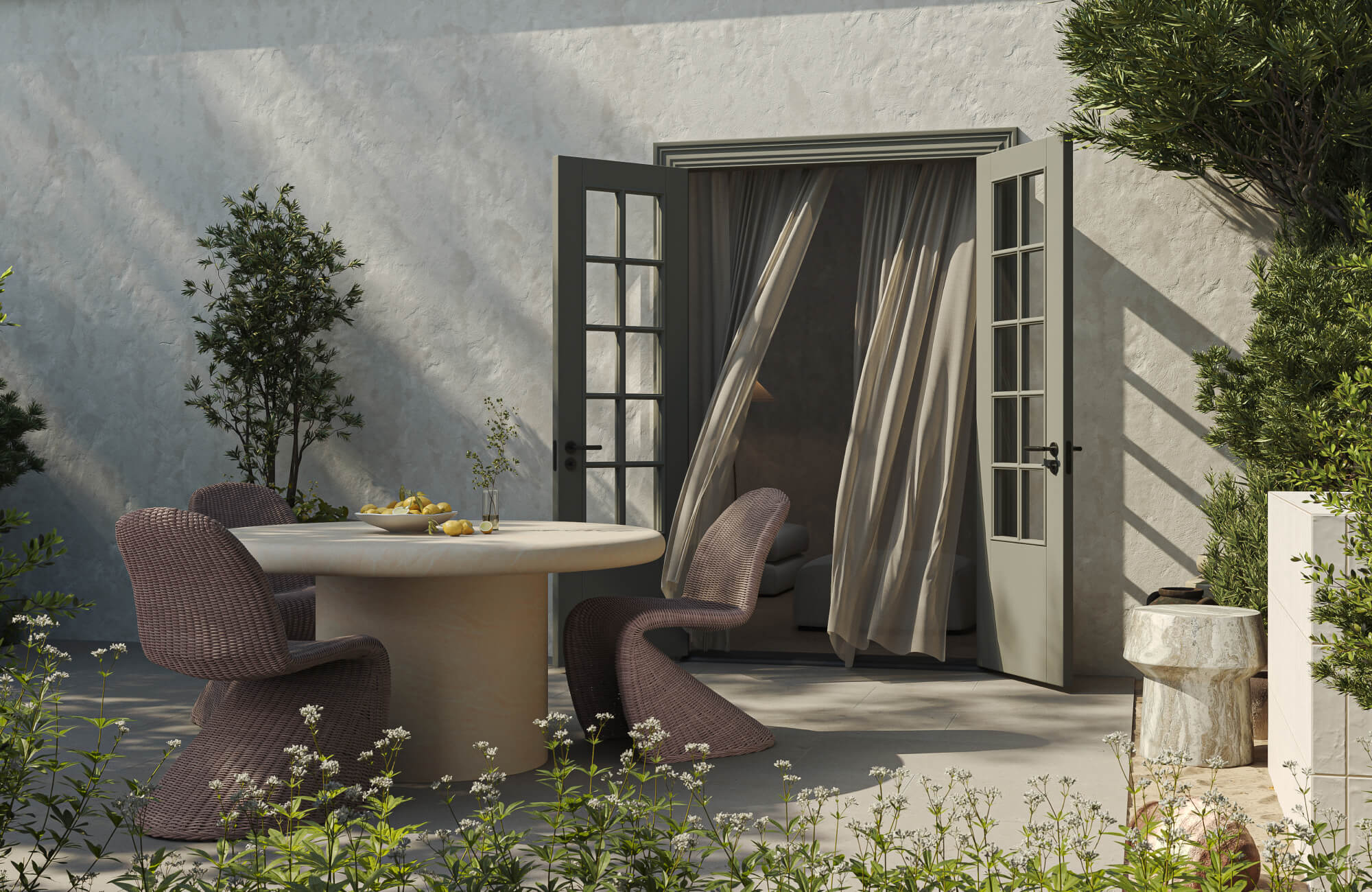
The Mysa Round Dining Table, 60", pairs with sculptural woven chairs to create a relaxed courtyard dining nook just outside open French doors
Resin Wicker HDPE And Synthetic Materials
Synthetic outdoor materials have come a long way. At their best, they offer genuine weather resistance, easy maintenance, and a refined appearance that holds up through seasons of real use. The key is choosing outdoor-grade options engineered for sun exposure, moisture, and daily wear.
Resin Wicker
Resin wicker provides the woven texture and warmth of natural wicker without its vulnerability to moisture and outdoor conditions. Quality resin wicker is designed to handle changing weather without brittleness or breakdown, but the frame beneath the weave matters as much as the surface above it.
Aluminum frames are the stronger choice: rust-resistant and light enough to move with ease. Steel frames should be properly coated to prevent moisture damage over time. When evaluating resin wicker dining chairs, look for tight, even weaving, UV-resistant material, and a seat that feels supportive through a full meal. Loose strands or thin weaving are signs of lower quality that will show earlier than expected.
Edward Martin's Calandor Outdoor Dining Chair in Tanned Weave is a considered expression of what resin wicker can be at its best. The photo above shows how the chair's sculpted woven form and warm tonal finish contribute to a dining environment that feels relaxed and refined in equal measure, proof that synthetic materials, when designed with intention, can hold their own alongside the most elevated outdoor settings.
HDPE Lumber
HDPE lumber is a durable synthetic material, often made from recycled plastic, that resembles painted wood in form but behaves differently outdoors. It requires no staining, sealing, or oiling, which makes it one of the most genuinely low-maintenance options for outdoor dining.
Its moisture resistance is one of its defining strengths. Unlike wood, it does not absorb water or expand with humidity. Unlike metal, it does not rust. This makes it particularly well-suited to coastal homes, poolside environments, rainy climates, and households where the dining set is used frequently and cleaned regularly. HDPE furniture is heavier than standard plastic, which gives it a steadier, more grounded presence. Its color typically runs through the material, so surface wear does not expose a different layer beneath.
Molded Plastic
Molded plastic is the most accessible option for outdoor dining, and in the right context, casual balconies, secondary seating, rental properties, or occasional meals, it serves its purpose well.
For outdoor use, choose UV-stabilized plastic designed to resist sun exposure. Thin or untreated plastic fades, cracks, and becomes brittle faster than its initial appearance suggests. Thicker construction provides more stability and a more considered feel. Molded plastic cleans easily, but it does not offer the long-term value, presence, or refinement of aluminum, teak, HDPE, or quality resin wicker. It is best understood as a practical solution rather than a permanent one.
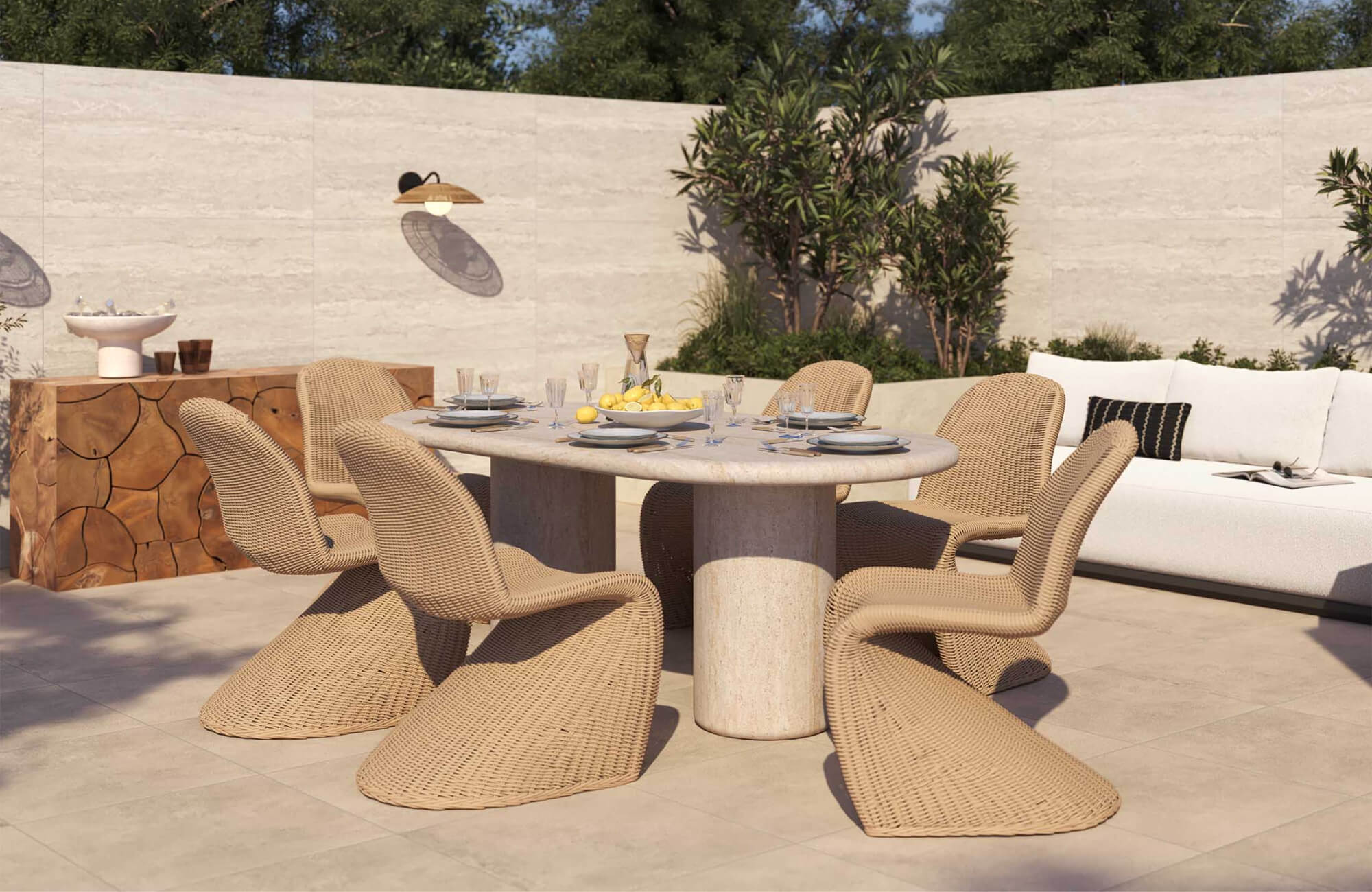
A concrete outdoor dining table paired with Calandor Outdoor Dining Chairs in Vintage Natural creates a sunlit patio setting with a substantial surface and relaxed woven seating
Stone, Concrete, Ceramic, and Glass Tabletops
The tabletop contributes significantly to the character of an outdoor dining set, how refined it feels, how easy it is to maintain through meals, and how it relates to the frame beneath it. In many cases, pairing a well-chosen base with the right surface material creates the most coherent and functional result.
Concrete
Concrete brings weight, stability, and a quiet architectural authority to outdoor dining. Its mass makes it particularly effective in windy spaces, where lighter tables may shift or feel unsettled. The surface, however, is porous unless properly sealed, which means oil, wine, and food can stain it if a quality sealer is not applied and maintained.
That solidity, when paired with considered design, becomes something genuinely beautiful. Edward Martin's Seabrook Outdoor Dining Table, 78", is a compelling example, its oval stone-toned surface and cylindrical pedestal base composing a form that feels sculptural without being ornamental. The photo featured above shows how naturally it anchors an open outdoor setting, bringing the kind of quiet permanence that only a material with real weight and presence can offer.
When choosing a concrete table, confirm that the surface is sealed for outdoor use and understand how often resealing is recommended. Concrete also requires a strong base and level placement. It is not a table you will move often, so it works best in a defined dining area where you want a grounded, composed look.
Stone And Ceramic
Stone and ceramic tabletops bring a quiet refinement that pairs naturally with both metal and wood bases, effortlessly elevating the outdoor dining environment. The key is choosing materials rated for outdoor conditions.
Natural stone should be sealed if porous, and certain varieties are more sensitive to temperature changes and staining than others. Ceramic tabletops are a practical choice for outdoor dining; many resist heat and clean easily, though they should be selected for outdoor use, particularly in climates where temperatures shift significantly between seasons.
When chosen with care and proper material knowledge, stone and ceramic surfaces add lasting visual quality to an outdoor dining space. Confirm that the base can support the weight, and that the finish is appropriate for your climate.
Glass
Tempered glass brings a visual lightness to outdoor dining tables that no other surface replicates. It reflects the surroundings, keeps sightlines open, and can make a smaller terrace or balcony feel more spacious and airy.
It is also one of the easiest surfaces to clean after a meal, smooth, non-porous, and quick to wipe down. The tradeoff is visibility, such as fingerprints, pollen, water spots, and dust on glass, which means more frequent cleaning in exposed settings.
Tempered glass is significantly stronger than standard glass, but placement and use should still be considered. It is less suited to high-wind environments or spaces where it will be subjected to significant impact. For a refined terrace or balcony where conditions are more considered, glass remains both a beautiful and quietly practical surface.
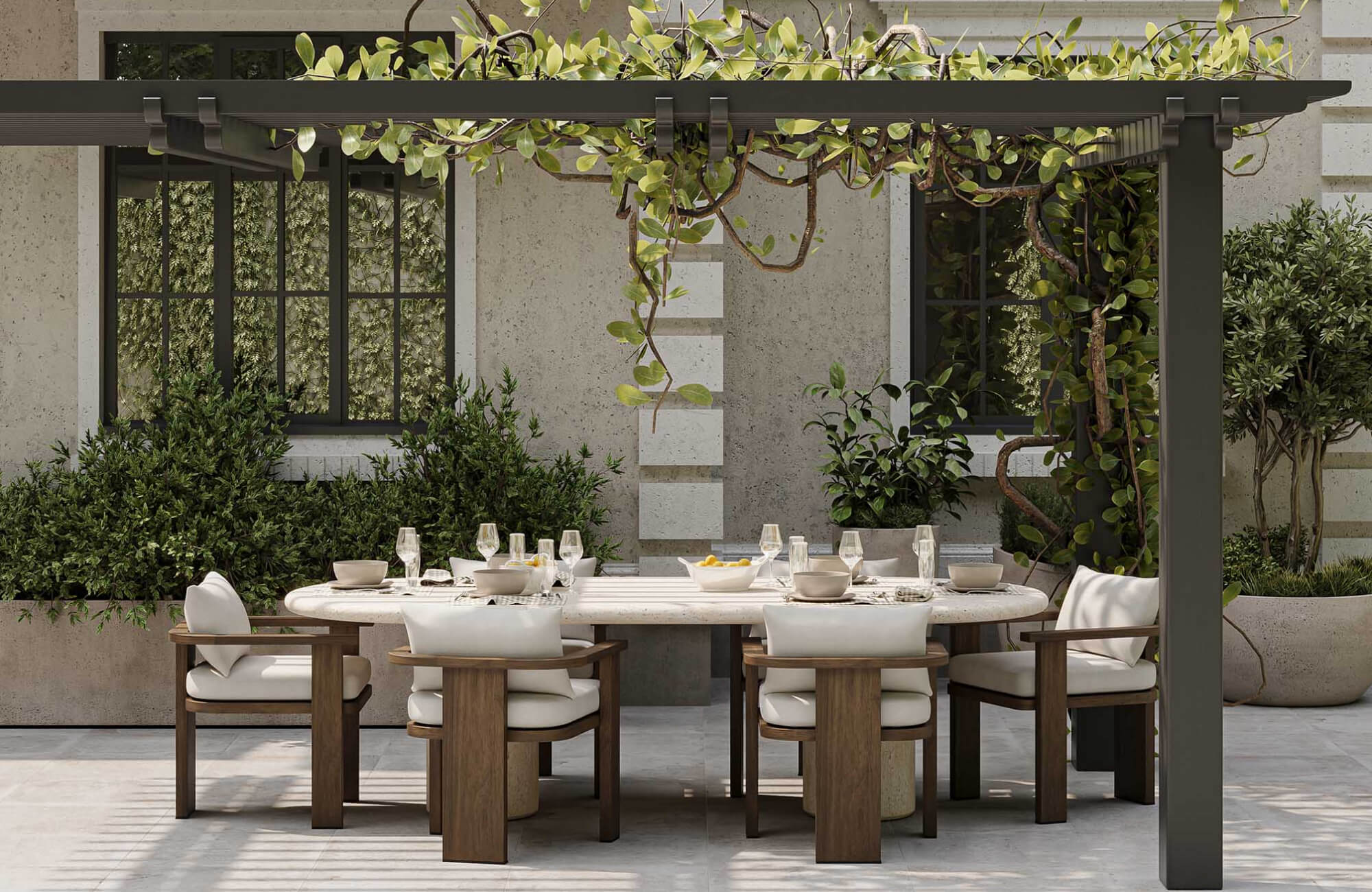
The Seabrook Outdoor Dining Table, 102", pairs with cushioned armchairs beneath a vine-covered pergola, creating a shaded setting designed for comfortable, long outdoor meals
Comfort Maintenance And Long-Term Value
The most enduring outdoor dining set combines materials that weather well, feel comfortable through a full meal, and align with the care you are actually willing to provide. Balancing these three things honestly is what separates furniture that lasts from furniture that disappoints.
Seating Comfort
Comfort extends beyond cushions. The material itself affects how a chair feels, how much warmth it holds, how hard its surface is, and how it responds to extended sitting. Metal chairs tend to feel firmer and can become warm in direct sunlight. Wood feels more natural to the touch. Woven seats offer a degree of give. Cushioned chairs invite longer, more relaxed dining.
Chair proportion matters just as much as material. A comfortable outdoor dining chair should offer the right seat height, adequate back support, and enough room for your arms and legs to rest naturally beneath the table. For those who host long dinners or entertain often, this is not a detail to overlook.
Edward Martin's Hightide Outdoor Dining Armchair in Stained Aged Grey/Alessi Linen brings these considerations together with quiet confidence. Its solid wood frame, generous proportions, and cushioned seat strike the balance that the best outdoor dining chairs aim for, structured enough to feel grounded, comfortable enough to linger through a long meal. The photo above shows how well it holds its presence around a table, contributing to a setting that feels as considered in its seating as it does in its surface and surroundings.
If cushions are part of the design, choose outdoor-rated fabrics that resist moisture and fading, and prioritize removable covers for easy cleaning. Storing cushions when the furniture is not in use extends their life considerably.
Cleaning Routine
Each material has its own maintenance rhythm. Aluminum and HDPE are among the least demanding; mild soap, water, and occasional rinsing are generally sufficient. Teak requires periodic cleaning and oiling to preserve its original tone. Steel and wrought iron should be inspected seasonally for chips or signs of rust and addressed before they progress.
Tabletops vary in the same way. Glass shows marks readily, but cleans with little effort. Sealed stone and ceramic are practical surfaces for dining, but their finishes should be maintained as directed. Concrete benefits most from consistent protection, particularly in spaces where meals are served often.
A well-considered maintenance routine need not be complex. Wipe spills promptly, avoid harsh cleaners unless specified by the manufacturer, and cover or store furniture during extended periods of non-use. These habits allow almost any quality outdoor material to remain beautiful far longer than neglect would permit.
Cost Over Time
The least expensive dining set is rarely the most economical over time. A material that fades, corrodes, or loses its integrity within a few seasons will always cost more in the end than a better-made piece chosen with longevity in mind.
Teak, powder-coated aluminum, HDPE, and high-quality resin wicker tend to hold their value because they hold their performance, remaining functional and visually sound through years of regular outdoor dining. The upfront investment reflects not just the material, but the absence of ongoing replacement costs.
That said, the right investment depends on how you live. For occasional use, a secondary space, or a temporary arrangement, simpler and more accessible options can serve perfectly well. For a dining environment that sees regular use and is meant to feel permanent and considered, stronger materials are almost always the wiser choice.
Best Material Choice For Your Outdoor Dining Space
The finest outdoor dining furniture is not the most expensive; it is the most considered. It suits the climate it lives in, the meals it hosts, and the aesthetic it contributes to. It ages with integrity rather than deteriorating with neglect.
Powder-coated aluminum offers reliable, low-maintenance performance across most climates. Teak brings natural warmth and enduring character. HDPE delivers moisture resistance with minimal upkeep. Resin wicker adds woven texture with outdoor practicality. Wrought iron and concrete provide weight and stability for more exposed or architectural settings.
For most spaces, the strongest result comes from combining a weather-resistant frame with a refined tabletop surface and chairs that feel genuinely comfortable through a full meal, chosen together with the same care and design intention you would bring to any interior space.
If you would like guidance selecting outdoor dining furniture that feels cohesive, beautiful, and suited to the way you live, we invite you to explore our collections or reach out for personalized support. Our design consultation services are available to help you compose an outdoor dining environment that is elevated, enduring, and entirely your own.
Follow us on Instagram
@EDWARD.MARTIN
)
)
)
)
)
)
)
)
)
)
)
)
)
)
)
)