
)
)
)
)
)
)
)
)
What Height Should Outdoor Bar Stools Be For A Patio Counter?
A patio counter is often one of the most social surfaces in an outdoor living space. It may frame an outdoor kitchen, extend from a grill station, border a poolside bar, or create a casual place for morning coffee and evening drinks. Yet even the most beautifully finished counter can feel uncomfortable if the stools are too tall, too short, or poorly spaced. The right outdoor stool height determines whether the counter feels intuitive to use or visually and physically out of proportion.
The most common mistake is assuming that every outdoor stool described as a “bar stool” will fit a patio counter. In practice, a standard patio counter often needs a counter-height stool rather than a true bar-height stool. The correct choice depends on the measured counter height, the stool’s seat height, available leg clearance, cushion construction, and the way the counter is used. For a refined outdoor setting, those measurements are not merely technical details. They shape comfort, circulation, and the overall sense of design cohesion.
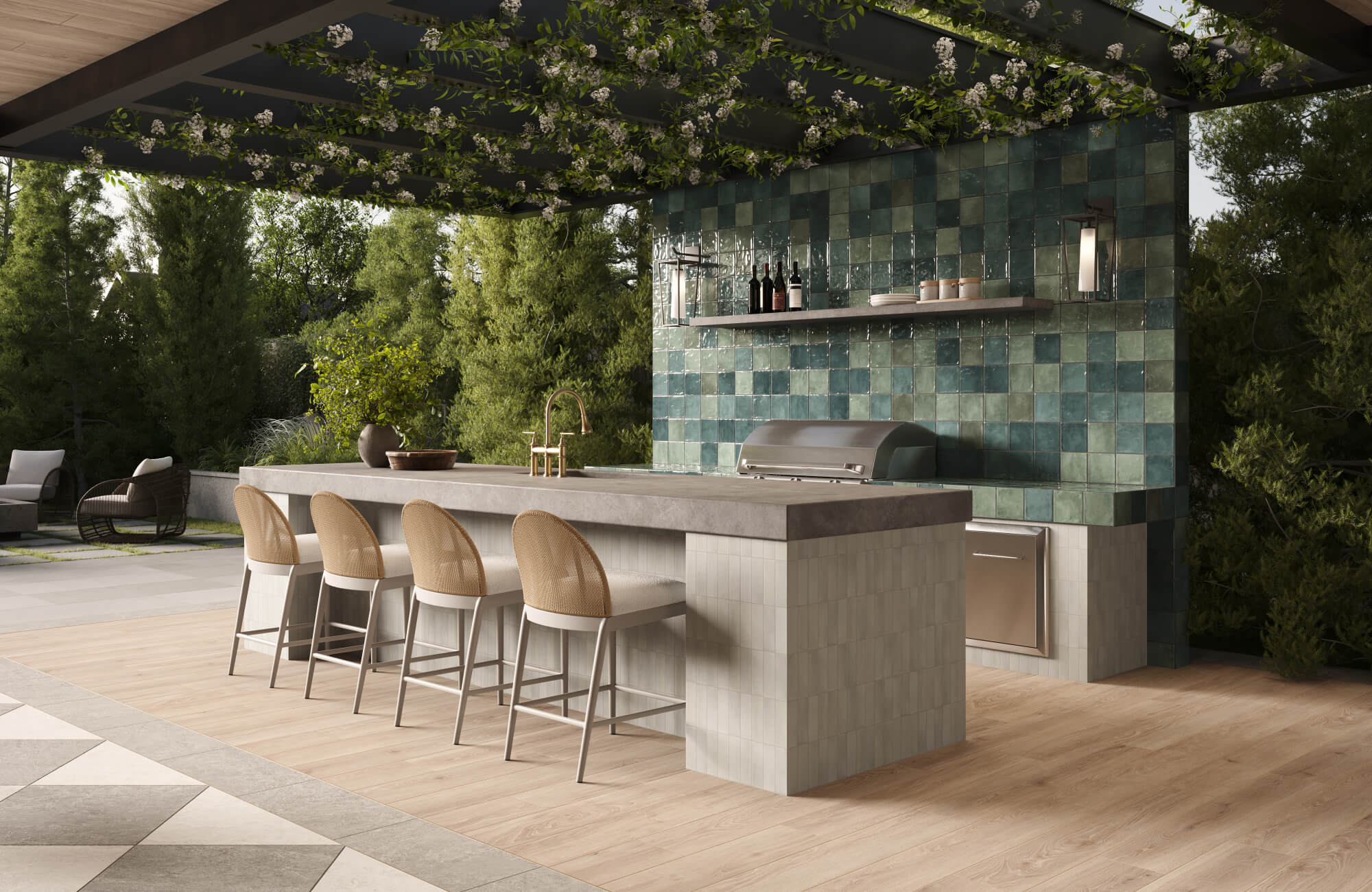
Natasha 2 x 6 Glossy Porcelain Tile in Oat and Jameson 8 x 48 Matte Porcelain Tile in Latte create a layered outdoor kitchen setting, pairing soft neutral flooring with a glossy green tile wall behind the counter seating.
Start With the Right Patio Counter Measurement
Before readers can choose the right stool height, they need to understand what they are measuring. This section should slow the process down and make the article practical: instead of assuming all patio counters are standard, it should teach readers how to confirm the exact height of their outdoor counter and avoid buying based on product names alone.
Measure From the Finished Patio Surface
The first measurement should always begin at the finished patio surface. That means measuring from the actual floor material beneath the stool legs to the top of the counter, not from the base of the cabinetry, the deck framing, or the unfinished slab below. A patio finished in porcelain tile, stone pavers, concrete, composite decking, or natural stone may sit slightly higher than the underlying structure, and that difference can affect the final stool fit.
This is especially important in outdoor kitchens and covered patios where multiple trades may be involved. A counter may be framed at one height, then finished with tile, stone, concrete, or another surface that subtly changes the final dimension. Even a difference of one inch can be noticeable when a stool already sits near the upper or lower end of the comfortable range.
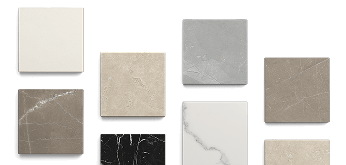
Outdoor flooring also introduces conditions that indoor seating rarely has to accommodate. Slight patio slopes are often intentional for drainage, while pavers and textured surfaces can create minor height variation beneath each stool. A stool that feels level on a showroom floor may behave differently on a poolside surface, a tiled terrace, or a covered outdoor kitchen. If the patio surface is still being selected, Edward Martin’s tile samples can help evaluate not only color and finish, but also texture, thickness, and how the surface will visually relate to outdoor furnishings.
Identify Whether It Is Counter Height or Bar Height
Once the full height is measured, the next step is identifying the category of the surface. Most counter-height patio surfaces are about 34 to 36 inches high. These are common for outdoor kitchen islands, serving counters, and casual dining counters because they align with familiar kitchen proportions. Bar-height surfaces are taller, usually around 40 to 42 inches, and are often used for entertaining areas, drink ledges, and raised patio bars. Extra-tall or pub-height counters may reach 44 inches or more, although they are less common in residential outdoor spaces.
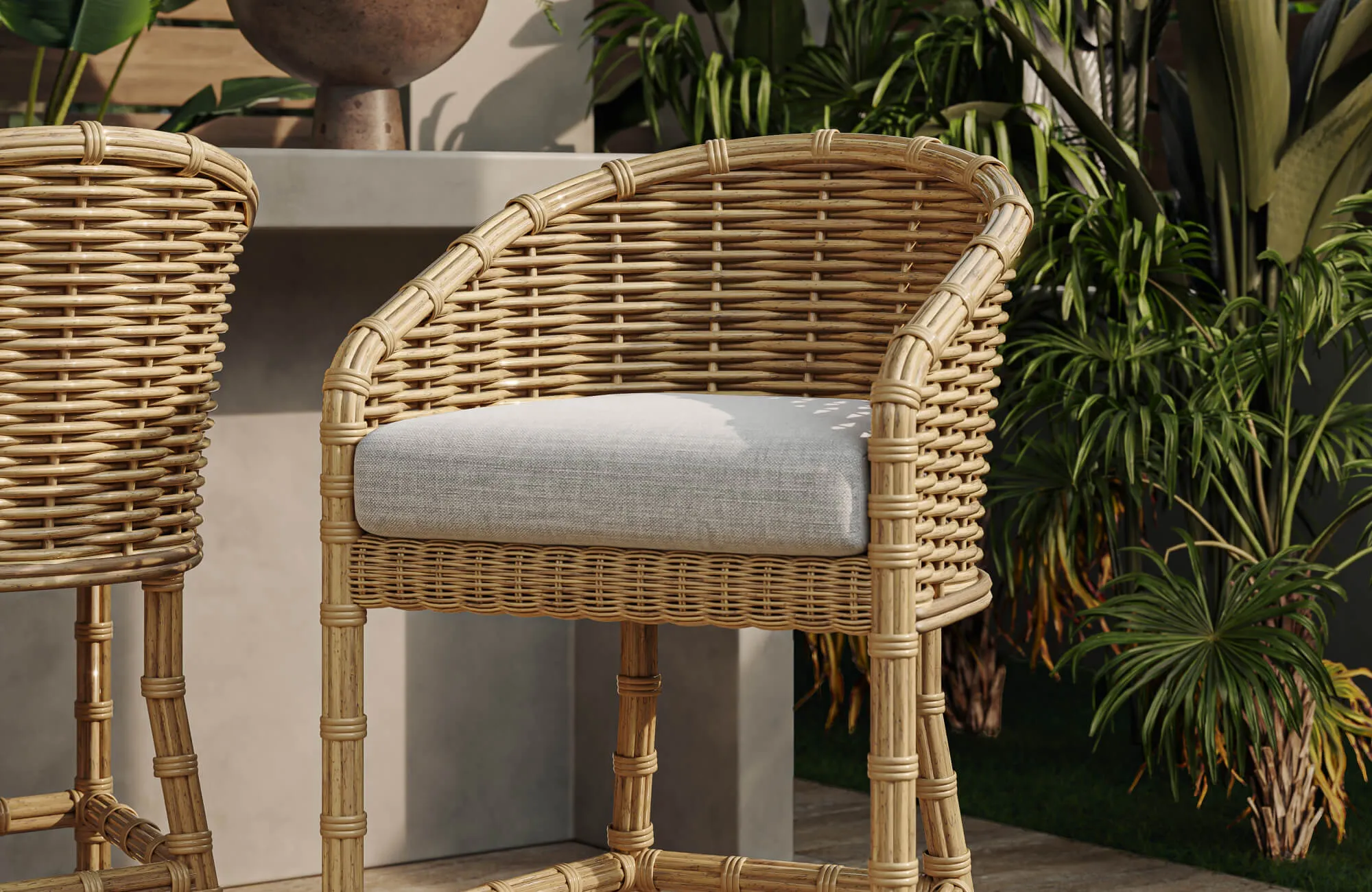
This distinction matters because many people use the phrase “outdoor bar stools” as a general search term. Retailers may also label products differently, which can make the category feel less precise than it should. Edward Martin's Darcy Outdoor Counter Stool in Cream is a useful example of why the actual seat relationship is more important than the casual use of the word “bar.” Its rounded woven back, light cushioned seat, and slim frame sit in balanced proportion with a patio counter, demonstrating the lower, more approachable scale associated with counter-height seating.
The most reliable approach is to measure the surface first, then shop by seat height. A well-scaled patio counter should allow guests to sit naturally, place arms comfortably near the counter surface, and move in and out without feeling wedged beneath the top.
Account for Countertop Thickness, Aprons, and Overhangs
Counter height alone does not tell the whole story. The usable space beneath the counter also matters, particularly when the counter has a thick stone slab, tile build-up, concrete top, apron detail, support brackets, or structural framing. These elements can reduce knee clearance even when the overall counter height appears standard.
A generous overhang can make a patio counter feel more comfortable for dining because it allows the knees to sit beneath the surface rather than forcing guests to perch at the edge. A shallow overhang may still work for drinks or casual conversation, but it can feel less comfortable for long meals. Built-in grill islands and masonry counters should be checked carefully because their structural supports may limit seating depth.
For custom outdoor kitchens, contractor-built counters, or nonstandard patio bars, measurements should be verified on site before stools are purchased. Installation conditions, finished surface thickness, and support requirements can vary. When structural changes, tile installation, or custom counter fabrication are involved, professional guidance is recommended to confirm that the finished dimensions support both safety and comfort.
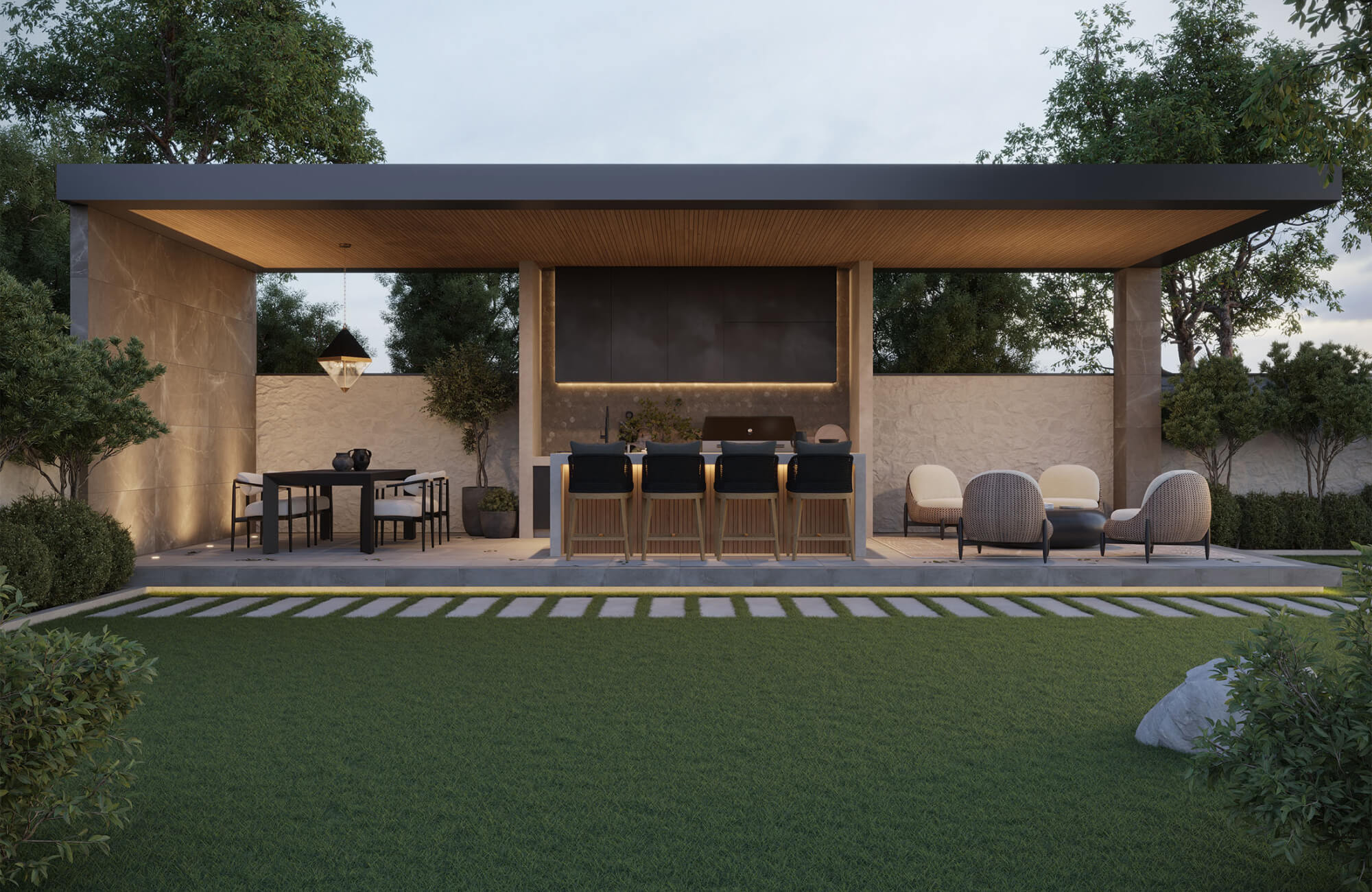
Briaro Outdoor Lounge Chair in Cream and Leticia Dining Chair in Cream help define separate lounge and dining zones around the covered outdoor bar, balancing structured architecture with soft seating forms.
Choose the Correct Outdoor Stool Seat Height
Once the patio counter has been measured, the reader needs a direct answer. This section should satisfy the primary search intent by giving clear stool-height recommendations and explaining why seat height matters more than the product label. It should be the most immediately useful section for readers who came to the page looking for a fast sizing answer.
Use the 9–12 Inch Clearance Rule
A comfortable stool generally leaves about 9 to 12 inches between the stool seat and the counter surface or underside clearance zone. This range allows enough room for the legs while keeping the sitter close enough to use the counter naturally. Less clearance can make the seating feel cramped. Too much clearance can make the counter feel too high, especially when dining or working at the surface.
For example, a 36-inch patio counter usually pairs well with a stool seat around 24 to 27 inches high. A 42-inch outdoor bar usually needs a seat closer to 28 to 33 inches. The exact fit depends on the sitter’s height, cushion firmness, counter thickness, and whether the counter is used for meals, drinks, or occasional serving.
Taller users may prefer slightly more clearance, while compact spaces may need slimmer stool profiles to preserve movement around the counter. The goal is not simply to match a number, but to create a seated posture that feels relaxed and proportional to the counter.
Match Stool Seat Height to Patio Counter Height
The table below offers a practical starting point for matching patio counter height to outdoor stool seat height. It is especially useful when comparing products across different retailers, since category labels can vary.
Patio Surface Height Recommended Seat Height Best Stool Type 34–36 inches 24–27 inches Outdoor counter stool 40–42 inches 28–33 inches Outdoor bar stool 44–46 inches 30–34 inches Extra-tall outdoor stool
For most standard patio counters, the best choice is an outdoor counter stool with a seat height in the 24 to 27 inch range. This pairing typically gives enough clearance for the legs while keeping the sitter at a comfortable height for dining, serving, or conversation.
Edward Martin's Mateo Outdoor Counter Stool in Grey illustrates how a counter stool can still have a substantial, highly supportive presence without becoming a true bar-height stool. Its dark woven back and arms create a taller visual profile, while the cushioned seat and footrest keep the focus on the actual sitting height. This distinction is important when evaluating products online, where the overall silhouette may appear tall even though the seat is intended for a counter-height surface.
A true outdoor bar stool is better reserved for a raised bar-height surface. If that stool is placed at a standard 36-inch counter, the sitter may feel too high, with limited space between the seat and the underside of the counter. This is one of the most common sizing errors, particularly when the shopper searches broadly for outdoor bar stools without checking the listed seat height.
Extra-tall stools require even more caution. They can work beautifully with a custom pub-height counter, but they feel awkward when paired with a surface that is only slightly taller than standard bar height. When in doubt, the measured seat height should guide the decision more than the product title.
Consider Cushions and Seat Construction
Cushions and seat construction can change how a stool feels once it is in use. A thick, firm outdoor cushion may raise the effective sitting height, while a softer cushion may compress under body weight. Sling seats, woven seats, contoured frames, and padded seats all behave differently, even when their listed dimensions appear similar.
This is why two stools with the same published seat height may not feel identical. A tightly upholstered cushion over a rigid frame can sit higher than expected. A woven or sling seat may have slight give. A contoured seat may position the body lower at the center than the front edge suggests.
When comparing outdoor counter stools, review the product specifications closely and consider the seat material as part of the measurement. Manufacturer dimensions should be treated as the starting point, while cushion compression, frame design, and individual comfort preferences may affect the final experience. If care or performance details are provided by the manufacturer, follow those guidelines, particularly for outdoor cushions and upholstery exposed to sun, moisture, or pool conditions.
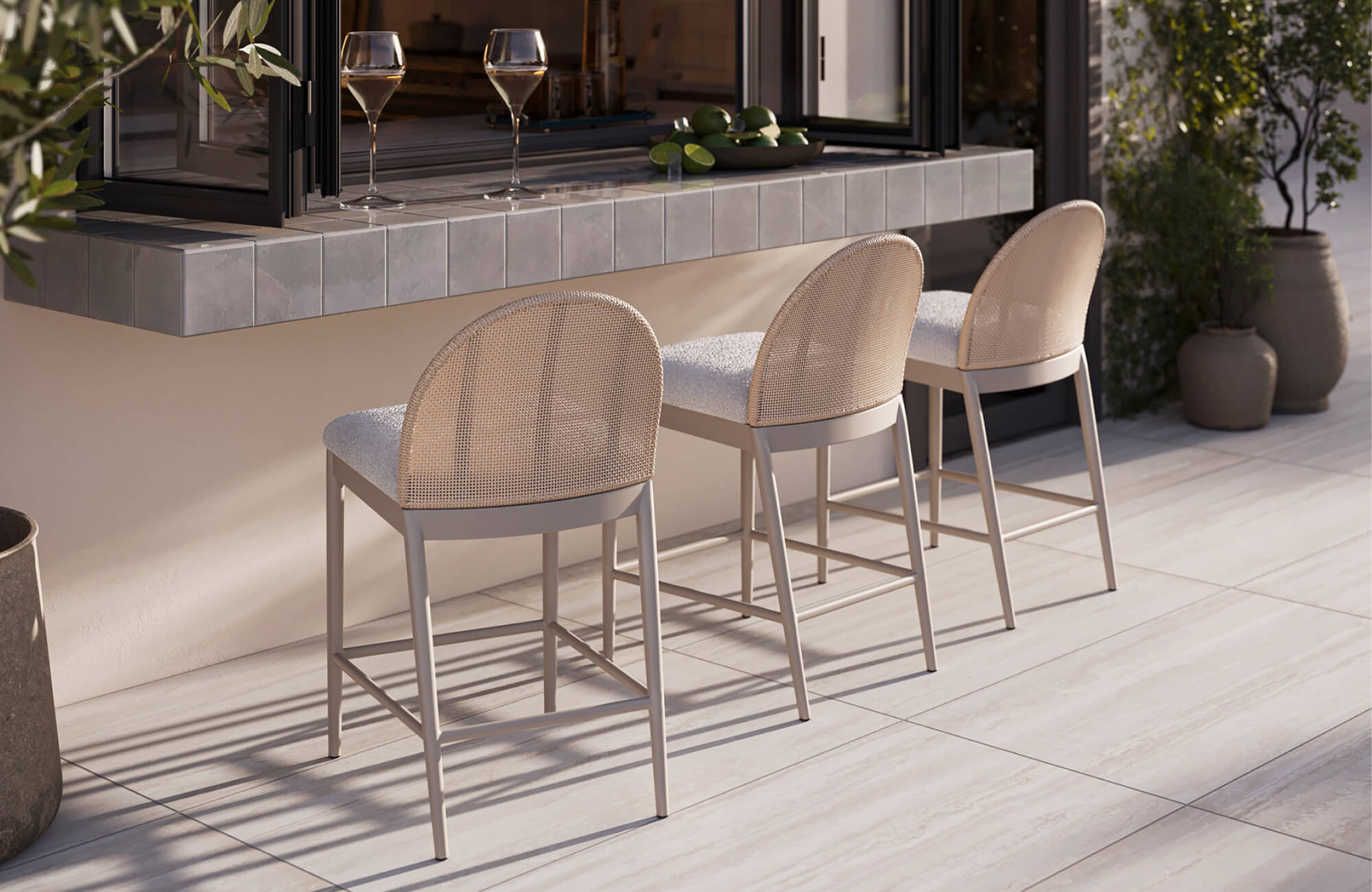
Wren 24 x 48 Grip Porcelain 2cm Paver Tile in Oat and Makenna 6 x 6 Glossy Porcelain Tile in Pebble frame the counter seating area with light, textured surfaces that emphasize the stools’ woven backs and slim profiles.
Plan Legroom, Spacing, and Everyday Comfort
Correct height is only part of the fit. This section should expand the article from a simple sizing answer into a complete usability guide by showing how clearance, spacing, stool width, and comfort features affect how well outdoor bar or counter stools work in real patio settings.
Leave Enough Knee and Leg Clearance
A stool can be technically the right height and still feel uncomfortable if there is not enough knee space beneath the counter. Vertical clearance determines whether the legs fit comfortably under the top, while horizontal clearance determines whether guests can sit close enough to the counter without leaning forward or sitting too far away.
This distinction matters most for outdoor kitchen counters used for meals. A drink ledge or serving counter may be comfortable with limited depth, but a dining counter benefits from a more generous overhang. The deeper the overhang, the easier it is for guests to sit with their knees naturally positioned beneath the counter rather than angled outward.
Edward Martin's Darcy Outdoor Counter Stool in Cream demonstrates this relationship well because its slim frame, open base, and defined footrest allow the counter area to remain visually and physically accessible. The cushioned seat sits below the counter edge without crowding it, while the rounded woven back adds comfort without creating a bulky obstruction. In practical terms, this is the kind of proportion that helps a patio counter feel usable for more than a brief pause.
Built-in outdoor kitchens sometimes have less usable knee room than freestanding patio bars because appliances, storage, stone supports, or masonry bases occupy space below the surface. If the counter includes a grill, refrigerator, sink, or cabinet run, each seating area should be evaluated independently. One side of the island may be ideal for stools, while another may be better suited for prep or serving.
Space Outdoor Stools So They Are Easy to Use
Stool spacing affects comfort just as much as seat height. A long counter may appear to fit four stools by width alone, but the seating can feel crowded once guests sit down, turn, or rest their arms. Outdoor settings often require a little more generosity because people move between the counter, dining area, lounge seating, grill, and pool or garden paths.
Backless and armless stools usually work best in tighter layouts because they slide more easily beneath the counter and create a cleaner visual line. Stools with arms need additional width so guests can sit without bumping into neighboring seats. Swivel stools require even more clearance because the seat needs room to rotate without striking the counter, wall, or adjacent stool.
The width of the stool should also be considered in relation to the counter’s visual scale. A narrow balcony counter may look overwhelmed by bulky bar stools, while a substantial stone or tiled outdoor kitchen island can often support a larger, more architectural stool profile. For projects where proportions are difficult to judge from measurements alone, Edward Martin’s design services can help assess how stool width, counter length, and surrounding outdoor furnishings work together in the broader layout.
Decide Which Comfort Features Matter Most
The most suitable comfort features depend on how the patio counter will be used. For quick morning coffee or casual drinks, backless stools may be sufficient and visually unobtrusive. For outdoor dining, longer conversations, or entertaining, stools with backs can make the seating feel more supportive. Arms add comfort, but they must be checked against the counter height and underside clearance so they do not collide with the edge.
Footrests become especially important as stool height increases. At a counter-height stool, some users may still feel close enough to the ground, but bar-height seating often leaves the feet unsupported without a foot rail or integrated rest. A well-placed footrest improves posture and makes taller seating feel more natural.
Swivel bases can be useful in social outdoor spaces because they allow guests to turn toward the counter, the grill, or the conversation area without dragging the stool across the patio surface. The tradeoff is spatial. Swivel stools need enough room to rotate, and their bases can add visual weight. The right choice should reflect both the counter’s function and the surrounding design language.
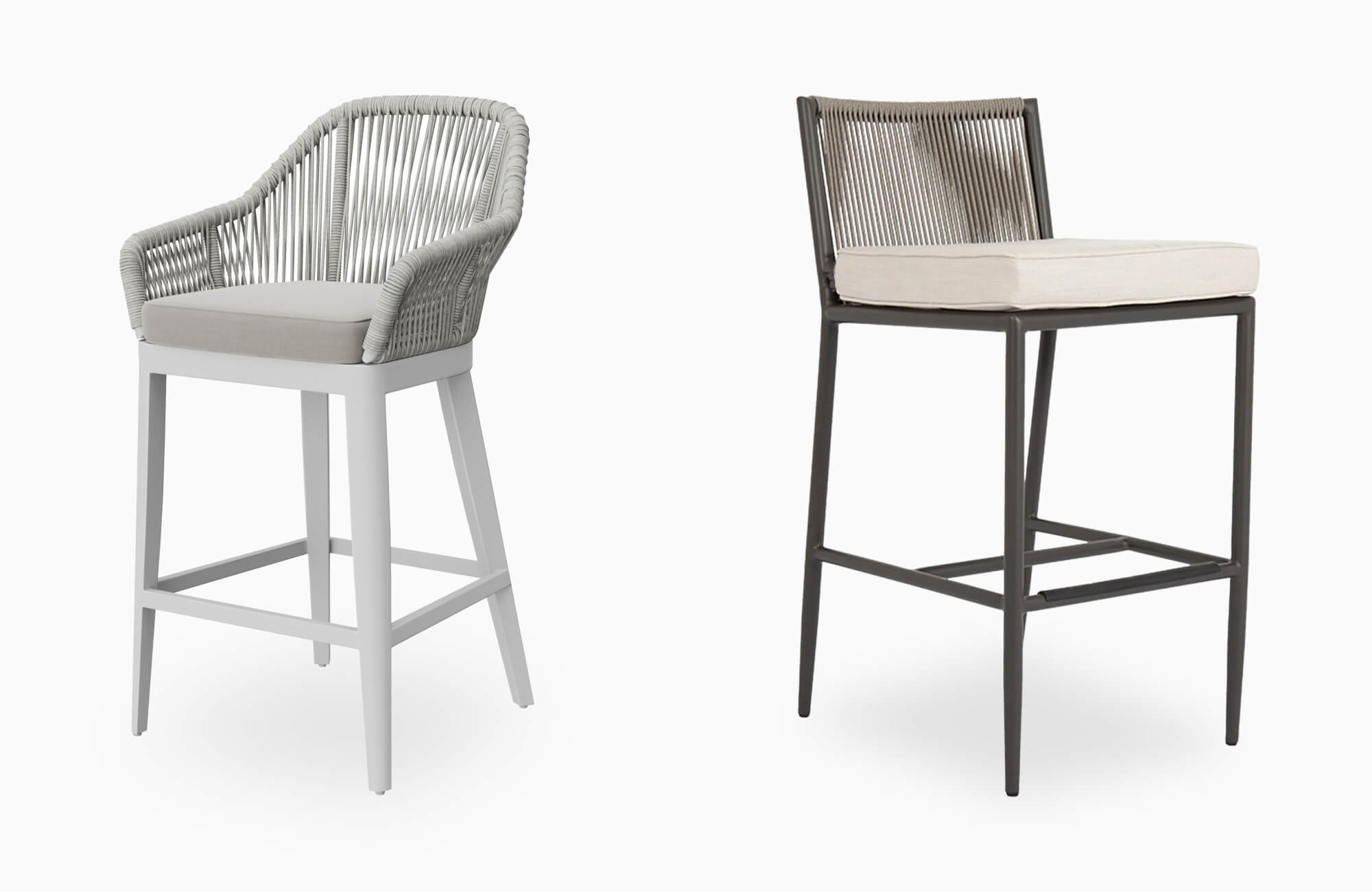
Vetra Barstool and Kova Barstool show how frame color, woven texture, cushion thickness, and footrest placement can change the visual weight and comfort profile of outdoor counter seating.
Compare Counter Stools, Bar Stools, and Extra-Tall Stools
Many readers arrive with the phrase “outdoor bar stools” in mind, but their actual patio setup may require a different stool category. This section should serve the comparison intent by clearly separating the most common stool types and helping readers choose the right category without duplicating the earlier height chart.
Outdoor Counter Stools
Outdoor counter stools are usually the best fit for patio counters in the 34 to 36 inch range. Their seat height typically falls around 24 to 27 inches, which aligns with outdoor kitchen islands, serving counters, and casual dining surfaces. This makes them a practical choice for spaces that function like an extension of the indoor kitchen.
Counter-height seating tends to feel approachable and versatile. It is easier to get in and out of than taller bar seating, which can be helpful for families, multigenerational gatherings, and everyday outdoor meals. The lower profile also integrates well with adjacent dining tables, lounge furniture, and built-in counters.
From a design perspective, outdoor counter stools often provide the most balanced proportions for residential patios. They support conversation across the counter without creating the elevated, commercial feel that taller bar stools can introduce.
Outdoor Bar Stools
Outdoor bar stools are designed for taller surfaces, usually around 40 to 42 inches high. They suit raised patio bars, poolside drink counters, and entertaining areas where a more elevated seating experience is desired. When paired correctly, they can create a relaxed lounge atmosphere with strong visual presence.
Because bar-height seating places the body higher above the floor, comfort details become more important. A footrest is almost essential. A supportive back may also be preferable if the stools will be used for longer gatherings rather than quick drinks.
Edward Martin's Vetra Barstool and Edward Martin's Kova Barstool show how two bar-height designs can answer the same functional need with very different visual effects. Vetra’s dark, slender frame and straighter woven back create a more linear profile, which can suit crisp outdoor counters or compact bar areas where visual lightness matters. Kova’s rounded woven back, pale frame, and more enveloping shape feel softer and more sculptural, making it useful when the bar area needs a greater sense of comfort and presence. In both cases, the visible footrest is not just a detail; it is central to making a taller stool feel supported.
The main caution is fit. Outdoor bar stools should not be used at a standard patio counter simply because the phrase sounds right. At a 34 to 36 inch counter, they will usually sit too high, leaving too little legroom and making the counter feel awkwardly low.
Extra-Tall Outdoor Stools
Extra-tall outdoor stools are designed for surfaces above typical bar height, often in the 44 to 46 inch range. They are less common in residential patios but may appear in custom pub-style counters, elevated entertaining structures, or specialized outdoor hospitality settings.
Because these stools are taller, small measurement errors become more noticeable. A stool that is even a little too high can make the counter difficult to use, while one that is too low may feel disconnected from the surface. Stability and foot support also deserve close attention, particularly outdoors where flooring may be textured, sloped, or exposed to moisture.
The table below compares the three main stool categories in a more compact format:
Stool Type Typical Seat Height Best Surface Height Best Use Case Counter stool 24–27 inches 34–36 inches Outdoor kitchens and patio counters Bar stool 28–33 inches 40–42 inches Raised patio bars and entertaining areas Extra-tall stool 30–34 inches 44–46 inches Custom pub-height counters
This comparison reinforces the central point: the right stool category is determined by the finished surface height, not the wording used in a product title.
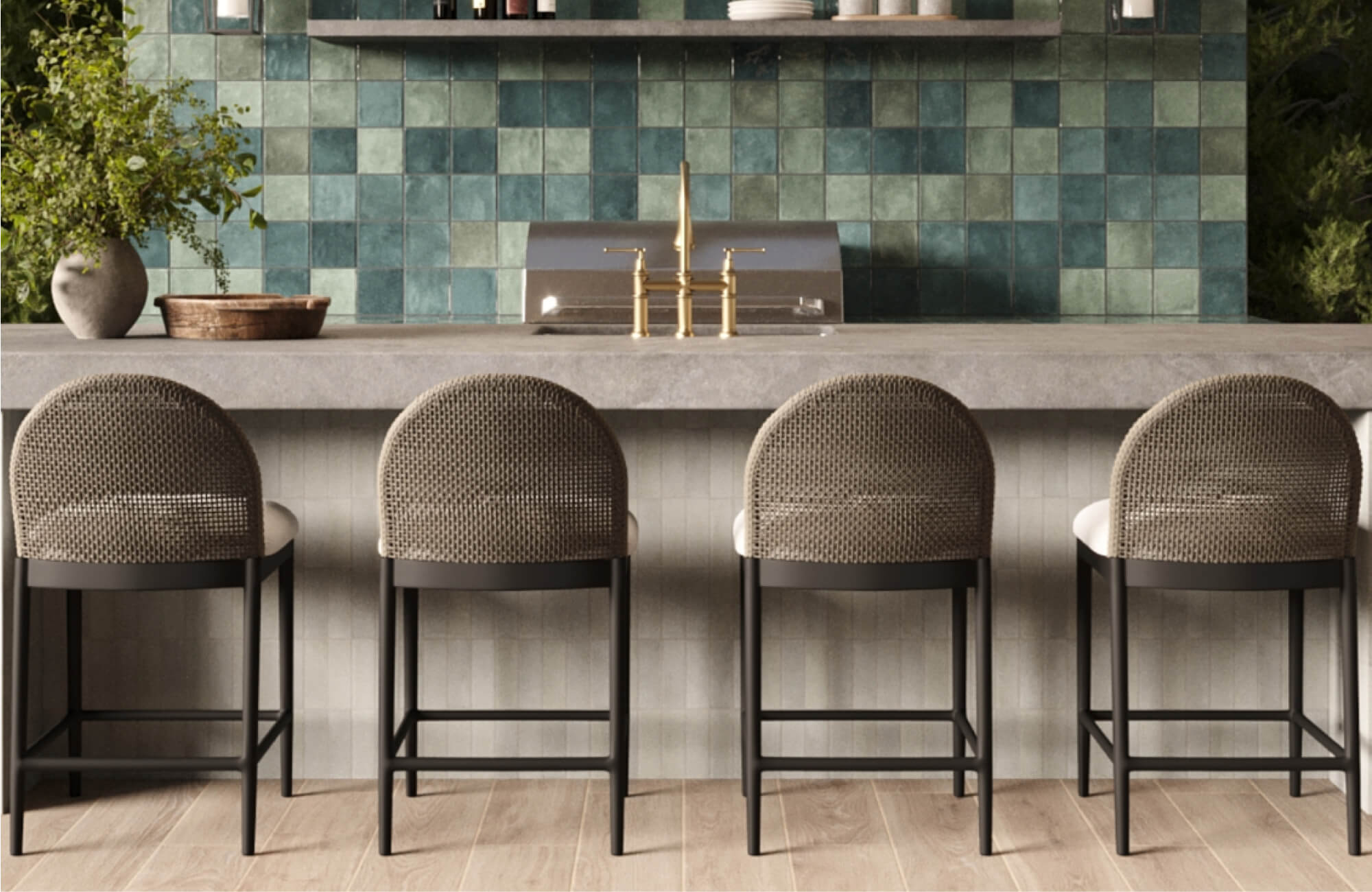
Lilah 6 x 6 Glossy Ceramic Tile in Opal adds depth behind the outdoor counter, while the woven bar stools and light cushions bring warmth and softness to the structured kitchen setting.
Adapt Stool Height Choices to Outdoor Materials and Patio Design
Outdoor stools have to fit physically, but they also need to suit the surrounding materials, exposure level, and design style. This section should deepen topical authority by addressing outdoor-specific factors that generic stool-height articles often miss, including surface texture, weather exposure, frame material, and visual proportion.
Match Stool Materials to Outdoor Conditions
Outdoor stool materials do not usually change the required seat height, but they do affect comfort, durability, maintenance, and stability. Powder-coated aluminum is often valued for its light weight and resistance to corrosion when properly finished. Teak brings warmth and natural character, though it requires appropriate care as it weathers. HDPE lumber offers a substantial feel and strong outdoor performance. Resin wicker can soften the look of a patio, especially when paired with cushions and textured flooring.
Weight is worth considering. Lightweight stools are easier to move for cleaning, storage, or flexible entertaining layouts. Heavier stools may feel more stable in breezy locations or on expansive patios. Near pools, coastal areas, or uncovered terraces, material selection should account for moisture, sun exposure, and maintenance expectations.
Always review manufacturer specifications for outdoor suitability, weight capacity, cleaning methods, and exposure limitations. Outdoor furniture can perform very differently depending on climate, use, and care routine, so published care guidelines should guide long-term maintenance.
Coordinate Stool Scale With the Patio Counter and Surrounding Decor
A well-chosen stool should feel proportionate to the counter as well as comfortable to sit in. A substantial masonry or tiled outdoor kitchen island can often carry stools with stronger frames, backs, or arms. A slim balcony counter may require a lighter silhouette, such as an armless or backless stool, to preserve openness.
The counter material also influences the visual relationship. A richly veined stone surface, handmade-look tile, or textured porcelain counter may pair beautifully with stools that have a refined but quiet profile. A sleek contemporary counter may call for cleaner lines and minimal ornament. The goal is not exact matching, but visual balance.
Consider Flooring Texture, Drainage, and Stability
Outdoor flooring affects both how a stool looks and how it performs. Smooth porcelain tile can create a refined, architectural surface, while textured pavers, concrete, stone, or decking may produce a more casual or tactile setting. Each material interacts differently with stool legs and bases.
On textured surfaces, stools may need levelers or protective feet to sit evenly. On smoother tile or finished concrete, non-marking glides can help protect the surface and reduce scraping. Around pools or uncovered patios, drainage and slip resistance should also be considered, particularly when people may sit down with wet feet or move stools after rain.
Tile samples can be useful at this stage because they allow the surface to be evaluated in real light alongside stool finishes, outdoor cushions, and surrounding materials. They can also help clarify whether a flooring texture feels appropriate for a seating area. For installation, slope, substrate, and outdoor performance questions, consult qualified professionals and follow product-specific installation guidance.
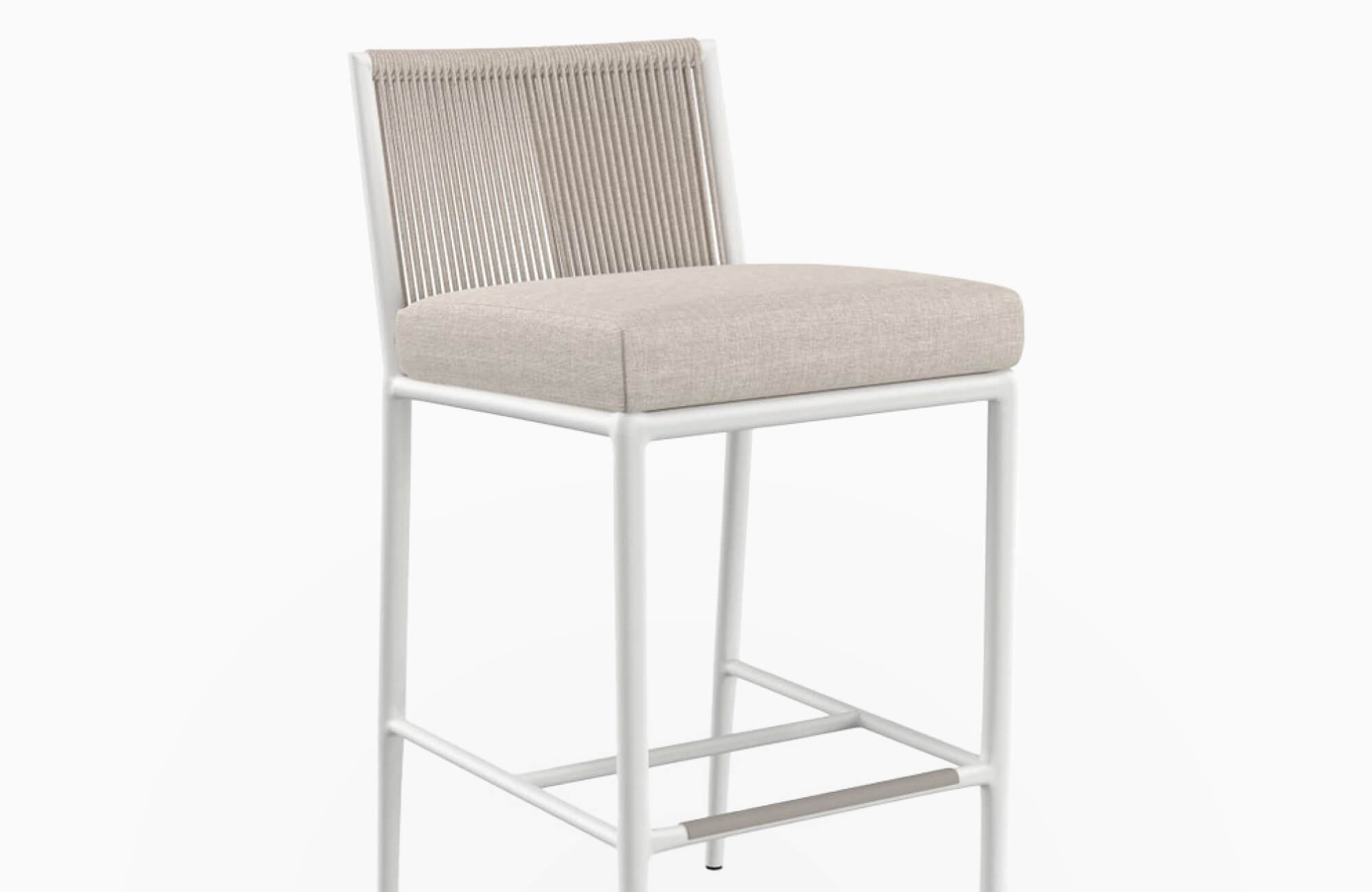
Alba Counter Stool pairs a slim white frame with a woven back and light cushion, highlighting the seat height, footrest placement, and compact proportions important for patio counter seating.
Avoid the Most Common Outdoor Stool Sizing Mistakes
This section should capture problem-solving intent and help readers prevent expensive returns or uncomfortable seating. It should consolidate common errors into a practical decision-making checkpoint, reinforcing earlier information without repeating it section by section.
Buying by the Word “Bar” Instead of the Seat Height
The word “bar” is often used loosely in outdoor furniture shopping. A product may appear in a search for outdoor bar stools even if its dimensions are closer to counter height, or it may be a true bar-height stool that is too tall for a patio counter. The listed seat height is the dimension that matters most.
For a counter-height patio surface, a true bar stool will usually sit too high. The result is reduced legroom, an uncomfortable posture, and a counter surface that feels visually too low. For a raised patio bar, the opposite problem can occur. A counter stool may leave the sitter too low, making the surface feel distant and awkward to use.
The safest method is simple: measure the finished counter height, subtract the desired clearance range, then compare that number with the stool’s published seat height.
Forgetting Arms, Backs, and Swivel Clearance
A stool’s height may be correct while its overall form still causes fit issues. Arms can strike the underside of the counter or prevent the stool from sliding in neatly. Backs may rise above the counter in a way that changes the visual line of the outdoor kitchen. Swivel stools need enough room to rotate without hitting neighboring furniture or the counter edge.
Width is just as important. A counter that technically accommodates four narrow stools may only feel comfortable with three wider stools, especially if they have arms or shaped backs. In premium outdoor spaces, restraint often produces a better result than maximizing the number of seats.
Before purchasing, consider how the stools will look when pushed in, pulled out, and occupied. Outdoor furniture is experienced in motion, not only in a product image.
Skipping a Final Fit Check Before Buying
A final fit check can prevent most sizing mistakes. Confirm the patio counter height, the stool seat height, underside clearance, cushion thickness, stool width, arm height, back height, and swivel radius if applicable. Review outdoor material suitability, care requirements, and weight capacity before committing to a set.
Edward Martin's Alba Counter Stool is a clear example of why this final review should look beyond one measurement. Its slim white frame keeps the footprint visually light, but the cushioned seat, woven back, and front footrest all affect how it will function at a counter. The seat height determines the counter relationship, the cushion changes the perceived sitting level, the back contributes to the overall visual height, and the footrest influences how comfortable the stool feels once the feet leave the floor.
For custom counters, unusual dimensions, or mixed-material patios, it may be worth seeking additional guidance before making a purchase. Edward Martin’s contact page is a natural resource when a project involves design questions that extend beyond a single measurement, such as coordinating outdoor furnishings with tile, decor, and the surrounding architectural style.
All measurements should be verified against the specific product dimensions and the actual installed counter. Published dimensions are useful, but the finished environment determines how the stools will ultimately feel.
Bringing Patio Counter Height, Comfort, and Outdoor Design Into Alignment
The best outdoor stool is not defined by whether it is called a bar stool or a counter stool. It is defined by how precisely it fits the patio counter, how comfortably it supports the body, and how naturally it belongs within the outdoor setting. For most 34 to 36 inch patio counters, a 24 to 27 inch counter stool will provide the right relationship. For 40 to 42 inch outdoor bars, a 28 to 33 inch bar stool is usually the better match.
Those numbers provide the foundation, but the final decision should also account for clearance, overhang, spacing, cushion construction, footrests, arms, backs, flooring texture, and material performance. In a thoughtfully designed patio, measurement and aesthetics are not separate concerns. The right stool height allows the counter to function beautifully, while the right scale, material, and finish allow the entire outdoor space to feel intentional. When those elements align, the patio counter becomes more than a place to sit. It becomes a composed, comfortable part of the home’s everyday rhythm.
Follow us on Instagram
@EDWARD.MARTIN
)
)
)
)
)
)
)
)
)
)
)
)
)
)
)
)