A mid century bathroom vanity is more than a piece of furniture. It represents an era when design was reimagined to combine beauty with function, innovation with accessibility, and natural warmth with modern simplicity. Born in the mid-20th century, this style continues to inspire because it offers solutions that are as practical as they are visually striking.
As you explore its history, defining features, craftsmanship, and adaptability, it becomes clear why these vanities have never lost their relevance. They are not just echoes of the past but also living pieces of design philosophy that connect timeless principles with modern lifestyles. Understanding what sets them apart helps you see why they remain a staple in bathrooms today.

The Roots of Mid Century Bathroom Vanity Design
To understand why mid century vanities are timeless, it is important to look back at the cultural and design movements that shaped them. Emerging in the postwar years of the 1940s through the 1960s, this style reflected a collective desire for simplicity, optimism, and innovation. After decades of ornate prewar furnishings, vanities of this era broke away from excess detail and embraced clean lines, geometric forms, and functional elegance. Even humble materials like laminate were reimagined through thoughtful design, while features such as dovetail joinery and integrated storage elevated everyday bathroom furniture into sculptural, enduring pieces.
Equally significant was the emphasis on democratic design, a principle that sought to make beauty and functionality accessible to all. Drawing from Bauhaus ideals, mid century designers crafted vanities that combined affordability with durability. Plywood and engineered woods also made production efficient, allowing stylish vanities to reach suburban homes without sacrificing quality. This accessibility transformed the bathroom vanity from a purely utilitarian object into a staple of modern living, one that blended affordability with aesthetic refinement.
Finally, mid century bathroom vanities stood out for their ability to blur the line between indoors and outdoors. By incorporating natural woods such as walnut, teak, and oak, and pairing them with earth-inspired tones and calming palettes, these pieces infused warmth and serenity into private spaces. The organic textures not only provided a visual connection to nature but also offered a tactile, emotional appeal that continues to resonate. In this way, the roots of mid century design reveal why these vanities have remained beloved for decades: they balanced form and function, embraced inclusivity, and celebrated the natural world within the space.

Defining Elements that Set Mid Century Vanities Apart
A mid century bathroom vanity is instantly recognizable by its distinct structural and stylistic features, many of which remain popular today for their simplicity and elegance.
Floating Vanity Forms
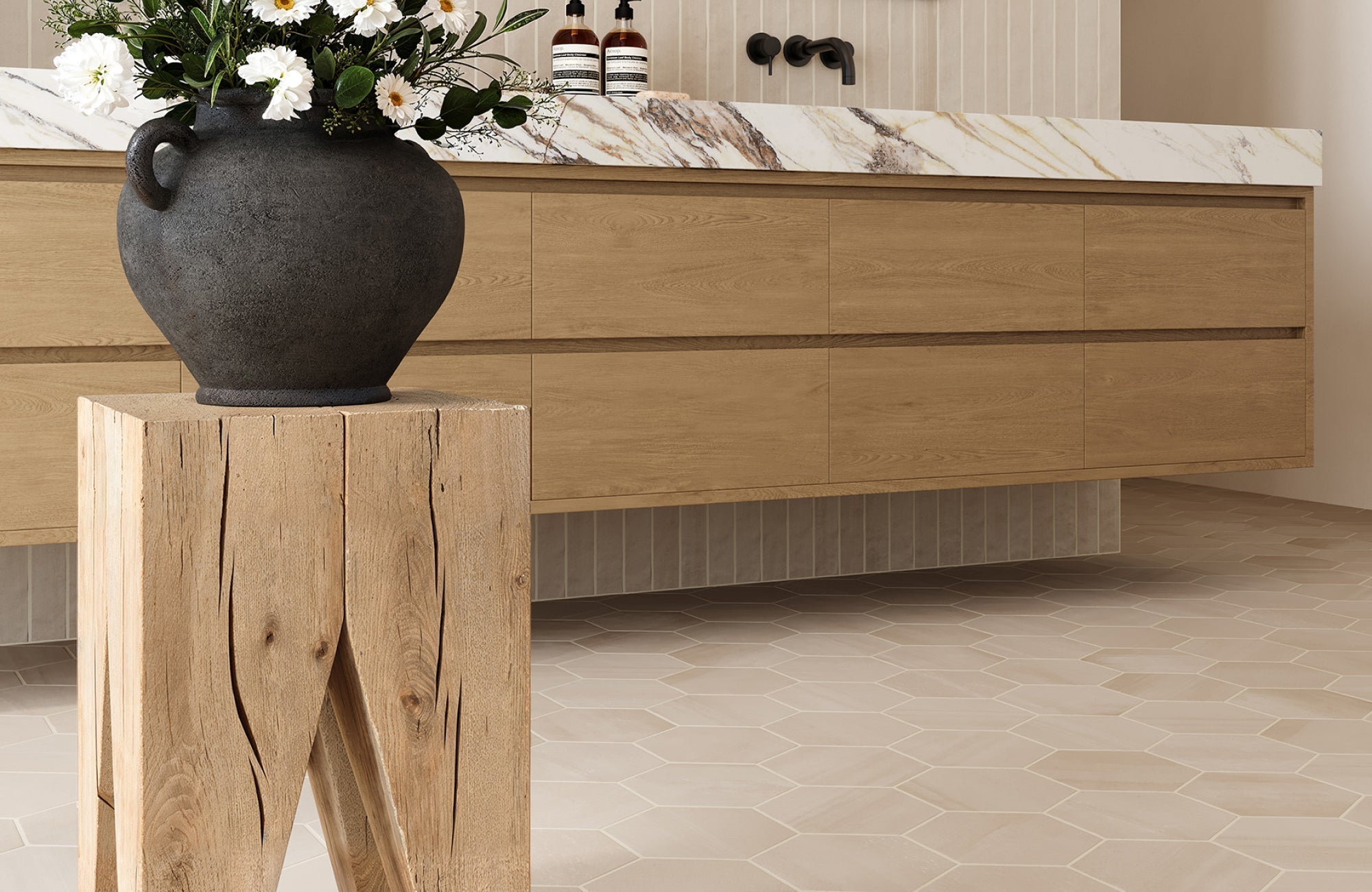
Aside from freestanding forms, one of the most iconic features of a mid century bathroom vanity is its floating design. By being mounted to the wall and lifted above the floor, the vanity creates a sense of openness that immediately transforms the room. This design choice makes the bathroom feel larger and lighter, which is especially beneficial if you are working with a compact space. Beyond appearances, the floating form also offers practical advantages, giving you easier access to cleaning the floor and managing plumbing without the bulk of a heavy base.
The suspended design further reflects the engineering spirit of the mid century era, when innovation and efficiency were at the forefront. Instead of overbuilding, designers used just the right amount of structure to achieve both stability and elegance. The result was a piece of furniture that felt modern, purposeful, and distinct from the grounded, often bulky bathroom cabinetry of earlier decades.
Natural Wood Tones and Veneers
If there is one detail that instantly signals mid century design, it is the use of natural wood. Vanities crafted from walnut, teak, or oak showcased the rich textures and grains of these materials, often finished with oils that deepened their warmth. When you see these tones in a bathroom, they introduce a welcoming, organic quality that balances the sharpness of clean lines. Instead of feeling sterile, the bathroom gains a sense of comfort and calm, rooted in the timeless appeal of wood.
A perfect example is our Sasha 72" Double Vanity in Mid Century Walnut with 3 cm White Zeus Quartz Top, shown in the image above. This mid-century-inspired design features a rich walnut finish, often recognized by its warm brown undertones, which highlights the natural beauty of the wood. The crisp white quartz top reinforces the balance between organic warmth and modern simplicity. Together, these elements capture exactly what makes mid century vanities so enduring: a harmony of materials that feels both timeless and current.
Veneers were also a defining characteristic, allowing designers to bring the beauty of expensive woods to a wider audience. By applying thin layers of high-quality wood over sturdy frames, they created vanities that looked luxurious yet remained affordable. This approach embodied the mid century philosophy of making design accessible while still celebrating the authenticity of natural materials. The pairing of warm wood with geometric silhouettes gave vanities an unmistakable modernity that continues to inspire today.
Hardware Simplicity and Geometry
Another hallmark of mid century vanities is the understated treatment of hardware. Instead of ornate knobs or decorative pulls, designers leaned toward subtle solutions such as integrated handles, grooved edges, or slim bar pulls. These details were often crafted from metals like brass or chrome, chosen not to dominate the design but to quietly complement it. By keeping hardware minimal, attention stayed on the vanity’s form and material rather than on embellishments.
This emphasis on simplicity also highlighted the movement’s devotion to geometry and proportion. Every detail was carefully considered so that the vanity remained visually balanced while serving its practical function. When you interact with a mid century bathroom vanity, the smoothness of the hardware and the clarity of its lines reinforce the overall sense of cohesion. The result is a design that feels intentional, precise, and timeless because it never relies on trends; it relies on the enduring beauty of restraint.

The Craftsmanship and Materials That Endure Over Time
Mid century bathroom vanities were not only thoughtfully designed but also built with a level of craftsmanship that ensured their longevity. Unlike many modern mass-produced pieces, they were created to endure daily use for decades. Traditional techniques such as dovetail joinery and solid wood framing gave these vanities a sturdiness that still holds up today. When you encounter a vintage piece, its stability is immediately apparent—it was never meant to be disposable but to be lived with, repaired if needed, and appreciated over time. This dedication to integrity has also helped mid century furniture maintain its value and relevance across generations.
The same emphasis on durability extended to the materials chosen for surfaces. Vanities were often topped with stone or ceramic finishes that combined elegance with performance in humid bathroom environments. Quartz, marble, and polished ceramics, for instance, offered water resistance and strength, while integrated ceramic sinks created smooth, seamless surfaces that were both easy to maintain and visually harmonious. These design choices also reflected the era’s devotion to clarity and functionality, where every material was selected not just for looks but for its ability to work beautifully in daily life.
Today, the legacy of mid century craftsmanship lives on in modern interpretations that embrace sustainability. Many contemporary vanities draw inspiration from the originals but incorporate eco-conscious practices, from FSC-certified woods to recycled materials and low-impact finishes. This evolution honors the movement’s core values of honest, purposeful design while also addressing the ecological concerns of the present. By choosing a mid-century-inspired vanity today, you are not only bringing timeless design into your space but also participating in a living tradition; one that balances durability, beauty, and responsibility.

The Timeless Appeal Across Different Design Eras
One reason for the continued popularity of mid century bathroom vanities is their remarkable versatility. They adapt effortlessly across various interior styles, from minimalist to eclectic and luxury spaces.
Modern Minimalist Bathrooms
Minimalism thrives on restraint, clarity, and the careful use of space, which makes mid century bathroom vanities a perfect companion for this design approach. Their floating or freestanding forms and pared-down silhouettes allow a bathroom to feel uncluttered, while their warm wood tones prevent the space from feeling cold or sterile. By blending organic texture with sleek geometry, these vanities strike the right balance between functionality and style.
In the bathroom photo seen above, our Demi 60" Single Vanity in Mid-Century Walnut with 3 cm White Zeus Quartz Top demonstrates how well this style translates to modern minimalism. The walnut finish, in a rich brown tone, anchors the space with warmth, while the bright quartz top keeps the look clean and contemporary. This pairing shows how a mid-century-inspired design can provide both simplicity and character, making a minimalist bathroom feel refined yet inviting.
If you appreciate the clean look of modern minimalism but worry about it feeling too stark, a mid century vanity can also bridge that gap. Its form is simple enough to complement the purity of the design, yet the natural grain and tactility of the wood introduce a human touch. This makes the bathroom feel not just orderly but inviting, a space where utility and comfort coexist seamlessly.
Eclectic and Transitional Spaces
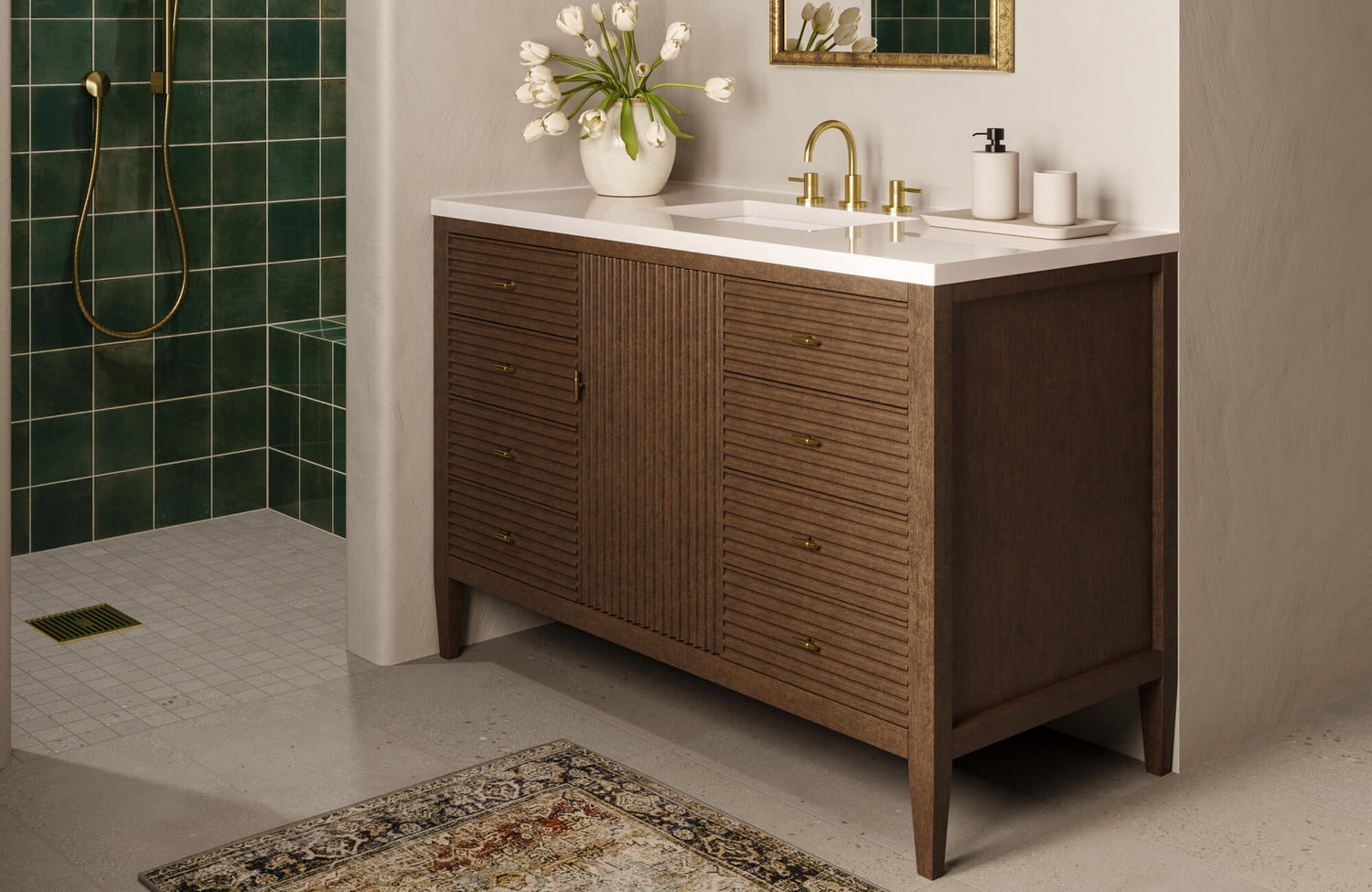
Although mid century bathroom vanities excel in minimalist rooms, they also thrive in more layered and expressive interiors. In eclectic or transitional bathrooms, where patterns, colors, and textures often collide, the understated profile of a mid century bathroom vanity provides stability. Its clean lines and balanced proportions also act as an anchor, helping to unify the space without competing with bolder features like patterned tiles, statement mirrors, or colorful accents.
Our Elodie 48" Single Vanity in Mid-Century Walnut with 3 cm White Zeus Quartz Top illustrates this versatility beautifully. The warm walnut finish, in a familiar deep brown shade, offers an inviting contrast to patterned floors or textured walls, while the sleek quartz top maintains a sense of refinement. By combining warmth with restraint, this mid-century-inspired design adapts easily to eclectic spaces, serving as a steady anchor that ties bold elements together.
You can also place a mid century bathroom vanity against a dramatic backdrop, such as a bold wallpaper or intricate flooring, and instead of clashing, it will quietly hold the room together. Its timeless design makes it adaptable, allowing you to experiment with other elements while knowing the vanity will always provide a grounding effect. This flexibility is one of the reasons it remains a favorite choice for those who like to mix eras and styles.
Contemporary Luxury Bathrooms
Mid century bathroom vanities have found a prominent place in the world of luxury design. As high-end bathrooms lean into sculptural tubs, floor-to-ceiling marble, and polished brass fixtures, the organic warmth of a mid century piece prevents the room from becoming overly rigid or ostentatious. The contrast between refined finishes and the natural wood tones also creates a layered, sophisticated look that feels curated rather than excessive.
In luxury interiors, designs like our Elodie 60" Double Vanity in Mid-Century Walnut with 3 cm White Zeus Quartz Top show how timeless style and elegance can coexist. The walnut base, with its rich brown hue, brings an organic warmth to the room, while the polished white quartz top elevates the vanity into a piece that feels perfectly at home among high-end finishes. It demonstrates how mid-century-inspired design can integrate seamlessly into a refined bathroom without losing its authenticity.
When you introduce a mid century bathroom vanity into a luxury setting, it enhances the space without overwhelming it. The seamless countertop integrations and refined silhouettes also elevate the sense of elegance, while the authenticity of the materials keeps the design grounded. This balance of glamour and restraint is what makes the mid century bathroom vanity so enduring in even the most opulent spaces. It never tries too hard, yet it always stands out.

Why Mid Century Bathroom Vanities Remain Timeless
The continued popularity of mid century vanities is rooted not just in their appearance, but in the principles that guide their design.
Balance of Form and Function
Mid century bathroom vanities embody the philosophy of form following function. Every detail is intentional, from the floating or freestanding silhouettes that create an airy sense of space to the built-in storage that keeps daily essentials neatly organized. Nothing feels ornamental for its own sake; instead, beauty is achieved through purpose. This practical elegance also ensures the vanities never fall out of step with shifting design trends.
As design landscapes evolve, many styles fade because they rely on novelty or ornamentation. Mid century bathroom vanities, however, remain relevant precisely because their foundation is rooted in utility. They solve real problems while offering clean, enduring aesthetics. This balance of usefulness and style gives them a timeless quality that continues to resonate no matter the era.
Emotional Connection to Authenticity
What sets mid century bathroom vanities apart is not only their practicality but also the emotional connection they create through authenticity. The warmth of natural wood grain, the weight of solid joinery, and the absence of unnecessary embellishment all convey a sense of honesty. You can also see and feel the craftsmanship in every detail, and that tactile quality makes the vanity more than just a functional piece; it becomes part of your daily ritual.
This idea is reflected in pieces like our Demi 30" Single Vanity in Mid-Century Walnut with 3 cm White Zeus Quartz Top, featured in the picture above. Its mid-century-inspired design uses a walnut finish in a familiar rich brown tone, which brings warmth and depth to the room. Paired with a smooth white quartz top, it shows how authenticity in material and form creates a piece that feels enduring, purposeful, and perfectly suited to daily living.
In today’s world of mass-produced, disposable furniture, this authenticity feels increasingly rare and valuable. A mid century bathroom vanity reassures you with its permanence, reminding you that design can be both beautiful and enduring. Living with such a piece offers a quiet satisfaction, a sense that your space is anchored by something real, intentional, and made to last.
Lasting Legacy in Modern Design
Mid century bathroom vanities endure because they embody values that never go out of style: authenticity, thoughtful craftsmanship, and the seamless union of form and function. Their clean lines, honest materials, and adaptable elegance continue to enrich modern interiors while offering a sense of permanence in an ever-changing world. By carrying forward these principles, mid century vanities prove that design rooted in purpose and integrity will always remain timeless.
If you are considering how to bring this aesthetic into your own bathroom, the next step is exploring design resources and reaching out for guidance tailored to your project. Speaking with professionals ensures you can match the right vanity style to your bathroom, while also receiving advice on finishes, materials, and installation. To begin that process, you can head to our Contact Us page and take the first step toward making timeless mid century design part of your space.