

)
)
)
)
)
)
)
)
What Bathroom Lighting Size Do I Need?
Choosing the right size for your bathroom lighting isn’t just about appearance; it’s also about how the space functions and feels each day. Whether you’re getting ready in the morning or winding down in the evening, the right lighting supports both clarity and comfort. This article will help you choose the right fixture sizes by considering your bathroom’s layout, lighting needs, and overall design aesthetic.
Getting the Lighting Scale Right in Bathroom Design
Before diving into specific fixtures, it’s important to consider proportion. The way lighting fits into your bathroom impacts more than just appearance; it directly influences how well the space is lit. Choosing the right size helps prevent the room from feeling either cramped or inadequately illuminated.
Balance vs Overpowering
In a smaller bathroom, an oversized fixture can easily overwhelm the space, making it feel tight or visually heavy. On the other hand, a fixture that’s too small may not provide enough light or might look out of place next to mirrors or vanities. It helps to consider scale; how the fixture relates to the room’s dimensions and the elements around it. The goal is proportional lighting that supports the space without dominating it.
Room-to-Fixture Ratio
A helpful starting point is using simple size guides. For instance, in a compact 5-by-8-foot bathroom, a ceiling fixture with a diameter between 12 and 16 inches typically provides effective coverage. Vanity lighting should span about 75 to 80 percent of the vanity’s width. For sconces, smaller rooms call for narrower styles, while larger bathrooms benefit from broader fixtures that cast wider light.
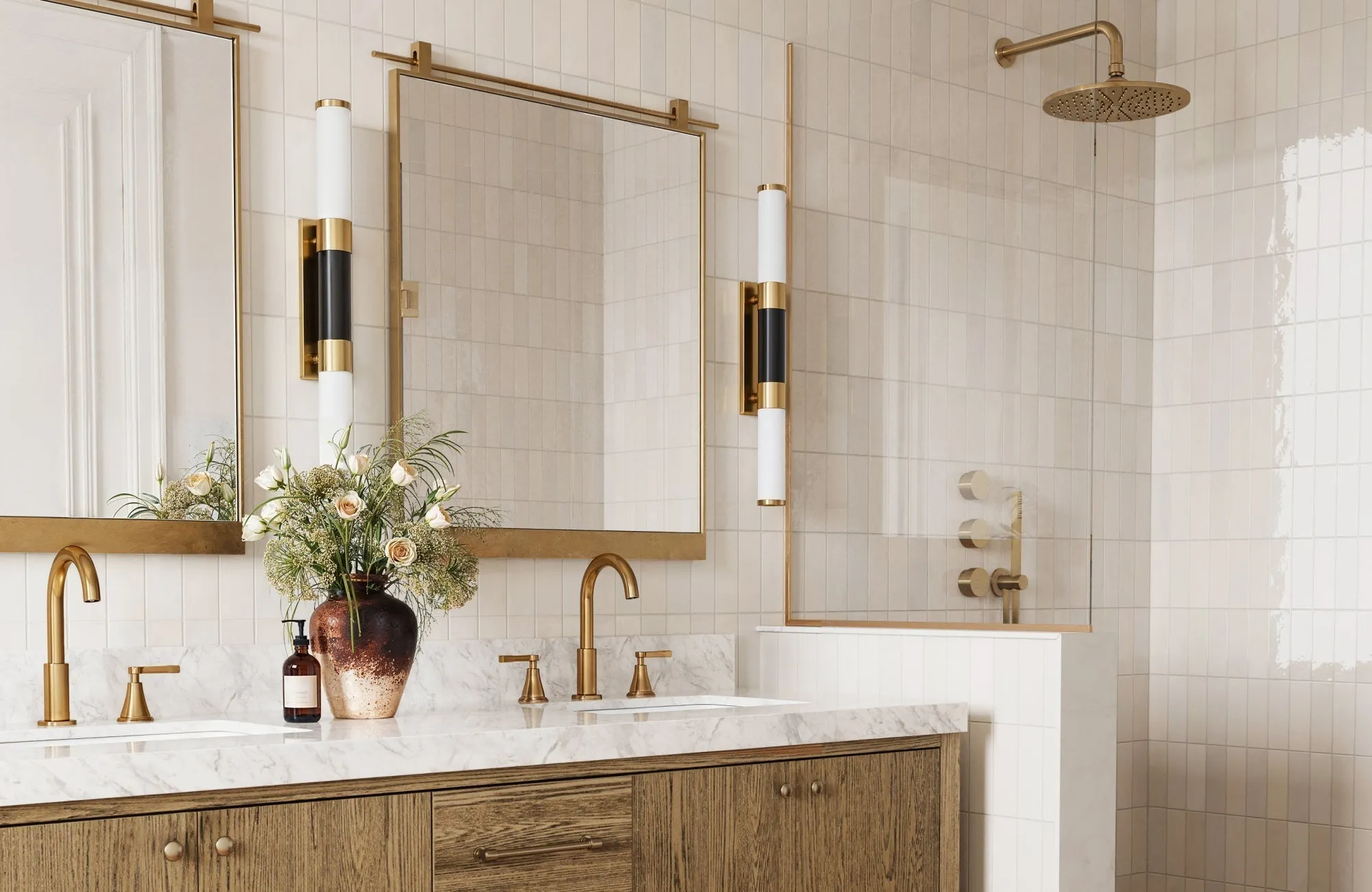
In the bathroom pictured above, this principle is put into practice with Edward Martin’s Nicholson Wall Sconce in Aged Brass. Measuring 13.5 inches high and 4.75 inches wide, its compact yet balanced profile fits neatly beside each mirror, providing ample light without overpowering the wall space. The fixture’s double-globe design and warm brass finish add visual interest, while staying within a size range that feels just right for the scale of the vanity and mirrors. This kind of proportional placement helps maintain a cohesive and inviting look, especially in bathrooms where clean lines and functional lighting are essential.
Visual Weight Considerations
Size isn’t just about physical measurements. Some fixtures appear larger because of their shape, color, or material. A dark metal pendant or a chunky glass sconce might feel heavier visually than a slim, light-toned design, even if they measure the same. In compact bathrooms, these subtle shifts in perception can also make a big difference. Select materials and shapes that complement the room’s scale without drawing unnecessary attention.
Matching Fixture Size to Bathroom Layout
The overall layout of your bathroom plays a direct role in how you should approach lighting size. It’s not just the floor dimensions; it’s also about ceiling height, wall space, and how the different zones in the room are used.
Powder Rooms
Powder rooms are often compact, so lighting here needs to be efficient and minimal. A single fixture above the mirror or two small sconces on either side usually provide enough illumination. Slim profiles work best, as they offer clarity without visually cluttering the space. Because there’s less room to work with, every element, including lighting, should feel intentional and proportionate.
Master Bathrooms
Master bathrooms tend to have more square footage and more defined areas, like dual sinks or separate vanity spaces. This means larger or multiple fixtures are often required. A wide vanity bar can help brighten both sinks, while overhead lighting fills in the rest of the room. For symmetry and practicality, it’s often helpful to assign one fixture per mirror or sink when dealing with double vanities. The lighting should support how you move through the room, not just look good on the wall.
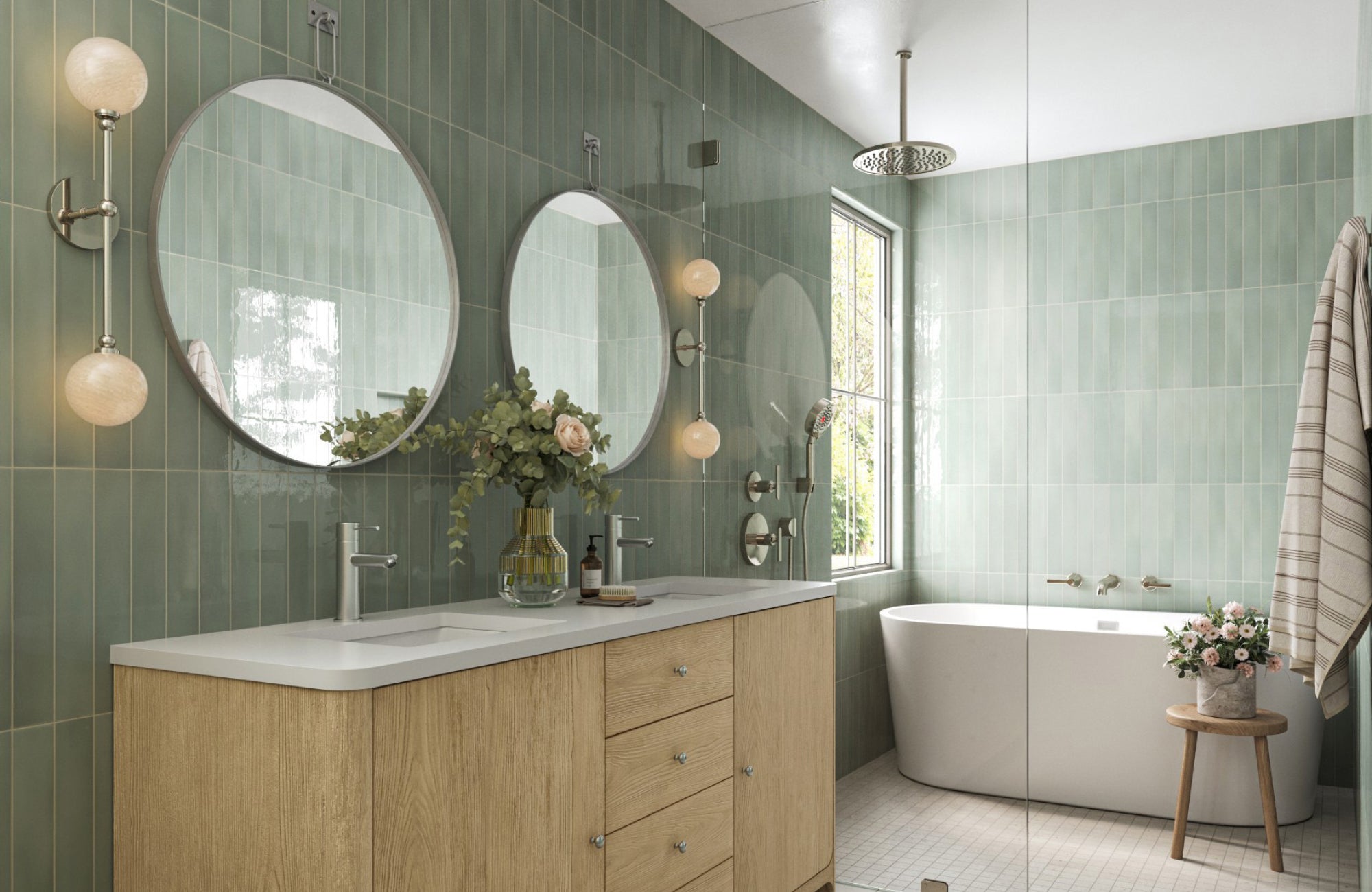
That idea comes to life in the bathroom shown above, where Edward Martin’s Isadora Wall Sconce in Polished Nickel brings both scale and elegance to the design. Measuring 24 inches high and 4.75 inches wide, this vertically stacked sconce fills the wall space with a strong, balanced presence; perfectly flanking each round mirror. Its elongated form and double-globe silhouette align effortlessly with the clean lines of the vanity while offering generous illumination for both sinks. In larger bathrooms like this, oversized sconces serve not just as light sources but as anchoring elements that enhance symmetry and elevate the room’s overall style.
Ceiling Height and Wall Space
When sizing lighting, don’t overlook vertical dimensions. High ceilings open the door to taller fixtures or even hanging pendants. In rooms with low ceilings, flush mounts are more appropriate since they don’t intrude into headspace. Wall lighting should also account for cabinetry, mirrors, and shelves. For instance, if you’ve got a tall medicine cabinet, choose sconces that allow space around it. Good lighting placement is just as much about where the fixture fits as how big it is.
Choosing the Right Size for Vanity Lighting
Vanity lighting does more than brighten your reflection; it further helps you get ready comfortably and accurately. Getting the size right ensures that the light is functional, flattering, and visually aligned with the rest of the room.
Fixture Width and Mirror Proportions
Start by considering the width of your mirror. A typical guideline is to choose a fixture that’s about 75 to 80 percent of the width of the mirror itself. For a 30-inch mirror, that translates to a light around 24 inches wide. This helps provide even illumination across the face and avoids awkward overhang or imbalance. If your mirror extends across the entire wall, choose a fixture that effectively lights the functional area rather than trying to match the full width of the mirror.
Sconce vs Bar Sizing
Sconces and bars have different requirements when it comes to sizing. Sconces work well when they’re one-third the height of the mirror and installed at eye level, usually around 60 to 65 inches from the floor. This setup minimizes harsh shadows and lights the face from the sides. Overhead bars should be wide enough to distribute light evenly without spilling too far out. In larger spaces, multi-light bars can also maintain coverage while staying proportionate to the vanity’s scale.
Multi-Sink Setups
If you have a double vanity, lighting needs to serve each station individually. Two separate mirrors generally call for two fixtures; each centered above or beside its sink. This ensures both users get equal light, rather than relying on a single large fixture. If your vanity has one continuous mirror, a longer horizontal fixture can also work, but it must be wide enough to cover both sides evenly. The key is to maintain balanced lighting across both sinks, ensuring neither side feels dim or overlooked.
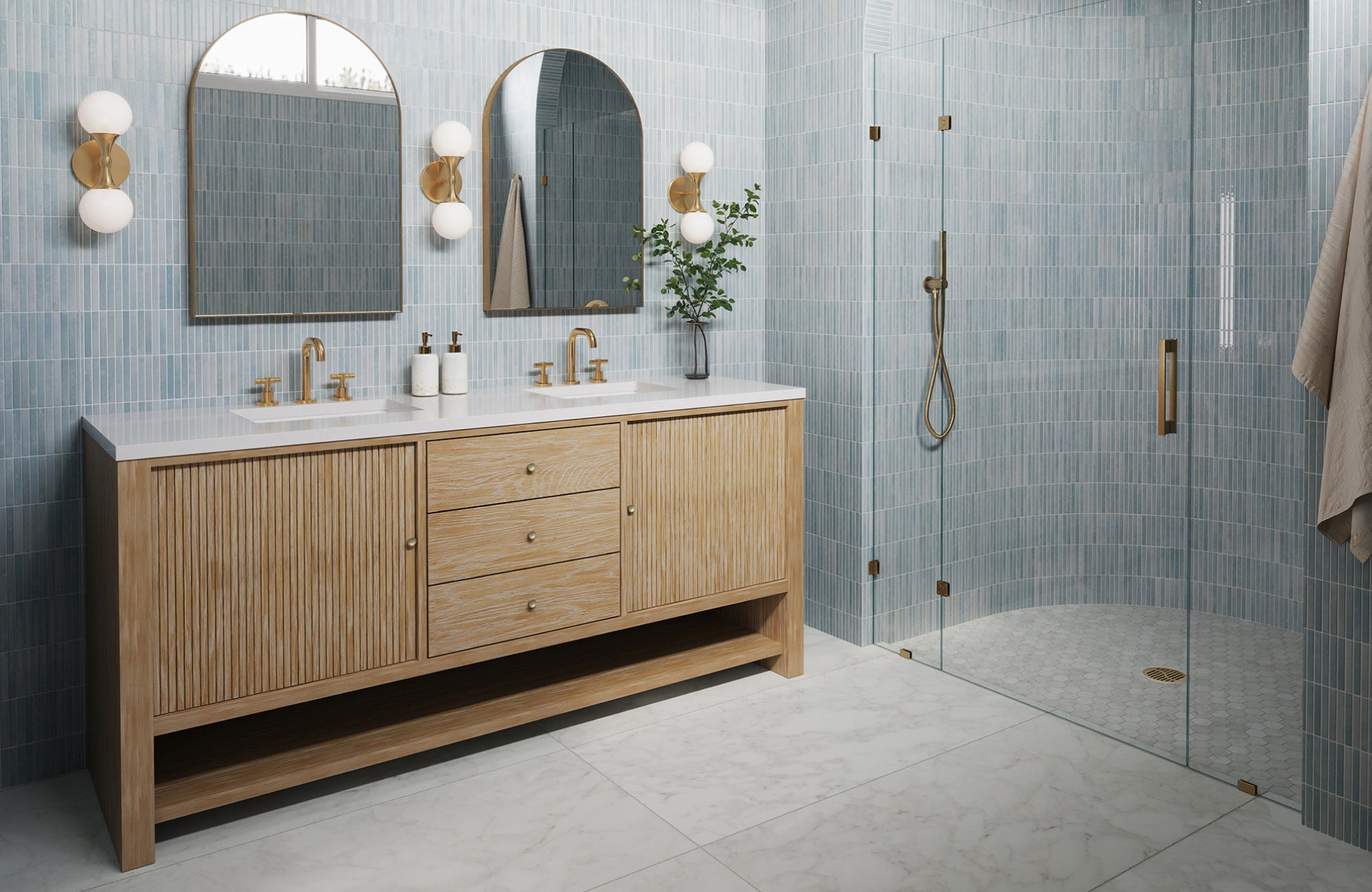
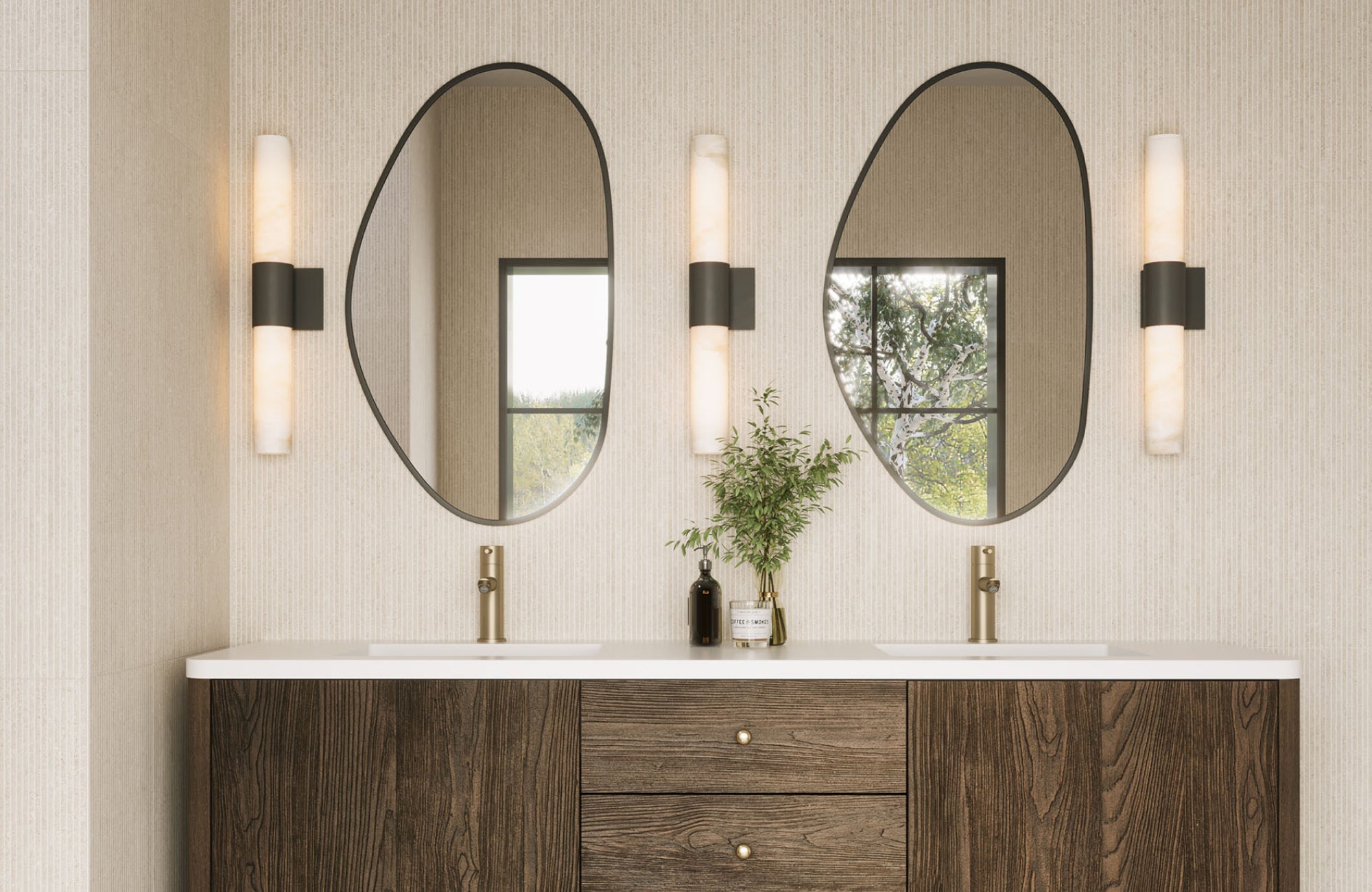
This principle is well-executed with Edward Martin’s Ryder Wall Sconce in Old Bronze, as featured in the bathroom above. Measuring 23.75 inches high and 4.75 inches wide, these vertical sconces are positioned on either side of the mirrors, evenly framing each sink area. Their sleek, elongated silhouette offers ample brightness across both stations without overwhelming the wall space. The dark bronze backplate adds contrast against the neutral wall, anchoring the design while keeping the focus on symmetry and clarity. In setups like this, tall sconces not only enhance task lighting but also contribute to a clean, balanced aesthetic.
Ceiling and Overhead Fixture Guidelines
Ceiling fixtures provide general lighting, which helps fill in where task lights can’t reach. Their size determines how much of the room gets evenly lit, and whether they stand out or blend in.
Flush Mounts and Semi-Flush Lights
Flush mounts sit directly against the ceiling and are ideal for bathrooms with ceilings under 8 feet. For most small to mid-sized bathrooms, a flush mount between 12 and 16 inches in diameter usually works well. Semi-flush lights hang slightly lower and offer more style flexibility. These are well-suited for ceilings between 8 and 10 feet, adding a touch of design character while still providing dependable illumination.
Chandeliers and Pendants
In bathrooms with high ceilings or focal features such as freestanding tubs, a chandelier or pendant can be both decorative and functional. These need to be carefully sized, not more than one-third the width of the space they serve. Mount them at least 7 feet above the finished floor to avoid crowding. The right size and height allow the fixture to shine without becoming a hazard or dominating the room visually.
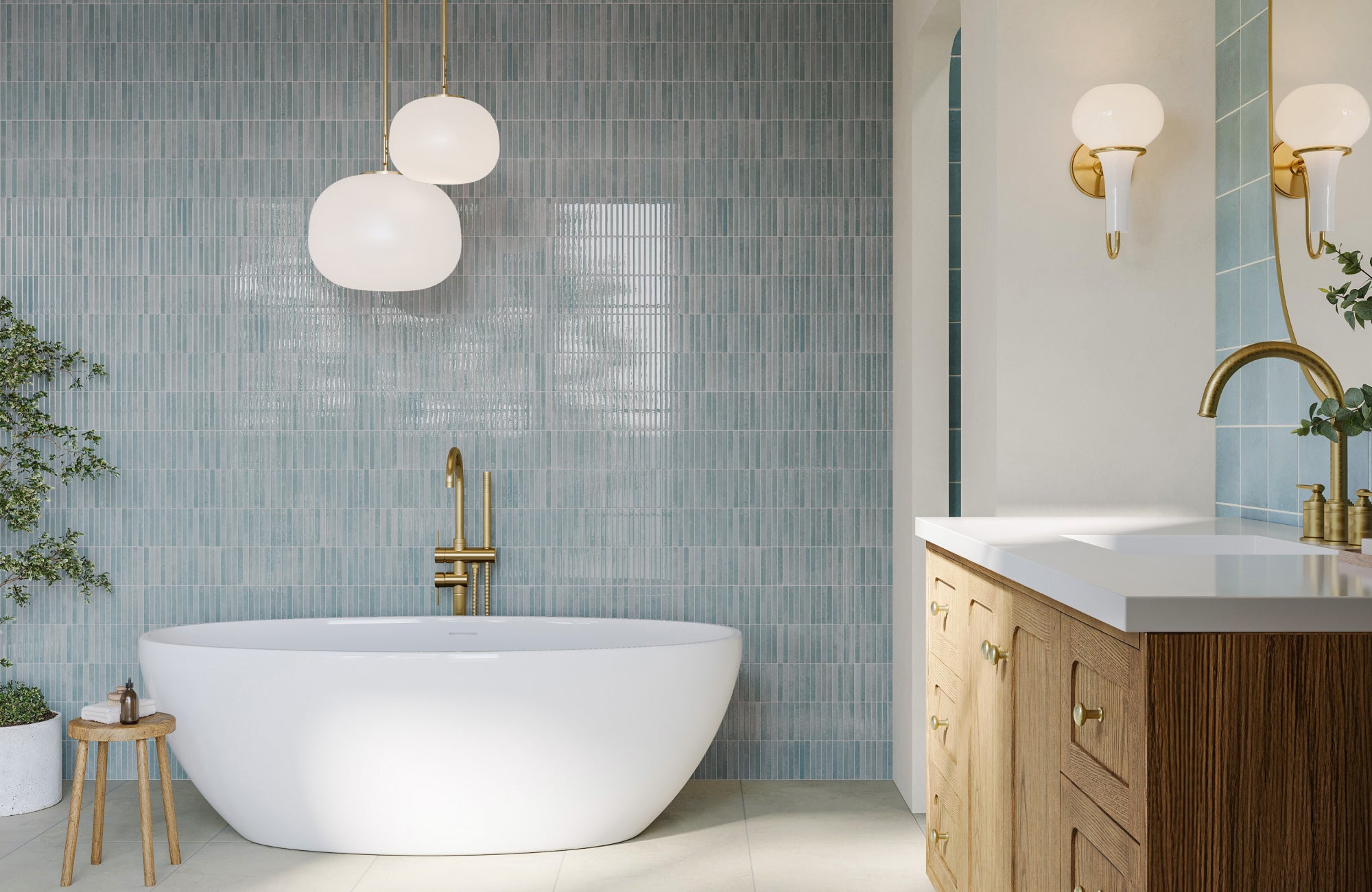
This concept is elegantly demonstrated with Edward Martin’s Kaley 11" Pendant in Aged Brass, as featured in the photo above. Positioned over the freestanding tub, the pendants bring height and softness to the space without overwhelming it. Their compact, rounded form and warm brass finish complement the vertical tile and exposed wood beams, adding warmth and dimension. With their modest 11-inch width, the pendants strike just the right balance, providing visual interest while preserving open sightlines and an airy atmosphere. In larger bathrooms like this, carefully scaled pendants can enhance a focal area while still feeling light and intentional.
Recessed Lighting Spacing
Recessed lights require thoughtful placement rather than traditional sizing. Standard 4- to 6-inch cans should be spaced about 4 to 6 feet apart, depending on ceiling height and brightness. In compact rooms, fewer lights may be needed, while larger spaces can use more; just make sure the spacing keeps light even across the entire ceiling. The idea is to eliminate shadows and dark corners without creating hotspots.
Lighting Size and Function
Beyond appearance, size determines how well a fixture performs. Depending on what you’re doing, different lighting roles need different scales.
Task Lighting Scale
Task lighting needs to be focused and clear. Small fixtures might leave dim spots, while oversized ones can throw light too broadly. For grooming and makeup, larger sconces or wider bars further help position bulbs at the right angle for face-level clarity. The added width also spreads light more evenly, reducing contrast and shadows.
Ambient Lighting Coverage
Ambient lighting supports overall visibility and softens shadows. Large ceiling lights or a thoughtful arrangement of recessed fixtures can help achieve full-room coverage. Instead of relying on higher wattage, focus on scaling the fixture size to match the room’s dimensions. This allows for balanced, comfortable light without straining your eyes or washing out the space.
Accent Lighting Proportion
Accent lights are meant to enhance, not overwhelm. Whether you're illuminating a piece of art or highlighting tilework, keep fixtures scaled to the object they frame. A compact LED strip or a slim spotlight often does the trick. Choosing the right size here means adding visual depth without creating distractions or throwing off the room’s balance.
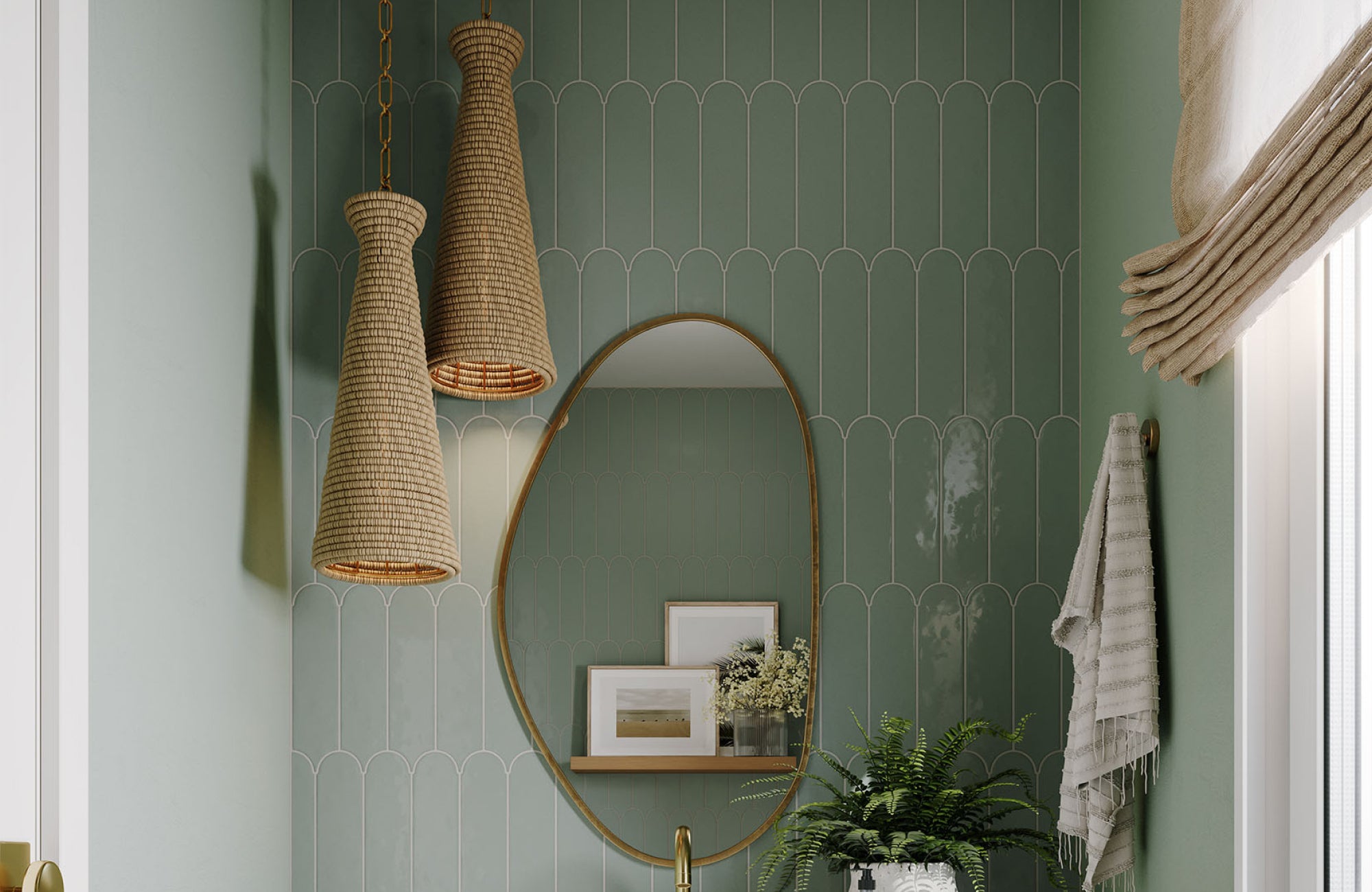
This idea is skillfully demonstrated with Edward Martin’s Santos Pendant in Vintage Gold Leaf, seen in the image above. Measuring 20.25 inches high and 8 inches wide, these pendants bring warmth and texture to the space without overpowering it. Their woven form draws attention to the vanity area, framing the mirror and faucet with a soft glow that enhances the tilework and natural tones. In small spaces like this, carefully chosen accent fixtures add visual richness and layered lighting without competing with the room’s main features.
Design and Fixture Size Harmony
A well-designed bathroom isn’t just about matching colors or finishes; it’s also about visual flow. The size of your fixtures plays a major role in how cohesive the space feels.
Coordinating with Fixture Style
Different design styles often come with their own sense of scale. Minimalist spaces typically favor slim, understated fixtures, while vintage or industrial designs can support larger, more detailed pieces. Instead of choosing a fixture based on size alone, think about how it fits within the overall aesthetic of the room. When lighting aligns with the design as a whole, it also creates a more cohesive and polished result.
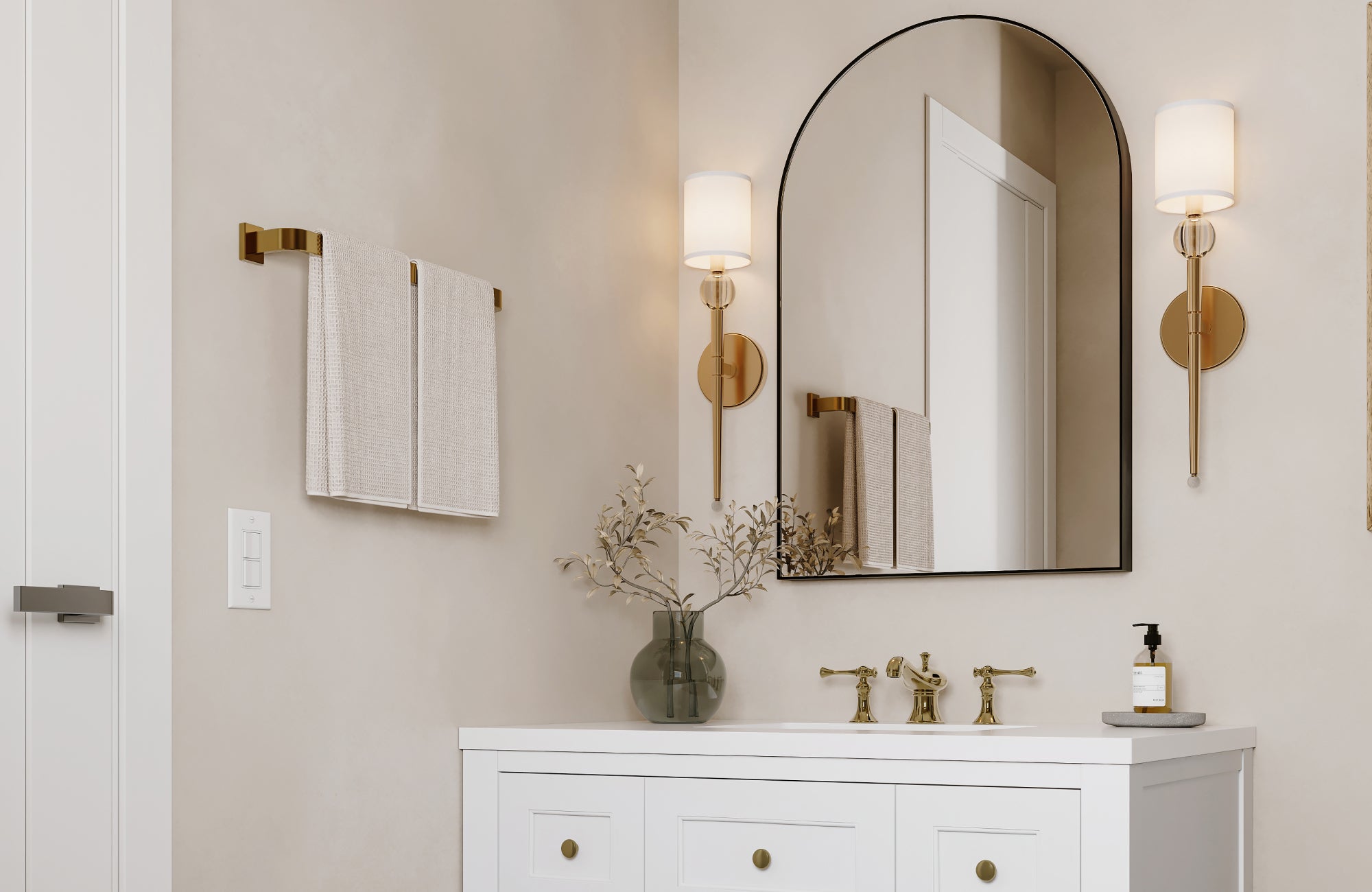
This concept is clearly illustrated with Edward Martin’s Mickelson 1-Light Wall Sconce in Aged Brass, as featured in the image above. Its slender profile and refined brass finish echo the room’s elegant, transitional style without overpowering the space. Its tall stem and soft white shade offer just the right amount of presence, striking a balance between modern simplicity and classic charm. The fixture works in harmony with the curved mirror and clean-lined vanity, proving how scale and style can complement one another when thoughtfully chosen.
Matching Fixture Size Across Zones
Lighting fixtures don’t all need to be the same size throughout your bathroom. In many cases, mixing sizes creates a more balanced and visually engaging design. A larger central fixture can be paired with slimmer sconces or more compact accents to establish contrast and depth. This variation feels intentional and adds character, whereas using identical fixture sizes everywhere can make the space feel monotonous and overly uniform.
Avoiding Overcrowding
Too many large fixtures in one bathroom can quickly feel overwhelming. If you’re using a chandelier or a wide vanity bar, pair it with smaller, less intrusive lights elsewhere. Leave enough breathing room between elements so the space feels open and functional. The idea is to let each fixture play its role without overcrowding the visual field.
Choosing the Right Lighting Size for Your Bathroom
Finding the ideal bathroom lighting size goes beyond measurements; it’s also about achieving the right blend of function, proportion, and style to create a space that feels natural and works effortlessly. By factoring in layout, ceiling height, fixture purpose, and overall aesthetic, you can choose lighting that elevates both utility and design. The result is a bathroom that feels cohesive, well-lit, and thoughtfully finished.
Need help choosing the right lighting for your space? Contact us or explore our complimentary design services to get personalized guidance from our team. We’re here to help you bring your bathroom lighting vision to life with confidence!
Follow us on Instagram
@EDWARD.MARTIN
)
)
)
)
)
)
)
)
)
)
)
)
)
)
)
)