
)
)
)
)
)
)
)
)
Are 72 Inch Vanities Worth The Investment?
In bathroom design, few elements make a stronger impression, or carry more practical weight, than the vanity. A 72 inch model, typically outfitted with dual sinks and expansive storage, sits at the top tier of standard vanity sizes. More than just a visual anchor, it offers generous countertop real estate, high-function cabinetry, and layout flexibility that suits both luxury renovations and active primary baths.
Still, scale alone doesn’t guarantee value. Factors like room dimensions, plumbing logistics, and overall resale appeal are key to determining whether a vanity of this size is a smart long-term investment. In this article, we’ll break down the benefits, design considerations, and ROI potential of 72 inch vanities to help you decide if it’s the right fit for your space and lifestyle.
Understanding the Space Requirements for a 72 inch Vanity
Before committing to a 72 inch vanity, it’s important to understand how much space it truly requires and how it will shape the room around it. From overall bathroom dimensions to layout flow and creative solutions for tighter quarters, several spatial factors can make or break the success of this substantial upgrade.
Ideal Bathroom Dimensions for Large Vanities
To start, a 72 inch vanity, measuring six feet wide, requires generous square footage to avoid crowding. The National Kitchen & Bath Association (NKBA) recommends at least 36 inches of clearance in front of the vanity for comfortable movement and access to drawers or cabinet doors. Ideally, the room should be at least 8 feet wide, allowing for balanced spacing around the unit and a harmonious layout.
Additionally, vanity depth typically ranges from 21 to 24 inches but may extend with countertop overhangs or integrated sink designs such as vessel or undermount basins. Beyond floor space, sufficient wall area is crucial to accommodate plumbing, mirrors, and lighting fixtures. In double-sink configurations, a 36-inch center-to-center distance between sinks ensures comfortable, simultaneous use for two people.
Impact on Bathroom Layout and Flow
A 72 inch vanity significantly influences the room’s flow. Due to its substantial footprint, it becomes a dominant architectural feature that shapes movement patterns and functional zones. Designers also often anchor it along the longest uninterrupted wall to promote linear movement and minimize congestion near adjacent fixtures like toilets and showers.
Furthermore, elements such as cabinet style, freestanding versus wall-mounted, and door swing direction influence overall circulation. In a master bath, this vanity size readily supports dual workstation setups, giving each user sufficient space. Just as important, lighting should be scaled appropriately, with mirrors and fixtures spanning the vanity’s width to provide even, task-ready illumination.
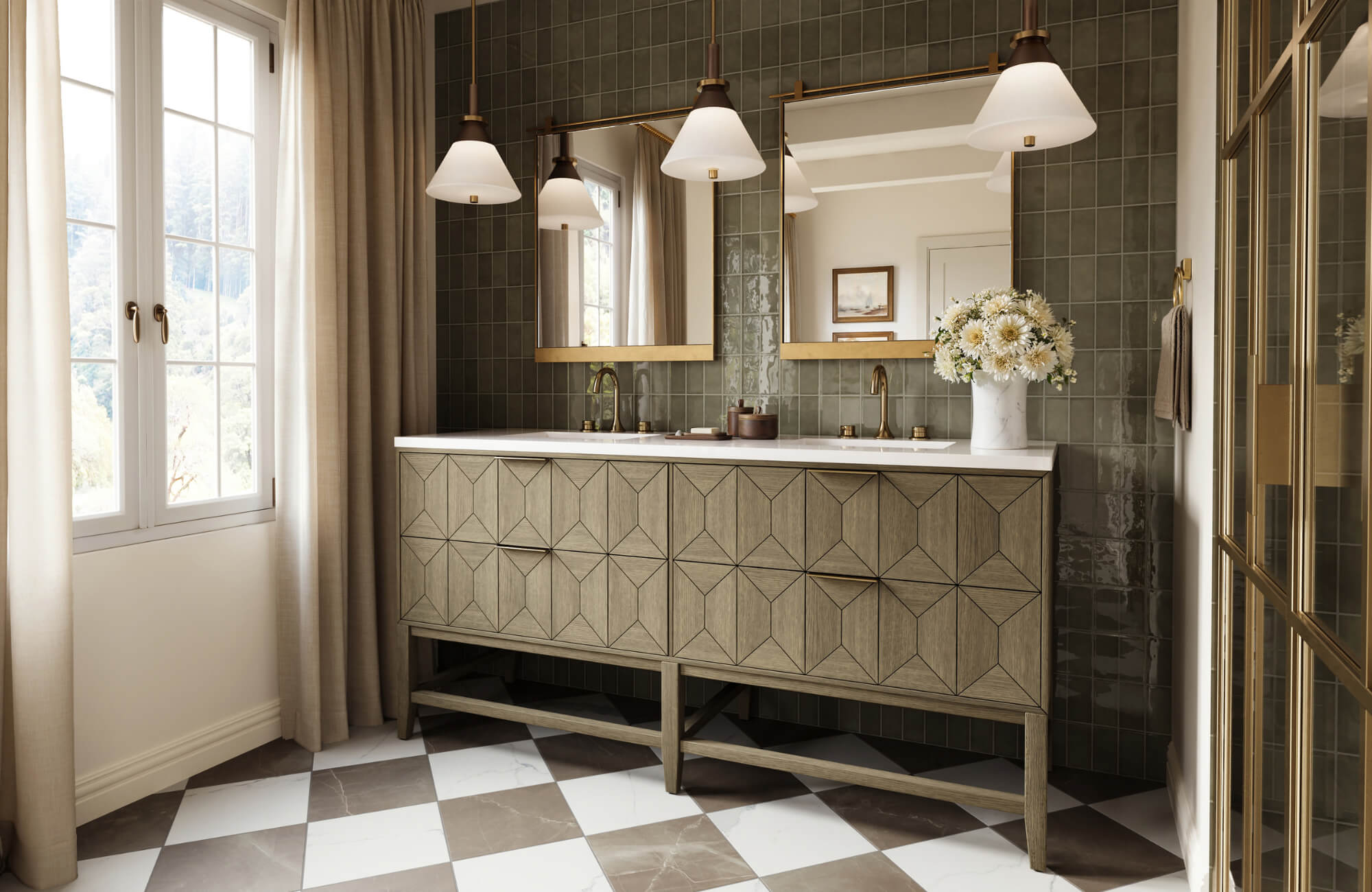
For instance, the Edward Martin Gwen 72" Double Vanity in Pebble Oak with a 3 cm White Zeus Quartz Top exemplifies this balance of form and function. As shown in the photo above, with geometric detailing and symmetrical drawer design, it enhances both layout efficiency and visual cohesion, serving as a practical yet stylish centerpiece.
Maximizing Space in Smaller Bathrooms with Large Vanities
Not every bathroom offers expansive dimensions, but a 72 inch vanity can still work in modest spaces with the right design approach. Wall-mounted options help open up floor area and create a sense of lightness, while open shelving reduces visual weight without sacrificing accessibility.
Moreover, smart storage features, like pull-out organizers, tiered drawers, and toe-kick compartments, maximize efficiency within the same footprint. To further enhance the sense of openness, slim-profile countertops paired with frameless mirrors or recessed cabinets can elongate sightlines and reduce visual clutter.
Enhanced Functionality and Storage Benefits
While a 72 inch vanity certainly makes a visual statement, its real value lies in how it transforms everyday functionality. From simplifying busy morning routines to keeping clutter at bay, this larger footprint brings thoughtful design and practical benefits into perfect balance.
Ample Countertop Real Estate
A major advantage of a 72 inch vanity is the expansive countertop, which easily accommodates dual sinks while leaving room for grooming tools, toiletries, and décor. Popular surface materials like quartz, granite, and cultured marble offer both durability and easy maintenance, while supporting seamless integration with undermount or drop-in sink configurations.
Moreover, this extended surface helps reduce clutter in busy settings, such as shared master or family bathrooms, by creating distinct personal zones. The added width also enhances functionality without compromising visual clarity, supporting both style and everyday use.
Optimized Storage Solutions
In addition to surface space, 72 inch vanities offer generous, well-organized internal storage. Most models include full-extension drawers, deep compartments, and soft-close hardware that prevents wear over time. Many designs also incorporate vertical dividers, pull-out shelves, and integrated electrical outlets for hairdryers or electric toothbrushes, features that elevate performance without sacrificing aesthetics.
Furthermore, space-saving additions like toe-kick drawers and hidden compartments help maximize every inch. In dual-sink layouts, symmetrical storage ensures each user has dedicated space, reinforcing comfort and convenience.
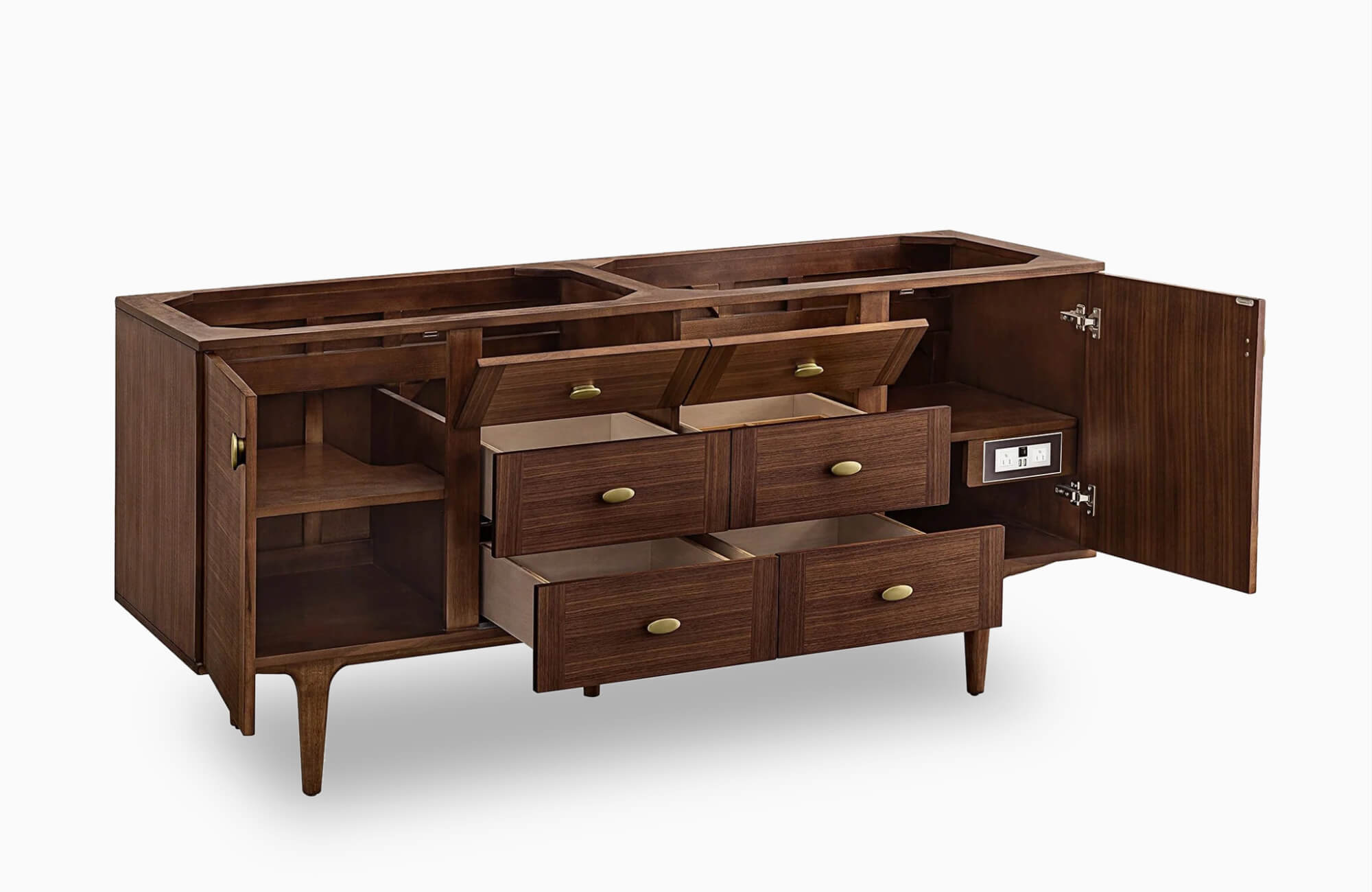
A standout example of this functionality is Edward Martin’s Demi 72" Double Vanity in Mid-Century Walnut with a 3 cm White Zeus Quartz Top. Featured in the picture above with tilt-out trays, generous drawer capacity, and a built-in power outlet, it exemplifies the seamless blend of thoughtful storage and high-end craftsmanship.
Accommodating Multiple Users
A key advantage of a 72 inch vanity is its ability to comfortably serve multiple users at once. With ample width and thoughtful spacing, typically 36 inches between sinks, it’s especially effective in shared spaces like master en-suites or Jack-and-Jill layouts, helping reduce congestion during peak routines.
Additionally, these vanities can be adapted with ADA-compliant features such as lower countertop heights or open knee spaces, enhancing accessibility for users with mobility needs. By offering personal zones, efficient workflow, and balanced lighting, a well-designed 72 inch vanity supports both daily ease and long-term comfort for households of all kinds.
Aesthetic Impact and Design Versatility
Beyond functionality, a 72 inch vanity has the power to elevate a bathroom’s entire design narrative. With the right styling, materials, and placement, it becomes more than a fixture; it becomes a statement piece that anchors the room with sophistication and intention.
Creating a Luxurious Focal Point
Because of its scale and visual weight, a 72 inch vanity serves as a natural anchor in master bathrooms or upscale renovations. Its expansive footprint accommodates design elements like double vessel sinks, integrated lighting, and continuous stone countertops, features often found in spa-inspired or boutique hotel spaces.
Moreover, in larger bathrooms, the proportional presence of a wide vanity enhances visual balance. Custom details such as fluted drawer fronts, premium hardware finishes like matte black or brushed brass, and under-cabinet lighting add design polish while also supporting practical needs such as nighttime visibility or task illumination.
Complementing Various Interior Styles
Beyond creating a focal point, this vanity format adapts well to a broad range of interior aesthetics. For example, a natural wood shaker-style complements rustic or coastal environments, while glossy, handle-free silhouettes suit modern and Scandinavian spaces. Meanwhile, traditional molding and inset doors are ideal for more classic, heritage-inspired designs.
In addition, color and material coordination are essential for seamlessly integrating the vanity into the surrounding design. Neutrals like white, gray, and navy offer timeless versatility, while bolder hues such as forest green or matte black introduce high-impact contrast. Pairing the vanity with coordinating finishes, like porcelain tile, marble surfaces, or brushed metal accents, ensures cohesion and visual harmony.
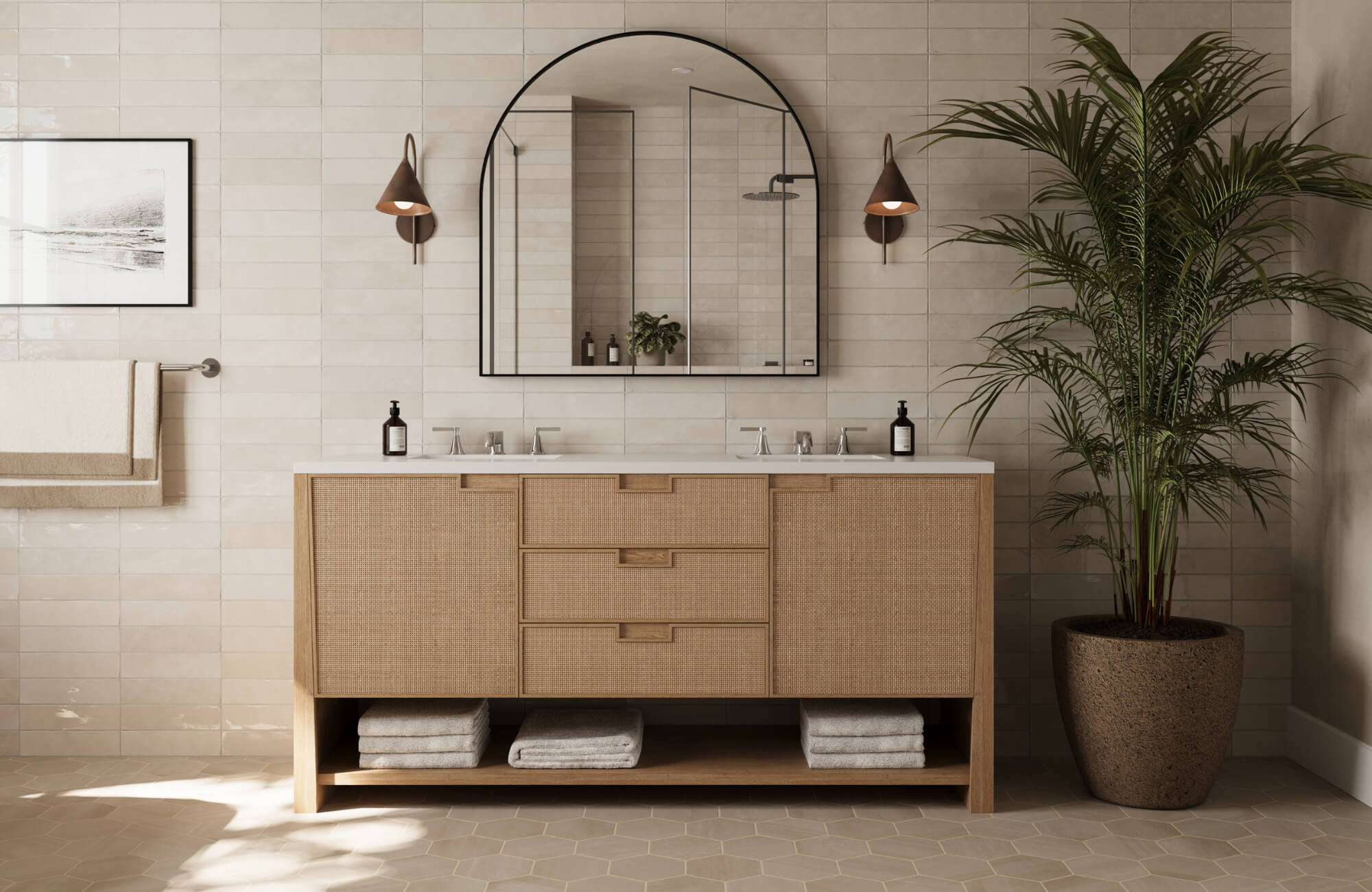
A strong example of this adaptability is Edward Martin’s Delilah 72" Double Vanity in Seaside Oak with a 3 cm White Zeus Quartz Top. As displayed in the photo above, its rattan-textured fronts, clean silhouette, and warm oak finish seamlessly bridge coastal, bohemian, and organic modern aesthetics. The open lower shelf also contributes both storage and visual lightness, preserving a breezy, open feel.
Material and Finish Options for Enduring Style
Visual appeal alone isn’t enough; long-term style depends on quality materials and finishes. High-end vanities often use solid wood or plywood construction with dovetail joinery, sealed to resist humidity and warping. Whether stained hardwoods or painted enamel, these finishes are typically protected with topcoats to guard against wear and fading over time.
Equally important are countertop materials, which contribute both durability and design character. Quartz is favored for its stain resistance and non-porous surface, while granite offers natural veining and heat resistance. These surfaces also pair well with complementary sink materials such as ceramic, vitreous china, or stone resin, creating a cohesive and elevated finish.
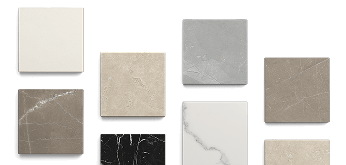
To simplify the design process, Edward Martin offers personalized design consultation, including curated samples, one-on-one designer support, and dedicated follow-ups, to ensure every selection aligns with your overall vision. Whether you're coordinating vanities, tile, rugs, or furnishings, our expert team can help bring everything together with confidence and clarity.
For tailored recommendations or design support, don’t hesitate to contact Edward Martin. Our specialists are ready to guide your selections and help turn your bathroom concept into a cohesive, lasting design.
Long-Term Value and Resale Potential
While design and convenience matter today, it’s the long-term payoff that truly defines the value of a 72 inch vanity. From how it resonates with future buyers to how well it holds up over time, this investment has a greater impact on your home’s equity than you might expect.
Appealing to Potential Homebuyers
In a competitive housing market, a well-appointed primary bathroom can significantly influence buyer perception, and a 72 inch double-sink vanity is often a standout feature. It conveys a sense of spaciousness and convenience that appeals to modern homebuyers, particularly families and dual-income households. According to the National Association of Home Builders (NAHB), double vanities remain among the most desirable bathroom features across a wide range of demographics.
Furthermore, large vanities often signal thoughtful space planning and quality renovation. Premium materials, soft-close hardware, and integrated lighting reflect a level of craftsmanship that real estate professionals frequently highlight in listings. This attention to detail can elevate a home’s perceived value, often leading to faster sales and more competitive offers.
Durability and Longevity as an Investment
Beyond buyer appeal, durability is another major factor in long-term value. A high-quality 72 inch vanity delivers lasting performance, especially when constructed from solid hardwood, reinforced with dovetail joinery, and finished with moisture-resistant coatings. These structural choices help the vanity withstand the daily demands of high-humidity environments like bathrooms.
In addition, durable countertops made from quartz or natural stone extend the unit’s lifespan with excellent resistance to staining, scratching, and thermal stress. Fixtures such as ceramic undermount sinks, brushed metal faucets, and sealed finishes reduce maintenance demands and lower the total cost of ownership (TCO) over time.
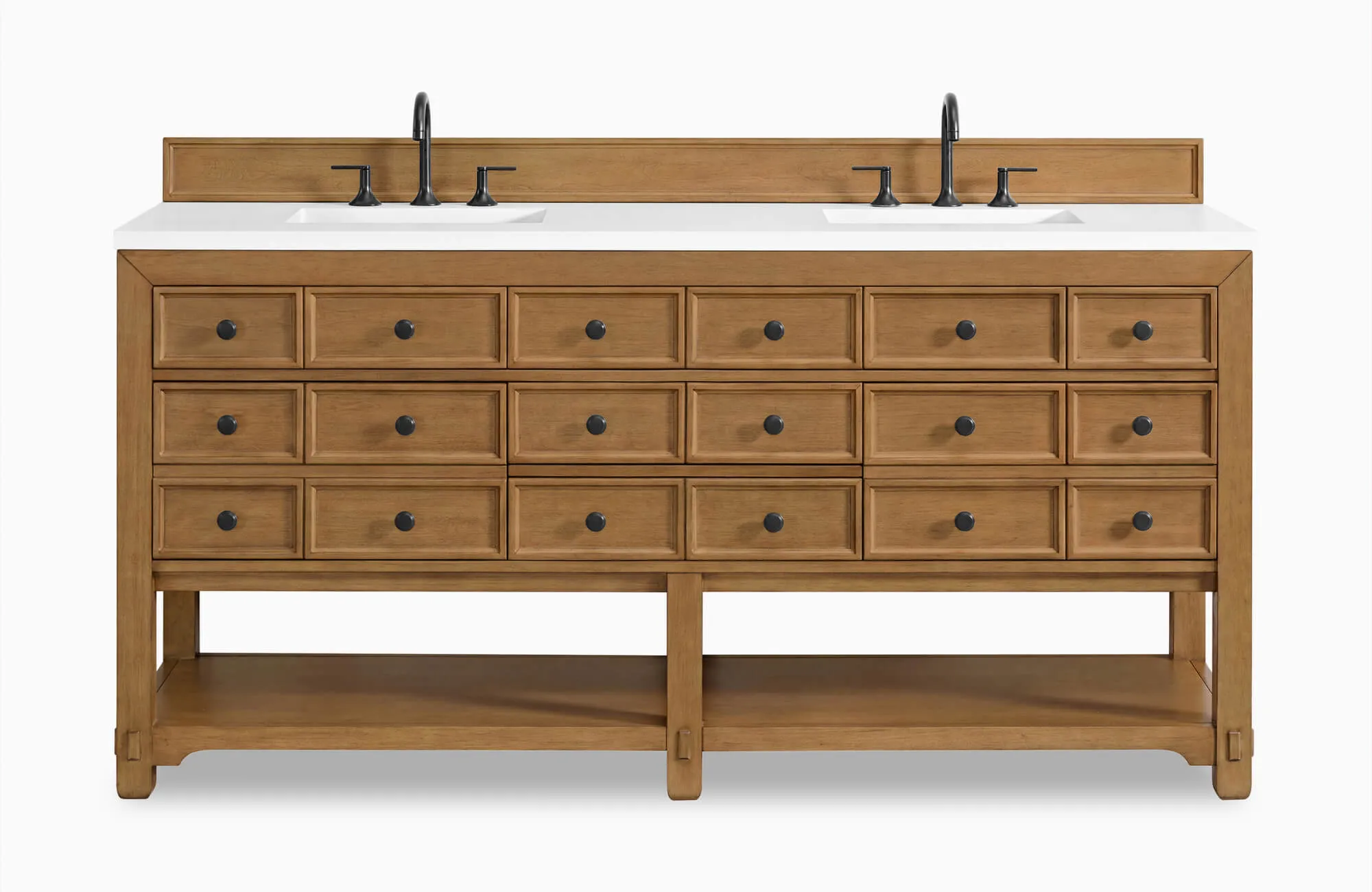
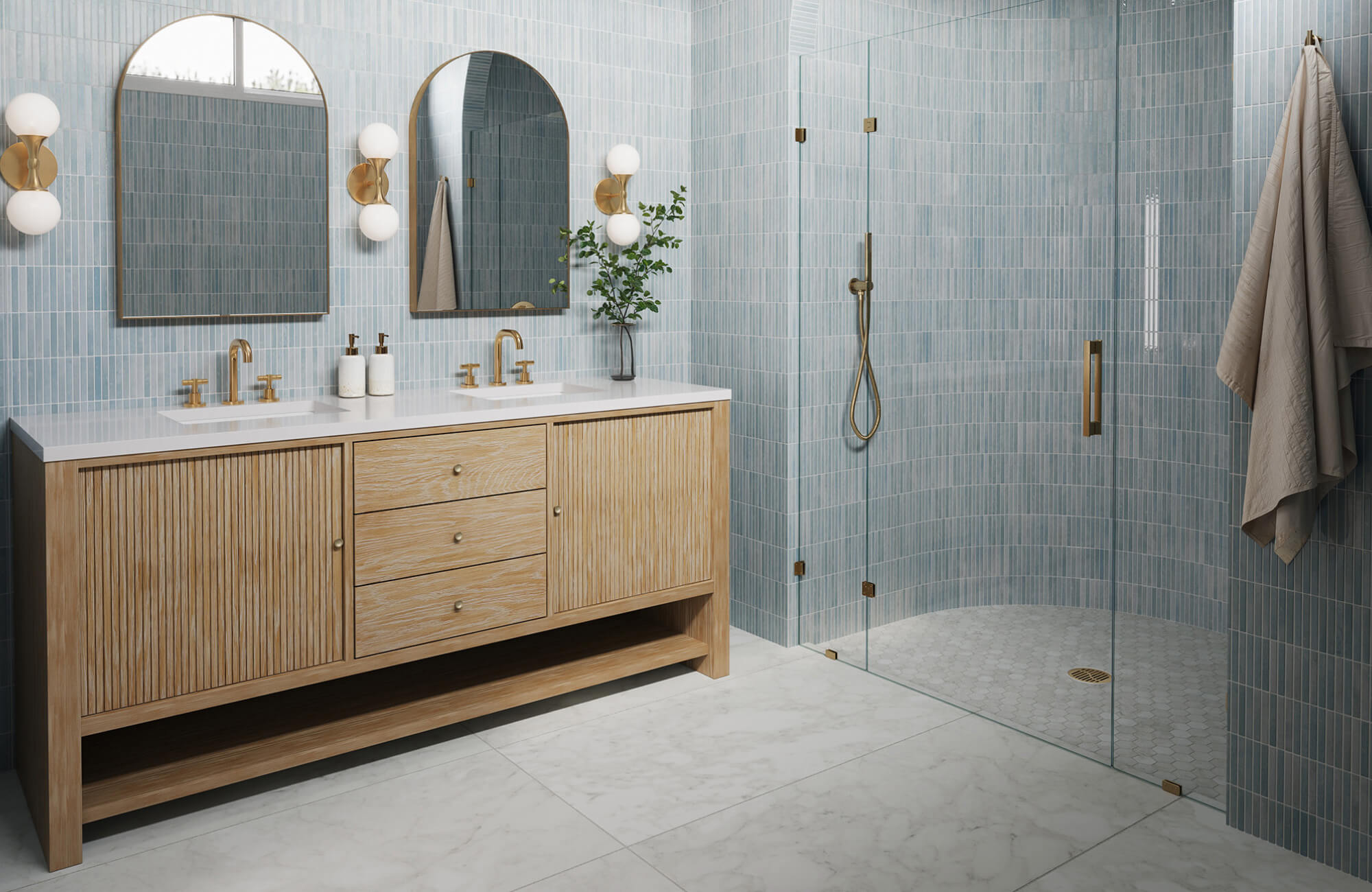
A prime example of this long-lasting design is Edward Martin’s Holly 72" Double Vanity in Sunwashed Oak with a 3 cm White Zeus Quartz Top. As shown in the photo above, its fluted detailing, durable oak build, and open lower shelf showcase how timeless materials and thoughtful craftsmanship can result in a vanity built to last for years to come.
Cost Versus Value Proposition
Investment value isn’t just about durability; it’s also about financial return. Though priced higher than smaller units (typically between $1,500 and $5,000 depending on materials and customization), a 72 inch vanity often delivers a strong ROI. According to Remodeling Magazine’s Cost vs. Value Report, upscale bathroom remodels featuring premium additions like double vanities tend to recoup 50–60% of their cost at resale, with even higher returns in competitive or high-demand markets.
Beyond measurable resale gains, the daily benefits of a well-equipped vanity, dual sinks, ample storage, and energy-efficient features significantly enhance overall livability. These upgrades also contribute to a more functional and enjoyable space, reinforcing the value of your investment both now and in the future.
Why Size and Substance Matter
In the end, a 72 inch vanity does far more than simply fill space; it defines it. With its dual-sink functionality, generous surface area, and custom-quality storage, this statement piece supports not just daily performance, but also the overall design integrity of your bathroom. Its scale promotes better foot flow, pairs seamlessly with high-end materials like quartz and marble, and meets the evolving expectations of today’s discerning homeowners.
Whether you're embarking on a high-end renovation or aiming to increase long-term resale appeal, this vanity size offers real returns in both form and function. If you're considering how to integrate one into your layout, Edward Martin’s design team is here to help guide every detail with precision and care!
Follow us on Instagram
@EDWARD.MARTIN
)
)
)
)
)
)
)
)
)
)
)
)
)
)
)
)