Choosing the right pool tile is more than just a design decision. The surface you select will endure years of exposure to water, chemicals, sunlight, and shifting temperatures. A well-matched tile not only elevates the look of your pool but also determines how long that beauty lasts before repairs or replacements are needed.
From sleek porcelain to shimmering glass and timeless natural stone, every material brings its own mix of strengths and challenges. Factors like size, shape, and finish also play a role, reminding you that the best tile is the one that balances performance with style. This article walks you through those choices so you can invest confidently in a pool that remains stunning and resilient season after season.

Materials
Durability starts with the material. Every tile type reacts differently when exposed to water, chemicals, and temperature extremes. To make a smart investment, you need to understand how each option holds up in real-world pool conditions.
Porcelain
Porcelain is often considered the workhorse of pool design because of its dense, vitrified structure and non-porous nature. It is especially valued for its strength and its ability to resist freeze-thaw cycles, making it reliable in virtually any climate. Porcelain also resists staining, fading, and chemical attack, giving you confidence that it will hold up beautifully against chlorine, saltwater, and constant sun exposure.
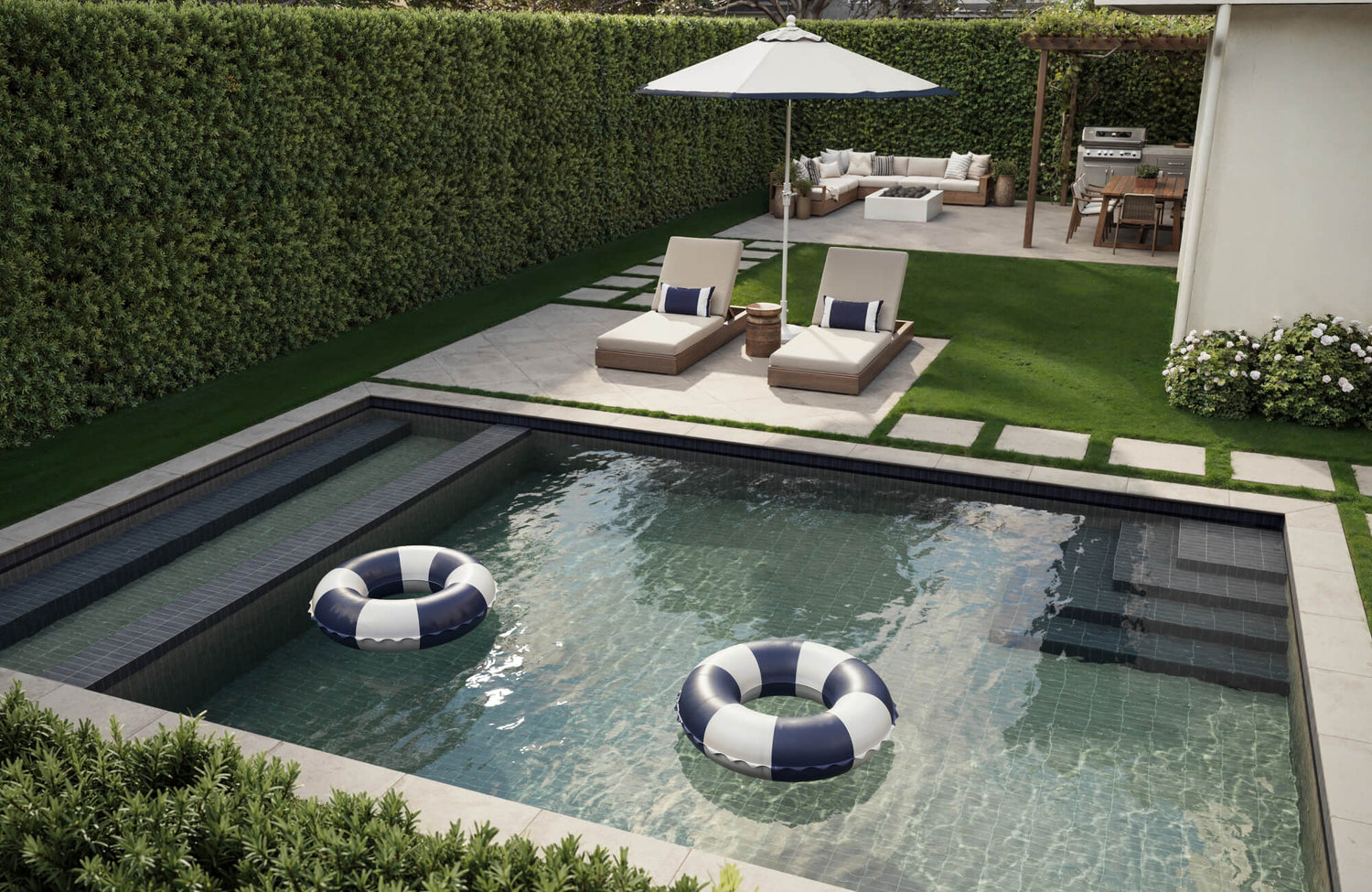
Another advantage is its ease of maintenance. The smooth surface makes cleaning straightforward, while its durability minimizes the risk of cracks or surface wear over time. Porcelain is also available in an impressive variety of colors, finishes, and patterns, giving you the freedom to choose a style that fits your vision without sacrificing resilience. For instance, the serene blue tones in the pool design shown above are beautifully captured by our Miley 4.5x9.1 Glossy Porcelain Tile in Ice. Its glossy finish reflects light gracefully across the water, adding both depth and brightness to the pool while retaining porcelain’s unmatched durability. If you want a tile that balances affordability, design flexibility, and long-term performance, porcelain remains one of the smartest choices for any pool.
Glass
For a more premium look, glass and natural stone bring a different set of qualities to your pool environment. Glass tiles are completely nonporous and chemically inert, meaning they won’t absorb water, stain, or react with chlorine. Their reflective properties also create a jewel-like shimmer under the water, adding depth and movement that few other materials can match. When installed with epoxy grout and high-quality thin-set, they remain exceptionally durable, though their higher cost and precise installation requirements place them firmly in the luxury category.
Natural Stone
Natural stone offers an organic warmth and authenticity that no manufactured tile can fully replicate. Travertine, slate, or limestone tiles bring earthy textures and unique variation that make every poolscape feel one-of-a-kind. Yet stone’s porous nature requires more attention. You’ll need regular sealing to protect against staining, efflorescence, and chemical etching. With consistent maintenance, however, natural stone rewards you with timeless character and a sense of harmony with the surrounding landscape.

Size, Shape, and Installation
Tile dimensions and shapes are more than aesthetic choices. They influence structural performance, flexibility, and how effectively tiles adhere to both flat and curved pool surfaces. The right size and form can enhance not only style but also long-term durability.
Small Format Tiles
Small format tiles are excellent for achieving strong mechanical bonding and adapting to the unique contours of a pool. Whether you choose traditional mosaics or small-scale versions of subway tiles, their compact size allows them to flex around curves, steps, and benches where larger tiles would struggle. This adaptability makes them a practical choice for areas that require both precision and durability under constant water pressure.
Another key benefit of smaller tiles is their higher grout-to-surface ratio. With more grout lines, stress is distributed evenly, which helps the installation handle thermal expansion and contraction without cracking. Beyond performance, small tiles also add visual interest, allowing you to incorporate detail and texture into your design while still ensuring long-term resilience. A perfect example can be seen in the pool floor pictured above, finished with our Natasha 2x6 Glossy Porcelain Tile in Fog. The elongated subway format creates a subtle grid that enhances the movement of water while the soft gray color brings a refined and modern feel. The glossy surface also reflects light beautifully, adding depth to the pool while still benefiting from porcelain’s superior durability. Beyond performance, small tiles like these add distinct character, proving that strength and design flexibility can work seamlessly together.
Large Format Tiles
Large tiles immediately give a pool a sleek, contemporary appearance, creating uninterrupted surfaces with minimal grout lines. This clean look is particularly appealing if you’re aiming for a modern design statement that feels spacious and sophisticated. A great example is our Dax 6x24 Matte Porcelain Tile in Squash, a large format subway style whose warm golden tone adds both brightness and depth to a poolscape. Its elongated proportions also emphasize clean lines while the matte finish softens reflections, creating a refined and inviting atmosphere.
Because large tiles span a wider area, any imperfection in the substrate beneath them can lead to cracks or uneven edges. To avoid premature failure, professional installers must use precise leveling, full mortar coverage, and back-buttering to ensure every tile is fully supported. When installed correctly, large format tiles not only elevate style but also perform reliably, making them a bold yet durable choice.
Specialty Shapes
Tiles in specialty shapes such as hexagons, arabesques, or chevrons introduce a unique personality into pool design. They break away from traditional squares and rectangles, adding movement and depth that instantly capture attention. These patterns can transform a pool’s surface into a work of art, making them a favorite for those who want standout visual character.
Still, these shapes demand careful planning during installation. Irregular grout lines require precision to avoid gaps or voids, which can compromise water resistance and weaken the bond over time. To ensure longevity, it’s crucial that specialty tiles are specifically rated for pool use and manufactured with consistent edge quality. With proper installation, these distinctive shapes deliver both durability and unforgettable design flair.

Slip Resistance and Surface Finish
A pool tile’s beauty means little if it becomes a safety risk. In areas like coping, steps, and shallow zones, the right finish ensures traction while still preserving the aesthetic appeal of your design. By choosing surfaces that balance texture and durability, you can create a pool that feels as safe as it looks inviting.
Matte, Textured, and Glossy
Porcelain pool tiles with matte or textured finishes are among the most effective ways to reduce slipperiness in wet areas. These subtle surfaces break the tension of water, helping to prevent the hydroplaning effect that often causes slips and falls. Many are tested with slip-resistance ratings (commonly R9–R13), giving you measurable benchmarks for performance in submerged or splash-heavy zones such as steps, shallow ledges, or pool surrounds.
This same focus on safety extends beautifully to pool decks, where porcelain pavers deliver both traction and elegance. The poolside featured in the photo above is finished with our Bowden 24x24 Grip Porcelain 2cm Paver Tile in Canvas, a light beige shade that creates a bright, airy backdrop while ensuring secure footing around wet areas. At the same time, porcelain’s versatility means you can still play with finishes such as matte and textured for safety underfoot, and glossy for vertical accents like waterlines or feature walls. With this balance of practicality and design, porcelain ensures your pool environment is as safe as it is stylish.
Sandblasted Stone
Natural stone, when sandblasted or honed, offers an elegant solution for slip resistance. The roughened surface increases friction, providing secure footing around pool decks, coping, and transition zones where water is unavoidable. This makes it a strong option if you want the warm, organic look of stone without sacrificing safety.
However, the very texture that creates grip also leaves the surface more vulnerable to absorbing pool chemicals and debris. To protect the stone and keep its beauty intact, regular sealing is essential. With consistent maintenance, sandblasted stone strikes a balance between rustic sophistication and reliable safety underfoot.
Etched Glass
Glass tiles are typically admired for their shine and brilliance, but when etched or frosted, they also become a safer option for areas prone to slipping. Through acid etching or mechanical frosting, the surface takes on a subtle texture that enhances grip while maintaining the luminous quality of glass. This dual benefit allows you to add sparkle to steps, ledges, or accent zones without increasing risk.
Because etched glass combines both performance and visual appeal, it’s best used strategically. By placing it in high-contact areas while pairing it with smooth glass elsewhere, you create a pool environment that looks dynamic yet remains safe. The result is a thoughtful blend of elegance and practicality that ensures both form and function shine.

Matching Style Trends with Functional Performance
A beautiful pool tile is only as good as the way it performs. The most popular trends today do more than follow aesthetics. They also combine design innovation with durability, giving you a pool that looks stunning while standing the test of time.
Modern Minimalism
Large format porcelain tiles are at the forefront of modern pool design, especially in neutral tones like soft gray, beige, or taupe. Their generous dimensions minimize grout lines, which not only creates a sleek, uninterrupted surface but also makes cleaning and upkeep far easier. The result is a sophisticated, streamlined poolscape that aligns perfectly with contemporary architecture.
Small tiles, on the other hand, bring precision and flexibility where large tiles cannot. They are often used on steps, benches, and curved edges, where their compact size allows them to conform seamlessly to complex shapes. Although large tiles excel in creating broad, minimalist expanses, small tiles provide the detailing and adaptability that ensure the entire pool design is both functional and visually balanced.
In the pool design seen in the image above, the minimalist effect is elevated further by pairing the strengths of both formats. Our Bowden 24x24 Grip Porcelain 2cm Paver Tile in Oat sets a warm, slip-resistant foundation for the deck, while our Natasha 2x6 Glossy Porcelain Tile in Denim adds a striking, reflective accent along the poolside wall. Together, they showcase how large tiles can anchor a minimalist design while smaller tiles add depth, contrast, and refined detail.
Nature-Inspired Designs
One of today’s most popular trends is using earthy tones and natural textures to create a pool that feels closely tied to the surrounding landscape. Porcelain tiles that mimic travertine, limestone, or slate capture this organic look without the demanding upkeep of real stone. These manufactured options also offer the depth, variation, and character of natural materials while still benefiting from porcelain’s durability and resistance to water absorption.
Another emerging design choice is zellige-inspired porcelain pool tiles. These tiles replicate the handcrafted look of traditional Moroccan zellige with its subtle surface variations and artisanal charm, but in a form that can handle the challenges of pool environments. A standout example is our Juliet 2.5x10 Matte Porcelain Tile in Denim, whose deep denim blue tone pairs organic texture with a matte finish that reduces glare. Perfect for waterlines, feature walls, or accent details, it blends natural-inspired richness with the durability of porcelain.
Making the Right Tile Choice for Lasting Performance
The best pool tile is the one that balances beauty, durability, and value, and porcelain consistently rises to the top. Its non-porous structure makes it highly resistant to water, chemicals, and temperature changes, while its versatility in style ensures you do not sacrifice design for practicality. Glass and stone can add luxury or authenticity, but they come with higher costs or greater upkeep. By choosing porcelain, you secure a tile that delivers long-term performance, safety, and timeless appeal, keeping your pool both stunning and resilient for years to come.
If you are ready to bring porcelain into your pool design, our design services can help you refine your vision and match the right finish to your space. To make your decision even more seamless, our augmented reality (AR) tool lets you preview porcelain tile options directly in your environment. Together, these resources ensure that your choice is both visually striking and perfectly suited to the long-term performance your pool deserves.